Introduction: Why CPR Certification Matters for Dental Professionals
Dental practices are uniquely vulnerable to medical emergencies, from vasovagal syncope to sudden cardiac arrest. Sedation, local anesthetics, and treating older or medically complex patients increase risk, and the first minutes matter most. That’s why Basic Life Support (BLS) training rooted in American Heart Association (AHA) guidelines is essential for every member of the dental team. The California Dental Board requires licensees to maintain current BLS with a hands-on component, and many employers specifically expect the AHA BLS Provider course—making low cost dental CPR certification both a compliance and patient-safety priority.
Common events where rapid, high‑quality CPR and AED use can save a life include:
- Cardiac arrest in the waiting room or operatory
- Airway obstruction or laryngospasm during procedures
- Anaphylaxis to latex or local anesthetic
- Opioid or sedative‑related respiratory depression
- Hypoglycemia or syncope leading to unresponsiveness
Cost and scheduling shouldn’t be barriers to readiness. Safety Training Seminars offers affordable CPR training for dental professionals through AHA‑approved blended learning—complete the online module on your schedule, then finish a brief, in‑person skills session at one of 100+ California locations. This flexible model supports busy practices seeking budget-friendly BLS certification dentists rely on, without compromising quality. Clinics and DSOs can also leverage discount dental CPR classes and group scheduling, backed by a low price guarantee for all courses.
If your practice manages pediatric patients, provides deeper levels of sedation, or handles medically complex cases, adding ACLS or PALS can strengthen your emergency protocols. Safety Training Seminars provides these specialized AHA certifications alongside cheap dental CPR courses and streamlined paths that make dentist CPR recertification affordable. For details on California-specific requirements and choosing the right course mix, see BLS & CPR for dentists.
Understanding CPR Requirements in Dental Practice
In California, dentists, hygienists, and dental assistants must maintain current Basic Life Support (BLS) for Healthcare Providers to meet licensure and employment requirements. The Dental Board of California and the Dental Hygiene Board recognize American Heart Association (AHA) BLS as a gold-standard option, and an in-person skills evaluation with AED use is required even when coursework is completed online. AHA BLS cards are valid for two years, and many employers and malpractice insurers expect no lapse in certification.
Certain practice settings demand more. Providers who administer moderate or deep sedation, or who treat pediatric patients under sedation, may need ACLS and/or PALS in addition to BLS, depending on permit type and patient population. Even in offices limited to local anesthesia and nitrous oxide, teams must be ready to manage syncope, anaphylaxis, local anesthetic toxicity, and cardiac arrest until EMS arrives.
What typically satisfies dental CPR requirements:
- Course type: AHA BLS Provider; blended learning is acceptable when paired with an in-person skills check.
- Core skills: high-quality adult/child/infant CPR, bag-mask ventilation, team dynamics, choking relief, and AED operation.
- Documentation: AHA eCard with issue/expiration dates; keep records accessible for audits and hospital credentialing.
- Renewal planning: recertify before expiration; schedule team-wide refreshers to align dates and avoid coverage gaps.
If you’re seeking low cost dental CPR certification, prioritize programs that are both compliant and time-efficient. Safety Training Seminars offers affordable CPR training for dental professionals through AHA-blended courses with quick skills sessions at 100+ California locations, plus a low price guarantee. For multi-chair practices, on-site options and Group CPR discounts can make budget-friendly BLS certification dentists need easier to coordinate. Dentist CPR recertification affordable doesn’t mean cutting corners—you can meet AHA standards and keep your team ready for emergencies without overspending.
The True Cost of Dental CPR Certification Programs
When evaluating low cost dental CPR certification, look beyond the advertised tuition. The real price includes time away from patients, travel and parking, required AHA eLearning fees, skills check appointments, card issuance, and any reschedule or remediation costs. For California dentists and hygienists, the most budget-friendly choice is usually the one that minimizes both out-of-pocket expenses and practice disruption while yielding an AHA BLS Provider card widely accepted by employers.
Consider a typical cost scenario. A “cheap dental CPR course” might list at $55, but add an AHA HeartCode BLS online key (~$36), a separate skills fee ($35–$60), parking ($10–$20), and a penalty if you need to reschedule. Compare that with a blended option priced at $95–$125 that includes the skills session near your office, free rescheduling, and fast eCard delivery—your actual total may be lower, with less chairside downtime. Over a two-year cycle, that difference can exceed the sticker price by hundreds of dollars once lost billable hours are considered.
Acceptance matters as much as price. Some ultra-discount providers issue non-AHA cards that many dental employers, auditors, and malpractice insurers won’t accept, forcing re-training and doubling your expense. To keep dentist CPR recertification affordable, verify the course is AHA-compliant BLS for healthcare providers with an in-person skills check and immediate eCard access.
To compare programs accurately, line up these cost drivers:
- AHA alignment and employer acceptance of the card
- Total price including AHA online key, skills check, eCard, and materials
- Time to complete (online portion length, skills session duration)
- Location convenience, parking, and schedule flexibility
- Reschedule/cancellation policies and remediation fees
- Group/employee discounts and renewal reminders

Safety Training Seminars helps control the true cost with blended AHA BLS, over 100 California locations, evening/weekend skills sessions, and a low price guarantee. Practices can leverage discount dental CPR classes for teams, reducing per-person spend while standardizing compliance. For affordable CPR training for dental professionals that won’t create hidden costs later, STS is a practical, California-ready solution.
How to Find Low Cost CPR Training Options
Start by verifying that any course you consider is an American Heart Association (AHA) BLS Provider course, which is the standard most California dental practices require. Low cost dental CPR certification should never mean cutting corners on accreditation—confirm you’ll receive an official AHA eCard and that the class includes adult, child, and AED skills. Avoid “awareness-only” CPR or non-AHA options marketed as cheap dental CPR courses; they often won’t satisfy employer or malpractice insurer requirements.
To keep costs down, compare the total price, not just the advertised tuition. Ask whether the AHA online key (if blended), skills session, eCard fee, rescheduling fees, and parking are included. Blended learning (AHA HeartCode BLS plus an in-person skills check) is typically the most affordable CPR training for dental professionals because it reduces time away from the operatory and lets you complete the online portion on your schedule.
Smart ways dentists find discount dental CPR classes and budget-friendly BLS certification:
- Search for “AHA BLS Provider” near your ZIP code and filter for blended learning to minimize clinic downtime.
- Check for weekday or off-peak skills sessions; these are often priced lower and easier to book last-minute.
- Ask about employer reimbursements or union/association discounts (e.g., office-wide training days).
- Confirm group rates if certifying the entire dental team; per-person pricing usually drops at 5+ participants.
- Time your renewal 30–60 days before expiration to avoid rush fees and to access more scheduling options.
- Bundle with other required courses (e.g., ACLS for sedation practices) when available to reduce total spend.
- Verify you’ll get your AHA eCard immediately after passing so you don’t risk work delays.
Safety Training Seminars is a reliable option for dentist CPR recertification affordable across California. With over 100 locations, blended AHA BLS classes, frequent skills sessions, corporate group training, and a low price guarantee, it’s easy to find a class that fits your budget and schedule. Their approach helps dental teams meet compliance quickly while keeping training costs predictable.
Comparing In-Person vs Blended Learning Formats
Dentists and auxiliaries in California typically need an AHA BLS Provider card, and you can earn it through either a traditional classroom or a blended format. If your goal is low cost dental CPR certification, the right choice often depends on how much clinic downtime, travel, and after-hours study you can accommodate.
In-person classes provide structured, start-to-finish instruction with real-time feedback and team-based practice. They’re ideal for first-time learners, new hires, or offices that want a coordinated mock-code experience. The tradeoff is a longer, fixed schedule and potential production loss if staff attend during business hours.
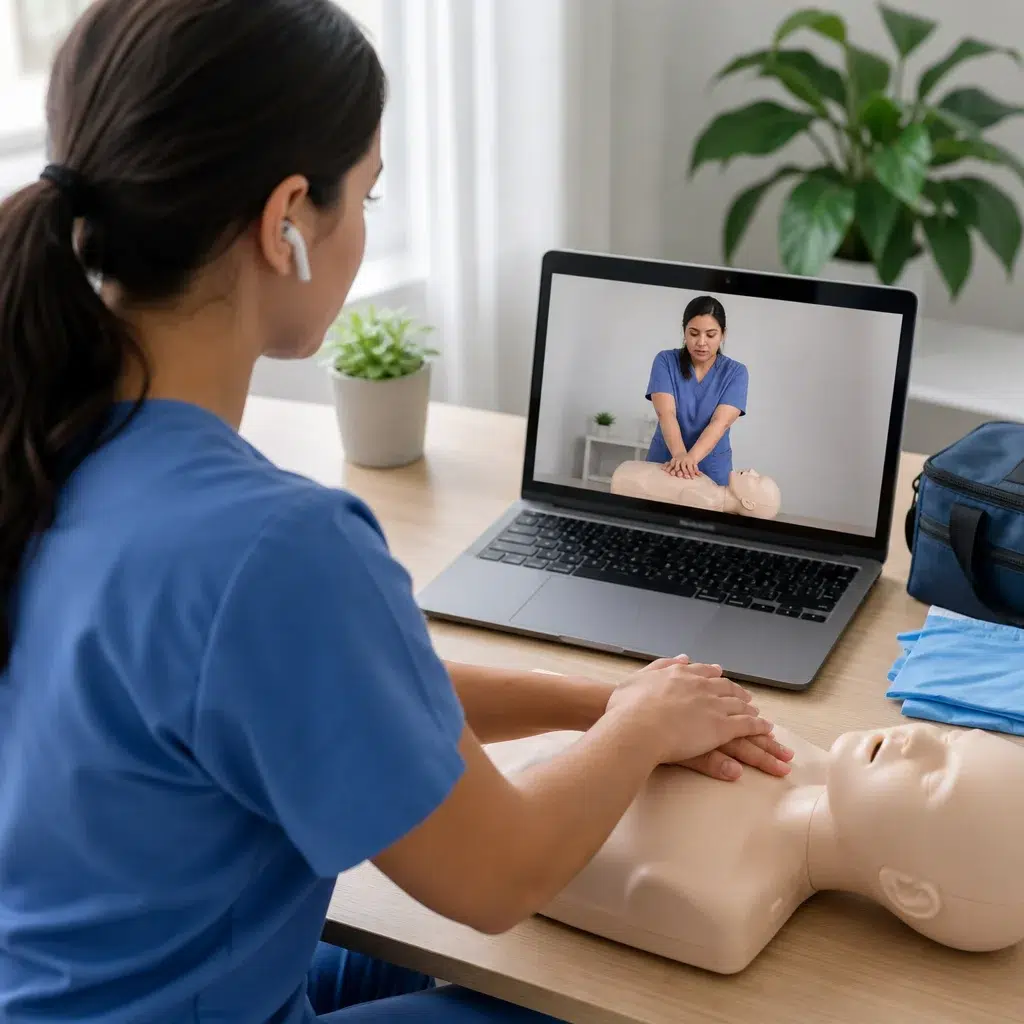
Blended learning combines an online AHA-aligned cognitive module with a short, in-person skills check. Many dental professionals complete the online portion after clinic hours, then book a quick skills session—often under two hours—near their practice. This format is popular for dentist CPR recertification affordable needs, since it reduces travel, chair-time disruption, and overtime.
When comparing affordable CPR training for dental professionals, look beyond tuition:
- Time cost: How many hours are staff away from patients?
- Travel/parking: Are there nearby sites to minimize expenses?
- Scheduling: Can you complete skills checks evenings or weekends?
- Group rates: Will a team session lower the per-person price?
- Recert cycles: Blended options can streamline cheap dental CPR courses for repeat renewals.
Safety Training Seminars offers both formats across 100+ locations statewide, helping practices find budget-friendly BLS certification dentists can complete with minimal downtime. Their blended AHA-compliant courses, frequent skills sessions, corporate group training, and low price guarantee support truly discount dental CPR classes without sacrificing quality. For example, a Bay Area office might have staff complete the online module at home, then meet at a nearby site Saturday morning for skills—keeping the schedule full and costs down.
What to Expect During Your CPR Certification Course
Choosing a low cost dental CPR certification doesn’t mean cutting corners on quality. Most dentists complete a blended AHA BLS Provider format: a self‑paced online module followed by a brief, hands‑on skills session. This structure keeps training affordable and efficient while meeting California employer and licensing requirements.
The online portion reviews high‑quality CPR fundamentals, AED basics, ventilation techniques, and team roles. Expect interactive videos and knowledge checks tailored to real dental‑office situations, like a patient losing consciousness after local anesthesia or respiratory compromise during nitrous oxide use. Plan 1.5–3 hours, depending on your experience and pace.

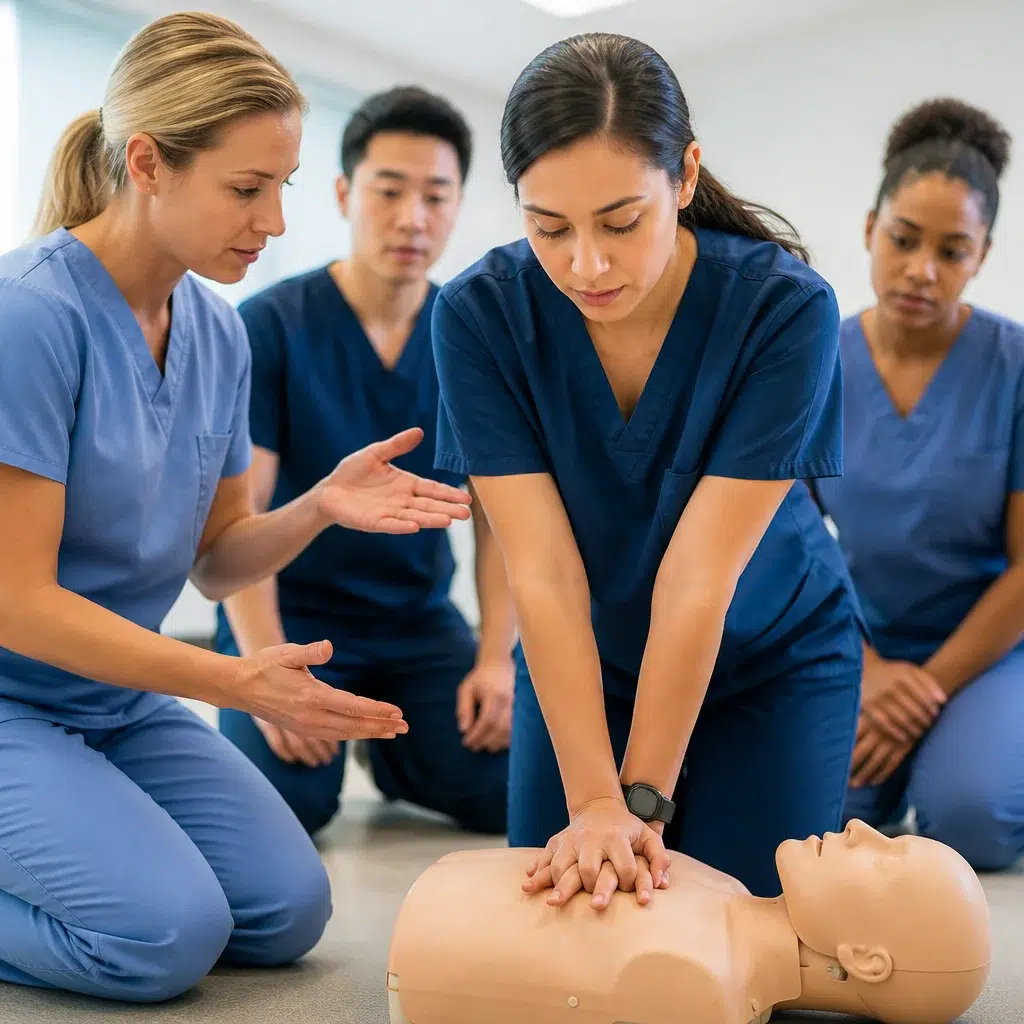
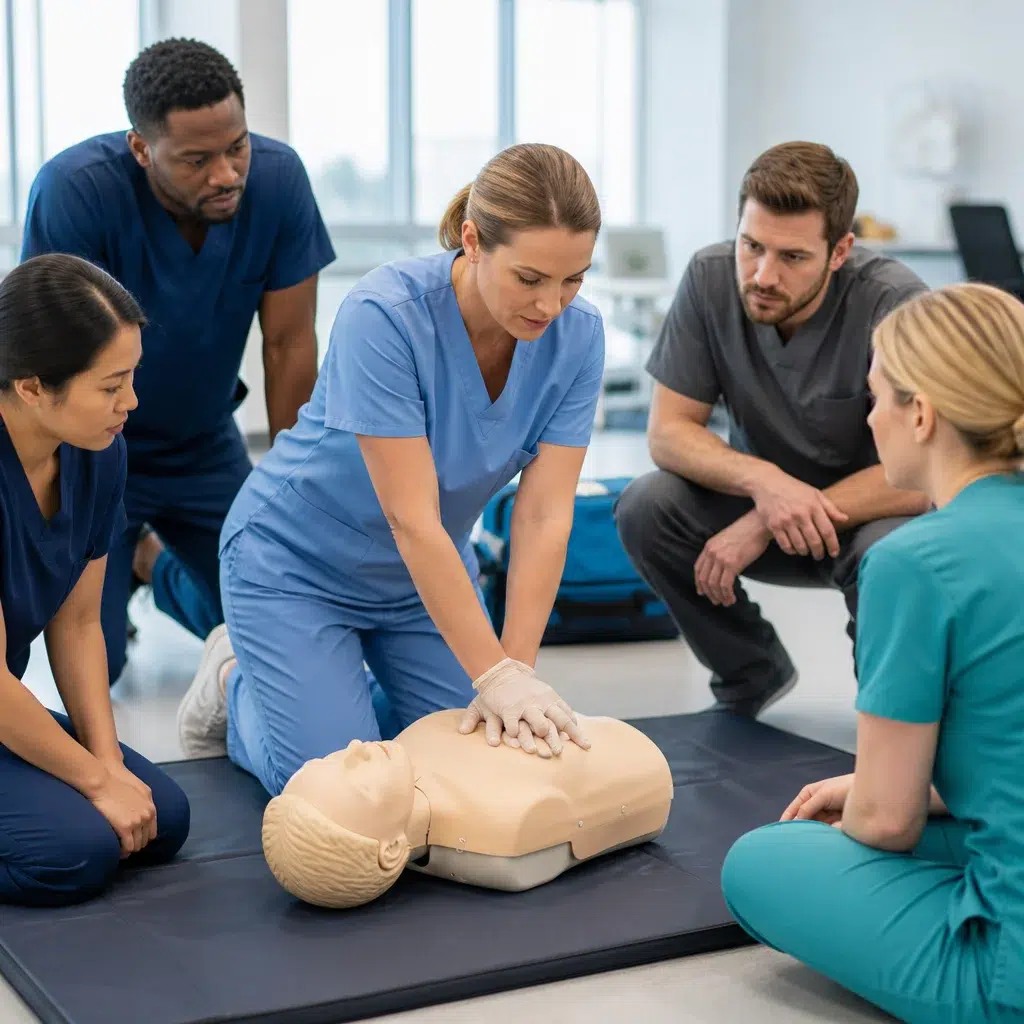
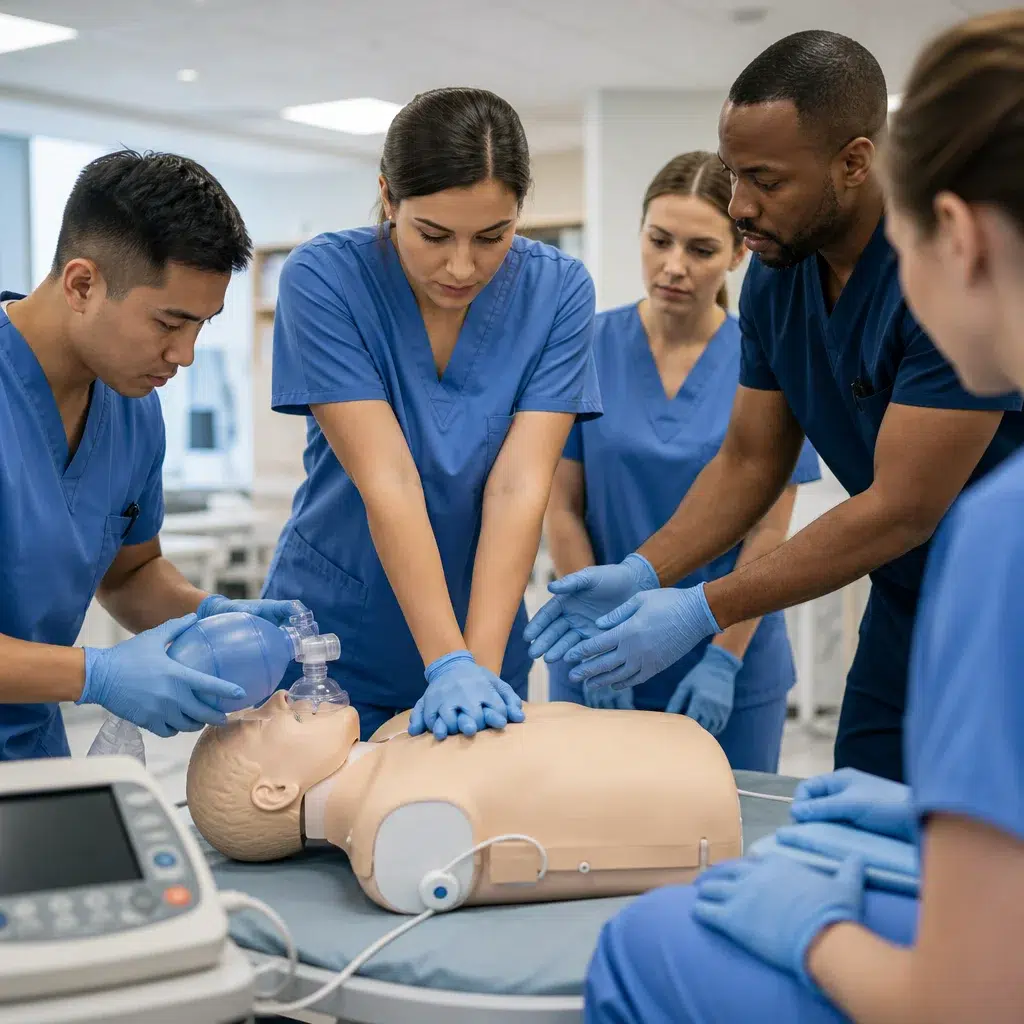
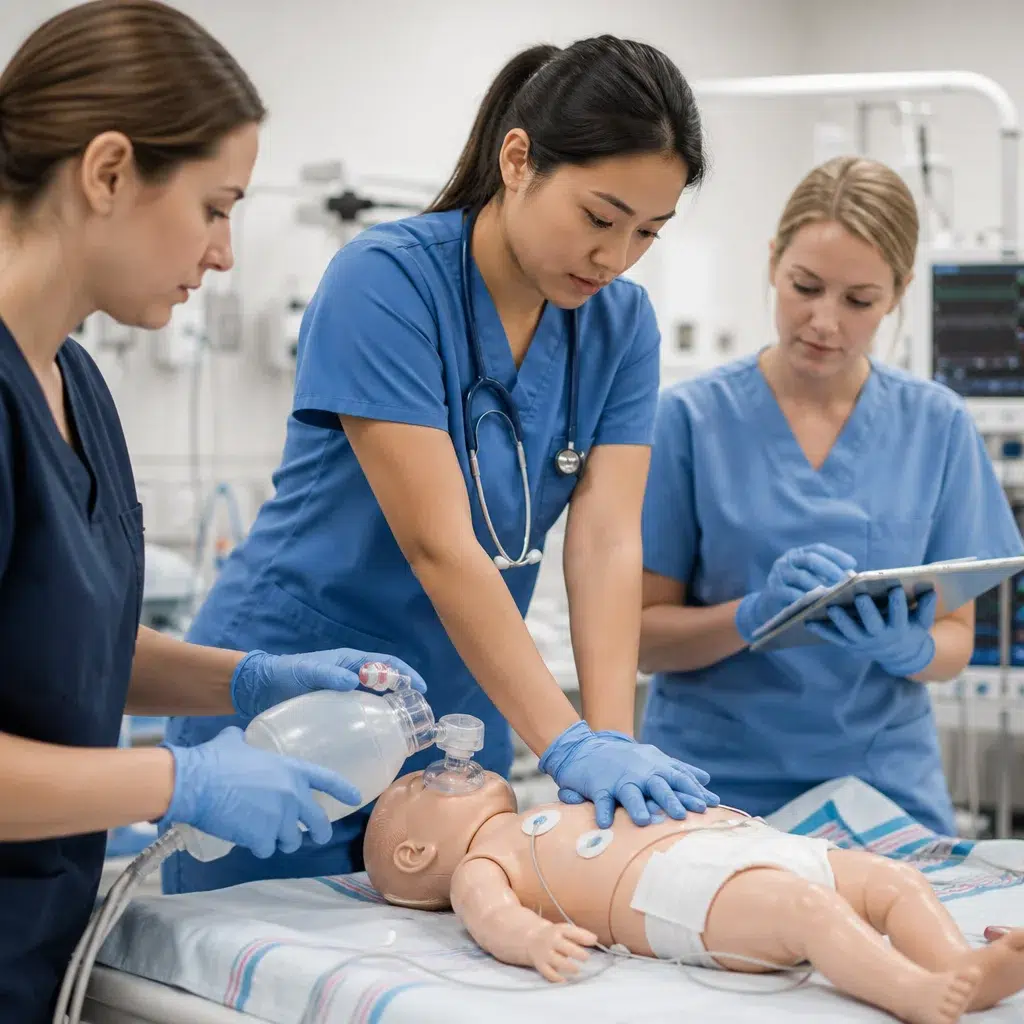
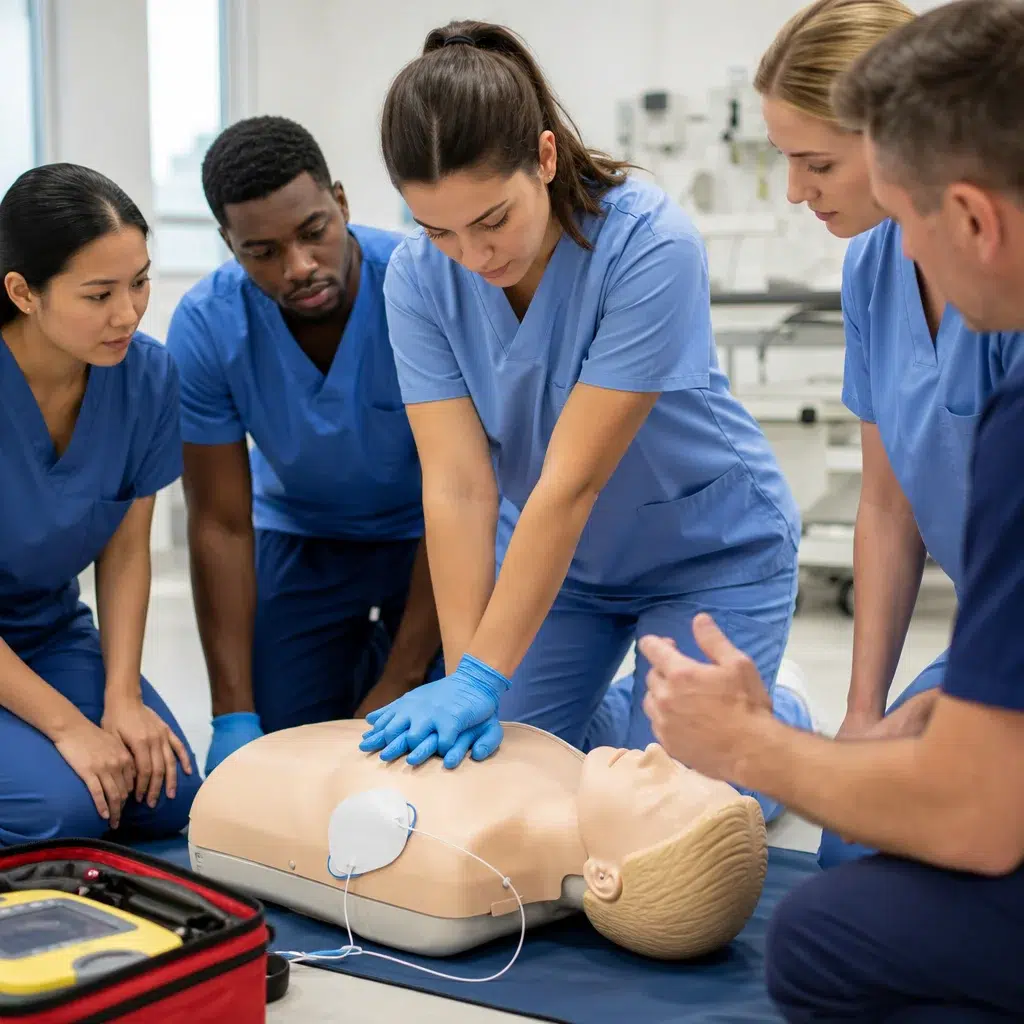
During the in‑person skills session, you’ll practice with feedback manikins and demonstrate competency on:
- Adult and pediatric CPR (1‑ and 2‑rescuer sequences)
- AED use, pad placement, and safety steps
- Pocket mask and bag‑mask ventilation
- Relief of choking for adults and children
- Team‑based resuscitation and role assignment with your dental team
- Rapid assessment and activation of the emergency response plan in a dental operatory
Skills testing uses AHA checklists to verify compression depth/rate, recoil, and ventilation quality. Most dentists find the assessment straightforward, especially with coaching and real‑time feedback. Upon successful completion, you’ll receive an AHA BLS eCard (valid for two years), making dentist CPR recertification affordable when it’s time to renew.
Safety Training Seminars streamlines the process with affordable CPR training for dental professionals at over 100 locations across California, plus flexible evenings and weekends. You’ll complete the online module at home and book a 45–90 minute skills appointment nearby—ideal for busy practices seeking discount dental CPR classes or budget-friendly BLS certification dentists can finish in one visit. Bring a photo ID and your online completion certificate to the skills session. Their low price guarantee keeps costs competitive, and group rates make “cheap dental CPR courses” realistic for entire dental teams without sacrificing AHA compliance.
AHA Certification Standards and Recognition
For California dentists, credibility hinges on holding the right credential. The Dental Board of California requires current Basic Life Support (BLS) certification with a hands-on skills component, such as the American Heart Association (AHA) BLS Provider course. To keep costs down without risking compliance, choose low cost dental CPR certification that still results in an AHA-recognized card accepted by employers, malpractice insurers, and group practices statewide. AHA BLS Provider eCards are valid for two years and can be verified online by employers in seconds.
AHA standards define what you must know and demonstrate in the dental operatory. A compliant BLS course covers:
- Adult, child, and infant CPR, including one- and two-rescuer sequences
- Use of AEDs and bag-mask ventilation for team-based care
- Relief of choking and management of opioid-associated emergencies
- High-quality compressions, ventilation rates, and team dynamics
These competencies must be practiced and tested in person—fully online-only CPR is not accepted for dentists in California. Blended learning is permitted: you complete an AHA eLearning module at your pace, then finish with an in-person skills session to earn the AHA BLS Provider eCard.
Your scope of practice may require additional AHA credentials. For example, oral surgeons and dentists providing moderate sedation often need ACLS, while pediatric-focused practices may require PALS. Plan dentist CPR recertification early—renew at the two-year mark to avoid lapsed credentials that can disrupt scheduling and billing—and look for affordable CPR training for dental professionals that offers evening or weekend skills sessions.
Safety Training Seminars delivers AHA-guideline BLS for healthcare providers via convenient blended learning at over 100 California locations. You get flexible skills sessions, discount dental CPR classes for groups, and a low price guarantee—ideal for budget-friendly BLS certification dentists need without compromising recognition. Whether you’re new to practice or seeking cheap dental CPR courses for a full team, their statewide network makes dentist CPR recertification affordable and fully compliant.
Maintaining Your Dental CPR Certification
Staying current on BLS for Healthcare Providers is essential for California dentists and staff, and American Heart Association cards are typically valid for two years. To keep low cost dental CPR certification from becoming a last‑minute scramble, build a renewal plan that covers every team member and aligns with your license cycle. Choose an AHA provider and verify that a hands‑on skills session is included, since most boards and malpractice carriers require it.
Plan renewals 60–90 days before expiration to avoid lapses and scheduling bottlenecks. Blended learning helps minimize chairside downtime: complete the online coursework at your convenience, then book a short, in‑person skills check. Safety Training Seminars offers AHA BLS with virtual learning plus skills sessions at more than 100 locations across California, a low price guarantee, and budget-friendly BLS certification dentists across the state rely on.
Keep your practice emergency‑ready with simple, recurring routines beyond the card itself:
- Set automated reminders for each clinician’s expiration date and schedule group sessions to streamline coverage.
- Store digital copies of AHA eCards in your HR system and maintain a central roster for audits and insurance credentialing.
- Perform monthly emergency kit and AED checks (pads and battery dates, oxygen, epinephrine, nitroglycerin, bronchodilator, glucose) and log results.
- Run quarterly mock codes (syncope, anaphylaxis, cardiac arrest) to assign roles, practice compressions/ventilation ratios, and confirm AED placement.
- Onboard new hires with proof of current BLS and your office’s medical emergency protocol.
If your practice provides pediatric or sedation services, you may also need ACLS or PALS based on credentialing or permit requirements—Safety Training Seminars offers those AHA courses, too. To keep dentist CPR recertification affordable, consider corporate group training and discount dental CPR classes that bring the skills session to your office. While searching for cheap dental CPR courses, prioritize AHA accreditation to ensure compliance and quality. For affordable CPR training for dental professionals, Safety Training Seminars makes scheduling and costs straightforward without compromising standards.
Group Training Discounts for Dental Teams

Outfitting your entire office with low cost dental CPR certification is easier—and more economical—when you enroll as a team. Group pricing lowers the per‑person rate while ensuring everyone completes the same AHA BLS curriculum tailored to dental settings, from managing syncope to preparing for sedation‑related emergencies. It’s an efficient path to affordable CPR training for dental professionals without compromising quality or compliance.
Safety Training Seminars streamlines group enrollments through blended learning: staff complete the AHA online module on their own time, then attend a short, hands‑on skills session at one of 100+ California locations. Dedicated group scheduling helps you pick dates that minimize chair‑time disruption, including evenings and weekends. For example, a Bay Area practice can have 10–15 staff finish eLearning during the week and book a single Friday evening skills check at a nearby center, keeping the clinic fully operational.
Dental teams also gain practical admin benefits that reduce hassle and cost:
- Volume pricing with a low price guarantee on all classes
- Centralized rosters, consolidated billing, and appointment coordination
- Same‑day AHA eCards for immediate documentation
- Automated reminders to keep dentist CPR recertification affordable and on schedule
- Options to add ACLS or PALS for providers involved in sedation or pediatric care
If you’re comparing discount dental CPR classes, look for providers that combine budget‑friendly BLS certification dentists can trust with proven AHA alignment and ample locations. Safety Training Seminars meets those criteria with cheap dental CPR courses that are still rigorous, instructor‑led, and hands‑on where it matters. Request a group quote to see how much your practice can save, whether you’re onboarding new hires or organizing an annual BLS renewal day. It’s a straightforward way to secure affordable CPR training for dental professionals and keep your entire team compliant year‑round.
How to Get Same-Day Certification Cards
Need proof of completion today? Choose an AHA BLS Provider course that issues electronic cards (eCards) immediately after you pass your skills check. With Safety Training Seminars’ blended format, you complete the online learning at home and then finish a short, in-person skills session—an efficient path to low cost dental CPR certification that satisfies California Dental Board requirements.
Follow these steps to walk out certified the same day:
- Enroll in the AHA BLS Provider for healthcare professionals and confirm “same-day eCard” is included. Safety Training Seminars offers a low price guarantee and over 100 California locations.
- Complete the AHA online module before your appointment and bring the completion certificate to your skills session.
- Schedule an early-day skills check, arrive with photo ID, and be ready for compressions, AED use, and ventilation testing.
- After you pass, watch for your AHA eCard email (often within minutes to a few hours). Save a PDF for your HR file and print a wallet copy if needed.
To keep costs down and avoid delays, verify that your email matches your AHA profile and check spam for the eCard message. Morning appointments speed up processing, and blended learning shortens classroom time—ideal for affordable CPR training for dental professionals. Be cautious of cheap dental CPR courses that are not AHA-approved; many employers won’t accept them. If you’re enrolling a whole practice, ask about discount dental CPR classes and on-site options to make budget-friendly BLS certification dentists can complete in one visit.
Example: A dentist books an 8:00 a.m. skills session in San Jose with Safety Training Seminars, finishes by 9:30, and receives the AHA eCard before lunch—ready to submit for payroll or credentialing. The same process works for renewals, making dentist CPR recertification affordable without disrupting the patient schedule. With widespread California locations, blended learning, and transparent pricing, Safety Training Seminars helps you meet compliance and get same-day proof—fast.
Conclusion: Balancing Affordability with Quality Training
Finding low cost dental CPR certification doesn’t require sacrificing rigor or compliance. The best value programs still follow current American Heart Association guidelines, include a live skills assessment, and emphasize dental-specific emergencies like syncope, anaphylaxis, airway obstruction, and post-sedation respiratory compromise. This balance keeps your team ready for real chairside events while staying within budget.
Use this quick checklist to choose affordable CPR training for dental professionals:
- Confirm the course issues an AHA BLS Provider eCard (widely accepted for employers and insurers).
- Choose blended learning to complete coursework online and finish with a brief, in-person skills check.
- Look for practice on feedback manikins and low student-to-manikin ratios.
- Verify transparent pricing that includes eCard fees and materials—no surprise add-ons.
- Favor locations and schedules that minimize downtime (evenings, weekends, and near your practice).
- Ask about group rates, onsite options, and renewal reminders to streamline dentist CPR recertification affordable for teams.
Safety Training Seminars is a practical option for budget-friendly BLS certification dentists can trust. With over 100 California locations and a blended model, you can complete the online AHA component at your convenience and book a short, focused skills session close to your office—whether you’re in Sacramento, the Bay Area, Los Angeles, or San Diego. Practices can reduce costs further through corporate group training and discount pricing, and the company’s low price guarantee helps keep cheap dental CPR courses from cutting corners on quality. For offices providing sedation, expanding into ACLS or PALS is straightforward through the same provider.
Ultimately, discount dental CPR classes should deliver both savings and confidence. Plan renewals 30–60 days before expiration, align sessions with staff meetings to limit downtime, and document eCards promptly in HR files. When you need low cost dental CPR certification that still meets employer and payer expectations, Safety Training Seminars offers an efficient, compliant path without inflating your training budget.
Register for a class today.