Table of Contents
- 1. Understand Your BLS Renewal Timeline and Requirements
- 2. Choose Blended Learning for Maximum Schedule Control
- 3. Access Same-Day Certification Without Extended Commitments
- 4. Leverage Multiple Training Locations for Convenience
- 5. Schedule Skills Sessions Around Your Shift Patterns
- 6. Take Advantage of Evening and Weekend Class Options
- 7. Utilize Online Coursework Before Your In-Person Skills Session
- Frequently Asked Questions (FAQ)
1. Understand Your BLS Renewal Timeline and Requirements
As a nurse juggling demanding shifts, recertification deadlines can feel like another constraint on your already packed schedule. Your Basic Life Support (BLS) certification doesn’t pause for your 12-hour shifts or rotating schedules, yet finding training that actually fits your life shouldn’t mean sacrificing quality or peace of mind. We understand this challenge, and we’ve built our renewal process specifically for healthcare professionals like you who need flexibility without compromise.
The good news: BLS renewal doesn’t require a full week away from work or a rigid classroom schedule anymore. With the right approach and training partner, you can maintain your certification, meet your employer’s requirements, and work around your shift patterns. Here are seven proven strategies we’ve developed to help nurses renew their BLS credentials on their own terms.
Your renewal deadline is typically two to three years from your initial certification date, and checking this early matters more than you might think. California’s healthcare employers generally require current BLS certification for all clinical nursing roles, and letting certification lapse creates immediate compliance issues with your facility and professional licensing board.
Start by locating your current certification card or checking with your employer’s training coordinator. Your renewal must cover the same competencies as initial certification: recognizing cardiac arrest, performing high-quality chest compressions, using an automated external defibrillator (AED), and delivering rescue breathing. Many nurses assume renewal content is lighter than initial training, but renewal courses maintain the same rigorous standards because these skills directly impact patient outcomes.
Knowing your exact deadline also helps you plan training strategically. If your certification expires in four months, you have time to choose a program that genuinely fits your schedule rather than rushing into something that creates more stress. We recommend starting your renewal process at least six to eight weeks before expiration to avoid the scramble.
Action step: Pull your certification card today and mark your renewal deadline on your calendar. Set a reminder for two months before expiration.
2. Choose Blended Learning for Maximum Schedule Control
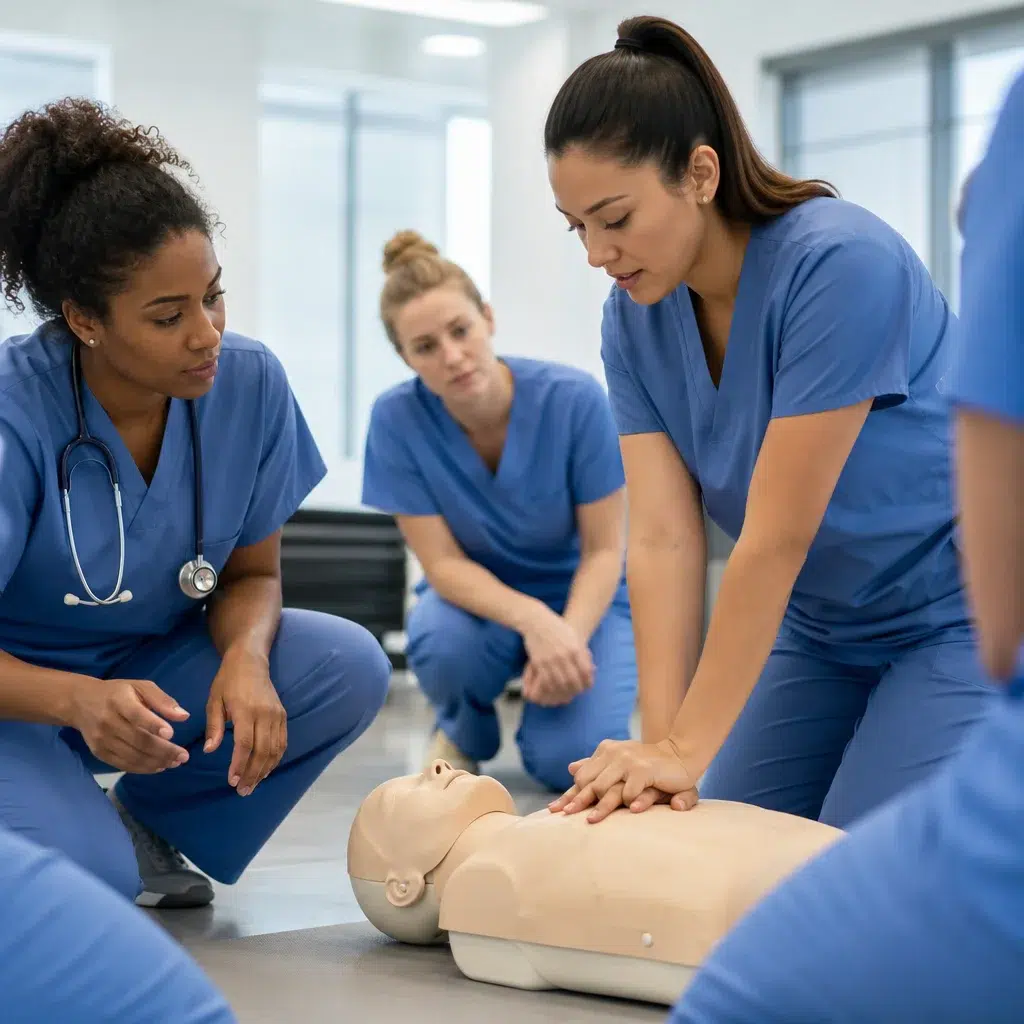
Blended learning combines online theory work with in-person skills practice, giving you control over when you study and when you practice hands-on techniques. This hybrid model works particularly well for shift-based professionals because you can complete the knowledge review on your own timeline, then attend a focused skills session when your schedule allows.
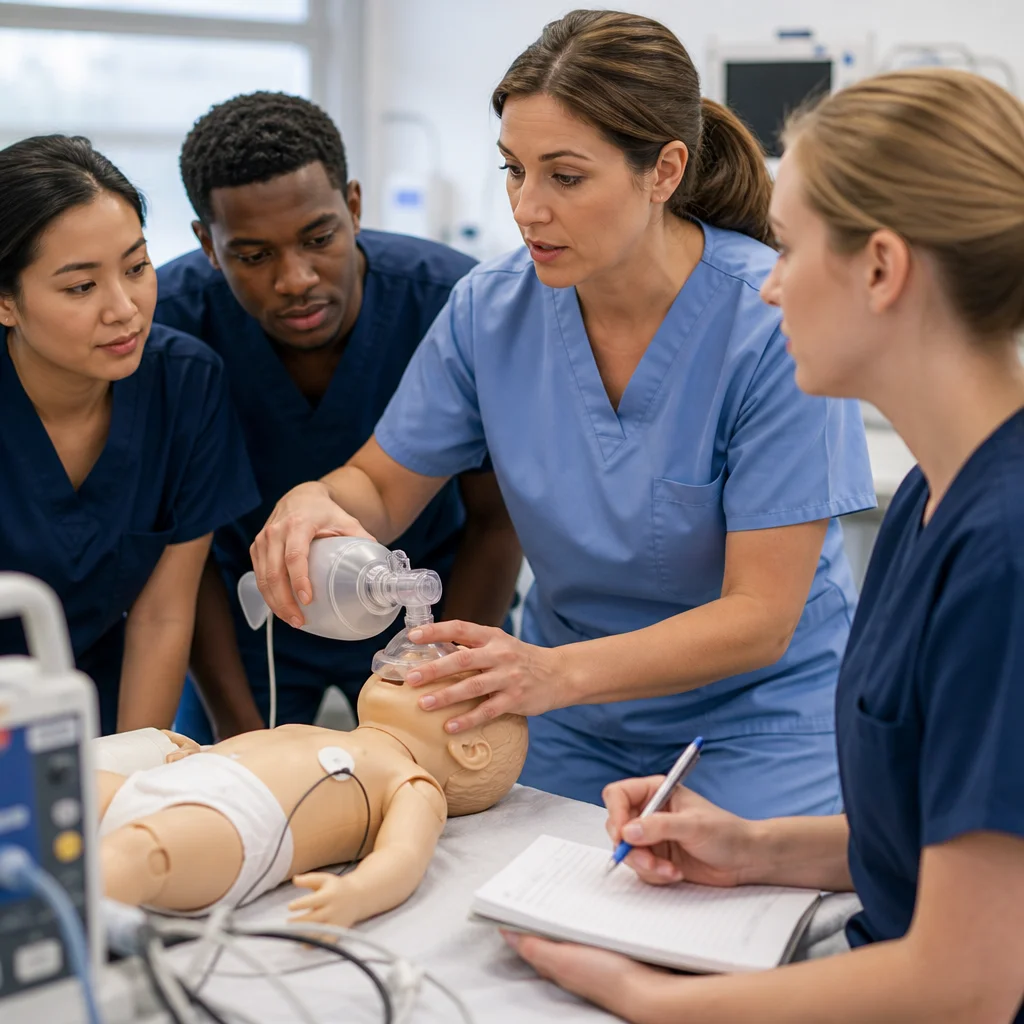
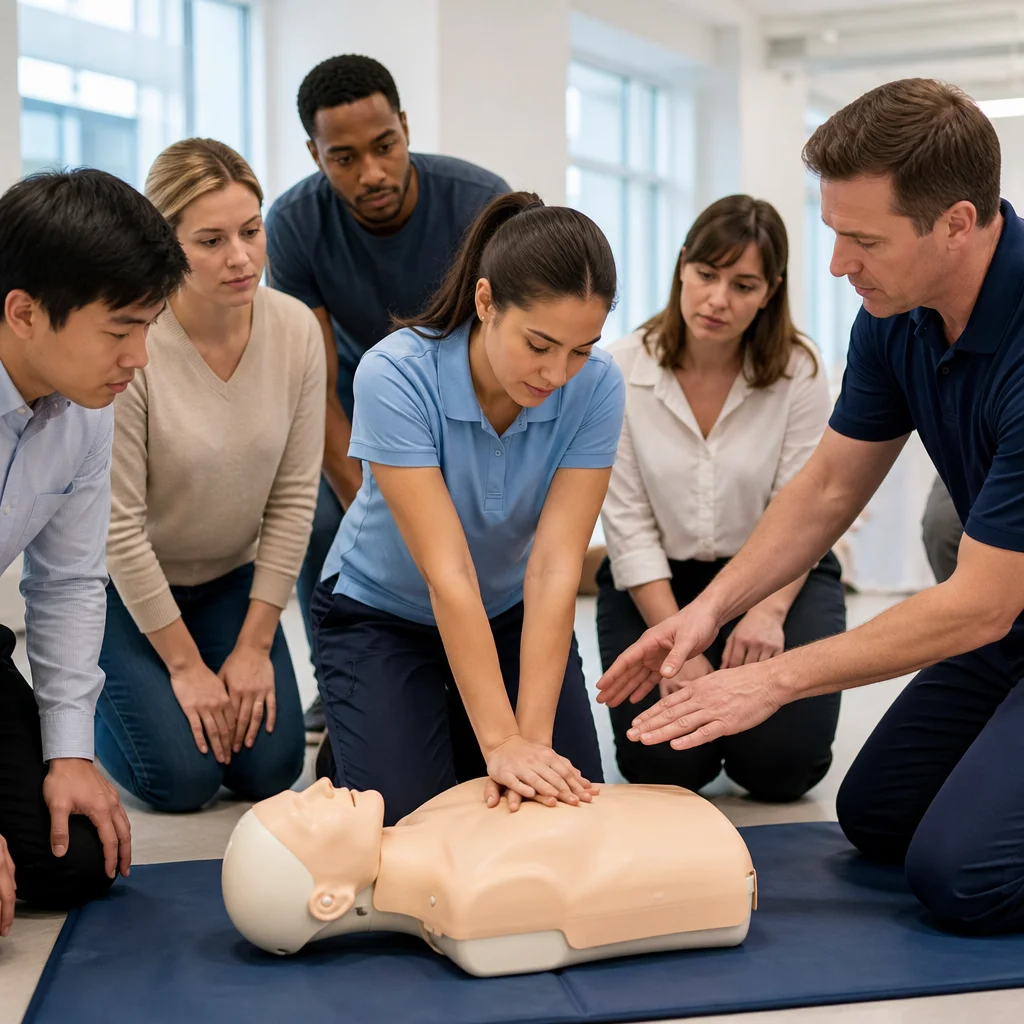
The online portion typically covers rhythm recognition, emergency protocols, and scenario-based decision-making through interactive modules. You progress at your pace, rewinding explanations as needed and taking knowledge checks without time pressure. The in-person component concentrates on what matters most: demonstrating chest compression technique, practicing with mannequins under instructor feedback, and building confidence in high-pressure scenarios.
Unlike traditional all-day classroom courses that require you to request days off or restructure your entire week, blended programs let you separate the learning from the skills practice. A nurse working three 12-hour shifts can complete online coursework during a quiet night shift or on a day off, then attend a two-hour skills session on their next scheduled break. This separation removes the logistical nightmare of finding an entire day available.
We’ve designed our blended courses to accept students at any point in the online module, so you’re not locked into cohort start dates. Complete the online content in one week or three weeks, depending on your workload. Your skills session is then scheduled independently based on what works for you.
Action step: If you’ve been dreading renewal partly because of scheduling, blended learning eliminates that barrier. Look for programs offering independent online access rather than locked, cohort-based models.
3. Access Same-Day Certification Without Extended Commitments
Some renewal candidates need certification faster than traditional multi-day programs allow. Same-day BLS renewal sessions compress the entire renewal process into one four to six-hour appointment, combining knowledge assessment with hands-on skills verification in a single session.
Same-day renewal works best if you’ve maintained your clinical skills through workplace practice or if you completed your online coursework in advance. Our instructors assess your knowledge quickly through practical questioning and then focus the session on skills validation. You’ll practice algorithms, demonstrate compressions at the correct rate and depth, and show proficiency with AED operation. After passing the skills evaluation, you walk out with your renewed certification the same day.
This approach eliminates the gap many nurses face between completing an online module and attending an in-person session. You’re not waiting weeks for the next available class or coordinating multiple appointments. Nurses at facilities in San Jose, Oakland, Sacramento, and throughout the Bay Area often choose same-day renewal when their certification is nearing expiration and they need immediate validation.
Same-day sessions do require you to come prepared. You’ll get the most value by reviewing basic algorithms beforehand or completing online coursework, so the session focuses on skills rather than re-teaching theory. We always recommend confirming this with your training provider beforehand.
Action step: If your renewal deadline is within eight weeks, ask about same-day certification options rather than assuming you need a multi-week program.
4. Leverage Multiple Training Locations for Convenience
Traveling across town or driving to a distant training center adds time that most nurses don’t have. We operate over 100 training locations throughout California, meaning you likely have a certified facility within a short distance from your home, hospital, or commute route.
Whether you work shifts at a facility in Alameda, Fresno, San Francisco, or Visalia, we maintain accessible training sites nearby. Choosing a location close to where you live or work cuts travel time significantly. A nurse in the Mission District can attend skills training in San Francisco rather than driving to a distant suburb. A clinician working in Concord can train locally instead of commuting to Sacramento.
Multiple locations also solve a common problem: coordinating with colleagues. If several nurses from your department need renewal, our various sites make it easier to find a time that works for your group. Corporate and group training programs let departments schedule renewal sessions together, often at discounted rates. This approach builds team accountability and reduces the administrative burden on your training coordinator.
Beyond convenience, having options means you can switch locations if your first choice fills up or doesn’t match your schedule. Flexibility in venue selection gives you actual control rather than taking whatever slot opens up first.
Action step: Check our training locations in California and identify which site is closest to your workplace or home. This single choice often removes the biggest scheduling objection.
5. Schedule Skills Sessions Around Your Shift Patterns
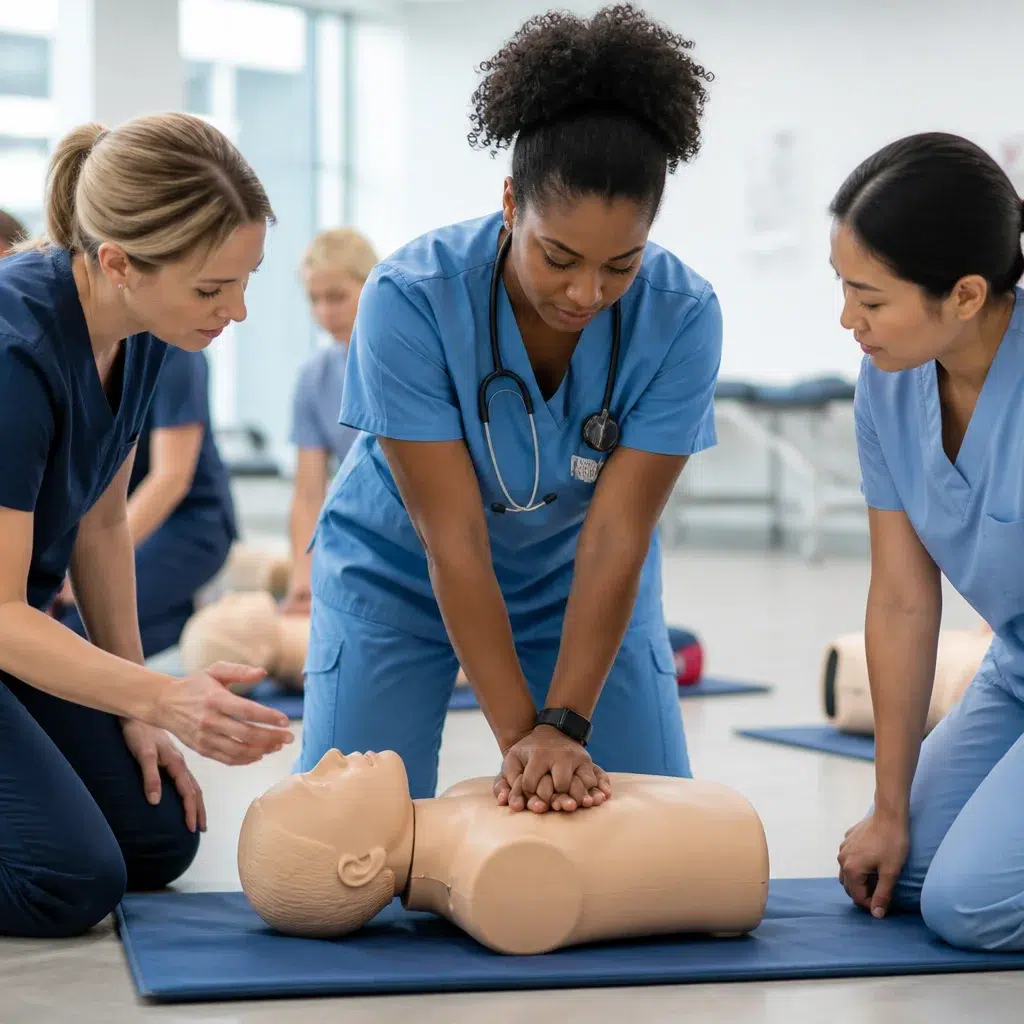
Understanding your own shift rotation is the foundation of practical renewal planning. Nurses working rotating 12-hour shifts, night shifts, or irregular schedules need training partners who genuinely accommodate those patterns rather than offering standard 9-to-5 class times.
Map out your next three months of shifts, noting which days you have off or lighter schedules. If you typically have Mondays and Tuesdays off, look for skills sessions scheduled on those days. Night shift nurses often prefer early morning sessions right after their shift ends, when they’re already awake and motivated to complete renewal before heading home to sleep. Day shift nurses might book evening sessions after their clinical hours.
We recognize that your schedule isn’t typical, and we’ve structured our offerings accordingly. Weekend skills sessions work for nurses who prefer completing renewal on their days off. Early morning classes suit night shift workers wrapping up their overnight hours. Mid-afternoon options bridge the gap for nurses between shift changes.
The key is being proactive rather than reactive. Don’t wait until your certification is expiring to check available times. Instead, identify your ideal training window now, then book a session that genuinely aligns with your rotation. This prevents the crisis of finding anything available as your deadline approaches.
Action step: Write down your shift pattern for the next 90 days. Note which days feel most realistic for taking a 2-4 hour training session, then search for classes on those specific dates.
6. Take Advantage of Evening and Weekend Class Options
Evening and weekend class options exist precisely because healthcare professionals can’t always train during standard business hours. We schedule skills sessions regularly during nights and weekends at multiple locations across California, recognizing that your clinical work doesn’t pause for training.
Evening sessions typically run 5:00 p.m. to 8:00 p.m. or 6:00 p.m. to 9:00 p.m., allowing nurses to complete a day shift and arrive for training without scrambling. These sessions work particularly well for day shift nurses who want to handle renewal without using paid time off. You finish your clinical duties, grab a quick meal, and head to your skills session.
Weekend classes offer continuity and deeper focus. A Saturday or Sunday morning session lets you concentrate fully on skills practice without the mental fatigue of transitioning from a long shift. Many nurses find weekend training less stressful because they’re not simultaneously managing patient care or thinking about what they’re missing at work.
The consistent availability of evening and weekend options means you’re not choosing between your job and your renewal. These aren’t occasional offerings or special requests; they’re regular, scheduled components of our course calendar. Facilities throughout Northern California, including Stockton, Modesto, Fresno, and the Sacramento region, maintain robust evening and weekend session schedules.
Action step: Don’t default to daytime classes just because they’re traditional. Specifically look for evening or weekend sessions and notice how much less disruptive renewal becomes when it fits your natural rhythm.
7. Utilize Online Coursework Before Your In-Person Skills Session
Completing your online coursework well before your scheduled skills session creates a preparation advantage and reduces anxiety. Online modules let you review algorithms, watch technique demonstrations, and assess your knowledge without any time pressure. You’re not cramming knowledge the night before a skills test.
Our online coursework is accessible from any device, 24/7, so you can study during your breaks, on days off, or even during a quiet moment at work (if your facility allows). This flexibility means you’re not confined to a specific learning window. A nurse working night shifts can review content during their shift’s quieter hours. A day shift clinician can study after work without committing to a rigid class schedule.

Completing online work in advance also clarifies which topics you want to review with your instructor. If you’re uncertain about a specific rhythm or algorithm after reviewing the module, you can ask your instructor to spend extra time on that skill during your in-person session. Rather than using the skills session to learn basics, you’re using it for refinement and real-world application.
Most programs allow 30-90 days of online access, so you can start coursework as soon as you enroll without worrying about deadline pressure. This extended timeline fits naturally into a busy clinical schedule and reduces the psychological burden of “one more thing” piling up.
Action step: When you enroll, start your online coursework immediately, even if your skills session isn’t scheduled for several weeks. Each module you complete reduces stress closer to your test date.
—
Nurse BLS renewal doesn’t have to be another administrative burden competing for your limited time and energy. We’ve built our certification programs specifically around shift-based healthcare professionals who need flexibility, accessibility, and quality training that respects their reality. Our blended learning model, same-day options, 100+ California locations, and evening and weekend scheduling remove the traditional barriers that make renewal feel impossible.
The most successful nurses we work with treat renewal as a priority they schedule early, not a crisis they manage last-minute. Start with your renewal deadline, identify your ideal training window from the strategies above, then book a program that genuinely fits. Our low price guarantee ensures you’re not paying premium rates for convenience, and our certified instructors deliver the same rigorous training whether you’re renewing in San Francisco, Sacramento, or anywhere in between.
Your certification validates your commitment to patient safety. Make your renewal process equally professional and deliberate. Let us help you maintain that certification while protecting the schedule flexibility you need.
Register for a class today.
Frequently Asked Questions (FAQ)
How does your blended learning approach help me renew my BLS certification around my nursing schedule?
We offer a flexible blended model that lets you complete online coursework on your own time, then attend an in-person skills session at one of our 100+ California locations when it works best for you. This means you can study between shifts and schedule your hands-on training during a window that fits your roster, rather than committing to a full all-day class.
Can I get certified the same day I take my skills session?
Yes, we process BLS certifications immediately after you pass your in-person skills assessment, so you walk out certified on the day of your session. This is especially valuable when you need recertification quickly before a work deadline or licensing requirement.
What if my schedule changes after I book a class?
We understand nursing schedules shift unexpectedly, so we work with you to reschedule your skills session at another time or location that accommodates your updated availability. With our extensive network across California, you’ll have multiple options to find a time and place that aligns with your actual working hours.