
Table of Contents
- Why Healthcare Professionals Need Competency Verification in PALS
- The Challenge of Maintaining Current PALS Certifications
- How Blended Learning Transforms PALS Training Effectiveness
- Our Virtual Classroom Foundation for Theory and Knowledge
- Real-World Skills Practice in Our Hands-On Sessions
- Simulation Technology That Prepares You for Critical Moments
- Same-Day Certification and Flexible Scheduling Options
- Why Our California-Wide Training Network Serves Your Career
- Expert Instructors and Compliance-First Instruction Methods
- Affordable PALS Certification with Our Low Price Guarantee
- Schedule Your PALS Competency Training Today
- Frequently Asked Questions (FAQ)
Why Healthcare Professionals Need Competency Verification in PALS
Pediatric Advanced Life Support (PALS) certification isn’t optional in most healthcare settings. Nurses, emergency medical services personnel, respiratory therapists, and other clinical professionals across California face regulatory mandates requiring current PALS competency to maintain licensure and employment eligibility. Your state board, facility credentialing committee, and insurance carriers all expect documented proof that you can manage pediatric cardiac emergencies with precision and confidence.
Beyond compliance, PALS verification demonstrates clinical readiness when a child’s life depends on your immediate action. The stakes demand more than passive knowledge consumption. You need authentic skill verification that translates directly to bedside competence. When you’re faced with a critical pediatric patient, muscle memory and decision-making patterns developed through rigorous practice become your foundation.
We recognize that this isn’t just paperwork. Your certification represents your commitment to staying current in a field where pediatric resuscitation protocols evolve and best practices shift. That’s why we’ve designed our training approach around verified competency, not just course completion.
The Challenge of Maintaining Current PALS Certifications
Healthcare professionals juggle demanding schedules. Attending an all-day in-person training session while covering shifts, managing patient loads, or balancing multiple roles feels nearly impossible for many of you. The traditional format wastes valuable time on content you may already understand while rushing through hands-on skills that demand careful attention and repetition.
Cost concerns compound the scheduling burden. Between tuition, travel time, and lost productivity, recertification can strain personal budgets, particularly when you’re renewing every two years. Many professionals delay recertification simply because the logistics feel overwhelming.
There’s also the variability problem. Not all training experiences provide equal depth. Some courses prioritize speed over skill mastery, leaving you uncertain whether you’re truly prepared for high-acuity scenarios. When you’re recertifying in cities like Sacramento, Fremont, or San Francisco, you deserve instruction that matches the complexity of pediatric emergencies you’ll actually face.
We built our blended learning model specifically to solve these challenges without compromising either your learning quality or your schedule flexibility.
How Blended Learning Transforms PALS Training Effectiveness
Blended learning combines self-paced online content with dedicated in-person skills sessions, creating a training rhythm that respects your time while deepening competency. You control when you engage with theoretical material, then come to our location for concentrated, expert-led hands-on practice where every minute counts.
This structure reduces overall training time compared to traditional formats. You’re not sitting through classroom lectures on content you can absorb independently. Instead, you spend your in-person hours on what matters most: practicing compressions on pediatric mannequins, learning rhythm interpretation through real case scenarios, and building decision-making confidence with experienced instructors observing your technique.
The pedagogical research supports this approach consistently. When learners prepare theory before live skills practice, they ask sharper questions, absorb feedback more effectively, and retain procedural memory longer. You’re not cognitively overloaded trying to absorb new concepts while simultaneously performing physical skills.
Our blended approach also increases accessibility across our extensive California network, from Woodland and Chico in the north to Visalia and Bakersfield in the south, and throughout the Bay Area in places like Oakland, San Jose, and Palo Alto.
Our Virtual Classroom Foundation for Theory and Knowledge
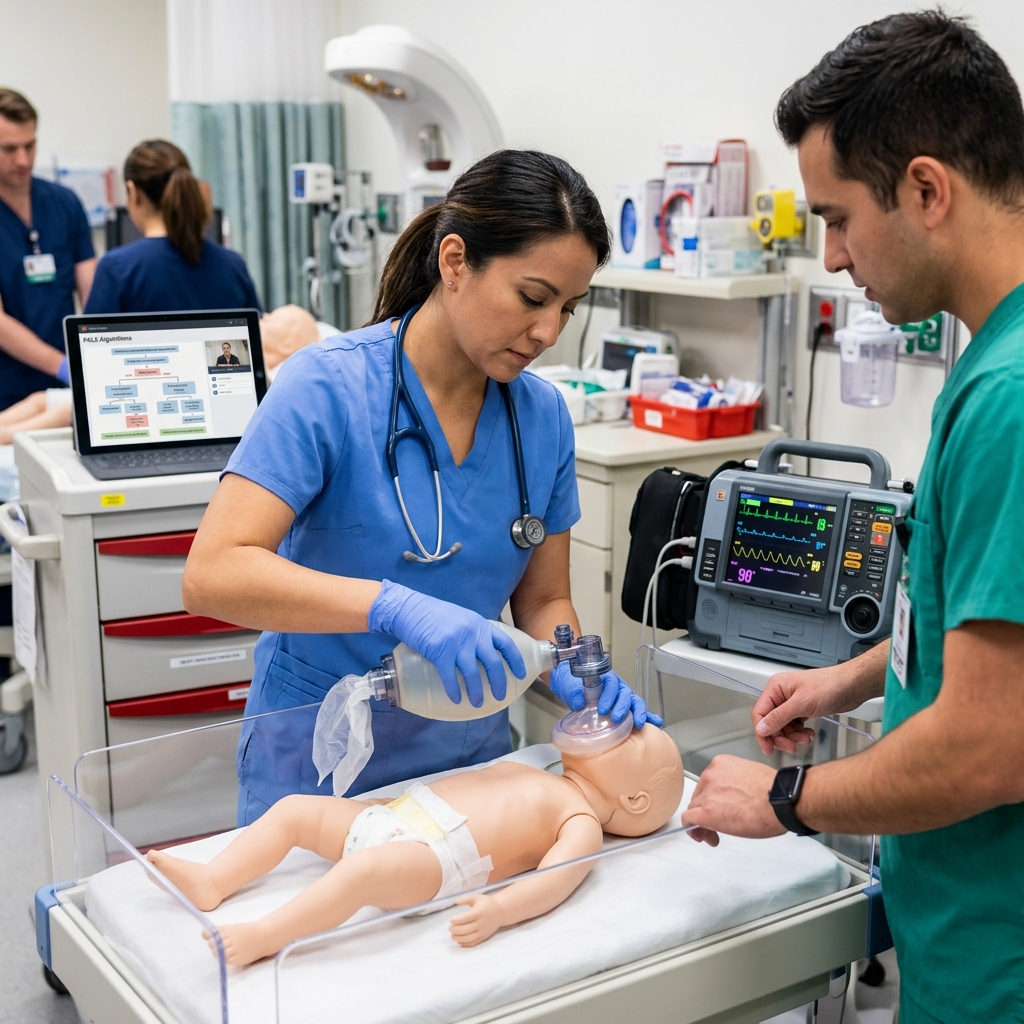
Your online component begins the moment you enroll. You access our virtual classroom, which covers pediatric assessment, rhythm recognition, medication administration, and the decision algorithms that guide PALS management. The content is organized in digestible modules, allowing you to progress at your own pace without time pressure.
Our platform includes interactive elements designed to reinforce learning. You’ll encounter scenario-based questions that mirror real clinical situations: a three-year-old with a perfusing rhythm in respiratory distress, an infant with bradycardia, a teenager with pulseless ventricular fibrillation. These scenarios build your clinical reasoning in a low-stakes environment before you step into a hands-on session.
You can review material multiple times, pause to look up dosing references, and progress through content that builds conceptually. This foundational layer ensures that when you arrive at our training center in locations like Modesto, Stockton, or Fairfield, you’re ready to focus entirely on physical skills and real-time decision-making rather than absorbing new theoretical concepts.
We also provide downloadable reference materials and quick-review guides that you can keep accessible during the course and beyond, supporting your ongoing confidence.
Real-World Skills Practice in Our Hands-On Sessions
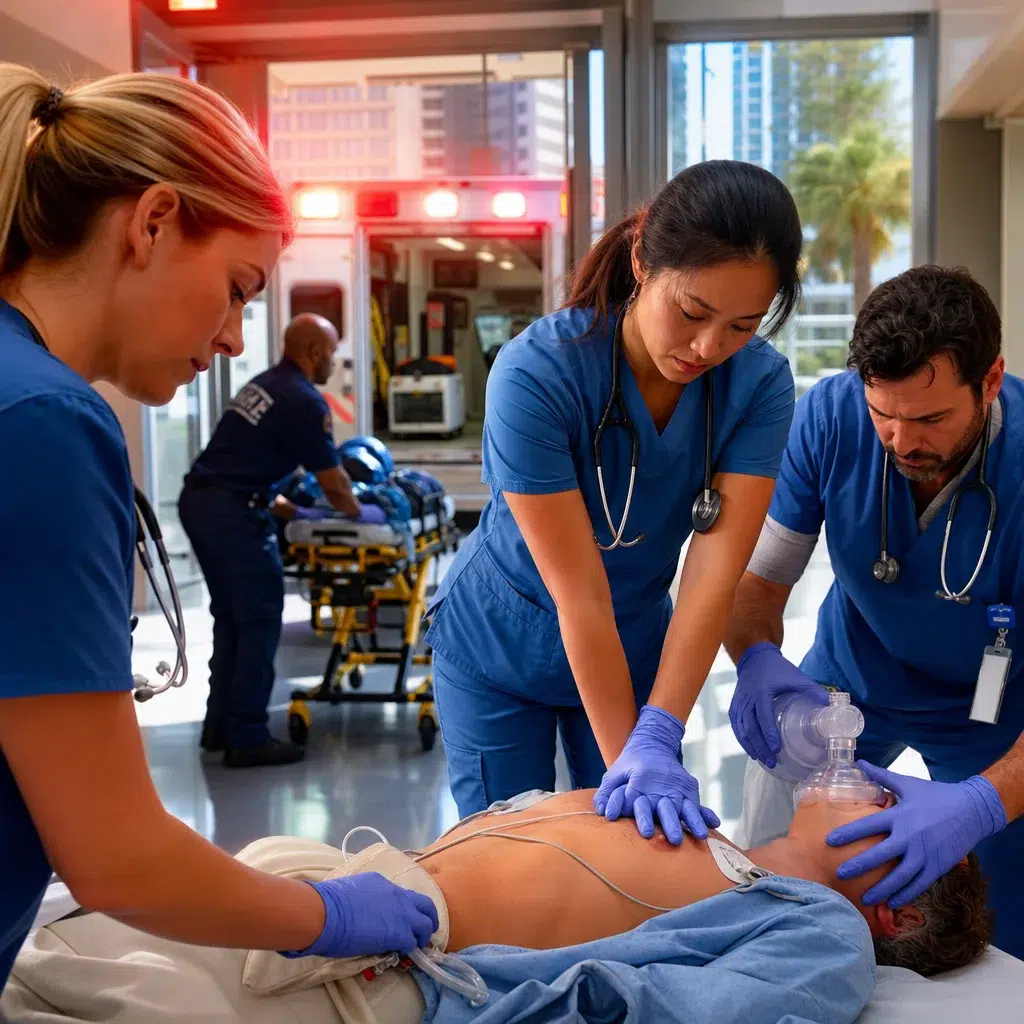
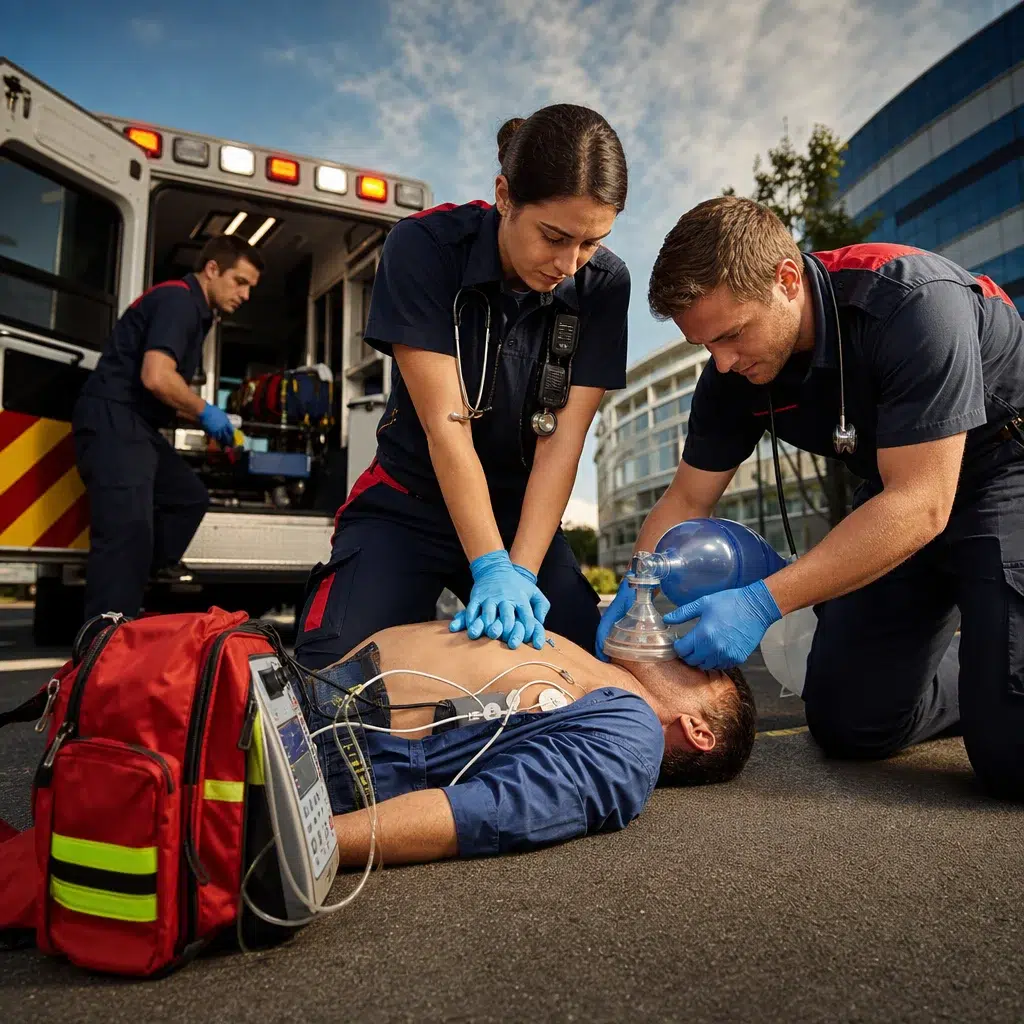
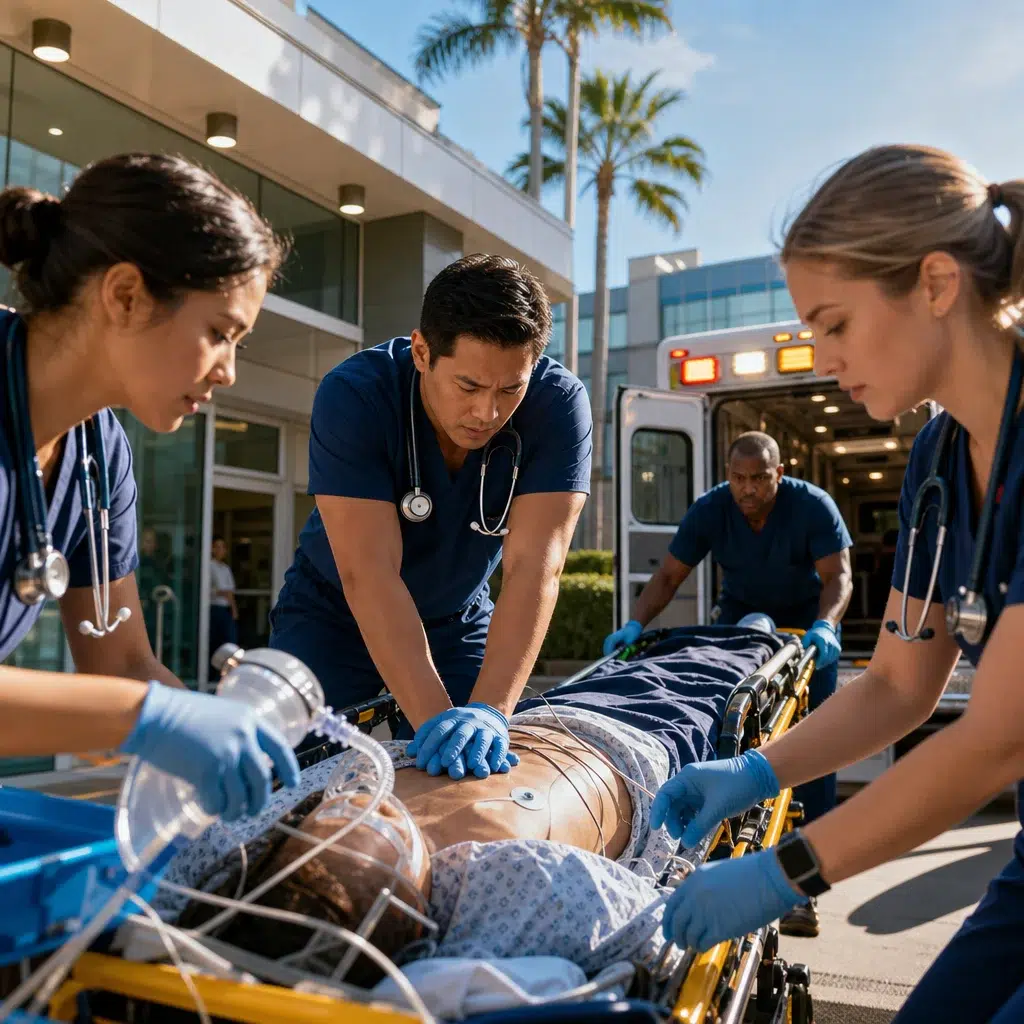
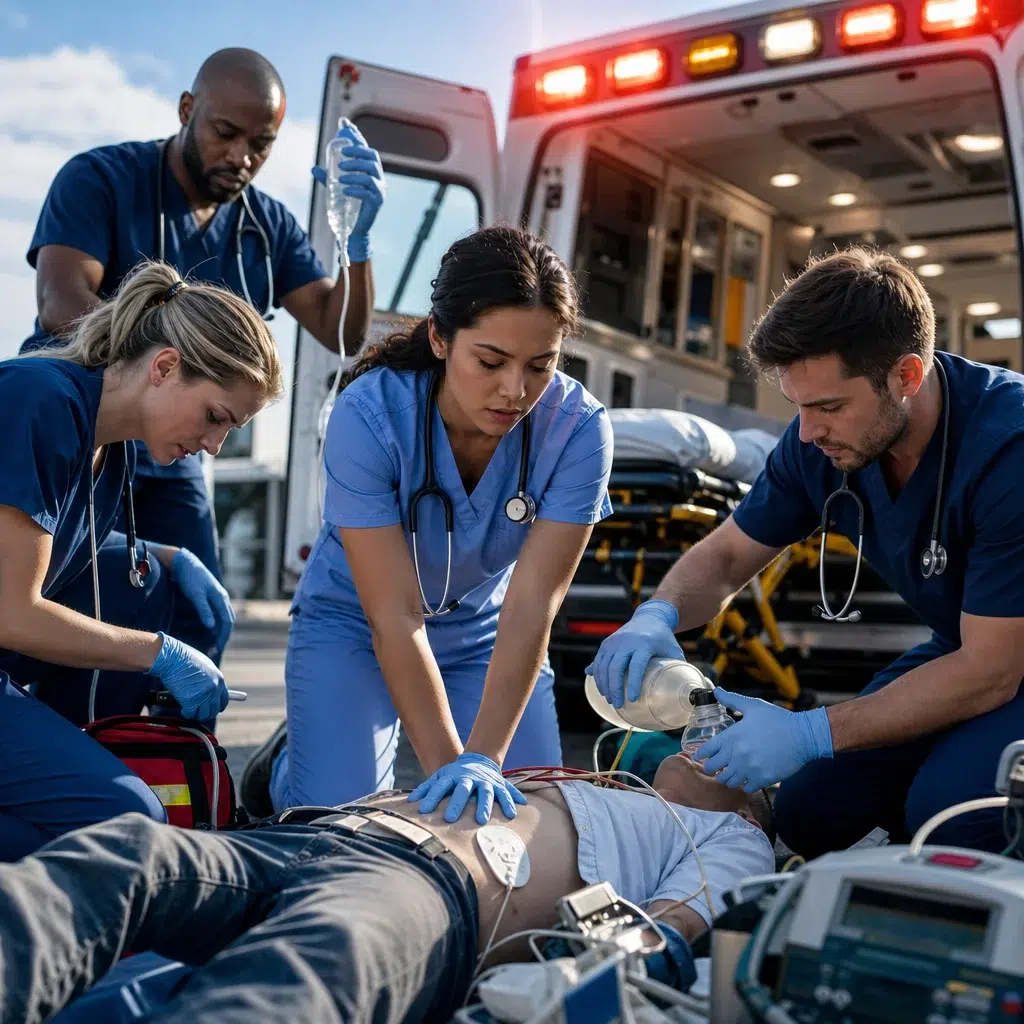
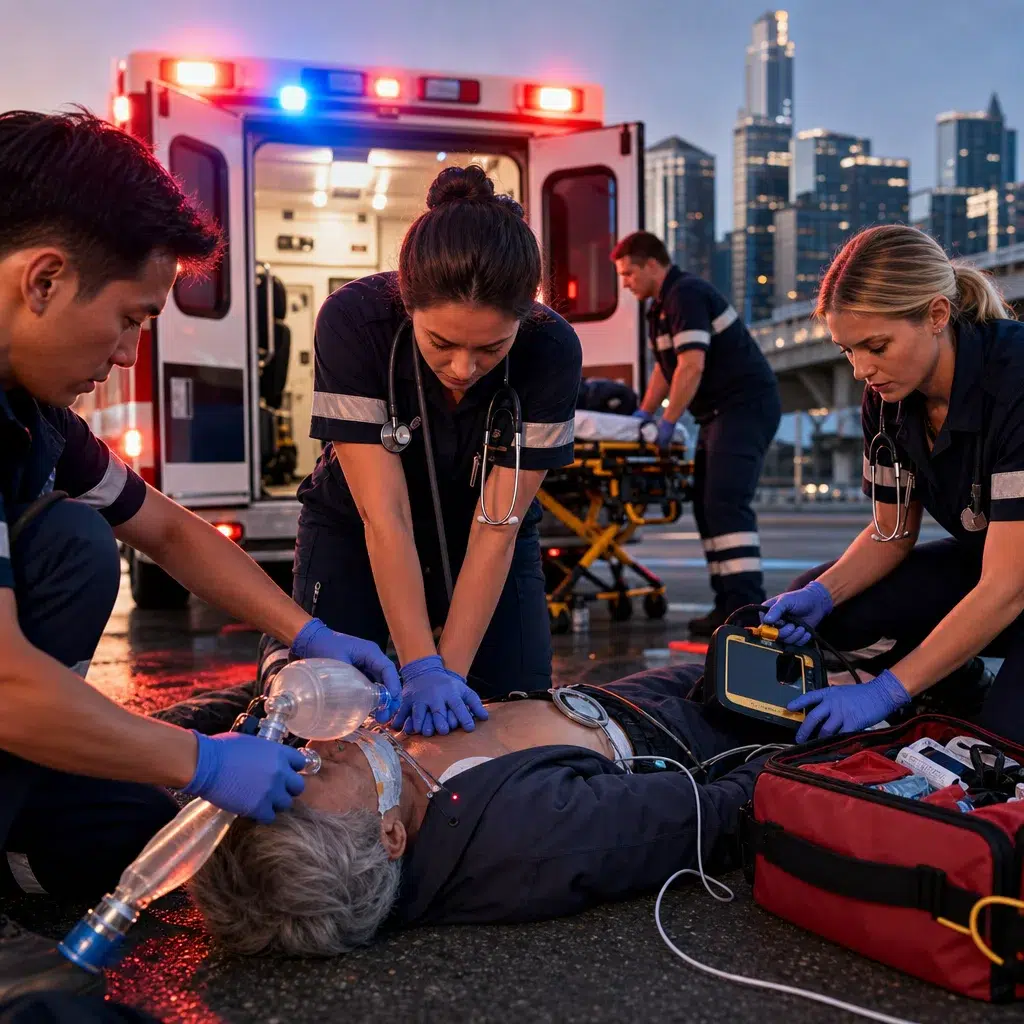
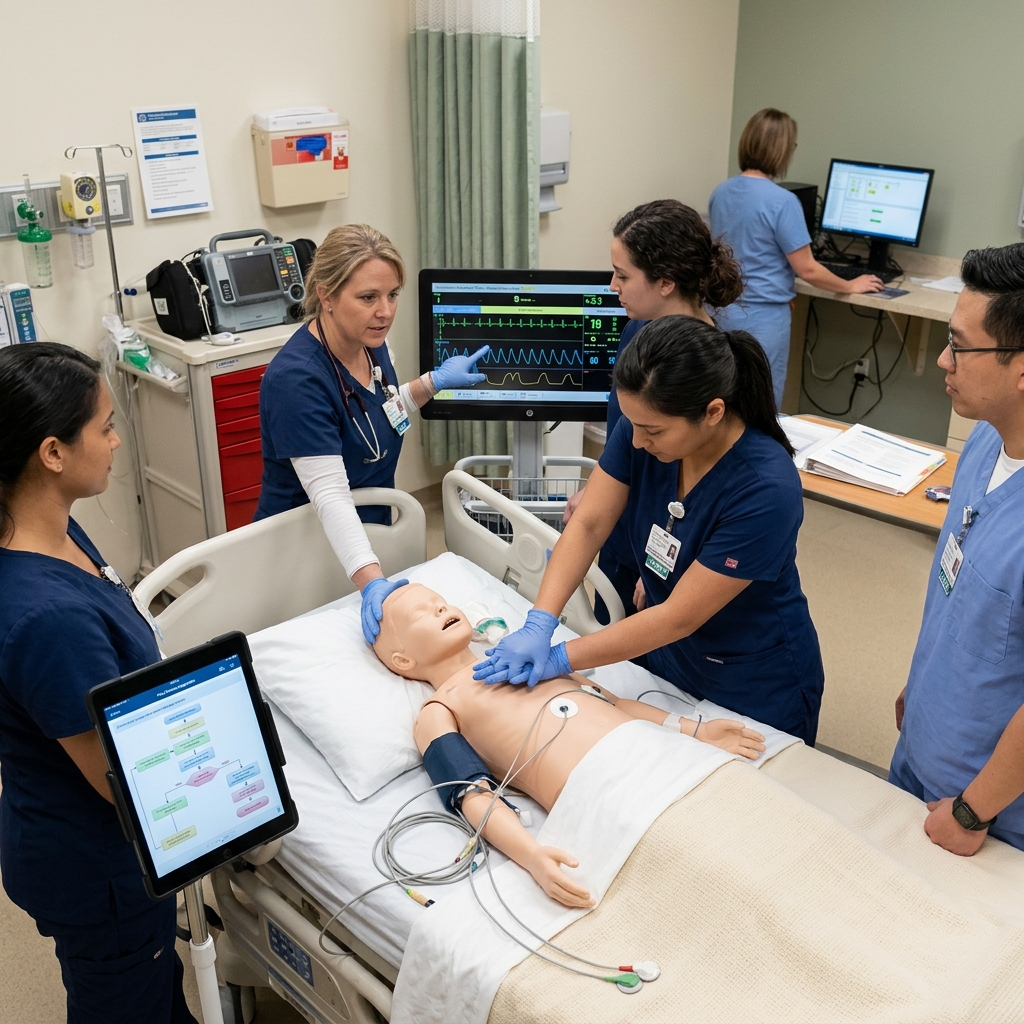
Once you’ve completed the virtual foundation, you arrive at one of our 100-plus California training locations for your hands-on component. Here’s where certification becomes real. You’ll practice on pediatric mannequins representing different ages and sizes, because resuscitating a six-month-old requires different compression depth and hand placement than resuscitating a twelve-year-old.
Our instructors observe your performance directly, providing corrective feedback in the moment. They’ll adjust your hand position on the chest, guide your compression rate, and coach you through medication calculations until you demonstrate true competence. This isn’t a checklist exercise; it’s skill refinement with an expert watching specifically to ensure you’re doing it right.
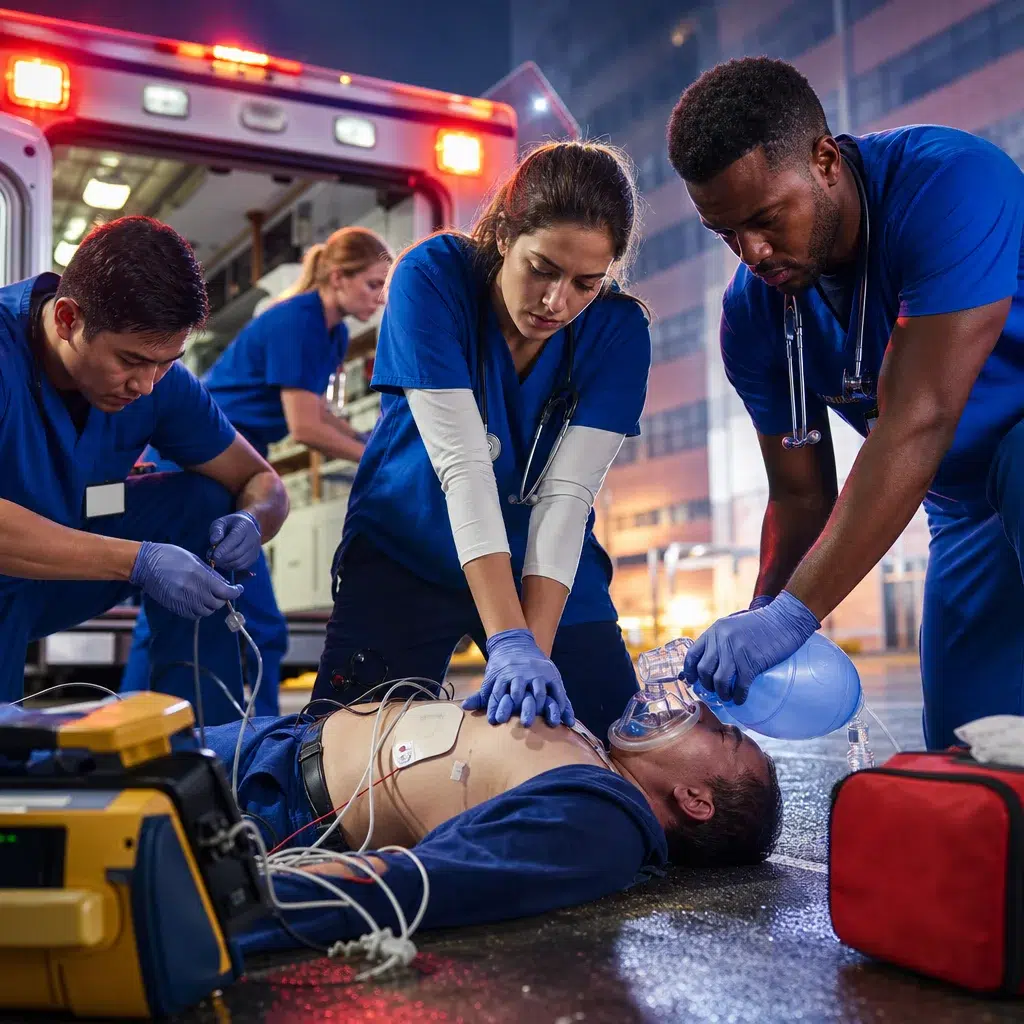
You’ll participate in team-based resuscitation scenarios where roles rotate. You might manage the airway, then lead compressions, then manage medications and documentation. This rotation builds the situational awareness necessary for real code team performance. You learn not just individual skills but how those skills integrate within a coordinated response.
Sessions typically include multiple scenario runs with increasing complexity. Early scenarios establish baseline technique. Later scenarios add communication challenges, unexpected rhythm changes, or medication decisions that require rapid clinical reasoning.
Simulation Technology That Prepares You for Critical Moments
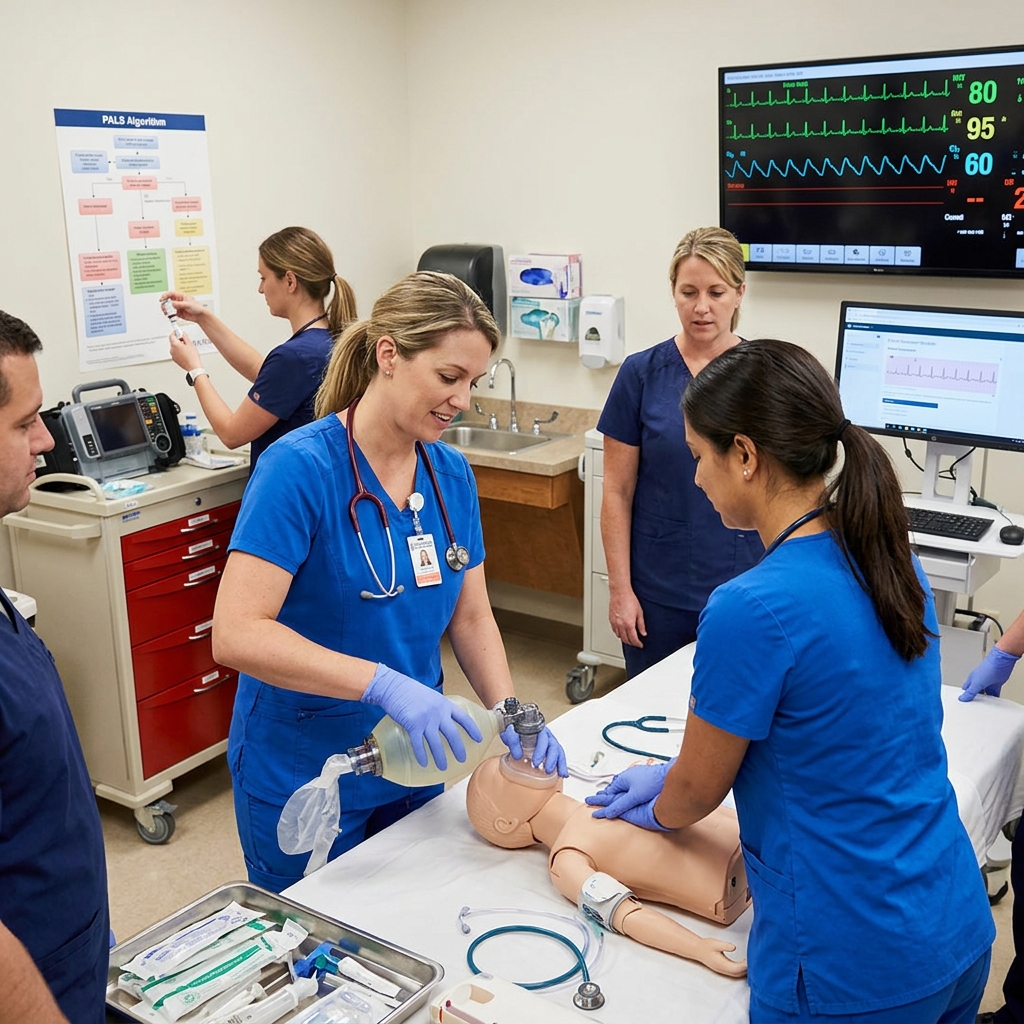
Our mannequins aren’t static practice tools. They provide real-time physiologic feedback, responding to your compressions with realistic chest compliance and mechanical resistance. Some of our equipment tracks compression depth and rate, giving you immediate data on whether you’re meeting guideline-based targets.
Advanced simulators also integrate cardiac rhythm recognition. You practice identifying rhythms on actual monitor displays rather than static images, building pattern recognition that transfers directly to bedside interpretation. When the simulation responds to your interventions, changing rhythm after defibrillation or improving oxygenation after airway management, you experience the cause-and-effect relationship between your actions and patient response.
This bridge between simulation and real clinical practice matters enormously. Simulation provides a psychologically safe space where mistakes become learning opportunities rather than patient harm events. You can practice difficult conversations, troubleshoot medication calculations, and develop confidence before facing a real pediatric emergency.
We continuously update our simulation technology to reflect current resuscitation standards and emerging evidence, ensuring your practice reflects contemporary best practices whether you’re training in Sacramento’s Arden or Rosemont locations, or closer to the coast in places like Petaluma or San Rafael.
Same-Day Certification and Flexible Scheduling Options
We understand that weeks of waiting for results creates stress. That’s why many of our locations offer same-day certification upon successful completion of both virtual and in-person components. You walk out with documentation of your verified competency, ready to submit to your employer or licensing board.
Our scheduling accommodates shift work. We offer early morning, evening, and weekend sessions across our network. Whether you’re based in Livermore, Fremont, or South San Francisco, you’ll find class times that fit your reality. We also rotate offerings throughout the year, ensuring that the locations near you have consistent availability.
For professionals who need certification urgently, we maintain regular open-enrollment sessions at major centers like San Francisco’s Mission Bay location, Sacramento’s Midtown office, and San Jose’s Downtown campus. You can often schedule your in-person component within days of completing your online work.
This flexibility removes the typical barrier of “finding time off for training.” You’re not requesting a full day away from work; you’re scheduling a focused skills session that respects your existing commitments.
Why Our California-Wide Training Network Serves Your Career
Our 100-plus training locations across California mean you’re never far from certification. Whether you’re in Alameda, Antioch, or anywhere between, a training center exists within reasonable driving distance. This local accessibility matters for busy professionals managing multiple responsibilities.
Our locations include established hubs in major medical centers and satellite sites in smaller communities. Urban professionals in San Francisco’s Parnassus/UCSF area access training at specialized medical education facilities, while rural practitioners in places like Redding or Visalia train at community-based locations designed for working professionals.
We’ve designed our facility network based on healthcare professional density and workplace distribution across the state. This means you’re training alongside colleagues from your region, often from your own healthcare system or affiliated facilities.
Beyond logistics, our statewide presence means consistent quality standards and instructor credentials regardless of where you complete your certification. Whether you’re in Berkeley, Los Gatos, or Tracy, you’re receiving the same evidence-based instruction and rigorous skills verification.
Expert Instructors and Compliance-First Instruction Methods
Our instructors hold clinical credentials themselves. Many are active nurses, respiratory therapists, emergency physicians, or paramedics who understand the real pressures of pediatric resuscitation. They’re not educators teaching from curriculum alone; they’re practitioners who’ve managed actual pediatric codes and understand the decisions you’ll face.
This clinical credibility changes instruction quality. Your instructors can discuss why certain techniques matter in context, share real scenarios that illustrate decision-making under pressure, and address the specific challenges of pediatric resuscitation in your practice setting. They bring current evidence into skills instruction, explaining not just what to do but why contemporary guidelines evolved.
Our approach prioritizes compliance first. Every instructor understands that your certification must meet regulatory and organizational standards. You’re not just learning; you’re documenting competency against established criteria that employers recognize and licensing boards accept.
Instructors also maintain active educator certifications themselves, participating in ongoing professional development to stay current with guideline updates and instructional best practices. This commitment to instructor excellence translates directly into your learning experience.
Affordable PALS Certification with Our Low Price Guarantee
We believe quality training shouldn’t be financially prohibitive. Our pricing across all California locations, from Walnut Creek to Santa Rosa to San Leandro, remains among the most accessible options for certified PALS competency. We’ve specifically designed our low price guarantee to ensure you’re not paying premium rates simply because recertification is mandatory.
Our blended format also reduces your true cost. You’re not paying for classroom hours spent on content you can absorb independently. Virtual components cost less to deliver than traditional in-person lectures, and we pass those savings to you. Your total investment covers focused instructor time and verified skills assessment rather than extended classroom hours.
Group training discounts extend these savings further for healthcare organizations. Corporate teams, emergency departments, and medical practices can schedule cohort training, reducing per-person costs while building team competency simultaneously.
We publish our pricing transparently online, with no hidden fees. The price you see is the price you pay, with certification included upon successful completion of both components.
Schedule Your PALS Competency Training Today
Your pediatric advanced life support competency matters to your patients, your institution, and your professional standing. We’re ready to help you maintain that certification efficiently, affordably, and rigorously.
Visit our PALS certification classes page to explore current offerings at locations near you. Check our PALS skills testing details to understand exactly what your in-person component will cover.
Select a location that fits your schedule, complete the enrollment process, and you’ll immediately access your virtual classroom. Within weeks, you’ll have current, verified PALS certification that meets every regulatory requirement your career demands.
Contact our enrollment team today. We’ll match you with a session that fits your schedule and answer any questions about our blended learning approach. Your next step toward current, confident pediatric advanced life support competency is waiting.
Register for a class today.
Frequently Asked Questions (FAQ)
What makes our blended learning approach different from traditional PALS training?
We combine virtual classroom sessions where you master theory and knowledge with hands-on skills practice in our local training centers. This means you complete the cognitive portion on your own schedule, then come in for focused, instructor-led simulation training where you practice on real equipment and scenarios. We’ve found this method gives our students better retention and confidence when they need these skills in actual patient care situations.
Can I get certified on the same day as my training with us?
Yes, we offer same-day certification at most of our over 100 California locations. After you complete both the virtual and in-person components of our PALS course, we administer your skills assessment and written exam the same day. We understand that healthcare professionals need efficient pathways to stay current with their certifications, so we’ve structured our scheduling to accommodate busy clinical schedules.
How does our low price guarantee work?
We commit to offering the lowest pricing available for PALS certification across California, and we back that promise with a price match guarantee. If you find comparable PALS training for less, we’ll match that rate. Our goal is to remove cost as a barrier to staying certified, especially for nurses, dentists, and EMS personnel managing multiple renewal requirements throughout their careers.