
How Often Should You Practice CPR to Stay Proficient?
While your official certification card lasts two years, research shows that CPR skills begin to decline within just months of initial training without regular refresher practice.

Take CPR Training On-Demand: Renting an RQI Station with Safety Training Seminars
This blog dives into why leasing an RQI station might be the game-changer your organization needs.

How RQI Stations Help Hospitals Eliminate Compliance Risks
When your hospital staff maintains current certifications in BLS, ACLS, and PALS, they’re prepared to respond effectively during critical moments.

Why ACLS Medical Training is Crucial for Emergency Response Teams
When seconds count, ACLS training transforms response teams from prepared to life-saving. Learn how mastering pro-level protocols, hands-on simulations, and unified team communication can mean the difference between chaos and control in a medical emergency.

What to Expect from a BLS Certification Class
Basic Life Support (BLS) certification gives you the skills to respond to life-threatening emergencies like cardiac arrest, choking, or respiratory distress. Designed for healthcare professionals and anyone who wants to be prepared, BLS training covers CPR for all ages, AED use, airway management, and team-based resuscitation. With hands-on practice and American Heart Association–approved instruction, you’ll gain the confidence to act quickly when every second matters.

Why BLS Certification is Essential for Healthcare Professionals
In the ever-evolving world of healthcare, the demand for highly skilled and certified professionals continues to rise. Among the essential qualifications, earning a BLS certificate—Basic Life Support certification—is a non-negotiable standard for anyone involved in patient care. Whether you’re a seasoned nurse, an aspiring medical student, or an emergency responder, BLS certification is both a legal requirement in many clinical settings and a moral imperative.

The Importance of BLS for Healthcare Providers: A Lifesaving Skill
In the dynamic and high-stakes world of healthcare, the ability to act swiftly and effectively in emergency situations is not just a desirable skill—it’s a fundamental necessity. BLS for healthcare providers (Basic Life Support) forms the bedrock of this critical response, equipping medical professionals with the skills and confidence to save lives during cardiac arrest, respiratory failure, and other medical crises.
What You Need to Know Before Taking a BLS Course
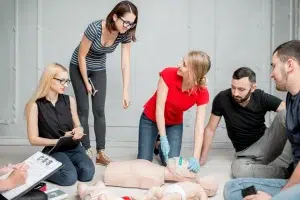
If you’re considering a career in healthcare or are currently employed in a role that requires emergency response preparedness, chances are you’ve come across the term “BLS course.” BLS, or Basic Life Support, is a fundamental certification that equips you with the skills necessary to recognize life-threatening emergencies, provide CPR, use an AED, and relieve choking in a safe, timely, and effective manner.

Why Get CPR Certified? 7 Life-Saving Benefits of CPR Training
Cardiac arrest can strike at any time, and the ability to respond quickly and effectively can mean the difference between life and death. Every year, over 350,000 cardiac arrests occur outside of hospitals in the United States alone. When CPR (Cardiopulmonary Resuscitation) is performed immediately, survival rates can double or even triple. Yet, despite the life-saving potential of this simple technique, many people hesitate to get CPR certified. Why should you invest your time and effort in CPR training?