
Table of Contents
- 1. Flexible Scheduling Through Virtual and In-Person Sessions
- 2. Real-World Skills Practice with RQI Simulation Stations
- 3. Same-Day Certification Cards for Immediate Compliance
- 4. AHA-Aligned Curriculum Across All Course Levels
- 5. Over 100 Training Locations for Maximum Convenience
- 6. Corporate Group Training with Guaranteed Lowest Pricing
- 7. Expert Instruction with Compliance-First Methodology
- Frequently Asked Questions (FAQ)
1. Flexible Scheduling Through Virtual and In-Person Sessions
Healthcare professionals across California face a persistent challenge: maintaining mandatory certifications while managing demanding clinical schedules. Nurses pulling double shifts, dentists balancing patient care with administrative duties, and EMS personnel responding to emergencies need CPR and BLS training that fits their reality, not a rigid classroom calendar. Traditional in-person-only courses demand full-day commitments. Online-only programs skip the hands-on skills verification that actually matters when lives depend on your technique.
Blended learning CPR courses bridge this gap. By combining self-paced virtual instruction with focused in-person skills sessions, you complete the knowledge portion on your timeline and validate your technique with certified instructors in a real clinical environment. We’ve designed our blended approach to meet the specific compliance needs of California healthcare professionals while respecting the unpredictability of clinical work.
Here’s what sets effective blended CPR training apart and why we’ve built our program around these six critical elements.
Your certification deadline doesn’t wait, but your schedule rarely accommodates rigid class times. Blended learning removes that friction by splitting coursework into two phases: an online component you complete at midnight if needed, then a short in-person skills session scheduled around your availability.
We offer online modules you can finish in one or two sittings, covering CPR foundations, rescue breathing, chest compression technique, and decision-making scenarios. Once you’ve completed the virtual portion, you schedule your hands-on session at a time that works for you. Many professionals complete the online work over a weekend and come in for the practical exam the following week.
This structure means you’re not sitting in a classroom for six hours when you only need two hours of hands-on practice. Healthcare professionals in Sacramento, Modesto, and Fresno tell us they appreciate completing the cognitive portion during slower shifts, then blocking just 90 minutes for in-person verification.
Actionable takeaway: Complete your online modules three to five days before your scheduled skills session so you arrive prepared and confident for hands-on assessment.
2. Real-World Skills Practice with RQI Simulation Stations
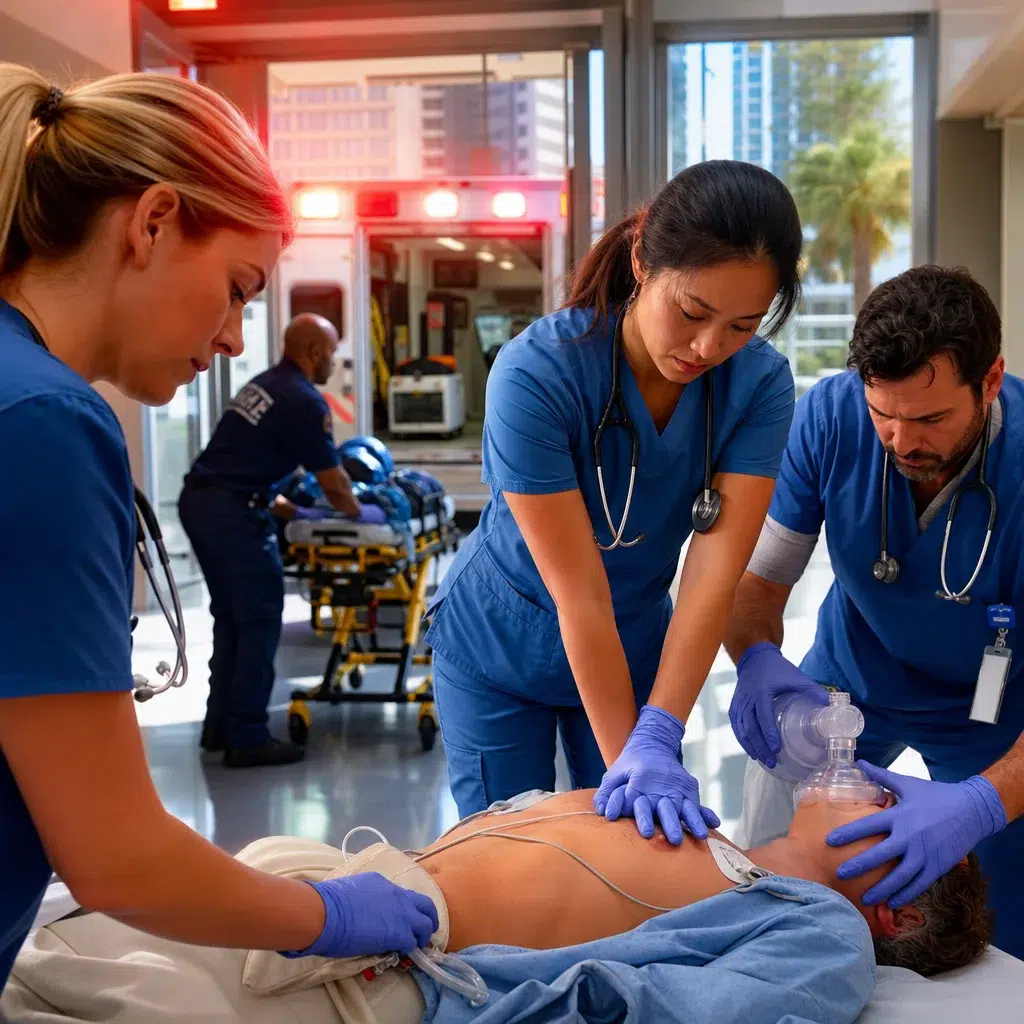
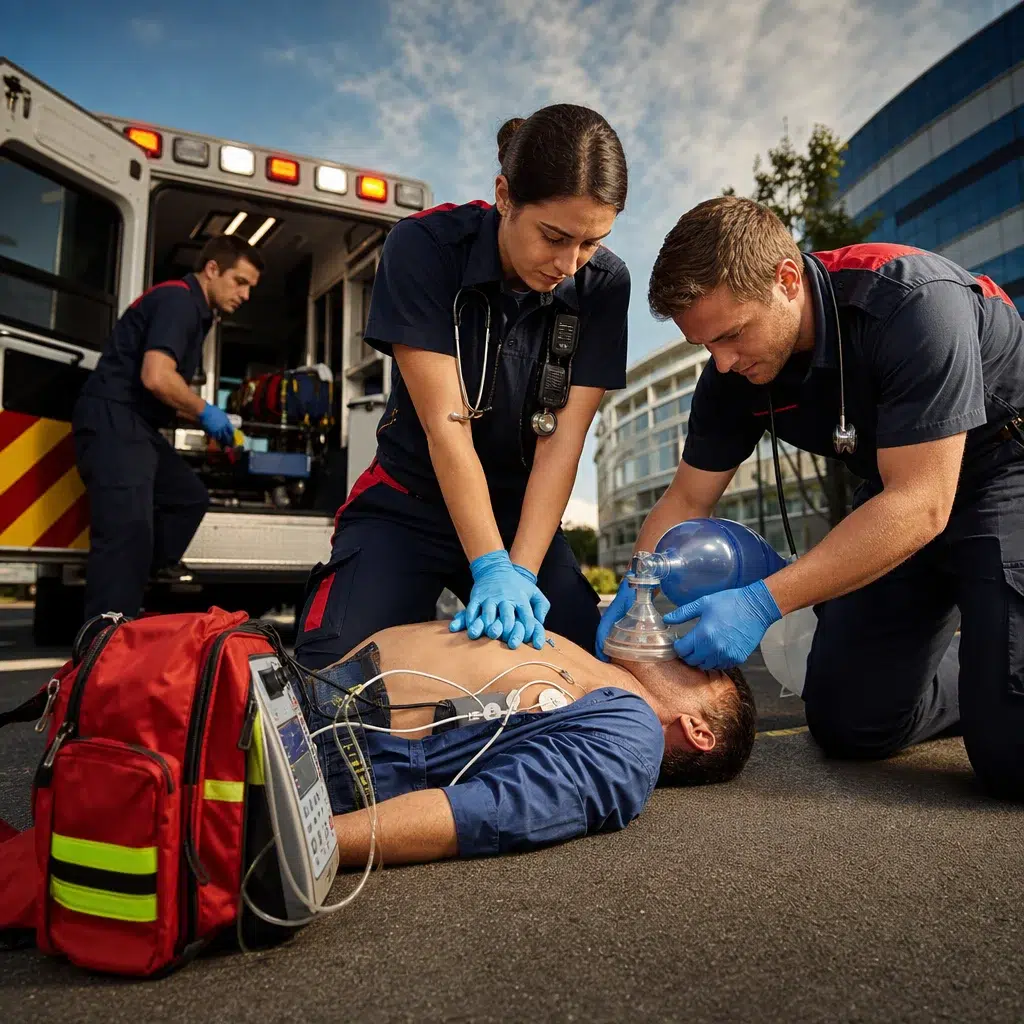
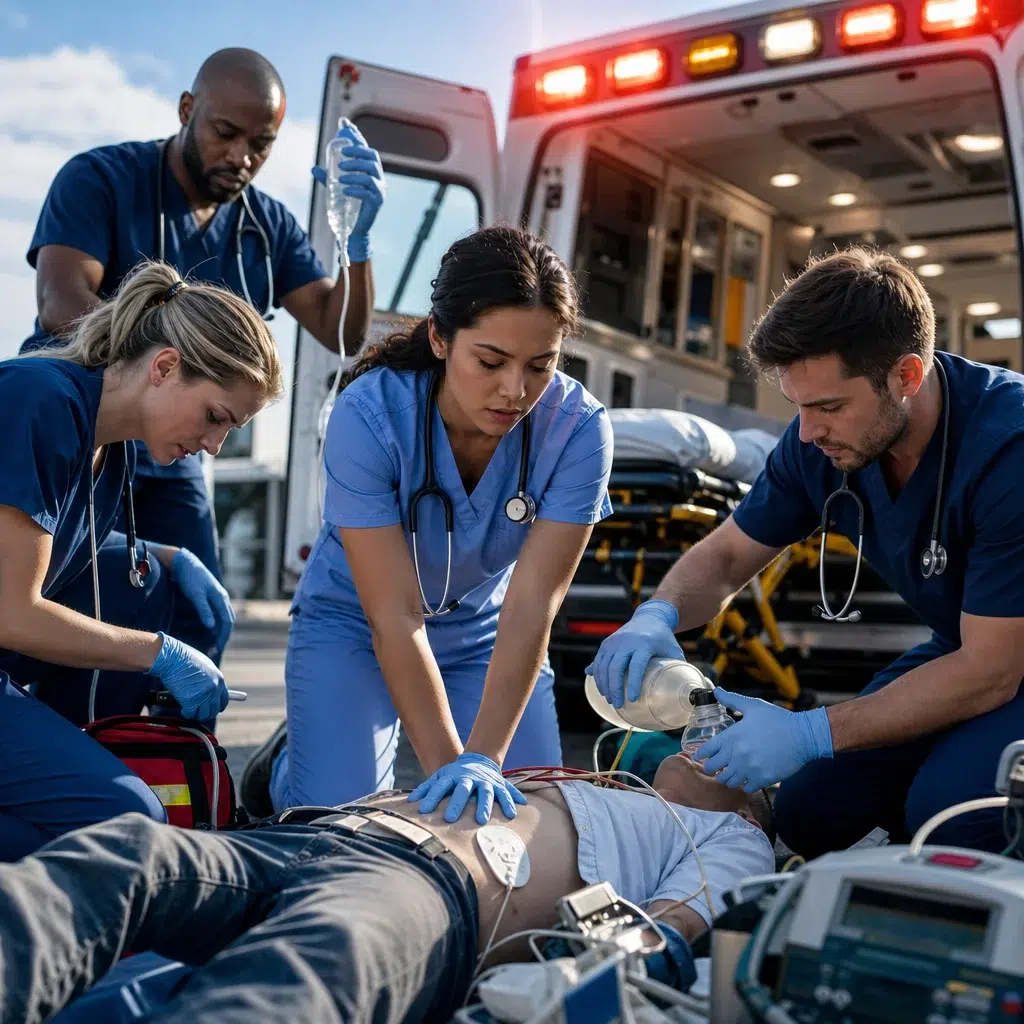
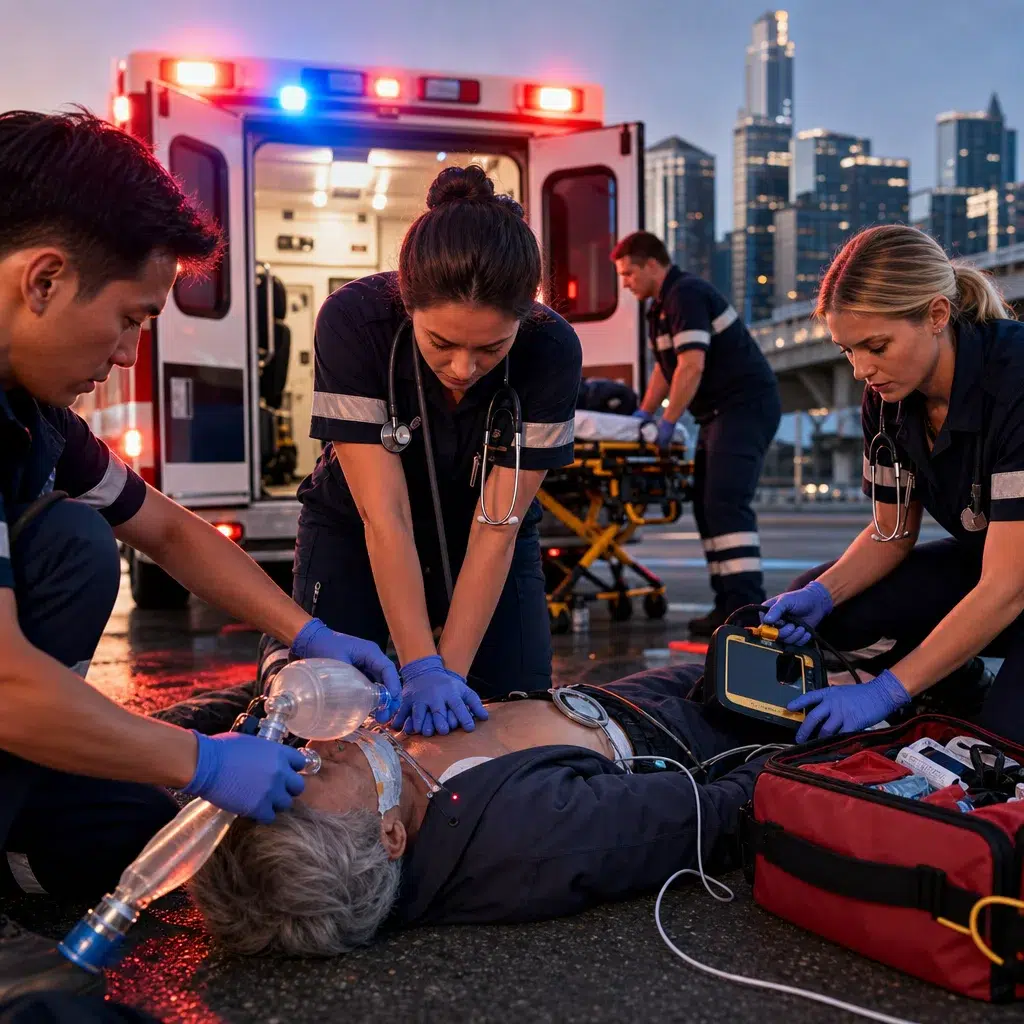
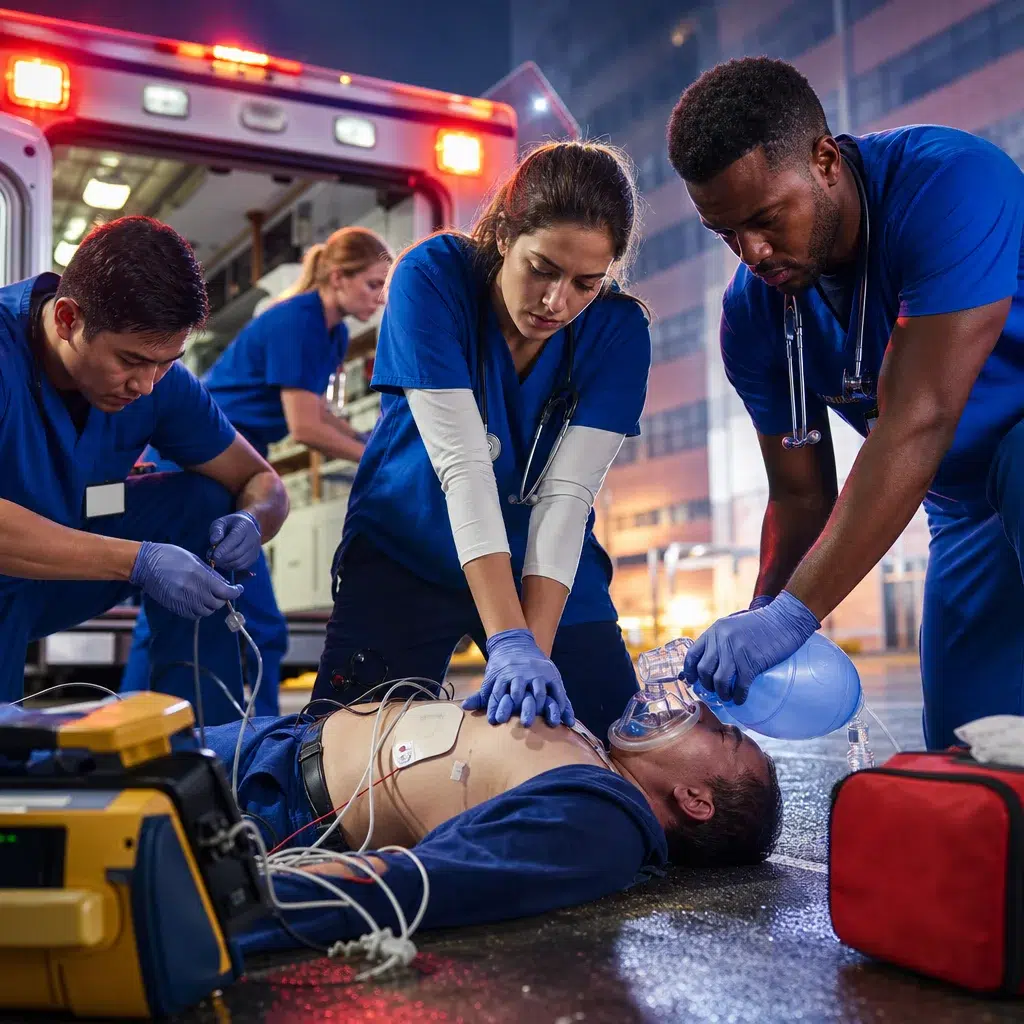
Knowledge and technique are different things. You can understand compression depth intellectually, but your muscle memory needs calibration. Our RQI (Resuscitation Quality Improvement) simulation stations provide real-time feedback on compression quality, rhythm, and ventilation so you experience exactly what proper technique feels like.
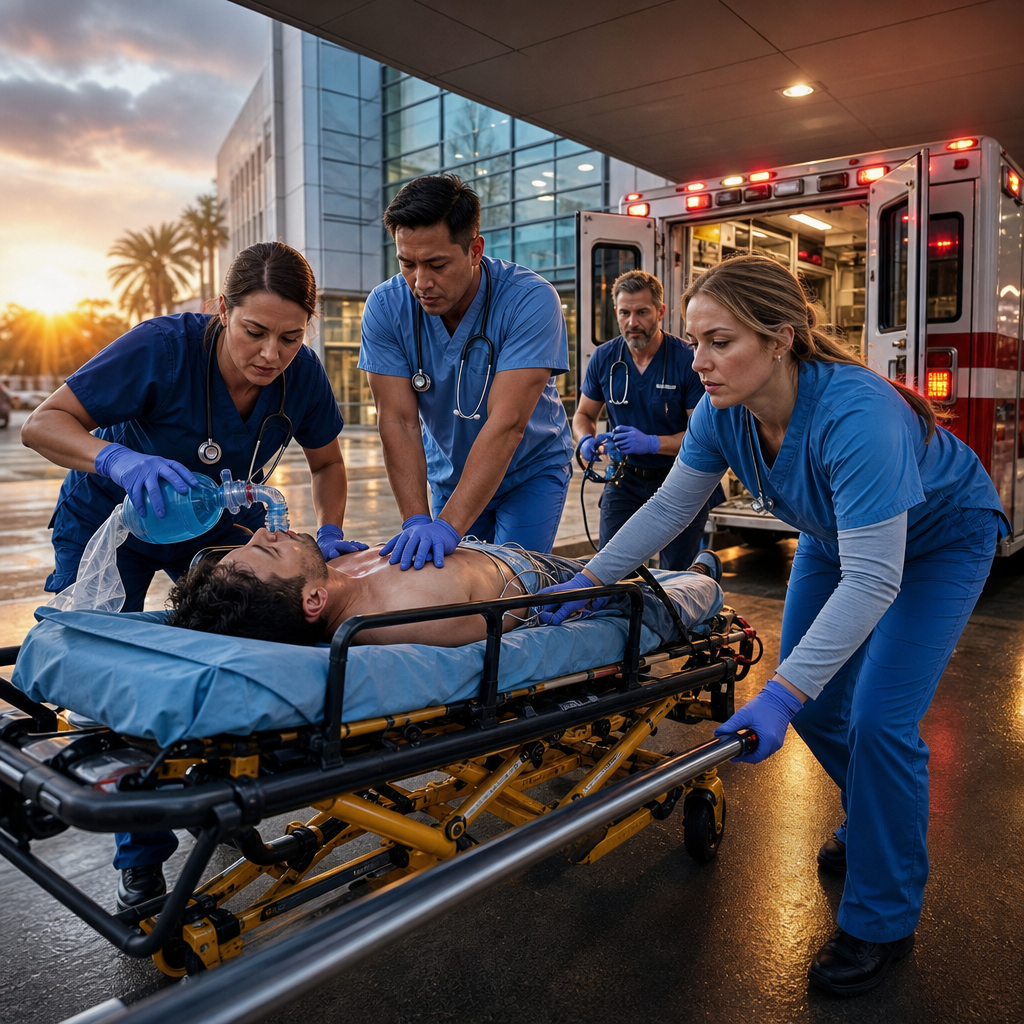
Unlike static mannequins, RQI stations measure your performance data point by point: compression depth, recoil, hand position, and rate. Instructors watch your form and guide corrections immediately. This isn’t about passing an exam; it’s about building the physical competence you’ll use if a patient in front of you becomes unresponsive.
We’ve installed these stations across our 100+ California locations, from San Jose to Redding, Stockton to San Francisco. You’re not adapting to outdated equipment or guessing whether your technique is adequate. You’re training on the same feedback systems that help optimize real-world resuscitation outcomes.
Actionable takeaway: Request a skills session location within 15 minutes of your workplace so the short time commitment feels genuinely convenient.
3. Same-Day Certification Cards for Immediate Compliance
Certification delays create workplace risk. A nurse with an expired BLS card may face scheduling restrictions. A dentist between certifications could lose the ability to staff certain procedures. Emergency happens fast; compliance requirements don’t bend.
After your in-person skills session concludes successfully, you walk out with your printed certification card. No waiting for digital documents. No email delays. Your employer has documentation that same day, and you’re immediately compliant for your next shift.
We maintain CPR verification stations at multiple locations across the Bay Area, including Oakland (Lake Merritt, Piedmont, and Fruitvale), San Francisco (Mission Bay and Parnassus/UCSF), and the South Bay. If you need verification of your current certification between renewals, these stations are available for quick documentation updates.
Actionable takeaway: Schedule your skills session with enough time before your certification expires that same-day card issuance keeps you compliant without stress.
4. AHA-Aligned Curriculum Across All Course Levels
Professional credibility rests on training that employers recognize. Our curriculum aligns with the clinical guidelines and evidence-based practices that define the standard across California healthcare settings. Whether you’re pursuing BLS for basic life support, ACLS (Advanced Cardiac Life Support) for critical-care interventions, or PALS (Pediatric Advanced Life Support) for pediatric emergencies, the content matches what your workplace expects and what your license requires.
We regularly update course materials to reflect current resuscitation science and compliance expectations. Your training stays relevant whether you’re renewing annually or certifying for the first time. Hospitals, clinics, and emergency services across regions like Sacramento, the East Bay, and the Peninsula recognize our certifications because the underlying standards are consistent and rigorous.
Actionable takeaway: Confirm your employer’s specific certification requirement (BLS, ACLS, PALS, or NRP for perinatal care) before enrolling so you take exactly the course your role demands.
5. Over 100 Training Locations for Maximum Convenience
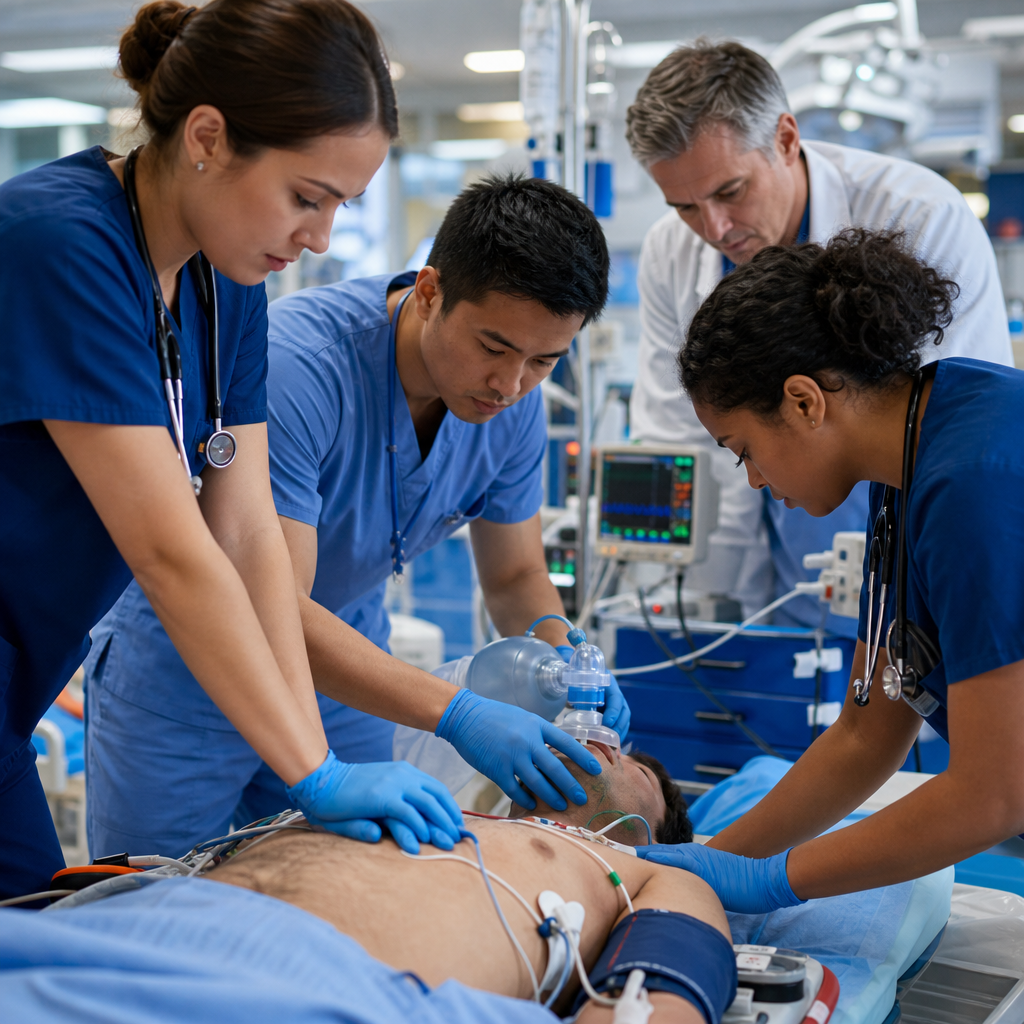
Geography shouldn’t be the reason you delay certification. We maintain training centers across the entire state: from wine country in Sonoma (Santa Rosa locations), to the Central Valley (Fresno, Bakersfield, Visalia), the coast (Santa Cruz), and every major metro area in between.
Whether you work in downtown San Francisco, suburban Silicon Valley, the tri-valley region near Livermore and Pleasanton, or Sacramento’s growing healthcare corridor, you’ll find a location within reach. We’ve intentionally distributed group CPR certification classes and individual training across the state so commute time isn’t a barrier.
For example, if you’re a nurse in the North Bay, you can train in Napa, Petaluma, or Novato rather than driving to San Francisco. If you’re based in the Central Valley, we offer options in Stockton, Modesto, and Fresno so you’re scheduling within your local healthcare community.
Actionable takeaway: Find the training location closest to your workplace or home, then block 90 minutes on your calendar for the in-person session.
6. Corporate Group Training with Guaranteed Lowest Pricing
Healthcare organizations managing team certifications face cost pressure. Our group CPR certification classes model brings meaningful savings while maintaining the hands-on quality individual professionals expect.
Departments can coordinate virtual instruction across their team, then schedule a single in-person session at a preferred location. This reduces the total administrative burden on scheduling coordinators while keeping per-person costs competitive. We guarantee our pricing matches or beats alternatives, so budget approvals are straightforward.
Clinics in places like Campbell, Morgan Hill, and Los Gatos have used group training to certify entire nursing shifts at once. Hospitals across the Bay Area use our model to keep staff current without the expense and logistical complexity of traditional full-day seminars.
Actionable takeaway: If you manage a healthcare team, contact us for group pricing and schedule a blended session that minimizes disruption to patient care operations.
7. Expert Instruction with Compliance-First Methodology
Your instructors shape the quality of your training. We employ certified professionals with hands-on healthcare or emergency response backgrounds, not classroom trainers who’ve never performed CPR under pressure. They understand the clinical reality you face.
Our methodology prioritizes compliance first: you leave knowing exactly what your employer expects and confident you can execute it. We don’t rush through skills stations or gloss over decision-making scenarios. Instead, we invest time in areas where professionals frequently struggle, giving you the confidence to act decisively if an emergency occurs in your workplace.
Instructors across our California network, from CPR and BLS classes in Stockton to San Francisco locations, are trained to adapt explanations to the clinical context where you work, whether that’s operating room protocols, emergency department trauma response, or dental office patient management.
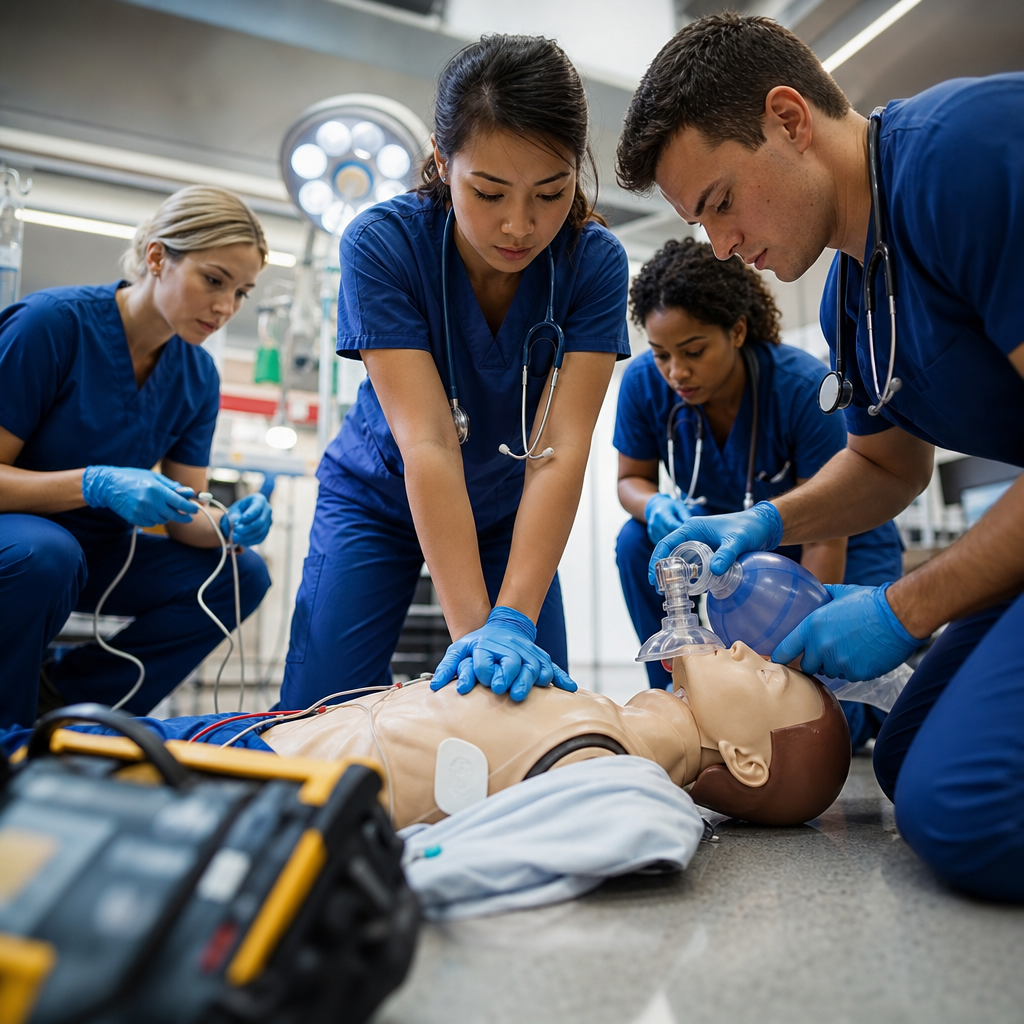
Actionable takeaway: Ask about your instructor’s healthcare or emergency background during registration so you know you’re learning from experienced practitioners.
—
Blended learning CPR training isn’t a compromise between online and in-person options. It’s a purpose-built approach designed for how healthcare professionals actually work. You complete knowledge-building on your schedule, validate technique with real-time feedback, and walk out with immediate proof of compliance.
We’ve built our program specifically for California healthcare professionals who refuse to sacrifice quality for convenience. Our 100+ locations, same-day certification cards, RQI simulation stations, and experienced instructor team mean you’re getting accredited, recognized training that fits your reality.
Your next shift starts soon. Your certification deadline is coming. Schedule your blended CPR course today and join thousands of California healthcare professionals who’ve trusted us to keep their credentials current and their skills sharp.
Register for a class today.
Frequently Asked Questions (FAQ)
What makes our blended learning format different from traditional in-person CPR training?
We combine virtual coursework with hands-on skills sessions so you can learn at your own pace before coming to us for practical instruction. Our approach lets you complete the cognitive portion online, then spend focused time with our instructors practicing real emergency scenarios. This saves you time while ensuring you get the direct feedback needed to perform confidently in actual medical situations.
Can I get my certification card the same day I complete my course?
Yes. We issue certification cards immediately upon successful completion of your final skills session, so you meet your workplace requirements right away without waiting for paperwork. This means you can return to your job with valid credentials the moment you finish training with us.
How do we keep our pricing the lowest across California?
We’ve built our network to operate efficiently across over 100 locations statewide, which allows us to pass savings directly to you. We also guarantee that our pricing is the lowest available, and we offer additional discounts for corporate groups and multiple course enrollments. If you find a lower price elsewhere for the same certification level, we’ll match it.