Table of Contents
- Why California Healthcare Professionals Need Flexible CPR Certification Options
- How Blended Learning Transforms Your CPR Certification Journey
- Our Virtual Curriculum: Building Knowledge Before Hands-On Practice
- In-Person Skills Sessions: Mastering Critical Techniques with Expert Instructors
- Same-Day Certification and Verification: Getting Credentialed When You Need It
- Accessing Our 100+ Training Locations Across California
- Blended Learning Advantages for Your Professional Requirements
- Corporate Group Training with Blended Flexibility
- Maintaining Compliance with Our RQI Simulation Technology
- Why Our Approach Outperforms Traditional Fixed-Schedule Training
- Getting Started with Your Blended CPR Certification Today
- Frequently Asked Questions (FAQ)
Why California Healthcare Professionals Need Flexible CPR Certification Options
Your clinical schedule doesn’t fit a fixed training calendar. Between patient care, shift rotations, and mandatory continuing education, finding time for in-person CPR certification feels impossible. Yet your license renewal depends on it.
We understand this tension. California healthcare professionals like nurses, dentists, and EMS personnel face real scheduling constraints while maintaining strict compliance requirements. Traditional training models require you to block out entire days or evenings, often months in advance, only to discover the closest class doesn’t align with your availability.
The solution isn’t choosing between convenience and quality. Our blended learning approach recognizes that your certification journey needs both flexibility and hands-on rigor. You deserve a path that respects your time while delivering the instructor-led skills practice your patients depend on.
Across our network spanning Sacramento, San Francisco, Oakland, San Jose, and beyond, we’ve built a system that adapts to how you actually work. Whether you’re managing patient loads in Fresno or training protocols in Berkeley, blended CPR certification eliminates the false choice between scheduling flexibility and professional-grade instruction.
How Blended Learning Transforms Your CPR Certification Journey
Blended learning combines online knowledge delivery with in-person skills mastery. You complete the cognitive portions at your own pace, then practice critical techniques under direct expert supervision. This isn’t self-paced learning without accountability; it’s structured progression with flexibility.
The model works because it respects how adults learn best. Healthcare professionals don’t need to sit through lengthy lectures about cardiac physiology; you need to absorb key concepts efficiently, then dedicate focused time to muscle memory and judgment under pressure. Our blended approach accomplishes both.
Here’s how your typical journey flows:
- Complete online modules covering CPR fundamentals, AHA (American Heart Association) guidelines, and scenario-based decision-making
- Schedule your in-person skills session when your calendar permits (not when a fixed class calendar demands it)
- Practice hands-on techniques with certified instructors in a controlled environment
- Receive same-day certification and verification upon successful completion
This structure compresses your total time investment while increasing retention. You’re not cramming eight hours into one exhausting day; you’re spreading learning across a week or two with focused, purposeful practice sessions.
Our Virtual Curriculum: Building Knowledge Before Hands-On Practice
Our online modules aren’t generic recordings. We’ve designed them specifically for the way healthcare professionals learn, with clear learning objectives and practical application focus.
You’ll engage with content covering:
- Current resuscitation science and guideline updates
- Age-specific considerations (pediatric, adult, geriatric)
- Recognition of cardiac emergencies and chain of survival principles
- Integration with automated external defibrillators (AEDs)
- Special scenarios relevant to your clinical setting
The virtual portion typically takes two to three hours, depending on your certification level (BLS, ACLS, PALS, or neonatal resuscitation). You control the pacing. You can review complex rhythm interpretation multiple times without feeling rushed. You can study during your lunch break or evening hours when you’re mentally fresh.
Importantly, we don’t front-load hours of video and call it complete. The online content serves as preparation for hands-on practice, not a substitute for it. Your instructors review your online progress before your skills session, so they can focus in-person time on areas where you need personalized guidance.
We continuously update our virtual curriculum to reflect the latest AHA standards and evidence-based practices. When guidelines change, you’re not learning outdated protocols.
In-Person Skills Sessions: Mastering Critical Techniques with Expert Instructors
This is where certification becomes real. In-person skills sessions typically run two to three hours and focus entirely on demonstration, practice, and feedback.
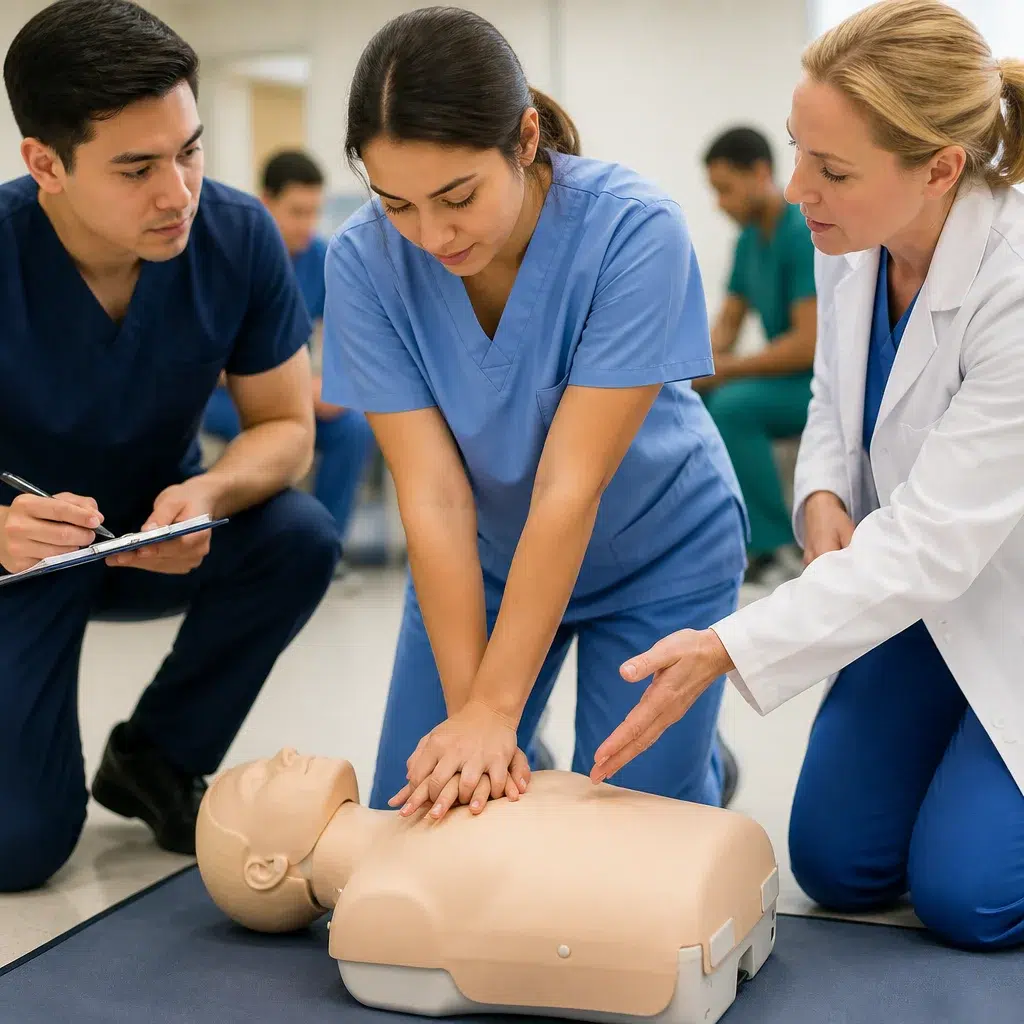
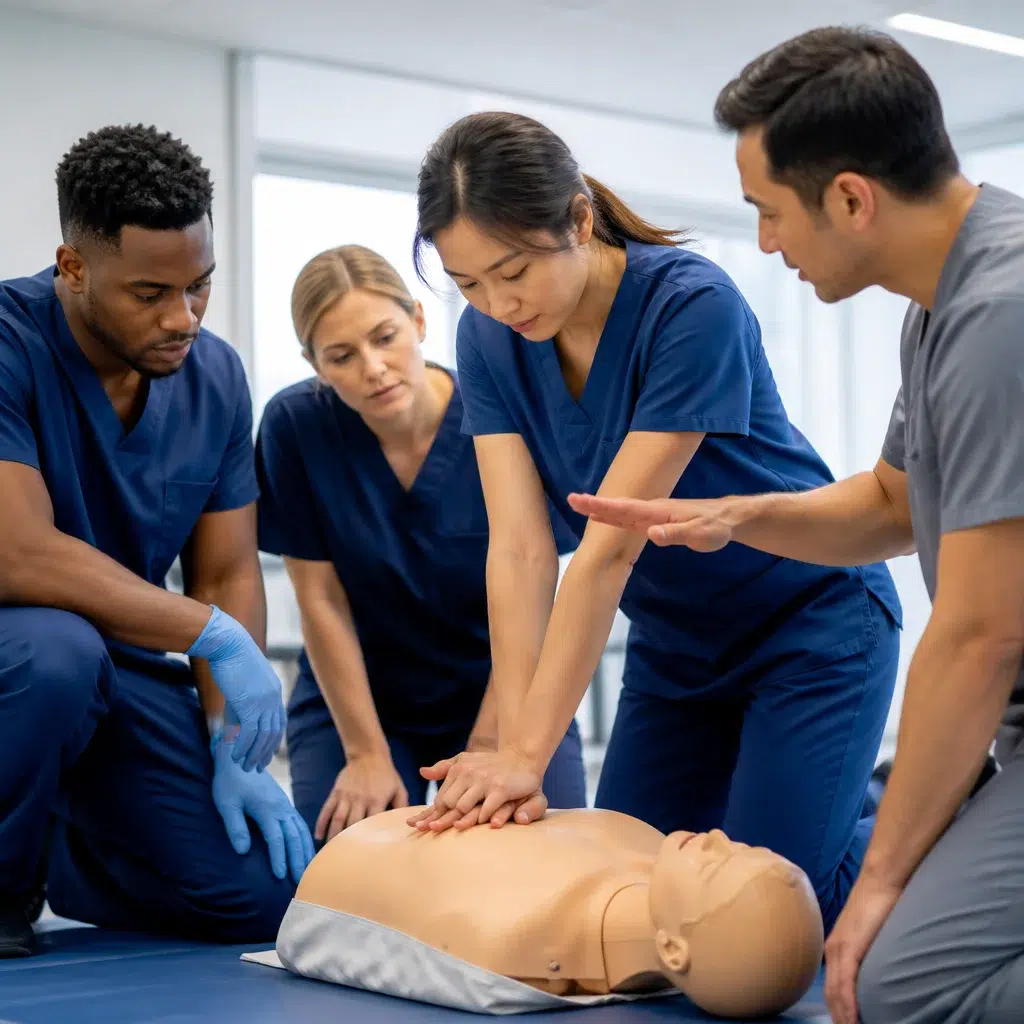
Our instructors bring clinical experience from emergency departments, critical care units, and field response. They understand the difference between textbook knowledge and real-world performance. When you’re practicing chest compressions, they observe your hand placement, compression depth, and recoil. They watch your rhythm interpretation and intervention decisions on a monitor. They catch the subtle mistakes that don’t show up in knowledge tests.
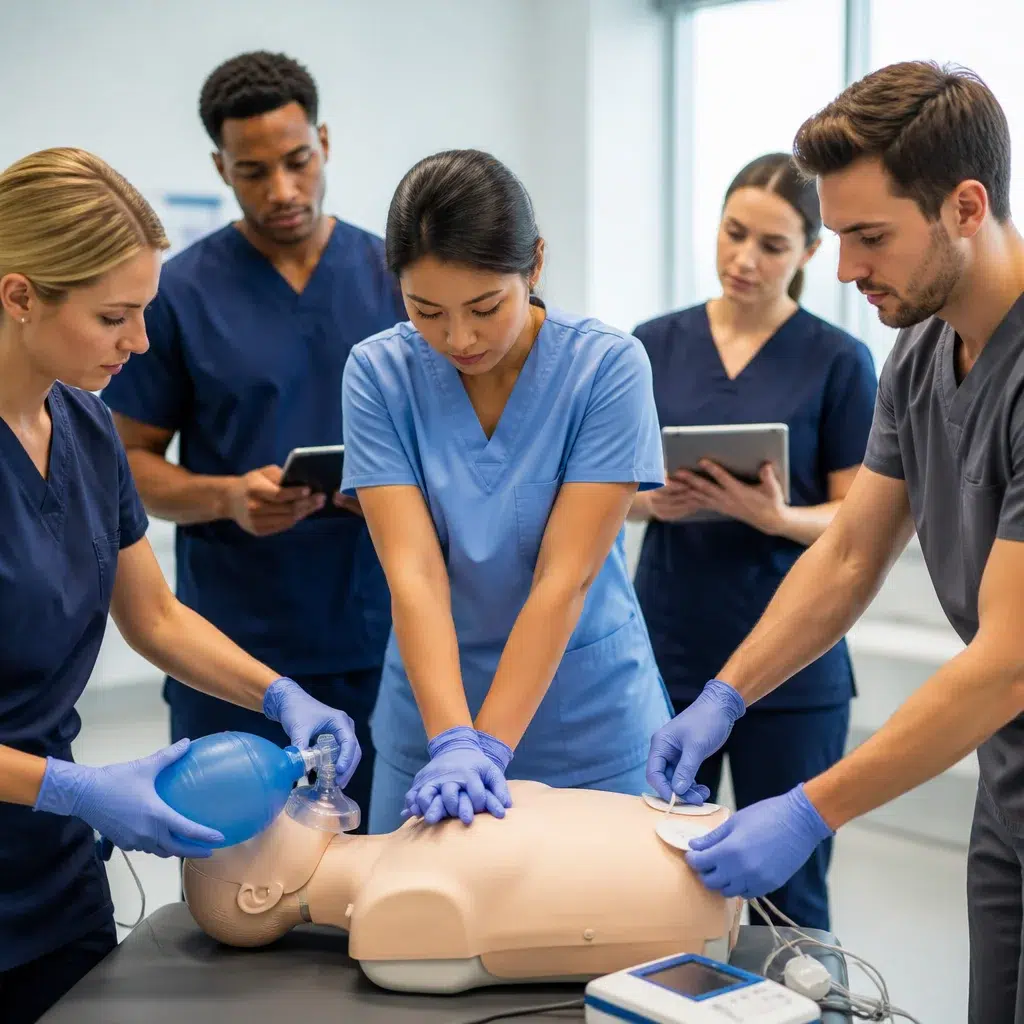
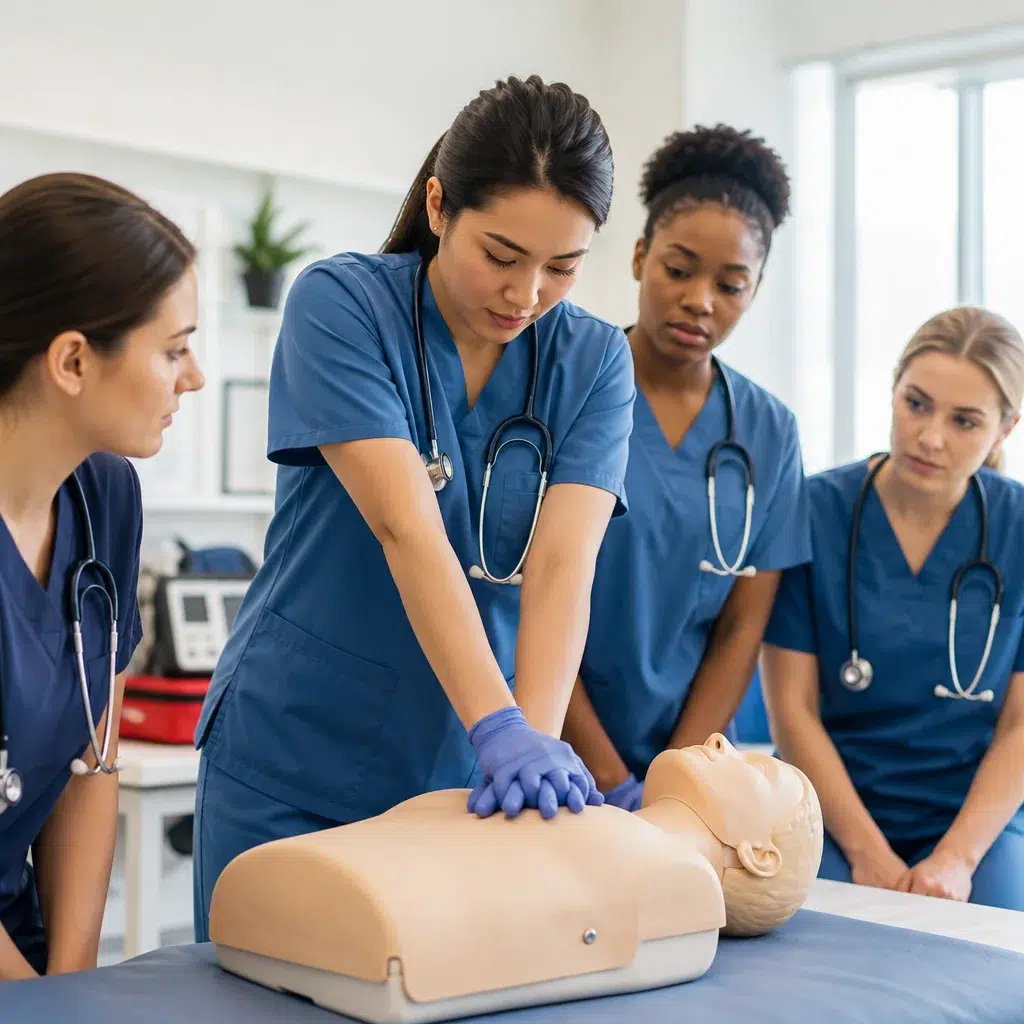
You’ll practice on high-fidelity mannequins with realistic feedback mechanisms. Our RQI simulation technology provides real-time data on compression quality, allowing instructors to identify and correct technique immediately. This immediate feedback accelerates learning far more effectively than practicing blindly and receiving corrections afterward.
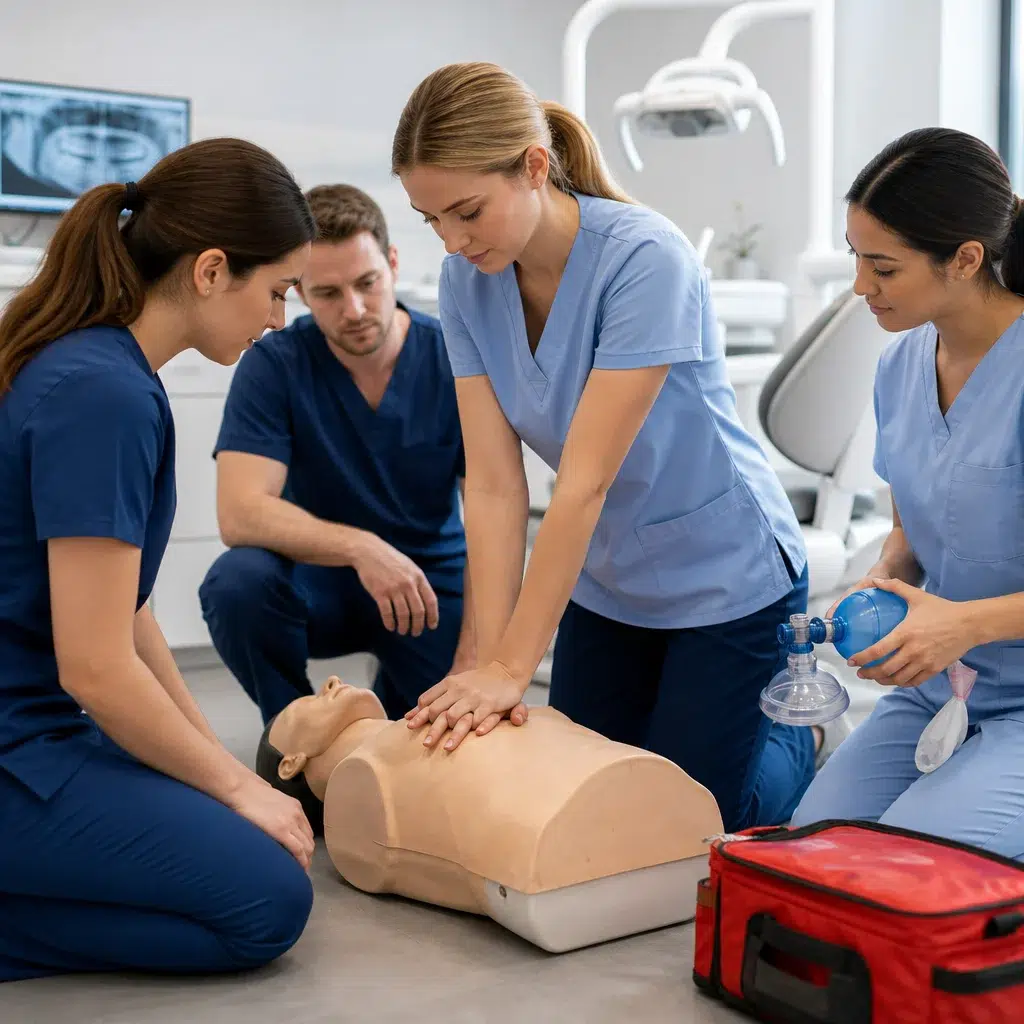
Sessions accommodate small groups, typically six to eight participants. This isn’t a crowded lecture hall. You get meaningful instructor attention and time to ask questions specific to your clinical environment. A pediatric nurse in San Mateo might ask about child-specific rescue techniques; a dental office manager in Walnut Creek might focus on team coordination during an emergency in a non-hospital setting. Our instructors address these scenarios directly.
You’ll leave with muscle memory, confidence, and the ability to perform these skills under the pressure of an actual emergency. That’s the difference between holding a certificate and holding genuine competence.
Same-Day Certification and Verification: Getting Credentialed When You Need It
After your skills session, you don’t wait weeks for results. You’re certified the same day upon successful completion. No further processing. No administrative delays.
We provide your certification card immediately, and your credentials enter verification systems instantly. Your employer, credentialing body, or licensing board can verify your current status within hours, not days. For professionals in Alameda, Antioch, Bakersfield, or anywhere across California, this matters for hiring starts, contract renewals, or license applications.
Our verification stations across the state provide additional assurance. You can request verification documentation in person at any of our training locations, whether that’s downtown Sacramento, Mission Bay in San Francisco, or San Jose Japantown. Digital verification is immediate and comprehensive.
If your certification expires while you’re traveling or between scheduled class dates, you can renew at participating locations without traveling across the state. We recognize that your schedule rarely aligns perfectly with administrative timelines.
Accessing Our 100+ Training Locations Across California
We operate over 100 training locations throughout California, strategically positioned to minimize your travel time. Whether you work in urban centers like San Francisco, Oakland, or Sacramento, or in regional hubs like Fresno, Visalia, or Santa Cruz, you have nearby options.
Our California training locations include major metropolitan areas and smaller communities. From Redding in the north to Bakersfield in the south, from the coast near Santa Rosa and Petaluma to inland Stockton and Modesto, we’ve positioned facilities to serve you where you are.
Each location operates daily schedules, giving you flexibility beyond just blended learning. You can find an in-person skills session on your next day off or between shifts. No waiting three months for the next available class.
Our scheduling system shows real-time availability across all locations. If your preferred local site is full, you can see openings at nearby facilities immediately. This visibility eliminates frustration and accelerates your path to certification.
Blended Learning Advantages for Your Professional Requirements
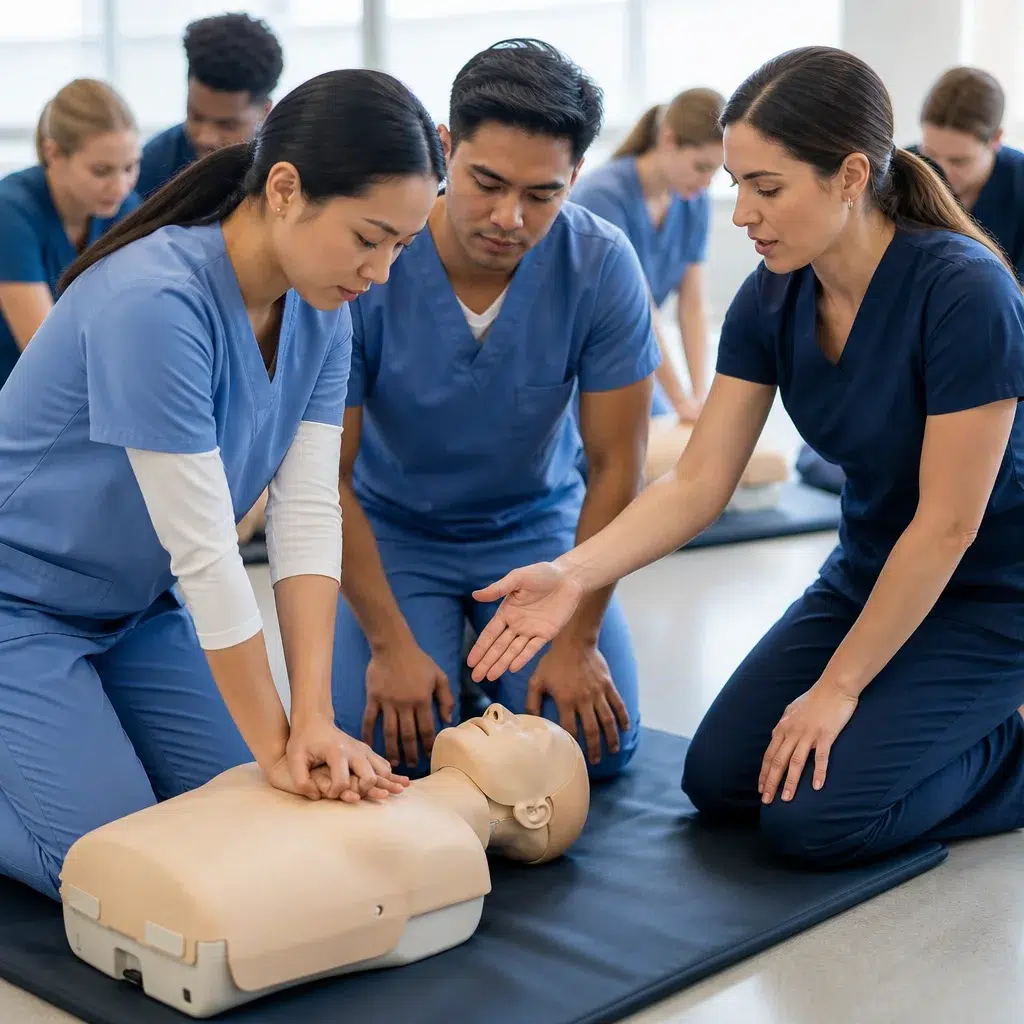
Blended certification meets every requirement that traditional training addresses, with additional benefits specific to healthcare professionals’ reality.
Compliance: Your employer, hospital credentialing department, and licensing board recognize our certifications equally with any full-day, in-person alternative. We deliver the hands-on skills practice they require and the documented evidence they audit.
Retention: Research in adult education consistently shows that spaced learning with hands-on practice produces superior long-term retention compared to cramming an entire course into one exhaustive session. You’ll remember resuscitation protocols better with our approach.
Professional relevance: You practice scenarios aligned with your specialty. Pediatric nurses practice pediatric protocols. EMS personnel practice field scenarios. Corporate clinical teams integrate their specific workplace dynamics. This relevance makes the training stick.
Cost efficiency: By concentrating instructor time on skills practice rather than lecture delivery, we maintain lower pricing while delivering higher-quality instruction. You get better value without sacrificing quality.
Reduced burnout: Blocking your entire weekend or taking a full day off for training creates scheduling friction and fatigue. Spreading learning across virtual modules and a focused skills session respects your well-being and your professional life.
Corporate Group Training with Blended Flexibility
Healthcare organizations across California partner with us for team-wide CPR certification. Hospitals in Sacramento, medical offices in San Francisco, dental practices in San Jose, and clinics throughout Kern County coordinate blended training for their entire staff.
Corporate group blending works differently than individual training. We often organize your virtual modules to complete on a specific week, then schedule skills sessions that accommodate different staff shifts. Night shift nurses complete their online portion before their shift; day staff finish during administrative time. Everyone then attends skills sessions scheduled around your operational needs.
This approach maintains quality while respecting the complexity of healthcare staffing. You’re not forcing an entire night shift to retrain during daytime hours. You’re building a certified team efficiently and equitably.
We provide group discounts and bulk reporting to streamline your compliance documentation. Your HR and credentialing departments get comprehensive tracking across all staff, with certification expiration alerts months in advance. We help you stay ahead of regulatory requirements rather than responding to them.
Maintaining Compliance with Our RQI Simulation Technology
Our RQI (Resuscitation Quality Improvement) simulation systems transform skills practice into data-driven learning. Real-time feedback during compressions, ventilation, and defibrillation decisions means you’re not practicing techniques that might be suboptimal.
The system measures compression depth, rate, recoil, and hand position. It evaluates your ventilation volumes and timing. It tracks your response to rhythm interpretation and medication administration in complex scenarios. This quantitative feedback accelerates improvement far more effectively than instructor observation alone.
Healthcare professionals appreciate this approach because it mimics how you already practice medicine and nursing. You use objective data to guide clinical decisions every day. Resuscitation training should work the same way.
Compliance and competency blend seamlessly. Your instructor sees real-time performance data and can immediately identify systematic errors. A compression rate that’s too fast, inconsistent recoil, or ventilation volumes that are excessive all appear on the monitor. The instructor corrects the technique right then, and you practice the correction immediately. By the end of the session, you’ve demonstrated mastery at the exact competency level your patients expect.
Why Our Approach Outperforms Traditional Fixed-Schedule Training
Full-day, in-person classes served a necessary function before blended learning technology existed. Everyone participated simultaneously, and instructors delivered all material in person. But this model creates real problems for today’s healthcare professionals.
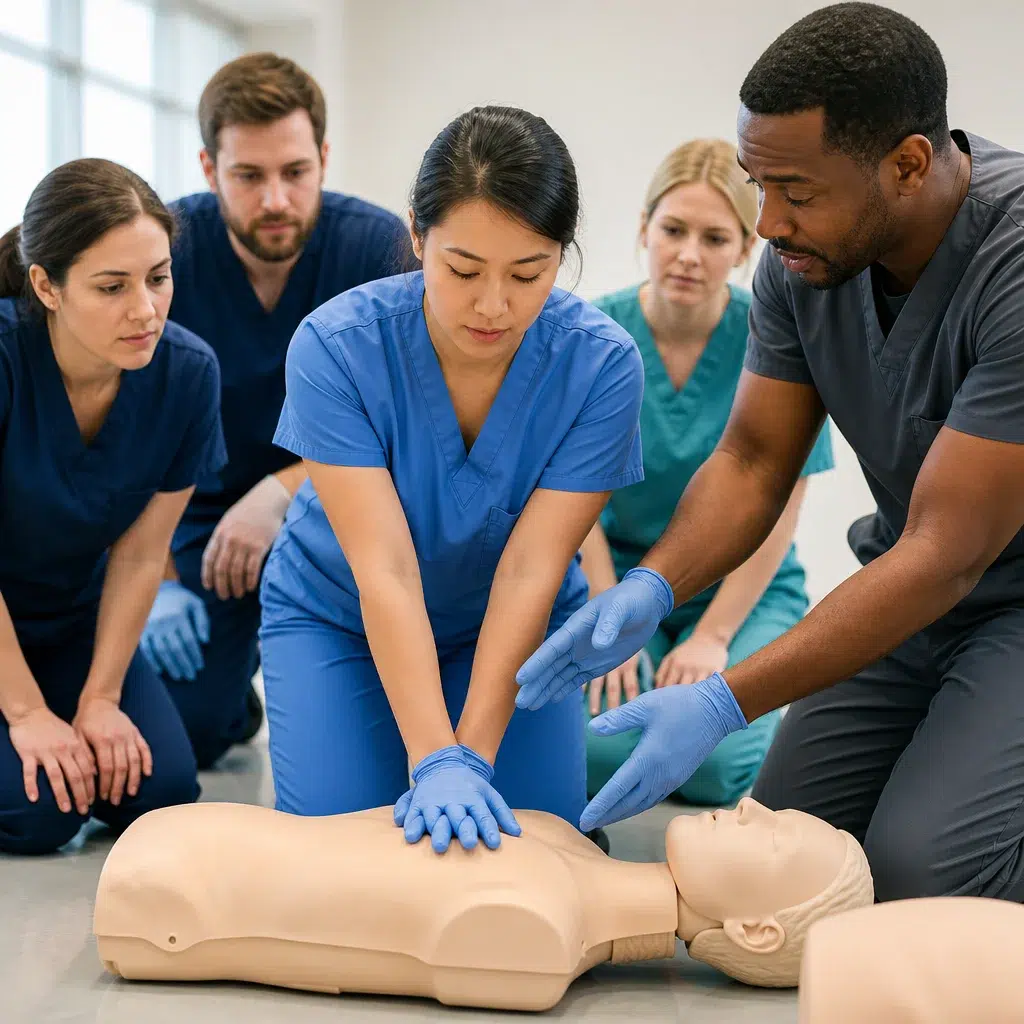
Fixed-schedule courses demand months of advance planning. You can’t accommodate unexpected call-outs or shifting administrative requirements. If a class fills before you register, you’re waiting another two months. If you miss a class day due to illness or emergency, many providers won’t allow you to make up individual components; you restart entirely.
Knowledge retention suffers with intensive, single-session delivery. Your brain absorbs vast amounts of information rapidly, then begins forgetting immediately. Distributed learning across multiple sessions produces measurably better long-term retention, which directly benefits your patients when emergencies occur.
Blended delivery respects adult learning research. You absorb conceptual knowledge at your pace, then engage in meaningful practice when cognitively fresh. You apply what you’ve learned while still holding it clearly in mind. You receive immediate, specific feedback that reinforces correct technique and corrects errors instantly.
Cost and accessibility improve dramatically. We concentrate instructor time where it matters most: hands-on skills development. We eliminate lecture-delivery overhead. We position facilities across the entire state rather than requiring travel to regional hubs. These efficiencies flow through to you as lower pricing without quality compromise.
Getting Started with Your Blended CPR Certification Today
Your path forward is straightforward. Visit our website or call to select your preferred certification level (BLS, ACLS, PALS, neonatal resuscitation) and identify a convenient training location from our 100+ California sites.
You’ll complete a quick registration, then access your online modules immediately. Study at your own pace over the next week or two. Most professionals complete the virtual portion during their regular downtime: lunch breaks, commute time, or evening hours.
Once you’ve finished online learning, you’ll book your in-person skills session at your preferred location. We maintain daily schedules, so you’ll typically find openings within a few days of your target date. Show up to practice, demonstrate competency, and leave certified.
Your certification card arrives same-day, and your credentials enter verification systems instantly. Your employer, credentialing body, or licensing board can confirm your current status before the end of your business day.
We stand behind our pricing with a low-price guarantee across all California locations. You won’t find a lower rate for equivalent, instructor-led, hands-on CPR training anywhere in the state.
Whether you’re based in Folsom, Napa, Pleasanton, Tracy, or any of our other California locations, the process is identical: simple, flexible, and focused on getting you certified with genuine competency. Your patients depend on your skills. We’ve designed every aspect of our training to ensure you’re genuinely prepared when an emergency occurs.
Register for a class today.
Frequently Asked Questions (FAQ)
How does our blended learning format work, and why do we offer both virtual and in-person sessions?
We structure our courses so you complete your knowledge-building online at your own pace, then join us for a focused in-person skills session where our instructors validate your techniques and answer questions in real time. This approach lets us accommodate your schedule while ensuring you master the hands-on skills that matter most in emergency situations.
Can I get same-day certification after completing our blended course?
Yes, we offer same-day certification once you finish both the virtual component and in-person skills session. We also operate CPR verification stations across our 100+ California locations, so you can get your credentials processed immediately without waiting for mail delivery or online processing delays.
Do you offer group training rates for our healthcare facility or corporate team?
We absolutely do. We provide specialized corporate group training with flexible blended scheduling that works around your facility’s staffing needs, and we guarantee competitive pricing across all our courses. Contact our team directly at our nearest location to discuss volume pricing and custom class scheduling for your organization.