Table of Contents
- Why Nurses Need Reliable CPR Training in California
- Understanding California's CPR Certification Requirements for RNs
- How Our Blended Learning Approach Keeps You Current
- Flexible Scheduling That Fits Your Nursing Career
- Over 100 Training Locations Across California for Your Convenience
- Same-Day Certification Cards and Verification Stations
- Cost-Effective Training With Our Low Price Guarantee
- Specialized Training Beyond Basic CPR for Nurses
- What Sets Our Nurse Training Programs Apart
- How to Get Started With Your California CPR Certification
- Frequently Asked Questions (FAQ)
Why Nurses Need Reliable CPR Training in California
Your patients depend on your skills during critical moments, and California’s healthcare system expects you to maintain current, verified training. CPR certification isn’t just a checkbox on your license renewal form, it’s a core clinical competency that directly impacts patient outcomes during cardiac emergencies.
Most nursing positions in California require proof of current certification as a condition of employment. Hospitals, clinics, urgent care centers, and specialty practices all verify your credentials before you start shifts. Without current, valid certification, your career opportunities narrow significantly, and you risk disciplinary action or termination if your status lapses.
We understand the pressure nurses face. Between 12-hour shifts, continuing education requirements, and personal obligations, finding time for training feels nearly impossible. That’s why we’ve designed our program specifically for your reality, ensuring you can maintain compliance without sacrificing your schedule or peace of mind.
Understanding California’s CPR Certification Requirements for RNs
California nursing regulations, guided by the California Board of Registered Nursing, require nurses to hold current Basic Life Support (BLS) certification as a mandatory condition of licensure. Your employer typically mandates renewal every two years, though some specialty roles require annual recertification.
BLS certification covers chest compressions, rescue breathing, and automated external defibrillator (AED) operation. Many hospitals also require Advanced Cardiac Life Support (ACLS) for nurses working in intensive care, emergency departments, or critical care units. Pediatric Advanced Life Support (PALS) becomes essential if you work with child populations.
Beyond these fundamentals, your specific role shapes your requirements. Nurses in procedural settings may need additional airway management training. Those in perioperative environments typically require both BLS and ACLS. We help you identify exactly which certifications your position demands, avoiding unnecessary courses while ensuring full compliance.
Your certification must come from an approved provider and include both cognitive assessment and hands-on skills evaluation. Many nurses make the mistake of believing online-only courses satisfy requirements, only to discover their employer won’t accept them. We deliver comprehensive instruction that meets every standard your healthcare facility expects.
How Our Blended Learning Approach Keeps You Current
Our [flexible blended learning] model combines self-paced online instruction with in-person skills sessions, giving you control over your learning timeline. You review anatomy, physiology, and emergency protocols on your schedule, then attend a focused two to three-hour hands-on session where instructors verify your competency.
This approach reduces burnout compared to full-day classroom training. You’re not sitting in a conference room for eight hours absorbing information passively. Instead, you engage with the material when you’re mentally fresh, then practice in a supervised, realistic environment where instructors provide immediate feedback on your technique.
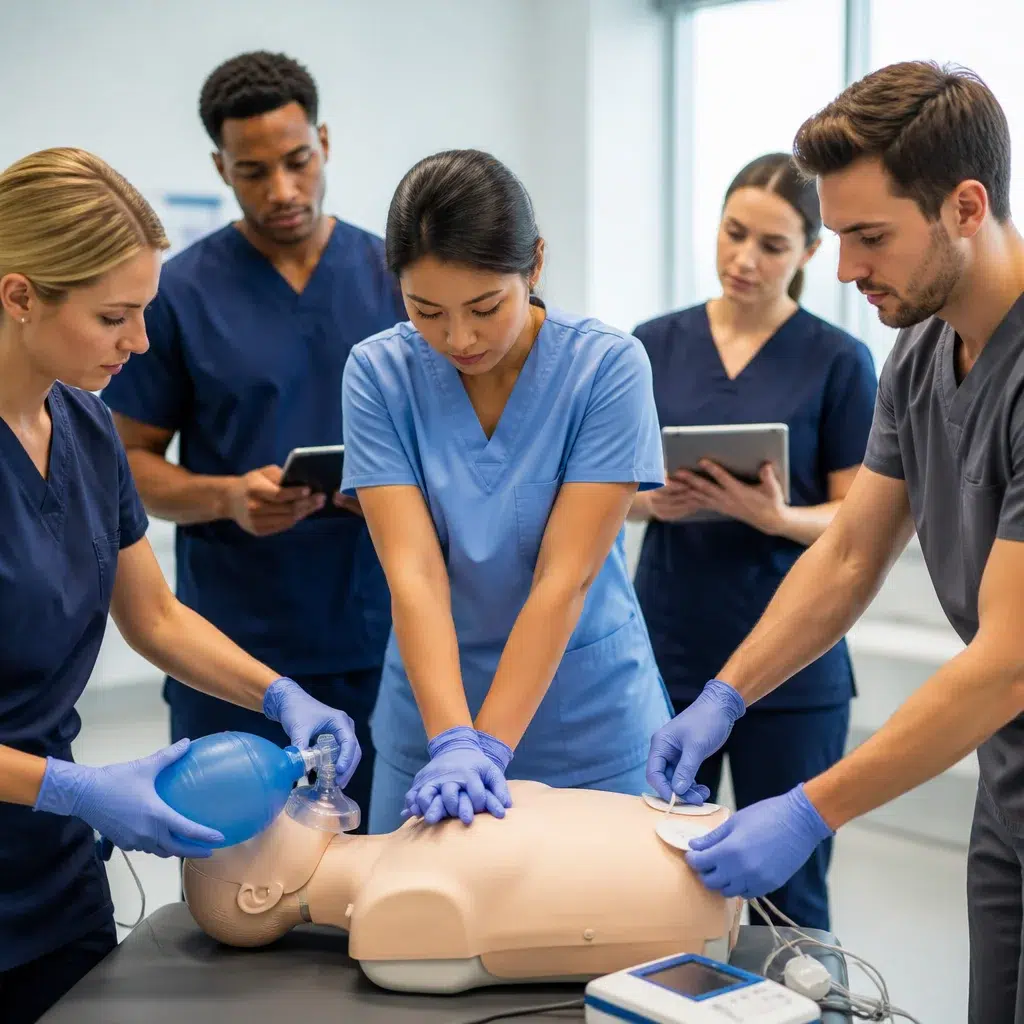
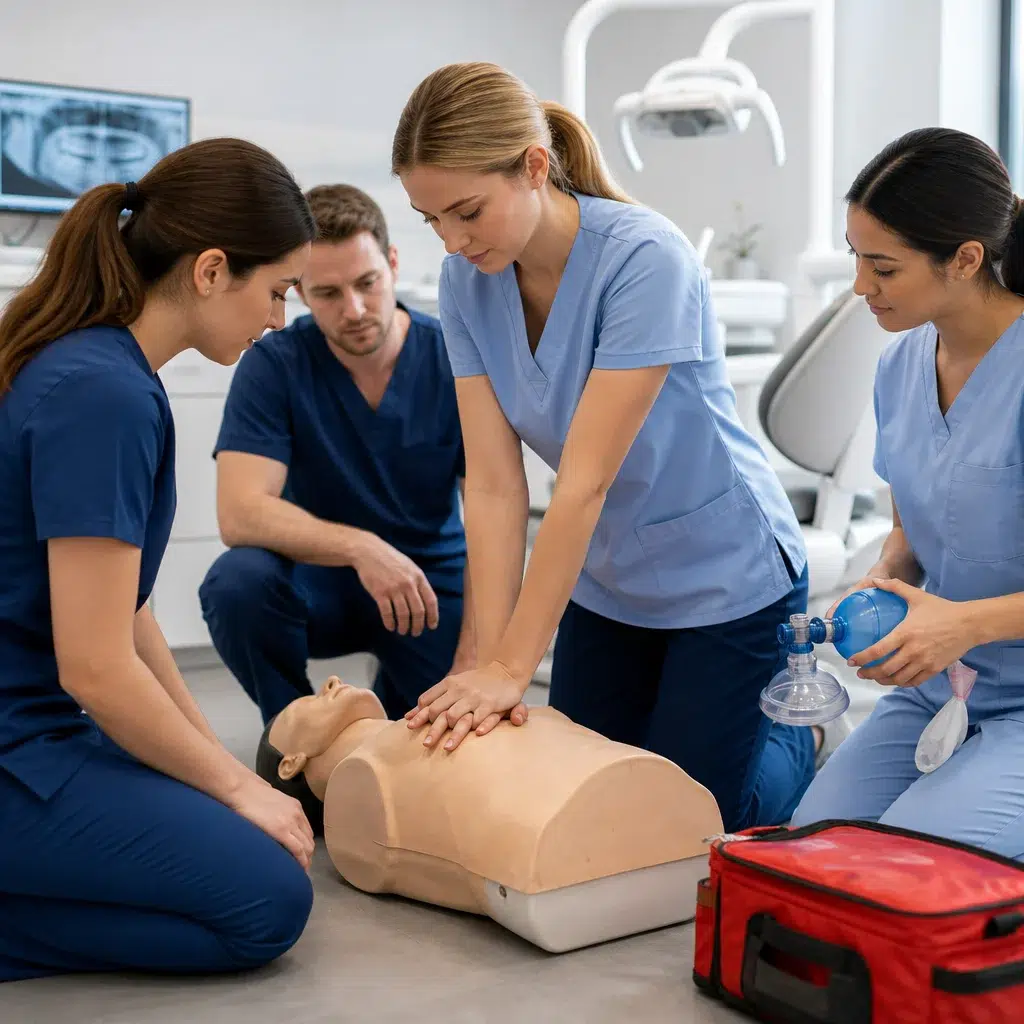
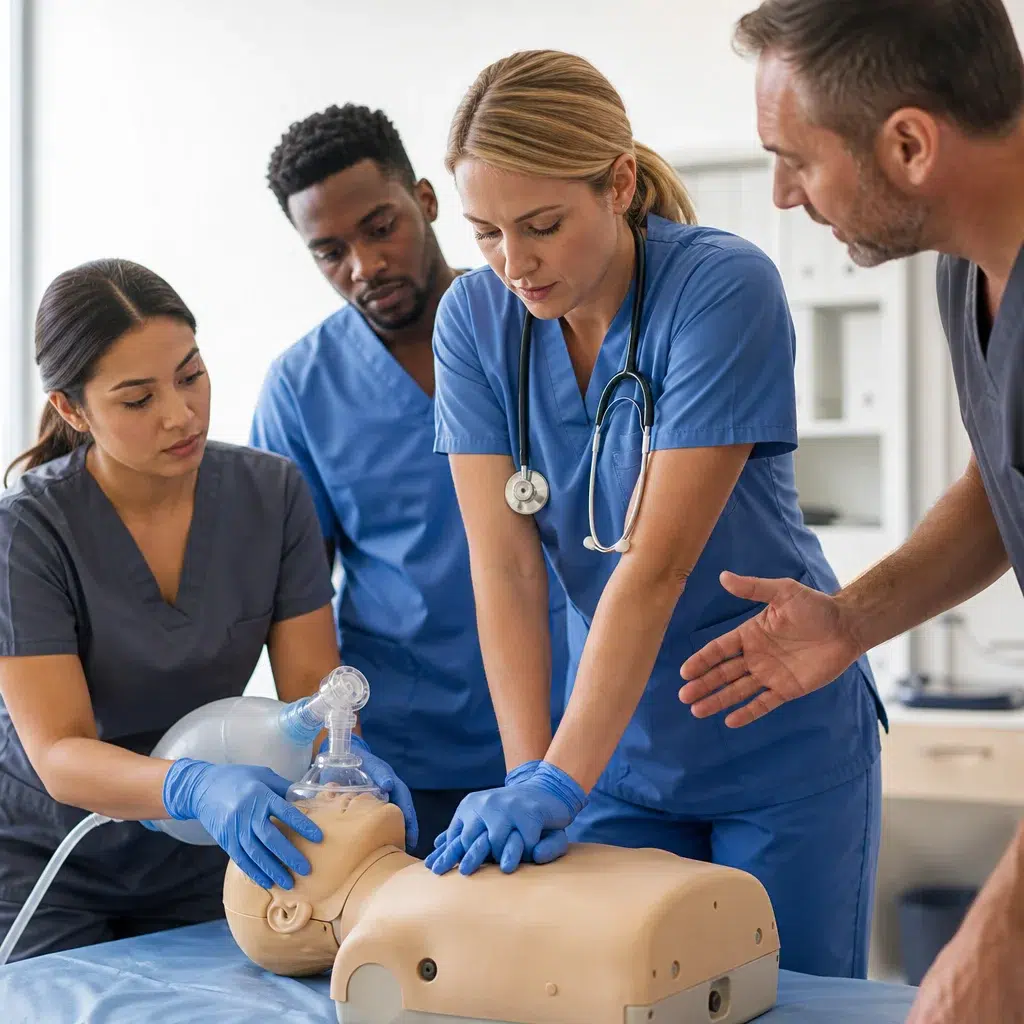
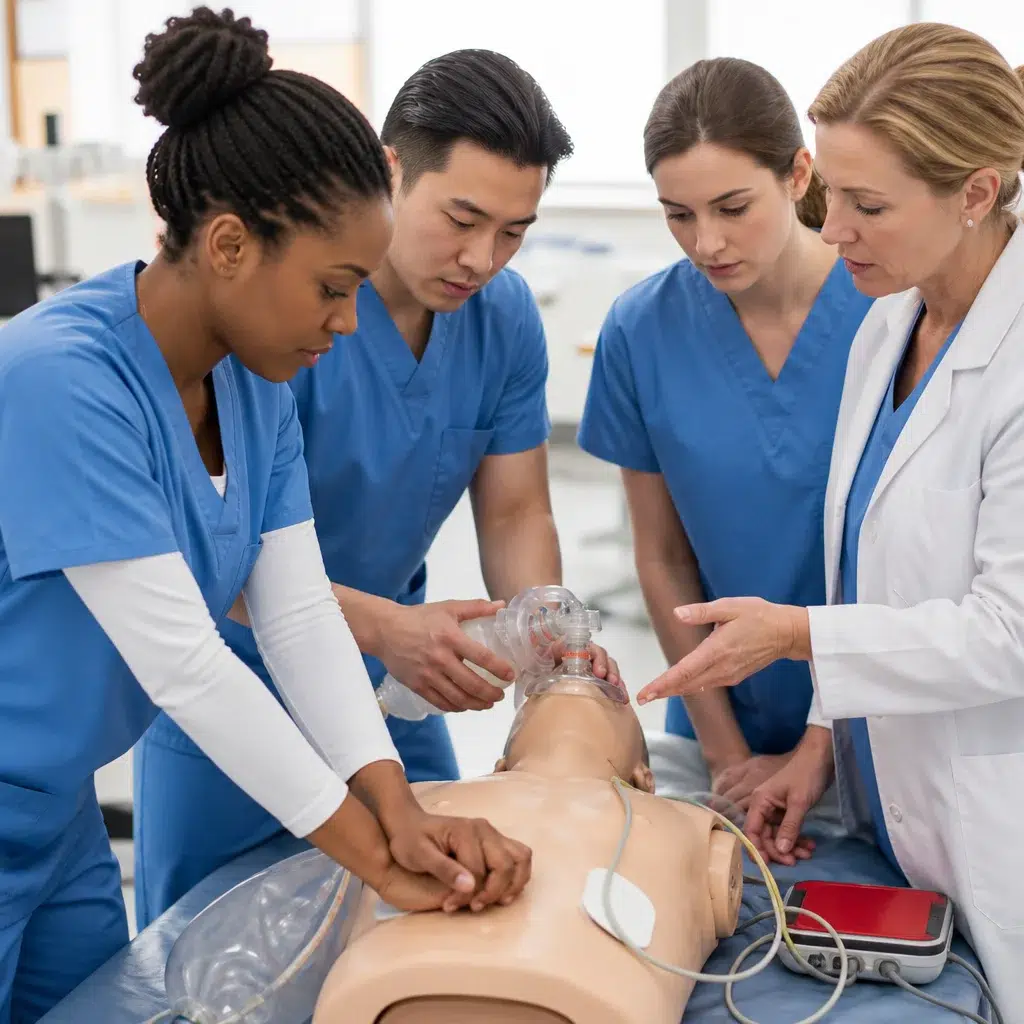
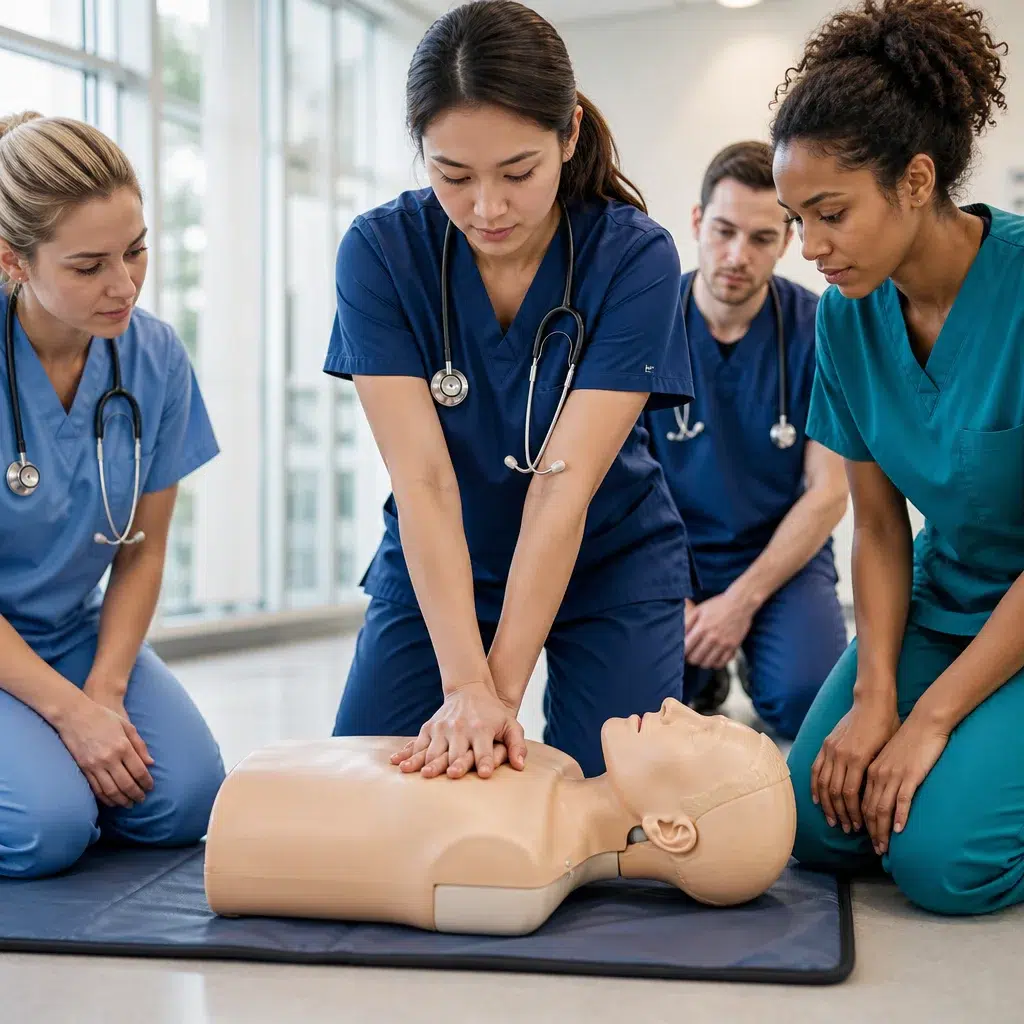
The online component covers essential knowledge through interactive modules and case studies. You learn common cardiac arrest scenarios, medication interactions, and decision-making frameworks that apply directly to your floor. The in-person session lets you practice on high-fidelity mannequins under instructor guidance, ask clarifying questions, and build confidence in your physical skills.
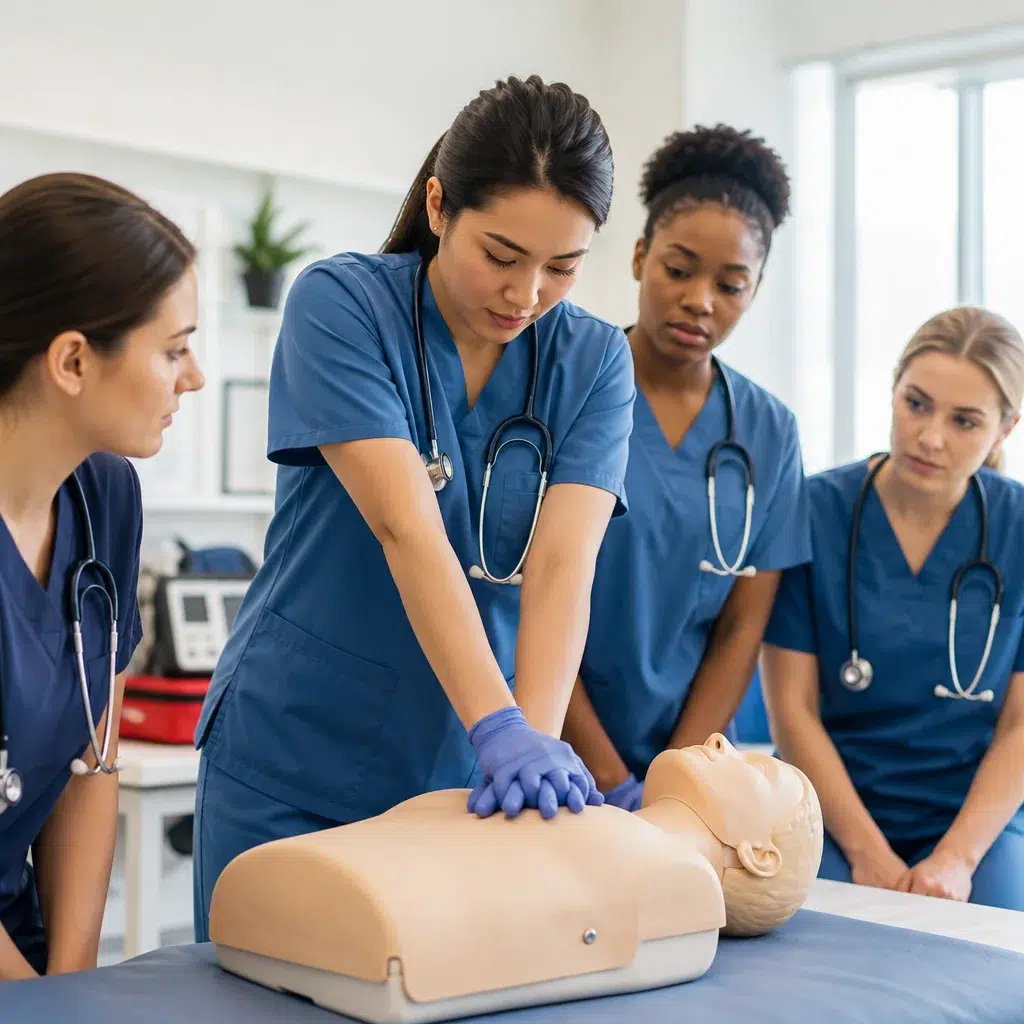
Many nurses tell us this hybrid format feels less overwhelming than traditional all-day seminars. You avoid the cognitive fatigue of cramming everything into one session, and you retain information better when you space learning across days rather than compressing it into hours.
Flexible Scheduling That Fits Your Nursing Career
We offer classes daily across California, including evenings and weekends specifically designed for working nurses. Whether you work day shifts in Sacramento, night shifts in San Jose, or rotating schedules in the Bay Area, we have options that don’t require time off.
Your typical class runs two to three hours for BLS certification, or four to five hours for ACLS or PALS. We schedule sessions at times that work around common nursing schedules: early mornings before your shift, late afternoons after you clock out, or weekend mornings when you’re off. No more requesting personal days or losing income to get certified.
We maintain over 100 training locations throughout California, including multiple sites in major nursing hubs. Whether you’re in Fresno, Modesto, Livermore, or San Rafael, we have a classroom near your workplace or home. This proximity eliminates the excuse of travel time, which often deters nurses from timely recertification.
If life happens and you need to reschedule, we offer flexible rescheduling options. Miss your session due to an unexpected shift change? Contact us and we’ll place you in the next available class without penalties. Your professional obligations come first, and we work around them rather than expecting you to rearrange your life for training.
Over 100 Training Locations Across California for Your Convenience
Our network spans from Redding in the north to Visalia in the south, covering every major city and many smaller communities where nurses work. Urban centers like San Francisco, Oakland, San Jose, and Sacramento have multiple locations, ensuring you never travel more than 15-20 minutes to reach training.
In the Bay Area, we operate in Alameda, Berkeley, Hayward, Fremont, Palo Alto, Sunnyvale, and dozens of surrounding communities. East Bay nurses benefit from sites in Pleasant Hill, Walnut Creek, Dublin, and Livermore. Sacramento professionals can choose between Arden, Midtown, Oak Park, and Rosemont locations.
Southern California coverage includes Bakersfield, Fresno, and Visalia for Central Valley nurses. Coastal communities from Chico to Santa Cruz ensure geographic accessibility regardless of where you practice. This decentralized approach means scheduling your training doesn’t require commuting across the region.
Each location features modern classrooms with current equipment and certified instructors who understand nursing workflows. We’ve invested in facilities that respect your professional standards, not converting closets or basement spaces into training rooms. You’ll practice on equipment similar to what you use daily at your facility.
Same-Day Certification Cards and Verification Stations
The moment you complete our skills assessment, you receive your certification card. No waiting for mailed credentials or digital certificates that take weeks to arrive. You walk out with proof of compliance in hand, ready to show your employer.
We operate [CPR verification stations] at select locations where you can drop in with your card for employer verification. If your facility requires third-party confirmation of your credentials, our stations provide instant documentation without requiring a full recourse course. This service saves time when you’re coordinating with compliance departments.
Your certificate includes all relevant data: completion date, expiration date, certification type, and instructor credentials. It meets every California healthcare facility’s acceptance standards. If you lose it later, we maintain records and can issue replacements quickly, ensuring your career doesn’t stall due to administrative mishaps.
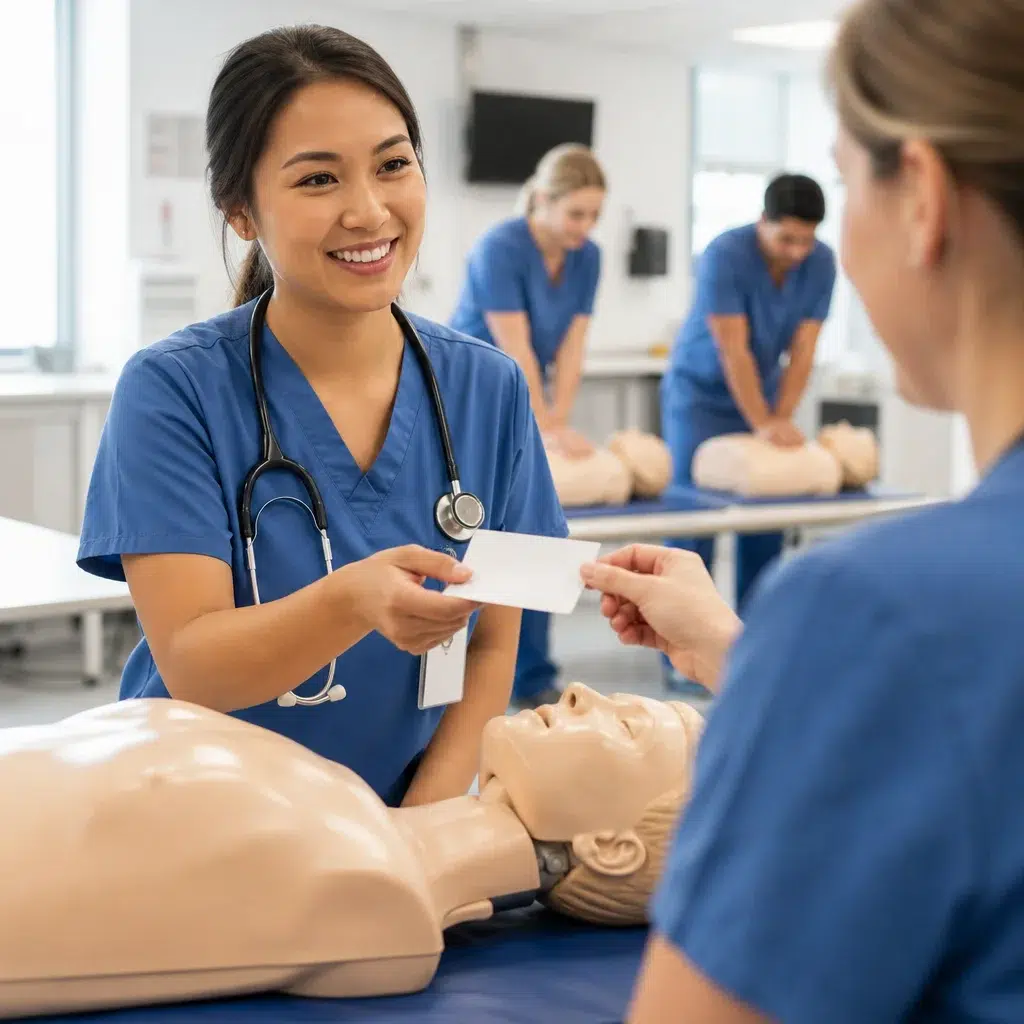
Digital credential options are also available for immediate documentation. Some nurses prefer having both physical and digital copies for redundancy. We support both approaches and ensure rapid, hassle-free delivery regardless of your preference.
Cost-Effective Training With Our Low Price Guarantee
We guarantee the lowest pricing for CPR, BLS, ACLS, and PALS courses throughout California. If you find comparable training elsewhere at a lower rate, we’ll match that price. This commitment removes the concern that you’re overpaying or missing better deals.
Our standard BLS certification costs far less than many competitors, and we offer volume discounts for hospital departments or group registrations. If your facility wants to train an entire unit, we provide corporate pricing that helps your employer’s budget while maintaining quality instruction.
We eliminate hidden fees that surprise you at checkout. What you see during registration is what you pay. No surprise facility charges, no unexpected credential processing fees, no add-on costs for verification stations. This transparency builds trust and makes budgeting straightforward.
Payment plans are available for those who need flexibility. We understand that certification costs come out of your personal budget or your employer’s training allocation, so we structure payments to ease financial strain without charging predatory interest rates.
Specialized Training Beyond Basic CPR for Nurses
BLS covers fundamental life support, but many nursing roles demand deeper expertise. Our ACLS courses dive into rhythm interpretation, medication administration, and post-cardiac arrest care protocols that you’ll encounter in critical care environments. This training directly applies to emergency departments, ICUs, and procedural areas.
PALS certification prepares you for pediatric emergencies, covering airway management specific to children, medication dosing for pediatric patients, and common pediatric arrest rhythms. If you work in pediatrics, neonatal units, or emergency settings serving children, PALS certification is often mandatory and essential to your clinical confidence.
We also offer Neonatal Resuscitation Program (NRP) training for nurses in delivery rooms, labor and delivery units, and neonatal intensive care settings. This specialized certification covers meconium management, thermoregulation, and resuscitation techniques specific to newborns.
Each specialized course builds on foundational BLS knowledge while addressing the unique physiology and protocols of your patient population. Our instructors are experienced in the clinical contexts you work in, making training immediately relevant rather than theoretical.
What Sets Our Nurse Training Programs Apart
Our instructors are working or recently retired healthcare professionals, not generic trainers reading from scripts. Many have nursing backgrounds, emergency medicine experience, or critical care credentials. They understand your clinical reality and tailor examples to scenarios you actually encounter on shifts.
We invest in high-fidelity mannequins and current equipment that mirrors what you use daily. Practicing on outdated or unrealistic equipment creates false confidence that evaporates when you face a real patient. Our facilities feature equipment that matches your workplace standards.
Our curriculum emphasizes practical decision-making, not just skills performance. You learn to recognize early signs of deterioration, escalate appropriately, and coordinate with team members during emergencies. This holistic approach prepares you for real clinical situations, not just passing an assessment.
We’re committed to your long-term professional development, not just collecting tuition. Your feedback shapes our curriculum improvements, and we maintain ongoing relationships with healthcare organizations across California to ensure our training reflects current best practices and facility expectations.
How to Get Started With Your California CPR Certification
Visit our website and select your preferred certification type, location, and schedule. We display available dates across all California regions, with next-day and same-week options at most locations. The registration process takes minutes and requires basic information plus payment.
Review your facility’s specific requirements if you’re unsure which certification you need. Call us or use our online tool to verify your workplace mandates, and we’ll guide you toward the correct course. Many nurses over-certify unnecessarily, so confirming exact requirements saves money and time.
Arrive 10-15 minutes early on class day with a valid ID and any required documentation. Bring comfortable clothing that allows free arm movement for hands-on practice. Most sessions wrap in the timeframe promised, so plan accordingly with your schedule.
Don’t delay certification renewals until the last minute. Scheduling training 4-6 weeks before your expiration ensures you’re never at risk of lapsed credentials, and you’ll find more scheduling options when you’re flexible on dates. We help you stay proactive rather than reactive about compliance.
Your commitment to current, verified training demonstrates professionalism and prioritizes patient safety. We’re here to make that commitment convenient, affordable, and genuinely useful to your nursing career across California.
For further reading: CPR verification stations.
Register for a class today.
Frequently Asked Questions (FAQ)
How quickly can I get my CPR certification card after completing training?
We issue same-day certification cards at the conclusion of our in-person skills sessions, so you can leave with your credential in hand. Our verification stations throughout California also provide instant documentation for your employer or licensing board. If you need expedited processing for any reason, our team can arrange that as well.
Do you offer training options that fit around my nursing schedule?
We understand nurses work irregular shifts, which is why we offer blended learning with both virtual and in-person components. We schedule in-person skills sessions throughout California at over 100 locations, with classes available daily to accommodate your availability. You can complete the knowledge portion online at your own pace and then attend a short hands-on session when it works for you.
What certifications do you provide beyond standard CPR for healthcare professionals?
We offer specialized training including BLS, ACLS, PALS, and NRP certifications tailored specifically for the clinical environment you work in. Our advanced courses go beyond basic life support to cover the protocols and scenarios you’ll actually encounter in nursing practice. We customize our offerings based on your facility’s requirements and your career specialization.