Table of Contents
- 1. Coordinated Scheduling Across Your Medical Team
- 2. Blended Learning Maximizes Clinic Efficiency
- 3. Hands-On Skills Practice with Real Equipment
- 4. Compliance-First Instruction Protects Your Clinic
- 5. Same-Day Certification Cards for Immediate Readiness
- 6. Cost-Effective Group Pricing Without Compromising Quality
- 7. Ongoing Support and Recertification Planning
1. Coordinated Scheduling Across Your Medical Team
Running a medical clinic means juggling clinical hours, patient care, and staff development all at once. When your team needs ACLS (Advanced Cardiovascular Life Support) or PALS (Pediatric Advanced Life Support) certification, coordinating group training shouldn’t add stress to your operation. We’ve worked with hundreds of healthcare teams across California, from small dental practices in San Rafael to multi-provider clinics in Sacramento, and we’ve identified what separates smooth training programs from chaotic ones.
The right group training approach protects your clinic, keeps your team current, and demonstrates your commitment to emergency preparedness. Here’s what we’ve learned about setting up group ACLS and PALS training that works.
The biggest obstacle clinics face is finding a time when everyone can train simultaneously. Patient schedules don’t stop, and pulling your entire clinical staff away creates gaps. The solution is smart scheduling that respects your clinic’s workflow.
We recommend staggering training into smaller groups if your clinic has more than 10 staff members. A clinic in Fremont with nurses, dentists, and support staff can schedule half the team on a Tuesday afternoon and the second half on Thursday, ensuring coverage stays intact. Alternatively, early morning sessions before patient hours or late afternoon slots after hours keep disruption minimal.
Communicate scheduling expectations early. Give your team at least two weeks’ notice so they can plan around their shifts. If you’re coordinating across multiple departments, involve your managers in choosing dates. When staff feel heard about timing, attendance improves and preparation increases.
Our scheduling team works directly with clinic administrators to find windows that minimize disruption. We offer flexible start times across all our locations, including early morning sessions in Bakersfield, midday options in Berkeley, and evening classes in San Jose. We also keep seats available during the same week so if someone gets sick, they can move to another session without delaying certification.
Action takeaway: Propose three scheduling options to your team and let them vote on the most feasible time. This takes friction out of the planning phase and builds buy-in.
2. Blended Learning Maximizes Clinic Efficiency
Not every hour of training needs to happen in person. Blended learning pairs online instruction with hands-on skills practice, cutting classroom time while maintaining rigor. This approach respects your team’s schedule and ensures you’re not wasting expensive clinical time on content that works better online.
Here’s how it works in practice: Your team completes cognitive modules (cardiac pathophysiology, algorithm review, medication protocols) during their own time using a self-paced platform. They log in from home, progress through videos and knowledge checks, and come fully prepared for the skills session. When everyone arrives for the in-person component, there’s no time spent on lectures. Instead, your team jumps straight into hands-on scenarios, mannequin practice, and live feedback.
A pediatrics clinic in Palo Alto used this method and found they could run their entire staff certification in one focused four-hour session instead of two full days. The online prep meant instructors could spend time on difficult scenarios and troubleshooting, not repeating foundational content.
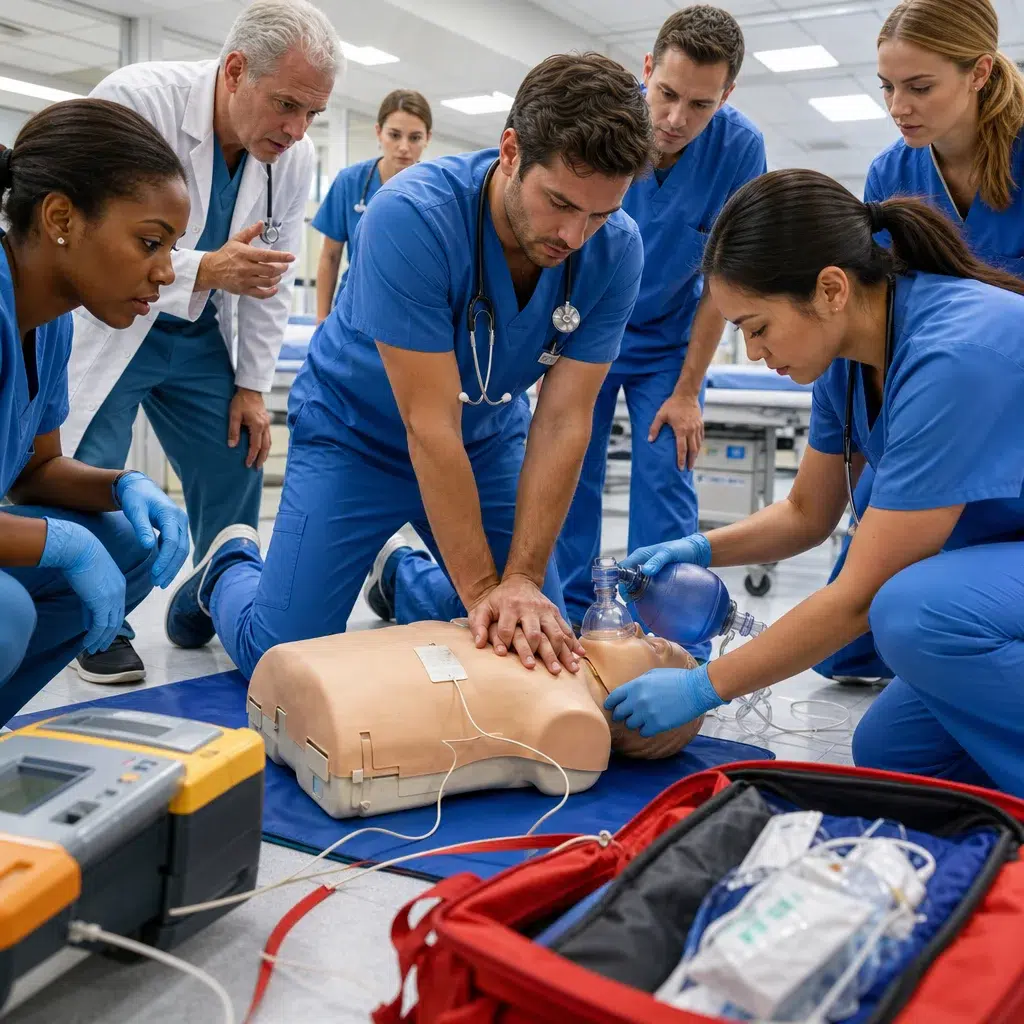
Our blended learning model lets your team progress at their own pace while keeping the in-person component genuinely valuable. You control when your staff logs in, and we track progress so instructors know exactly what to focus on during skills sessions. We’ve deployed this across Concord, Lathrop, and Sunnyvale with excellent results.
Action takeaway: Ask your training provider if they separate online knowledge from in-person skills practice. If they combine them, you’re paying for unnecessary classroom hours.
3. Hands-On Skills Practice with Real Equipment
Certification only counts if your team can actually perform the skills under pressure. Cardiac resuscitation, airway management, and medication administration require muscle memory and confidence. Online modules alone never achieve that.
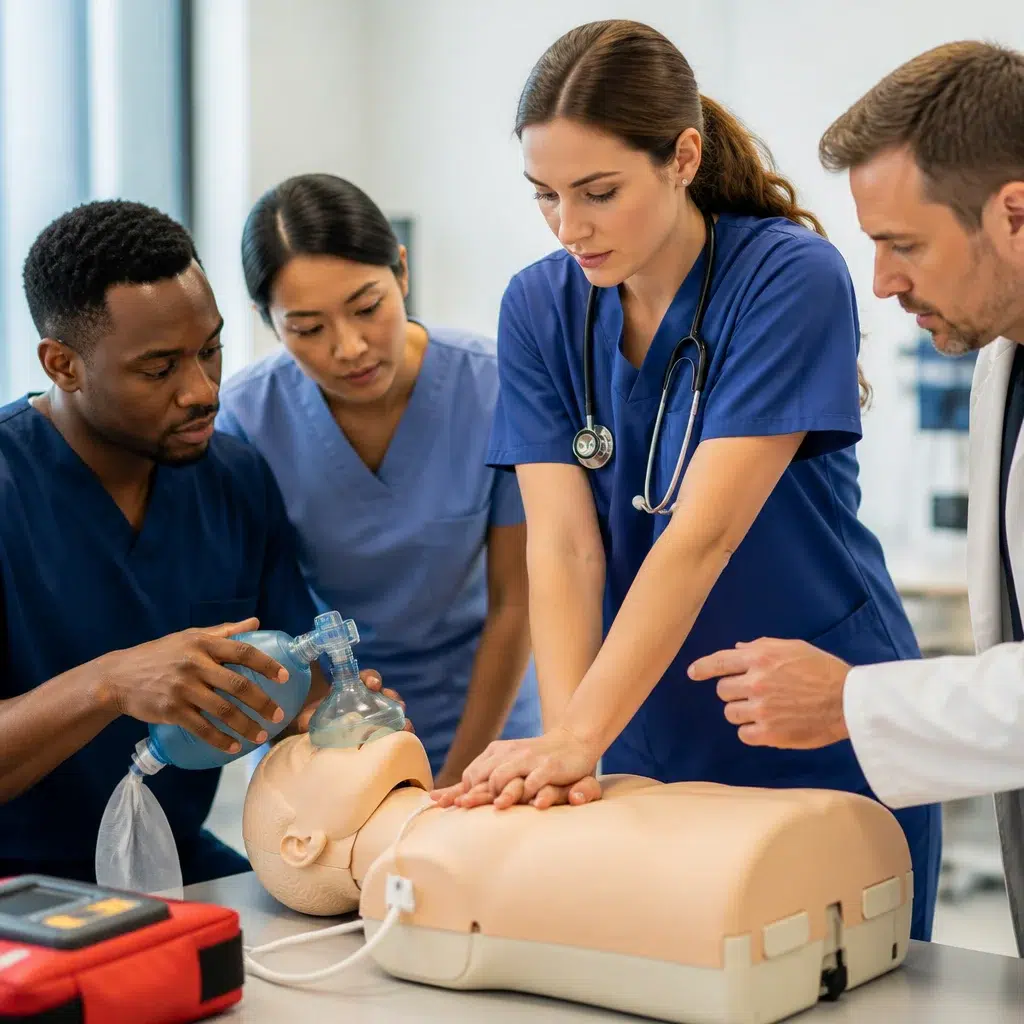
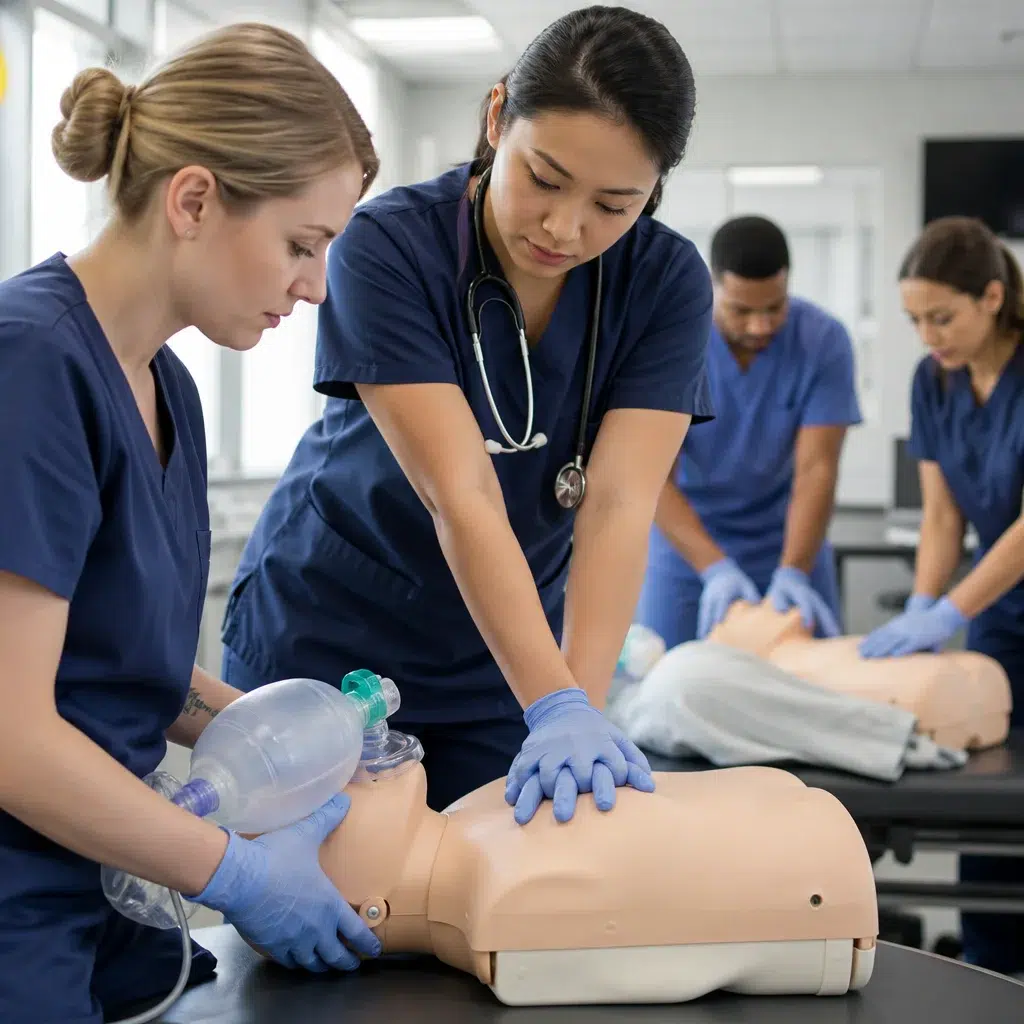
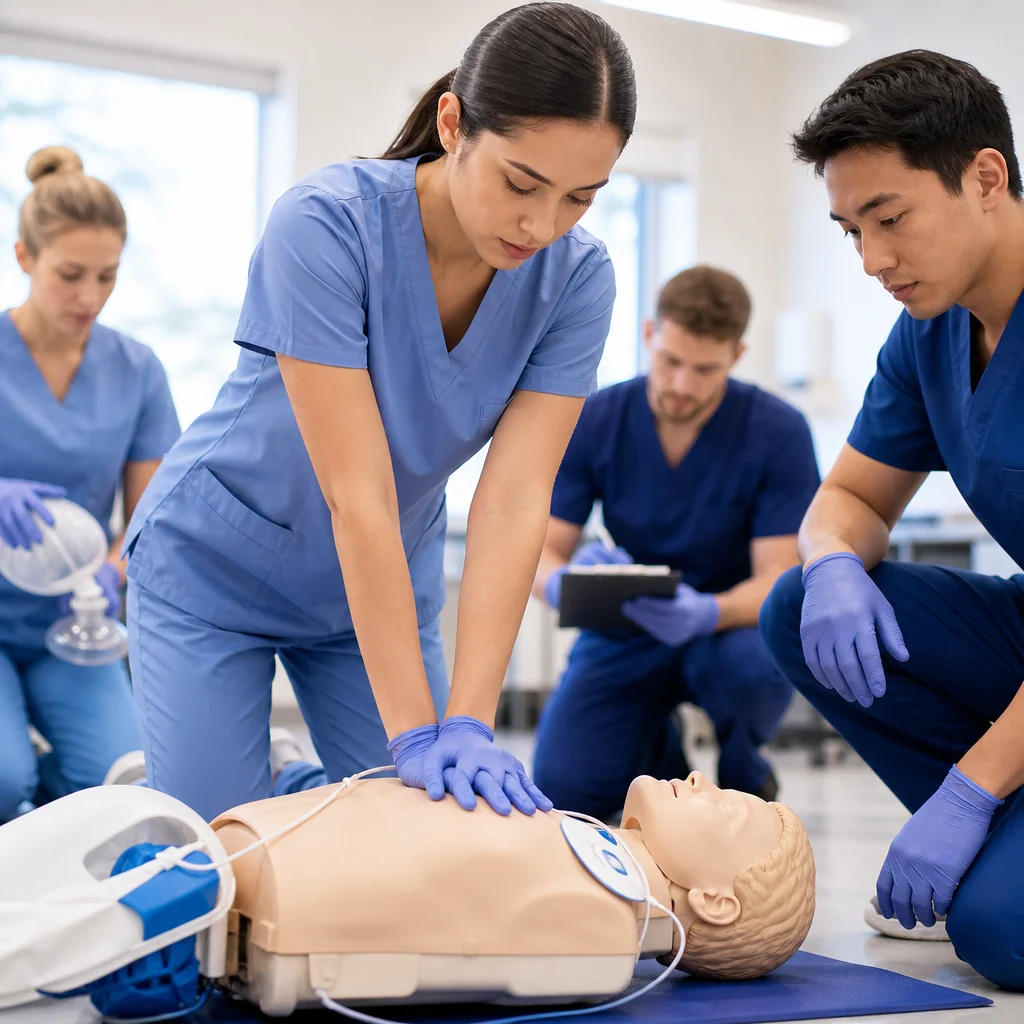
We insist on equipment that matches what your staff uses daily. If your clinic uses adult and pediatric defibrillators, our instructors bring those exact models. If your nurses are familiar with specific IV setups or medication drawers, we practice with those tools. This removes the friction between training and real-world application.
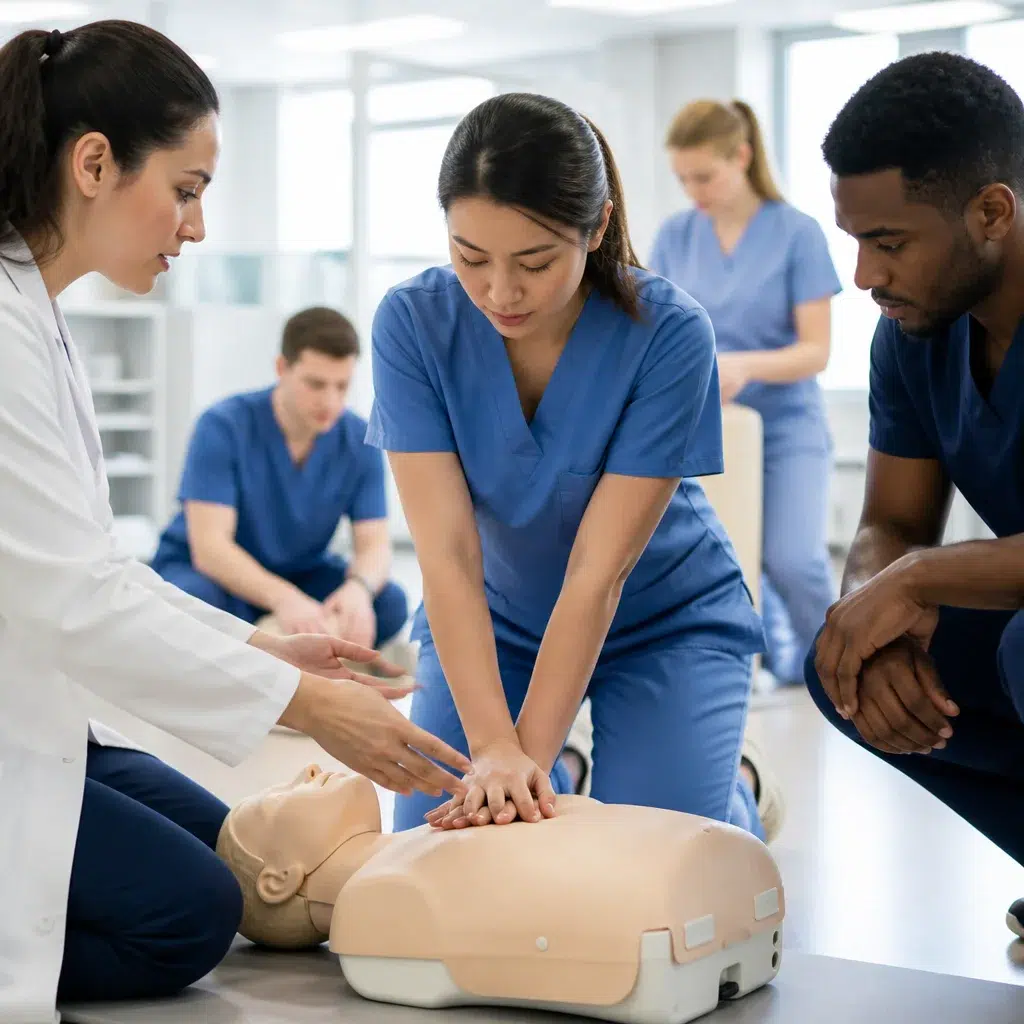
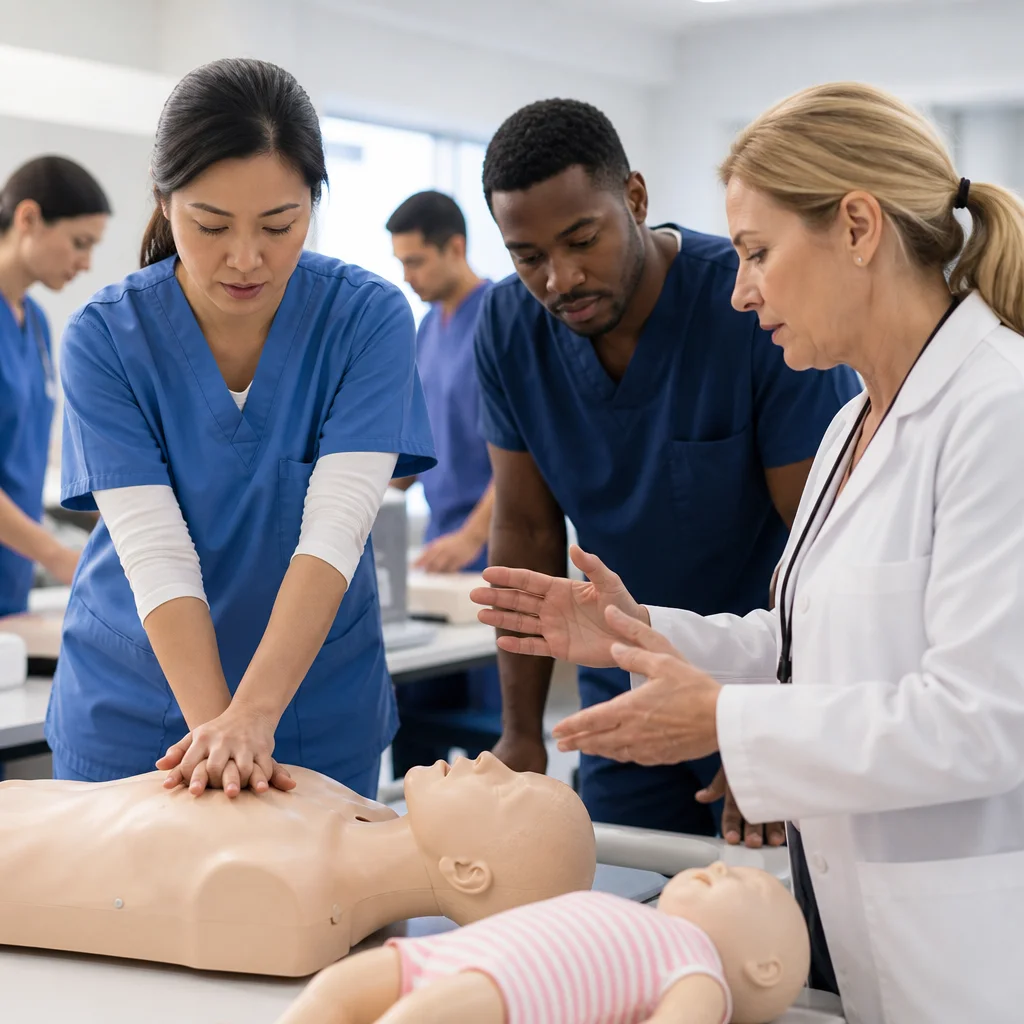
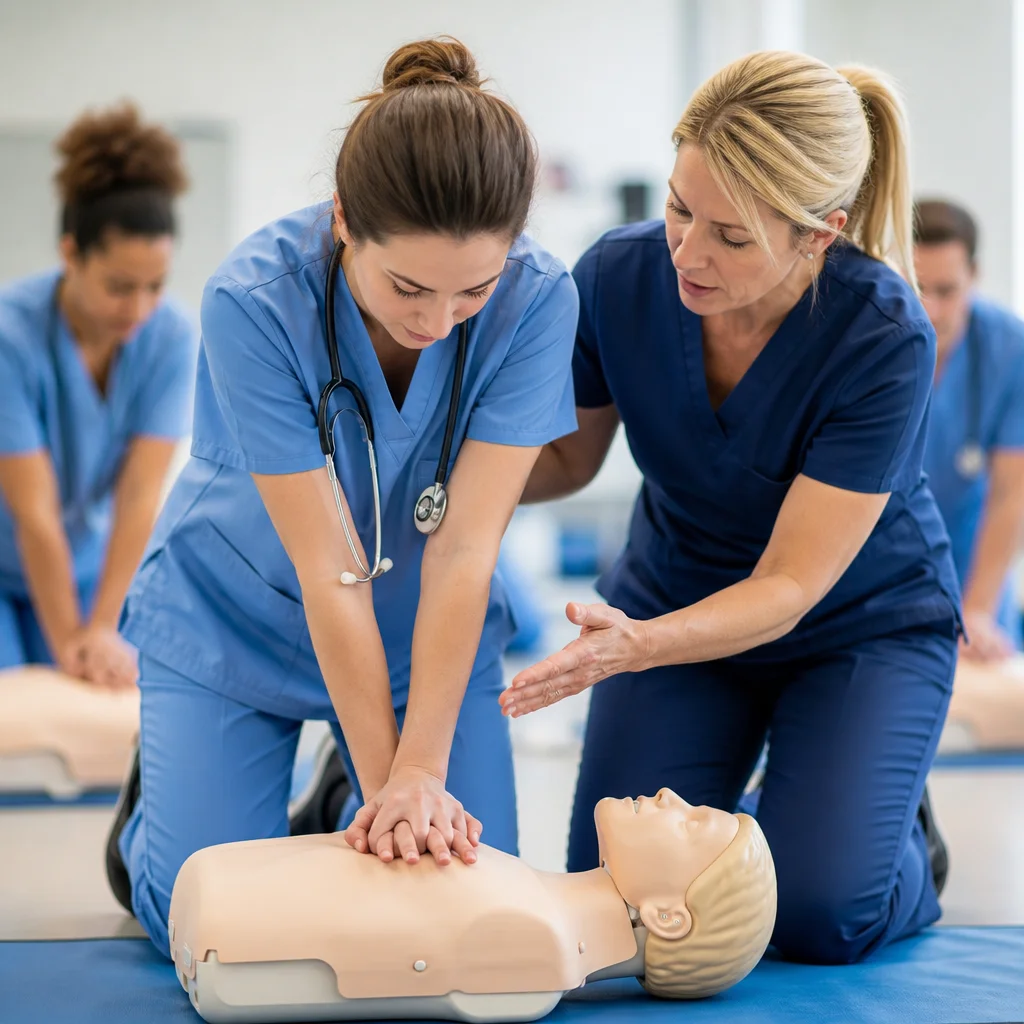
Hands-on practice also means one-on-one correction. An instructor watches your team member perform chest compressions, notices hand placement is shallow, and guides them to proper depth. That correction happens in the moment, on a mannequin, not during an actual emergency. It’s the difference between passing a test and being genuinely prepared.
Group training creates peer learning too. When a dental hygienist in Martinez watches a nurse intubate a pediatric mannequin, they see the technique and ask questions specific to their own clinic role. That cross-functional learning strengthens your entire team’s resilience.
Our instructors are experienced healthcare providers themselves. Many have emergency medicine, critical care, or EMS backgrounds. They bring real scenarios into practice: “What if your medication cart wasn’t stocked correctly?” or “Your algorithm says to give epinephrine, but the pharmacy didn’t send it.” This reality-based training builds confidence.
Action takeaway: Schedule your skills session at a location equipped with the same defibrillators and airway devices your clinic uses. We have over 100 training locations throughout California, so this is almost always possible.
4. Compliance-First Instruction Protects Your Clinic
Your team’s certification isn’t just professional development. It’s a legal and licensure requirement. Gaps in compliance expose your clinic to liability and can complicate credentialing for hospitals, insurance panels, or regulatory agencies.
We structure every group session to ensure your clinic documentation is airtight. Each participant receives a roster with attendance verification, completion dates, and official certification numbers. Your clinic gets a master report showing who’s current and whose expiration date is approaching. This becomes your compliance audit trail.
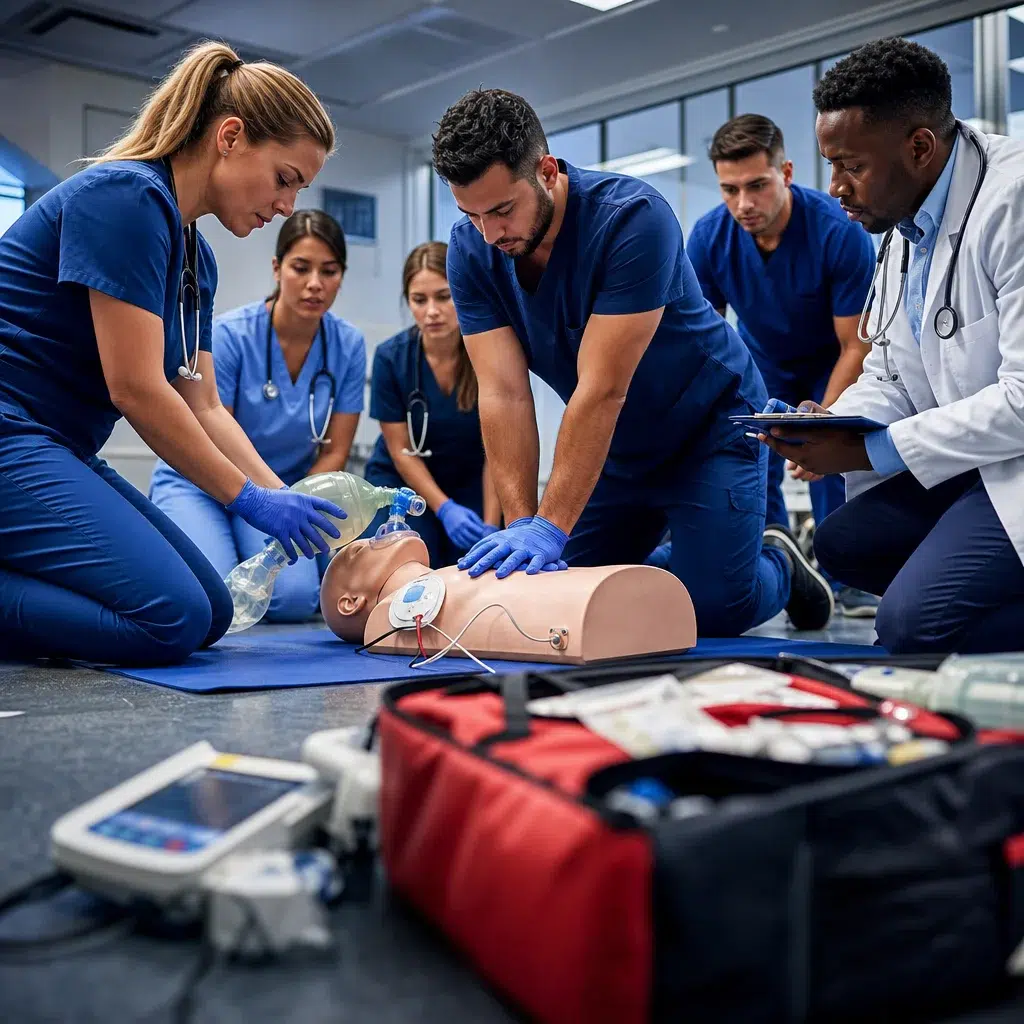
Our instructors teach to the exact standards required for your specialty. Nurses preparing for hospital privileges get instruction aligned with hospital protocols. Dentists completing mandatory continuing education receive clinically relevant scenarios specific to dental emergencies. Paramedics and EMS personnel get the exact protocols required by state regulations.
We also build recertification planning into the initial training. We’ll flag renewal dates before expiration, so your team isn’t scrambling last-minute. A clinic in Walnut Creek realized during their group training that half their staff had certifications expiring in six months. We helped them schedule renewal sessions well in advance, preventing any gaps in coverage.
Action takeaway: Before booking group training, verify with your licensing board or credentialing department exactly which certification standard your team needs. We can match that requirement perfectly.
5. Same-Day Certification Cards for Immediate Readiness
Waiting weeks for certification papers creates operational stress. Your nurse needs to verify ACLS status for a new hospital assignment, or your clinic needs to show current certifications during a state inspection. Delays feel unprofessional and create compliance uncertainty.
We issue official certification cards on the day of training completion. Your team walks out with proof of competency in hand. No waiting for mail. No digital-only status that requires printing and filing. The card is valid immediately for employment, credentialing, and regulatory purposes.
This same-day approach has transformed clinic operations across Modesto, San Francisco, and Santa Rosa. Instead of tracking pending certifications, clinic administrators have physical proof of current status before staff leave the classroom. It’s a small detail that eliminates administrative headaches.
Action takeaway: Insist on same-day certification delivery from your training provider. It’s a marker of operational efficiency and shows they’re organized.
6. Cost-Effective Group Pricing Without Compromising Quality
Group training costs less per person than individual certifications, but the savings depend on how your provider structures pricing. Some training organizations charge high per-person rates and call bulk discounts “savings,” which isn’t true savings if the base price is inflated.
We price group training with a low price guarantee. Your clinic in Hayward pays the same per-person rate as our busiest locations in San Francisco. No hidden setup fees. No additional charges for materials or certification cards. You get transparent per-head pricing that scales fairly whether you’re training 5 people or 50.
For a typical clinic group of 12-15 staff members, the per-person cost drops significantly compared to individual enrollment. A group of 15 nurses, dentists, and support staff training together typically costs 30-40% less per person than if each had enrolled separately. That savings goes straight back to your clinic’s training budget.
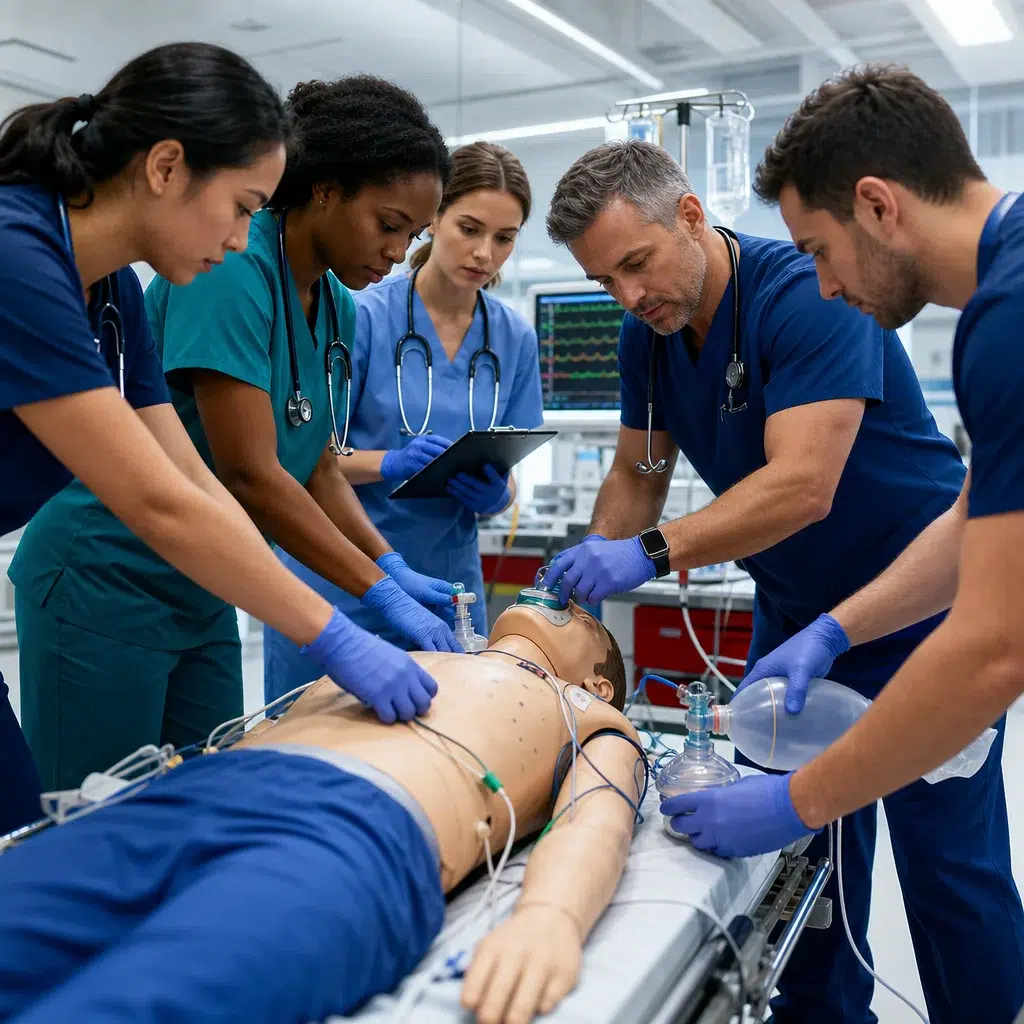
We’ve also eliminated pricing games. Some competitors charge extra for blended learning, or charge for materials on top of tuition. We include everything: online platform access, in-person skills instruction, certification cards, and post-training support, all in one transparent rate. Your budget planning becomes straightforward.
Action takeaway: Compare total cost, not just per-person rates. Ask for an all-inclusive quote that shows exactly what’s covered. If a provider lists separate charges for materials, cards, or access, you’re looking at incomplete pricing.
7. Ongoing Support and Recertification Planning
Certification doesn’t end when your staff leaves the classroom. Real support means helping your clinic stay current over years, not just delivering a one-time training event.
We track your team’s certification expiration dates and send reminders 60 days before renewal deadlines. We also offer priority scheduling for recertification cohorts, so your entire team can renew together at discounted rates. If your clinic has 12 staff members all expiring in the same quarter, we can schedule them together and provide group pricing for the refresh course.
Beyond scheduling, we provide resources your team can use between certifications. Video refreshers on skill performance, downloadable pocket cards for quick algorithm reference, and access to case studies keep your team’s knowledge sharp. A clinic in Elk Grove uses our monthly webinar series to review challenging scenarios without formal recertification.
We’ve also noticed that clinics benefit from knowing which of their team members have specialty certifications. A nurse in your clinic might hold NRP (Neonatal Resuscitation Program) certification that others don’t know about. We help you build a skills inventory so your team understands the depth of expertise already present. That’s the kind of insight that strengthens clinic culture and emergency preparedness.
When your clinic is ready to renew, we leverage what we learned from your first group session. We know your schedule preferences, your equipment, and your team’s learning style. Recertification becomes seamless.
Action takeaway: During your initial group training, ask your provider about their recertification support system. The best training partnerships extend beyond the first certification into ongoing readiness.
—
Group ACLS and PALS training works best when it’s designed around your clinic’s specific needs, not built into a one-size-fits-all mold. We’ve helped medical teams across California, from Visalia to Redding, build training programs that fit seamlessly into their operations while delivering genuine clinical competency.
Start with honest assessment: What’s your clinic’s biggest scheduling challenge? How much time can your team realistically dedicate? Do you need to train everyone simultaneously or can you stagger groups? Once you answer those questions, choose a training partner who customizes their approach accordingly.
We’re built for exactly this work. With over 100 training locations throughout California, flexible scheduling, blended learning options, and transparent pricing, we make group medical clinic training practical and effective. Your team gets certified, your compliance stays clean, and your clinic’s emergency preparedness improves. That’s what matters.