Table of Contents
- Why California Nurses Need PALS Certification Today
- Understanding PALS Requirements for Your Nursing Career
- How Our Blended Learning Approach Works for Your Schedule
- Same-Day Certification: No Lengthy Waiting Periods
- PALS Skills Sessions at Over 100 California Locations
- Expert Instruction Built on Proven Protocols
- Flexible Options: Virtual and In-Person Training
- Corporate and Group Training for Your Healthcare Facility
- Affordable PALS Certification with Our Low Price Guarantee
- Get Certified Today at Your Nearest Location
- Frequently Asked Questions (FAQ)
Why California Nurses Need PALS Certification Today
PALS (Pediatric Advanced Life Support) certification has become non-negotiable for nurses working in California hospitals, urgent care centers, and pediatric settings. Whether you work in emergency departments, acute care floors, or specialty units, your employer likely requires current PALS credentials as a condition of employment and professional licensure.
The reality is straightforward: pediatric emergencies demand specialized knowledge that goes beyond standard CPR. Children’s physiology differs significantly from adults, and treatment protocols reflect those differences. When a child arrives in cardiac arrest or severe respiratory distress, you need immediate confidence in age-appropriate interventions, dosing calculations, and equipment sizing.
California’s healthcare regulatory environment reinforces this necessity. Hospitals and clinics maintain PALS requirements in their credentialing standards, and many nursing positions explicitly list current certification in job descriptions. Beyond compliance, PALS equips you with decision-making frameworks that translate directly to patient outcomes.
Action step: Review your current job requirements and facility policies to confirm renewal deadlines. Mark your calendar if certification expires within the next six months.
Understanding PALS Requirements for Your Nursing Career
PALS requirements vary depending on your specialty and employer, but the fundamentals remain consistent across California healthcare settings. Most acute care environments require initial certification within your first year of employment, followed by recertification every two years.
Your facility’s credentialing department typically specifies which certifications meet their standards. Some hospitals accept only specific course formats, while others maintain flexibility around training providers. The key is ensuring your certificate meets your employer’s documentation requirements and regulatory expectations.
Scope of practice matters too. Emergency department nurses, critical care nurses, and those in pediatric specialties face the strictest requirements. Nurses in medical-surgical units or outpatient settings may have less stringent mandates, though many employers standardize PALS across departments for consistency and patient safety.
One frequently overlooked detail: recertification timing. Your certification remains valid for exactly two years from the date issued. Planning renewal before expiration prevents gaps in credentials and potential employment complications. Many facilities flag certification lapses during credentialing audits, which can temporarily restrict your scope of practice.
Action step: Contact your HR or credentialing department to confirm your facility’s specific PALS requirements and any employer-preferred training options.
How Our Blended Learning Approach Works for Your Schedule
We designed our PALS training around the reality of nursing schedules. Combining online modules with in-person skills sessions lets you complete theory work on your timeline while ensuring hands-on practice with qualified instructors.
Here’s how it flows: You start with our online didactic component, covering pediatric physiology, arrhythmia recognition, medication calculations, and scenario-based decision-making. This self-paced portion typically takes four to six hours and can be completed during quieter shifts or at home. You receive immediate feedback on knowledge checks, allowing you to review challenging concepts before arriving for skills practice.
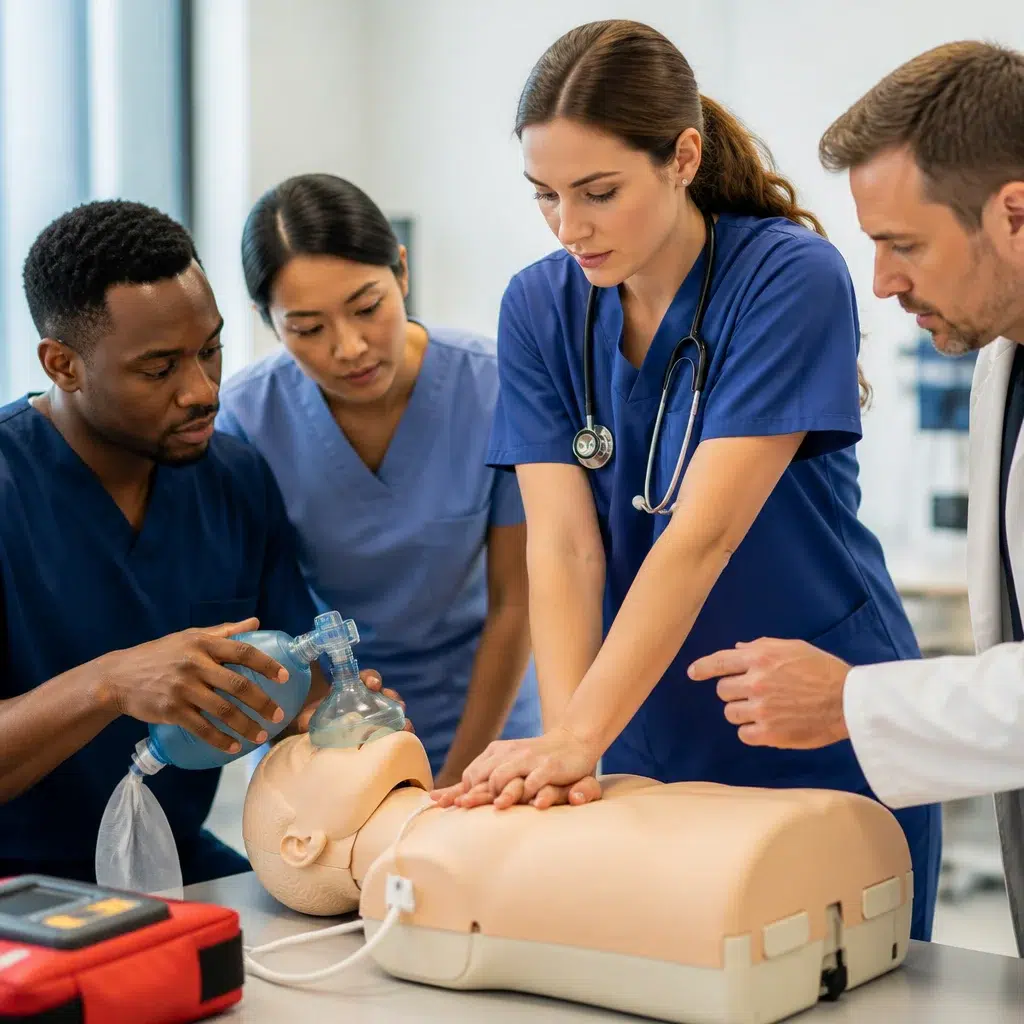
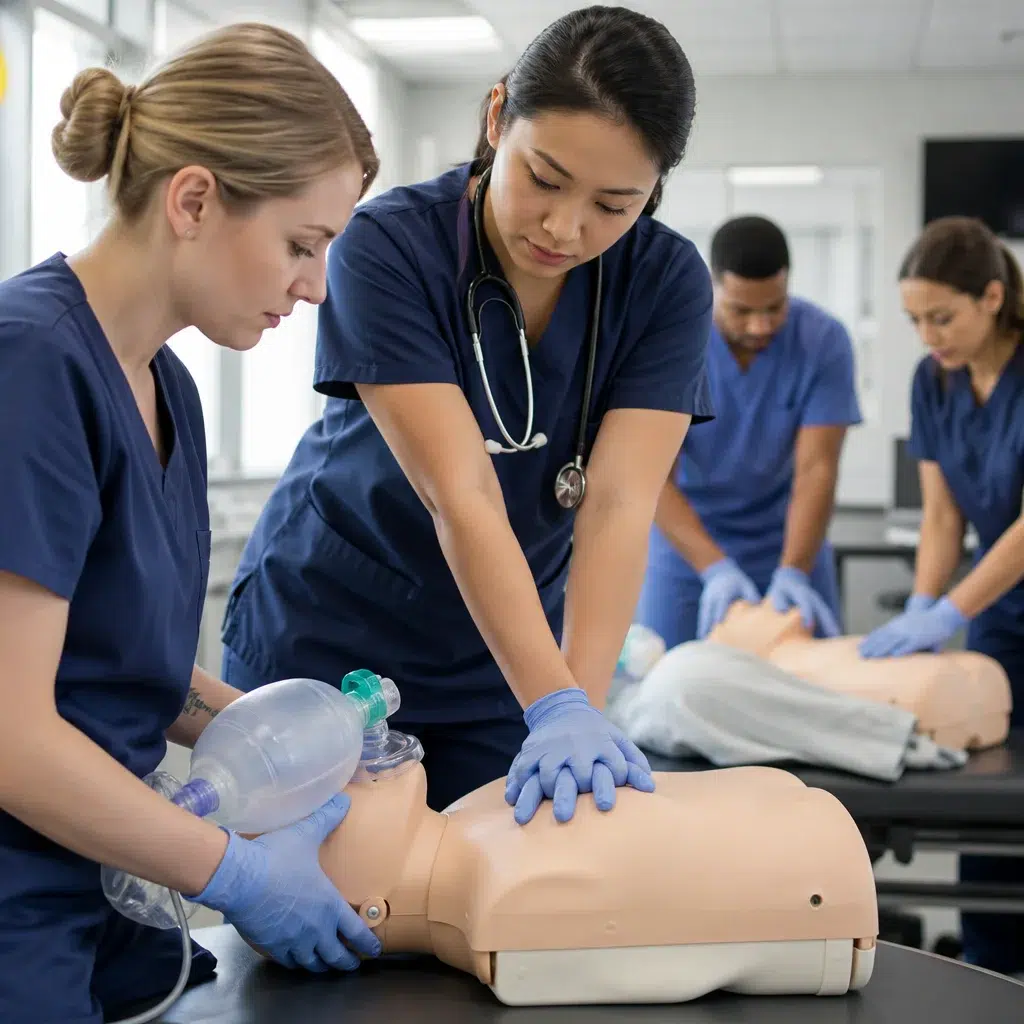
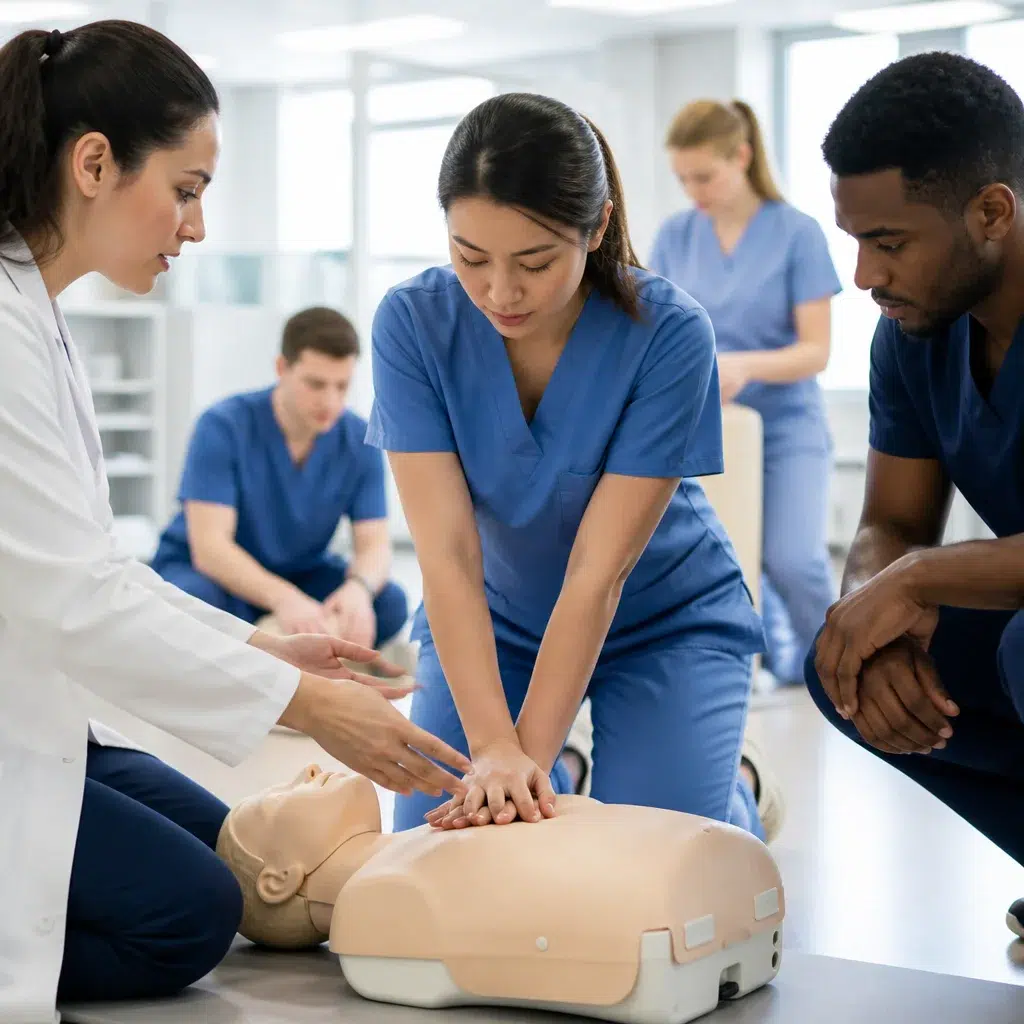
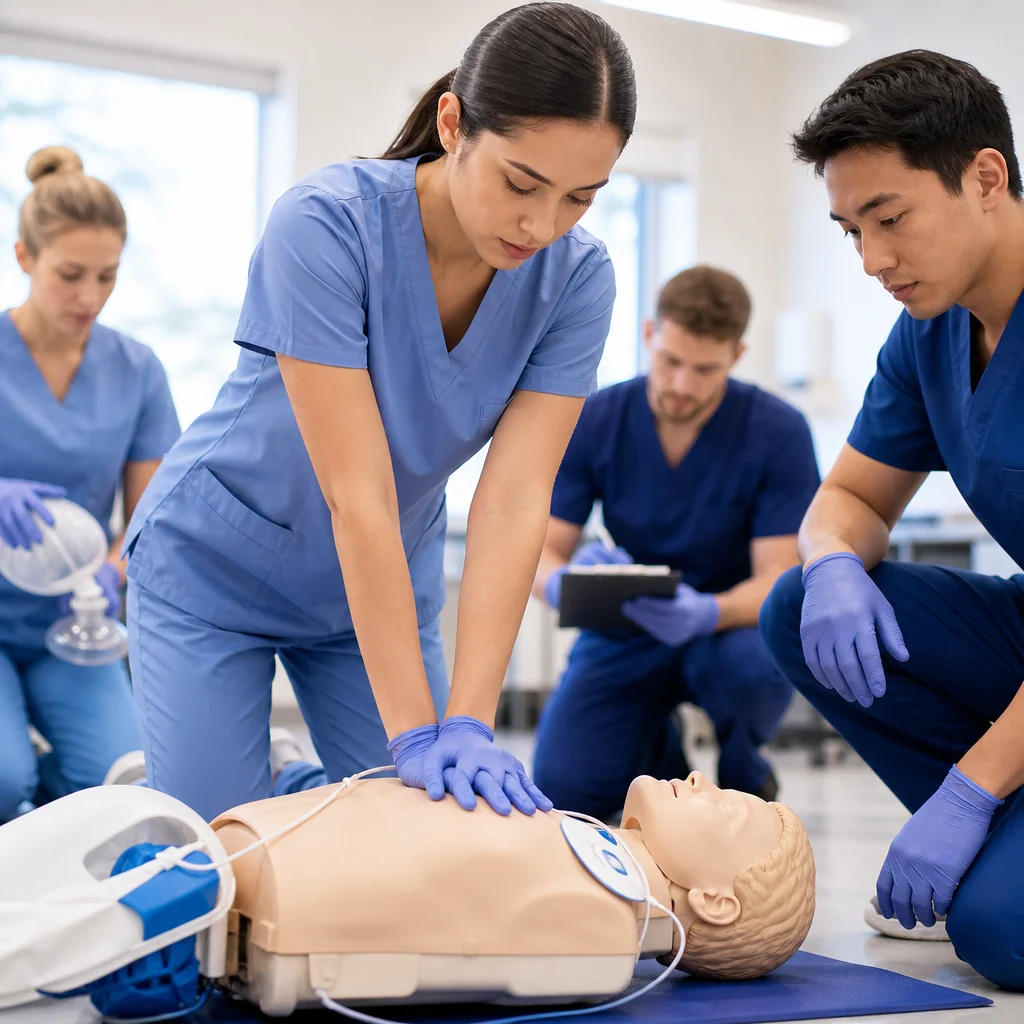
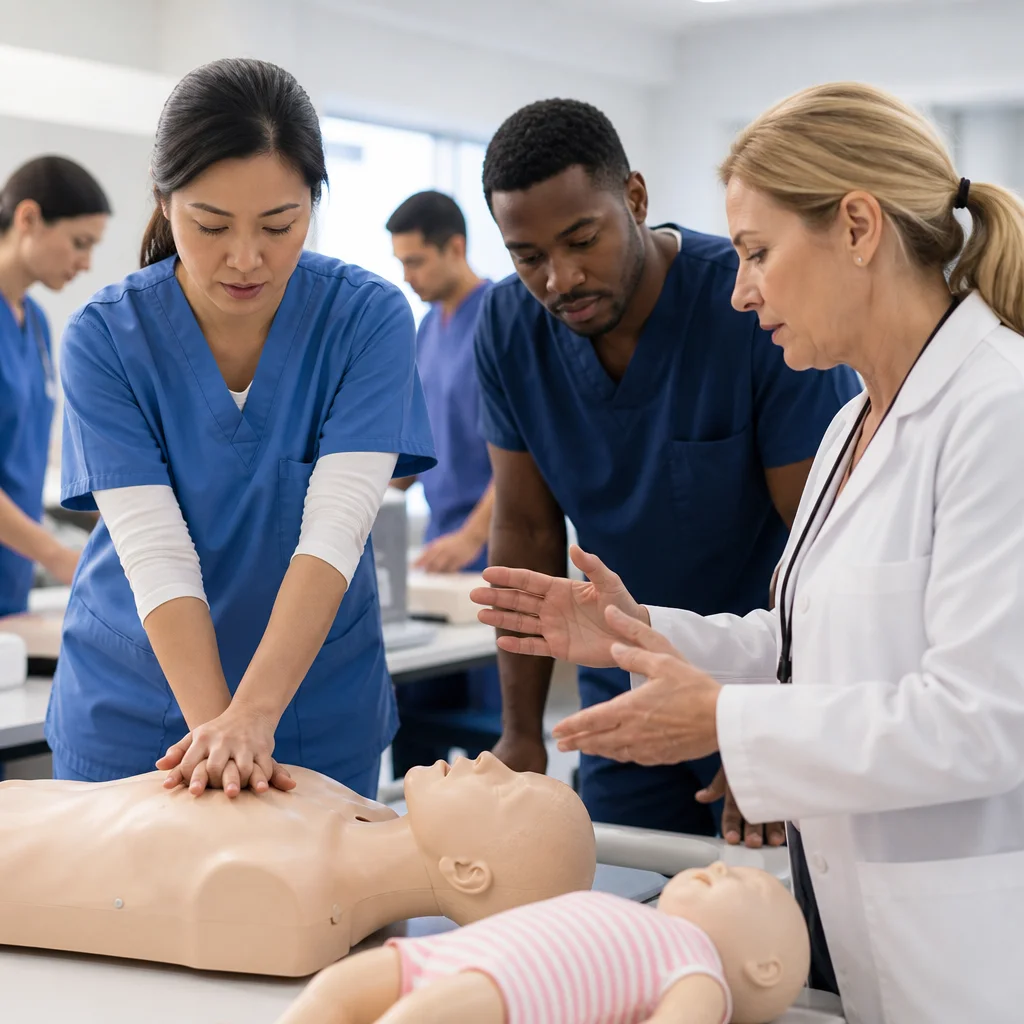
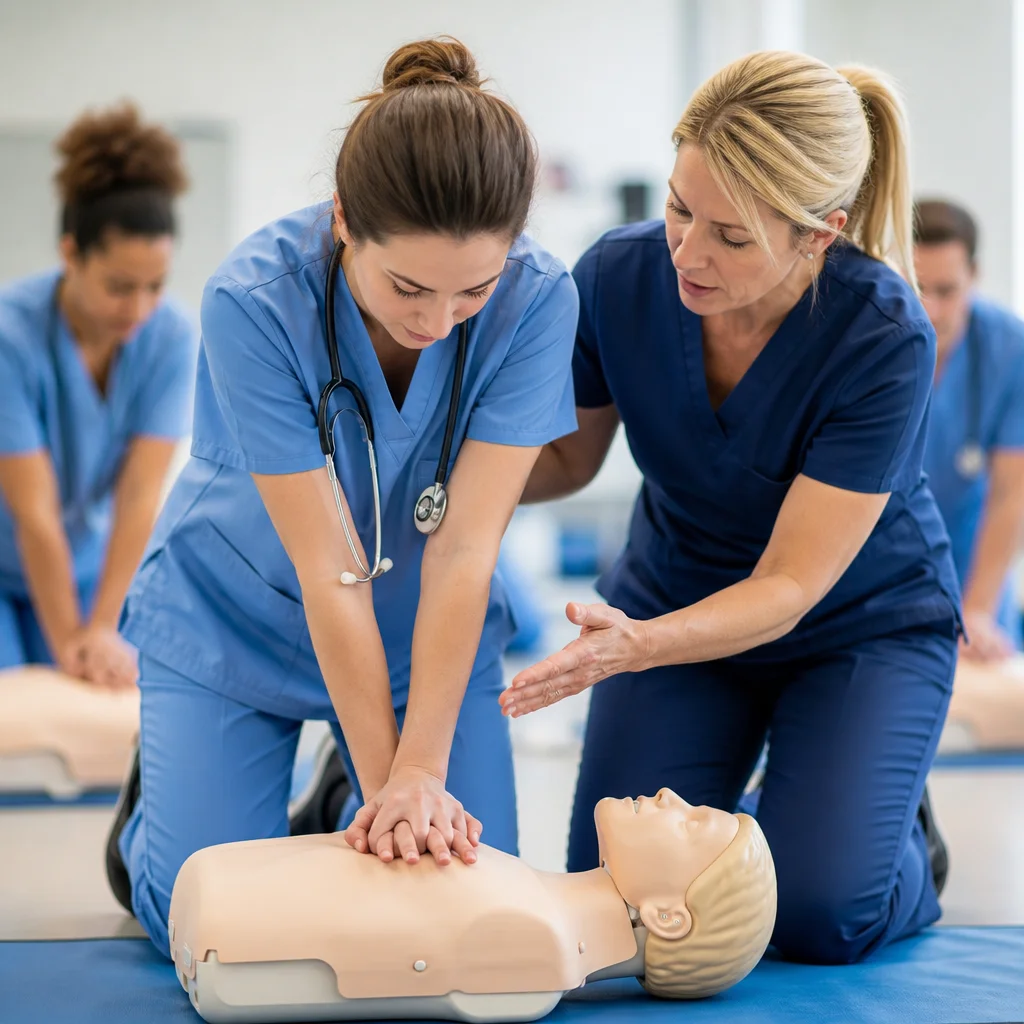
The in-person session focuses entirely on competency validation and practical application. You’ll work through code scenarios using high-fidelity mannequins, practice effective chest compressions on pediatric models, and develop confidence with pediatric airway management techniques. Instructors observe your performance on critical skills, provide real-time corrections, and ensure you meet competency standards before certification.
This hybrid structure eliminates the inefficiency of full-day classroom lectures. Nurses don’t need instructors reading slides when you can absorb that content independently. What you need is expert feedback on skills performance, and that’s where our in-person sessions deliver maximum value.
Action step: Block out four to six hours this week for the online module, then schedule your skills session within two weeks to maintain momentum.
Same-Day Certification: No Lengthy Waiting Periods
We issue your PALS certificate the same day you complete skills validation. No waiting for processing, no delays in credential verification. You walk out with documentation in hand, ready to submit to your employer or facility credentialing office.
This matters more than it might seem. Many nurses need certification updated before a shift change or to maintain continuous coverage during a facility transition. Same-day issuance eliminates the stress of uncertain timelines and ensures you meet workplace deadlines reliably.
Our instructors verify skill competency through standardized assessments during your session. Once you demonstrate mastery of core pediatric resuscitation techniques, your certification is immediately valid. Digital and printed certificates are both available, giving you flexible options for submitting proof to your employer.
Same-day certification also reflects our respect for your time. You’ve already invested effort in learning and travel to your training location. Completing the process in one visit, rather than spanning it across multiple days, keeps friction minimal.
Action step: When booking your session, confirm same-day certification availability and choose a time that works with your shift schedule.
PALS Skills Sessions at Over 100 California Locations
We operate over 100 training locations throughout California, bringing certification within reach regardless of where you practice. Whether you’re based in the Bay Area, Sacramento region, Southern California, or the Central Valley, convenient options exist nearby.
Our network spans major metropolitan areas and smaller regional communities. Find facilities in Alameda, Antioch, Bakersfield, Chico, Folsom, Fresno, Oakland, Palo Alto, Sacramento, San Francisco, San Jose, Santa Rosa, Stockton, Sunnyvale, and dozens of other California cities. Each location maintains consistent instructor quality and equipment standards.
Proximity matters practically. A 15-minute drive to training beats a 90-minute commute, especially when coordinating with your nursing schedule. We’ve positioned our locations strategically so most nurses find an option within reasonable distance from their hospital or home.
Facility selection also impacts your learning experience. Smaller group sizes at certain locations mean more instructor attention during skills practice. Others offer extended evening or weekend hours to accommodate varied shift patterns. Visit our California training locations page to explore options near you and check scheduling availability.
Action step: Identify the three closest training facilities to your work location or home, then check their current class schedules.
Expert Instruction Built on Proven Protocols
Our instructors bring genuine clinical experience into the classroom. Rather than relying on training scripts, they draw from years working in pediatric emergency medicine, critical care, and prehospital settings. This real-world foundation helps you understand not just what to do, but why those interventions matter in actual clinical situations.
Instruction emphasizes pattern recognition and clinical reasoning. You’ll learn to interpret rhythm strips, understand medication delivery rationales, and develop mental models for pediatric resuscitation that transfer directly to bedside decisions. Our instructors create scenarios mirroring genuine clinical presentations you’ll encounter, building confidence through realistic practice.
Protocols taught align with current resuscitation science and evidence-based guidelines. Instructors stay current through ongoing continuing education, ensuring you receive training reflecting the latest evidence and best practices. This matters because resuscitation protocols evolve, and outdated training could lead to suboptimal patient care.
Small group sizes during skills sessions mean personalized feedback. Instructors observe your technique closely, correct form deficiencies immediately, and confirm competency before certification. This individualized approach beats large lecture formats where instructors can’t monitor everyone equally.
Action step: When enrolling, note that you can request instructors with specific clinical backgrounds if your facility emphasizes certain specialties.
Flexible Options: Virtual and In-Person Training
Balancing classroom attendance with nursing responsibilities demands flexibility. We offer both virtual and in-person learning options, letting you choose the format best fitting your circumstances.
Virtual didactic modules work perfectly for nurses managing unpredictable schedules. Complete the online content during breaks, between shifts, or early mornings without traveling to a physical location. You maintain full autonomy over pacing, review, and completion timing.
In-person skills sessions remain essential because pediatric resuscitation requires hands-on practice. You can’t develop proper compression technique or airway management skills through video alone. Our instructors must observe your performance, correct errors in real-time, and confirm competency through direct assessment.
The combination approach maximizes convenience while maintaining educational rigor. Spend theory time wherever you’re most productive, then attend a focused skills session at a time suiting your schedule. Many nurses complete the online module over several evenings, then dedicate a single afternoon to in-person practice and certification.
Some nurses prefer entirely in-person courses where online and skills components happen sequentially on the same day. Both pathways are available, giving you genuine control over your training format.
Action step: Decide whether your schedule favors split learning across multiple days or consolidating everything into one intensive session.
Corporate and Group Training for Your Healthcare Facility
If your hospital, clinic, or healthcare organization needs multiple nurses certified, we offer specialized corporate and group training programs. These arrangements provide convenience, cost efficiency, and scheduling flexibility tailored to facility operations.
Group sessions can be held at your workplace, eliminating travel time and disruption to staffing. We bring instructors and equipment to your location, conducting training in meeting spaces or conference rooms. Your leadership team controls scheduling to minimize census impact and maintain coverage levels.
Bulk pricing substantially reduces per-person costs compared to individual enrollment. Larger groups receive deeper discounts, making facility-wide certification initiatives financially sustainable. Many organizations use our group training to maintain compliance across departments during transition periods or following policy changes.
Customized scheduling accommodates shift rotations. We schedule separate sessions for day shift, night shift, and swing shift staff, ensuring equitable access regardless of work schedule. Facility administrators appreciate this flexibility because it prevents workforce gaps during training.
Corporate training also simplifies documentation and compliance tracking. We provide aggregate reporting showing which staff members completed certification, dates achieved, and expiration timelines. This information supports your facility’s credentialing audits and regulatory inspections.
Action step: Contact your facility’s education director or nursing leadership to discuss group training options and request a quote for your team.
Affordable PALS Certification with Our Low Price Guarantee
We maintain transparent pricing and guarantee the lowest rates for PALS certification across California. No hidden fees, no surprise charges, and no price gouging on certifications nurses need for employment compliance.
Our low price guarantee means you won’t find better value elsewhere. If you discover lower pricing for comparable PALS training meeting your facility’s requirements, we’ll match it. This commitment reflects our belief that cost shouldn’t create barriers to professional certification.
Transparent pricing includes everything: online didactic content, instructor fees, skills assessment, and your certificate. You see the total cost upfront with no additional charges at check-in or after completion. Many nurses appreciate this clarity after experiencing surprise fees from other training providers.
Individual enrollment costs significantly less than training through hospital systems or alternative providers. Groups receive even deeper discounts, making facility-wide programs highly cost-effective. Some employers subsidize or fully cover employee training, so confirm whether your organization reimburses certification expenses.
Flexible payment options accommodate different financial situations. We accept major credit cards and offer payment plans for groups, removing financial obstacles to timely recertification.
Action step: Compare our published pricing to any competitor quotes you’ve received, then contact us with pricing questions or to activate our low price guarantee.
Get Certified Today at Your Nearest Location
Your pathway to current PALS certification is straightforward. Browse available class schedules at your preferred location, complete online enrollment, and confirm your spot in an upcoming session.
Start by identifying your nearest training facility. With over 100 California locations, you’ll find convenient options whether you’re in the Bay Area, Sacramento, Central Valley, or other regions. Each location maintains current scheduling information showing available dates and times.
Online registration takes just minutes. Provide your contact information, select your preferred training format, and choose your session date. You’ll receive immediate confirmation along with access to your online didactic module if selecting our blended approach.
Arrive approximately 15 minutes early to your skills session. Bring a valid photo ID and any employer-specific documentation requirements. Our check-in process is efficient, and instructors will provide equipment overview and session logistics before skills practice begins.
Many nurses complete the entire process within two weeks from initial enrollment to certification in hand. This speed reflects our commitment to removing barriers between you and professional credentials your career demands.
Visit our California training locations to explore facilities near you, review current availability, and begin your enrollment today. Your professional competency in pediatric advanced life support starts with taking this single next step.
Register for a class today.
Frequently Asked Questions (FAQ)
What are the PALS certification requirements for nurses working in California?
We require nurses to complete both our virtual coursework and an in-person skills session to meet certification standards. The virtual portion covers pediatric emergency scenarios and treatment protocols, while our skills session validates your ability to perform critical interventions on manikins. Our certification is recognized across California healthcare facilities and satisfies licensing and employment requirements for nursing professionals.
How quickly can I get my PALS certification with your program?
We offer same-day certification through our blended learning model. You can complete the virtual component on your schedule, then attend a skills session at one of our 100+ California locations. Many nurses finish both components within a single week, with no lengthy waiting periods between completion and receiving your certificate.
Do you offer PALS training at locations convenient to me?
We have training centers throughout California including multiple locations in San Francisco, San Jose, Sacramento, Oakland, and most major Bay Area and Central Valley cities. You can attend the virtual portion from anywhere, then choose an in-person skills session at whichever location works best for your schedule.