Table of Contents
- 1. Understanding AHA Certification Mandates for Your Practice
- 2. Maintaining Current BLS and ACLS Credentials for All Staff
- 3. Implementing Proper Documentation and Record-Keeping Systems
- 4. Establishing Recertification Schedules to Avoid Compliance Gaps
- 5. Creating Competency Assessment Protocols for Licensed Personnel
- 6. Conducting Regular Compliance Audits Within Your Organization
- 7. Training New Hires with Current AHA-Aligned Curriculum
- 8. Ensuring Immediate Access to Same-Day Certification Solutions
- Frequently Asked Questions (FAQ)
1. Understanding AHA Certification Mandates for Your Practice
Running a medical practice in California means navigating strict licensing requirements that directly impact your ability to operate. One of the most critical compliance elements involves maintaining current certifications aligned with American Heart Association (AHA) standards. State licensing boards conduct audits specifically targeting whether your staff holds valid credentials, whether your documentation meets standards, and whether your training protocols are defensible during inspection.
The challenge? Many practices discover gaps too late, sometimes during audits themselves. We’ve worked with hundreds of California healthcare providers across locations from Sacramento to San Jose, and the ones who maintain compliance consistently share eight key practices. This guide walks you through each requirement so you can audit your own practice before regulators do.
Your practice type and staff roles determine which certifications the state actually requires. Nurses need Basic Life Support (BLS). Physicians and advanced practice providers typically need Advanced Cardiac Life Support (ACLS). Pediatric providers need Pediatric Advanced Life Support (PALS). Critical care specialists often need multiple credentials.
California’s licensing boards don’t just verify that certificates exist. They verify that the certifications match current job responsibilities and that the training is recent enough to be relevant. A nurse working in critical care who holds only BLS (and not ACLS) creates a compliance risk, even if the facility might function without it.
Start by documenting which certifications each staff role requires. Cross-reference your job descriptions against state nursing board guidelines, medical board requirements for physicians, and paramedic regulations if applicable. This creates your compliance baseline. If you’re unsure which credentials are truly mandatory versus recommended, contact your state licensing board directly rather than making assumptions.
Actionable step: Schedule a 30-minute audit with your compliance or human resources lead to map every position against required certifications. Note expiration dates for each staff member in a centralized system.
2. Maintaining Current BLS and ACLS Credentials for All Staff
Expired credentials are the most common compliance violation we see. BLS certification lasts two years; ACLS typically lasts two years as well. When auditors pull staff files, they’re looking at the expiration date first.
Many practices fall into a renewal trap where they accidentally let staff lapse between jobs, during leave, or simply due to scheduling conflicts. One nurse becomes two becomes five, and suddenly you have a staffing crisis that also triggers a compliance violation.
The solution requires a proactive tracking system that reminds you 90 days before expiration. Whether you use spreadsheets, HR software, or dedicated credential management platforms, the system must flag renewals automatically so nothing slips through.
We recommend building recertification scheduling directly into your annual onboarding and performance review cycles. When you hire someone in Hayward, Fremont, or Milpitas, capture their expiration date at day one. When you conduct annual reviews, verify current status and schedule renewals for the following quarter.
Actionable step: Set calendar reminders for 90 days before each staff member’s expiration date, or audit your current HR system to confirm it already tracks these dates and sends alerts.
3. Implementing Proper Documentation and Record-Keeping Systems

Auditors don’t just verify that staff hold current credentials. They examine your documentation system to confirm you can actually produce evidence. A staff member with a valid BLS card in their wallet doesn’t satisfy compliance if your practice can’t document it.
Develop a centralized credential file for each staff member. This file should contain the original certificate (or digital copy), the date obtained, the expiration date, and the issuing organization. Digital storage with backup is preferable because paper gets lost, fades, and becomes difficult to retrieve during an audit.
Your documentation system needs to be accessible during an audit. If regulators ask to see all current BLS certifications for your nursing staff, you should be able to produce that list within minutes, not hours. When auditors find disorganization, they often expand the scope of their inquiry.
Consider using cloud-based credential management solutions that allow you to upload certificates once and maintain version control. Some practices photograph cards and store them in secure shared drives. The format matters less than consistency and accessibility.
Actionable step: Audit your current system today. If you can’t produce a complete list of all staff certifications with expiration dates in under 10 minutes, redesign your storage process immediately.
4. Establishing Recertification Schedules to Avoid Compliance Gaps
Timing is everything. When staff members have certifications expiring on different schedules, coordination becomes messy. A better approach clusters recertification windows so you’re not managing credential renewals year-round.
Many practices stagger training so that roughly one-third of staff recertify each quarter, or bundle renewals around annual performance reviews. This concentrates the administrative burden and makes it easier to ensure no one falls through the cracks.
Consider your practice’s operational capacity. If you train 10 nurses at once and two call out sick, you still have eight trained staff. If you train one at a time and they become unavailable, you lose coverage. Batch scheduling improves both compliance and operational resilience.
For multi-location practices across California, from Berkeley to San Jose to Sacramento, establishing consistent recertification windows across all sites prevents situation where one location maintains compliance while another drifts.
Actionable step: Map your staff’s current expiration dates on a calendar and identify your optimal recertification windows based on operational needs and staff availability.
5. Creating Competency Assessment Protocols for Licensed Personnel
Holding a current certificate doesn’t guarantee competency. Auditors increasingly examine whether your practice validates that staff can actually perform the skills certified training covers. This is especially critical for BLS and ACLS, where hands-on performance matters.
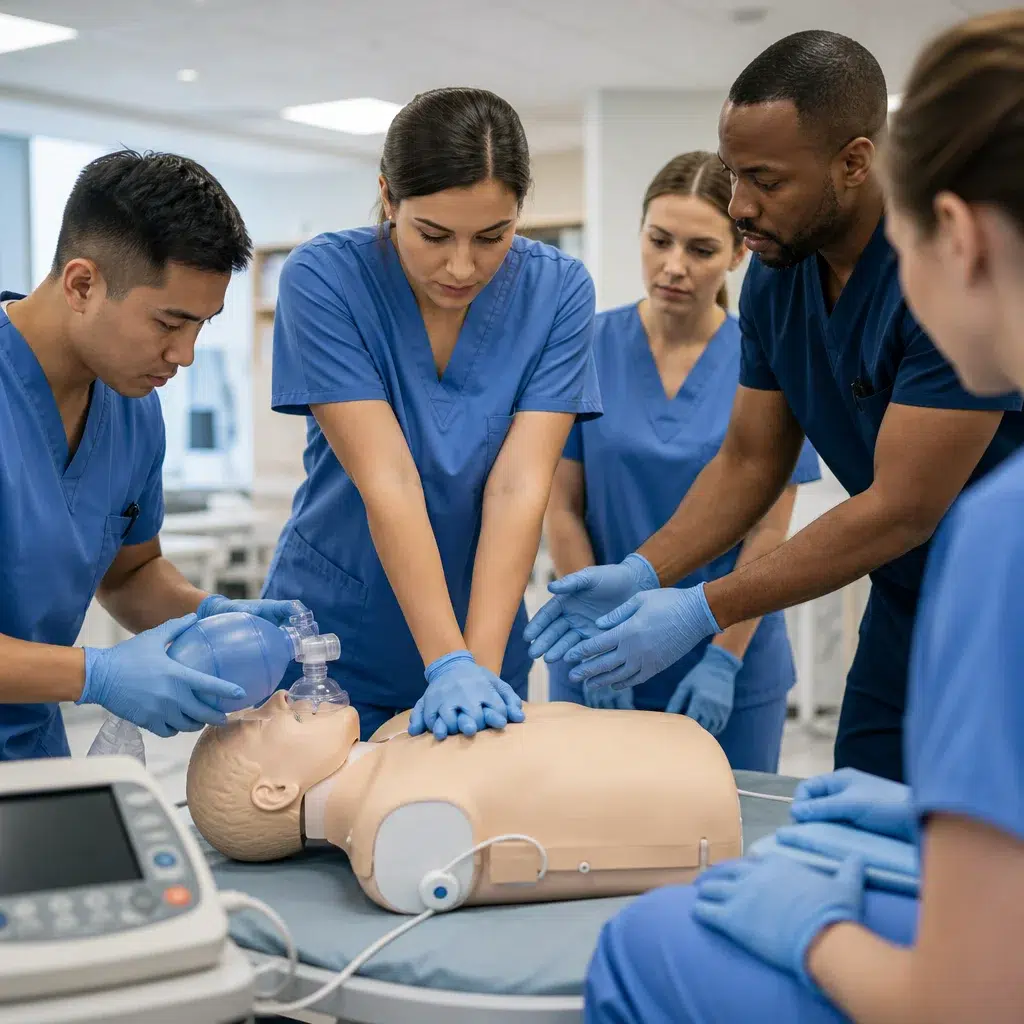
Competency assessments should occur annually at minimum, ideally during orientation and at regular intervals throughout employment. Use practical scenarios: Can this nurse effectively perform chest compressions? Can the physician recognize and treat a shockable rhythm? Can staff operate your specific defibrillator?
Documentation of these assessments becomes part of your compliance file. If an auditor asks whether you verified competency for a specific staff member, you should have dated notes demonstrating the assessment occurred.
Some practices hire external instructors to conduct competency checks annually, creating third-party documentation that carries additional credibility. Others conduct internal peer assessments with documented results. Both approaches satisfy compliance if documented consistently.

Actionable step: Design a simple one-page competency assessment form specific to your practice’s most common emergency scenarios, then conduct assessments during your next staff meeting or orientation cycle.
6. Conducting Regular Compliance Audits Within Your Organization
Don’t wait for state regulators to audit you. Conduct internal audits quarterly or at minimum semi-annually to catch gaps before they become violations.
A basic internal audit checklist includes:
- Are all staff certifications current and documented?
- Do certifications match job responsibilities?
- Are skills stations or equipment (like defibrillators) accessible and functioning?
- Have new hires completed required training within specified timeframes?
- Are competency assessments current and documented?
Assign ownership. One person should own compliance tracking and should report findings to leadership quarterly. This creates accountability and prevents the “no one’s responsibility” situation that leads to compliance drift.
Document your audit findings and corrective actions. If you discover expired certifications, document when you remediated them. Auditors appreciate seeing evidence that you identify and fix problems proactively.
Actionable step: Schedule your first internal compliance audit for next month. Use the checklist above or contact your licensing board for their audit expectations specific to your practice setting.
7. Training New Hires with Current AHA-Aligned Curriculum
Every new staff member must complete required training before or immediately upon hire. State regulations typically specify that staff cannot perform patient care duties without current credentials.
Your onboarding process should make training a non-negotiable first step. Some practices hire staff on day one and schedule training for week two, which creates a compliance window where uncertified staff are providing patient care. Instead, require certification before the first shift or complete training during the first day of employment.
When selecting training providers, ensure they teach current AHA curricula. Training standards update periodically, and auditors verify that your staff learned the most recent protocols. Outdated curriculum creates a different type of compliance risk.
For multi-location practices, using a training provider that serves your entire network across locations like Oakland, Pleasanton, and Stockton simplifies coordination. You get consistent curriculum and scheduling flexibility across your organization.
Actionable step: Review your current onboarding checklist and confirm that certification training occurs before or during day one of employment, not weeks later.
8. Ensuring Immediate Access to Same-Day Certification Solutions
Real life creates urgencies. A staff member’s certification expires unexpectedly, or you hire someone and need them trained immediately. Your practice needs access to training that accommodates urgent timelines without disrupting operations.
We offer BLS certification courses offered daily across more than 100 California locations, from Alameda to Visalia. This means whether your need arises in Campbell, Davis, or San Francisco’s Mission District, same-day or next-day training is typically available.

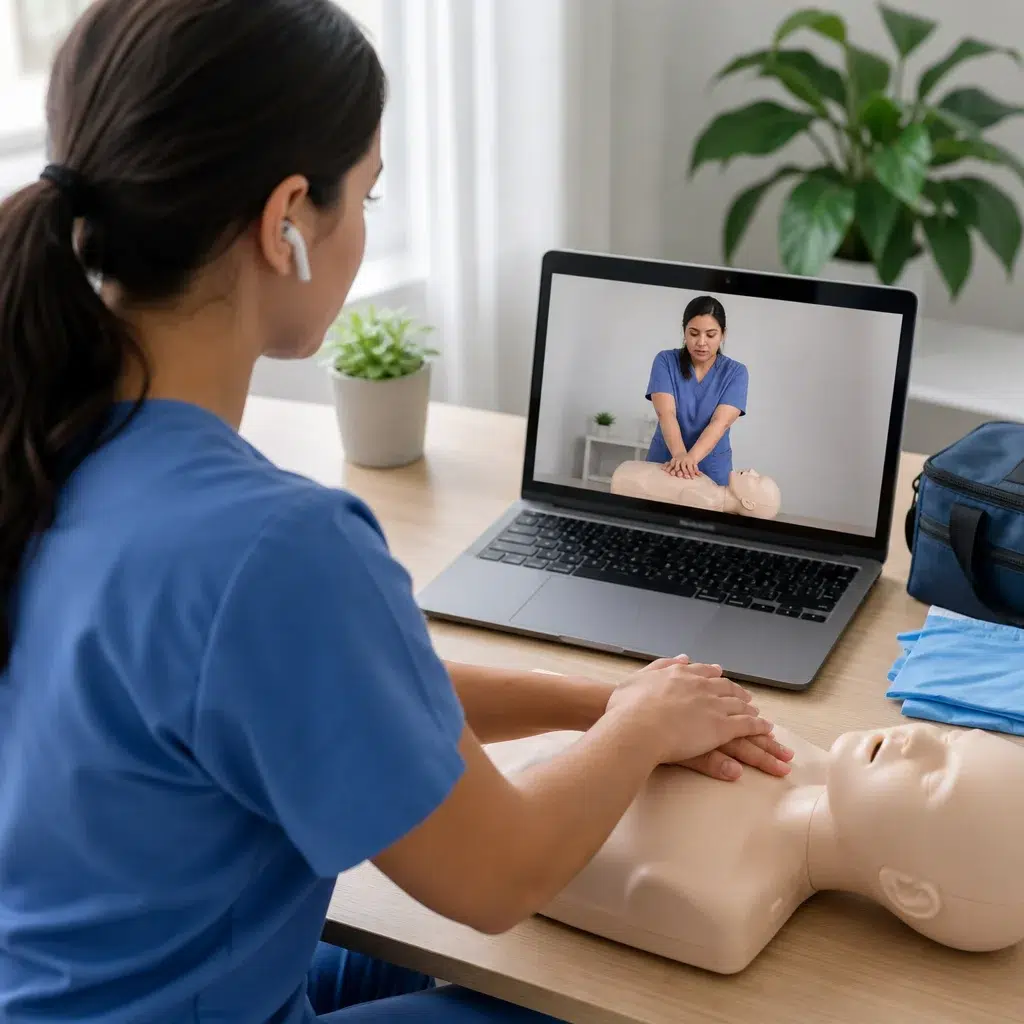
Our blended learning model combines online instruction with hands-on skills sessions, so staff can complete classroom work on their schedule and arrive for practical training already prepared. This approach gets people certified faster while reducing time away from patient care.
The cost matters too. We maintain a low price guarantee on all classes, meaning you don’t pay a premium for urgent or same-day training. This removes the financial barrier to proactive compliance.
When you discover a gap, whether it’s one staff member or five needing renewal, you should be able to schedule training within days, not weeks. That capability prevents emergency situations where you have uncertified staff and limited options.
Actionable step: Identify your nearest training location and save our contact information. When compliance gaps arise, you’ll know exactly where to get staff trained immediately rather than scrambling under pressure.
—
Compliance with AHA certification requirements protects your practice’s license, your patients’ safety, and your team’s professional standing. The eight practices outlined here create a system where compliance becomes routine rather than reactive. Start with understanding your specific requirements, then build documentation and scheduling systems that prevent gaps.
We’re here to support your compliance journey. With convenient locations throughout California and flexible scheduling, we make it easy to keep your entire staff current. When you need training today or next week, we have capacity. Our instructors deliver evidence-based, hands-on instruction that staff actually remember when emergencies occur.
Contact us to discuss your practice’s specific training needs and scheduling constraints. We’ll work with you to create a compliance plan that keeps your team certified and your practice audit-ready.
For further reading: Stockton CPR & BLS.
Register for a class today.
Frequently Asked Questions (FAQ)
What certifications do we require our staff to maintain for California medical practice compliance?
We require our clients to maintain current BLS certification for all clinical staff and ACLS certification for physicians, nurses, and advanced practice providers. Depending on your specialty, we also offer PALS for pediatric providers and NRP for those working in neonatal settings. Our courses are designed to align with the specific credential verification standards your practice licensing board requires during audits.
How does our blended learning approach help practices stay compliant without disrupting operations?
We combine virtual instruction with in-person skills sessions so your staff can learn flexibly around patient care schedules. This means your team completes the knowledge portion online at their own pace, then attends a focused hands-on session at one of our 100+ California locations to demonstrate competency and earn certification. We also offer daily classes throughout California, making it easier to schedule staff certifications before compliance deadlines.
What documentation support do we provide for your licensing audit preparation?
We generate detailed completion records and verification certificates that clearly show certification dates, validity periods, and specific course content covered. Our system helps you track expiration dates so we can notify you when recertification is due, preventing the gaps that auditors commonly flag during practice inspections.