Table of Contents
- Current AHA BLS Certification Standards for Dentists
- Renewal Timeline and Expiration Requirements
- Hands-On Skills Demonstration and Practical Assessment
- CPR Compression Techniques Specific to Dental Settings
- Emergency Response Protocols in Your Practice
- Same-Day Certification Through Our California Locations
- Why Our AHA-Aligned Program Exceeds State Requirements
- Frequently Asked Questions (FAQ)
Current AHA BLS Certification Standards for Dentists
As a dental professional in California, you know that maintaining your Basic Life Support (BLS) certification isn’t optional—it’s a requirement tied directly to your license renewal. The California Dental Board mandates that all active dentists demonstrate current BLS competency, and the standards have become more rigorous over recent years. We’ve guided thousands of dental professionals through this renewal process, and we’re here to walk you through exactly what you need to know.
Your certification status affects your ability to practice. Many dentists wait until the last minute, only to discover their renewal can’t be processed without proof of current BLS training. We’ve built our entire program around preventing this scenario and making the process straightforward, affordable, and genuinely valuable for your clinical practice.
The American Heart Association (AHA) sets the gold standard for BLS training across healthcare, and that standard applies directly to your licensure requirements. When California dental regulators reference “acceptable BLS certification,” they’re expecting AHA-certified instruction or equivalent approved providers. We deliver AHA-aligned training that meets the exact standards California’s licensing board recognizes.
Current AHA BLS standards focus on high-quality CPR delivery with minimal interruptions, early defibrillation, and integrated team-based response. For dentists, this means you’ll learn protocols appropriate for both adult and pediatric patients—critical since your practice may serve younger patients. The curriculum emphasizes compression-only CPR for adults, proper hand positioning, and the role of automated external defibrillators (AEDs).
Our instructors ensure you understand not just the mechanics but the reasoning behind each guideline update. Since standards evolve roughly every five years, we keep our materials current with the latest AHA revisions. When you train with us, your certification document carries the weight that state boards expect.
What to do next: Verify your current certification expiration date. If it’s within six months of expiring, reserve your spot in one of our classes across California to avoid any gaps in your licensing status.
Renewal Timeline and Expiration Requirements
Your BLS certification expires on a fixed date, and California’s dental licensing board won’t process renewal applications if your BLS has lapsed. The board reviews this during every license renewal cycle, typically every two years depending on your renewal date. This means timing your training strategically matters.
Most dentists must renew BLS every two years, though some certifications (like those obtained through certain hospital pathways) may follow different schedules. We recommend renewing with at least two to three months of buffer before your license renewal paperwork is due. This protects you from administrative delays and gives you flexibility if you need to retake any portion of the course.
California doesn’t recognize expired certifications retroactively—once your BLS lapses, you’ll need fresh training before you can legally practice. We’ve seen dentists miss renewal deadlines because they didn’t plan ahead. Our scheduling system lets you book classes months in advance across over 100 California locations, including Sacramento, San Jose, San Francisco, Los Angeles, and smaller cities throughout the state.

If your certification has already expired, don’t worry. Our same-day certification programs mean you can get recertified without lengthy waiting periods. Many of our dental professional clients come to us specifically because we offer flexible scheduling that fits busy clinical calendars.
What to do next: Mark your BLS expiration date in your calendar right now, then add a reminder three months before that date to book your renewal course.
Hands-On Skills Demonstration and Practical Assessment
BLS certification requires more than watching videos or reading material—you must demonstrate hands-on competency with a qualified instructor observing and evaluating your performance. This practical assessment is non-negotiable for licensure and, frankly, it’s where real clinical preparation happens.
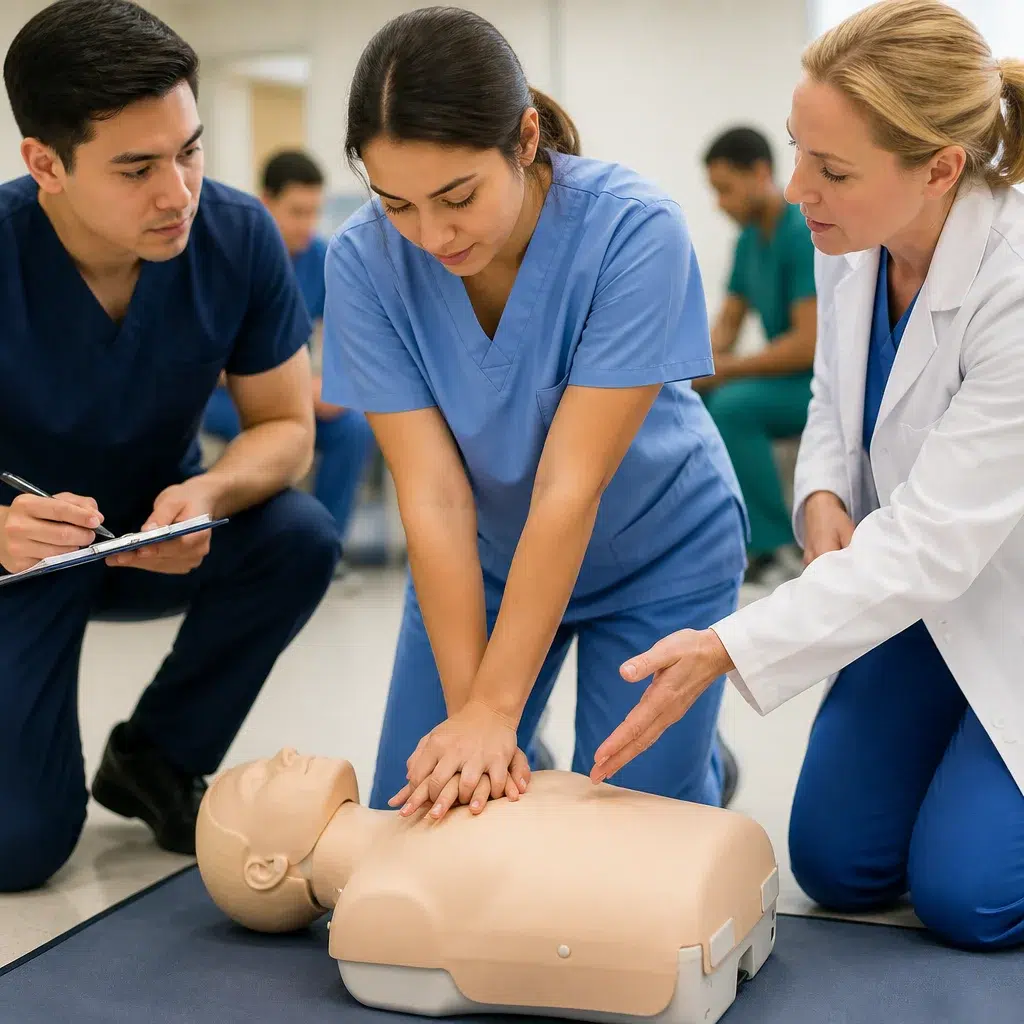
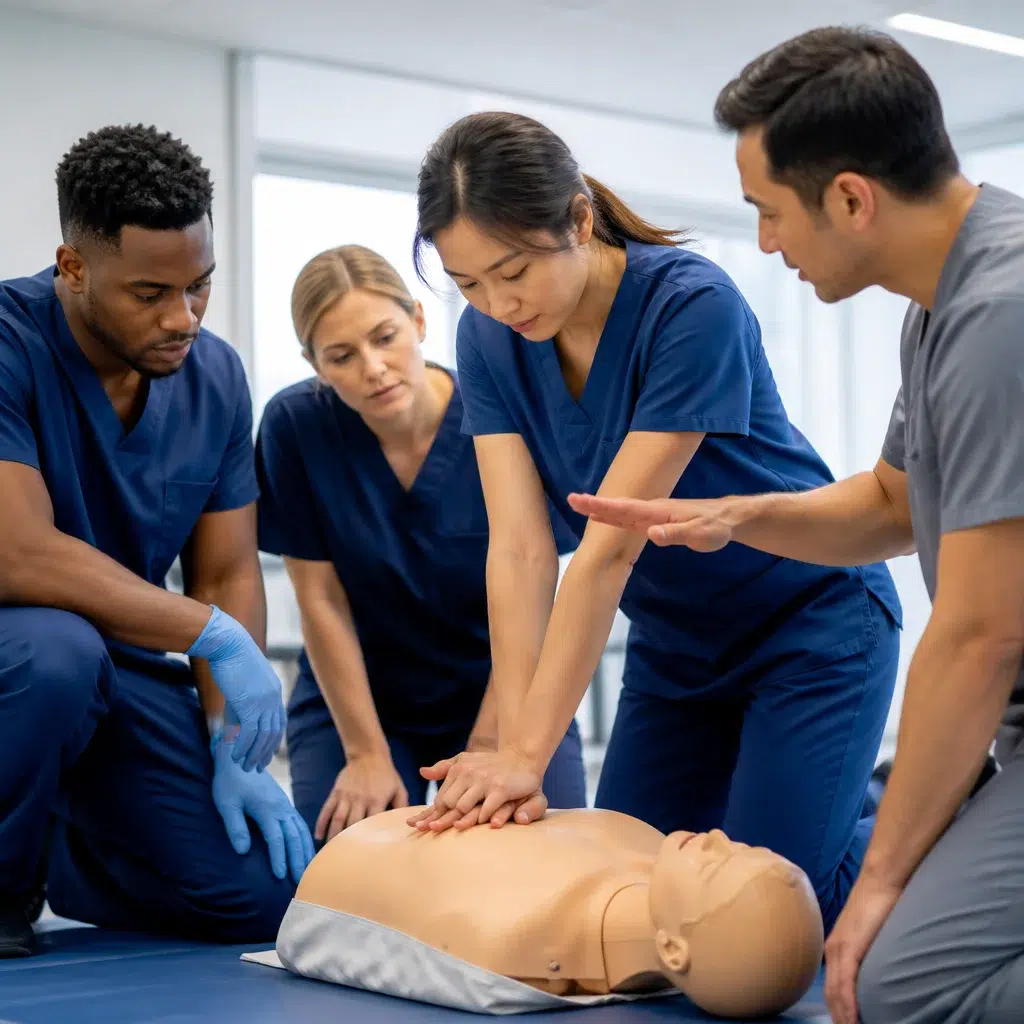
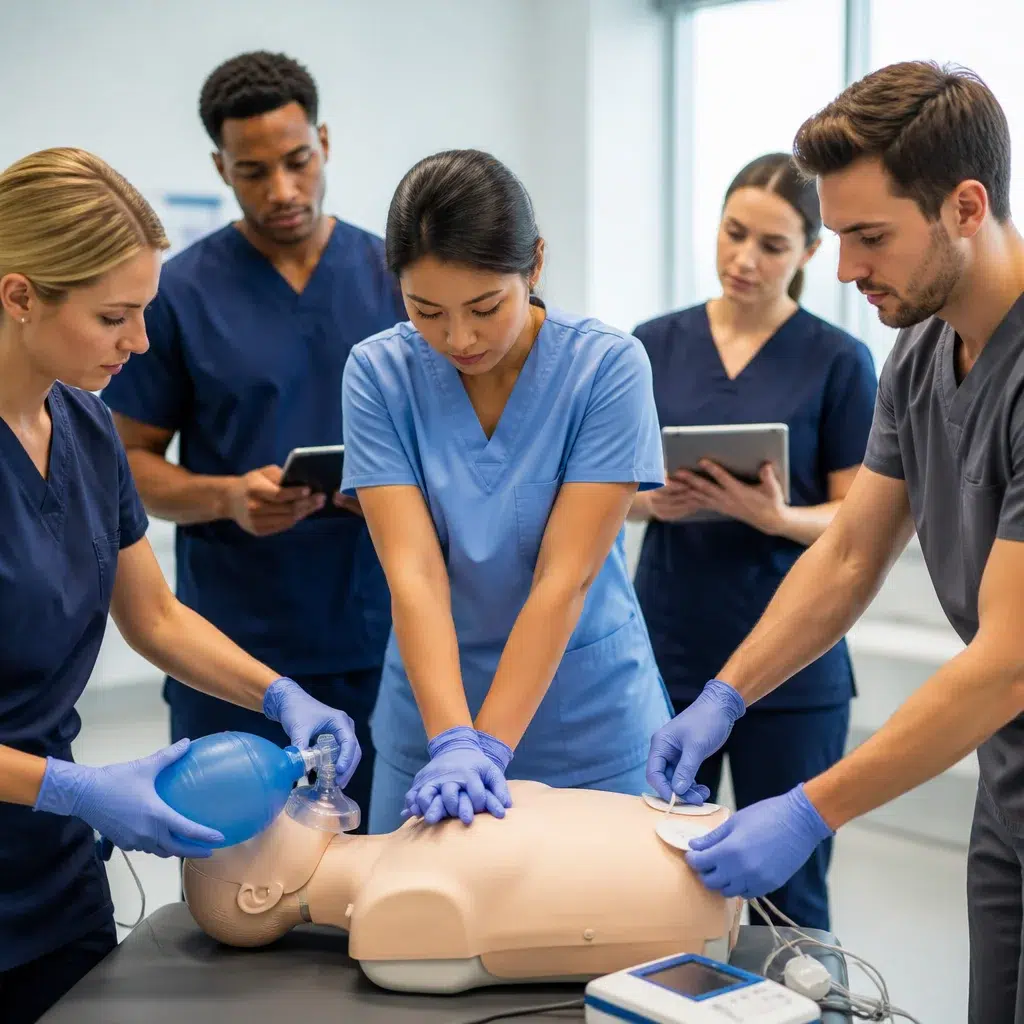
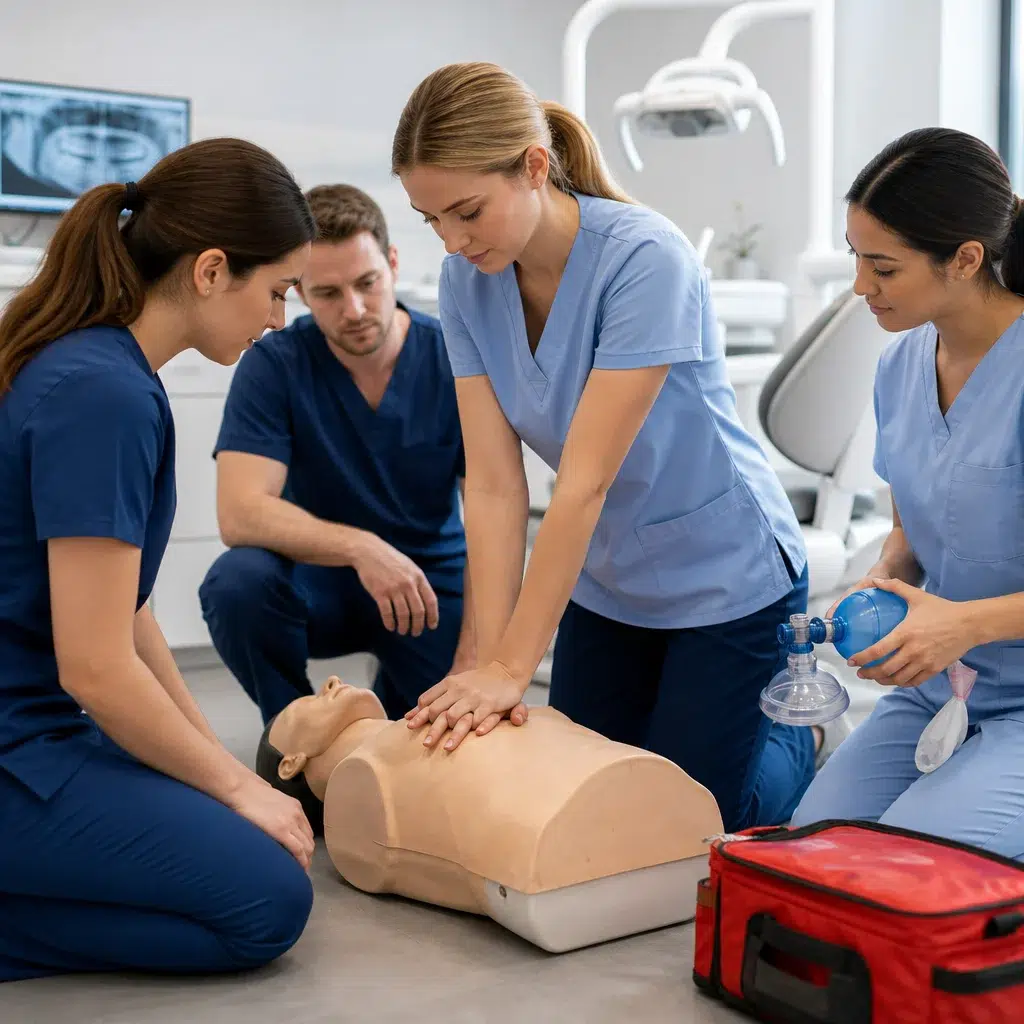
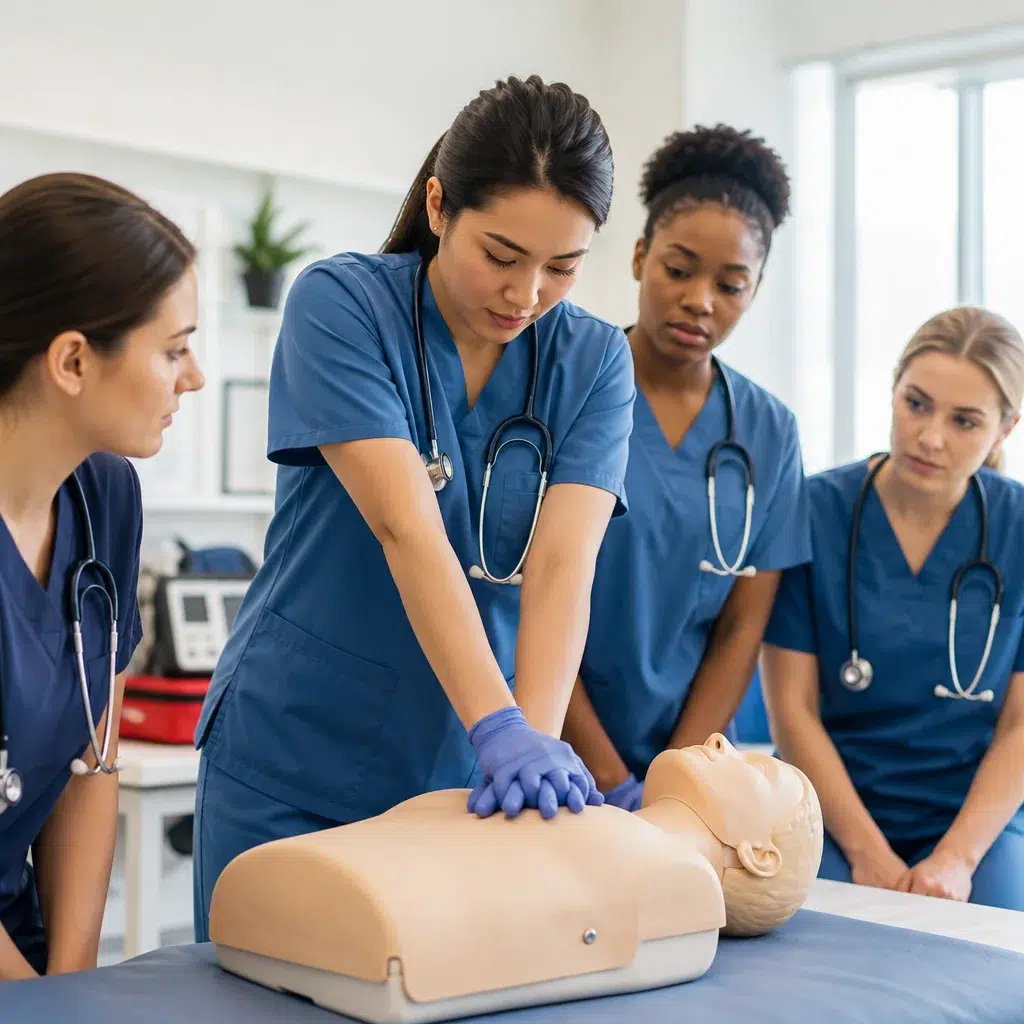
During the skills portion, you’ll perform CPR on a manikin while an instructor watches your compression depth, rate, hand placement, and airway management technique. You’ll practice two-person rescue scenarios and learn how to operate an AED in a realistic setting. For dental professionals, we include specific guidance on performing CPR in a clinical setting where you might have a patient in the chair or on the floor.
We don’t just check boxes. Our instructors give real feedback on your technique and help you correct any issues before you leave. You’ll also practice team communication and role-switching, which are skills many solo practitioners overlook until they’re in an actual emergency.
The written assessment covers recognition of cardiac emergencies, proper rescue breathing, and decision-making in crisis situations. We keep these assessments aligned with AHA standards but write them in language that reflects real dental practice scenarios. You’re not memorizing trivia—you’re learning how to save a life in your specific work environment.
What to do next: When you book your course, ask our team about scenario-based practice. We include advanced scenario training where you work through realistic dental office emergencies before certification day.
CPR Compression Techniques Specific to Dental Settings
Standard CPR training covers general principles, but dental settings present unique challenges. Your treatment chair, position relative to the patient, and the presence of instruments or materials require adapted technique knowledge. We teach you how to transition from treating a patient in the chair to performing effective CPR on the floor in seconds.
High-quality chest compressions are the foundation of survival. For dental professionals, this means understanding hand positioning and body mechanics when you’re moving quickly from seated treatment to floor-based resuscitation. We emphasize that compressions are more critical than rescue breathing—maintaining a compression rate of 100-120 compressions per minute can mean the difference between a patient’s recovery and permanent brain injury.
Your position matters too. Many dentists instinctively try to perform CPR while standing beside the chair, which compromises compression effectiveness. We teach you to kneel at the correct angle, use proper body weight distribution, and maintain compressions even when tired. For team-based scenarios, we show your front desk or hygienist how to relieve you every two minutes, which is critical in actual emergencies.
In dental settings, airway management also differs slightly from hospital environments. If a patient has recent dental work, partial dentures, or restorative materials in their mouth, you’ll need to know whether to remove them and how to maintain a clear airway. These specifics often aren’t covered in generic BLS courses—they’re part of what makes our dental-focused instruction genuinely valuable.
What to do next: During your next training session, ask your instructor to walk through CPR positioning specific to your operatory setup at home, whether you treat patients in a traditional chair or use alternative equipment.

Emergency Response Protocols in Your Practice
BLS certification teaches individual skills, but real emergency response depends on a coordinated team protocol within your practice. You’re required to have written emergency procedures, accessible emergency equipment, and staff who know their roles. Your BLS training should inform and reinforce these protocols.
Your practice needs a clearly designated emergency response plan that everyone knows. This means identifying who calls 911, who retrieves the AED, who performs CPR, and who continues managing other patients. We recommend naming a primary responder and a backup. This isn’t bureaucratic overhead—it’s the difference between panicked improvisation and coordinated action when minutes matter.
Equipment placement and maintenance are often overlooked. Your AED should be mounted in an easily accessible location, checked monthly, and all staff should know where it is and how to access it within seconds. Emergency medications (like oxygen and epinephrine in dental settings) should be current and stored accessibly. Your BLS certification is only as valuable as the infrastructure supporting it.
We encourage practices to conduct quarterly drills where staff walk through a mock emergency scenario. These drills reveal gaps—a staff member who doesn’t know where the AED is, equipment that’s in an awkward spot, or communication breakdowns. Many practices discover their written protocol doesn’t match their actual workflow until they practice it.
What to do next: Schedule a team meeting to review your written emergency response plan, conduct an equipment audit, and assign clear roles to each staff member. Ask your BLS instructor to recommend a practice drill template during your training.
Same-Day Certification Through Our California Locations
One of the biggest barriers to renewal compliance is inconvenience. You’re running a practice, managing patient schedules, and balancing continuing education requirements. We’ve removed that barrier by offering same-day BLS certification across over 100 locations throughout California, including California locations in San Francisco, Oakland, San Jose, Sacramento, Fresno, Los Angeles, and dozens of smaller communities.
Our blended learning model means you can complete the knowledge-based portion online at your own pace, then attend a single in-person skills session where you practice with our instructors and earn your certification the same day. This works perfectly for busy dentists—no multi-day course, no travel to distant training centers, just efficient, focused instruction where and when you need it.
We offer classes daily across our California network. If you’re in Sacramento, you’ll find options at our downtown, midtown, oak park, and rosemont locations. If you’re in the Bay Area, we staff multiple locations in San Francisco, Oakland, San Jose, and surrounding cities. You can literally book a class in a location convenient to your practice or home within days.
Our low price guarantee means you won’t find better rates anywhere. We believe certification shouldn’t be a financial burden, so we keep costs accessible while maintaining instructor quality and AHA-aligned curriculum. Group discounts are available for practices bringing multiple staff members, which most dental offices appreciate.
What to do next: Visit our California locations page, find your nearest training center, and reserve your spot. Most available classes fill up within two weeks, so booking early protects your schedule.
Why Our AHA-Aligned Program Exceeds State Requirements

California’s dental board sets minimum standards, but minimum compliance doesn’t prepare you for real emergencies. We’ve designed our program to exceed those baseline requirements while staying laser-focused on what actually matters in dental practice.
Our instructors are experienced healthcare professionals, not just certification processors. They’ve worked in clinical settings and understand the specific anxieties dentists face around emergency preparedness. They don’t just teach protocol—they help you visualize yourself responding confidently in a real emergency scenario in your practice.
We include scenario-based training that generic courses skip. You’ll work through realistic situations like recognizing early signs of cardiac distress in a patient, communicating with your team during a crisis, managing a collapsed patient in your operatory, and coordinating with incoming paramedics. These scenarios transform knowledge into muscle memory.
Our certification documents are recognized across California and hold weight with licensing boards because they reflect genuine AHA standards, not diluted versions. When you renew your dental license, your BLS verification carries full credibility. We also maintain student records securely, so if regulators ever request verification, we can provide documentation instantly.
The difference is tangible: dentists who train with us report feeling genuinely prepared to handle emergencies, not just paper-compliant. Your team knows their roles, your facility is set up for rapid response, and you understand the clinical reasoning behind each skill—not just the checklist items.
What to do next: Reserve your spot in our next available class across California. You’ll receive detailed instructions for the online knowledge component, then attend your skills session confident that you’re getting instruction that exceeds state requirements and genuinely prepares you for real emergency response in your dental practice.
Register for a class today.
Frequently Asked Questions (FAQ)
How quickly can I get my AHA BLS certification for dental license renewal?
We offer same-day certification at our California locations, which means you can complete your certification requirements and be ready for licensure compliance immediately. Our blended learning approach combines virtual coursework with hands-on skills sessions, so you’ll have your AHA-certified credentials in hand the day you finish. We have classes available daily across our 100+ training locations, making it convenient to fit this requirement into your schedule.
What makes your BLS training specific to dental professionals?
We’ve designed our curriculum to address emergency response protocols and CPR techniques directly relevant to dental practice settings. Our experienced instructors guide you through hands-on practice tailored to dental environments, including compression techniques and patient management scenarios you’ll actually encounter in your office. This specialized approach ensures you meet state renewal requirements while gaining practical knowledge that applies to your daily work.
Do I need to renew my BLS certification every year for my dental license?
We recommend checking your specific renewal timeline with your dental board, but most dental professionals in California need current AHA BLS certification as a condition of licensure. We’ll help you track your expiration date and can reserve your spot in an upcoming class well before your certification lapses. Contact us to verify your renewal requirements and we’ll get you scheduled at a location convenient for you.