Table of Contents
- Why Healthcare Facilities Choose Certification Provider Changes
- Challenges With Current Training Solutions
- What Makes an Ideal AHA Certification Partner
- Our Blended Learning Approach for Busy Healthcare Teams
- Same-Day Certification and Flexible Scheduling Benefits
- Over 100 California Locations for Staff Convenience
- Specialized Certifications for Your Medical Professionals
- Cost Savings With Our Low Price Guarantee
- RQI Simulation Stations and VAM Technology Training
- Dedicated Support for Corporate Group Programs
- Getting Your Hospital Started With Our Services
- Frequently Asked Questions (FAQ)
Why Healthcare Facilities Choose Certification Provider Changes
Healthcare facilities across California switch certification providers for one fundamental reason: they need training that fits their operational reality. When your nursing staff, dentists, and EMS personnel can’t easily access certification courses without disrupting patient care schedules, your compliance efforts suffer. We work with dozens of hospitals and clinics because we understand this tension.
Facilities that switch to us typically report that their previous approach created friction. Classes ran at inconvenient times. Scheduling around shift rotations felt impossible. Staff traveled long distances or waited weeks for the next available session. These aren’t minor frustrations—they directly impact your ability to maintain current certifications across your entire team.
The transition happens because our infrastructure is built specifically for busy healthcare environments. We operate over 100 training locations throughout California, from Sacramento and San Francisco to San Jose, Fresno, and beyond. Your team doesn’t travel far. Classes run daily, including early morning and evening options. Certification happens when your facility needs it, not when a training calendar dictates it.
Challenges With Current Training Solutions
Most healthcare facilities encounter similar obstacles when managing staff certifications. Traditional training models require lengthy in-person sessions that pull team members away from patient care for extended periods. If you’re coordinating certification for nurses, dentists, EMS personnel, or other healthcare providers, you know how difficult it is to cover staffing gaps.
Another persistent challenge: inflexible scheduling. When courses only run on specific dates at distant locations, you’re forced to choose between compliance and operational continuity. Staff members might skip refresher training rather than face travel time or schedule conflicts. This creates compliance gaps that expose your facility to liability and jeopardizes your licensing standing.
Cost is equally critical. Healthcare budgets are tight, and unexpected price increases or hidden fees erode resources you could direct toward patient care. Many facilities discover mid-year that their certification spending has ballooned beyond projections, leaving no flexibility for equipment upgrades or additional training investments.
Quality consistency presents another issue. When instructors vary widely in teaching approach and expertise, your staff receives inconsistent preparation for real-world scenarios. Some healthcare providers walk out of certification courses feeling confident in emergency skills. Others leave uncertain whether they’d perform effectively when minutes matter most.
What Makes an Ideal AHA Certification Partner
An effective certification partner addresses all these pain points simultaneously. Start by evaluating whether they offer flexible delivery models. The best providers combine online learning with in-person skills practice, letting your team study at their own pace while ensuring hands-on competency assessment.
Look for geographic accessibility. If your facility spans multiple locations or your staff lives across different regions, a provider with extensive location options saves time and scheduling headaches. We maintain certified training centers throughout California in communities like Alameda, Oakland, Berkeley, and dozens more, ensuring your team rarely travels more than 15 minutes.
Verify their instructor credentials and experience. Healthcare professionals respect instructors who’ve worked in clinical settings. Our instructors bring real healthcare experience, not just training certification. They understand the scenarios your staff will actually encounter.
Examine their technology infrastructure. Simulation stations, video-based skills practice, and assessment tools should feel modern and professional. This isn’t about flashiness; it’s about preparing your team realistically.
Finally, confirm they offer specialized certifications your facility needs. Nurses require BLS (Basic Life Support). Pediatric-focused staff need PALS (Pediatric Advanced Life Support). Anesthesiologists and critical care teams need ACLS (Advanced Cardiovascular Life Support). Neonatal specialists need NRP (Neonatal Resuscitation Program). Your partner should offer all of these without forcing you to book multiple vendors.
Our Blended Learning Approach for Busy Healthcare Teams

We designed our blended learning model specifically for healthcare professionals juggling clinical responsibilities. Here’s how it works: your team completes theoretical content online at their own pace, typically finishing within one to two weeks. They can study at 6 a.m. before a shift or during lunch breaks. The content uses clear explanations, videos, and case-based scenarios that resonate with practicing clinicians.
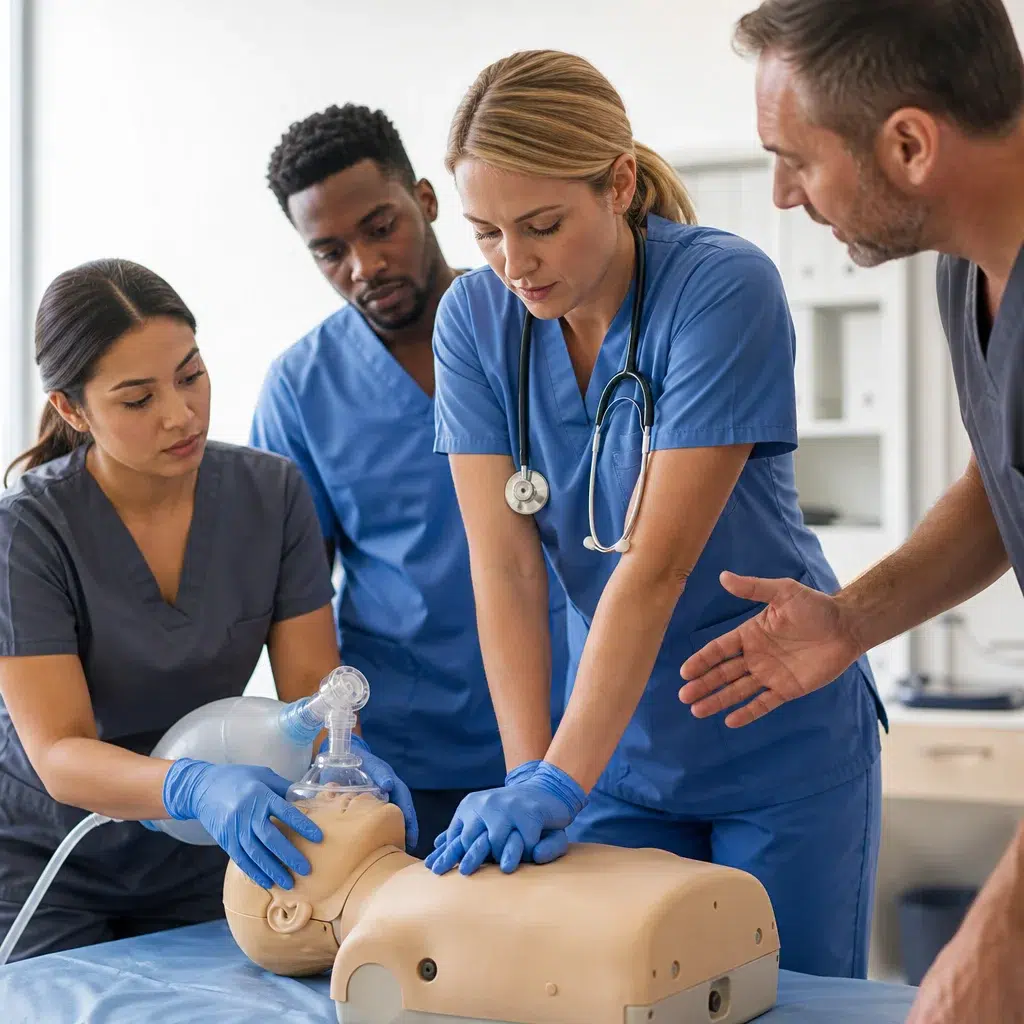
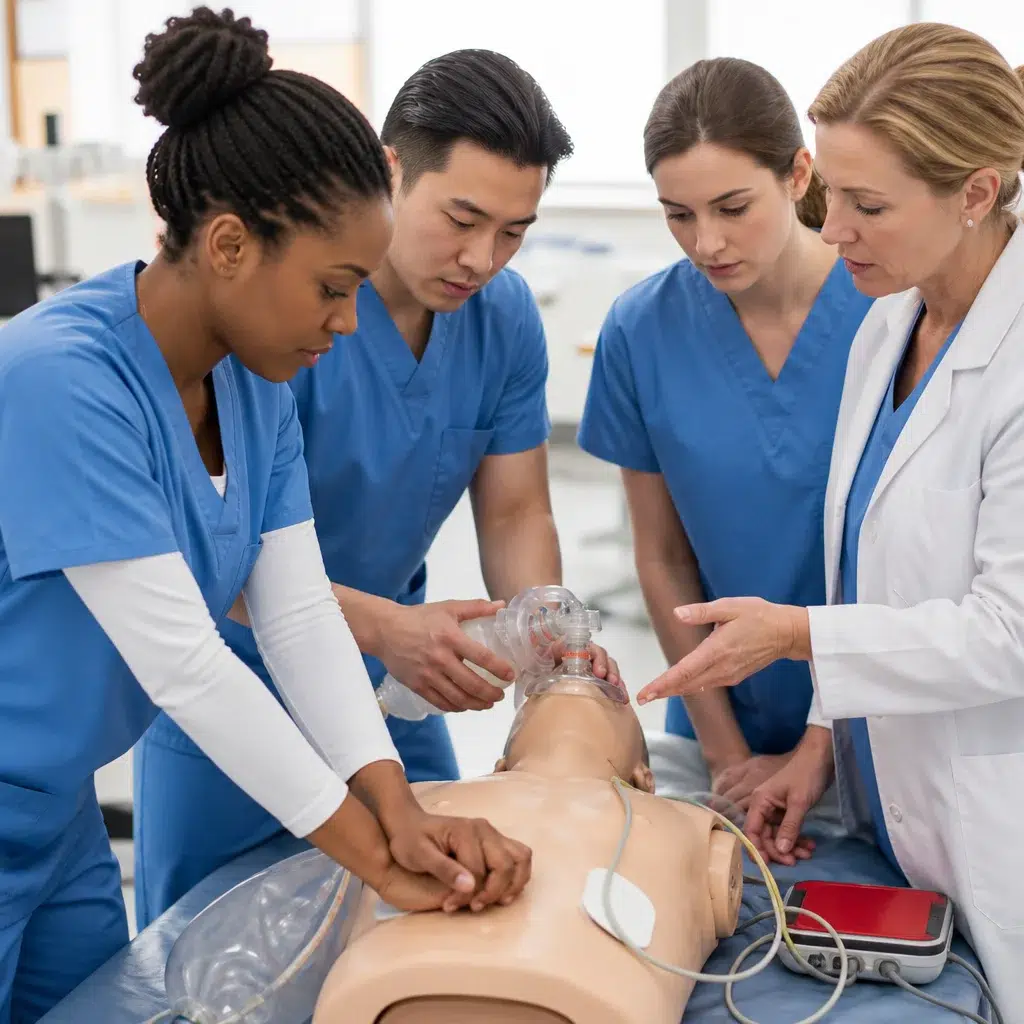
Then your staff attends a focused in-person session at one of our California locations. This isn’t a full-day marathon. The hands-on component concentrates entirely on practical skills: chest compressions, airway management, proper medication administration, and equipment operation. Our instructors work with small groups to ensure everyone demonstrates competency before certification.
This approach works because it respects your team’s time constraints while maintaining rigorous standards. Your nurses in San Francisco’s Mission District location can complete online content during their own schedule, then spend just a few focused hours with an instructor for skills validation. The same flexibility applies whether your staff works in Walnut Creek, Fresno, or Los Gatos.
Your team retains more information too. Research consistently shows that spacing learning over time, then practicing physically, improves long-term retention compared to single-day cramming sessions. Your staff will feel more confident in actual emergencies because the learning stuck.
Same-Day Certification and Flexible Scheduling Benefits
We offer same-day certification options because delays in compliance create unnecessary stress. When your facility needs someone certified immediately for a new position or coverage, we can schedule a skills session within days, not weeks. Your nurse passes the assessment on Tuesday and holds a valid certification by Wednesday.
Our scheduling flexibility extends throughout your week. We run early morning classes for night-shift staff who prefer not adjusting their sleep schedule. Evening sessions accommodate day-shift professionals. Weekend options work for staff with complex personal schedules. Since we maintain multiple California locations, your team can often choose a nearby venue and convenient time window without compromise.
This matters practically. A dentist in Campbell needs ACLS certification for a new role. Rather than waiting two months for the next available group class, we can schedule an individual or small group assessment within a week at a nearby location. Your team member stays focused on their job while their compliance status moves forward.
Scheduling flexibility also reduces certification lapses. When courses are easy to book, staff members renew proactively rather than waiting until their credentials expire. This keeps your facility continuously compliant and prevents the scramble that occurs when multiple certifications lapse simultaneously.
Over 100 California Locations for Staff Convenience
Proximity matters enormously when you’re managing staff across a healthcare network. Our footprint spans California from Redding in the north to Visalia in the south, from coastal Petaluma and Novato to inland Modesto and Stockton. Whether your facility operates in one community or multiple regions, your team has certified training centers nearby.
In the San Francisco Bay Area, we maintain locations throughout the region: San Francisco districts including Mission Bay, Telegraph Hill, and Parnassus/UCSF areas; Oakland options in Fruitvale, Lake Merritt, and Piedmont; Berkeley facilities in Downtown and Solano; plus accessible centers in Fremont, Hayward, San Leandro, and other East Bay communities.
The Sacramento and Northern California corridor includes multiple locations like Sacramento’s Arden, Midtown, Oak Park, and Rosemont areas, plus nearby Folsom, Davis, and Rocklin. Your staff in smaller communities like Larkspur, Martinez, or Vallejo similarly have nearby options rather than traveling an hour to find training.
In Silicon Valley and the South Bay, our San Jose facilities serve Downtown, Japantown, South San Jose, and Willow Glen neighborhoods. We’re equally accessible from Sunnyvale, San Mateo, Palo Alto, Los Gatos, and Santa Clara. This density means real convenience for your team members.
This geographic distribution translates to lower training costs through reduced travel time and mileage reimbursement. Your staff spends less time commuting and more time clinically productive. A phlebotomist in Pleasanton doesn’t lose half a day traveling to certification. An EMS crew in Modesto finds a class in their community, not 90 minutes away.
Specialized Certifications for Your Medical Professionals
Different healthcare roles require different certifications, and a credible partner offers the full spectrum. We provide BLS certification for general healthcare providers who need life-support fundamentals. Nurses, respiratory therapists, and front-line clinical staff typically complete BLS annually.
ACLS (Advanced Cardiovascular Life Support) serves emergency medicine staff, intensivists, and providers managing cardiac events. This certification goes deeper than BLS, covering arrhythmia recognition, medication algorithms, and advanced airway techniques. Your critical care team needs this credential.

PALS (Pediatric Advanced Life Support) prepares providers for pediatric emergencies. If your facility has obstetrics, pediatrics, or emergency departments treating children, your staff needs PALS certification. The scenarios and drug doses differ fundamentally from adult protocols.
NRP (Neonatal Resuscitation Program) targets obstetrics and neonatal intensive care teams. This specialized certification focuses on newborn assessment and resuscitation within the first minutes of life.
We also offer CPR and First Aid certification for non-clinical staff, healthcare administrators, and facilities wanting universal preparedness. Many hospitals require universal CPR access for safety and liability reasons.
Each certification pathway uses evidence-based instructor training and assessment standards. Your staff completes coursework knowing it meets current guidelines and your facility’s compliance requirements. AHA CPR First Aid Certification programs reflect the latest resuscitation science.
Cost Savings With Our Low Price Guarantee
Your certification budget shouldn’t surprise you mid-year with unexpected costs. We maintain transparent pricing with our Low Price Guarantee, ensuring you pay competitive rates without gimmicks or hidden fees.
This guarantee means if you find lower pricing from another certified provider for identical certification, we’ll match it. No asterisks. No exclusions for group sizes or course types. This commitment protects your budget planning and eliminates the risk of switching providers only to discover inflated costs.
Corporate group pricing amplifies your savings. When your facility enrolls multiple staff members, our pricing scales accordingly. A hospital scheduling 50 nurses for BLS renewal receives substantially lower per-person costs than individual registrations. We structure group programs to encourage compliance because we want your entire team certified.
Volume discounts apply across all certification types. Whether you’re enrolling ACLS participants from your critical care units or scheduling BLS for administrative staff, larger cohorts trigger better pricing. We’ve helped hospitals in Bakersfield, Fresno, and Sacramento reduce per-employee certification costs by 20-35% through strategic group scheduling.
The financial benefit compounds. Lower costs per certification multiplied across your entire team and annual renewal cycles create meaningful budget relief. These savings support your facility’s other training investments without requiring larger annual allocations to compliance.
RQI Simulation Stations and VAM Technology Training
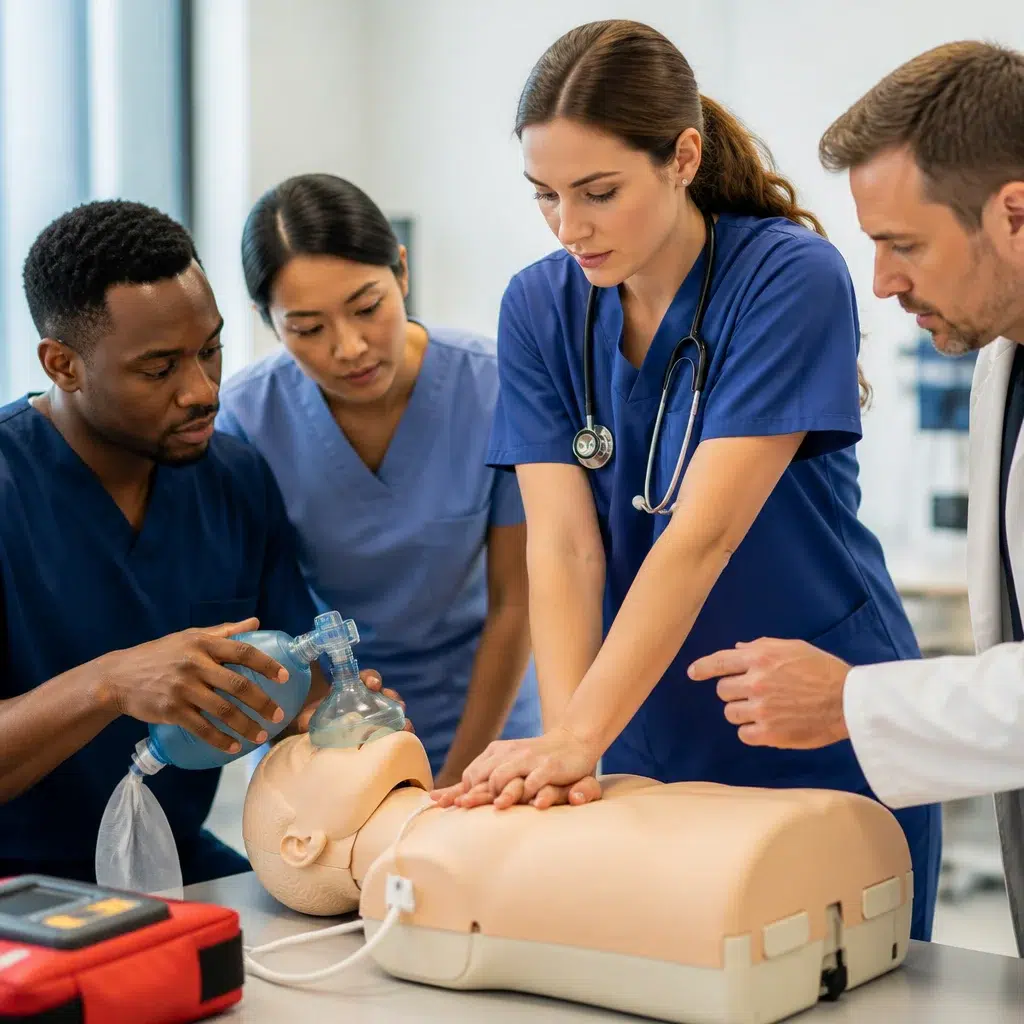
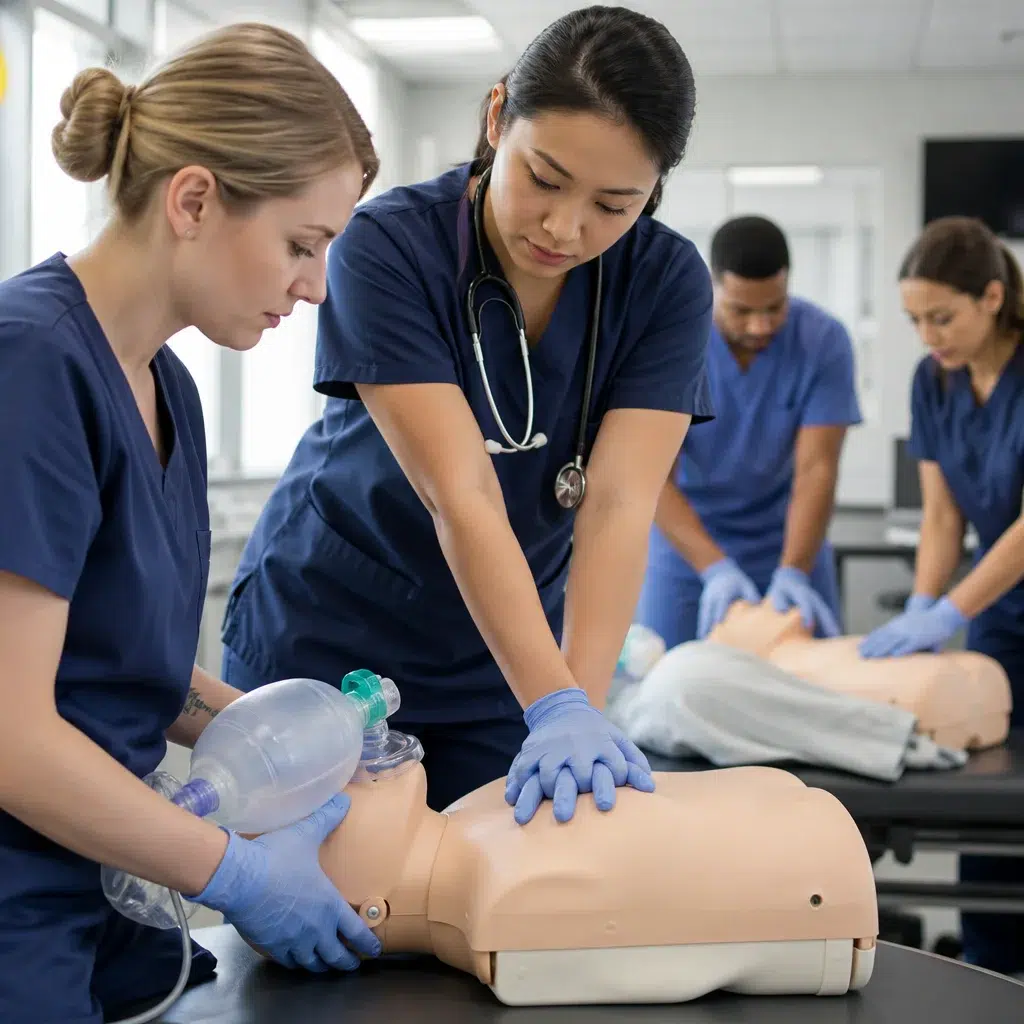
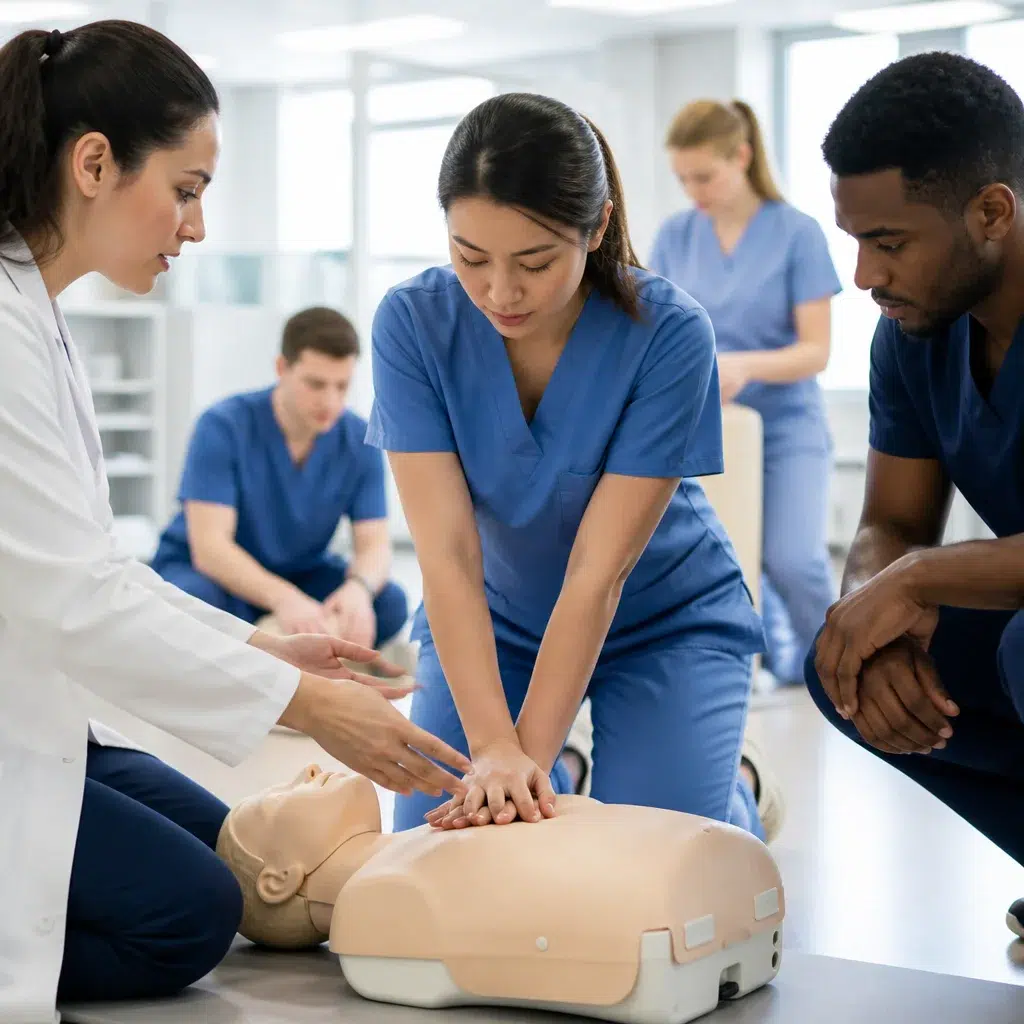
Our physical training locations feature modern simulation equipment that recreates real clinical scenarios. RQI (Resuscitation Quality Improvement) simulation stations allow your staff to practice on manikins that provide accurate feedback on compression depth, rate, and hand placement. This immediate feedback accelerates learning and builds genuine muscle memory.
VAM (Video and Manikin) technology integrates video-based scenarios with mannequin practice. Your team watches clinical situations unfold on screen, then immediately practices the appropriate response on the mannequin. This simulation-to-practice flow mirrors how providers learn during actual clinical rotations, creating more transferable skills.
These tools matter because they bridge the gap between knowledge and performance. A nurse can understand cardiac arrest protocols intellectually, but practice on a realistic mannequin with feedback builds the confidence and automaticity needed during genuine emergencies. When minutes matter, your staff’s muscle memory and instinctive responses determine outcomes.
Our locations throughout the Bay Area, Sacramento, and across California maintain current simulation equipment. Whether your staff trains in San Francisco’s Mission Bay location, Sacramento’s Arden facility, or a smaller community center like Brentwood or Lodi, they access identical equipment standards. This consistency ensures uniform preparation across your facility.
Dedicated Support for Corporate Group Programs
When you’re managing certification for dozens or hundreds of staff members, scheduling coordination alone becomes administratively complex. Our corporate group programs include dedicated support staff who handle logistics so your compliance officer doesn’t carry the entire burden.
We assign a coordinator to your account who understands your facility’s specific needs. They work with your staffing schedules, identify optimal training windows, manage roster coordination, and track completion across your organization. This person becomes your single point of contact rather than making individual staff members navigate registration independently.

For multi-location healthcare networks, our support extends across facilities. Whether your organization spans San Jose, Oakland, and San Francisco, or operates in multiple regions like Visalia and Sacramento, we synchronize scheduling and reporting. Your compliance team receives unified tracking across all locations and staff cohorts.
We provide detailed reporting that supports your accreditation and credentialing processes. You’ll receive rosters showing completion dates, certification validity periods, and expiration timelines. This documentation satisfies Joint Commission requirements and medical staff office audits without requiring your staff to assemble files individually.
Bulk pricing negotiations are handled directly. Rather than individual staff members paying standard rates, your organization receives group discounts, and we manage invoicing to your finance department on terms that fit your accounting cycle. This streamlining reduces administrative friction considerably.
Getting Your Hospital Started With Our Services
Beginning with us is straightforward. Contact our corporate accounts team with information about your facility: the number of staff members needing certification, the specific credential types required (BLS, ACLS, PALS, NRP, or combinations), and your preferred training windows.
We’ll conduct a brief assessment understanding your facility’s current compliance status and identify which staff cohorts have imminent certification expirations. This baseline helps us prioritize scheduling to prevent lapses while distributing training across your fiscal year to manage budget smoothly.
Next, we’ll propose a custom group program. Rather than forcing your facility into a standard package, we design a solution matching your specific circumstances. Maybe your critical care units need ACLS and PALS in Q1, while your administrative staff needs CPR/First Aid in Q2. We’ll schedule around your operational calendar.
Your compliance officer receives access to our scheduling portal, where they can view available dates and locations across our California network. They coordinate directly with your staff or manage roster submissions in bulk. We handle confirmations, reminders, and follow-up communications.
After training, you’ll receive comprehensive reporting showing completion status for every participant. Certificates issue immediately upon successful assessment, and we maintain records supporting your credentialing and accreditation obligations.
The transition to a more effective training partner shouldn’t feel like a project. We manage the complexity so your facility focuses on patient care. Your staff gets certified conveniently, your compliance status stays current, and your budget stays predictable. That’s the partnership we’ve built across our 100+ California locations.
Ready to explore how we can serve your facility’s certification needs? Reach out to discuss your specific requirements and how our blended learning, flexible scheduling, and comprehensive support can strengthen your team’s emergency preparedness and compliance status.
Register for a class today.
Frequently Asked Questions (FAQ)
Why should we switch our hospital’s certification provider to Safety Training Seminars?
We offer what busy healthcare facilities need: blended learning that combines virtual coursework with in-person skills sessions, same-day certification options, and over 100 training locations across California for staff convenience. Our low price guarantee means you’re getting certified training without overpaying, plus our dedicated corporate group support ensures your entire team stays compliant without scheduling chaos.
How does your scheduling work for hospitals with multiple shifts and departments?
We understand healthcare doesn’t stop, which is why we offer daily BLS certification courses and flexible session times that fit around patient care demands. With locations throughout California and the ability to arrange group sessions at times that work for your staff, we eliminate the common problem of having to wait weeks for the next available class or sending people far from your facility.
What specialized certifications do you provide for different types of medical professionals?
We deliver ACLS for physicians and advanced practitioners, PALS for pediatric-focused teams, and NRP for birthing centers and neonatal units. Each certification is tailored to the specific protocols and scenarios your staff encounters, so training directly supports how your teams actually work rather than generic instruction.