Table of Contents
- Why California Nurses Need Reliable AHA Certification and CEU Credits
- Understanding AHA Certification Requirements for Your Nursing License
- How Continuing Education Credits Support Your Professional Growth
- Our Blended Learning Approach Makes Certification Accessible
- Flexible Scheduling That Fits Your Clinical Shifts
- Same-Day Certification Cards and Instant Verification
- Specialized Programs for Different Healthcare Settings
- Our Commitment to Compliance-First Instruction
- Multiple California Locations for Your Convenience
- Affordable Pricing with Our Low Price Guarantee
- Getting Started With Your Next Certification
- Frequently Asked Questions (FAQ)
Why California Nurses Need Reliable AHA Certification and CEU Credits
Your nursing license in California requires more than your initial RN credential. The California Board of Registered Nursing mandates ongoing continuing education as a condition of licensure renewal, and many employers add their own certification requirements on top of state mandates. Life support certifications aligned with American Heart Association (AHA) standards form the backbone of these requirements, demonstrating your commitment to staying current with evidence-based resuscitation protocols.
Beyond compliance, these certifications protect your career and your patients. When a cardiac emergency unfolds in your unit, a current BLS (Basic Life Support) or ACLS (Advanced Cardiovascular Life Support) credential means you can respond with confidence. Employers notice nurses who maintain certifications without delay, and many facilities tie advancement opportunities and shift preferences to current credentials. CEU (continuing education unit) credits work similarly, documenting your professional development in areas like clinical skills, patient safety, and specialized care techniques.
The challenge isn’t understanding why you need these credentials. It’s finding training that fits your schedule, delivers quality instruction, and doesn’t drain your finances. That’s where we come in. We’ve built our entire operation around making AHA-aligned certifications and CEU-bearing courses accessible to California nurses working irregular shifts across the state.
Understanding AHA Certification Requirements for Your Nursing License
California’s licensing board requires RNs to complete 30 clock hours of continuing education every two years. Not all of those hours must be AHA-certified courses, but life support certifications typically count toward this total and carry significant weight with employers.
BLS certification is non-negotiable for most hospital settings. This credential validates your ability to recognize cardiac arrest and perform high-quality chest compressions and rescue breathing. Most nursing positions require BLS renewal every two years.
ACLS certification takes you deeper. If you work in acute care, emergency departments, ICUs, or critical care units, ACLS is standard. This course teaches you to recognize and respond to arrhythmias, administer medications during resuscitation, and work as part of a code team. ACLS certifications last two years.
PALS (Pediatric Advanced Life Support) is mandatory for nurses in pediatric units, emergency departments, and many surgical settings. It mirrors ACLS but focuses on children and infants, with different dosing, algorithms, and communication strategies.
Understanding what your specific role requires prevents unnecessary spending and delays. A pediatric clinic nurse needs PALS and BLS. A surgical center RN typically needs BLS and possibly ACLS depending on the scope of anesthesia involvement. We help you identify exactly which certifications align with your job description during enrollment, saving confusion later.
How Continuing Education Credits Support Your Professional Growth
CEU credits serve dual purposes: they satisfy state requirements and they represent genuine professional advancement. When you complete a course on wound care management, pharmacology updates, or infection control protocols, you’re not just checking a box. You’re deepening clinical knowledge that directly impacts patient outcomes.
California recognizes various CEU sources. Accredited provider organizations deliver courses that carry board-approved credits. When you earn credits through quality instruction, your transcript documents competency development in specialty areas. This matters when you pursue leadership roles, transfer to specialized units, or change employers. Your CEU history tells the story of your professional growth.

Many nurses use CEU courses strategically to transition between specialties. A medical-surgical nurse moving to cardiac care might pursue courses in coronary anatomy, arrhythmia interpretation, and cardiac medications. These credits make your skill set visible to hiring managers and build confidence in your new role.
We design our course offerings around real nursing practice. Rather than generic videos, we deliver instruction that connects directly to patient care decisions you make daily. This approach means the hours you invest in continuing education translate to immediate, practical application in your units.
Our Blended Learning Approach Makes Certification Accessible
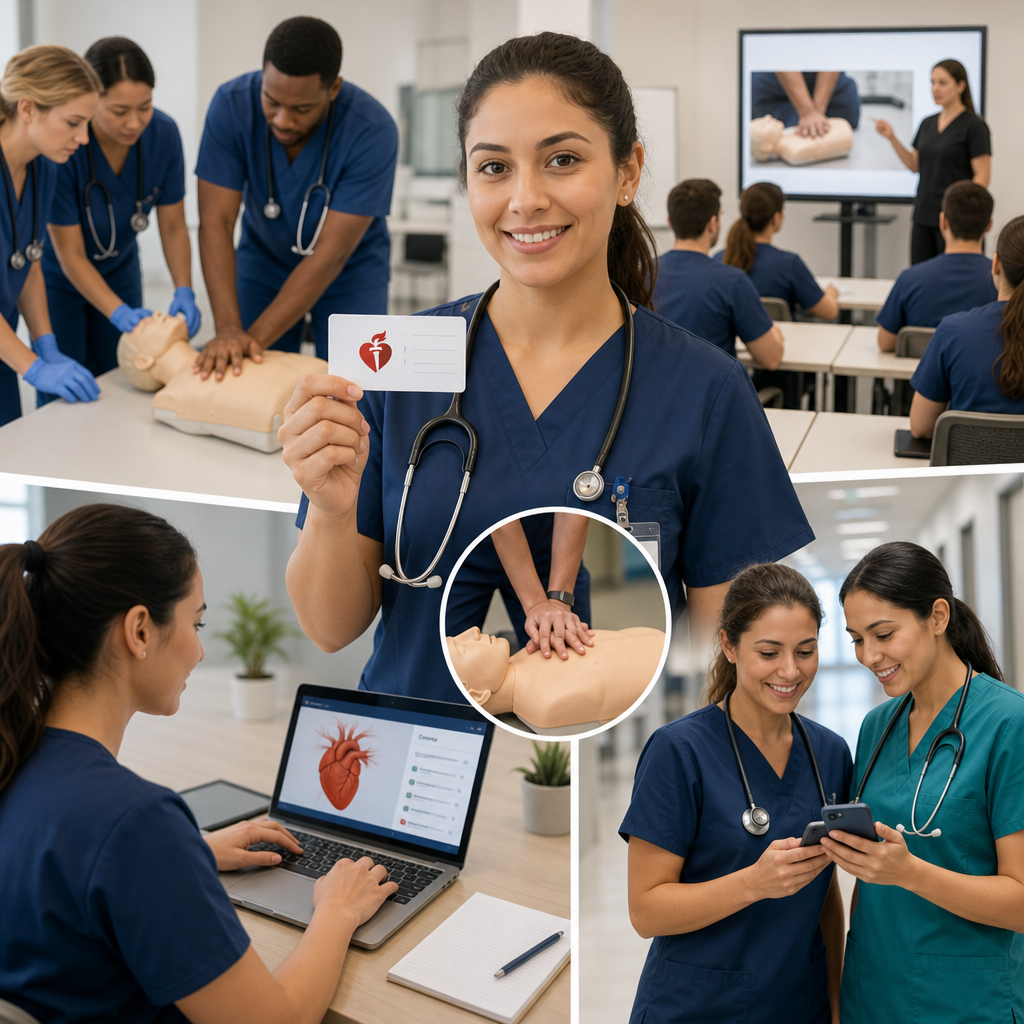
We combine online theory with in-person skills practice because retention and confidence require both. Your blended pathway typically looks like this: complete online modules covering the science and guidelines at your own pace, then attend a skills session where instructors observe your technique, provide feedback, and ensure you meet certification standards.
This model respects your time constraints. Late-night shifts at facilities in Sacramento, Oakland, or Fresno don’t have to wait until you find a full day free. You knock out didactic content when your schedule allows, then lock in a 3-4 hour skills session when it works for you.
Our instructors bring clinical experience into every session. They’re not educators reading scripts; they’re nurses, paramedics, and respiratory therapists who’ve managed real codes and taught from that perspective. They recognize why you need these skills and they teach accordingly.
The blended format also means you never attend a classroom session unprepared. You arrive knowing the material, ready to practice under pressure, and focused on the hands-on challenges that actually trip up new learners. This keeps everyone moving forward efficiently.
Flexible Scheduling That Fits Your Clinical Shifts
Most nurses can’t book a full day off mid-week just for certification renewal. We offer BLS, ACLS, PALS, and specialty certifications throughout every week at flexible times. Early morning sessions start at 7 a.m. for night-shift nurses heading home. Midday slots work for swing-shift schedules. Weekend options are available in most California locations.
We run classes daily across our network, which means you’re never waiting months for the next session. Whether you’re based in San Jose, San Francisco, Oakland, or Sacramento, there’s typically an opening within your preferred window. You book online, confirm your spot, and show up.
Rescheduling happens without penalty. Work demands change, and we get it. If your schedule shifts, you can move to a different date session up to a reasonable notice period. This flexibility reduces the stress of committing to a firm appointment weeks in advance.
For nurses managing multiple jobs or those with unpredictable clinical schedules, our blended approach again proves valuable. You can spread learning across several weeks rather than cramming everything into one day.
Same-Day Certification Cards and Instant Verification
You pass your skills check and walk out with a printed certification card the same day. Not a voucher. Not a promise. A card you can show your manager by the end of your shift.
We also provide instant digital verification. Your credentials appear in our verification portal within minutes, letting your employer confirm your current status anytime. Many healthcare facilities require this for access to certain medication administration protocols or clinical areas. You won’t face delays while waiting for paper credentials to arrive by mail.
This immediate documentation matters when you’re transitioning between jobs or when your facility runs compliance audits. There’s no gray area about when you’re covered.
Specialized Programs for Different Healthcare Settings
Nurses work in wildly different environments, and we’ve built specialized programs to match. Hospital-based nurses use standard ACLS alongside hospital-specific code protocols. Clinic and outpatient nurses often need PALS and BLS without the full ACLS scope. Dental clinics emphasize BLS and conscious sedation protocols.
We also offer neonatal resuscitation programs (NRP) for labor and delivery, postpartum, and NICU nurses. These courses teach the specifics of newborn resuscitation, which differs substantially from pediatric or adult protocols. Instructors who specialize in maternal-child nursing lead these sessions, so examples reflect your actual clinical context.
Critical care nurses benefit from our advanced electives covering 12-lead EKG interpretation, hemodynamic monitoring, and code leadership. These courses go beyond basic certification to build the clinical confidence that distinguishes experienced critical care nurses.
We work with healthcare facilities across California, from large academic medical centers in San Francisco and Palo Alto to smaller community hospitals in Chico, Visalia, and Redding. Our curriculum adapts to institutional standards while maintaining AHA alignment.
Our Commitment to Compliance-First Instruction
Every instructor follows strict guidelines to ensure you meet AHA standards without shortcuts. We don’t “pass” students who don’t demonstrate competency. Your skills check involves actual scenario-based assessment where you manage a simulated cardiac arrest from recognition through post-resuscitation care.
Compliance means accuracy. We teach current guidelines because resuscitation science evolves. Changes to compression-to-ventilation ratios, medication algorithms, and post-arrest care get incorporated into every course. You’re not learning outdated protocols; you’re learning what evidence supports today.
Documentation matters too. Every student record includes details about which competencies you demonstrated, any areas you needed additional practice on, and confirmation that you met certification standards. This creates accountability for both you and us.
Multiple California Locations for Your Convenience
We operate over 100 training locations throughout California, specifically designed to keep travel time minimal. Rather than asking you to drive 45 minutes for a certification, we’ve placed facilities in areas where nurses actually live and work. Whether you’re in Alameda, Antioch, Bakersfield, Concord, Davis, Fairfield, Hayward, Livermore, Modesto, Napa, Pleasanton, Redding, Roseville, Vallejo, or Woodland, you’ll find a location near your home or workplace. Our California locations page shows all our current facilities, so you can find the one that suits your commute best.
For Bay Area nurses, we maintain multiple locations in San Francisco (including Mission District, Bayshore, and Sunset), Oakland (Fruitvale, Lake Merritt), San Jose (Downtown, Japantown, South, and Willow Glen), and surrounding areas like Fremont, Hayward, Livermore, and Palo Alto.
Sacramento-area nurses can attend sessions at our Arden, Midtown, Oak Park, or Rosemont locations. Central Valley nurses find classes in Bakersfield, Fresno, Lodi, Merced, Modesto, Stockton, and Tracy.
This geographic spread means you’re not coordinating your life around a training center’s location. The training center coordinates around yours.
Affordable Pricing with Our Low Price Guarantee

We’ve committed to making certifications affordable because cost shouldn’t force nurses to skip required training. Our pricing is competitive, and our low price guarantee ensures you’re not overpaying.
Group rates are available for facilities sending multiple nurses. If your hospital unit or clinic needs to certify a cohort, we offer discounted pricing and can often arrange sessions tailored to your facility’s schedule. Contact us directly to discuss group training.
Individual courses are priced accessibly so certification renewal doesn’t create financial burden. Whether you’re renewing one credential or completing multiple courses, our pricing remains straightforward with no hidden fees.
Getting Started With Your Next Certification
Visit our website to browse available courses, select your preferred location, and check real-time class schedules. You’ll see dates, times, and enrollment status at a glance. Select the course matching your needs (BLS, ACLS, PALS, NRP, or specialty CEU courses), choose your location and date, and complete enrollment.
Before your skills session, you’ll access the online theory modules. Work through them at your pace, taking notes on concepts you want to discuss with your instructor. The modules typically take 2-3 hours to complete.
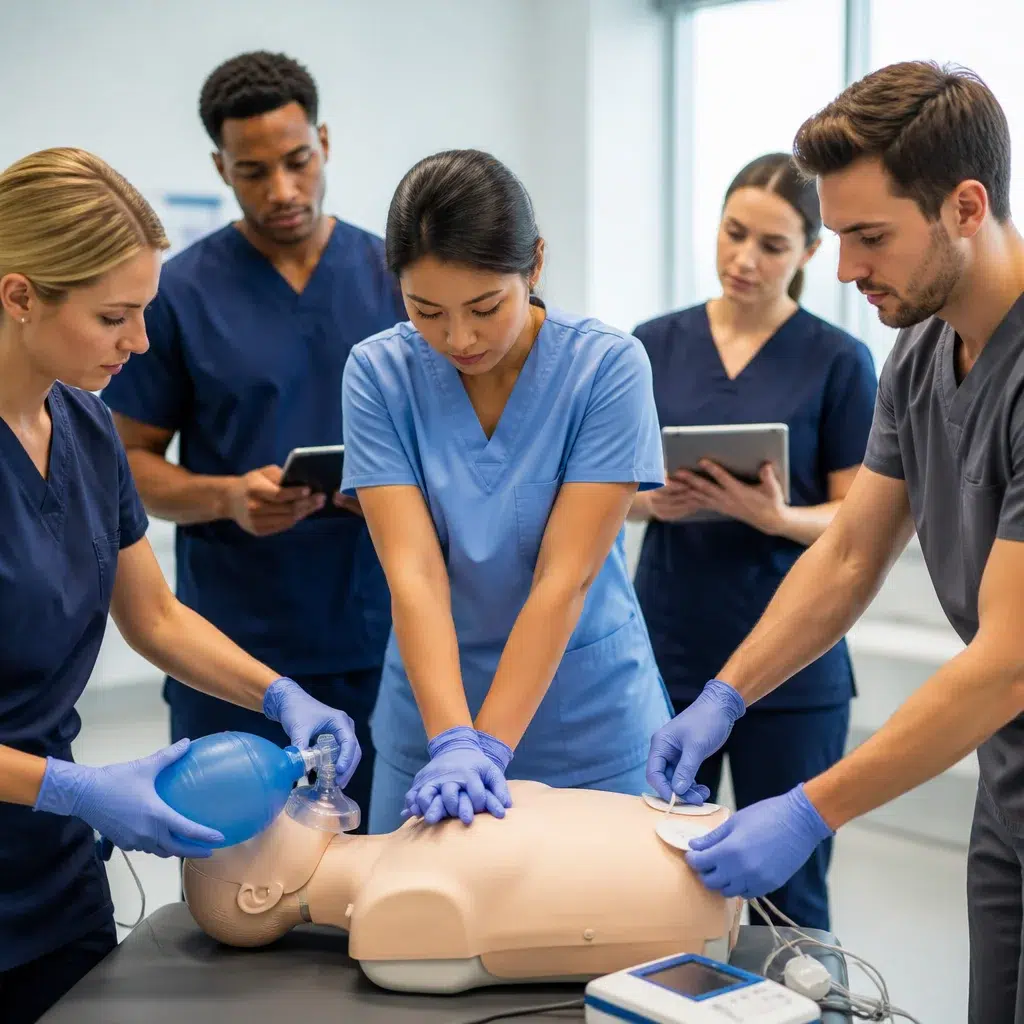
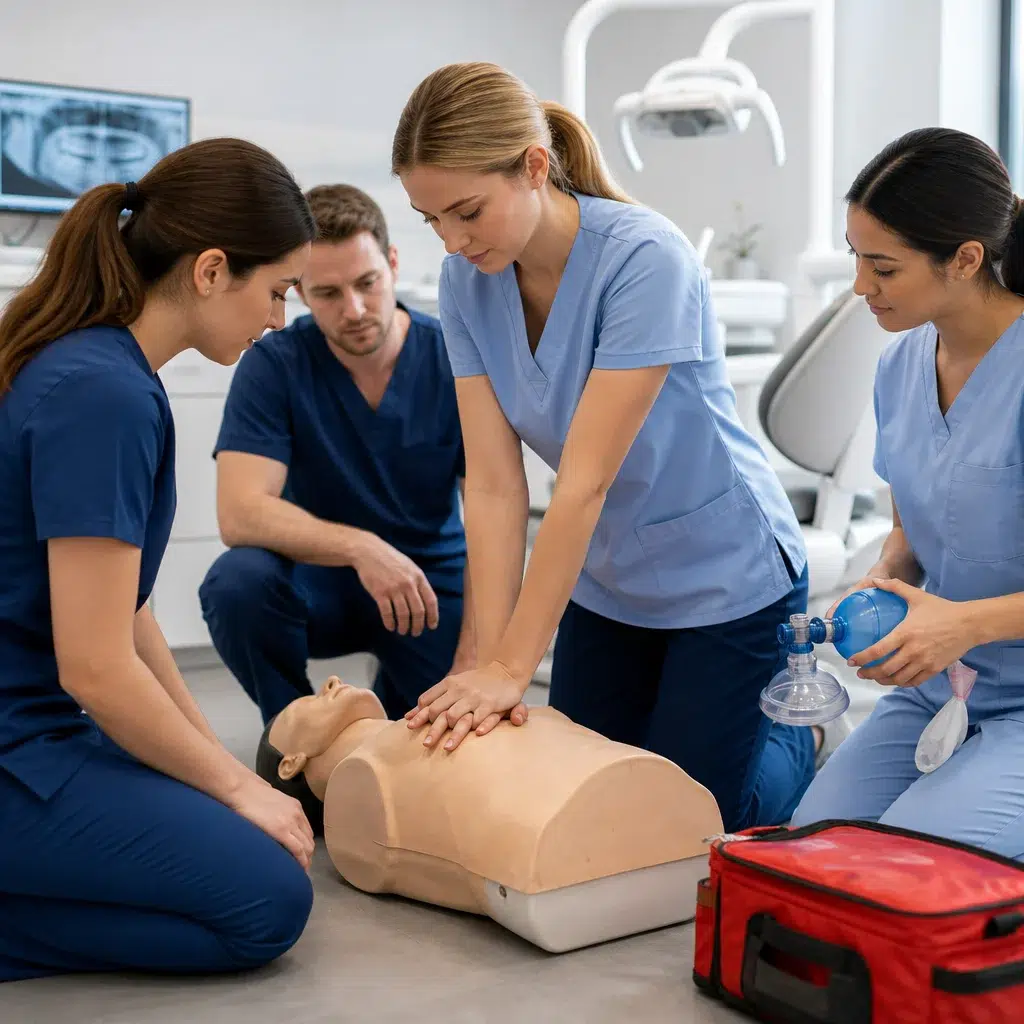
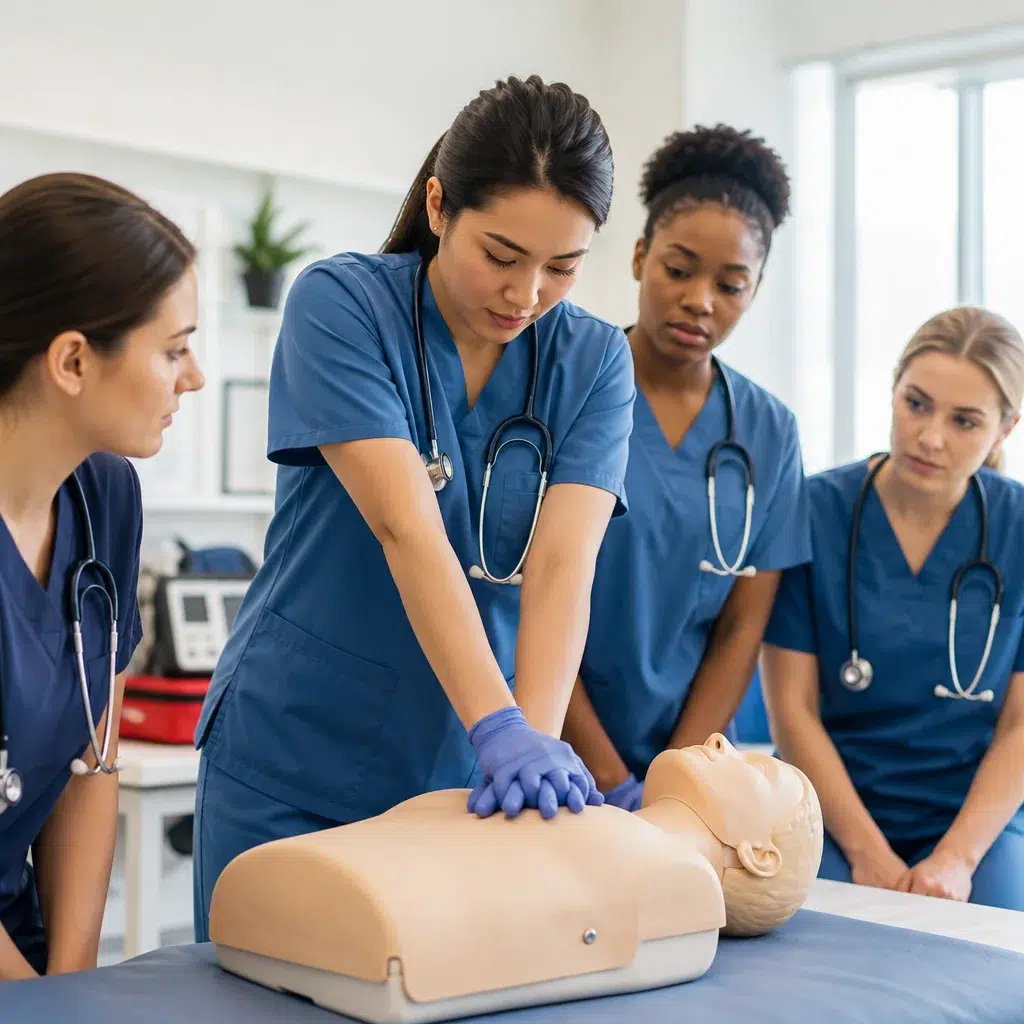
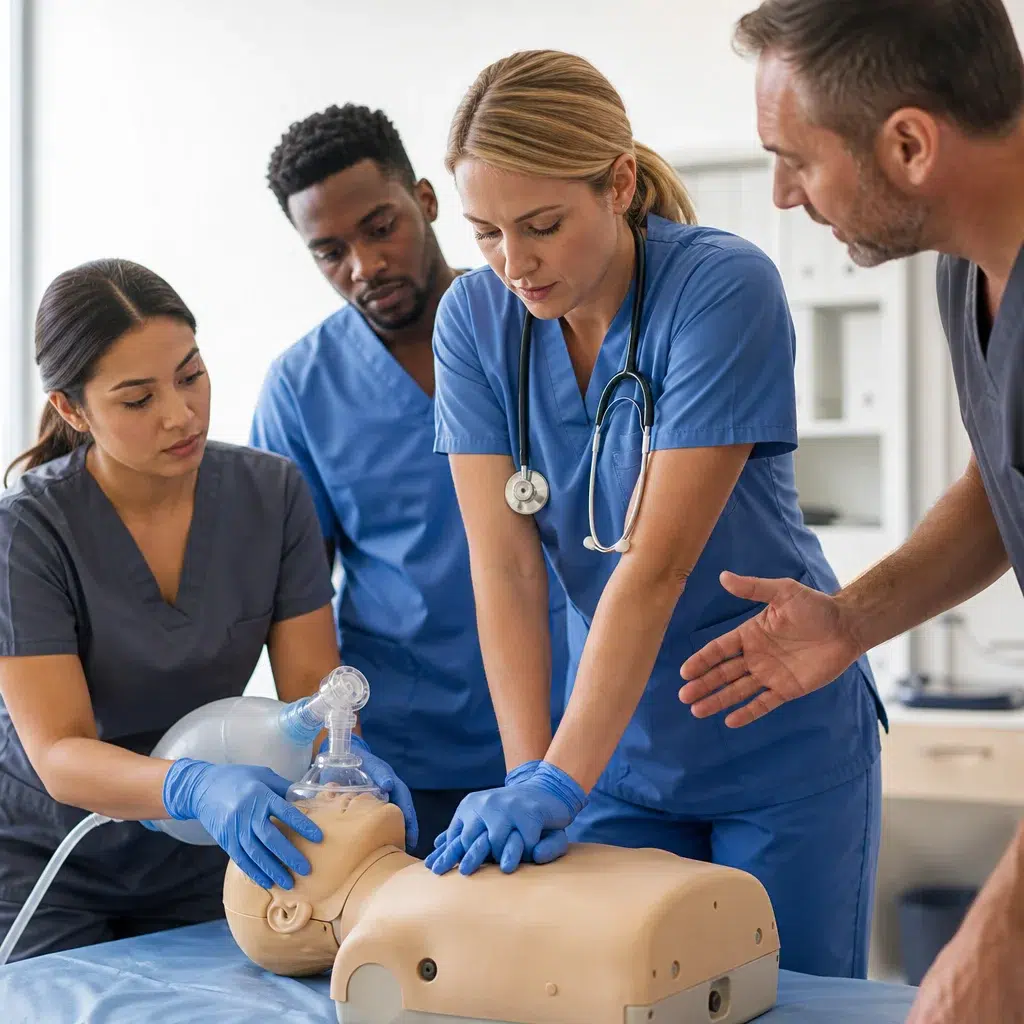
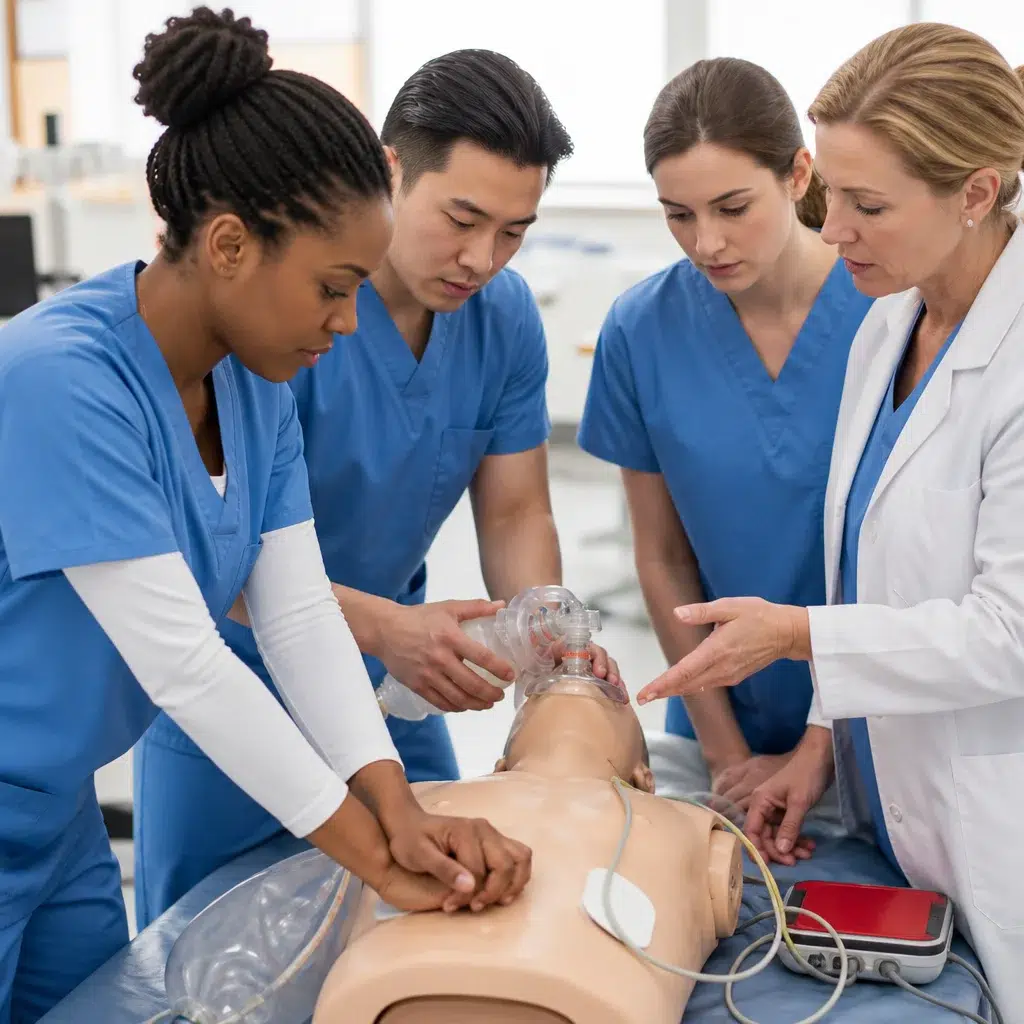
Arrive to your in-person session 10 minutes early, bring a photo ID, and be ready to demonstrate your skills. You’ll practice on manikins, work through scenarios, and get direct feedback. Most students complete the skills portion in under 4 hours.
Walk out certified and ready to practice with current credentials backing you up.
Register for a class today.
Frequently Asked Questions (FAQ)
How quickly can we issue my certification card after completing a course?
We provide same-day certification cards at our in-person skills sessions, and we can also email your digital verification instantly upon completion. If you need your credentials verified for your employer or licensing board before your physical card arrives, we can submit verification directly to them the same day you finish your course.
Does our training meet California nursing board requirements for continuing education?
Yes, our courses are designed to align with California’s nursing continuing education standards. We recommend verifying your specific employer or licensing requirements with your nursing board, as CEU needs vary by facility and specialty, but we’ve structured our programs to meet the compliance expectations for nurses across California healthcare settings.
With over 100 locations across California, can I take my course at a different location than where I registered?
We absolutely allow you to attend at any of our California locations that fits your schedule. Simply let us know your preferred training site when you register or contact us directly, and we’ll make sure your enrollment is transferred to the location that works best for your clinical shifts and commute.