Table of Contents
- The Real Cost of Healthcare Training Programs for California Hospitals
- Why Hospital Group Training Budgets Keep Growing
- What Makes Our Pricing Model Different for Large Medical Centers
- Our Blended Learning Approach Saves Money Without Cutting Corners
- Flexible Scheduling Across 100+ California Locations Benefits Your Staff
- Same-Day Certification Cards and Compliance Documentation
- Corporate Discount Structure and Volume Pricing Guarantees
- How Our RQI Simulation Technology Improves Learning Outcomes
- Customized On-Site Training for Your Hospital Department
- Streamlined Enrollment and Fast Checkout for Large Groups
- Ongoing Support and Recertification Planning for Your Organization
- Start Your Hospital Group Training Program Today
- Frequently Asked Questions (FAQ)
The Real Cost of Healthcare Training Programs for California Hospitals
Running a hospital means managing countless expenses, and mandatory staff training often becomes an overlooked budget line item that quietly consumes thousands of dollars annually. When you factor in instructor fees, facility rental, scheduling conflicts, and staff downtime, the true cost per certification climbs quickly. Most healthcare facilities in California discover that traditional training models don’t scale efficiently, especially when managing recertification cycles across nursing, emergency, and surgical departments.
We understand this challenge because we work with hospitals across California daily. The certification requirement is non-negotiable for your team, but the way you deliver that training doesn’t have to drain your budget. Many facilities accept inflated pricing as standard, unaware that structured group programs can deliver the same rigorous instruction at significantly lower per-person costs.
Your hospital’s size gives you leverage. Whether you’re training 20 nurses in Sacramento or 100 mixed staff across multiple San Francisco locations, volume-based pricing exists specifically to reward organizations like yours. The question becomes how to structure that training to minimize disruption while maximizing compliance and actual skill development.
Why Hospital Group Training Budgets Keep Growing
Budget creep in training programs happens gradually and often goes unnoticed until your CFO flags the year-over-year increase. Several structural factors drive this upward pressure. First, recertification cycles mean you’re paying recurring costs every two to three years for the same staff members. Second, scheduling inefficiencies force repeated class offerings because your team can’t attend single sessions. Third, uncoordinated enrollment through multiple providers creates administrative overhead and missed volume discounts.
We’ve tracked patterns across our client hospitals in Fremont, Berkeley, and Los Angeles, and the numbers consistently show that fragmented training approaches cost 30-40% more than coordinated group programs. When departments book individual classes independently, nobody benefits from the bulk pricing that hospitals using centralized training procurement receive.
Staff turnover adds another layer. New hires need immediate certification before they can work certain shifts, creating constant demand for classes. If you’re cycling 15-20% of staff annually, that’s potentially hundreds of recertifications needed just to maintain compliance. Without a strategic partnership, these become ad-hoc purchases at premium rates.
The solution isn’t simply finding cheaper classes. It’s establishing a predictable, scalable training partnership that absorbs cost increases through efficiency rather than passing them to you.
What Makes Our Pricing Model Different for Large Medical Centers
Our approach begins with transparency. We structure group pricing around actual volume, not abstract rate cards that mysteriously shift based on timing or demand. When your hospital commits to training a defined number of staff, we lock in pricing that accounts for the real operational efficiencies of delivering multiple sessions.
Here’s what differs from transactional models: we see your organization as a partner, not a series of individual student transactions. That means we build flexible delivery schedules around your department workflows, not the other way around. If your ICU needs evening sessions while surgery prefers mornings, we accommodate both without surcharges. If you need 30 nurses trained in August and 15 in November, we maintain consistent per-person pricing across both periods.
Our group CPR discounts reflect actual bulk purchasing power. We reduce administrative overhead by consolidating enrollment, streamlining verification documentation, and batching scheduling logistics. Those savings flow directly to your line item. Additionally, because we operate across 100+ California locations, we eliminate the constraint of geography. Whether your staff trains in Oakl eston, Palo Alto, or Visalia, we deliver consistent quality and pricing.
We also built our fee structure to reward longer-term partnerships. Organizations committing to annual recertification planning receive additional volume reductions compared to hospitals purchasing individual classes monthly.
Our Blended Learning Approach Saves Money Without Cutting Corners

The most misunderstood aspect of modern training is that blended learning (combining virtual and in-person instruction) doesn’t mean reducing rigor. In fact, our model often produces better outcomes because it focuses hands-on time where it matters most: skills practice.
Here’s how it works for your staff. Learners complete knowledge-based content online at their own pace before coming to the training facility. That might include CPR basics, medication recognition, or protocol review depending on their certification level. This reduces seat time in the physical classroom and compresses scheduling requirements.
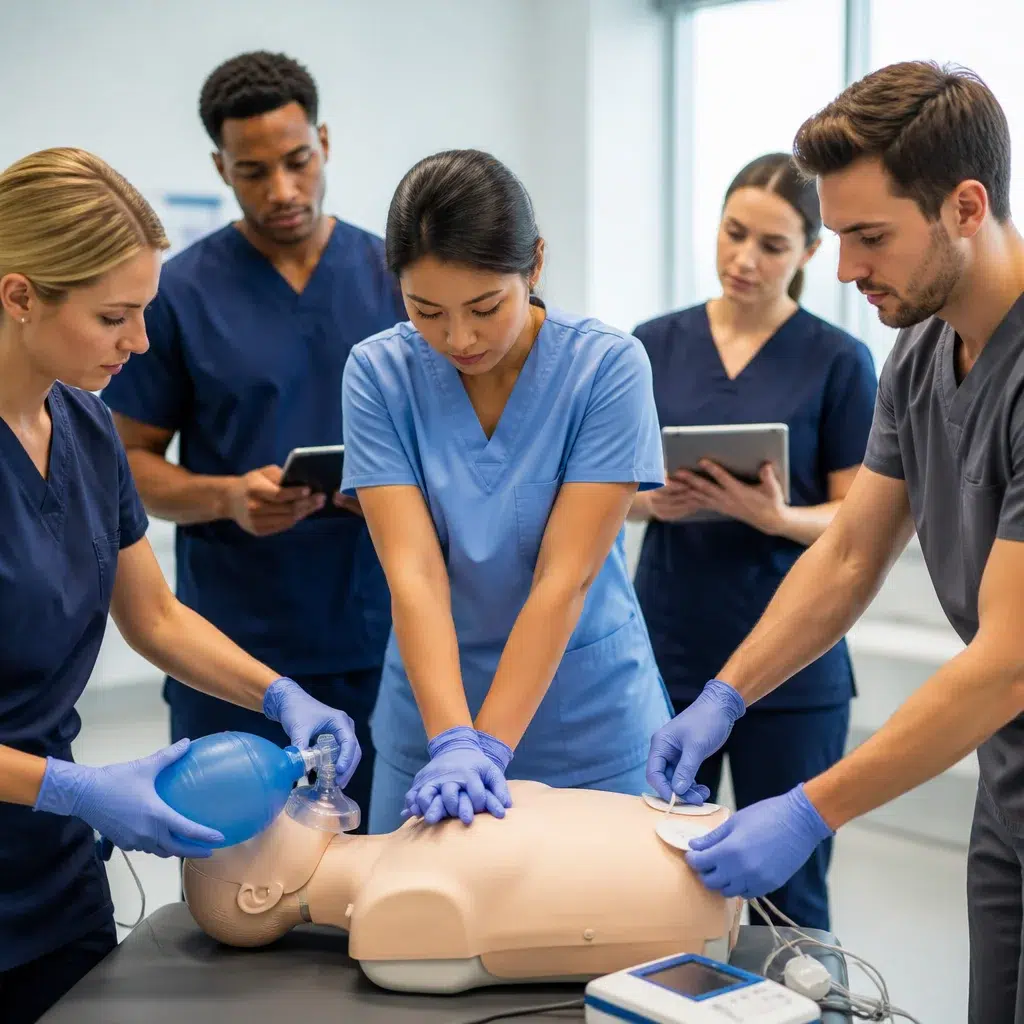
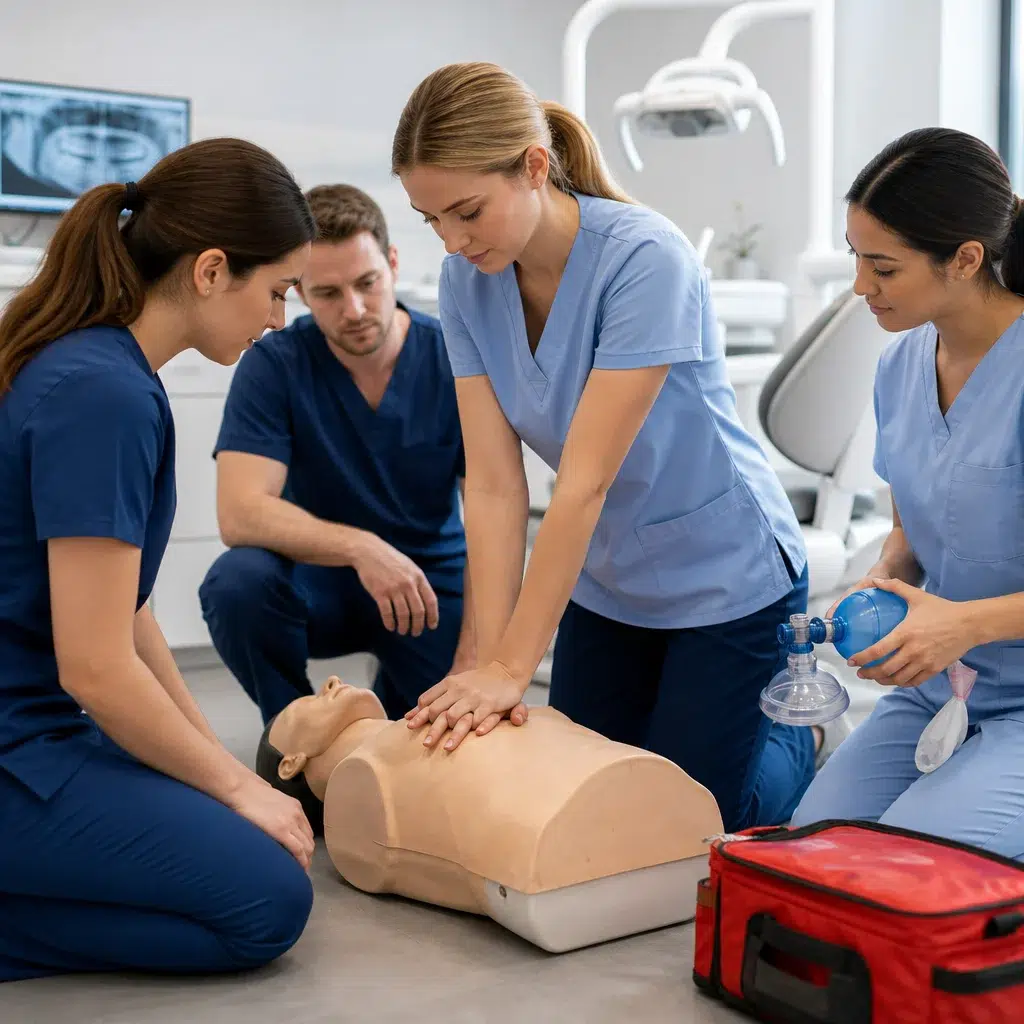
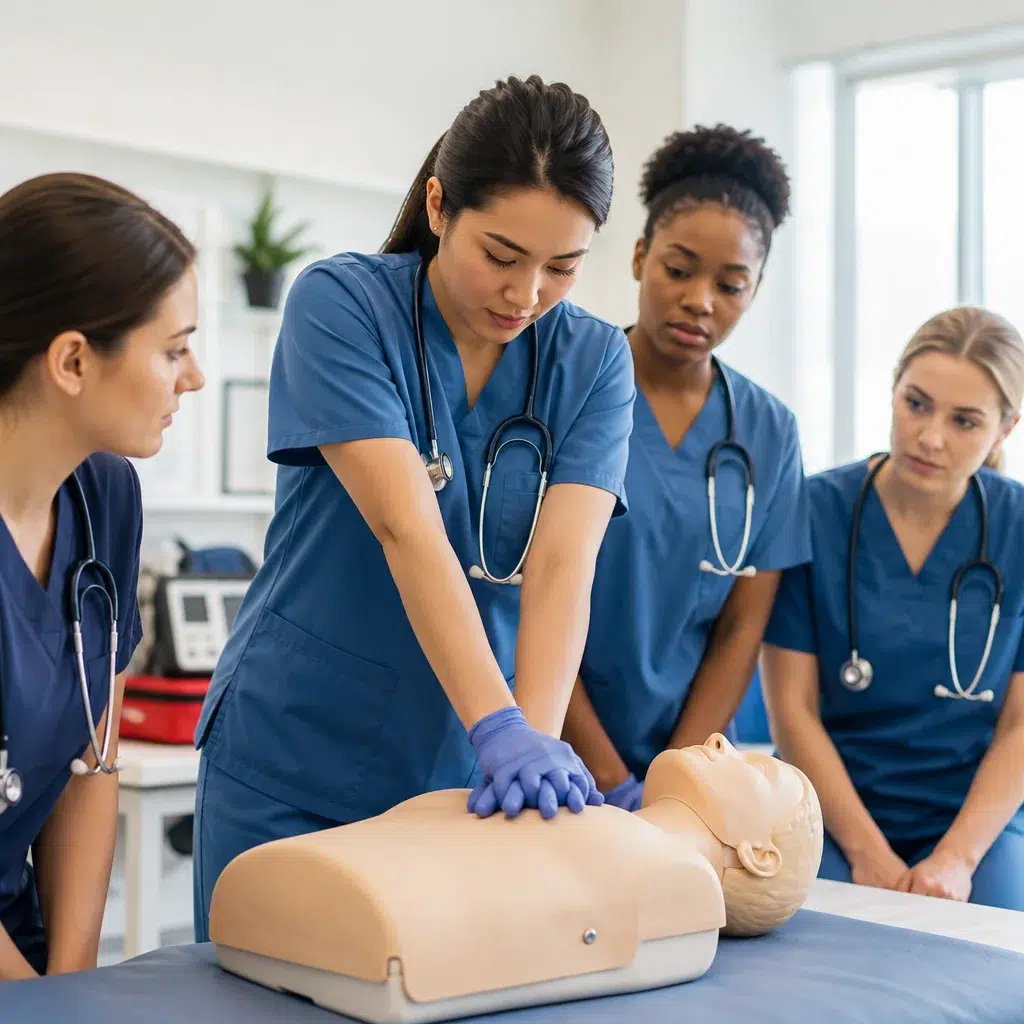
When staff arrive for the in-person skills session, every minute gets dedicated to actual practice with manikins and supervised demonstration. Your nurses aren’t sitting through lectures they could’ve watched at home. Instead, they’re getting corrective feedback from certified instructors while performing chest compressions, airway management, or medication administration depending on whether they’re taking BLS, ACLS (Advanced Cardiac Life Support), PALS (Pediatric Advanced Life Support), or NRP (Neonatal Resuscitation Program) certification.
This efficiency translates directly to lower costs. You reduce the number of facility hours needed, minimize staff scheduling disruption, and compress the overall time commitment. Your team still receives the same standardized instruction and leaves with identical credentials, but the delivery method respects both your budget and their work schedules. Hospitals in Modesto, Martinez, and Livermore have consistently reported 25-35% savings when switching from traditional all-day in-person models to our blended approach.
Flexible Scheduling Across 100+ California Locations Benefits Your Staff
Logistics often become the hidden enemy of group training programs. If your hospital operates across multiple campuses or different cities, coordinating single training sessions becomes nearly impossible. Staff in San Jose can’t easily travel to Oakland for an afternoon class. Overnight shift workers miss morning sessions.
Our network of California locations solves this problem directly. We offer regular classes across the Bay Area, Sacramento metro, Central Valley, and coastal regions. Your team can complete training near where they work or live. We operate daily classes at locations including Sacramento, San Francisco (with seven different neighborhood locations), San Jose (four locations), Oakland (three locations), and dozens of additional Bay Area and regional California sites including Concord, Walnut Creek, Hayward, and Fresno.
For large hospital groups, we also offer dedicated on-site training at your facility. This eliminates commute barriers entirely and lets your team train during normally scheduled clinical education time. Whether your preference is staff traveling to our locations or instructors coming to you, we adjust to your operational reality.
Flexible scheduling means night shift nurses can attend weekend classes. New hires starting mid-month don’t need to wait weeks for the next group session. Your compliance timelines become predictable rather than constrained by availability.
Same-Day Certification Cards and Compliance Documentation
One source of frustration with training programs is the gap between completion and documentation. Your staff passes the skills assessment on Friday afternoon but doesn’t receive their certification card until the following Tuesday. During that delay, compliance questions arise and scheduling uncertainty grows.
We issue same-day certification cards at every training session. Your nurses walk out with physical credentials in hand. This eliminates the waiting period and lets you immediately update compliance records. For digital tracking, we also provide instant digital verification that your hospital’s credentialing office can document right away.
Beyond the card itself, we generate comprehensive compliance documentation automatically. This includes attendance records, skills assessment scores, and any specialized credentials earned (such as ACLS, PALS, or NRP certifications). That documentation formats to meet hospital records requirements and integrates cleanly with whatever tracking system your compliance team uses.
Your credentialing and licensing departments spend less time chasing records and more time on actual credential verification work. This administrative efficiency often gets overlooked, but it translates to real staffing cost reduction in your compliance operations.
Corporate Discount Structure and Volume Pricing Guarantees
Our pricing structure reflects genuine volume economics. Here’s the framework we apply to hospital group programs:
Standard hospital group rates apply when training 15-30 staff annually. This tier typically delivers 15-20% below individual enrollment pricing.
Premium organizational pricing kicks in at 30+ certifications annually. At this level, per-person costs drop another 10-15% and we assign a dedicated coordinator to manage your scheduling and documentation.

Enterprise partnership agreements cover hospitals with 100+ annual certifications. These agreements include locked-in pricing guarantees, priority scheduling, customized reporting, and quarterly compliance reviews with your credentialing team.
We also offer seasonal pricing adjustments. High-demand periods (January following holidays, fall before winter) see standard rates, while slower periods offer additional reductions if your organization can accommodate flexible timing.
Crucially, we guarantee no price increases during the contract term. If broader market conditions change, your hospital’s pricing remains locked. We absorb cost changes because stable, long-term partnerships matter more to us than quarterly rate increases.
How Our RQI Simulation Technology Improves Learning Outcomes
Authentic practice with realistic equipment directly improves skill retention and real-world performance. Our training uses RQI (ResusciTation Quality Improvement) simulation manikins that provide real-time corrective feedback during CPR practice.
Here’s what makes this meaningful for your staff. As your nurses perform chest compressions, the manikin provides immediate auditory and visual feedback about compression depth, rate, and hand placement. Instructors can see the same data and provide corrective coaching in the moment. This tight feedback loop accelerates skill development compared to traditional manikins that provide no real-time information.
The outcome evidence is clear: learners practicing with feedback-enabled manikins demonstrate significantly better technique retention when tested months later, and they’re more confident applying skills in actual emergency situations. For your hospital, this means staff arriving at code situations with sharper reflexes and better technical precision.
We integrate this technology across all our classes regardless of whether staff train at our facilities or at your hospital location. The equipment investment means nothing if it’s gathering dust, so we treat RQI simulation as a core instructional tool, not an optional upgrade.
Customized On-Site Training for Your Hospital Department
When a hospital’s training volume justifies it, dedicated on-site training often becomes the most efficient option. Instead of staff commuting to our locations in Pleasanton, Petaluma, or San Rafael, our instructors come to you.
On-site training works particularly well for specialty departments. Your ICU might have unique ACLS protocols that benefit from customized instruction. Your perinatology team might need specialized PALS and NRP content tailored to your specific equipment and workflows. Rather than teaching generic content and having staff adapt afterward, we build the curriculum around your hospital’s actual systems.
Scheduling becomes completely flexible. You coordinate with your department managers about when staff can step away from direct patient care. Classes happen during shifts when it works best operationally. If you need Friday evening sessions for overnight workers, we accommodate that. If you need back-to-back morning sessions across three days, that works too.
We also provide on-site equipment verification. Your team practices with the actual resuscitation carts and defibrillators they’ll use during real emergencies. That familiarity eliminates learning curves when actual codes occur.
The cost per person for on-site training at larger hospitals (50+ annual certifications) often falls below our facility-based rates because both logistics are optimized and we achieve density within your location.
Streamlined Enrollment and Fast Checkout for Large Groups
Administrative friction around enrollment creates unnecessary delays and staff frustration. Our process removes that friction for hospital groups.
When you establish a partnership, we provide a hospital-specific enrollment portal where your HR or education coordinator directly schedules staff into available class times. No individual emails bouncing between staff members and our office. No duplicate entries or scheduling conflicts. Your coordinator sees real-time availability, books multiple staff members simultaneously, and automatically generates a manifest that gets sent to our instructors.
We also pre-populate enrollment forms using information you provide once. Your staff doesn’t complete duplicate paperwork for each class. They simply show up with their ID and wallet card.

Payment consolidation simplifies accounts payable. Instead of invoicing per individual student, we batch monthly invoices organized by department or cost center. That matches how your hospital actually processes training expenses and reduces accounting coordination time.
Fast checkout on training day means staff don’t linger after class. We process certifications and verifications while the group is leaving, so there’s no follow-up wait or unclear next steps.
Ongoing Support and Recertification Planning for Your Organization
The training relationship doesn’t end when staff receive their cards. We provide quarterly compliance reporting showing certification status across your hospital workforce. You’ll know immediately when certifications expire so staff can schedule recertification proactively rather than scrambling at the last moment.
We also help your hospital develop annual training calendars. Working with your education department, we schedule anticipated recertifications for nursing units, surgery, emergency, and other departments on a planned rhythm. This prevents the budget surprises that happen when you’re booking expensive rush classes because nobody tracked expiration dates.
For staff turnover, we maintain flex capacity in our class schedules specifically to accommodate last-minute new-hire certifications. If you bring on replacement staff mid-month, they can get certified quickly without disruptive ad-hoc purchases.
This ongoing partnership approach means your hospital gradually reduces training chaos. What started as managing crisis-driven recertification requests becomes a predictable, budgeted process that your education team controls rather than reacting to.
Start Your Hospital Group Training Program Today
Your hospital’s budget constraints are real, and your compliance obligations are non-negotiable. That’s precisely why we designed our service around both realities. You don’t sacrifice quality, rigor, or actual skill development when you choose us. You simply eliminate the inefficiencies that inflated your training costs in the first place.
Contact our hospital group specialist to discuss your facility’s annual certification volume and specific scheduling needs. We’ll review your current approach, identify cost reduction opportunities, and build a customized pricing proposal for your organization. Whether your team trains at our locations across California or we bring instruction to your hospital, we’re ready to support your compliance goals without breaking your budget.
Register for a class today.
Frequently Asked Questions (FAQ)
How much can our hospital save with your group training programs?
We offer volume-based discounts that scale with your enrollment, and we guarantee our pricing is the lowest available so you won’t find better rates elsewhere. For large medical centers, we typically structure pricing tiers based on your staff size and course mix. Our streamlined enrollment process also reduces administrative overhead compared to coordinating multiple individual registrations.
Can we get same-day certification cards for our staff compliance requirements?
Yes, we issue same-day certification cards at all our locations so your team meets licensing deadlines without delays. We also provide complete compliance documentation that integrates directly with your hospital’s credentialing systems. This eliminates the back-and-forth paperwork that typically extends your certification timelines.
What’s the difference between your blended learning model and traditional in-person only training?
We combine virtual instruction with hands-on skills sessions at our 100+ California locations, which lets your staff learn theory flexibly while mastering critical skills in person. This approach reduces time away from patient care while maintaining the same certification standards. Our RQI simulation technology during in-person sessions also improves retention and real-world application compared to classroom-only formats.