Table of Contents
- Why CPR and BLS Certifications Matter for Your Nursing Career
- California State Board of Nursing Mandatory Requirements
- How Our Blended Learning Model Fits Your Schedule
- Same-Day Certification Cards and Flexible Class Times
- Why Our AHA-Aligned Curriculum Meets All California Standards
- Over 100 Training Locations Across California for Your Convenience
- Affordable Pricing with Our Low Price Guarantee
- Real Support from Healthcare Professionals Who Understand Your Needs
- Frequently Asked Questions (FAQ)
Why CPR and BLS Certifications Matter for Your Nursing Career
As a California nurse, you know that maintaining current CPR and BLS certifications isn’t just recommended—it’s a legal requirement for employment and licensure. Whether you’re renewing credentials for your hospital position, switching healthcare settings, or maintaining compliance with the California State Board of Nursing, understanding what’s required and finding training that fits your demanding schedule matters. We’ve helped thousands of nurses across California stay current with certifications they trust, and we’re here to break down exactly what you need to know.
Your CPR and BLS certifications represent more than a checkbox on your licensing paperwork. They’re the skills that could save a patient’s life during a cardiac emergency, and they’re the credential that employers require before you step into a clinical setting. In nursing, the stakes are real, and your employer depends on knowing that every team member can respond confidently when seconds count.
For nurses specifically, BLS certification demonstrates competency in recognizing and responding to cardiac arrest, performing effective chest compressions, and using automated external defibrillators (AEDs). These aren’t abstract concepts—they’re practical interventions you’ll likely perform during your career. Current research shows that effective bystander CPR can double or triple survival rates in cardiac emergencies, making the quality of your training genuinely consequential.
Beyond patient safety, maintaining active certifications protects your nursing license and career. The California State Board of Nursing makes clear that lapsed certifications can affect your employment eligibility, your ability to work in certain units, and even your renewal status. Hospitals, clinics, urgent care centers, and other healthcare facilities won’t hire or retain nurses without valid BLS credentials. Your certification is part of your professional credibility.
Your next step: Check the expiration date on your current card. If you’re within 60 days of expiration, it’s time to schedule your renewal.
California State Board of Nursing Mandatory Requirements
California’s Board of Nursing doesn’t issue CPR or BLS certifications directly—instead, it requires that nurses maintain certifications from accredited training providers. The key is that your credential must come from a program aligned with American Heart Association (AHA) standards, which establish the curriculum, skills benchmarks, and assessment criteria that California healthcare employers recognize.
To maintain an active nursing license in California, you need to hold a current BLS certification from an AHA-approved provider. “Current” means the card hasn’t expired. If your certification lapses, you cannot legally work in most healthcare settings in California until you’re recertified. Some employers give nurses a grace period to renew, but don’t count on it—many facilities require certification before your first shift.
Your nursing license renewal with the California Board of Nursing doesn’t specifically ask for proof of CPR certification during the renewal process, but your employer will. When you apply for a job or move between positions, your prospective employer will verify that your BLS card is valid. This makes staying on top of renewal dates essential for job security and career flexibility.
Different healthcare settings sometimes add their own requirements on top of state mandates. For example, critical care units, emergency departments, and cardiac care areas may require ACLS (Advanced Cardiac Life Support) certification or specialized training beyond basic BLS. If you’re planning a career move, check your target employer’s specific credential list so you’re prepared before you interview.
Your next step: Request a credential verification letter from your current employer confirming which certifications they require. This prevents surprises during your next job search.

How Our Blended Learning Model Fits Your Schedule
We understand that nurses work shifts, pick up extra hours, and don’t have predictable weekday availability. That’s why we built our training around a blended learning model that splits classroom time between online and in-person sessions, so you’re not locked into a full day away from work.
With our blended approach, you complete the knowledge portion at your own pace online. Watch video content, review algorithms, and test your understanding whenever you have 30 minutes between shifts or on a day off. The online modules are designed by healthcare educators who know exactly what nurses need to understand before walking into the skills lab. You move through material at your speed, and you can revisit sections you want to strengthen.
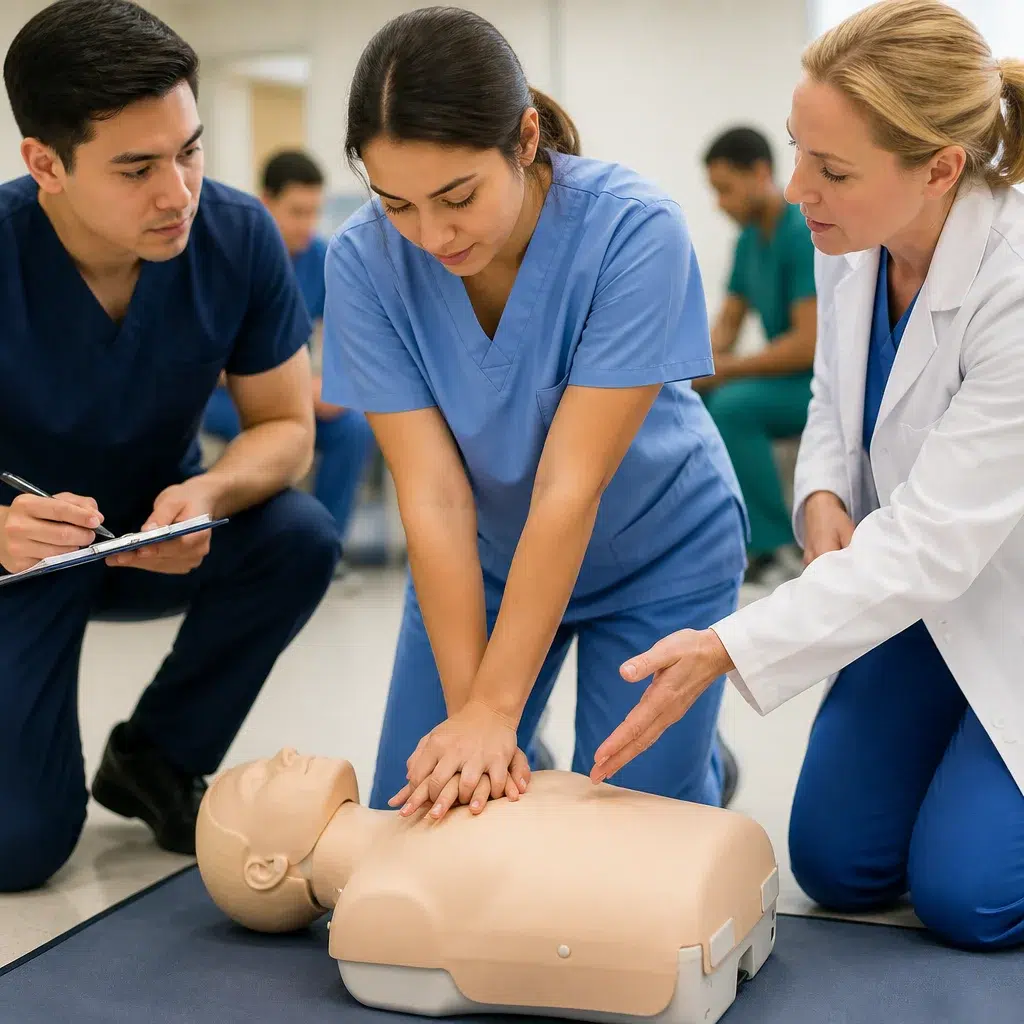
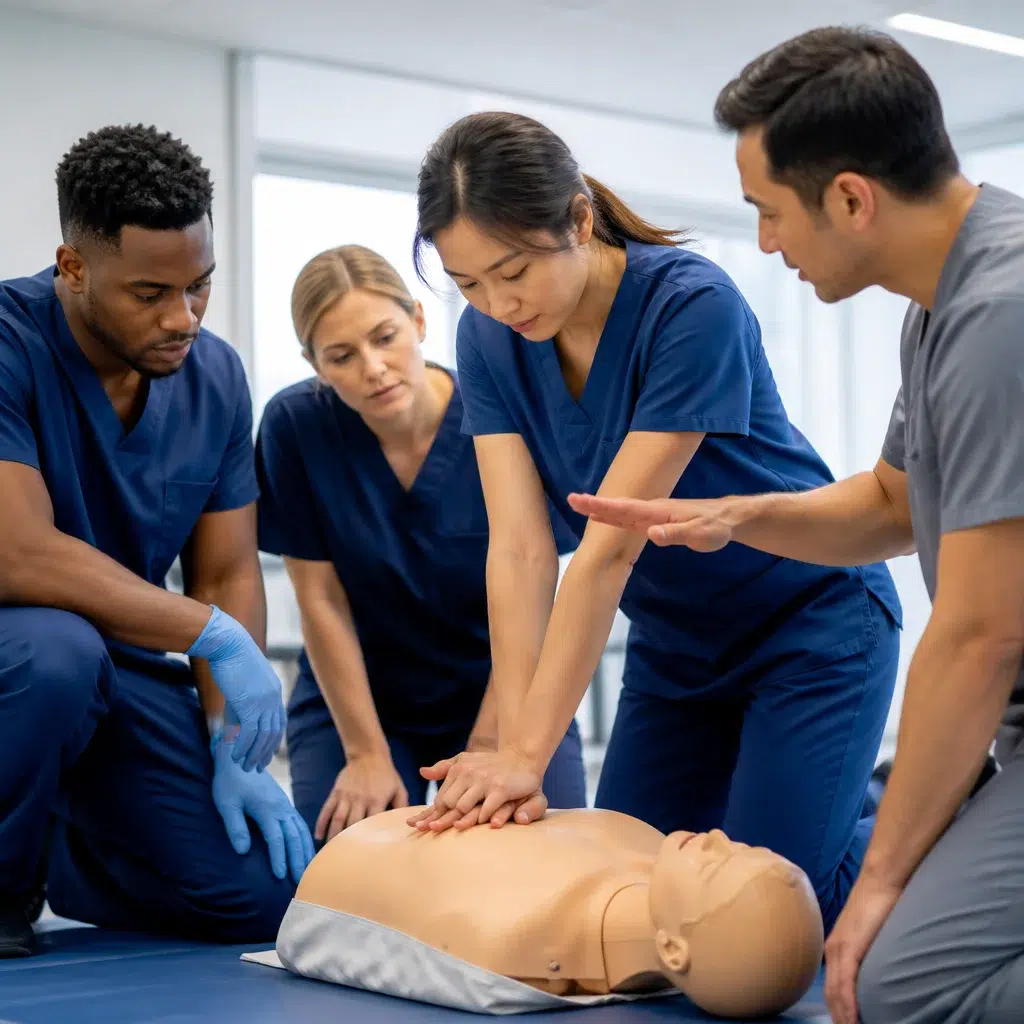
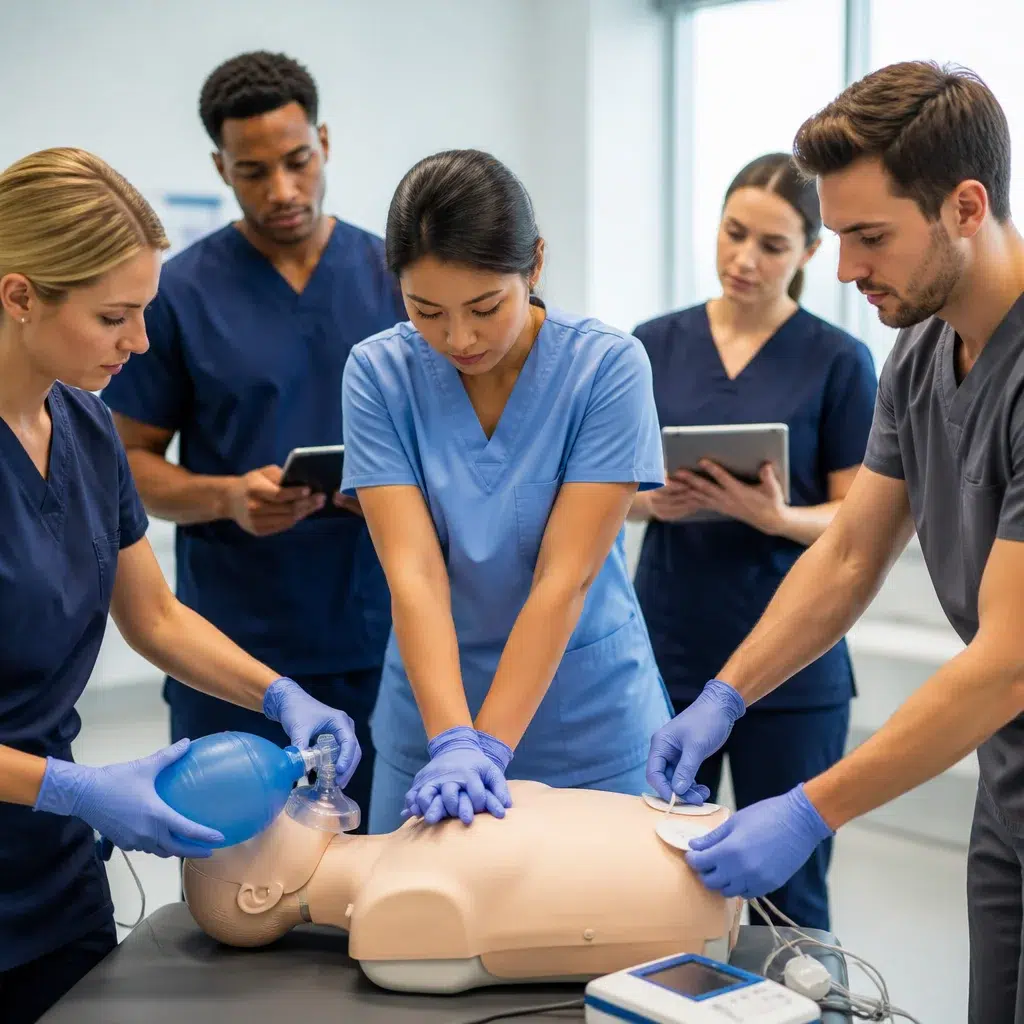
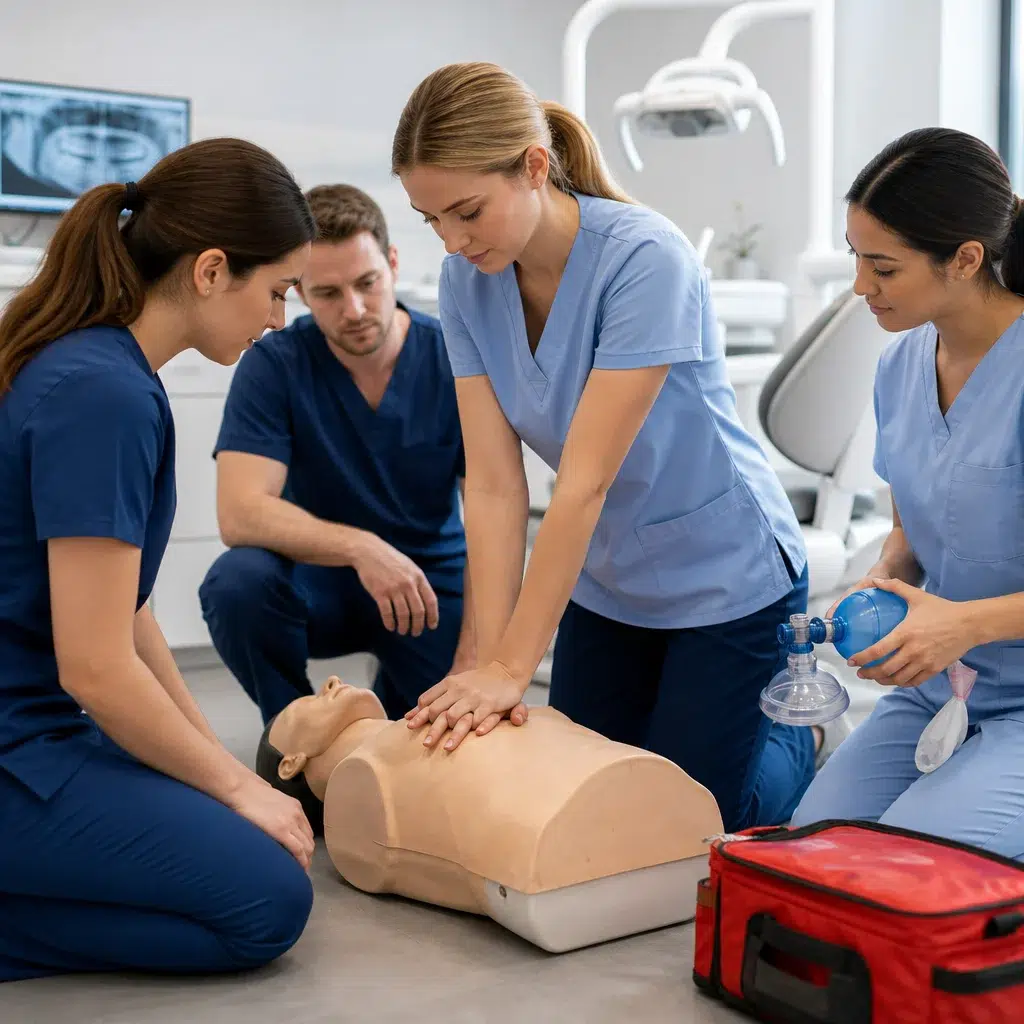
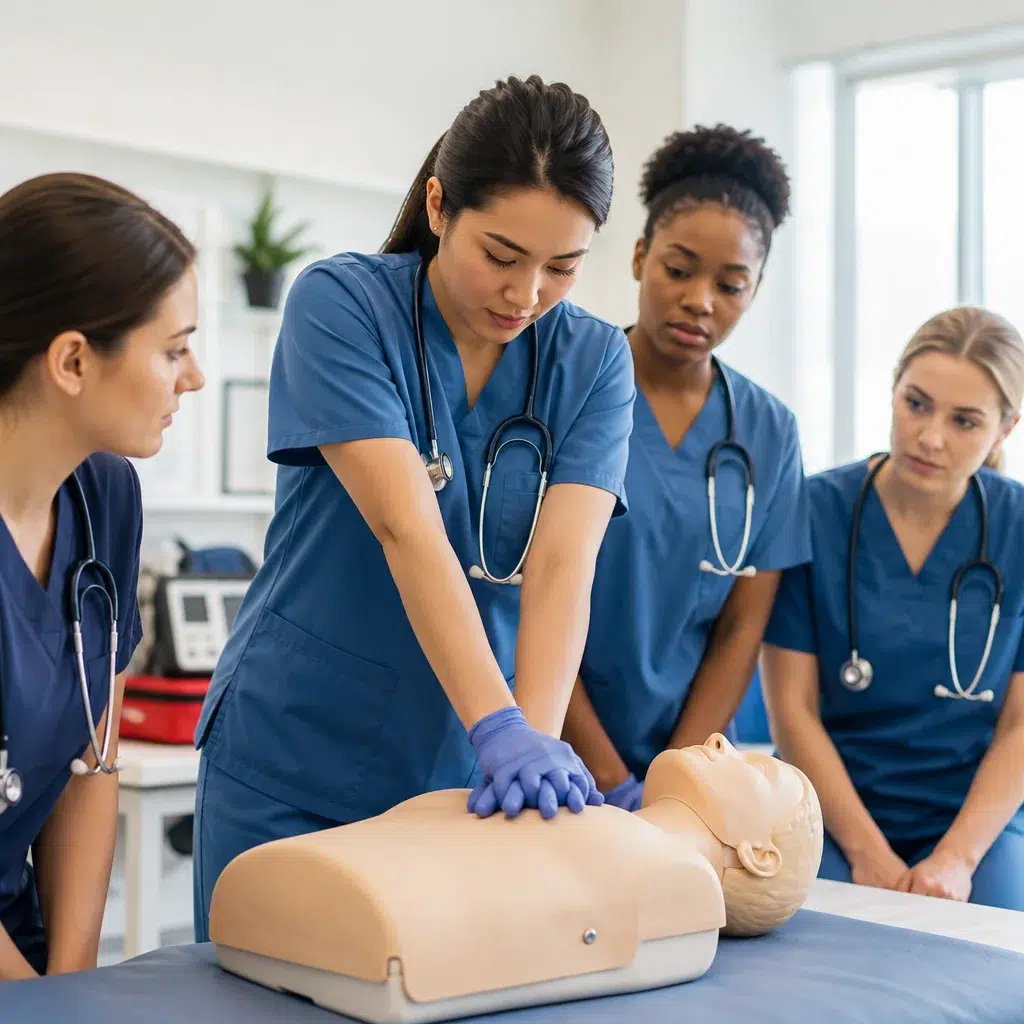
Then you book a shorter in-person session focused entirely on hands-on skills. This is where you practice actual chest compressions on a manikin, learn proper AED pad placement, and get real-time feedback from an instructor who’s trained healthcare professionals. These sessions typically take two to three hours, which is far more manageable than asking for a full eight-hour day off.
This flexibility has been a game-changer for working nurses. If you’re in the Bay Area, you can complete your online portion while on night shift, then attend a Saturday morning skills session at one of our San Francisco locations. If you’re in the Central Valley, the same model works in Stockton, Modesto, Visalia, or Fresno. You control when you learn, and we provide the qualified instruction when you’re ready.
Your next step: Set a specific date this week for your online portion. Most nurses complete it in two to four sessions of 30 minutes each.
Same-Day Certification Cards and Flexible Class Times
After you complete your in-person skills session, you walk out with your certification card in hand. Not a temporary card. Not a promise to email it later. Your actual wallet-sized credential that shows your BLS certification is valid from that day forward.
This matters practically because you might start a new position in days, not weeks. You might have a job interview lined up and need proof of current certification. You might have a gap in your employment timeline where you need to show your credentials were maintained throughout. With same-day cards, there’s no waiting period, no administrative delays, and no stress about whether documentation will arrive in time.
We offer class times that acknowledge your schedule constraints. Early morning sessions before a day shift. Evening sessions after you clock out. Weekend options in nearly every location across California, including areas like Sacramento, San Jose, Oakland, and the Peninsula. You’re not choosing between your paycheck and your certification—you’re finding a time that works within your existing commitments.
Daily class availability means you can renew on your timeline, not ours. If your certification expires during a busy month at work, you can often schedule a renewal within days rather than weeks. This reduces the risk of letting your credential lapse accidentally, which could disrupt your employment.
Your next step: Visit our scheduling page and filter by your preferred location and time of day. You’ll see availability for the next 90 days immediately.
Why Our AHA-Aligned Curriculum Meets All California Standards
Our curriculum is built directly from American Heart Association guidelines, which means the content, skills benchmarks, and assessment criteria align with what California employers expect. Every instructor we train follows AHA protocols for chest compression depth, airway management, and defibrillation techniques. This consistency matters because employers know exactly what they’re getting when they verify your certification with us.
California healthcare facilities don’t just need “some CPR training”—they need training that meets recognized industry standards. Employers verify certifications because they want assurance that the person holding the card actually understands how to perform these life-saving interventions correctly. When your credential comes from an AHA-aligned program like ours, that verification is straightforward and widely accepted.

The curriculum also stays current with evolving evidence. Every few years, the AHA updates guidelines based on the latest resuscitation research. When compression-to-ventilation ratios change, when drug protocols shift, or when new technology affects defibrillation, our instructors are trained on those updates, and our materials reflect them. You’re learning what’s current in 2026, not outdated techniques that might have worked five years ago.
Our instructors are healthcare professionals themselves—nurses, paramedics, and physicians who teach because they understand the real-world applications. They don’t read from a script; they explain the why behind the how. You learn not just that you should perform 30 compressions before ventilation, but why that ratio gives you the best chance of maintaining blood flow to vital organs during cardiac arrest.
Your next step: Request the specific curriculum outline for the certification you’re planning to take. Review it against your employer’s requirements to confirm full alignment.
Over 100 Training Locations Across California for Your Convenience
We operate more than 100 training locations throughout California, from the redwood communities of Eureka and the wine country of Napa and Sonoma to the major medical hubs of Los Angeles, San Diego, and the Bay Area. Whether you work in a rural clinic in Visalia, a busy hospital in Sacramento, or a specialty practice in Palo Alto, we’re within a reasonable distance.
This geographic reach matters because travel time affects your decision. Instead of driving an hour to centralized training, you can often find a location in your own community—or very close to where you work, your home, or both. Nurses in Alameda, Fremont, and Oakland have multiple options across their region. Nurses in the Bay Area can choose from locations in Berkeley, San Jose, Hayward, San Mateo, and beyond. Central Valley nurses have options in Stockton, Modesto, Fresno, and smaller communities like Lathrop and Tracy.
We’ve invested in this network because we believe convenience directly affects whether working professionals actually stay current with certifications. The easier we make it to renew, the less likely you are to let credentials slip. Our 100-plus locations mean most California nurses are within 20 minutes of a training center.
Each location maintains the same quality standards, same instructor qualifications, and same curriculum. A BLS certification you earn in Stockton is identical in value and recognition to one you earn in San Francisco or San Diego.
Your next step: Use our location finder to identify the three nearest training centers to your home or workplace. Know your options before your current card expires.
Affordable Pricing with Our Low Price Guarantee
We believe that cost shouldn’t be a barrier to staying current with mandatory certifications. That’s why we maintain a low price guarantee across all our courses, and we offer corporate group discounts for hospitals, clinics, and medical offices that want to train their staff together.
Individual BLS renewal courses are priced affordably, typically costing less than what you’d spend on a single shift of childcare or transportation. If you find a lower price for an equivalent AHA-aligned course elsewhere, we’ll match it. This guarantee removes the incentive to shop around or delay training to find a better deal—you already have one with us.
For larger healthcare organizations, group training often represents significant savings. If your hospital wants to certify ten nurses, twenty, or an entire department, we work with you on volume pricing and scheduling that minimizes disruption to patient care. Many facilities arrange quarterly group training sessions where staff renew together, spreading costs and building team competency simultaneously.
We also recognize that some nurses juggle multiple jobs or take on contract positions seasonally. Our pricing doesn’t penalize you for frequency. Whether you renew every two years or annually, the cost per course remains consistent and transparent. No hidden fees, no surprise charges during checkout.
Your next step: Get a price quote for your preferred location and certification type. You’ll see the full cost upfront with no surprises.

Real Support from Healthcare Professionals Who Understand Your Needs
Our instructors aren’t training specialists hired to teach CPR generically. They’re nurses, paramedics, respiratory therapists, and emergency medicine physicians who teach because they understand exactly what you do and why this training matters. When you practice chest compressions, your instructor might have performed them that week. When you learn about medication administration in ACLS, your instructor has actually administered those drugs in real cardiac emergencies.
This lived experience changes instruction quality. Our instructors can answer your specific questions: “How does this apply in our unit?” “What happens if the patient has this comorbidity?” “What’s the protocol when equipment fails?” They bridge the gap between textbook knowledge and clinical reality because they work in clinical reality themselves.
We also understand the professional pressures nurses face—competing demands for your time, the emotional weight of the work, the need to stay current while managing patient care. Our support extends beyond the classroom. If you have questions about renewal timelines, credential verification, or what your next career move might require certification-wise, we’re here to help. You’re not just a course registration to us; you’re a healthcare professional trying to do your job well.
Our satisfaction guarantees reflect this commitment. We want you to feel confident in your certification and supported throughout your renewal journey. If something isn’t clear, if you need to reschedule, or if you have concerns about your experience, we address them directly.
Your next step: Register for your next renewal course today. You’ll receive confirmation, reminders, and direct access to our support team before, during, and after training.
Maintaining current BLS and CPR certifications is non-negotiable for your nursing career in California, but the process doesn’t have to be stressful or time-consuming. We’ve built our entire operation around making renewal convenient, affordable, and high-quality. With more than 100 locations across California, flexible scheduling, same-day cards, and instruction from healthcare professionals who understand your world, you can keep your license current without sacrificing your work or personal commitments. Your next certification renewal is closer than you think.
Register for a class today.
Frequently Asked Questions (FAQ)
Do you offer CPR and BLS certification on the same day?
Yes, we provide same-day certification cards upon completion of our courses. We understand that healthcare professionals like you need flexible scheduling, which is why we offer BLS certification classes daily across our 100+ California locations. Our blended learning approach combines virtual instruction with in-person skills sessions, allowing you to earn your certification quickly without disrupting your work schedule.
Will your training meet California’s nursing license renewal requirements?
Absolutely. Our curriculum is aligned with California State Board of Nursing standards and covers all mandatory certifications required for license renewal and job compliance. We ensure that nurses, dentists, and EMS personnel receive the specialized instruction necessary for their professional credentials. You can trust that completing training with us satisfies your state-mandated continuing education obligations.
How much does certification training cost with you?
We stand behind our low price guarantee, meaning you won’t find better rates for quality training anywhere else. We also offer corporate group training with discount pricing for healthcare facilities and organizations. Our affordable rates make it easier for you to maintain your required certifications without breaking your budget.