Table of Contents
- Why California Healthcare Professionals Need Recognized Certifications
- Understanding Hospital Certification Requirements Across California
- Core Certifications Every Healthcare Professional Must Hold
- How We Prepare You for Hospital Compliance Standards
- Blended Learning Approach for Working Healthcare Professionals
- Same-Day Certification Cards and Fast Verification
- Multi-Location Convenience Across California for Your Schedule
- Affordable Certification Without Compromising Quality Standards
- Our Track Record Supporting California Healthcare Teams
- Getting Started With Your Required Certifications Today
- Frequently Asked Questions (FAQ)
Why California Healthcare Professionals Need Recognized Certifications
Hospitals and medical centers across California maintain strict compliance standards for staffing. As a healthcare professional, your certifications directly influence your hiring eligibility, scope of practice, and patient safety responsibilities. Without current, hospital-recognized credentials, you face employment barriers and potential liability issues.
California’s healthcare regulatory environment requires active certifications for nurses, emergency medical services (EMS) personnel, dentists, and other clinical staff. These credentials demonstrate competency in life-saving interventions and align with institutional accreditation standards. When you hold recognized certifications, you signal to employers that you meet established performance benchmarks.
Your certifications also protect your license and career. Regulatory bodies like the California Board of Nursing verify credential status during background checks and licensure renewals. Hospitals track certification expiration dates closely because non-compliant staff creates legal and accreditation risks. By staying current, you eliminate employment disruptions and maintain professional standing.
The value extends beyond compliance. Certified professionals demonstrate commitment to patient outcomes and evidence-based care. Employers recognize this investment when considering promotions, shift assignments, and specialty roles. Your certification is both a legal requirement and a career asset.
Understanding Hospital Certification Requirements Across California
Hospital credentialing departments set specific certification mandates based on departmental needs and accreditation standards. A cardiac care unit, for example, may require Advanced Cardiac Life Support (ACLS) certification with no grace period for expiration. An urgent care clinic in Sacramento or Fremont might require Basic Life Support (BLS) for all clinical staff but allow a 30-day renewal window.
Requirements vary by facility type, patient population, and role. Critical access hospitals in rural California have different staffing models than large urban medical centers in San Francisco or Los Angeles. Some facilities require pediatric-specific training (PALS) for staff working in pediatric units or emergency departments. Others mandate neonatal resuscitation for labor and delivery units.
You’ll encounter three common compliance scenarios:
- Mandatory certifications tied to job description and required before hire date
- Conditional certifications needed within 90 days of employment
- Role-specific certifications required only for certain departments or shifts
Understanding your employer’s specific requirements prevents costly delays. Contact your human resources or credentials department before enrolling in courses. Ask about preferred certification formats, renewal timelines, and whether your facility accepts same-day cards or requires official verification documents.
Many California healthcare systems now use shared credentialing verification services. A certification earned in Alameda may be verified instantly at a facility in Modesto or Pleasanton through electronic systems. This standardization simplifies your compliance process across multiple employers or healthcare systems.
Core Certifications Every Healthcare Professional Must Hold
BLS certification forms the foundation for nearly all clinical roles. This certification covers adult cardiopulmonary resuscitation (CPR), automated external defibrillator (AED) use, and relief of foreign body airway obstruction. Nurses, EMS personnel, and dental hygienists all require BLS to maintain employment in California. The certification remains valid for two years and requires practical demonstration of compression techniques and airway management.
ACLS certification targets physicians, nurses, and paramedics involved in advanced cardiac care. This credential builds on BLS skills by adding pharmacological interventions, rhythm interpretation, and post-resuscitation care. If you work in emergency departments, intensive care units, or critical care transport, ACLS is non-negotiable. The certification is rigorous and includes a written examination plus practical scenario assessments.
PALS (Pediatric Advanced Life Support) certification applies to professionals caring for infants and children. Pediatric nurses, emergency room staff, and pediatric dentists require PALS for job compliance. The coursework covers pediatric-specific CPR techniques, medication dosing calculations, and equipment sizing. Pediatric patients require different compression depths, airway approaches, and medication concentrations than adults, making this certification essential for accurate care delivery.

NRP (Neonatal Resuscitation Program) certification addresses newborn-specific resuscitation in delivery rooms and neonatal intensive care units. Obstetric nurses, midwives, and neonatologists pursue this credential. The program focuses on the unique physiology of newborns and evidence-based resuscitation sequences in the first minutes after birth.
You may need multiple certifications depending on your role and facility. A registered nurse in an emergency department might hold BLS, ACLS, and PALS simultaneously. A dental professional in Los Gatos or San Jose may only require BLS unless they provide sedation services.
How We Prepare You for Hospital Compliance Standards
We design our courses specifically around hospital compliance expectations. Our instructors are experienced healthcare professionals who understand credentialing requirements across California facilities. They teach practical skills that transfer directly to your workplace environment, not generic scenarios.
Our curriculum covers the exact competencies hospitals evaluate during credentialing reviews. We emphasize rhythm recognition, decision trees, and communication protocols that match real emergency department workflows. When you complete our courses, you’re prepared for both the certification exam and actual patient encounters.
We provide detailed course materials that highlight compliance checkpoints. Our instructors explain why hospitals require specific skills and how each competency supports patient outcomes. This context helps you retain information and apply it meaningfully in clinical practice.
Our verification process supports your employer’s credentialing workflow. We issue official documentation that healthcare systems recognize and accept. Your certification card includes required identifiers and expiration dates, eliminating questions from HR departments. We also maintain digital verification records that facilities can access instantly.
We offer specialty courses tailored to specific roles. Nurses preparing for critical care roles receive targeted ACLS and PALS instruction. EMS personnel get field-specific scenarios and equipment familiarization. Dentists and dental assistants learn sedation-specific protocols. This focused approach ensures you master competencies directly relevant to your position.
Blended Learning Approach for Working Healthcare Professionals
We understand that full-time healthcare professionals struggle to attend lengthy in-person classes. Our blended learning model combines self-paced online instruction with essential hands-on skills practice, giving you flexibility without compromising competency assessment.
The online component covers knowledge content at your own pace. You review anatomy, pharmacology, algorithm sequences, and decision-making frameworks on your schedule. This portion typically requires four to six hours across several days. You can complete modules during off-shift hours from home or between shifts at work.
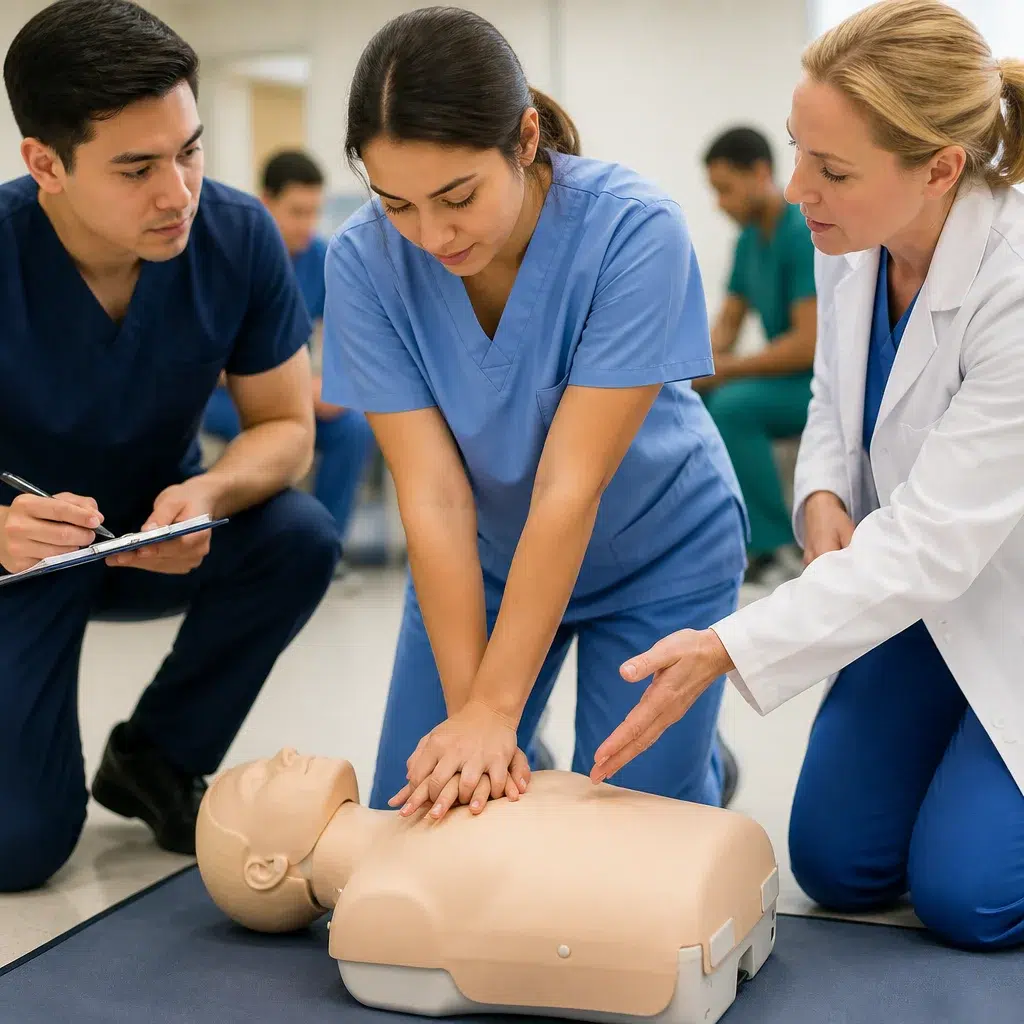
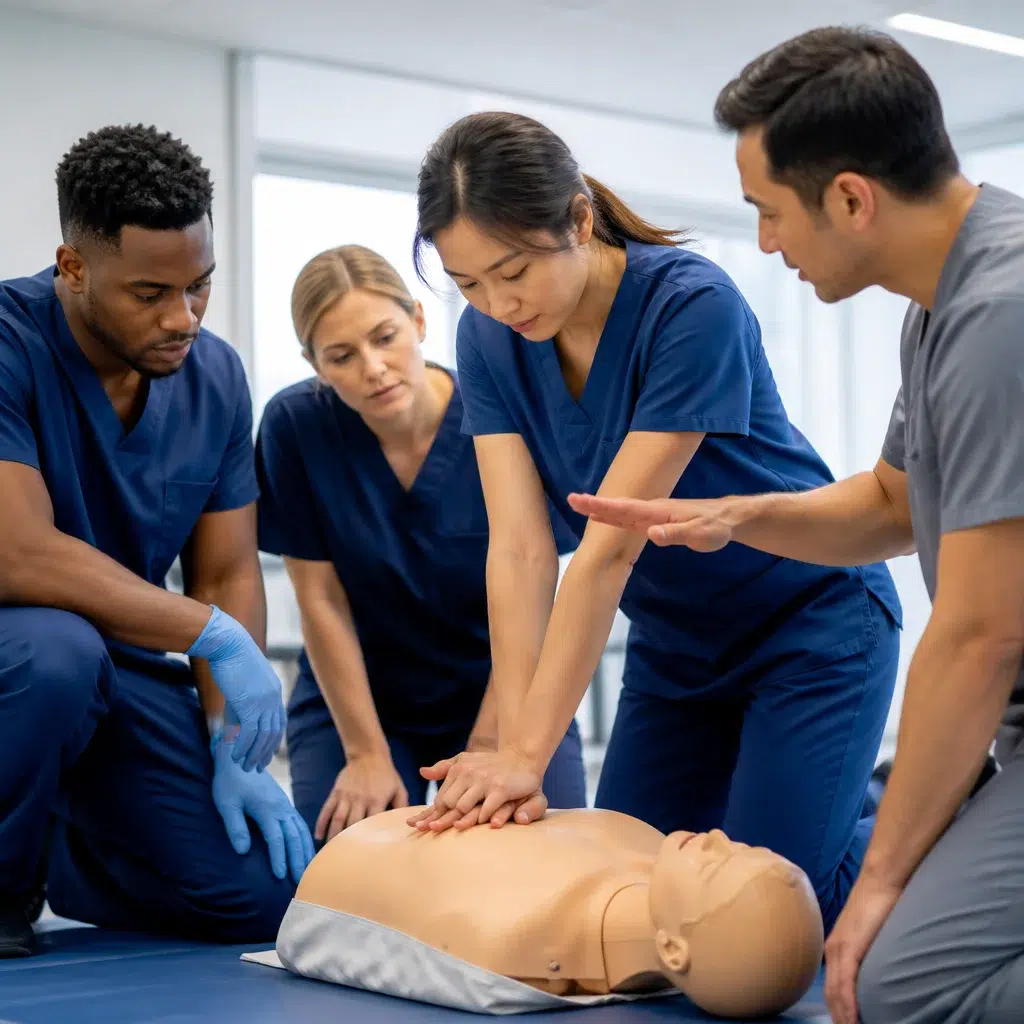
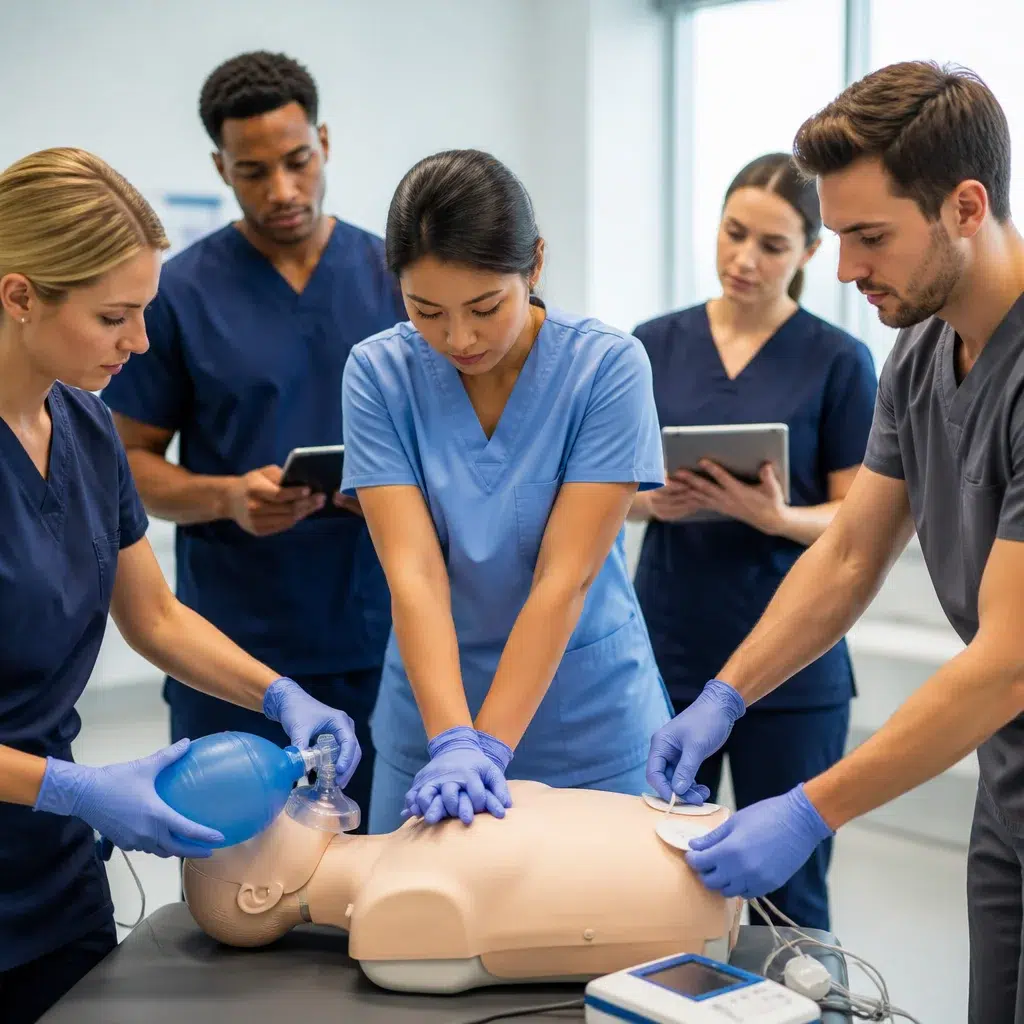
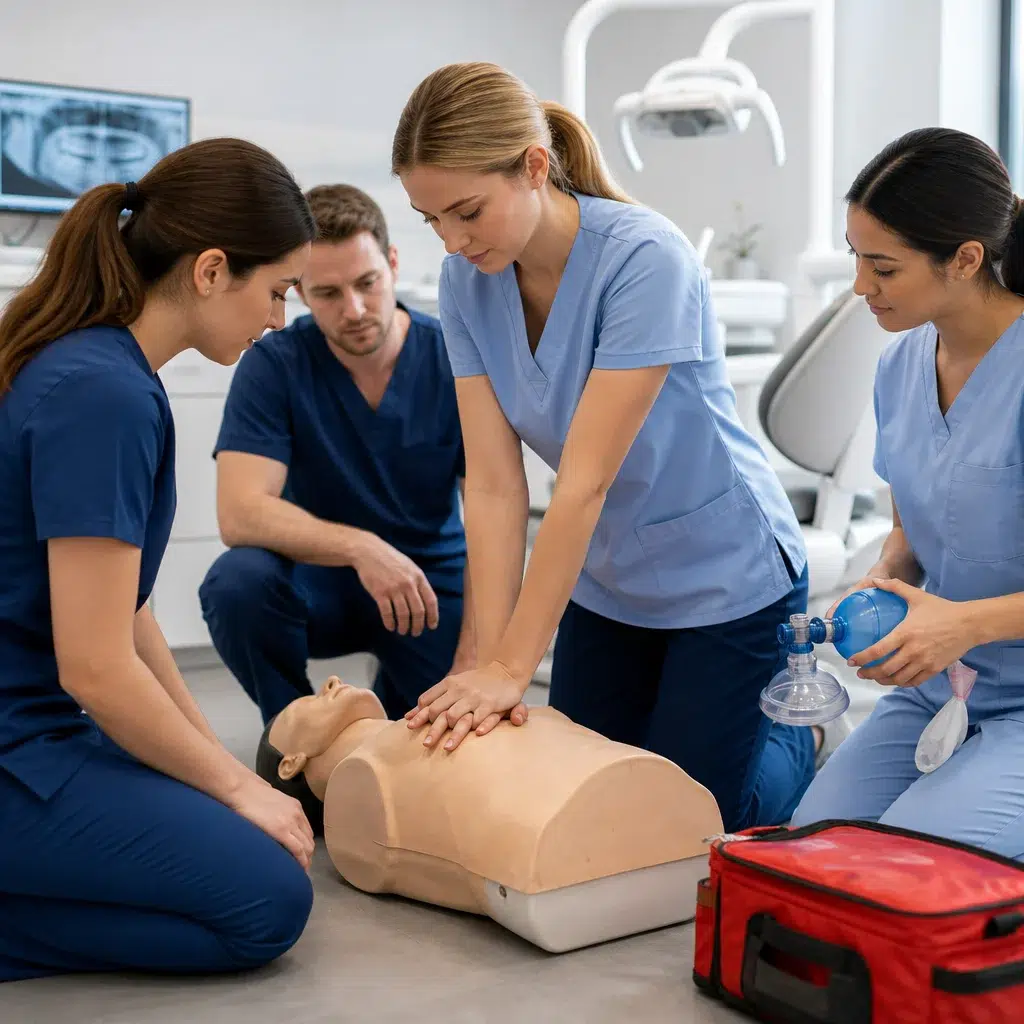
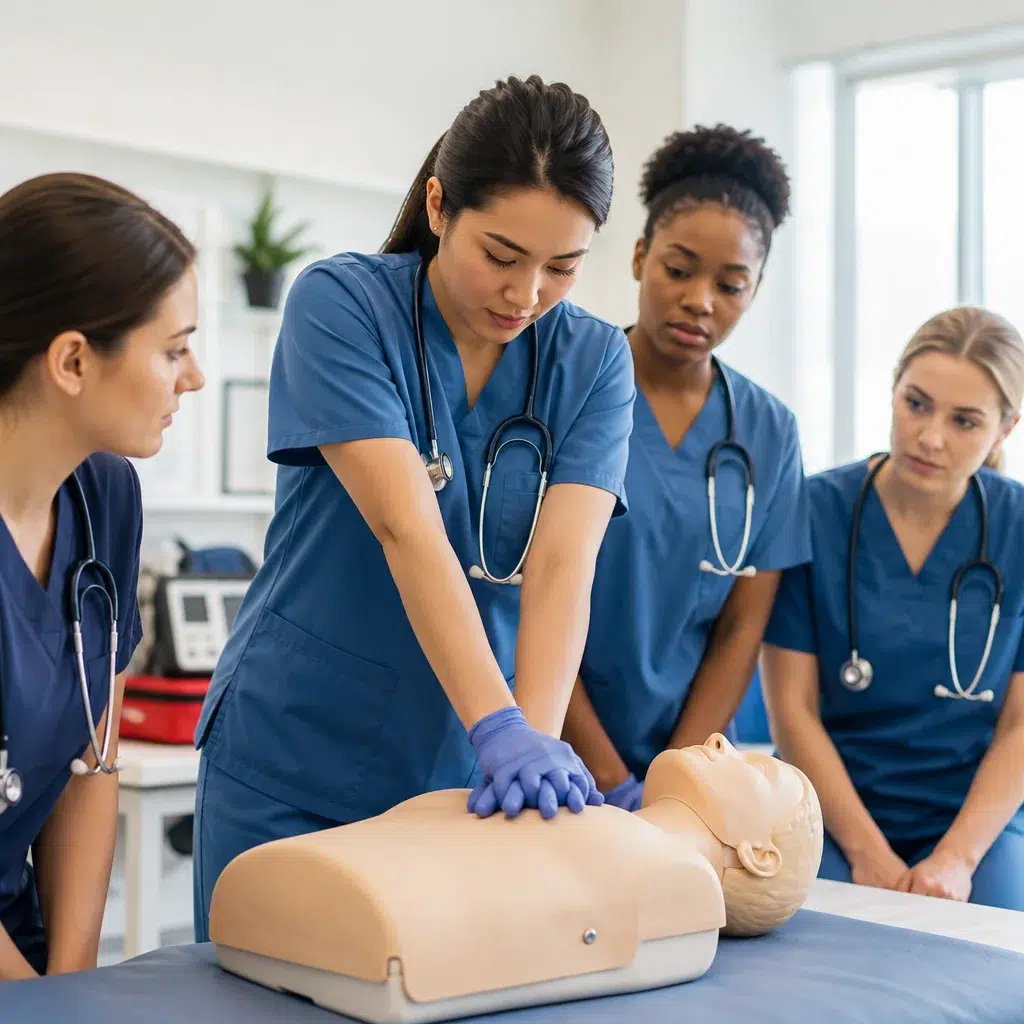
The in-person skills session delivers the practical component that online instruction cannot replicate. You attend a session at one of our 100+ California locations spanning Bakersfield to Redding, San Francisco to Visalia. During this concentrated session, you practice chest compressions on manikins, perform rescue breathing, operate AEDs, and demonstrate skills in realistic scenarios. Our instructors observe and correct technique, ensuring competency before certification.
This split format respects your demanding schedule. You complete knowledge content when convenient, then attend a brief hands-on session that typically runs four to eight hours depending on the certification level. Many professionals complete online modules over a week and attend a weekend skills session at a location near their home or workplace.
We schedule skills sessions at multiple California locations including Berkeley, Concord, Davis, Oakland, San Francisco, San Jose, and Sacramento throughout the week and weekends. Whether you work in Hayward or Fresno, Napa or Visalia, you’ll find convenient session times. This geographic distribution means you’re never more than 30 minutes from a training center.
Same-Day Certification Cards and Fast Verification
Upon successfully completing your skills assessment and passing the written exam, you receive your certification card immediately. You don’t wait for mail delivery or administrative processing. You walk out with documentation valid for your employer’s credentialing department.
This same-day card eliminates hiring delays and employment uncertainties. If you’re starting a new position next week, you can complete our course and present official credentials immediately. Your employer gains instant confirmation of your current certification status without waiting for third-party verification processes.
Our digital verification system provides additional support for hospital credentialing teams. Your employer can verify your certification through our secure portal within minutes. Healthcare systems in Sacramento, San Francisco, and across California accept our verification documentation as proof of compliance, streamlining their credentialing workflows.

We maintain accurate records for the duration of your certification validity. Your expiration date, certification level, and verification status remain accessible to authorized healthcare facilities. This documentation support reduces administrative burden on your employer and accelerates your onboarding process.
The same-day card approach also supports professionals managing multiple certifications. If you need to renew ACLS while maintaining current BLS, you complete both courses and receive both cards on the same day. No coordination gaps or lapsed compliance periods occur.
Multi-Location Convenience Across California for Your Schedule
Our network spans over 100 training locations throughout California, ensuring accessibility regardless of where you live or work. Whether you’re based in Alameda, Antioch, or Turlock, you’ll find convenient scheduling options near your location.
Northern California professionals access training centers in Chico, Redding, and surrounding communities. Bay Area healthcare workers choose from multiple San Francisco, Oakland, San Jose, and surrounding locations including Berkeley, Fremont, Pleasanton, and Walnut Creek. Central Valley professionals have facilities in Fresno, Modesto, Stockton, and Tracy. Southern California coverage extends through Visalia and surrounding regions.
Beyond geographic distribution, we offer flexible scheduling. Morning sessions accommodate night-shift workers preparing for position changes. Evening and weekend slots work for day-shift professionals. Many of our locations operate seven days a week, eliminating scheduling conflicts with your clinical shifts.
You’re never locked into a specific location. If your preferred training center is full, you can attend another facility within your region on your preferred date. This flexibility matters when coordinating around vacation time, call schedules, and family commitments.
Our locations support both initial certifications and renewals. When your BLS expires in 18 months, you can renew at any California facility, not just where you trained initially. This portability keeps your credentials current without geographic restrictions.
Affordable Certification Without Compromising Quality Standards
We maintain a low price guarantee across all certifications. Your investment in professional development remains affordable without sacrificing instructor quality or course rigor. We believe financial barriers shouldn’t prevent healthcare professionals from maintaining required credentials.
Our pricing covers comprehensive instruction, materials, practical skills assessment, and same-day certification. You receive everything needed for hospital compliance in a transparent, all-inclusive cost. No hidden fees, exam charges, or verification surcharges appear after enrollment.
We offer corporate group training and discount pricing for healthcare facilities and departments. If your employer is recruiting multiple nurses or EMS personnel, we can provide team training with substantial per-person savings. Many California hospitals and medical centers partner with us for staff onboarding programs.
Our commitment to affordability extends to renewal courses. As your certifications approach expiration, you can renew at the same low rates, keeping ongoing compliance cost-effective. We don’t increase prices based on urgency or last-minute scheduling.
Despite competitive pricing, we maintain rigorous quality standards. Our instructors hold advanced certifications and healthcare experience. Our curriculum reflects current evidence and hospital expectations. Our facilities meet professional training standards. Affordability doesn’t mean cutting corners on competency assessment or educational rigor.
Our Track Record Supporting California Healthcare Teams
We’ve prepared thousands of California healthcare professionals for hospital compliance and career advancement. Nurses, paramedics, dentists, and EMS personnel across the state have earned their certifications through our programs. Healthcare facilities from rural critical access hospitals to large urban medical centers trust our training outcomes.
Our instructors bring real-world experience from clinical settings where certifications matter most. They’ve worked in emergency departments, intensive care units, and field medicine. They understand the pressure of actual resuscitations and the importance of deliberate practice. This practical perspective shapes every course we deliver.
Healthcare systems throughout California rely on our verification processes. Our documentation meets credentialing standards at major medical centers in Sacramento, the Bay Area, Central Valley, and beyond. Hospital compliance teams recognize our certifications and accept our verification instantly, streamlining onboarding processes.

We’ve supported healthcare teams during recruitment challenges and staff transitions. When facilities need rapid certification of new hires, our flexible scheduling and same-day cards enable quick employment start dates. We’ve helped professionals transition between roles by providing specialized certifications like PALS or ACLS aligned with new clinical responsibilities.
Our commitment to quality has earned consistent professional recognition. Healthcare organizations continue to refer staff to us for training because our graduates demonstrate competency in real clinical environments. This ongoing trust reflects our dedication to comprehensive instruction and rigorous assessment.
Getting Started With Your Required Certifications Today
Begin by identifying which certifications your employer or position requires. Contact your human resources department or credentials office for specific mandates. Clarify expiration timelines and whether your facility prefers initial certification or renewal training. This clarity prevents wasted time on unnecessary courses.
Next, visit our website to explore available courses and scheduling options at California locations convenient to you. Review course details including duration, format, and pricing. Select a skills session date that accommodates your work schedule and allows adequate time for online modules if you’re completing blended learning.
Enroll online or contact us directly to reserve your spot. We’ll provide login credentials for online coursework and confirmation of your skills session. Complete the online modules at your pace, then arrive prepared for hands-on assessment.
Attend your scheduled skills session at your chosen California location. Our instructors will guide you through practical demonstrations, observe your technique, and answer questions. Upon passing both components, you’ll receive your certification card immediately and be ready for your employer’s credentialing process.
Don’t delay when certifications approach expiration. Schedule renewal training at least 60 days before your current credentials expire. This buffer prevents employment gaps and demonstrates proactive compliance to your employer.
We’re here to support your professional development and compliance requirements. Our experienced team understands California healthcare environments and is committed to your success. Reach out today to schedule your certification and take control of your career advancement.
For further reading: BLS certification basics.
Register for a class today.
Frequently Asked Questions (FAQ)
Which certifications do California hospitals require for nursing and medical professionals?
We offer CPR, BLS, ACLS, and PALS certifications that California hospitals and medical centers require for compliance and licensure. The specific certification depends on your role—nurses typically need BLS and ACLS, while critical care specialists often require PALS or NRP. We can guide you on exactly which certifications your employer mandates during your initial consultation.
How quickly can I receive my certification after completing a course with you?
We provide same-day certification cards at our in-person skills sessions, so you leave class with your credential in hand. For those who complete our blended learning option, we issue digital verification within 24 hours while your physical card arrives by mail. Our CPR verification stations across California also allow you to obtain proof of certification on your schedule if needed.
Do you have training locations convenient to my workplace across California?
We operate over 100 training locations throughout California, including multiple sites in San Francisco, Los Angeles, Sacramento, San Diego, and every major city between. Whether you work in Oakland, Fresno, San Jose, or anywhere else in the state, we can help you find a class that fits your schedule without requiring a long commute.