
Table of Contents
- Why EMS Professionals Need Regular ACLS and PALS Renewal
- The Real Consequences of Letting Your Certifications Lapse
- Understanding California's Specific Renewal Requirements for EMS
- How Our Blended Learning Approach Fits Your Schedule
- Same-Day Certification: How We Get You Recertified Fast
- What to Expect During Your Hands-On Skills Session
- Reserve Your Renewal Classes Across 100+ California Locations
- Why Healthcare Providers Trust Us for Their Compliance Needs
- Frequently Asked Questions (FAQ)
Why EMS Professionals Need Regular ACLS and PALS Renewal
Your ACLS and PALS certifications are critical credentials, but they expire. If you’re an EMS professional in California, staying current isn’t just a best practice—it’s a job requirement. We understand the pressure of juggling shift work, continuing education, and license maintenance. That’s why we’ve designed renewal courses that fit your reality, not the other way around.
Advanced Cardiovascular Life Support (ACLS) and Pediatric Advanced Life Support (PALS) certifications validate your ability to manage cardiac emergencies and pediatric crises. These skills degrade over time without practice and exposure to updated protocols. The American Heart Association (AHA) updates resuscitation guidelines roughly every five years based on the latest clinical evidence.
Your employer and California’s licensing boards expect current certifications. Many EMS agencies require ACLS renewal every two years. PALS renewal timelines vary but typically follow the same two-year window. Beyond compliance, these courses keep you sharp on the newest techniques and equipment your ambulance or fire department carries.
When you renew, you’re not just checking a box—you’re refreshing muscle memory, learning protocol updates, and building confidence for the high-stakes moments when every second matters. We guide you through that process with experienced instructors who’ve been in the field themselves.
Next step: Check your current expiration dates and mark your renewal deadline two months before it hits. This buffer gives you flexibility without the panic.
The Real Consequences of Letting Your Certifications Lapse
A lapsed certification doesn’t just disappear quietly. It can suspend your job eligibility immediately. Many EMS services perform monthly or quarterly credential checks. If your ACLS or PALS lapses mid-shift, you may be pulled from the ambulance until you recertify.
Beyond the immediate job impact, expired credentials expose you and your agency to liability. If you respond to a cardiac arrest without current ACLS certification and the patient doesn’t survive, questions about your competency become part of the medical record and potential legal proceedings. Your professional liability insurance may not cover you if you’re operating outside active certification.
There’s also the cascade effect: one lapsed credential can delay your entire licensing renewal. California’s EMS licensing board treats certification gaps seriously. Rebuilding your record after a lapse takes time, paperwork, and sometimes explaining the gap to your employer.
We’ve seen professionals miss one renewal and spend months untangling the fallout. A simple two-hour recertification course prevents all of this stress and risk.
Action item: Set calendar reminders at the four-month, two-month, and one-month marks before expiration. Early planning eliminates last-minute scrambling.
Understanding California’s Specific Renewal Requirements for EMS
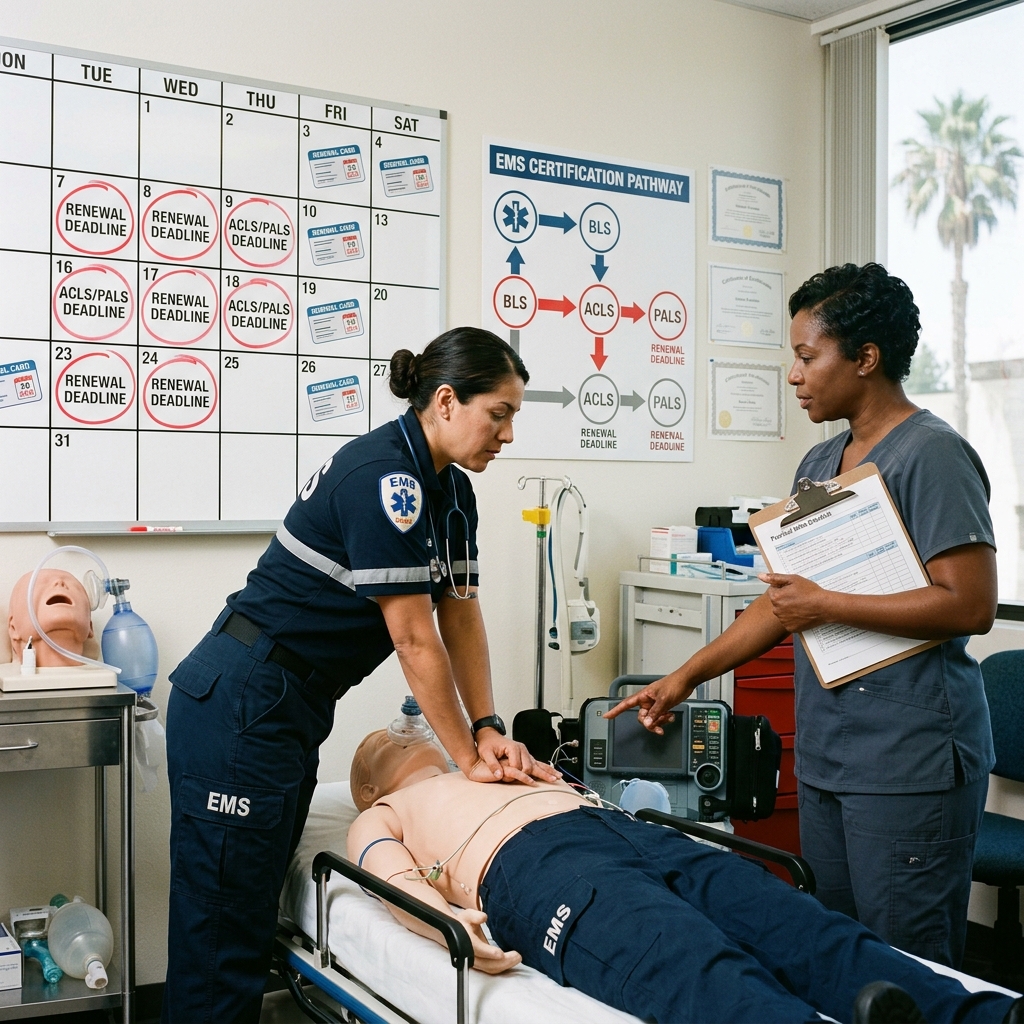
California’s Department of Emergency Medical Services sets standards that differ slightly from other states. EMS professionals must maintain current American Heart Association (AHA)-certified ACLS at all times. The state recognizes only AHA credentials, American Red Cross certifications in some contexts, and certain pre-hospital provider organizations.
For PALS, the requirement depends on your scope of practice. If you’re a paramedic handling pediatric cases, you’ll need PALS. Some basic life support (BLS) level providers may not require PALS, but many employers mandate it anyway. Fire departments and ambulance services often have internal policies stricter than the state baseline.
County-level regulations can add further nuance. Sacramento County, for instance, has specific renewal windows and preferred testing sites. San Francisco EMS has its own credential verification process. Smaller rural counties may have more flexibility but equally strict expectations once you’re hired.
California also requires you to complete renewal training, not just pass a written exam. You must demonstrate hands-on skills to an AHA-certified instructor. Online refresher courses alone don’t satisfy state requirements—you need in-person practice.
Compliance check: Contact your agency’s HR or training coordinator and ask for the exact renewal schedule and any county-specific rules that apply to you. We can confirm that you meet those requirements when you enroll.
How Our Blended Learning Approach Fits Your Schedule
We know EMS shifts don’t stop for continuing education. That’s why we’ve built a blended learning model that combines online prep with brief, intensive hands-on sessions. You complete the knowledge review at your own pace, usually in 30 to 60 minutes. Watch videos, take a practice test, and solidify concepts when you have downtime at the station or between shifts.
Then you come in for the skills session. Most candidates finish the hands-on portion in two to three hours. Our instructors run you through the core scenarios—cardiac arrest, stroke recognition, PALS pediatric emergencies—with real equipment you’ll use on calls. You practice on manikins, get immediate feedback, and build the muscle memory that matters when adrenaline kicks in.
This structure respects your time. You’re not sitting in a classroom for six hours. You’re learning what you need, practicing what you’ll use, and getting certified without derailing your schedule.
We offer early morning, evening, and weekend sessions across more than 100 California locations. Whether you work days, nights, or a rotating shift, you can find a class that works.
Scheduling tip: Browse available classes in your area and book at least two weeks ahead. This gives you time to complete the online portion without rushing and ensures your preferred location has a seat for you.
Same-Day Certification: How We Get You Recertified Fast
Same-day certification means you walk in, complete the online component (if you haven’t done it beforehand), spend a few hours with our instructors practicing skills, pass the AHA-recognized exam, and leave with a valid certificate. No waiting for test results. No administrative delays.
Our streamlined process works because we handle everything onsite. You don’t need to chase down an approval or wait for mailed credentials. If you have a renewal deadline breathing down your neck, same-day certification gets you across the finish line.
This speed doesn’t sacrifice rigor. Our instructors still assess your competency thoroughly. You must correctly perform cardiopulmonary resuscitation (CPR), operate a defibrillator, and apply ACLS or PALS protocols in realistic scenarios. If you don’t demonstrate competency, you don’t pass. We won’t issue a false credential, and you wouldn’t want us to.
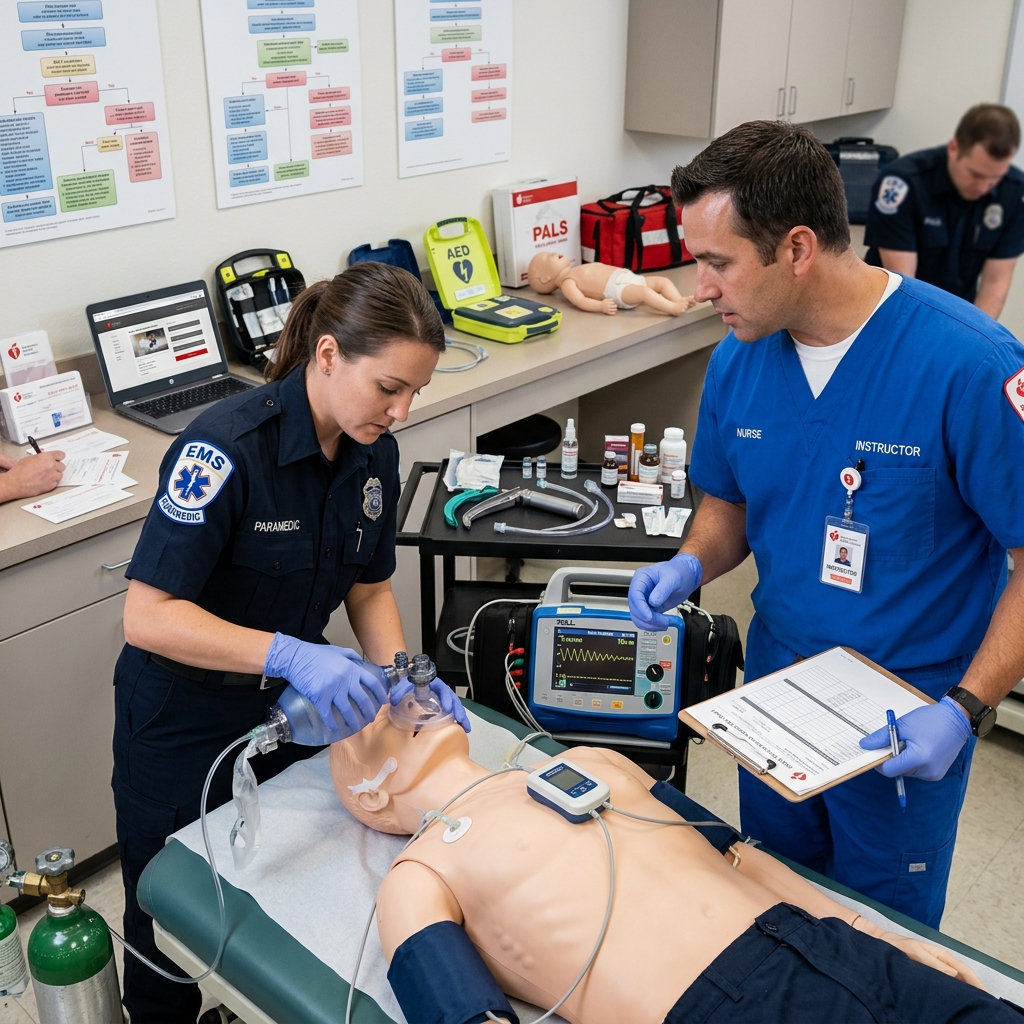
The key is efficiency, not corners cut. We’ve refined the process over thousands of certifications, so every hour serves your learning and validation.
Reserve your spot: Check classes in your city and book soon. Same-day sessions fill quickly, especially near month-end when renewal deadlines loom.
What to Expect During Your Hands-On Skills Session
Arrive with your government-issued ID and any prior certification cards. You’ll check in, review consent forms, and meet your instructor and classmates—usually a small group of 4 to 8 people.
Your instructor begins with a brief scenario overview and skills demonstration. You’ll see the exact techniques expected and hear the rationale. Then you practice on manikins in real-world setups. One scenario might be a collapsed patient at a restaurant; another, a pediatric choking incident (for PALS).
Throughout, your instructor observes, asks clarifying questions, and offers coaching. This isn’t a judgment—it’s guided practice. You might need to adjust hand position for chest compressions, practice speaking clearly during a handoff, or refine your rhythm. The goal is smooth, confident execution.
After several practice rounds, you complete the formal skills test. Your instructor evaluates you against AHA standards. Pass, and you’re done. You’ll receive your certificate immediately.
The whole session feels collaborative, not adversarial. You’re working with professionals who want you to succeed and know that good ACLS and PALS skills save lives.
Come prepared: Wear comfortable clothes and closed-toe shoes. Bring water. Don’t worry if you’re rusty—that’s exactly why renewal training exists.
Reserve Your Renewal Classes Across 100+ California Locations
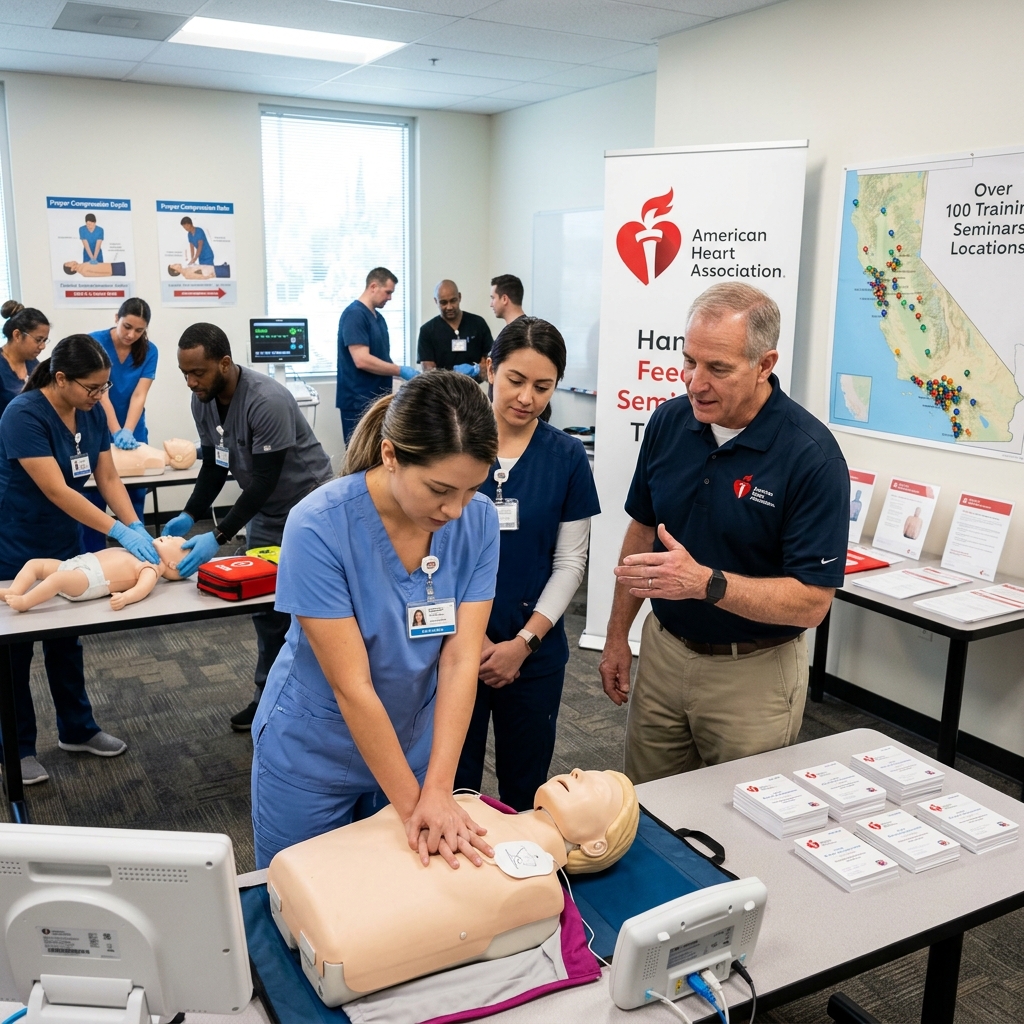
We operate ACLS Certification Classes across California, from the Bay Area to the Central Valley to Southern California. Whether you work in Oakland, San Francisco, Sacramento, San Jose, or Fresno, you’ll find a location and schedule that fits.
Urban centers have multiple venues. ACLS Certification San Jose offers downtown classes with flexible timing. Sacramento has sessions in Midtown, Arden, and Oak Park. San Francisco spans neighborhoods from the Mission to Nob Hill to ensure accessibility.
Rural and smaller cities are covered too. Chico, Visalia, Santa Cruz, and Redding all have regular classes. We’ve invested in spreading capacity specifically so EMS professionals don’t have to drive hours for a renewal.
Each location operates under the same AHA certification standards and instructor quality. You’re getting the same rigorous training whether you renew in a major city or a regional hub.
Find your class: Visit our site, search your city, and view available dates and times. Most locations offer multiple sessions per week. Reserve your spot online, and you’ll receive confirmation and pre-course instructions immediately.
Why Healthcare Providers Trust Us for Their Compliance Needs
We’ve certified thousands of EMS professionals, nurses, dentists, and healthcare workers across California. Our instructors aren’t just educators—many have field experience in emergency medicine, paramedicine, or critical care. They understand the real pressure and decisions you face on calls.
We maintain a low-price guarantee on all classes. You won’t find cheaper AHA-certified ACLS or PALS renewal anywhere in California. We believe compliance shouldn’t bankrupt professionals already juggling continuing education costs.
Our same-day certification approach has become standard because it works. You get current, compliant credentials without weeks of waiting. Your employer sees a fresh certificate in your file. Your licensing status stays clean.
We also run CPR verification stations and daily BLS Certification Courses across California. Whether you need BLS, ACLS, PALS, or Neonatal Resuscitation Program (NRP) training, we’ve got the breadth and depth to serve your whole career arc.
Most importantly, we respect your time and your profession. Compliance training shouldn’t feel like a burden—it should feel like a straightforward, supportive process. That’s what we deliver.
Next step: Check available classes in your area, book your renewal session, and complete the online prep at your convenience. If you have questions about California requirements or our course format, reach out—our team is here to help you stay current and compliant.
Register for a class today.
Frequently Asked Questions (FAQ)
How quickly can I get my ACLS and PALS certifications renewed?
We offer same-day certification for both ACLS and PALS renewals, so you can walk out with your updated credentials the same day you complete your course. Our blended learning model lets you finish the online portion at your own pace before coming in for your hands-on skills session, which means we can get you recertified fast without compromising on quality instruction. With over 100 locations across California, we can get you scheduled at a time and place that works for your EMS schedule.
What happens if my ACLS or PALS certification expires?
Letting your certifications lapse puts your licensure and employment at serious risk, as these credentials are required for most EMS roles in California. You may face suspension from patient care duties or lose your ability to work until you complete recertification, which creates operational challenges for your department and your career. That’s why we make renewal easy and affordable so you can stay current without the stress.
Do you offer renewal classes at locations near me?
We maintain over 100 training locations throughout California, including major cities like San Francisco, Los Angeles, Sacramento, and San Diego, plus smaller communities everywhere in between. You can check available classes in your specific city right on our website, and we update our schedule regularly to accommodate EMS professionals across the state. If you don’t see your exact location listed, reach out to us and we’ll help you find the closest option.