Introduction: The Importance of Credentialing-Ready AHA Certifications in California
California’s hospitals, medical groups, and surgery centers rely on fast, reliable verification of lifesaving training before providers touch patients. A credentialing-ready AHA card removes friction at onboarding and during audits because HR teams can complete the AHA certification verification process in minutes and document compliance. For clinicians, that means fewer delays in start dates and smoother renewals aligned with California hospital compliance standards.
Credentialing-ready certificates are more than proof you passed a class—they’re built for audit trails. AHA digital eCards for healthcare include secure identifiers and a real-time lookup tool that supports BLS and ACLS verification without email back-and-forth. For example, a travel RN starting a telemetry unit or a dentist renewing sedation privileges can share an eCard ID and have their credentials verified by HR in one step.
To prevent delays, your AHA documentation should clearly show the details credentialers expect:
- Full legal name matching your government ID.
- Course title and level (e.g., BLS Provider, ACLS Provider, PALS Provider).
- Issue date and expiration date (AHA provider cards are typically valid for two years).
- AHA Training Center ID, Instructor ID, and unique eCard code/QR.
- AHA branding and authenticity statement viewable on the verification portal.
Beyond hospital onboarding, your certifications often intersect with medical licensing board requirements and payer credentialing. California hospitals commonly require current BLS for all clinical staff and ACLS/PALS for roles in critical care, ED, anesthesia, or pediatrics. The Dental Board of California mandates an approved BLS course for license renewal, and dentists seeking sedation permits may need ACLS or PALS; see details in this guide for California dental credentialing requirements. EMS professionals must also maintain current provider-level cards aligned with agency policy.
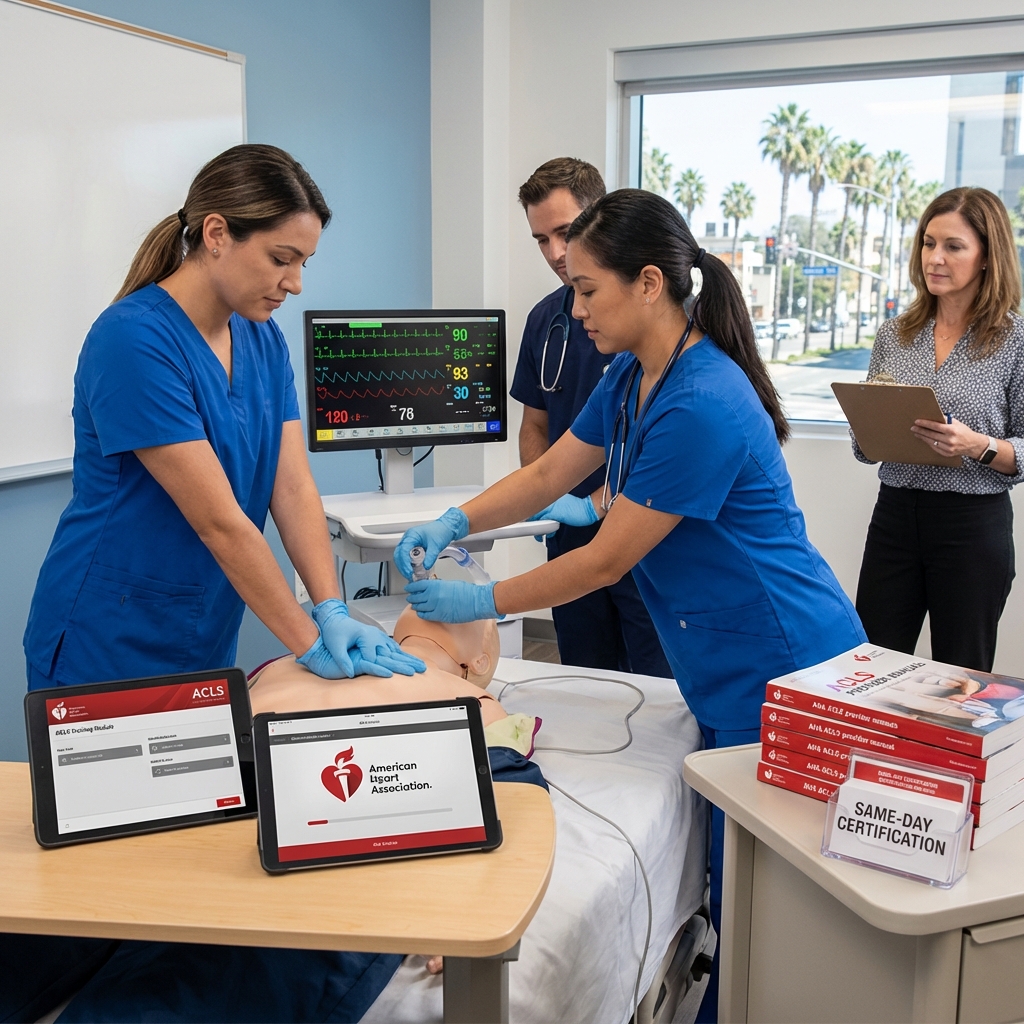
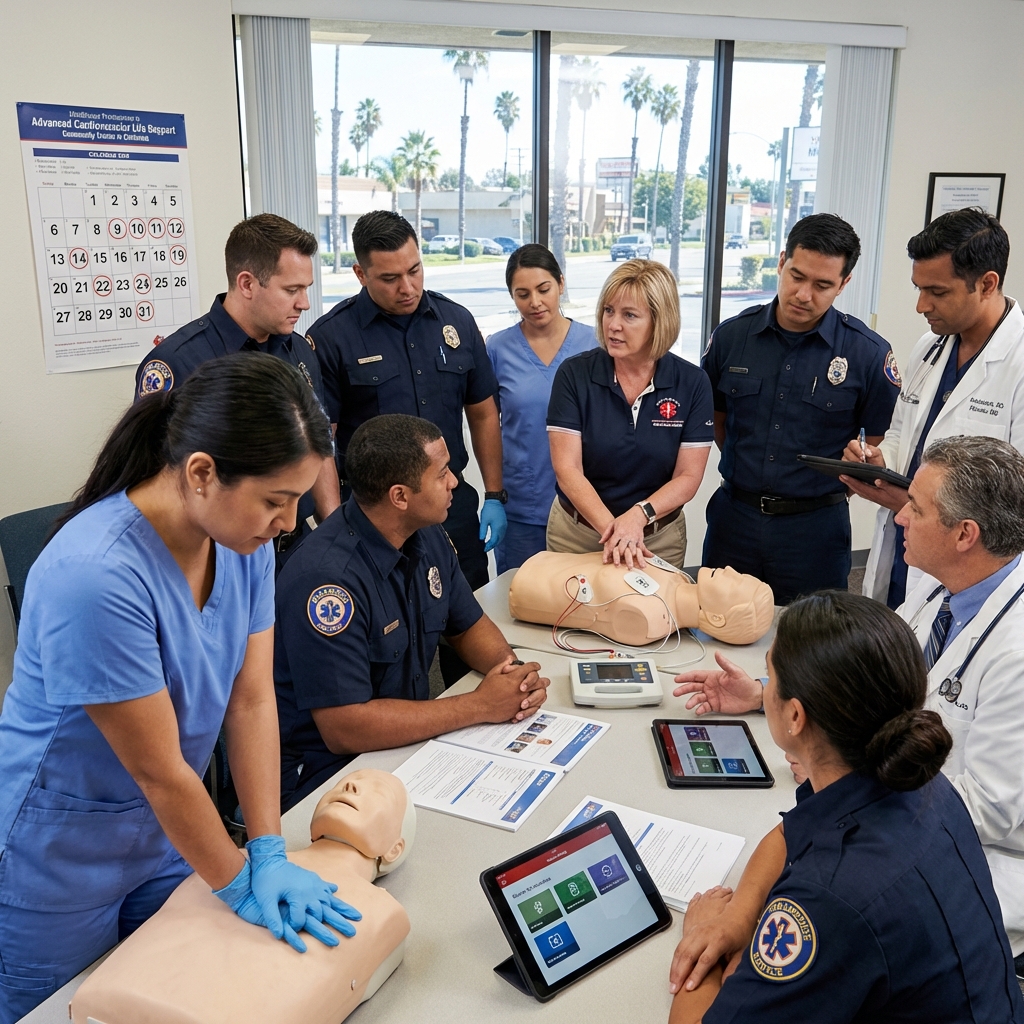
Safety Training Seminars helps California clinicians stay credentialing-ready with AHA-authorized courses delivered via flexible blended learning and skills checks at over 100 locations statewide. Same-day AHA eCards include all identifiers HR needs for BLS and ACLS verification, and staff receive step-by-step instructions for sharing eCards with credentialing teams. For hospitals and group practices, coordinated rosters, consolidated billing, and discount pricing simplify compliance at scale—backed by a low price guarantee on all classes.
Understanding California Hospital Standards for Provider Verification
For most California hospitals, the AHA certification verification process is built around primary-source validation of a provider’s digital eCard. Medical staff offices and HR teams compare the eCard record to government ID, confirm course type (e.g., BLS Provider, ACLS Provider, PALS Provider), and document expiration dates to meet California hospital compliance standards and Joint Commission expectations. Printed wallet cards are no longer the gold standard—digital eCards for healthcare with a scannable QR code and unique eCard code are preferred.
Credentialing-ready certificates and eCards should clearly display the required data elements. Hospitals typically look for:
- Provider’s legal name and course title (BLS Provider, ACLS Provider, PALS Provider, NRP as applicable)
- Issue and expiration dates, and the current guideline year/version
- AHA eCard code/QR code for primary-source verification
- Training Center name/ID and Instructor name/ID, with hands-on skills completion documented
A practical BLS and ACLS verification workflow commonly includes these steps:
- Scan the QR code or enter the eCard code on the AHA eCards portal to confirm authenticity.
- Match the legal name and date of birth with HR records; ensure the course level meets role requirements (e.g., ACLS for ICU/ED RNs).
- Confirm skills session completion and that the card is AHA (not “AHA-based” or non-AHA) and unexpired through the entire privileging period.
- Save the verification page or PDF to the credentialing file for audit readiness.
Licensing bodies may have separate medical licensing board requirements from employer policies. For example, many California hospitals require AHA BLS for staff privileges, while boards such as the Dental Board and EMS Authority recognize professional-level CPR from nationally recognized providers; nurses may not need BLS for license renewal but must meet employer/hospital policy. Always follow your facility’s stricter standard when policies differ, and keep your eCard code handy for rapid re-verification during contract renewals.
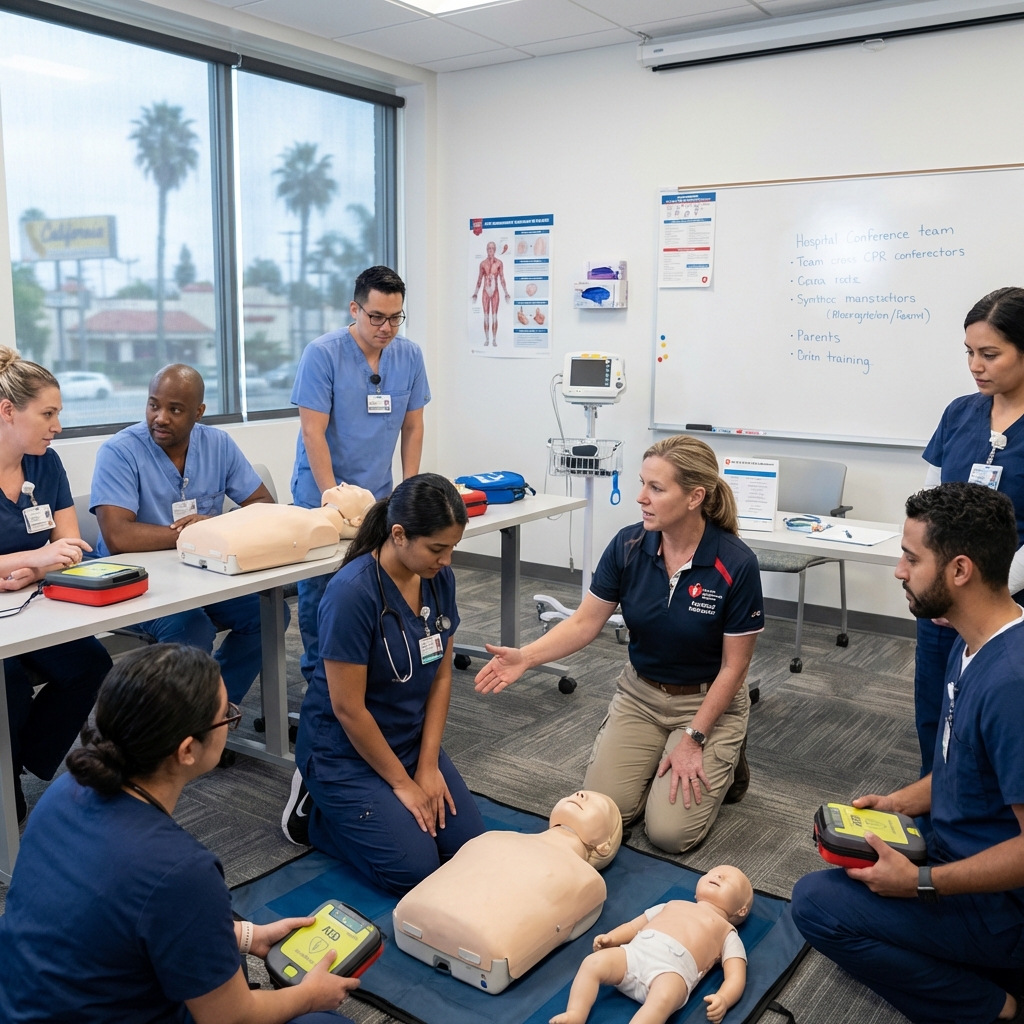
Safety Training Seminars helps clinicians stay compliant by issuing credentialing-ready AHA eCards promptly after successful completion, including blended learning options with an in-person skills check across 100+ California locations. For South Bay staff, you can enroll in verified AHA certification courses that align with hospital verification workflows, with course records that include all fields HR teams expect. Corporate groups can also standardize documentation across teams, simplifying audits and onboarding.
The Official AHA eCards System for Instant Verification
The American Heart Association’s eCards platform is the official, primary-source method for fast, reliable validation of BLS, ACLS, PALS, and Heartsaver credentials. For California hospital compliance standards and Joint Commission audits, the AHA certification verification process via eCards provides instant status confirmation directly from the issuer. Because eCards are digital, they eliminate delays tied to paper cards and create a verifiable audit trail that is accepted by most hospitals, credentialing committees, and medical licensing board requirements.
Each eCard includes a unique identifier and QR code that links to the AHA’s eCards Verification portal, where the record can be checked in real time. Verifiers see the course title, student name, issue date, recommended renewal date, Training Center and Instructor IDs, and “Active” status if the credential is current. This satisfies primary-source validation for BLS and ACLS verification without relying on screenshots or unofficial copies. The same process supports PALS and Heartsaver for roles that require those certifications.
How to verify an AHA eCard:

- Scan the QR code on the printed certificate or wallet card, or visit the AHA eCards Verification portal.
- Enter the eCard code, or search by student name and email.
- Confirm the record shows “Active,” with the correct course (e.g., BLS Provider, ACLS Provider) and dates.
- Download/print the certificate PDF if needed for privileging files.
- Document the verification confirmation screen or save the PDF to your HRIS/credentialing system.
Details displayed on an AHA eCard:
- Learner’s name (as entered by the Training Center) and course title
- Issue date and recommended renewal date
- Training Center name/ID and Instructor name/ID
- eCard code and QR code for digital eCards for healthcare verification
To ensure credentialing-ready certificates, use your legal name that matches your badge and license, and keep one email across AHA and hospital systems. Download both the full-page certificate and wallet card after claiming your eCard, and retain a local PDF for renewal reminders. For state boards and employers in California, AHA eCards are generally accepted as the official record; always confirm role-specific medical licensing board requirements.
Safety Training Seminars issues AHA eCards the same day you complete your skills session, enabling immediate onboarding and re-credentialing. Their blended learning format and statewide network streamline BLS and ACLS verification for both individuals and corporate groups, with roster support that makes primary-source checks fast for HR and medical staff offices.
Essential Requirements for BLS, ACLS, and PALS Credentialing
California hospitals and medical staff offices expect current, verifiable AHA BLS for all patient-facing roles, ACLS for adult critical care and procedural sedation environments, and PALS for pediatric units and ED/urgent care with pediatric patients. Cards typically expire every two years with no grace period, and lapses can delay privileges or onboarding. These expectations are driven by California hospital compliance standards aligned with Title 22, CMS Conditions of Participation, and Joint Commission requirements, plus facility-specific bylaws.
To be considered credentialing-ready certificates, your documentation must be official AHA Provider eCards (not third-party lookalikes). These digital eCards for healthcare include your name, course title (BLS, ACLS, or PALS Provider or Renewal), issue and expiration dates, eCard code/ID, Training Center ID, and a QR code for primary-source validation. For BLS and ACLS verification (and PALS), credentialers should complete the AHA certification verification process at the AHA eCards website using the eCard code or QR scan to confirm authenticity and status.
Expect primary-source verification and name-matching against your government ID and HR record. Download and save the PDF copy of your eCard, and keep the email with the claim link in a personal (not employer-only) inbox to preserve access when changing jobs. If you change your legal name, request a name update through the issuing Training Center before submitting to medical staff services to avoid delays.
Examples of role-based requirements and medical licensing board requirements in California include:
- RNs in ICU/ED/telemetry: AHA BLS and ACLS; pediatric ED or PICU nurses typically also maintain PALS per unit policy.
- Physicians with procedural sedation privileges: AHA ACLS; pediatric specialists often need PALS according to bylaws and sedation policies.
- Dentists: BLS for license renewal; moderate/deep sedation permits generally require ACLS for adult patients and PALS for pediatric patients per Dental Board rules.
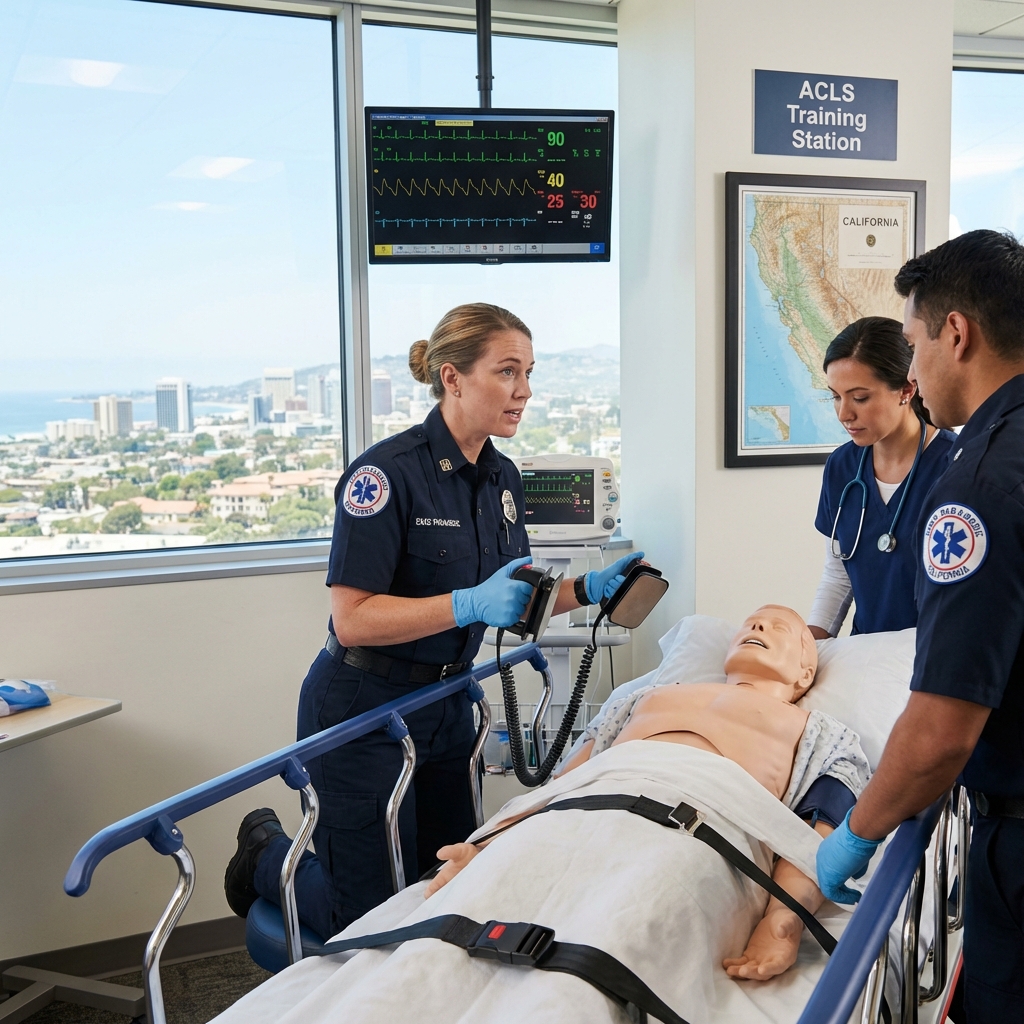
- EMS personnel: Current AHA BLS; many agencies require ACLS and pediatric resuscitation (PALS/PEPP) consistent with local EMS authority policies.
Blended learning is widely accepted when it is an AHA HeartCode online module paired with an instructor-led skills session. Safety Training Seminars offers AHA-compliant blended options with in-person skills checks at over 100 California locations, same-day AHA eCards, and support for group rosters and verification requests—helping teams stay credentialing-ready while meeting California hospital compliance standards at a low price guarantee.
Streamlining Certificate Documentation for Medical Boards and HR
For fast onboarding and renewals, the AHA certification verification process should fit seamlessly into your credentialing packet. The American Heart Association issues digital eCards for healthcare that function as primary-source documentation; HR and medical boards can confirm authenticity in seconds. Each eCard includes a unique 12-digit code, QR code, course type (BLS, ACLS, PALS, NRP), Training Center ID, issue date, and recommended renewal date to meet California hospital compliance standards.
Here’s how to keep your file credentialing-ready from day one:
- Use your legal name that matches your license before you claim your eCard.
- Claim your AHA eCard via the email from eCards@heart.org and save the PDF certificate and wallet view.
- Provide HR the verification link or eCard code; they can validate at ecards.heart.org or by scanning the QR.
- Upload both your BLS and ACLS verification PDFs when unit policy requires dual credentials (e.g., ED, ICU, cath lab).
- Retain your eCard email and code for audits; most facilities conduct periodic re-verification.
HR teams and medical staff offices typically look for a consistent data set:
- Course title and provider (e.g., AHA BLS Provider, AHA ACLS Provider)
- Student name matching government ID and license
- Issue date and renewal window
- Instructor and Training Center identifiers
- Unique eCard code and QR for primary-source verification
Common scenarios in California highlight why proper documentation matters. A telemetry nurse renewing ACLS must submit both ACLS and BLS; HR uses the QR on each certificate for instant AHA lookup. A dentist renewing a sedation permit may need ACLS or PALS per medical licensing board requirements; submitting the full AHA certificate PDF prevents delays. EMS personnel facing county accreditation checks benefit from having the eCard codes handy during station audits.
Safety Training Seminars streamlines this end-to-end. After your skills session, you receive credentialing-ready certificates the same day, formatted with all fields HR and boards expect. If your name changes or a hospital requests a reissued record, their team can update your eCard and resend links, reducing back-and-forth. For corporate groups, rosters with eCard codes can be sent directly to HR, simplifying mass BLS and ACLS verification ahead of compliance deadlines.

Pro tips to avoid rejections:
- Verify your legal name format before class; mismatches trigger HR holds.
- Check expiration timing—schedule renewals 30–60 days in advance to avoid lapses.
- Keep your eCard PDFs and codes in a secure folder and in your phone’s wallet for quick access during rounding audits.
Maintaining Compliance with Automated Renewal Notifications
Staying ahead of expiring life support cards is essential to avoid credentialing delays and schedule disruptions. Because AHA cards are valid for two years, an automated reminder system tied to the AHA certification verification process helps clinicians and medical staff renew on time and keeps files audit-ready for surveyors. This is especially important under California hospital compliance standards, where facilities must prove active, current credentials for every licensed role.
Effective reminders should be driven by the AHA digital eCards for healthcare, which include a unique code/QR that primary-source verifiers can check. When reminders link directly to the AHA eCard verification page, credentialers can complete BLS and ACLS verification in seconds and store credentialing-ready certificates without chasing paper. For multi-credential holders, aligning renewal windows (for example, BLS and ACLS in the same month) minimizes downtime and simplifies renewal cycles for managers.
Build a renewal program with these elements:
- Cadence: send notices at 90, 60, 30, and 7 days pre-expiration, plus a day-of reminder.
- Channels: email plus optional SMS, with calendar invites that block time for a skills session.
- Content: name, role/unit, certifications due, expiration dates, and links for the AHA eCard verification and course registration.
- Attachments/links: most recent credentialing-ready certificates, and instructions for uploading new eCards to the HRIS or credentialing platform.
- Escalation: CC the scheduler/manager at 7 days and auto-alert if a certification lapses.
- Audit trail: log all notification timestamps to document compliance efforts during surveys.
Consider a practical example: an ICU RN whose BLS, ACLS, and PALS expire within a 45-day window. Automated notices guide the RN to a blended refresher pathway, book a single skills day to co-terminate cards, and provide immediate eCards that the credentialing team verifies and files. This keeps the nurse compliant with medical licensing board requirements and prevents last-minute shift reassignments due to expired credentials.
Safety Training Seminars supports these workflows with AHA-authorized classes statewide, instant digital eCards, and automated renewal reminders that link directly to scheduling. With 100+ California locations and blended options, teams can renew quickly while meeting California hospital compliance standards. For group accounts, Safety Training Seminars can help align renewal cycles, assist with BLS and ACLS verification, and provide documentation that speeds up the AHA certification verification process—all backed by a low price guarantee.
Conclusion: Ensuring Career Readiness Through Reliable Certification Records
Reliable, accessible records are the backbone of smooth onboarding, privileging, and audits in California. The AHA certification verification process enables primary-source confirmation of training, which aligns with California hospital compliance standards and typical Joint Commission expectations. When your BLS and ACLS verification can be completed instantly via the official AHA eCard, medical staff offices spend less time chasing documents and more time clearing you for the schedule.
Credentialing-ready certificates are more than a PDF. An AHA digital eCard for healthcare includes your name, course type (for example, BLS Provider, ACLS Provider, PALS Provider), issue and expiration dates, Training Center details, and a unique eCard code with a scannable QR for direct validation. In practice, a hospital can verify by scanning the QR on your printed certificate or by entering your eCard code in the AHA system—no phone calls needed. That level of primary-source traceability reduces delays for travel nurses, new hires, and clinicians adding new privileges.
To stay credentialing-ready year-round, build a simple, repeatable routine:
- Save the AHA verification link and the PDF certificate with QR code for each course in a secure, cloud folder.
- Use your legal name consistently across HR, licensing, and AHA records; request a correction promptly if anything is off.
- Set reminders 60–90 days before expiration for BLS, ACLS, PALS, and NRP, and verify you are enrolled in the current AHA Provider version required by your role.
- Share the eCard verification link with recruiters and medical staff offices instead of screenshots to enable primary-source BLS and ACLS verification.
- Keep proof of hands-on skills completion dates and any CE documentation that may be relevant to medical licensing board requirements (for example, Dental Board or EMS Authority).
Safety Training Seminars helps California clinicians meet these demands without friction. Courses are delivered via blended learning with brief online modules plus in-person skills sessions at over 100 training locations statewide, and digital eCards for healthcare are issued promptly upon successful completion. The team can resend eCards, assist with name corrections, and provide Training Center details when a hospital requests primary-source confirmation. For departments and staffing agencies, corporate group training and discount pricing make it easier to bring entire teams into compliance at the lowest price guaranteed.
With reliable records and an efficient AHA certification verification process, you can maintain compliance, satisfy hospital onboarding checklists, and meet relevant medical licensing board requirements. Choose training that produces credentialing-ready certificates and supports direct verification. When you need statewide access, quick eCard delivery, and responsive verification support, Safety Training Seminars offers a proven path to career readiness.
Register for a class today.