Introduction to ACLS Requirements and Certification Lapses
Advanced Cardiovascular Life Support (ACLS) is a core requirement for many California healthcare professionals, including nurses in acute care, EMS personnel, and providers involved with sedation or emergency response. Most employers require current American Heart Association (AHA) credentials and treat ACLS as part of broader professional life support training alongside BLS and, when applicable, PALS. Because staffing and patient safety depend on it, keeping your card current is both a clinical and compliance priority.
An AHA ACLS card is typically valid for two years, and the AHA does not grant an official grace period after expiration. Policies on working with a lapsed ACLS certification vary by facility; some prohibit any clinical duties until renewal is complete, while others may allow scheduling contingent on proof of enrollment in an acceptable course. To avoid disruptions, confirm your employer’s ACLS renewal requirements before selecting a course.
Common ACLS recertification pathways California clinicians use include:
- AHA ACLS renewal course (Update): Best when your knowledge is current or your lapse is brief. Expect a pre-course self-assessment, algorithm review, and megacode testing.
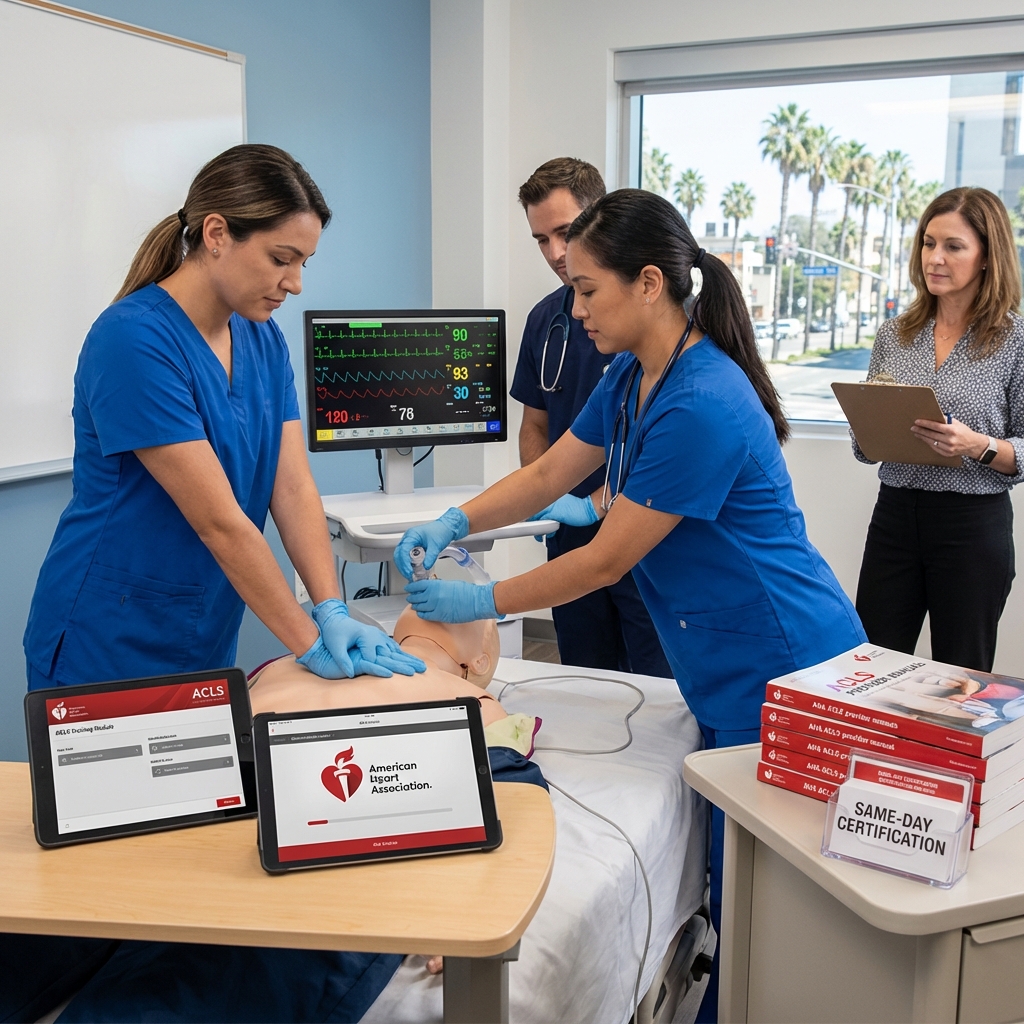
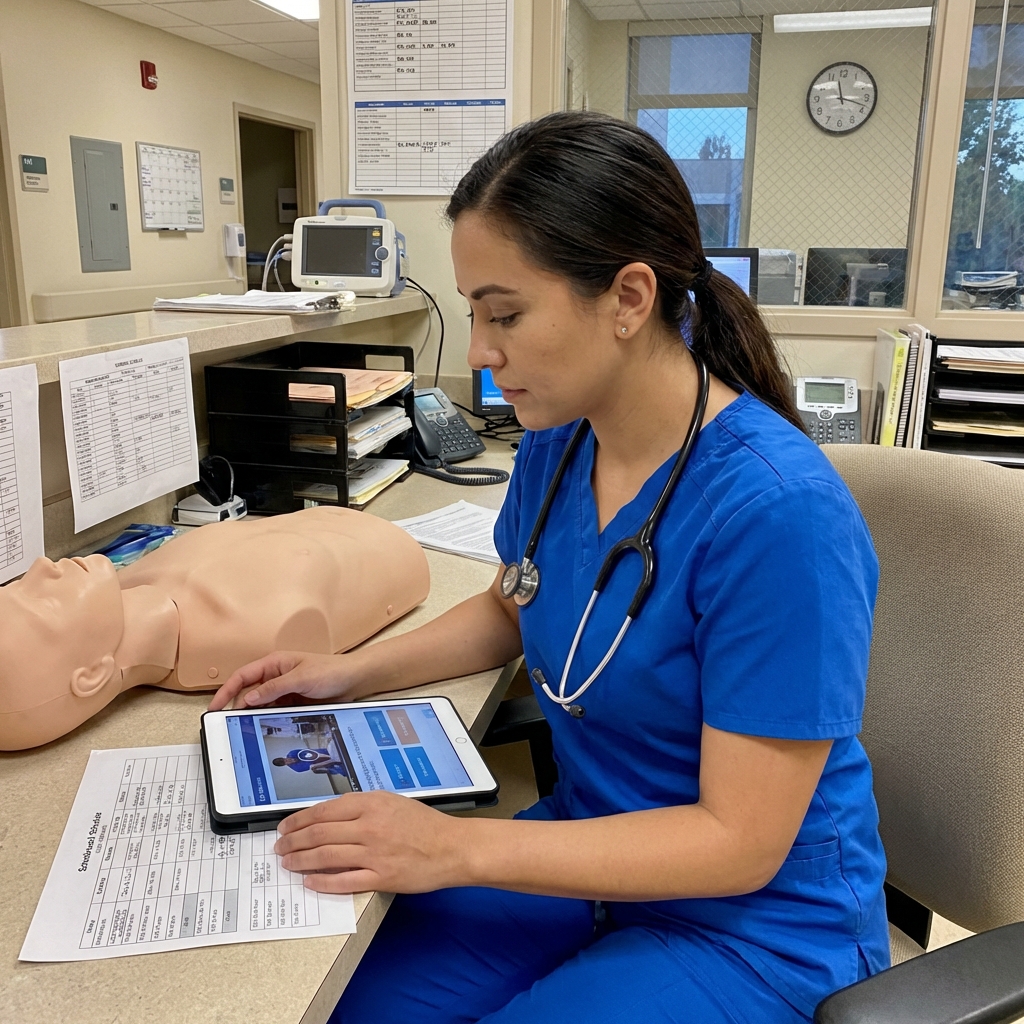
- Blended learning (HeartCode ACLS + skills session): Complete adaptive online modules at your pace, then finish a short, in-person skills check with a certified instructor—often the fastest option to get back into compliance.
- Full ACLS Provider course: Recommended if your skills are rusty, your lapse is prolonged, or your employer/training center requires the full curriculum rather than a renewal track.
Employers typically look for verifiable AHA eCards and completion dates that meet unit policy. If you’re renewing after a lapse, ask whether they’ll accept: proof of enrollment with a course date, a HeartCode online completion certificate prior to the skills session, or a temporary acceptance letter from your training center. Keep records of your pre-course assessment and any skills check documentation until your eCard is issued.
Two quick examples: a nurse returning from family leave who is 30 days past due can often complete HeartCode ACLS online over a weekend and book a Monday skills session to satisfy policy. An EMS provider a year overdue may choose the full Provider course to rebuild rhythm recognition and pharmacology confidence.
Safety Training Seminars offers multiple AHA-approved ACLS recertification pathways across more than 100 locations in California, including blended HeartCode plus in-person skills and traditional renewal or full Provider formats. With flexible scheduling, corporate group options, and a low price guarantee, clinicians can align training with employer expectations without delaying patient care. For role-specific guidance across California healthcare certifications, including dentistry and sedation practices, see our overview of California healthcare certifications.
Understanding the Consequences of a Lapsed ACLS Certification
Letting your ACLS lapse has immediate consequences in California healthcare settings. The AHA does not offer a grace period—once expired, you are no longer considered current, and many hospitals, ASCs, dental practices, and EMS agencies will remove you from ACLS-dependent duties until you renew. This can affect staffing, credentialing, and compliance audits (e.g., Joint Commission, CDPH), and may trigger corrective action under HR or medical staff bylaws.
Common impacts you may encounter include:
- Unit or assignment restrictions: ICU, ED, cath lab, PACU, sedation, and telemetry shifts often require active ACLS; you may be reassigned or sent home.
- Credentialing and onboarding delays: Travel/per diem agencies and hospital medical staff offices frequently put files on hold or cancel start dates when ACLS is expired.
- Loss of differentials or roles: Charge nurse, code team, rapid response, and precepting responsibilities (and associated pay) may be suspended.
- Policy and liability risk: Providing ACLS-level interventions without a current card can violate facility policy and expose you to disciplinary action.
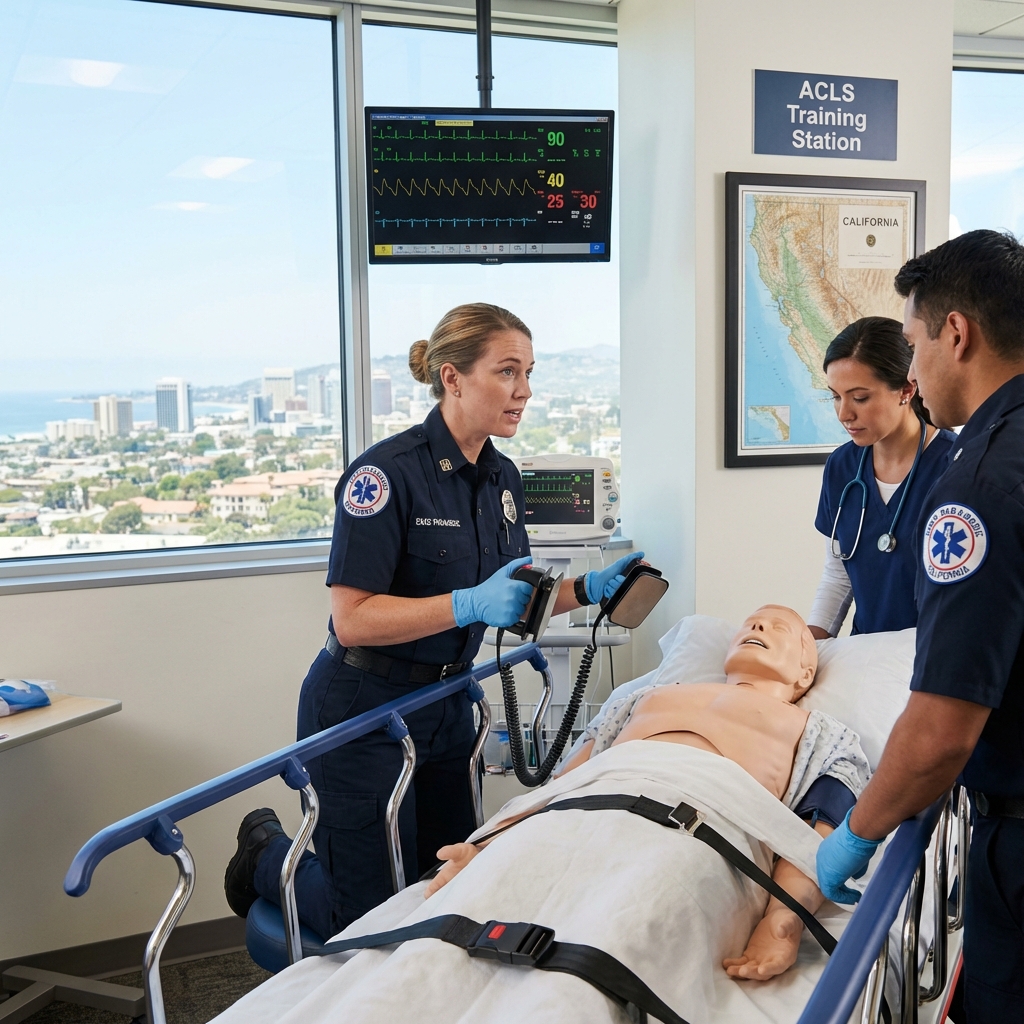
- EMS-specific implications: California paramedics and MICNs typically must maintain current ACLS to function on ALS units; lapses can temporarily sideline you from field or base-station duties.
- Dental sedation compliance: Dentists with moderate/deep sedation permits often must keep ACLS (and PALS when treating pediatric patients) current; lapses can restrict sedation services.
How you renew after a lapse depends on employer policy and Training Center requirements. Many facilities accept an AHA renewal course if your knowledge and skills remain strong; some Training Centers may direct you to the full Provider course when your card has been expired or if a pre-course assessment indicates significant gaps. Confirm your facility’s ACLS renewal requirements first so you choose a path that is employer-acceptable and avoids repeating training unnecessarily.
To minimize downtime, look for ACLS recertification pathways California employers regularly accept, such as blended learning: complete the online module, then finish a brief in-person skills session. Safety Training Seminars offers this flexible model across 100+ California sites with evening and weekend options, corporate group scheduling, and a low price guarantee. If you’re ready to get back into compliance quickly, you can book an AHA ACLS renewal course and select a skills session near you. This approach helps you regain active status fast while meeting your facility’s professional life support training standards.
AHA-Approved Pathways for ACLS Recertification in California
American Heart Association–approved options give California clinicians employer-accepted routes back to active status. There is no AHA grace period—once your eCard expires, it’s invalid—so choose an ACLS recertification pathway that fits your timeline and experience. California hospitals and EMS agencies universally accept AHA cards, making these pathways the gold standard among California healthcare certifications.
HeartCode ACLS (blended learning) is the most flexible route. You complete interactive eLearning at your own pace, then attend a brief, in-person skills session to verify high-quality BLS, airway management, rhythm recognition, and megacode performance. This AHA ACLS renewal course format is widely accepted by employers and is ideal for clinicians with variable shifts. Safety Training Seminars offers HeartCode skills checks statewide, with evening and weekend options.
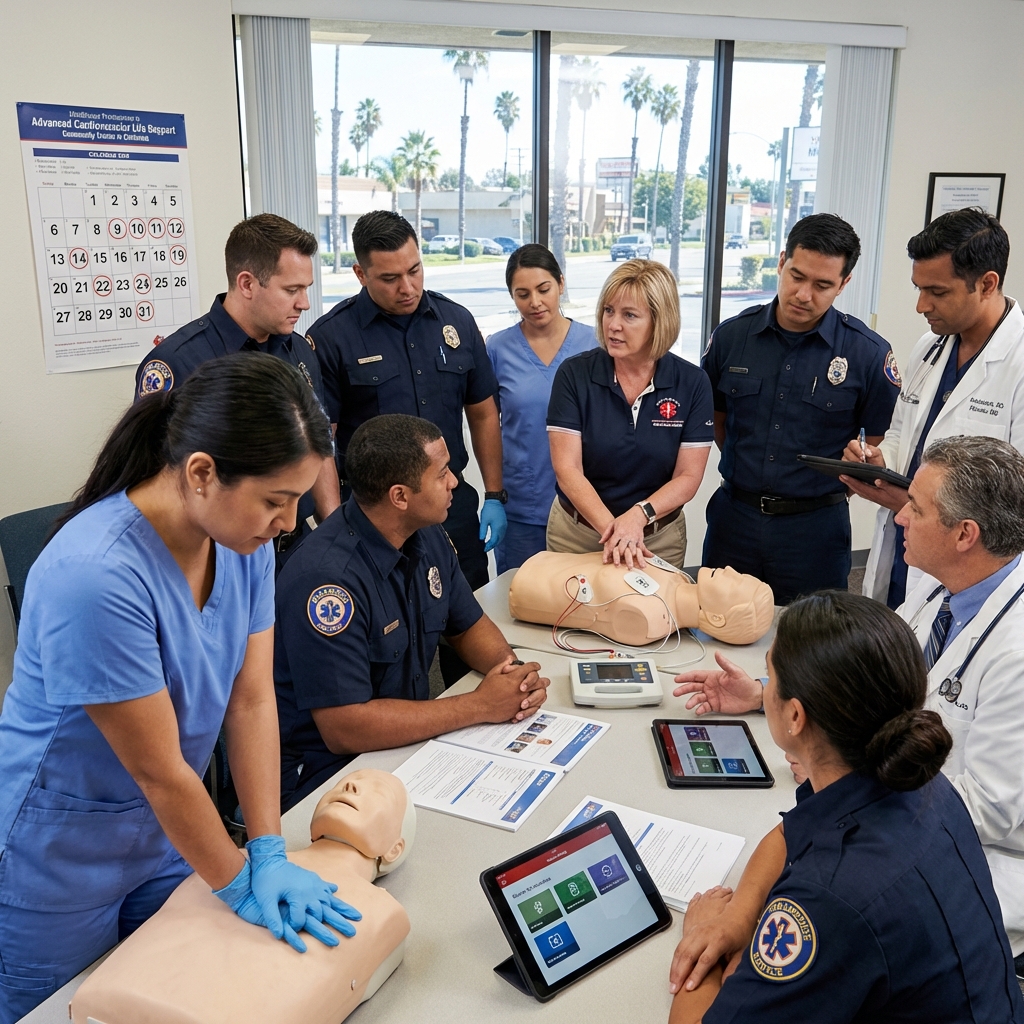
Instructor-led ACLS Renewal is a classroom course designed for providers with a current, unexpired card. Expect concentrated review, team-based simulations, a megacode assessment, and a written exam in a single day. Precourse work typically includes the AHA precourse self-assessment, algorithm familiarity, ECG interpretation, and pharmacology review.

If you have a lapsed ACLS certification, here’s how to choose a compliant path:
- Current (unexpired) ACLS card: Take the AHA ACLS Renewal course or HeartCode ACLS + skills.
- Recently expired: Most training centers recommend HeartCode ACLS + skills; confirm employer policy.
- Expired >1 year or limited recent code experience: Take the full ACLS Provider course (2-day) for comprehensive refresh.
- Uncertain acceptance: Ask your employer if HeartCode is acceptable; nearly all CA hospitals accept it.
ACLS renewal requirements also include bringing a valid photo ID and proof of online completion (for HeartCode). Many employers expect you to maintain current BLS Provider status; bundling BLS the same day can streamline your professional life support training. Booking early helps you avoid scheduling gaps that could affect staffing or credentialing.
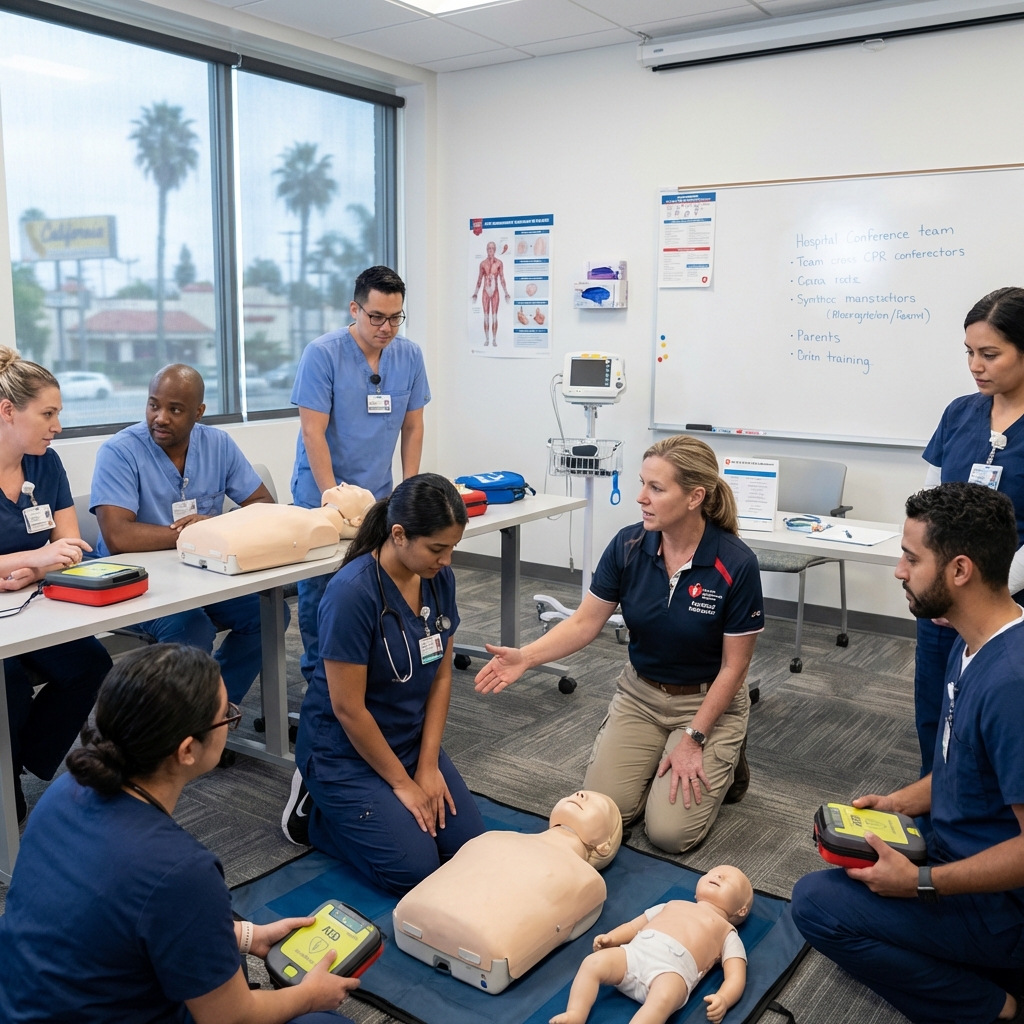
Safety Training Seminars, an AHA Training Center with over 100 California locations, provides all AHA-approved ACLS pathways—HeartCode skills sessions, instructor-led Renewal, and full Provider courses—plus corporate group options and a low price guarantee. Their blended learning model and statewide schedule make it straightforward for nurses, dentists, and EMS professionals to renew on time and stay employer-compliant.
Blended Learning: Combining Online Theory with In-Person Skills Testing
For many clinicians navigating ACLS recertification pathways California, a blended format is the fastest employer-accepted option. The American Heart Association’s HeartCode ACLS pairs self‑paced online learning with a brief, in‑person skills check, resulting in the same AHA ACLS Provider eCard issued for a traditional classroom course. This route is especially helpful if you have a lapsed ACLS certification, as most hospitals accept a current AHA eCard regardless of how you completed the course; always confirm your facility’s ACLS renewal requirements.
Here’s how the AHA ACLS renewal course works in a blended model:
- Enroll in HeartCode ACLS and complete the online modules, precourse self‑assessment, and realistic megacode simulations (typically 4–6 hours, self‑paced).
- Pass the online cognitive components and download the certificate of completion.
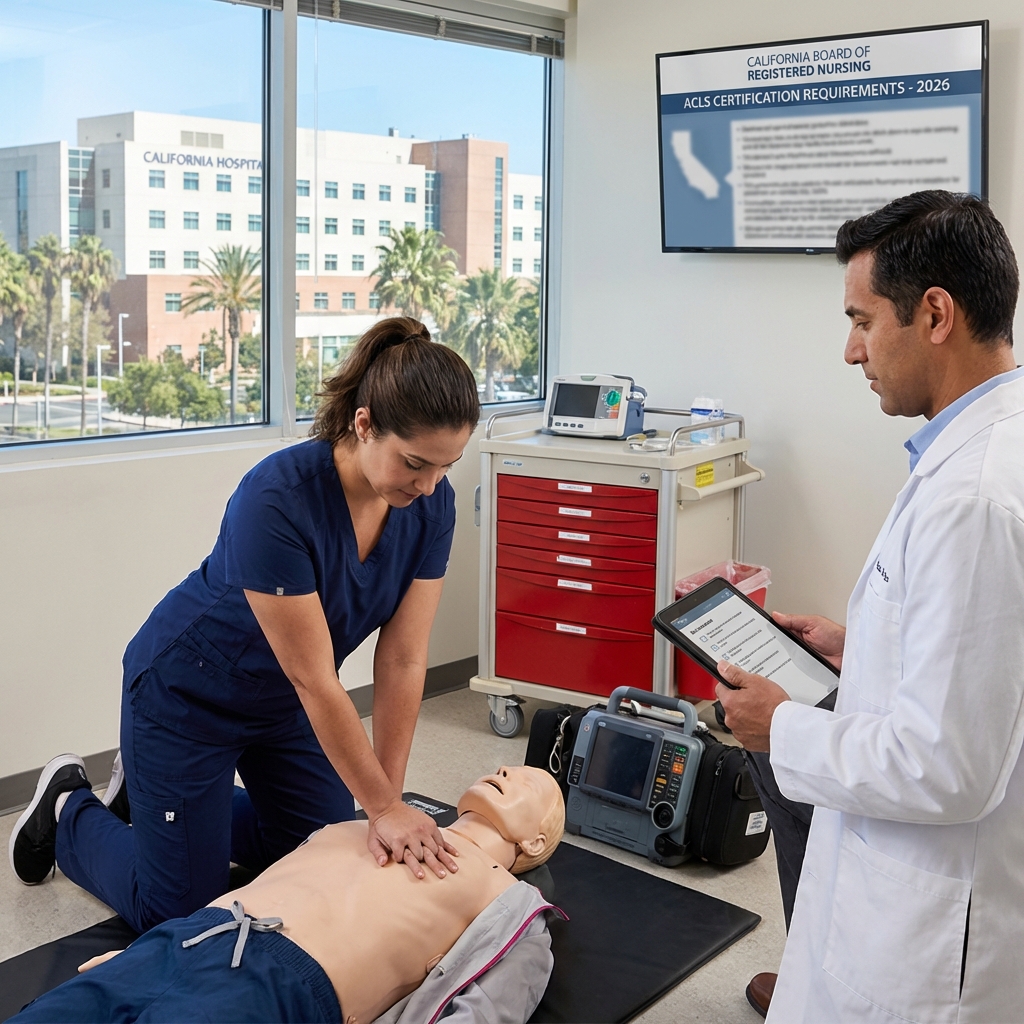
- Schedule an in‑person skills session (about 60–90 minutes) to demonstrate high‑quality CPR, airway management, rhythm recognition, medication sequencing, and team dynamics.
- Upon successful skills testing, receive your AHA ACLS Provider eCard, generally valid for two years and accepted for California healthcare certifications.
If your card is expired, most training centers will still place you in a renewal track as long as you can meet the performance benchmarks; some employers, however, may require the full provider course after a long lapse (e.g., >6–12 months). Example: a RN in San Jose with a 3‑month lapse completes HeartCode over a weekend, then attends a Monday evening skills check in Oakland, returning to work with a valid eCard for HR verification. This blended pathway minimizes time away from shifts while meeting professional life support training standards.
Safety Training Seminars offers HeartCode ACLS with frequent skills sessions across 100+ California locations, including evenings and weekends for busy hospital schedules. As an established provider of AHA courses, they issue eCards promptly and back classes with a low‑price guarantee, helping individuals and corporate teams stay compliant. For units recertifying together, on‑site group options can streamline scheduling and reduce costs.
To prepare, bring your HeartCode completion certificate and a photo ID to the skills session, and review 2020 AHA ACLS algorithms (e.g., bradycardia, tachycardia with a pulse, cardiac arrest). Many employers expect an active BLS card alongside ACLS, so consider pairing a BLS renewal the same day. Booking early—especially before travel or credentialing deadlines—ensures you secure a time and location that fits your shift pattern.
Verification of Employer-Acceptable Training Providers
When your card is expired, the first step is confirming that your ACLS recertification pathways California employers will accept lead to an American Heart Association credential. Many California hospitals, dental practices, and EMS agencies specify an AHA ACLS Provider eCard in their policy, even if they also accept other professional life support training. Check your HR or medical staff office handbook before you enroll, especially if you’re returning from a lapsed ACLS certification.
Look for concrete signs a course meets ACLS renewal requirements your employer recognizes. The class should be listed as “AHA ACLS Provider” or “AHA ACLS Renewal,” and include a hands-on skills evaluation (team megacode, airway, rhythm management) with an AHA-aligned instructor. The provider should issue an official AHA eCard containing a QR code and eCard code that your employer can verify on the AHA eCards site. If your facility requires current BLS, confirm whether the training center can bundle an AHA BLS renewal the same day.
Ask these questions before registering and watch for red flags:
- Will I receive an AHA ACLS Provider eCard, and how soon after the course?
- Can you provide the AHA Training Center name and ID my employer may request?
- Does the course include both online learning (HeartCode) and an in-person skills session, or a full instructor-led option?
- How do I or my manager verify the eCard (QR link or eCard code) with the AHA?
- What is your policy for lapsed ACLS certification—can I take the renewal, or do you require the full provider course?
- Red flags: “100% online ACLS,” “instant card before skills,” or “nationally accredited” with no AHA mention.
For a practical example, a Sacramento RN with an expired card can complete the AHA HeartCode ACLS online module, then attend a brief skills session the same week. Safety Training Seminars, an AHA-authorized provider with over 100 California locations, offers this blended AHA ACLS renewal course and issues same-day AHA eCards that managers can verify instantly. They also coordinate corporate rosters and onsite sessions so entire units stay current on California healthcare certifications, and they back classes with a low price guarantee. Verifying these elements upfront prevents delays in scheduling, avoids denied credentials, and keeps you compliant for your next shift.

Essential Steps to Secure Your ACLS Renewal Documentation
Start by confirming your facility’s ACLS renewal requirements. Ask HR or your education department whether they accept a blended AHA ACLS renewal course (online + skills) and what they require if you have a lapsed ACLS certification. The AHA does not offer a formal grace period, so some California hospitals mandate the full Provider course for expired cards while others accept the update course. Clarify due dates, CE documentation, and whether concurrent BLS is required for compliance with California healthcare certifications.
Choose an employer-accepted pathway. In most ACLS recertification pathways California clinicians opt for the AHA ACLS renewal course delivered via blended learning to minimize time away from patient care. If your card is significantly expired or your employer specifies it, enroll in the full Provider course instead. Safety Training Seminars offers both options statewide at 100+ locations with flexible skills sessions, corporate group scheduling, and a low price guarantee, helping you return to the floor faster.
Prepare the prerequisites and schedule efficiently:
- Complete the AHA Precourse Self-Assessment and required precourse work; bring or upload the completion certificate if your training site requests it.
- Brush up on BLS skills and ACLS algorithms (bradycardia, tachycardia with pulses, cardiac arrest, post–cardiac arrest care); many employers verify current BLS alongside ACLS.
- Bring a government-issued ID and any employer forms; confirm the skills session address, parking, and arrival time to avoid rescheduling.
- If you also need PALS or NRP, consider bundling to streamline professional life support training and reduce scheduling gaps.
Immediately after class, secure your documentation. Your primary proof is the AHA ACLS Provider eCard showing your name, issue date, and course ID; verify it on the AHA eCard Verification site and download a PDF. Send the eCard link or PDF to your manager, credentialing office, or agency portal the same day. If an eCard is briefly delayed, request a completion letter from the training center to bridge employer audits.
Keep a tidy file with the following:
- AHA ACLS Provider eCard PDF and a screenshot of the AHA eCard Verification page
- Course receipt/invoice and syllabus showing contact hours (for CE tracking)
- Precourse Self-Assessment certificate and any training center completion letter
- A note of renewal date and a 60–90 day reminder before the next expiration
Finally, upload your documents to hospital systems (e.g., HealthStream, PeopleSoft) and any staffing agency profiles. Safety Training Seminars can resend eCards, provide employer letters upon request, and coordinate group sessions so your unit stays compliant without staffing disruption.
Conclusion: Maintaining Compliance for Continuous Professional Practice
Staying employable after a lapse ultimately comes down to choosing employer-accepted options and documenting completion quickly. In California, most hospitals accept two primary ACLS recertification pathways California professionals rely on: an AHA ACLS renewal course taught instructor-led in a single day, or HeartCode (AHA’s eLearning) paired with an in-person skills session. If your lapsed ACLS certification extends many months or your skills feel rusty, the full two-day provider course can be the more efficient route to rebuild competence and confidence.
Plan around your organization’s ACLS renewal requirements, which typically include current BLS and AHA-issued eCards. The American Heart Association does not provide a grace period, so work policies govern whether you can work while expired. A practical example: a nurse can complete HeartCode ACLS online Sunday, attend a Monday evening skills session, receive the eCard the same day, and be back on shift Tuesday with verified credentials.
To minimize future gaps, align renewal dates across your California healthcare certifications (BLS, ACLS, PALS/NRP if required) and schedule early. Safety Training Seminars supports this with blended learning options and over 100 skills locations statewide, making it feasible to complete professional life support training near home or work. Their low price guarantee and group training options also help departments standardize compliance without overextending budgets.
A quick checklist to maintain continuous professional practice:
- Confirm your employer’s accepted format (instructor-led renewal vs. HeartCode + skills).
- Verify prerequisites (current BLS, pre-course assessment, drug/calculation readiness).
- Book early-morning or evening skills to shorten downtime between eLearning and eCard.
- Keep digital and printed copies of AHA eCards; provide the eCard code/QR for verification.
- Sync ACLS with BLS/PALS renewals and set calendar reminders at the 9–12 month mark.
For clinicians who need predictable scheduling and same-day proof of completion, Safety Training Seminars offers AHA ACLS renewal course options in both instructor-led and blended formats, with frequent skills sessions and immediate eCard issuance. Teams can coordinate on-site corporate sessions to recertify entire units on a single day, reducing overtime and coverage challenges. Choosing a reliable provider and a clear pathway ensures you meet employer standards, avoid disruptions from a lapsed ACLS certification, and sustain high-quality patient care statewide.
Register for a class today.