Introduction: The Importance of Certification Compliance in California Healthcare
Keeping AHA certifications current is more than a checkbox for California clinicians—it is central to patient safety, hospital credentialing, and employment eligibility. Many employers in acute and outpatient settings require active BLS at minimum, with ACLS, PALS, or NRP for specific roles. When cards lapse, nurses and providers can lose shift assignments or face delayed onboarding. That is why thoughtful healthcare certification scheduling strategies are essential to maintaining continuity of care while controlling staffing and overtime costs.
California’s clinical landscape adds complexity: multiple campuses, heavy traffic, and high census units make time a scarce resource. Different service lines carry different renewal cycles and prework requirements, particularly around ACLS training logistics (ECG/rhythm review, pharmacology, and megacode practice). Poorly timed renewals trigger last‑minute shift swaps, premium pay, and re-credentialing bottlenecks. Advance planning, clear communication, and standardized reminders reduce risk and administrative friction.
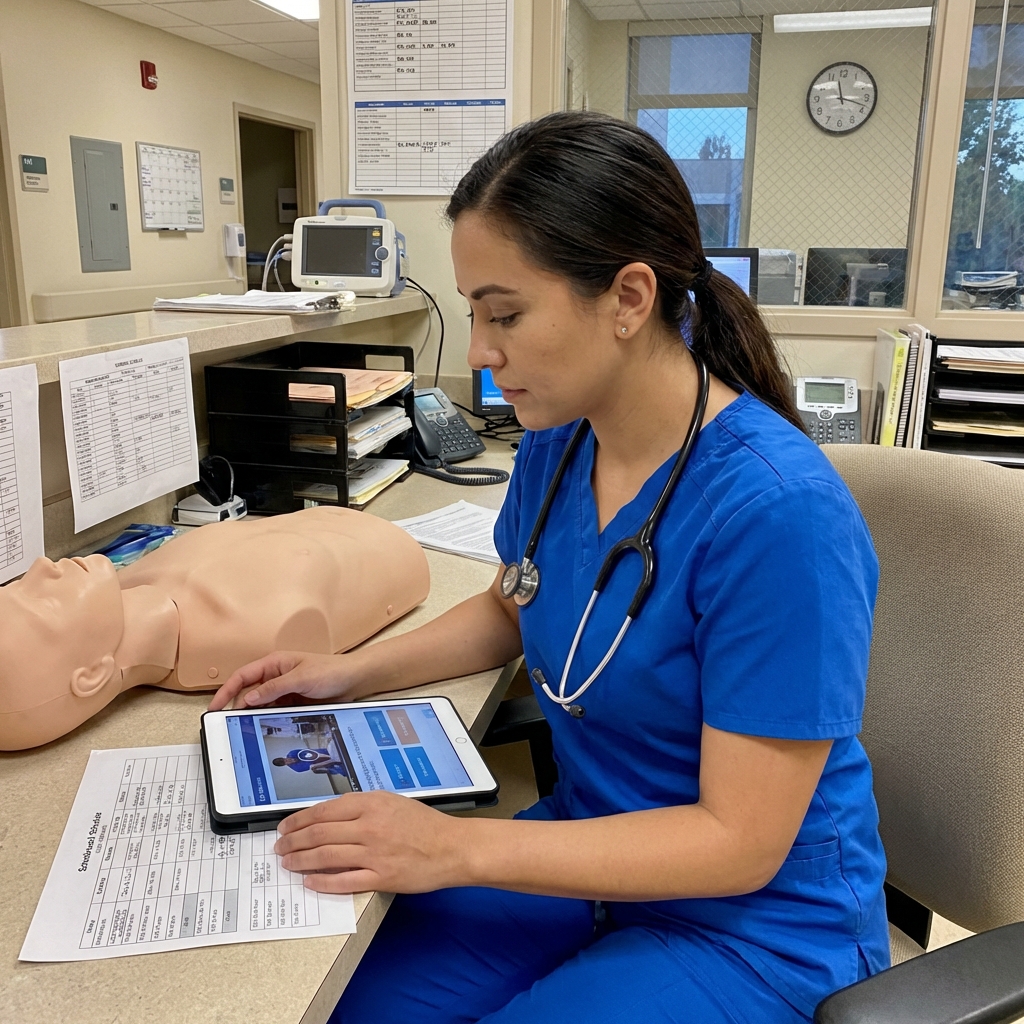
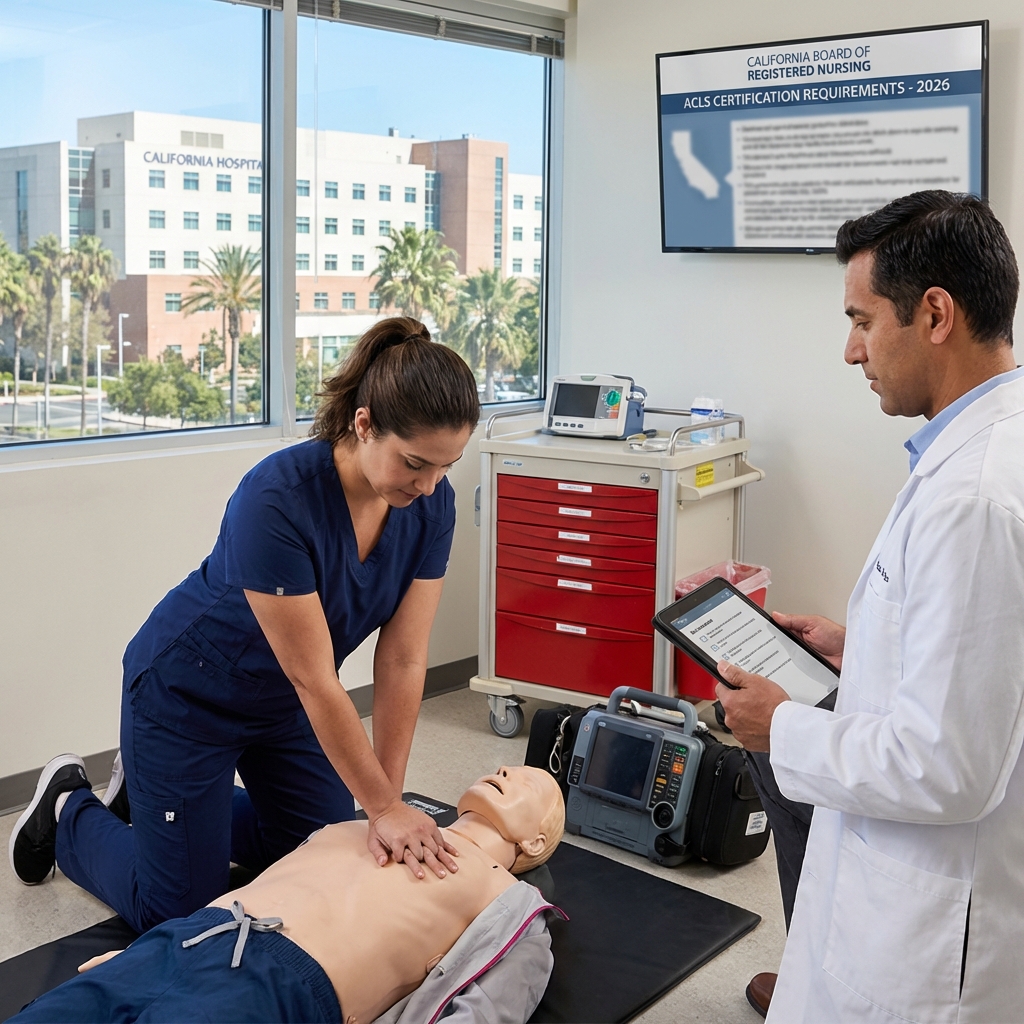
Blended learning benefits are a practical lever for minimizing nursing downtime. For example, a BLS HeartCode path allows clinicians to complete the online module off-shift and then book a 20–30 minute skills check near the unit—an efficient CPR certification approach that fits between rounds or after report. ACLS HeartCode can be completed in self‑paced segments (often 4–6 hours online) followed by a focused 2–3 hour skills session, reducing full-day classroom absences and enabling staggered participation across a unit.
Consider these tactics to streamline AHA course scheduling across teams:
- Map renewal windows by unit; align BLS with ACLS/PALS so clinicians renew multiple cards in one trip.
- Prioritize locations close to the facility and offer evening/weekend skills sessions to cover all shifts.
- Assign pre-course prep time on the schedule to avoid remediation and repeat appointments.
- Use digital reminders 60/30/14 days before expiration; track AHA eCards in a shared dashboard.
- For larger departments, coordinate onsite group training logistics to minimize travel and stagger attendance during lower‑census blocks.
Safety Training Seminars supports these approaches with over 100 California locations, flexible blended schedules, and specialized AHA courses for healthcare providers (ACLS, PALS, NRP, and BLS). Teams can bundle online modules with nearby skills check times, or arrange onsite group sessions that keep coverage intact. With a low price guarantee and predictable session lengths, managers can budget accurately and clinicians can recertify without disrupting patient care.
Identifying Logistical Challenges in Maintaining Mandatory Certifications
For many California clinicians, the barrier to staying current isn’t the material—it’s the logistics. Rotating 12-hour shifts, on-call demands, and tight expiration windows make healthcare certification scheduling strategies as critical as the coursework itself. Add employer audits, union rules, and credentialing timelines, and even simple renewals can disrupt patient coverage.
ACLS training logistics are especially complex. Providers must complete online prework, coordinate with code team schedules, and secure a skills session that aligns with shift rotations. EMS personnel face added unpredictability from call volumes, making fixed daytime classes risky. Limited seat availability during peak renewal months (often before fiscal or licensing deadlines) compounds the challenge.
Minimizing nursing downtime depends on reducing time away from the bedside. Efficient CPR certification paths that leverage blended learning benefits—completing the online module off-shift and a short, in-person skills check near the hospital—help preserve staffing ratios. Nurses juggling back-to-back shifts, PTO constraints, and precepting responsibilities benefit from evening and weekend skills sessions within a few miles of work or home.
AHA course scheduling also varies by role and requirement. Recertification timelines differ from initial courses, and lapsed cards usually mean longer sessions with additional prerequisites. Dental practices and ambulatory clinics often need to align multiple staffers’ renewals at once to avoid closing the office; reviewing the California healthcare certification requirements can clarify which team members need BLS versus ACLS or PALS and when.
California’s geography adds another layer. Commutes across the Bay Area, LA County, and the Central Valley can turn a two-hour skills check into a half-day absence once traffic and parking are factored in. Multi-site availability matters: with over 100 locations statewide and flexible skills sessions, Safety Training Seminars helps clinicians match course times to real-world routes and shift patterns.
Common bottlenecks to flag early include:
- Overlapping renewal dates for BLS, ACLS, PALS, and NRP that strain coverage on a single week.
- Underestimating online module durations and failing to finish before the scheduled skills check.
- Last-minute cancellations that collide with expiring cards or onboarding deadlines.
- Group scheduling across mixed roles, where one course type (e.g., ACLS) limits the whole team’s calendar.
For hospitals and practices coordinating groups, corporate sessions and block scheduling can reduce per-person time away and simplify verifications. Safety Training Seminars supports team bookings and discount pricing, and its low price guarantee helps administrators control costs while aligning class dates to staffing plans.
Strategic Scheduling: Balancing Patient Care with BLS and ACLS Renewal
Balancing unit coverage with mandatory renewals starts with proactive planning. Build healthcare certification scheduling strategies into your staffing rhythm by running a 90–120 day expiration report for BLS and ACLS, then reserving slots during historically lower census periods or overlap shifts. Assign renewals by pod or shift so only a fraction of a team is out at any time, which is key for minimizing nursing downtime without resorting to overtime.

Leverage blended learning benefits to decouple the time-intensive coursework from the brief, hands-on validation. Encourage staff to complete the online modules during administrative time, light-call hours, or protected education blocks, then book the in-person skills check in short, predictable windows. This approach supports efficient CPR certification while keeping more clinicians at the bedside during peak demand.
ACLS training logistics improve when you cluster skills sessions geographically and chronologically. For example, in a 24-bed ICU, schedule two nurses per hour at a nearby center across two consecutive afternoons, paired with partial backfill or charge nurse coverage. Safety Training Seminars offers AHA course scheduling across 100+ California locations with evening and weekend options, plus blended BLS and ACLS formats that allow teams to complete the cognitive work remotely and finish skills quickly.
Practical tactics you can implement now:
- Create a rolling renewal calendar that triggers 90/60/30-day reminders and blocks skills appointments before schedule finalization.
- Batch staff by unit and location to reduce commute time; select the nearest Safety Training Seminars site or arrange an on-site corporate group session to keep teams local.
- Align skills checks with shift transitions (e.g., nights to days) to limit mid-shift disruptions and avoid double coverage.
- Pair ACLS and BLS renewals in the same visit when feasible to cut duplicate travel and administrative time.
- Keep two standby staff per cohort to backfill last-minute callouts so reserved slots don’t go unused.
Consider a busy ED with mixed full-time and per-diem staff. The educator assigns online ACLS modules over two weeks, books 45-minute skills checks at a center three blocks away, and staggers appointments across three days. Coverage remains intact, the department avoids overtime, and clinicians maintain compliance. With Safety Training Seminars’ low price guarantee and flexible scheduling, departments can standardize renewals statewide while preserving patient access and budget discipline.
Leveraging Blended Learning to Reduce Clinical Downtime
Blended learning compresses classroom time by moving the cognitive portion of AHA courses online and reserving in-person time for a focused skills check. For busy nurses, dentists, and EMS personnel, this model turns commutes and unit coverage challenges into a single, brief appointment. The blended learning benefits are clear: fewer schedule disruptions, predictable timelines, and better chances of minimizing nursing downtime without sacrificing course quality.
Consider ACLS training logistics. With HeartCode-style modules, clinicians can complete the online learning in short blocks during off days or evenings, then book a skills session that typically runs a couple of hours. BLS renewals often require an even shorter skills check, which many professionals complete before or after a shift for efficient CPR certification. PALS and NRP follow the same pattern, allowing departments to stagger staff through skills sessions without pulling multiple team members off the floor at once.
Apply targeted healthcare certification scheduling strategies to make the most of the blended format and keep coverage intact. The goal is to align online study windows and skill appointments with your actual staffing reality, not the other way around.
- Map expiration dates 60–90 days out, then reserve skills sessions first; fill online modules around those anchors.
- Book early morning, late evening, or weekend skills checks to reduce overlap with peak census hours.
- Stack competencies when possible (e.g., BLS skills immediately before ACLS skills) to consolidate travel and time away.
- Break online modules into 30–45 minute blocks to fit between personal commitments or post-shift downtime.
- Coordinate with charge nurses or office managers to rotate staff through skills sessions in small waves.
- For multi-site teams, choose the nearest location to each employee to cut commute time.
- Use calendar holds and automated reminders to keep AHA course scheduling on track well before deadlines.
- For larger groups, bring training on-site to avoid multiple backfill events and overtime costs.
Safety Training Seminars supports this approach with AHA-compliant blended options across more than 100 locations in California. Clinicians complete online learning at their own pace, then choose from frequent, short in-person skills sessions, including evenings and weekends in many areas. For departments, corporate group training and discount pricing simplify budgeting while the low price guarantee helps keep compliance affordable.
Here’s a practical example for a San Jose ICU nurse renewing ACLS and BLS: complete 45 minutes of ACLS online content on Monday and Wednesday nights, finish the ACLS exam Friday, then attend a two-hour skills check Saturday morning near home; add a 45–60 minute BLS skills slot immediately afterward. The result is one trip, minimal coverage impact, and both cards renewed well before expiration. Multiply that plan across a unit, and you maintain staffing continuity while meeting mandatory requirements.
Group Training Logistics for Medical Practices and EMS Teams
Coordinating group courses starts with clear healthcare certification scheduling strategies that align with staffing models and regulatory deadlines. Map expiring BLS, ACLS, PALS, and NRP credentials by department and shift, then build cohorts that keep core services covered. Where possible, use AHA blended learning (eLearning + in-person skills) to compress classroom time and reduce disruption while maintaining rigor.
Lock in AHA course scheduling 60–90 days ahead and assign eLearning with firm completion windows, ideally during low-census hours or protected admin time. This creates shorter, focused skills sessions (often 1–3 hours, depending on course) that fit between shifts and handoffs. The blended learning benefits are measurable: less overtime, fewer schedule swaps, and higher first-time pass rates due to self‑paced study.
- Stagger small skills cohorts across multiple sessions to maintain coverage on each unit or rig.
- Parallelize stations by securing multiple instructors and manikins to move learners through assessments concurrently.
- Align ACLS training logistics with code team schedules; schedule leadership and key responders first, with backups on later sessions.
- Build “buffer” slots at the end of each day for no-shows or remediation without extending overtime.
- For 24/7 operations, rotate cohorts through early, mid, and night skills blocks so every shift has equitable access.
- Use nearby locations to minimize travel; for larger groups, request onsite skills sessions to reduce transit time.
- Automate reminders at 30/14/7 days before deadlines and track completion status on a shared roster.
Two examples illustrate the approach. A county EMS agency split 36 paramedics into six micro‑cohorts and ran ACLS and PALS skills in parallel stations over two mornings, keeping all units in service with float coverage for just four hours. A dental group scheduled efficient CPR certification by pairing BLS skills checks with monthly staff meetings; with eLearning completed in advance, assistants cycled through 20‑minute windows between patient blocks.
Safety Training Seminars supports these logistics with AHA-certified blended courses and over 100 training locations across California, plus onsite corporate group training and discount pricing for teams. Their scheduling flexibility helps with minimizing nursing downtime, especially when coordinating ACLS/PALS for multiple departments on tight renewal cycles. Teams can mix locations and dates to match rotations while standardizing curriculum and documentation. The low price guarantee ensures budgets stay predictable even as class volumes scale.

Best Practices for Tracking and Managing Certification Expiration Dates
Start by centralizing all credentials in one system. Most AHA cards (BLS, ACLS, PALS) are valid for two years, and there’s no grace period once they expire, so proactive AHA course scheduling is essential. Build healthcare certification scheduling strategies that capture issue/expiration dates, course type, shift, location, and manager contact, then sync those fields to shared calendars with holds 60–90 days before deadlines.
Automate reminders at 90/60/30 days and include the AHA eCard verification link so managers can quickly confirm status. Standardize a monthly audit: export your roster, filter for “expires in ≤90 days,” and trigger outreach. For union or rotating staff, tag roles (ICU, ED, pediatrics) to prioritize ACLS or PALS first where clinical risk is highest.
Use these tactics to streamline renewals and minimize disruption:
- Align cycles to reduce visits. For example, a telemetry nurse can complete BLS and ACLS within a two‑week window to minimize time off the floor.
- Leverage blended learning benefits. Assign online modules during low‑census hours and book a short in‑person skills check to achieve efficient CPR certification and PALS/ACLS updates.
- Plan ACLS training logistics around census and staffing. Favor early morning, evening, or weekend skills sessions and arrange cross‑coverage to support minimizing nursing downtime.
- Build a 30‑day buffer policy. Cards must be renewed at least a month early to prevent accidental lapses and staffing gaps.
- Track proof systematically. Save eCard PDFs and verification codes in your HRIS and attach CE credits for license renewals.
Example: An ED nurse in Sacramento with ACLS expiring in September can assign ACLS online coursework in late July, then schedule a 1–2 hour skills session in early August at a nearby site. In the same period, they renew BLS to synchronize future cycles. Safety Training Seminars, with over 100 locations across California, makes this plan practical by offering flexible skills appointments close to work or home.
For departments and group practices, consolidate scheduling through a single training partner. Safety Training Seminars supports corporate rosters, on‑site skills checks, and blended solutions for ACLS/PALS/NRP that reduce travel and overtime, with discount pricing and a low price guarantee to stabilize budgets. Their broad schedule options help leaders fill classes quickly and keep compliance dashboards green.
Finally, maintain contingencies. Keep a waitlist for high‑demand days, hold a few last‑minute slots for expiring cards, and designate a backup location in case of shift changes. Review policies on expired cards with HR to avoid surprises, and audit quarterly to catch drift in aligned cycles.
Conclusion: Streamlining Professional Development for Continuous Compliance
Sustained compliance comes down to clear healthcare certification scheduling strategies that respect staffing realities while meeting AHA requirements. By aligning renewals with low-census windows, using blended learning, and coordinating across teams, California clinicians can keep skills current without sacrificing patient coverage.
A practical playbook for minimizing nursing downtime and unit disruption looks like this:
- Map all expiration dates 120–180 days out, then stagger cohorts by unit or shift to avoid simultaneous lapses.
- Prioritize blended learning benefits for ACLS, PALS, and BLS so staff complete online coursework during protected education time, followed by a short in-person skills appointment.
- Combine credentials when feasible (for example, pairing efficient CPR certification with ACLS training logistics) to reduce travel and administrative overhead.
- Leverage multiple nearby sites to cut commute time; aim for skills check-offs within a short radius of home or work.
- Reserve skills sessions on historically lighter days, and pre-plan cross-coverage to keep bedside ratios stable.
- Start AHA course scheduling early for hard-to-staff specialties, ensuring backup dates if census spikes.
Consider concrete scenarios. A med-surg unit can divide 24 ACLS renewals into three waves over six weeks, assigning online modules during existing professional development hours and booking skills check-offs on the unit’s slowest weekday. A dental practice can have the entire team complete BLS online individually, then meet for a single group skills session before clinic opens. An EMS crew working 24/48 rotations can schedule PALS or ACLS skills on the first day off and complete the online portion during scheduled training time at the station.
Safety Training Seminars simplifies these logistics with AHA-compliant blended options and more than 100 training locations across California. Healthcare teams can select ACLS, PALS, BLS, and NRP pathways, mix virtual modules with local skills sessions, and coordinate group bookings with discount pricing—all supported by a low price guarantee. For administrators, this breadth of locations and formats makes it easier to align certification cycles with staffing plans rather than the other way around.
Ultimately, efficient planning is a force multiplier. With the right partner and a disciplined calendar, you can turn certification from a disruptive event into a predictable cadence, meeting regulatory requirements while protecting continuity of care. If your goal is to streamline professional development, Safety Training Seminars offers the flexibility and coverage to operationalize these healthcare certification scheduling strategies at scale.
Register for a class today.