Introduction: Why ACLS and PALS Recertification Matters for California Healthcare Professionals
For clinicians practicing in busy California hospitals and clinics, staying current on Advanced Cardiovascular Life Support (ACLS) and Pediatric Advanced Life Support (PALS) is non‑negotiable. AHA recertification requirements ensure providers maintain competence with the latest algorithms, medication updates, and team dynamics that drive better outcomes during codes and pediatric emergencies. In practical terms, ACLS PALS recertification California helps you meet employer policies, payer expectations, and California medical certification standards that often reference American Heart Association training.
Letting a card lapse can sideline your schedule and limit assignments. An ICU RN may be removed from code team coverage, a pediatric urgent care clinician could be ineligible for high‑acuity shifts, and an EMS professional might face delays in credentialing until proof of current training is provided. Most California facilities require valid AHA eCards, and some add buffers (for example, 30 days pre‑expiration) to protect staffing and compliance.
Why timely renewal matters:
- Patient safety: current algorithms, post‑resuscitation care, and team roles reduce errors when seconds count.
- Regulatory and employer compliance: supports healthcare provider certification renewal across hospitals, surgery centers, and EMS agencies.
- Risk management: reduces liability exposure tied to outdated competencies.
- Career flexibility: keeps you eligible for float pools, travel assignments, and specialty rotations.
Plan your ACLS renewal timeline and PALS recertification compliance well before the two‑year mark on your AHA eCard. Blended learning options are widely accepted: complete online coursework, then demonstrate skills in person to satisfy hands‑on requirements without sacrificing clinical hours. Coordinating renewals together—ACLS, PALS, and BLS—simplifies tracking and minimizes downtime. Many California clinicians align these dates using local classes and employer‑friendly scheduling.
Safety Training Seminars streamlines renewal with AHA‑approved blended learning, in‑person skills sessions at 100+ California locations, evening and weekend options, and a low price guarantee. Healthcare teams can schedule corporate group training and secure discount pricing, while individual providers can bundle BLS, ACLS, and PALS courses to stay continuously compliant.
Understanding ACLS and PALS Certification Requirements
In California, hospitals, clinics, and licensing boards generally look to the American Heart Association (AHA) as the benchmark for ACLS and PALS credentials. Provider eCards are valid for two years, and maintaining an active card is central to ACLS PALS recertification California compliance. While there are no separate California medical certification standards for ACLS/PALS content, employers typically require current AHA cards for privileging and job compliance.
Plan your ACLS renewal timeline and PALS recertification well before the expiration date. The AHA does not offer a grace period, and an expired card can disrupt scheduling, credentialing, and shift assignments. Most clinicians begin healthcare provider certification renewal 60–90 days early, using blended learning (online modules plus an in-person skills session) to minimize time away from work. Safety Training Seminars meets AHA recertification requirements statewide with HeartCode ACLS/PALS and convenient skills checks at 100+ California locations.
What a compliant ACLS/PALS renewal typically includes:
- Precourse work (e.g., rhythm and pharmacology review and required online modules for HeartCode courses)
- Instructor-led or eLearning aligned with current AHA Guidelines for CPR and ECC
- Hands-on skills testing: high-quality CPR, airway management, defibrillation, team dynamics, and pediatric algorithms for PALS
- Megacode scenario evaluation and written exam demonstrating algorithm proficiency
- Issuance of a two-year AHA Provider eCard upon successful completion
Role-specific needs can shape your approach to PALS recertification compliance. An ICU nurse in Los Angeles might prioritize post–cardiac arrest care updates and medication dosing, while a pediatric emergency RN may focus on respiratory failure and shock algorithms. Dentists providing pediatric or deep sedation often need PALS in addition to BLS; see this overview for California dentists BLS, ACLS, and PALS. Safety Training Seminars supports individual and group renewals, helping teams stay current with AHA standards and employer policies across California.
Recertification Timeline and Renewal Windows
Under AHA recertification requirements, ACLS and PALS Provider cards are valid for two years from the issue date. For ACLS PALS recertification California clinicians should target renewal 60–90 days before expiration to keep hospital credentialing uninterrupted. This planning window helps you reserve class seats, complete any online coursework, and avoid year‑end or holiday backlogs that commonly impact the ACLS renewal timeline.
The AHA expects renewal before the expiration date and does not provide a universal grace period; many California employers follow zero‑lapse policies consistent with Joint Commission practices and California medical certification standards. If your card expires, some training centers may require the full Provider course instead of the shorter update, and your department or medical staff office can restrict duties until proof of current certification is uploaded. Example: an ER nurse with a 12/31 ACLS card who waits until January may face schedule removal and recredentialing delays, even if a class is booked.
For blended HeartCode options, budget time for both parts: typically several hours of self‑paced eLearning plus a brief, in‑person skills session. Complete the online module before your skills appointment and bring the completion certificate and a valid photo ID; verify any additional documents your facility requires for PALS recertification compliance. Providers on tight timelines often finish HeartCode early in the week and complete a skills check the same week to ensure seamless healthcare provider certification renewal.
- Set calendar alerts 120/90/60 days out and align renewals with annual competencies.
- Stack BLS on the same day as ACLS or PALS to minimize time away from the unit.
- Confirm your employer accepts blended learning and AHA cards from your chosen training center.
- If you work across multiple facilities, renew to the earliest expiring requirement to avoid gaps.

Safety Training Seminars offers flexible HeartCode plus skills sessions, evening/weekend options, and over 100 California locations, helping busy nurses, dentists, and EMS personnel renew on time at a low price guarantee.
Compliance Standards and Legal Requirements in California
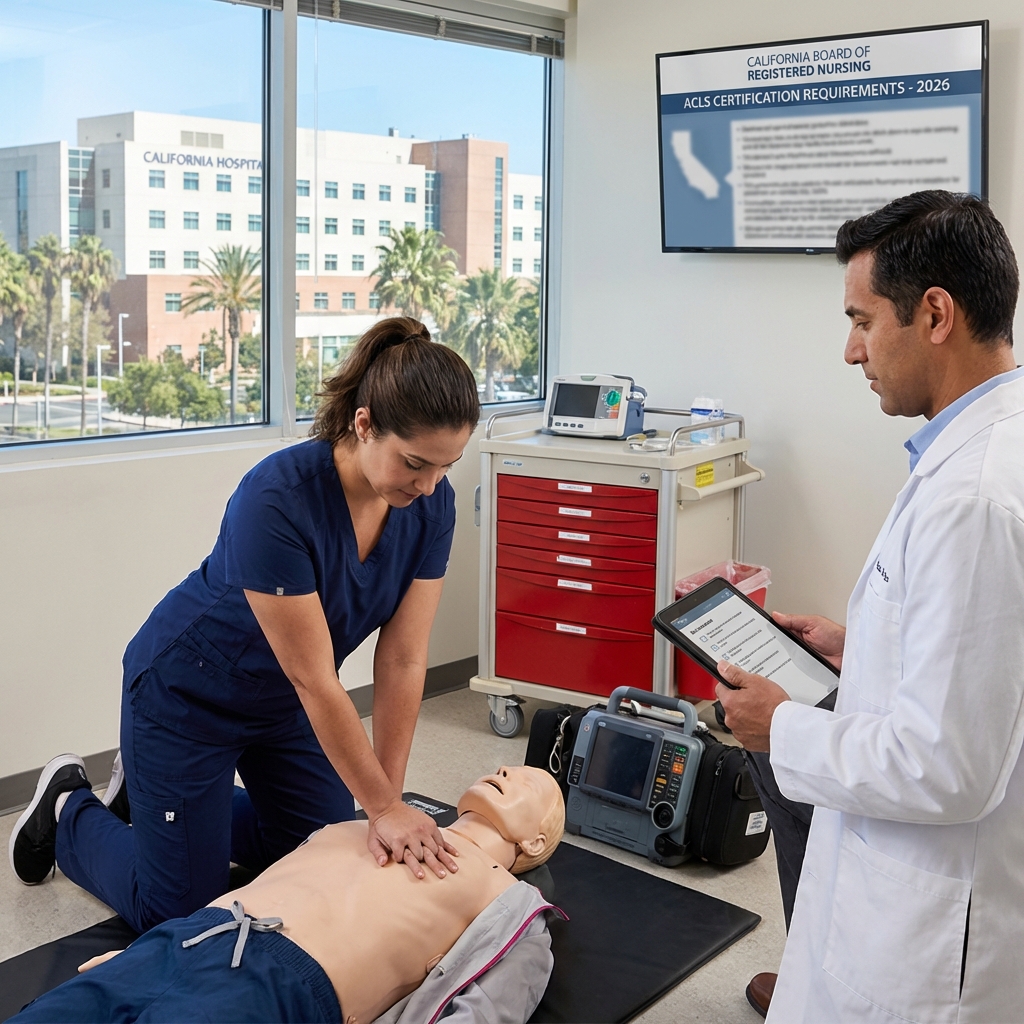
In California, compliance for ACLS and PALS is driven by employer policy, local EMS agency protocols, and adherence to American Heart Association standards. For ACLS PALS recertification California healthcare professionals must maintain unexpired AHA Provider cards appropriate to their role and patient population. Most hospitals and EMS agencies require AHA-issued eCards that can be verified electronically and reflect current science guidelines.
Under AHA recertification requirements, ACLS and PALS Provider cards are valid for two years from the issue date and include a mandatory hands-on skills evaluation. The AHA does not recognize online-only certifications for these disciplines, and there is no official “grace period” once a card expires. If your card lapses, some employers or training centers may require the full provider course rather than a renewal—confirm local policy before scheduling.
California medical certification standards are typically operationalized through facility credentialing and local EMS authority rules. For example, an ICU RN in San Francisco may need continuous ACLS to remain on the schedule, while a pediatric ED nurse or transport paramedic must show PALS recertification compliance before clinical assignment. Purely virtual courses that omit an in-person skills check are commonly rejected by credentialing offices across the state.
Plan your ACLS renewal timeline at least 30–60 days before expiration to prevent work interruptions and ensure room for remediation if needed. Maintain audit-ready records after healthcare provider certification renewal, including:
- AHA eCard ID and issue/expiration dates
- Course roster or receipt showing an AHA-authorized Training Center
- Documentation of the hands-on skills session (location and instructor)
- Any CE documentation required by your licensing board or employer
Safety Training Seminars helps California professionals stay compliant with statewide expectations through AHA-authorized blended learning (HeartCode + in-person skills) at 100+ locations. The team offers flexible scheduling, corporate group options, and fast eCard issuance so hospitals and EMS agencies can verify credentials without delay.
Choosing a Compliant Training Provider
Picking the right partner for ACLS PALS recertification California protects your license, employment status, and patient safety. Start by confirming the course is built around current American Heart Association science and policies, because most hospitals and agencies benchmark to AHA recertification requirements. Ask providers to document exactly how their classes meet employer audits and Joint Commission expectations.
Use this quick compliance checklist before you enroll:
- Verify AHA affiliation (Training Center or aligned site) and that instructors hold current AHA Instructor status.
- Choose the correct format: AHA blended learning is acceptable only with an in-person skills session; virtual-only courses do not satisfy hands-on requirements.
- Confirm adult and pediatric content matches the latest algorithms, team dynamics, airway management, and megacode testing.
- Ensure CPR practice uses feedback-enabled manikins for quality metrics, as required for modern training.
- Ask when you’ll receive your digital course completion card and whether it is an AHA eCard recognized by California employers.
- Request details on CE availability and whether credits are accepted by your board or agency for healthcare provider certification renewal.
- Check refund/reschedule policies and multiple testing opportunities to avoid delays in compliance.
Mind your ACLS renewal timeline and PALS recertification compliance. AHA provider cards are typically valid for two years; many California employers require renewal before the expiration date to maintain scheduling privileges. If a card lapses, you may need the full provider course rather than an update, so plan 60–90 days ahead.
California medical certification standards are often set at the employer or agency level. ICU nurses, ED RNs, and telemetry staff are commonly required to hold ACLS, while pediatric units and EDs require PALS; EMS and sedation dentistry requirements vary by county and board. Always confirm with your hospital education office, LEMSA, or credentialing department.
Safety Training Seminars makes compliance easier with blended learning plus in-person skills sessions at over 100 locations statewide. Their ACLS and PALS options are designed to align with AHA recertification requirements and the scheduling realities of shift work. For teams, corporate group training and a low price guarantee help standardize renewal while controlling costs.
Blended Learning Options for Busy Healthcare Professionals
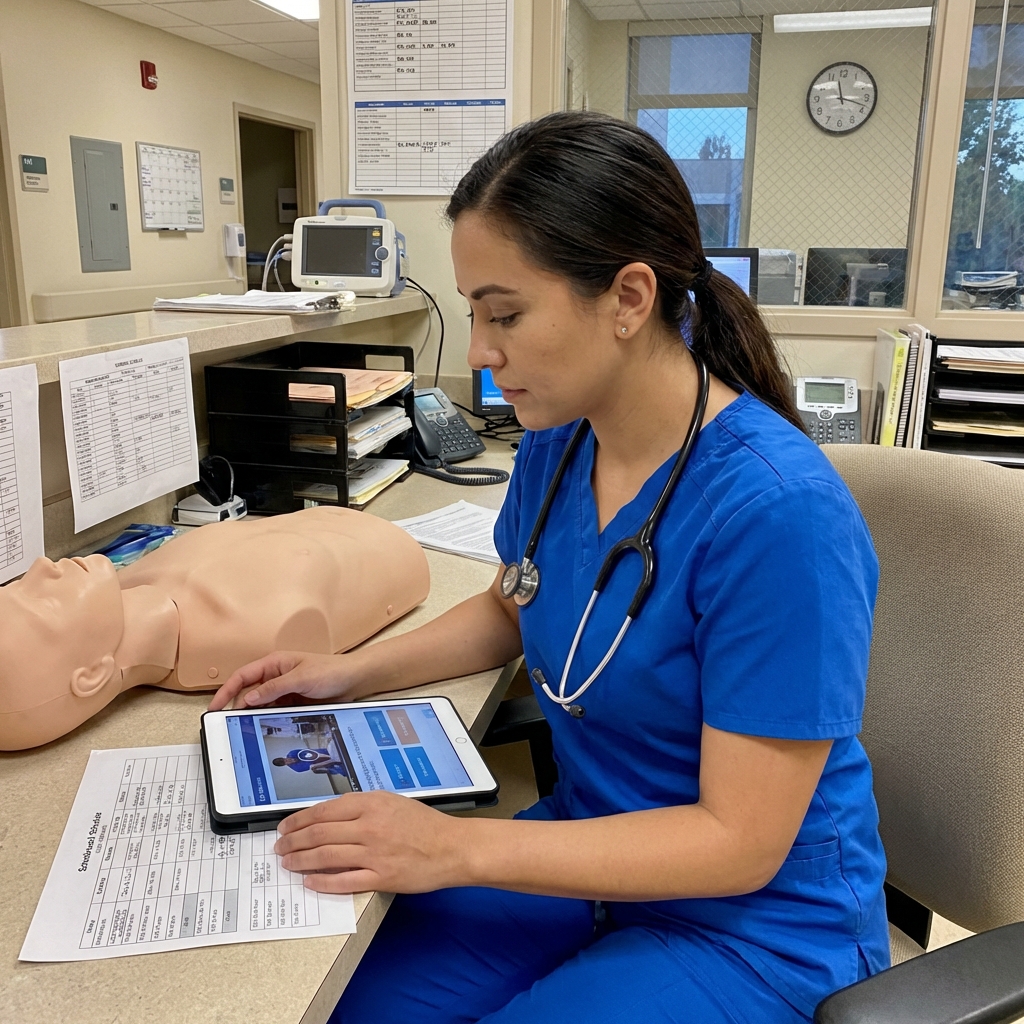
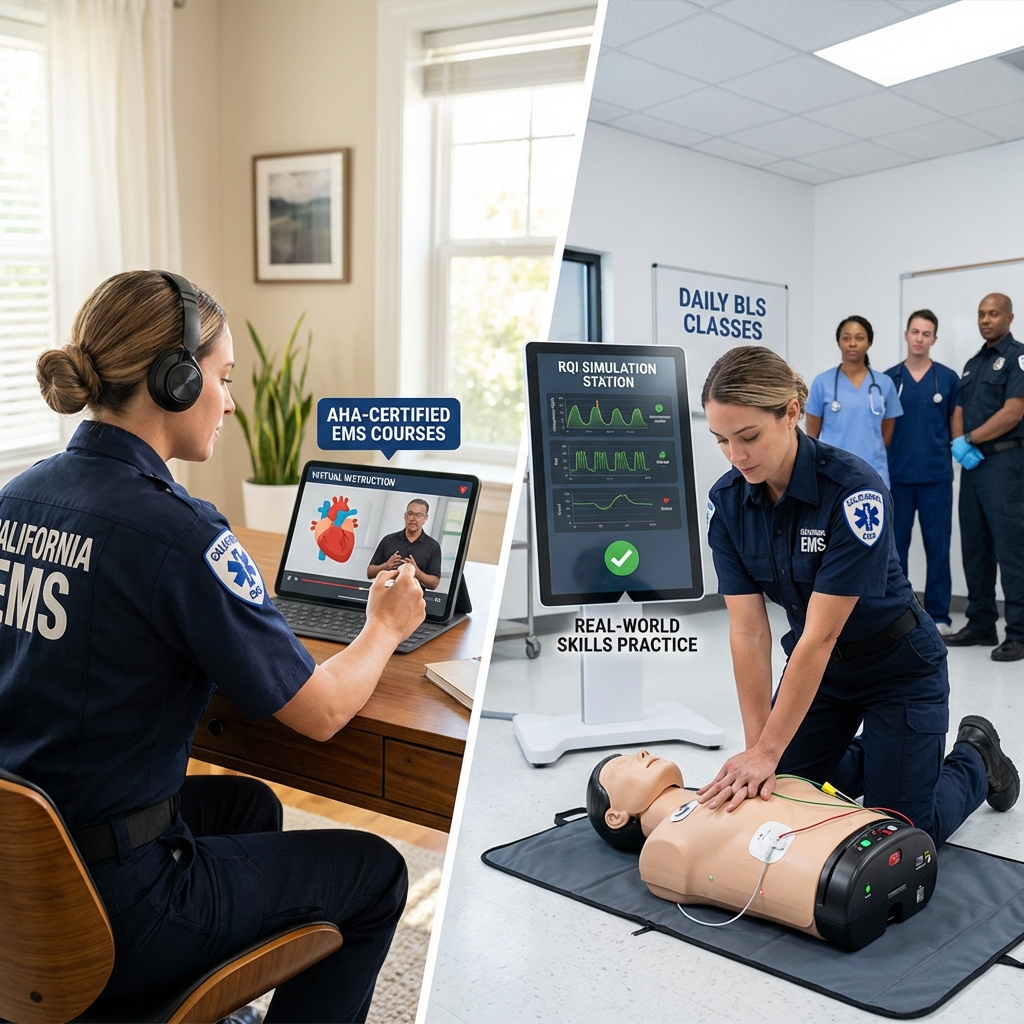
Blended learning makes ACLS PALS recertification California straightforward for clinicians with unpredictable schedules. Complete the AHA’s online cognitive modules (HeartCode ACLS or HeartCode PALS) on your own time, then book a brief in-person skills session to demonstrate hands-on competencies. Most skills checks take about 60–120 minutes and are offered frequently, reducing time away from patient care.
Under AHA recertification requirements, ACLS and PALS provider cards are typically valid for two years. To meet the ACLS renewal timeline or PALS recertification compliance, you must finish the approved online course and pass an instructor-led or voice-assisted manikin skills evaluation to receive a new AHA eCard. Planning your healthcare provider certification renewal a few weeks before expiration helps avoid scheduling crunches and potential gaps in employment compliance.
Safety Training Seminars offers HeartCode ACLS and HeartCode PALS with skills checks at over 100 locations across California, including evening and weekend options and a low price guarantee. For example, a Sacramento ICU nurse can complete the online ACLS modules over two weeknights and reserve a Saturday morning skills session nearby; a pediatric dentist in San Jose can follow the same cadence for PALS. Teams can also coordinate corporate group training to streamline renewals for entire units or practices.
What to expect in the blended format:
- Interactive online cases covering algorithms, pharmacology, and team dynamics
- Required AHA precourse self-assessment and prework to confirm readiness
- Hands-on megacode testing, airway management, and high-quality CPR verification
- Photo ID at check-in; current BLS skills proficiency is expected
Blended learning meets California medical certification standards because employers statewide accept AHA eCards as the gold standard for hospital privileging and licensing compliance. Keep your completion records, course certificates, and eCard handy for HR audits. If your renewal window is approaching, Safety Training Seminars’ statewide schedule and flexible sessions make it easier to stay compliant without disrupting patient panels or call coverage.
What to Expect During Recertification Classes
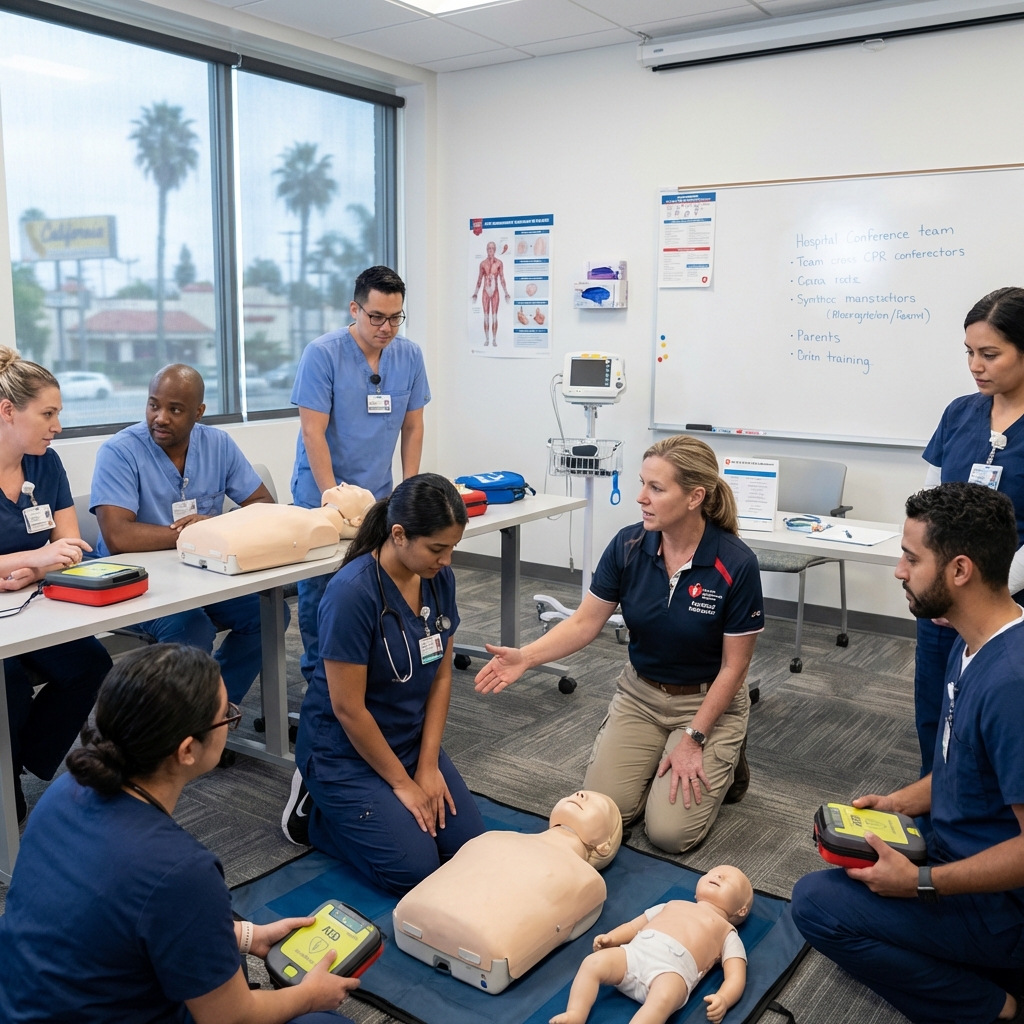
Recertification follows a blended format designed to be efficient and compliant. You’ll complete AHA-approved eLearning first (HeartCode ACLS or PALS), which includes interactive cases and a knowledge exam, then attend a brief, hands-on skills session. This structure streamlines ACLS PALS recertification California professionals need while meeting AHA recertification requirements and employer audits.
Plan your healthcare provider certification renewal before your card expires. AHA provider cards are valid for two years, and there is no official AHA “grace period,” so align your ACLS renewal timeline and PALS recertification compliance with your facility’s policy to avoid any lapse in privileges or scheduling delays. Most California medical certification standards and hospital bylaws recognize current AHA eCards for credentialing.
Bring the right items so your session runs smoothly:
- Government-issued photo ID
- AHA eLearning completion certificate for ACLS or PALS
- Your current AHA Provider eCard (if required by your facility or training site)
- Note of any employer-mandated checklists or forms for your file
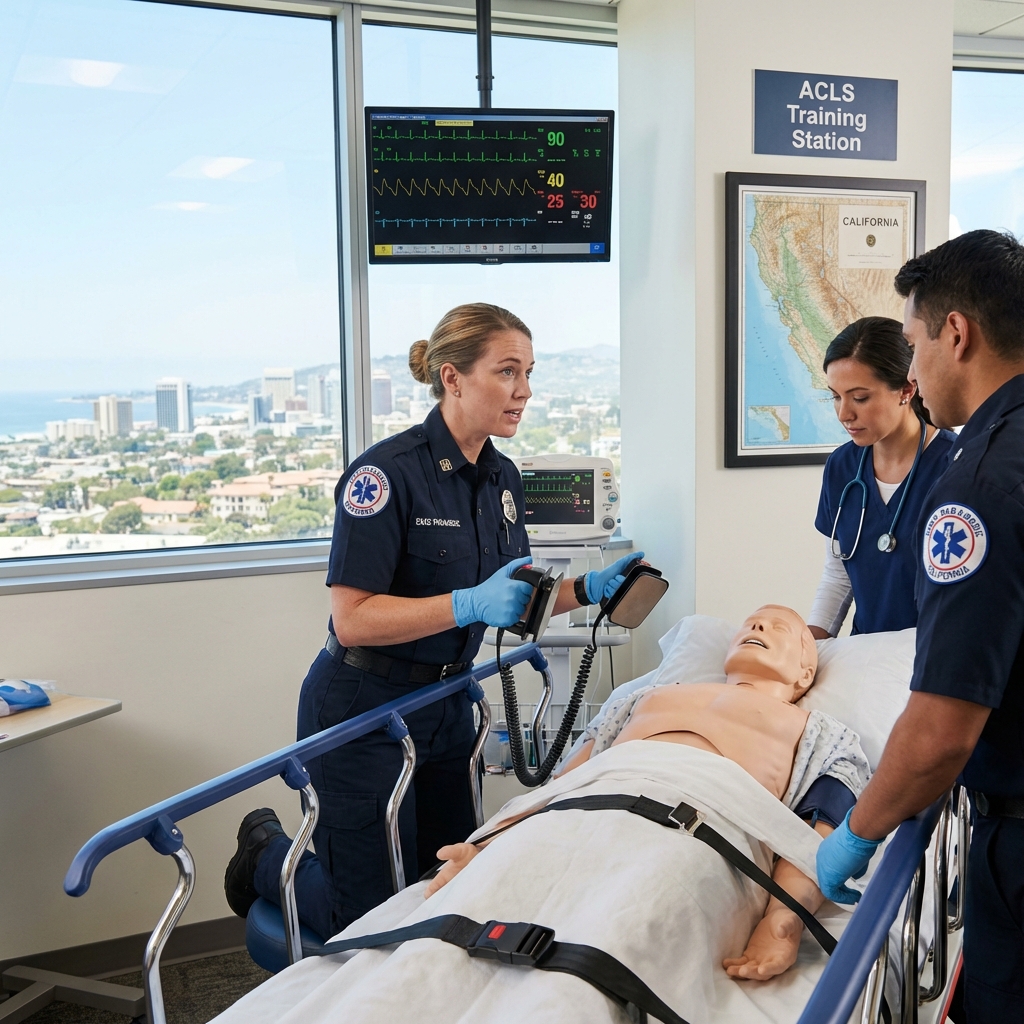
During the ACLS skills check, expect rapid, scenario-based evaluation. You’ll demonstrate high-quality adult CPR with feedback devices, rhythm recognition (e.g., VF/VT vs. PEA/asystole), safe defibrillation and cardioversion, airway management with bag-mask, and time-critical pharmacology such as epinephrine and amiodarone per algorithms. Team dynamics and closed-loop communication as a code leader or team member are assessed in a megacode.
PALS focuses on pediatric assessment and weight-based interventions. You’ll apply the Pediatric Assessment Triangle, manage respiratory distress/failure and shock, identify bradycardia/tachycardia with pulses, and dose medications using length-based tools. Skills include effective pediatric BLS, bag-mask ventilation with adjuncts, IO access discussion, and team-based resuscitation under time pressure.
Safety Training Seminars offers this blended pathway at over 100 California locations with flexible skills session times and a low price guarantee. After successful completion, your AHA eCard is issued promptly, helping you maintain uninterrupted compliance for California hospital credentialing and licensing needs.
Fast-Track and Same-Day Certification Options
If your schedule is tight or your card is nearing expiration, you can meet AHA recertification requirements quickly through blended learning. HeartCode ACLS and HeartCode PALS let you complete the online portion at your pace, then finish a brief, in-person skills check for same-day issuance of your AHA eCard. Safety Training Seminars offers this fast-track path for ACLS PALS recertification California clinicians rely on, with sessions available seven days a week across the state.
A streamlined plan looks like this:
- Enroll in HeartCode ACLS or PALS (AHA-approved) and complete the online modules and pre-course self-assessment.
- Schedule a skills session at one of Safety Training Seminars’ 100+ California locations; most take about 1–2 hours.
- Demonstrate hands-on skills and megacode performance with an AHA instructor or voice-assisted manikin.
- Receive your AHA eCard the same day you pass, satisfying healthcare provider certification renewal requirements.
Real-world examples show the time savings. A San Jose RN whose ACLS card expires Friday can finish HeartCode Thursday evening and complete a Friday morning skills session in Santa Clara, receiving a same-day eCard before her weekend shift. An EMS provider on a 24/48 schedule can book an evening Oakland skills check after completing the PALS modules, keeping PALS recertification compliance intact without missing a tour.
Plan ahead to align with the ACLS renewal timeline—AHA provider cards are typically valid for two years, and some employers require uninterrupted validity. Under California medical certification standards, facilities and boards commonly require current AHA ACLS/PALS; confirm any grace periods with your employer. For teams with multiple upcoming expirations, Safety Training Seminars can coordinate onsite skills checks and offers group discounts, helping departments avoid schedule disruptions while meeting AHA recertification requirements at a low price guarantee.
Cost Considerations and Pricing Transparency

Budgeting for ACLS PALS recertification California starts with understanding what you’re paying for and how course format affects your total cost. Prices vary by provider, modality (fully in-person vs. blended), and what’s bundled. To stay compliant with AHA recertification requirements and employer policies, confirm fees up front and document them for reimbursement.
When comparing options, look for line‑item clarity. Ask whether the following are included or billed separately:
- Tuition for renewal vs. full provider course
- Online module fee (e.g., HeartCode ACLS/PALS) for blended learning
- AHA eCard issuance and any “rush” processing
- Required student textbook or eBook access
- Skills session and any remediation or retake fees
- Rescheduling/cancellation windows and penalties
- Facility, parking, or proctoring fees
- Continuing education credits and any add‑on charge
- Sales tax or credit card processing fees
Course format can reduce both out‑of‑pocket and opportunity costs. Blended learning typically shortens time away from shifts, and local skills sessions can cut travel and parking expenses—especially in major California metros. Mind the ACLS renewal timeline: if your card lapses, some employers or schools may require a longer, higher‑cost provider course instead of a renewal, and PALS recertification compliance may hinge on completing precourse work and having the current textbook.
Leverage employer benefits where available. Many hospitals reimburse healthcare provider certification renewal when costs are itemized, and departments often save with on‑site or group bookings. Safety Training Seminars supports individual and corporate needs with blended options, over 100 California locations, discount pricing for groups, and a low price guarantee—helpful for controlling budgets without compromising on standards.
For true pricing transparency, request a written, all‑inclusive quote and verify what happens if you need to reschedule or remediate. Confirm that the course aligns with California medical certification standards and your facility’s policy on AHA eCards. Choosing a provider that publishes clear policies—such as Safety Training Seminars—helps you avoid hidden fees and stay compliant on time.
Maintaining Compliance After Certification
Staying compliant doesn’t end when you pass your exam. Under AHA recertification requirements, ACLS and PALS cards are valid for two years, and most California employers require your credential to remain unexpired at all times. Build an ACLS renewal timeline by enrolling 60–90 days before your card lapses to leave room for schedule changes, prework, and any facility-specific competencies. Blended learning lets you complete the online portion on your own time and reserve an in-person skills check close to your shift pattern.
There is no AHA “grace period”—once your card expires, you’re noncompliant until you renew, though individual facilities may set their own temporary policies. Reduce risk by synchronizing healthcare provider certification renewal dates (BLS, ACLS, and PALS) to the same month. For example, an ED RN can align ACLS and PALS every May, while a pediatric hospitalist keeps PALS current and confirms whether ACLS is also required by the medical staff office. Always verify unit, health plan, and surgery-center bylaws for PALS recertification compliance and any California medical certification standards your role must meet.
Keep impeccable documentation to breeze through audits and credentialing checks:
- Save your AHA eCard PDF and verification code in a secure drive and phone wallet, and print a copy for your badge.
- Notify HR/Medical Staff Services the same day your renewal posts so rosters and privileging files update.
- Log employer-mandated items tied to resuscitation (megacode checkoffs, rhythm interpretation tests, defibrillator model training).
- Record participation in mock codes and QI drills that demonstrate ongoing competence.
Stay alert to periodic AHA focused updates and local policy changes that can affect protocols or equipment use. Safety Training Seminars makes ACLS PALS recertification California straightforward with blended learning, frequent skills sessions at 100+ locations, and group training options that simplify roster tracking and scheduling. For teams balancing cost and access, their corporate discounts and low price guarantee help maintain compliance without straining budgets.
Conclusion: Staying Current with Mandatory Certifications
Staying current is nonnegotiable for California clinicians whose roles require advanced life support credentials. ACLS PALS recertification California processes hinge on meeting AHA-recognized training and aligning with employer policy and California medical certification standards. A thoughtful plan prevents lapses that could impact scheduling, patient assignments, or credentialing.
Under AHA recertification requirements, ACLS and PALS credentials are typically valid for two years, with no official grace period once a card expires. Blended learning (e.g., HeartCode online modules plus an in-person skills session) fully satisfies renewal for most hospitals and clinics. Many training centers prefer a current or recently expired card for a “renewal” format; otherwise, you may be directed to the full provider course. A practical ACLS renewal timeline is to book 60–90 days before expiration—e.g., an ICU RN in Sacramento schedules HeartCode ACLS in week one and a skills check the following week to maintain uninterrupted status. The same early planning supports PALS recertification compliance for pediatric-focused roles.
To simplify healthcare provider certification renewal:
- Set calendar reminders at 90, 60, and 30 days pre-expiration.
- Confirm your employer accepts the specific AHA course format and issuing Training Center.
- Complete pre-course self-assessments and online modules before the skills session.
- Align BLS renewal with ACLS/PALS to minimize downtime and duplicate trips.
- Keep digital and printed copies of your AHA eCard for HR and credentialing portals.
Safety Training Seminars makes renewal straightforward with blended learning options and over 100 training locations across California. Whether you need ACLS, PALS, or NRP, their AHA-aligned courses help you stay compliant without disrupting shifts, and corporate teams can leverage group scheduling and discount pricing. With a low price guarantee and extensive class availability, it’s easy to lock in your renewal timeline and remain fully credentialed.
Register for a class today.