Introduction to AHA Certification Formats for California Healthcare Professionals
Healthcare professionals in California can complete American Heart Association (AHA) credentials in two main formats: traditional instructor-led training or a blended option. AHA blended learning acceptance is strong across hospitals and agencies because, when completed through an authorized training center, it results in the same AHA course completion eCard as a full classroom course. Final acceptance always rests with your employer, medical staff office, or local authority, so confirm policies before enrolling.
In a traditional course, all learning and skills testing occur in person with an instructor. In a blended format, you complete the HeartCode online cognitive module at your own pace, then attend an AHA HeartCode skills session to demonstrate hands-on proficiency with an AHA instructor (or a voice-assisted manikin program where offered). Both pathways follow the same AHA science and issue identical eCards for BLS, ACLS, and PALS.
For nurses, the California Board of Registered Nursing does not prescribe a specific CPR course for licensure; however, most hospitals require AHA BLS Provider for hire and ongoing competency. In practice, California nursing license CPR needs are employer-driven and typically satisfied by AHA BLS completed via classroom or blended learning with hands-on testing. Regarding online BLS certification validity, avoid 100% online “no skills” options—Provider-level AHA cards require an in-person skills evaluation and are the standard many facilities recognize. Similar patterns apply to medical board certification requirements and healthcare provider certification standards for physicians, dentists, and EMS personnel, which commonly specify AHA or equivalent training with verified skills.
Examples help clarify fit:
- A new RN onboarding to an acute-care unit typically needs AHA BLS (and ACLS for telemetry/ICU) with documented skills.
- California dentists often need BLS for licensure and may require ACLS/PALS for sedation permits; see Why Dentists in California Need BLS, ACLS, and PALS Certification.
- Paramedics and many ED clinicians maintain ACLS and PALS based on local EMS and hospital policies aligned with AHA guidance.
Before you choose a course, verify:
- Your employer or medical staff office policy on format acceptance
- Any local EMS agency or facility-specific requirements
- That the provider is an AHA Authorized Training Center
- Inclusion of an in-person skills session for Provider-level cards
- eCard type (AHA BLS/ACLS/PALS) and renewal interval
- Scheduling, location, and price guarantees
Safety Training Seminars is an AHA Authorized Training Center offering both traditional classes and HeartCode skills sessions at over 100 locations statewide, with blended learning options, corporate group training, and a low price guarantee. This makes it straightforward to meet employer expectations while staying compliant with California’s healthcare provider certification standards.
Overview of Traditional Instructor-Led Classroom Training Sessions
Traditional instructor-led AHA classes take place fully in person with a certified instructor guiding lecture, skills practice, and testing in the same session. These courses follow AHA guidelines and healthcare provider certification standards, making them a dependable choice for hospital onboarding, clinical privileging, and many medical board certification requirements across California. Even with growing AHA blended learning acceptance, many facilities still prefer—or explicitly require—an instructor-led format because it documents hands-on competency without any ambiguity.
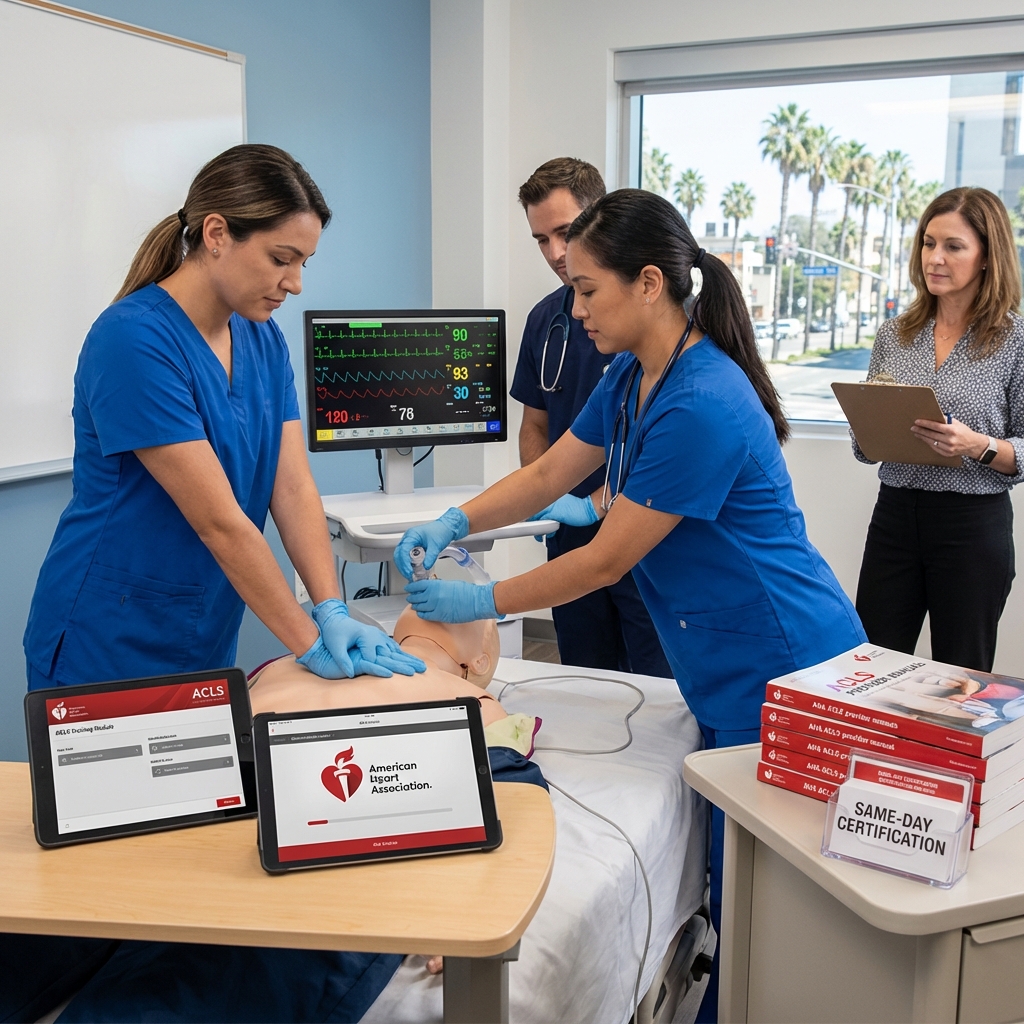
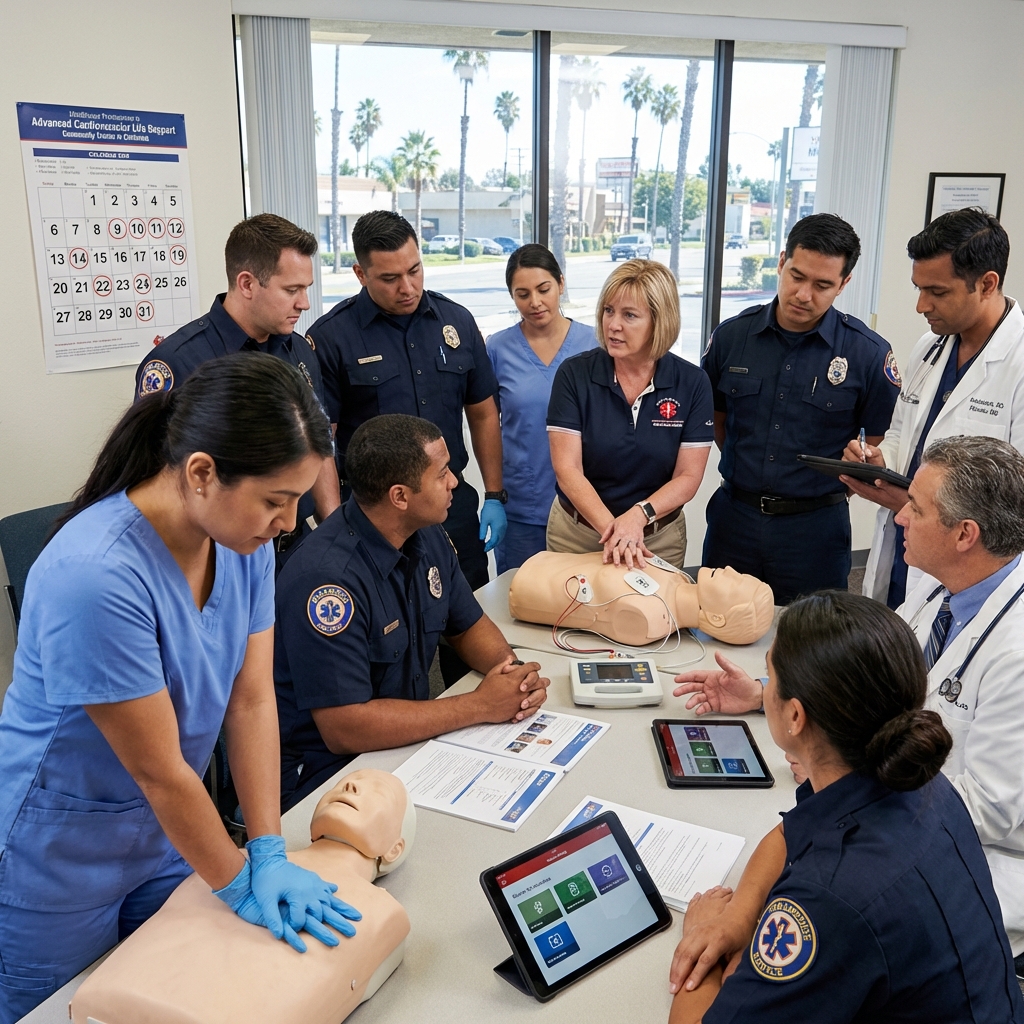
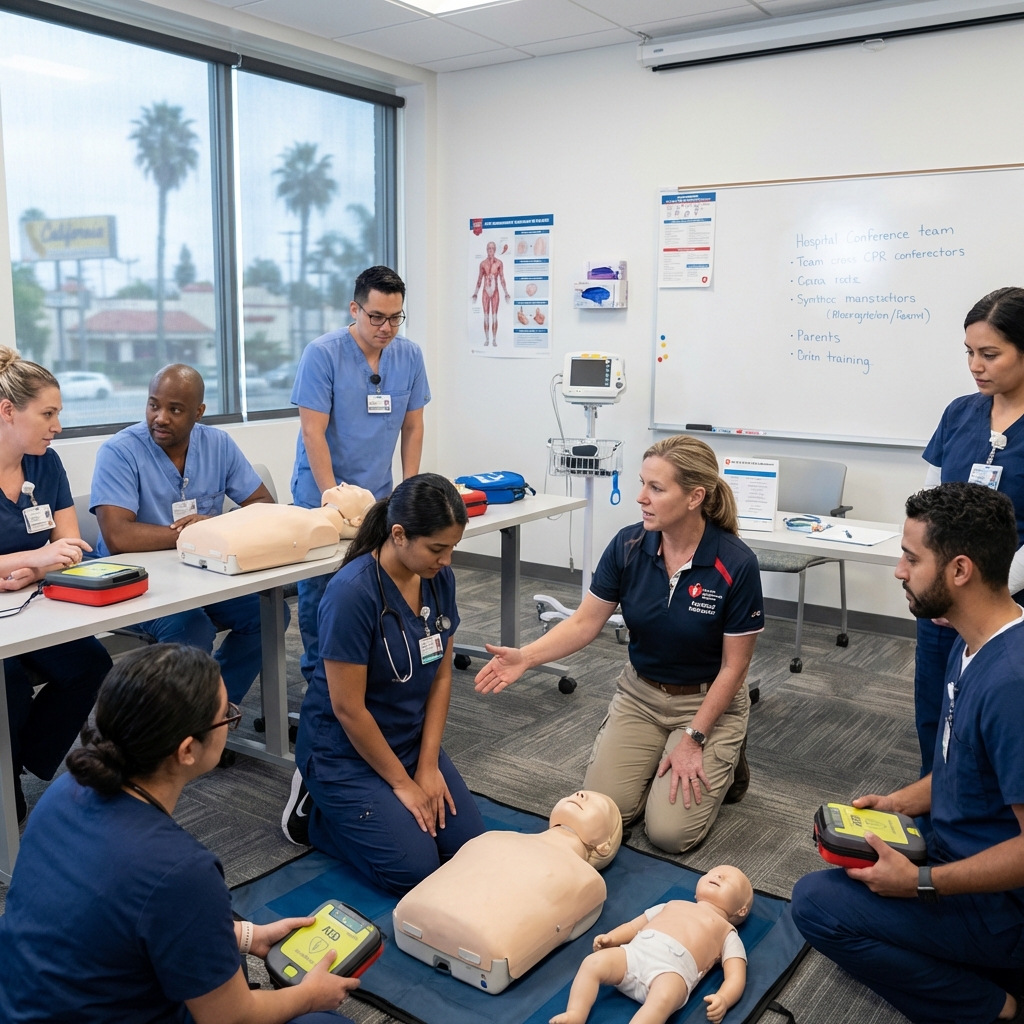
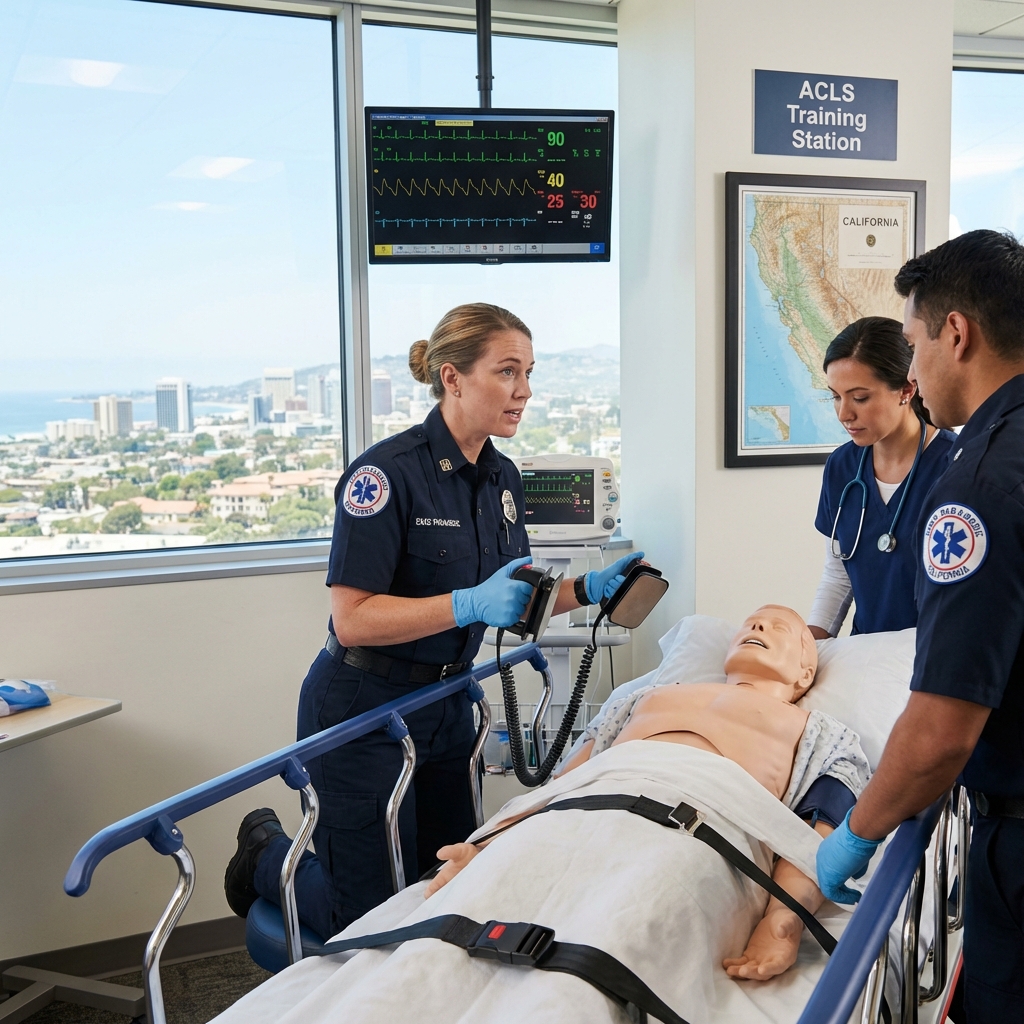
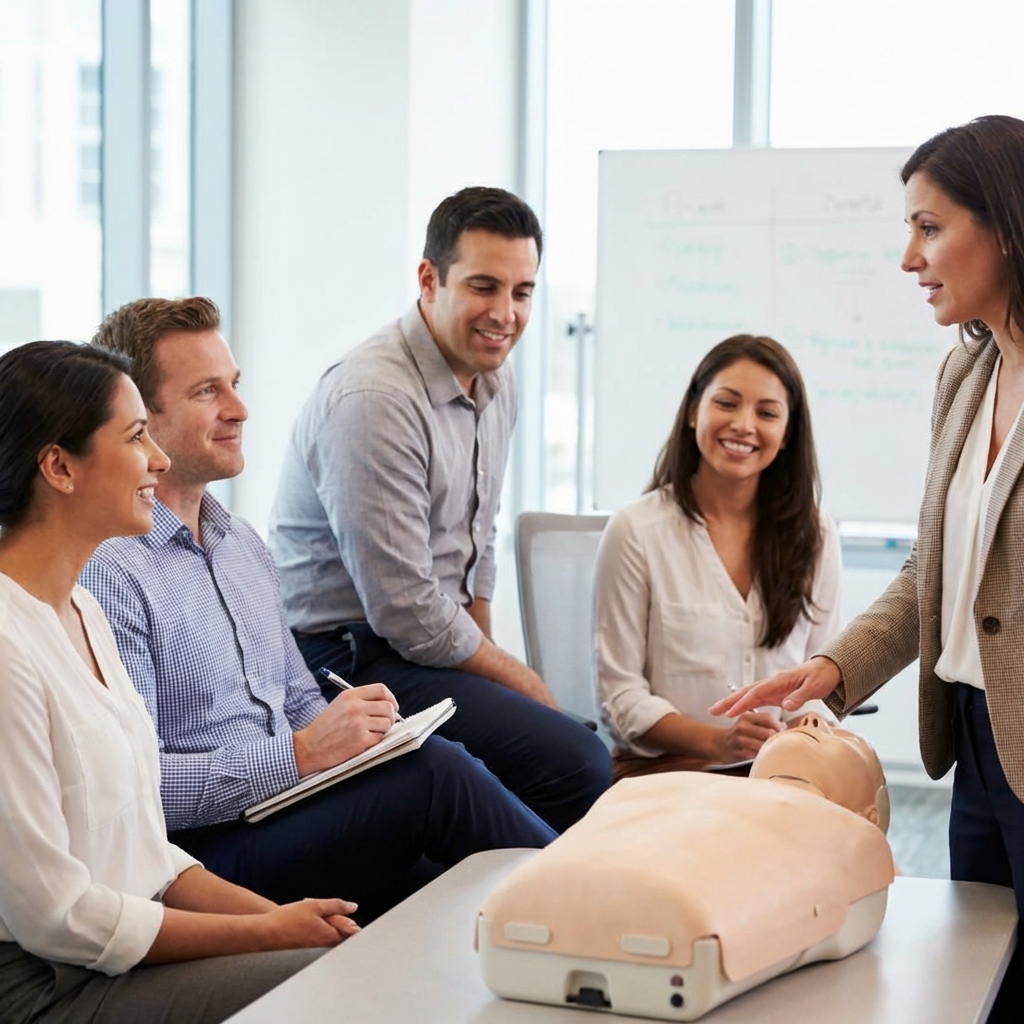
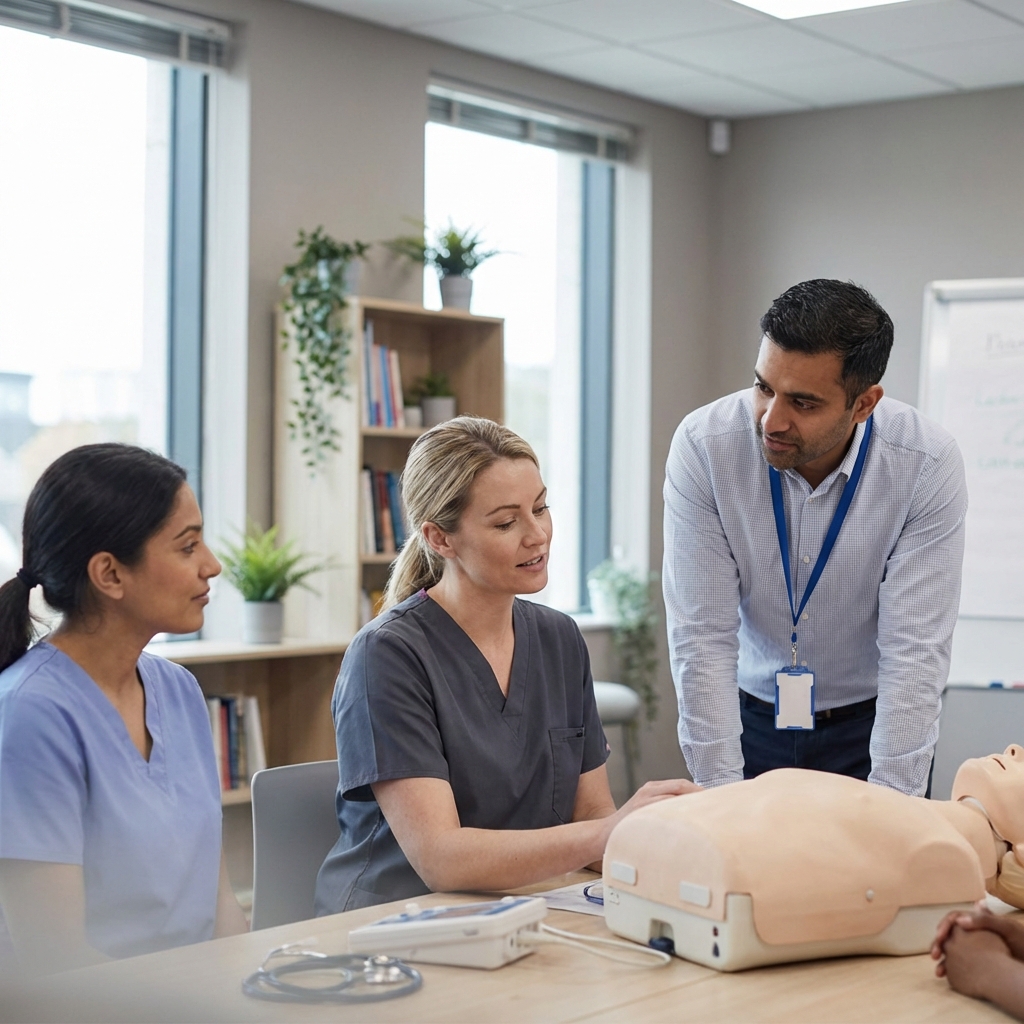
In a classroom session, learners rotate through stations to practice and be evaluated on high-quality CPR, bag-valve-mask ventilation, AED use, and team communication. Advanced courses add airway management, rhythm recognition, pharmacology, and megacode or pediatric scenarios to mirror real resuscitations. Modern manikins with feedback devices help students hit compression depth and rate targets, and instructors provide immediate remediation so skills meet AHA performance thresholds before testing.
Compliance questions often arise around “online BLS certification validity.” For most California hospitals and EMS agencies, online-only courses without a live skills check are not acceptable. The AHA does not issue provider cards for a knowledge-only module; learners must complete either a traditional classroom course or an AHA HeartCode skills session after the eLearning to meet employer and regulatory expectations. While the California nursing license CPR requirement is typically employer-driven rather than set by the BRN, professions such as EMS and dentistry commonly require current AHA BLS, and a fully instructor-led class remains an easy way to satisfy documentation requests.
Key advantages and considerations of traditional sessions include:
- Advantages: real-time feedback from expert instructors, standardized skills testing, team-based practice that mirrors code blue dynamics, and same-day card issuance trusted by credentialing teams.
- Considerations: travel and set schedules, a longer single sitting than blended options, and the need to secure a seat in a class that fits your shift pattern.
Safety Training Seminars delivers instructor-led BLS, ACLS, and PALS at over 100 locations statewide, making it easier to find a class near your facility and complete requirements in one visit. Clinicians who prefer the classroom path can take advantage of a low price guarantee and corporate group scheduling, while those choosing HeartCode can book the required skills check at the same sites. If you need a straightforward, employer-friendly option, explore in-person BLS — Basic Life Support sessions with flexible dates across California.
Overview of AHA Blended Learning with Mandatory In-Person Skills Testing
American Heart Association blended learning pairs self‑paced online coursework with mandatory, hands‑on evaluation to issue the same AHA eCard you’d receive from a fully classroom course. Because the testing standards are identical, AHA blended learning acceptance is widespread among California hospitals, clinics, and EMS agencies that require BLS, ACLS, PALS, or NRP for employment and privileging.
Here’s how the format works across HeartCode programs:
- Complete Part 1 online (videos, interactive cases, and adaptive assessments).
- Attend an AHA HeartCode skills session to practice with feedback devices and demonstrate required skills (e.g., compressions, ventilations, AED use, megacode scenarios).
- Pass instructor-led skills testing to receive your AHA eCard, typically issued the same day and valid for two years.
A common question is online BLS certification validity. Purely “100% online” CPR cards without an in‑person exam are routinely rejected by hospitals and staffing vendors. In contrast, AHA HeartCode plus an in‑person skills check is accepted because it meets the same healthcare provider certification standards for psychomotor competency and team-based resuscitation as traditional classes.
For California nursing license CPR expectations, the Board of Registered Nursing does not list BLS as a licensure requirement, but most employers require current AHA BLS Provider for patient-facing roles. The Dental Board of California requires licensees to maintain BLS for renewal, and many EMS agencies or hospital departments require AHA ACLS and, when applicable, PALS for hiring and privileging. Policies tied to medical board certification requirements and hospital credentialing vary by specialty and facility, but AHA eCards from blended courses are commonly recognized because the curriculum and testing are standardized by the AHA.
Safety Training Seminars streamlines the process with AHA HeartCode skills sessions offered at over 100 locations statewide, flexible day/evening schedules, and a low price guarantee. For example, a Sacramento RN can complete HeartCode BLS online, book a 30–60 minute skills appointment, and receive an AHA eCard the same day for onboarding. Teams can also arrange on-site skills testing or group sessions to align with unit schedules and compliance deadlines.
Regulatory Compliance: Comparing Acceptance by California State Boards and Employers
AHA blended learning acceptance in California hinges on two factors: the issuing body and a hands-on skills evaluation. When your BLS, ACLS, or PALS card is issued by the American Heart Association and includes an in-person skills check, employers and credentialing bodies generally treat it the same as a traditional classroom card. The format (eLearning plus skills vs. full in-person) matters less than meeting healthcare provider certification standards.
Here’s how key boards and stakeholders approach acceptance, with examples relevant to licensing and employment:
- Nursing (California BRN): The BRN does not mandate a specific California nursing license CPR card for licensure, but hospitals and health systems typically require current AHA BLS Provider. AHA HeartCode plus an in-person skills session is widely used to meet facility onboarding and annual competency requirements.
- Dental Board of California (DBC): Dentists and dental auxiliaries must maintain current BLS to practice and for renewal. The DBC recognizes AHA BLS, including blended HeartCode, provided there is an instructor-led, hands-on skills assessment.
- California EMS Authority (EMSA): EMTs and paramedics must hold current CPR at the healthcare provider level with documented skills verification. AHA BLS—completed via HeartCode online with an in-person skills session—is accepted by most local EMS agencies.
- Medical Board of California (physicians/PA): There is no blanket license requirement for BLS/ACLS/PALS, but hospital medical staff offices and residency programs often require AHA ACLS and PALS. Verify medical board certification requirements with your hospital’s credentialing policies.
- Employers and health systems: Many California hospitals explicitly prefer or require AHA-branded cards. Policies often specify “no fully online CPR” and require a live skills check to validate competence.
Regarding online BLS certification validity, fully online courses without a hands-on evaluation are frequently rejected by both boards and employers. By contrast, the AHA HeartCode skills session model pairs accredited AHA eLearning with a live, instructor-verified skills test, producing the same AHA eCard as a traditional class. Always confirm whether your facility requires AHA specifically or allows equivalent organizations.
For clean audits, keep your AHA eCard, course completion certificate, and skills session documentation readily available. Ensure the course title matches what your employer requires (e.g., BLS Provider, ACLS Provider, PALS Provider). If you float between units or facilities, align renewal dates to avoid gaps that could delay scheduling or credentialing.
Safety Training Seminars is an authorized AHA provider offering HeartCode eLearning with in-person skills checks at over 100 locations across California. They deliver BLS, ACLS, PALS, and NRP that satisfy most employer and board expectations, with a low price guarantee and corporate group options. This statewide footprint makes it straightforward to meet compliance deadlines without sacrificing shift coverage.
Efficiency and Retention: A Comparison of Educational Outcomes and Time Commitment
For many hospitals, clinics, and EMS agencies in California, AHA blended learning acceptance is strong because the AHA eCard issued after HeartCode online modules plus an instructor-led skills check is identical to the traditional classroom card and valid for two years. Acceptance ultimately rests with the employer or regulator, so clinicians should confirm facility policy and any medical board certification requirements before enrolling. In practice, most organizations defer to AHA healthcare provider certification standards when defining what counts for onboarding and renewal.
Blended formats can enhance retention by letting learners pause, replay, and remediate high‑risk topics until mastery. Case-based HeartCode scenarios and real-time feedback during manikin practice target common skill gaps (for example, high-quality compressions, rapid rhythm recognition, or team communication during a megacode). This focused, iterative practice—followed by an in-person AHA HeartCode skills session—helps consolidate psychomotor memory more efficiently than a single long lecture day.
Time commitments also differ meaningfully. Typical HeartCode durations are BLS: 1–2 hours online plus 30–60 minutes skills; ACLS: 4–6 hours online plus 2–3 hours skills; and PALS: 4–6 hours online plus 2–3 hours skills. By contrast, traditional initial courses often run BLS 3–4 hours, ACLS 10–12 hours over 1–2 days, and PALS 12–14 hours. A common example: a night-shift RN completes ACLS modules over two evenings and books a Saturday 2‑hour skills check, minimizing missed clinical time.
Be cautious about online BLS certification validity. Purely online “no skills” BLS cards are often not accepted by California hospitals or EMS agencies for healthcare roles; they typically require AHA BLS Provider or equivalent with hands-on verification. For California nursing license CPR expectations, the Board of Registered Nursing does not mandate BLS to renew a license, but most employers and academic programs do—and they specify AHA-compliant training to meet hospital credentialing standards.
To streamline approval, verify the following with your facility or program:
- Required card type and issuer (e.g., AHA BLS Provider, ACLS Provider, PALS Provider).
- Whether blended HeartCode with an AHA HeartCode skills session is acceptable.
- Hands-on manikin requirement and skills testing location.
- Renewal interval (commonly every 2 years) and any role-specific add-ons (e.g., ACLS for ICU/ED, PALS for pediatrics).
Safety Training Seminars offers AHA HeartCode options with frequent, short skills sessions at over 100 locations statewide, helping clinicians balance efficiency with strong skills retention. Learners receive the same AHA eCard as the classroom route, backed by a low price guarantee and fast scheduling. For groups, onsite training and discount pricing simplify compliance across teams while aligning with healthcare provider certification standards.
Pros and Cons of Blended versus Traditional In-Person Certification Methods
Blended learning pairs an AHA online module (HeartCode) with an in-person skills check, while traditional classes deliver all content face to face. In terms of AHA blended learning acceptance, both paths lead to the same AHA provider eCard when the hands-on evaluation is completed. Employers and credentialing departments generally accept either format from an AHA Training Center, but fully online-only CPR without a skills assessment is often rejected for clinical roles.
For California nursing license CPR needs and hospital onboarding, blended options reduce time off the unit. You can complete HeartCode BLS/ACLS/PALS at your own pace, then finish an AHA HeartCode skills session in a short appointment at a local site—useful for a night-shift RN who can’t attend a four-hour block. The format also helps travel nurses and per diem staff maintain multiple cards on tight timelines.
Blended tends to be ideal when:
- You’re renewing BLS, ACLS, or PALS and want minimal classroom time.
- You need flexible scheduling across multiple locations.
- You’re comfortable with self-paced eLearning and tech requirements.
- Your employer confirms online BLS certification validity only with an in-person skills check.
Traditional in-person courses offer structured, immersive practice—especially valuable for initial ACLS/PALS, high-acuity roles, or teams wanting live megacode drills. You’ll receive immediate coaching, peer learning, and extended hands-on time with scenarios that mirror real code responses. The tradeoff is more seat time, commute logistics, and fewer scheduling windows, but many hospitals favor the depth of instructor-led practice for first-time providers.
Whichever path you choose, verify medical board certification requirements and employer policies. Many healthcare provider certification standards in California (nursing, EMS, and dental) specify an AHA-compliant course with hands-on evaluation; “print-at-home” online certificates without a skills test usually do not meet facility or board expectations. For example, dental and EMS credentialing commonly require an AHA or equivalent BLS that includes an in-person component.
Safety Training Seminars offers both traditional classes and AHA HeartCode blended programs at 100+ locations statewide, making it easy to schedule the skills session near work or home. Their team can confirm acceptance for your facility or role and guide you to the right BLS, ACLS, PALS, or NRP option. For individuals and corporate groups, the low price guarantee and frequent skills-session availability support compliance without disrupting patient care.
Conclusion and Recommendations for Meeting Licensing Deadlines in California
If you are up against a deadline, blended formats are usually the fastest path to a valid card without sacrificing quality. In most California facilities, AHA blended learning acceptance is strong when the online cognitive course is paired with an in-person skills check that issues an official AHA eCard. Traditional, fully in-person classes remain a good option if you prefer classroom coaching or need extra practice time. Either way, choose AHA-branded courses to align with common healthcare provider certification standards.
Know what your agency actually requires. For California nursing license CPR, the Board of Registered Nursing does not mandate BLS for licensure, but most hospitals require current AHA BLS for Healthcare Providers as a condition of employment. The Dental Board of California requires BLS for renewal from an approved organization such as the AHA, and EMS personnel follow EMSA policies that recognize AHA credentials when proper skills verification is documented. Physicians generally meet medical board certification requirements through hospital privileging, which widely specifies AHA BLS/ACLS/PALS.
Use this timeline-driven plan to stay compliant:
- 72 hours or less: Complete AHA HeartCode BLS online, then book an AHA HeartCode skills session the same day; expect your eCard the same or next business day. Avoid “online-only” vendors, as online BLS certification validity typically requires hands-on skills to be accepted.
- 1–2 weeks: For ACLS or PALS, finish the HeartCode modules early (6–10 hours total learning time), then schedule the skills session within a few days. Bring your online completion certificate and a current BLS card if your facility requires it as a prerequisite.
- 30 days: Map renewals for BLS/ACLS/PALS to avoid overlap, and verify any department-specific add-ons (e.g., NRP for L&D units or pediatric sedation policies for dentists).
Safety Training Seminars makes this straightforward with AHA HeartCode skills sessions offered at over 100 locations statewide, plus frequent evenings and weekends. You can complete the online portion on your schedule and reserve a nearby skills check for BLS, ACLS, PALS, or NRP. For clinics and hospital units, corporate group training and discount pricing simplify team compliance, and a low price guarantee helps control budgets.
Before you enroll, confirm AHA blended learning acceptance with your employer or medical staff office, and keep your eCard ID and QR verification handy for credentialers. Set calendar reminders 60–90 days before expiration, and align course choices with unit policies to meet both organizational and state expectations.
Register for a class today.