Introduction to AHA Blended Learning for California Healthcare Professionals
American Heart Association blended learning combines a self‑paced online module (HeartCode) with a hands‑on skills evaluation to earn the same AHA eCard issued for traditional classroom courses. For most hospitals and licensing agencies, AHA blended learning acceptance hinges on whether you complete both parts and receive a valid, verifiable AHA eCard—not on how you learned the material. In California, that eCard is widely recognized for healthcare license compliance across roles that require BLS, ACLS, or PALS.
To be compliant, you must complete the online cognitive portion and a skills session with an AHA Instructor or approved voice‑assisted manikin. The resulting BLS Provider, ACLS Provider, or PALS Provider eCard includes a QR code and unique ID for verification and carries a two‑year AHA certification validity. For ACLS skills testing requirements, expect rhythm recognition, airway management, and team leadership scenarios (megacode) assessed during the hands‑on segment. If you choose a virtual or device‑assisted option for the online CPR skills session, confirm your employer accepts that format.
Most employers and boards in California look for:
- An AHA eCard that matches the role (e.g., BLS Provider for bedside staff; ACLS/PALS for critical care, ED, or pediatrics)
- Proof of hands‑on skills completion from an AHA Training Center and Instructor
- Current AHA Guidelines alignment noted on the eCard
- Clear expiration date (two years) and scannable verification via AHA’s eCard system
Practical examples: a telemetry nurse can renew BLS through BLS blended learning California and complete a same‑day skills check to stay compliant. A paramedic needing ACLS can finish HeartCode ACLS online, then pass megacode testing in person to meet agency standards. Dentists renewing BLS for sedation or permit requirements can choose a blended path and confirm acceptance with their board; see more on California healthcare licensing requirements.
Safety Training Seminars simplifies this process with AHA‑authorized blended learning across more than 100 California locations, offering both in‑person and virtual skills sessions scheduled frequently to fit shift work. Healthcare providers receive same‑day AHA eCards, specialized offerings for ACLS/PALS/NRP, and support for corporate groups, all with a low price guarantee. This helps ensure your credentials are valid, verifiable, and aligned with employer and licensing expectations statewide.
Understanding the Components of Blended HeartCode Courses
HeartCode is the American Heart Association’s blended format for BLS, ACLS, and PALS. Understanding how the parts fit together is key for AHA blended learning acceptance by California employers and credentialing bodies, and it helps you plan your renewal with fewer surprises. Here’s what the pathway looks like from start to finish.
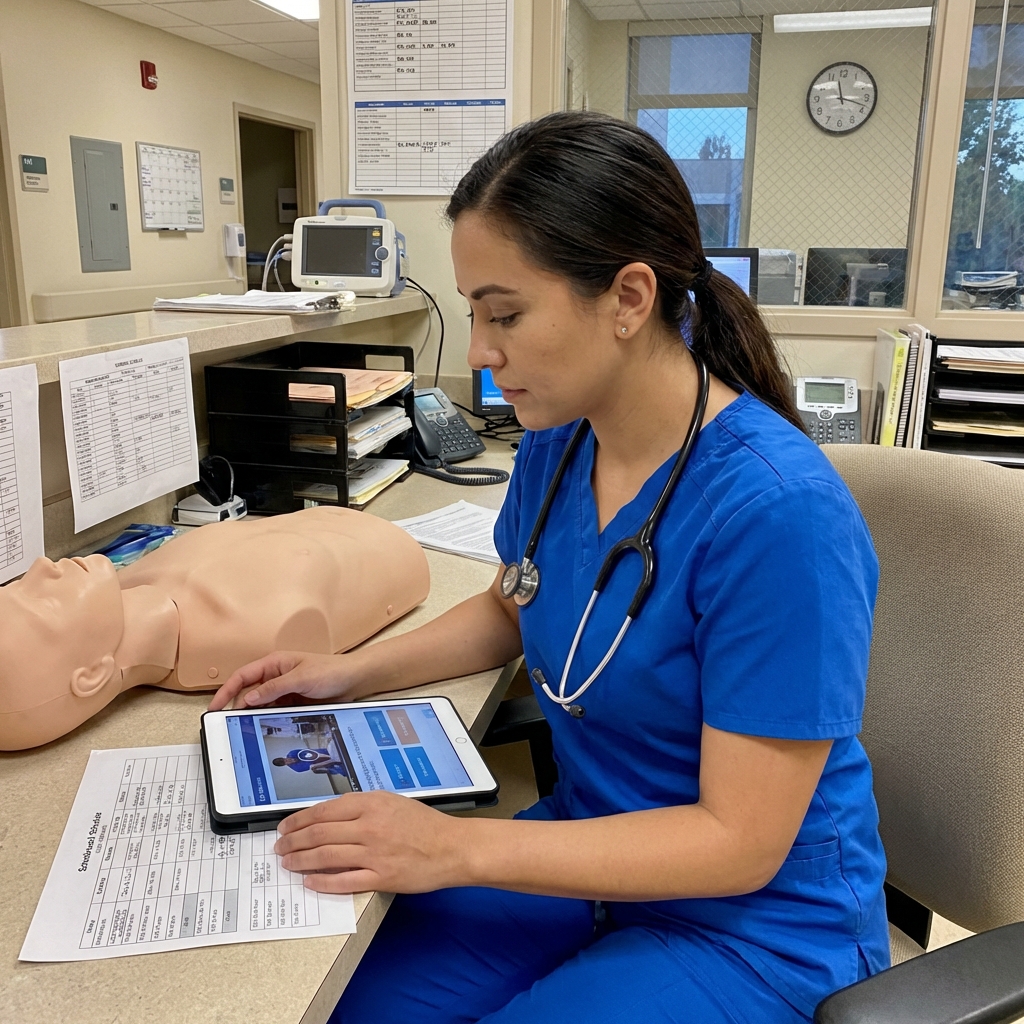
- Online cognitive module (HeartCode): Complete interactive, adaptive cases, videos, and knowledge checks in AHA’s eLearning system, then pass the written exam. Typical time: BLS 1.5–2.5 hours; ACLS/PALS 4–6 hours, depending on experience. Save your completion certificate; you’ll need it to enter the skills lab.
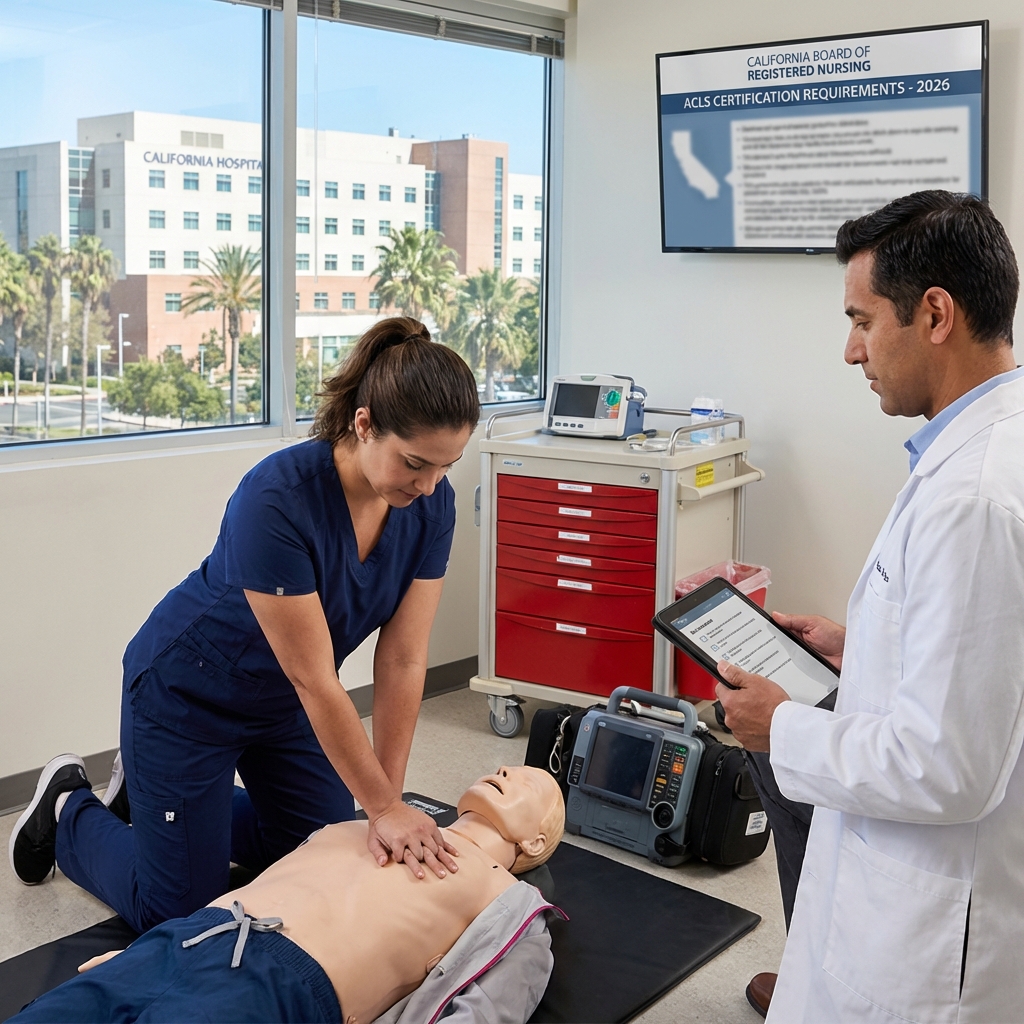
- In-person skills practice and testing: Demonstrate hands-on competency with an AHA Instructor and voice-assisted manikins. For BLS, expect high-quality compressions, ventilation with a barrier or BVM, and AED use. ACLS skills testing requirements include a megacode evaluation (airway management, rhythm recognition, defibrillation/cardioversion, brady/tachy algorithms, and team dynamics). PALS focuses on pediatric assessment, respiratory and shock management, BVM, rhythm therapy, and coordinated team roles.
- AHA eCard issuance: After you pass skills, you receive an official AHA Provider eCard (BLS Provider, ACLS Provider, or PALS Provider) with Training Center and Instructor IDs, issue/expiry dates, and a QR code for employer verification. AHA certification validity is two years and is equivalent to the classroom course—there’s no difference in how employers should accept the credential.
Many scheduling systems label the combined appointment for the in-person portion as an “online CPR skills session” even though the skills check itself is entirely hands-on. The key for healthcare license compliance is that both components are completed through an AHA Training Center and the final eCard is an AHA Provider eCard.
Plan your time so the online portion is finished before your lab date, and bring your completion certificate and a photo ID. If you’re renewing multiple disciplines (for example, BLS blended learning California plus ACLS), ask whether skills can be bundled to streamline your visit.
Safety Training Seminars delivers HeartCode BLS, ACLS, and PALS across 100+ California locations with flexible schedules and a low price guarantee. After completing the online module, you can book a convenient hands-on skills testing session to finish your card the same day. This end-to-end pathway meets employer expectations statewide and keeps you current for hospital onboarding and agency credentialing.
California Regulatory Standards for Online and In-Person Skills Testing
In California, AHA blended learning acceptance hinges on two parts: completing the online cognitive module (eLearning/HeartCode) and passing an in-person skills assessment with an AHA-authorized instructor. When both are done, the AHA eCard issued has the same AHA certification validity and renewal cycle as a fully classroom course (typically two years) and is verifiable via AHA’s eCard system. Online-only courses without a hands-on test do not meet healthcare license compliance or typical employer credentialing standards.
State licensing bodies generally defer to employer and training-center standards, but they consistently require a live, evaluated skills component. Most hospital systems and clinics in California accept AHA eCards from blended programs for onboarding and privileging, provided the hands-on portion is documented. Always confirm your facility’s policy, as union agreements, specialty roles, or trauma center designations can add local requirements.
Examples of how state and employer rules align with blended models:
- Nurses and allied staff (BRN): The Board does not require BLS/ACLS for RN licensure, but employers do. AHA HeartCode BLS or ACLS with an in-person skills session is widely accepted for unit competency and orientation.
- Dentists and RDHs (Dental Board): BLS must include live, in-person skills evaluation; an online-only course is not acceptable. AHA blended BLS satisfies the hands-on requirement for renewal.
- EMTs/Paramedics (EMSA/LEMSA): Current CPR at the healthcare provider level (and often ACLS/PALS) is required; AHA blended learning is acceptable when the skills test is completed with an AHA Training Center and a valid eCard is issued.
For BLS blended learning in California, the skills check typically covers high-quality CPR, AED use, and bag-mask ventilation for adults, children, and infants. ACLS skills testing requirements include rhythm recognition, defibrillation/ cardioversion, airway management, and a tested adult “megacode” scenario. PALS adds pediatric assessment, respiratory failure/shock management, and a pediatric megacode. These must be evaluated in person by an AHA instructor affiliated with a Training Center.

Keep both your online completion certificate and the AHA eCard available for HR or credentialing audits. If your hospital requests roster-based verification, your Training Center can verify the eCard number and issuance date.
Safety Training Seminars, an AHA Training Center with over 100 California locations, offers blended learning with convenient online modules and local, in-person skills sessions. Healthcare teams can schedule individual or group skills checks, receive same-day AHA eCards, and maintain compliance at the lowest available price.
Comparing Blended Learning vs. Traditional Classroom Training for Credentialing
For credentialing purposes, the decisive factor is the credential itself. An American Heart Association Provider eCard issued after completing a blended course (HeartCode online module plus hands-on skills) is the same credential issued after a fully in-person class. Because the eCard and course ID are identical, AHA blended learning acceptance among California employers and credentialing bodies is generally on par with traditional classroom training. Always confirm employer policy, as some facilities specify “AHA Provider with hands-on skills,” but do not differentiate between learning formats once the AHA eCard is awarded.
Both pathways require hands-on evaluation to meet AHA certification validity standards. Blended learning front-loads the cognitive content online and verifies psychomotor skills during a scheduled skills appointment, while traditional classes teach and test everything in person. For BLS blended learning California providers commonly use HeartCode BLS, then complete an online CPR skills session locally. ACLS and PALS follow the same pattern, with in-person megacode performance and scenario testing meeting ACLS skills testing requirements and pediatric skills for PALS.
Key differences and similarities that matter for healthcare license compliance and employer audits:
- Credential output: AHA Provider eCard with the same course title, issue/expiration dates, and eCard code employers can verify. Standard validity is two years unless your facility imposes shorter renewal cycles.
- Testing requirements: Blended courses require successful completion of the online exam and an instructor-led skills check (compressions, ventilations, bag-mask, AED use); ACLS adds rhythm recognition, airway management, and megacode; PALS adds pediatric assessment and resuscitation scenarios. No “online-only” option is accepted for direct patient care roles.
- Scheduling and time away from work: Blended learning reduces classroom time by moving didactics online and limiting in-person time to skills only, which can help with staffing coverage and call schedules.
- Documentation for audits: AHA eCards are instantly verifiable online, simplifying HR file reviews, travel nurse onboarding, and LEMSA or hospital surveys.
Examples: A Sacramento ICU nurse can renew BLS via HeartCode and a same-week skills check and submit the AHA eCard to a major hospital system. A Los Angeles dentist can complete PALS blended learning to meet sedation permit requirements if the practice or board specifies AHA. An EMT renewing county accreditation can present a verifiable AHA BLS eCard produced via the blended route.
Safety Training Seminars offers AHA blended options statewide with over 100 California locations for skills testing, frequent schedules (including evenings/weekends), and same-day eCards. They also support corporate group sessions and a low price guarantee, making it straightforward to book an online CPR skills session and meet employer and licensing timelines.
Employer Acceptance of AHA Hybrid Certifications in Medical Settings
Across California, most hospitals, clinics, and surgery centers treat American Heart Association eCards from blended learning the same as traditional classroom cards. AHA blended learning acceptance is strong because the final credential is an official AHA BLS, ACLS, or PALS Provider eCard, which does not indicate whether training was completed online-plus-skills or in a classroom. For employer files and privileging, the AHA certification validity is what matters—current, verifiable, and appropriate to the role.
In a hybrid pathway, learners complete the AHA’s online cognitive module (for example, HeartCode) and then finish an in-person skills evaluation with an AHA Instructor or RQI station. For BLS blended learning California providers, that means hands-on CPR, AED, and bag-mask ventilation testing after the online portion. The resulting AHA eCard is valid for two years and can be verified instantly by credentialing teams through the AHA eCards website using the QR code on the card.
Credentialing offices typically confirm acceptance by checking the eCard details:
- Course title and level (BLS Provider, ACLS Provider, PALS Provider)
- Issue and expiration dates (AHA certification validity: two years)
- AHA Training Center name/ID and instructor/issuer details
- QR code or eCard code that verifies the card in the AHA database
For advanced credentials, employers expect hands-on assessment. ACLS skills testing requirements include a live megacode scenario, high-quality CPR, defibrillation, airway management, and rhythm recognition, with team dynamics evaluated by an AHA Instructor. PALS follows a similar model with pediatric assessment and resuscitation scenarios. These elements are built into AHA hybrid courses, ensuring the same competency validation employers require for bedside practice.
Regarding healthcare license compliance, California boards and hospital credentialing policies commonly specify “current AHA BLS/ACLS/PALS” without dictating the delivery format. Because the AHA eCard is identical across pathways and fully verifiable, it generally meets licensing-driven employer requirements. That said, always review facility policy; a minority of units (e.g., critical care or procedural areas) may set additional internal timelines or course requirements.

Safety Training Seminars is an authorized AHA Training Center offering blended options statewide, with 100+ locations for convenient in-person skills. You can book your online CPR skills session sign-up and skills appointment in one place, and our team can provide sample eCards or verification letters to your HR office to expedite acceptance, including for corporate groups.
Maintaining Compliance with State Licensing Boards and Clinical Requirements
For most California hospitals and clinics, AHA blended learning acceptance is equivalent to traditional classroom courses as long as you complete both parts: the HeartCode online module and a hands-on skills evaluation with an AHA Instructor or RQI-enabled manikin. The resulting AHA eCard is the same credential employers verify for onboarding, privileging, and audits. This is key for healthcare license compliance because credentialing committees typically specify “current AHA BLS/ACLS/PALS” rather than the delivery format.
Blended courses still require in-person psychomotor testing—fully online-only CPR is not accepted for clinical roles. Plan to finish the online portion before booking your CPR skills session; you can schedule your in-person appointment online for convenience. AHA certification validity is generally two years, but some units (eg, ED, ICU, cath lab) expect staff to renew early if competencies lapse or protocols change.
State licensing boards rarely require BLS/ACLS/PALS to renew a professional license (eg, RNs with the BRN), but clinical employers and certain permits do. Examples: a staff nurse using BLS blended learning in California can submit the AHA eCard for HR verification; a dentist seeking a moderate sedation permit must maintain AHA BLS and often ACLS (PALS if treating children); many LEMSAs expect paramedics to hold current AHA ACLS and PALS for accreditation. In all cases, ACLS skills testing requirements include rhythm recognition, high-quality CPR, airway/ventilation, medication dosing, and team leadership in a megacode scenario.
To stay audit-ready and compliant:
- Choose the correct AHA course: BLS Provider for clinical staff; ACLS/PALS for advanced resuscitation roles (Heartsaver is not for clinicians).
- Verify the provider is an authorized AHA Training Center and that your skills test is conducted by an AHA Instructor or approved RQI system.
- Complete the online module before the hands-on evaluation and bring the certificate of completion to your skills appointment.
- Retain your AHA eCard and use the QR code/ID for employer primary-source verification.
- Track renewal dates (often 60–90 days before expiration) and align with unit policies, especially post-arrest care elements (eg, waveform capnography) that appear in testing.
Safety Training Seminars simplifies compliance with statewide access to AHA HeartCode BLS, ACLS, and PALS, plus easy online scheduling for your in-person CPR skills session at 100+ California locations. Their low price guarantee and frequent skills sessions make it straightforward to meet ACLS skills testing requirements and maintain continuous credentialing without disrupting clinical schedules.
Conclusion: Verifying Your Certification Validity for Professional Use
For most California clinicians, AHA blended learning acceptance comes down to two things: completing the official AHA online course and passing an in-person skills evaluation with an authorized AHA Instructor. When those steps are met, you receive the same AHA eCard issued to classroom students, which typically satisfies employer credentialing and healthcare license compliance requirements. The key is documenting your pathway and confirming your facility’s specific policy before you enroll.
Use this quick verification checklist:
- Confirm the course is AHA HeartCode (BLS, ACLS, or PALS), not a third-party lookalike.
- Ensure you will complete an in-person skills test; an online CPR skills session alone will not meet AHA certification validity standards.
- Match the exact credential your role requires (e.g., BLS Provider vs Heartsaver; ACLS Provider for acute/critical care).
- Ask your employer or medical staff office whether AHA blended learning is acceptable; request that answer in writing or by email.
- Verify your eCard authenticity at ecards.heart.org and save the QR code/eCard ID for credentialing.
- Check any local EMS Agency (LEMSA) or hospital policy nuances, including expiration tolerance and renewal grace periods.
- For corporate or union contracts, confirm whether the agreement specifies “AHA only” or accepts equivalents.
Licensing boards and employers play different roles. The California Board of Registered Nursing and Dental Board focus on licensure; your hospital, clinic, or EMS agency sets the AHA certification requirements for privileges and employment. For example, a nurse onboarding to a Bay Area hospital may need AHA BLS and ACLS Provider eCards, while a paramedic seeking county accreditation must meet the LEMSA’s named standard. When in doubt, share the AHA course name and your skills testing plan to get pre-approval.
Know what your skills evaluation includes. ACLS skills testing requirements typically cover high‑quality CPR and bag‑mask ventilation, airway management, rhythm recognition, defibrillation, pharmacology, and a megacode team scenario. In BLS blended learning California courses, you’ll demonstrate adult CPR/AED (and often infant/child, if required) on AHA feedback manikins. After successful testing, your AHA eCard can be instantly verified online by credentialing teams.
If you prefer a frictionless path, Safety Training Seminars offers official AHA HeartCode with flexible in-person skills sessions at over 100 locations statewide, plus immediate eCards and a low price guarantee. Their team can provide course outlines for employer pre-approval and coordinate onsite group skills checks to streamline compliance. Whether you need BLS today or ACLS/PALS for an upcoming credentialing deadline, they can help you meet requirements confidently and on time.
Register for a class today.