Why Blended Learning CPR Training Matters for Healthcare Professionals
Best Blended Learning CPR and BLS Certification Methods for Healthcare Professionals
Healthcare professionals face a unique challenge: maintaining current certifications while managing demanding schedules. Blended learning solves this by combining self-paced online content with hands-on in-person skills labs, allowing you to study foundational concepts at 2 a.m. if needed, then practice compressions and airway management during a focused session.
The stakes are high. Your license renewal often depends on current BLS or ACLS credentials, and your patients depend on your competency the moment you step into a clinical setting. A blended approach means you’re not wasting time in a classroom learning chest anatomy through lecture when you could review that material at your own pace, then spend in-person time actually practicing the techniques that matter most.
Blended learning also reflects how healthcare actually works: you access reference materials, protocols, and knowledge bases on the fly, then apply that knowledge in real-world scenarios. This mirrors the cognitive model that keeps you sharp in your field.
What to do next: Identify whether your employer or licensing board specifies a delivery method (some require in-person components, others accept fully online options). This determines your flexibility in choosing a program.
Key Criteria for Evaluating CPR and BLS Programs
Not all certification programs are equal. Start by verifying AHA alignment and whether the program meets your specific state’s regulatory requirements. California has particular standards, so confirm the program is registered and compliant with state health and safety regulations.
Next, assess the skills verification process. How do instructors evaluate your technique? Do they use equipment like manikins with feedback sensors? A program that documents your performance in writing is valuable for your employer records.
Consider also:
- Curriculum depth: Does it cover your specialty? (PALS for pediatrics, ACLS for cardiac care, NRP for neonatal providers, etc.)
- Instructor credentials: Are they healthcare professionals or just trainers?
- Certification turnaround: Can you receive credentials the same day or must you wait?
- Scheduling flexibility: Are classes offered evenings, weekends, or multiple locations?
- Cost transparency: Are there hidden fees, or is pricing upfront?
A quality program will publish all of this information clearly on their website so you can compare without guesswork.
Virtual Learning Components in Modern CPR Training
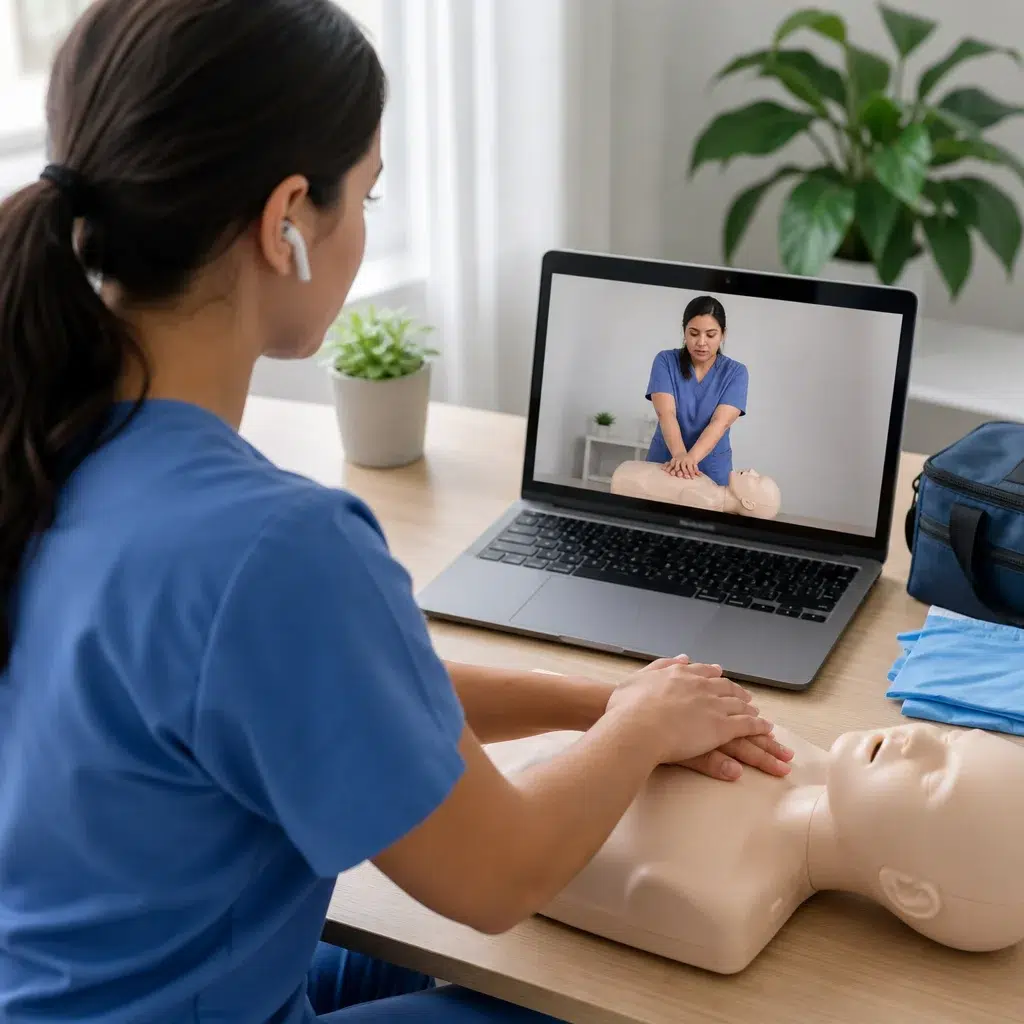
The online portion of blended CPR training typically covers anatomy, physiology, scenario-based decision-making, and the reasoning behind protocols. You’ll learn why compression depth matters, when to activate emergency response, and how to handle special populations.
Good virtual modules use interactive scenarios: a video shows a patient in respiratory distress, and you must decide whether to administer oxygen, call 911, or perform chest compressions. These decision-tree exercises build clinical judgment beyond rote memorization.
Online CPR training platforms now include video demonstrations of proper technique so you can observe expert performance before attempting it yourself. Some programs add knowledge checks between modules so you arrive at your in-person session confident in the theory.
The convenience is real: you can review content multiple times without an instructor watching, pause to look up related concepts, and complete modules during your lunch break or late evening. This flexibility is why blended learning works so well for shift workers and those juggling continuing education with clinical responsibilities.

In-Person Skills Practice and Hands-On Simulation
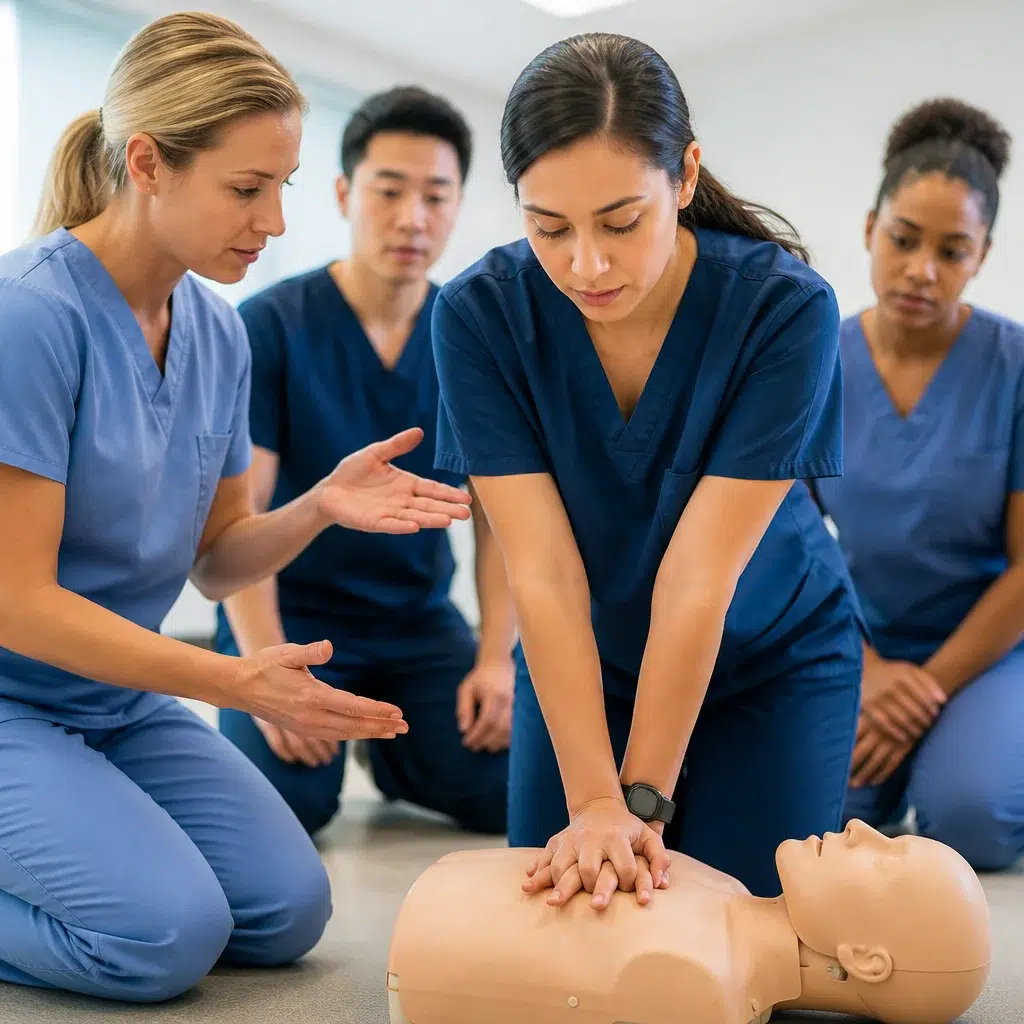
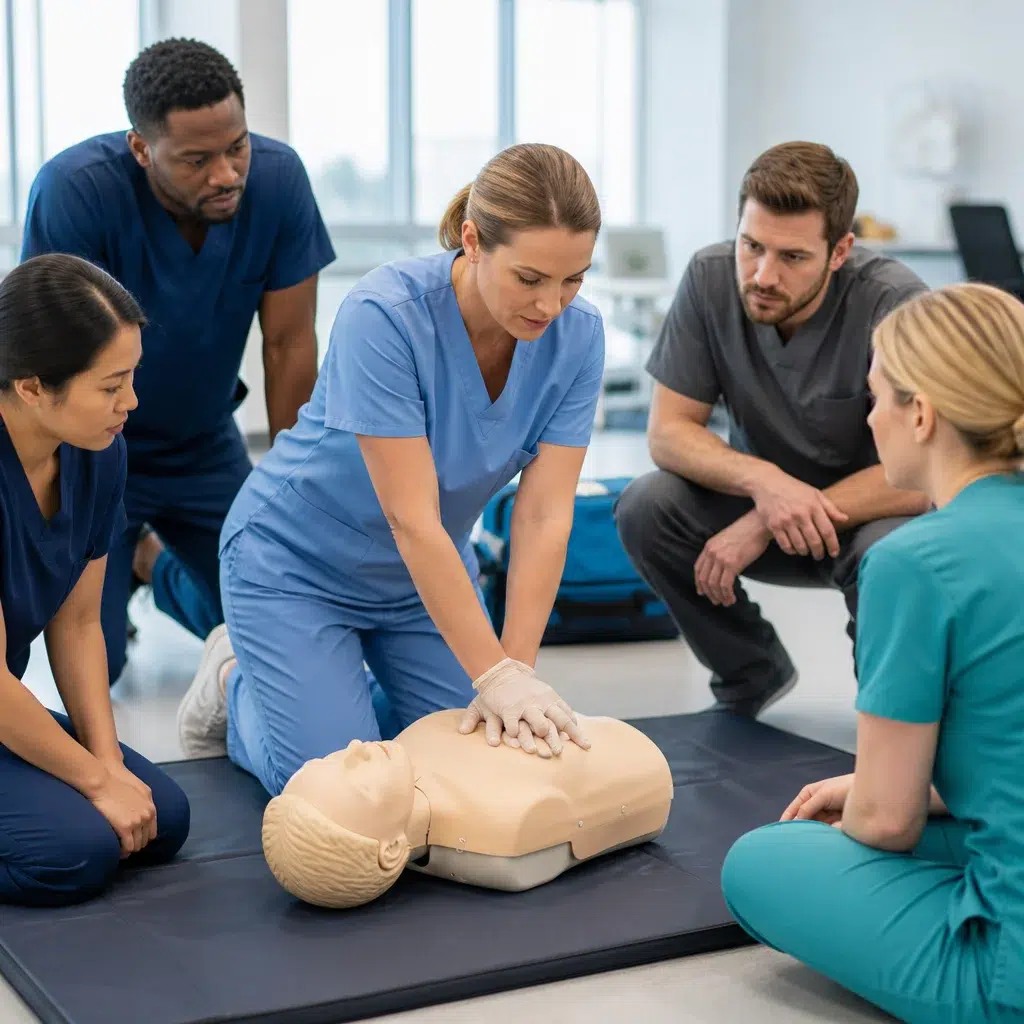
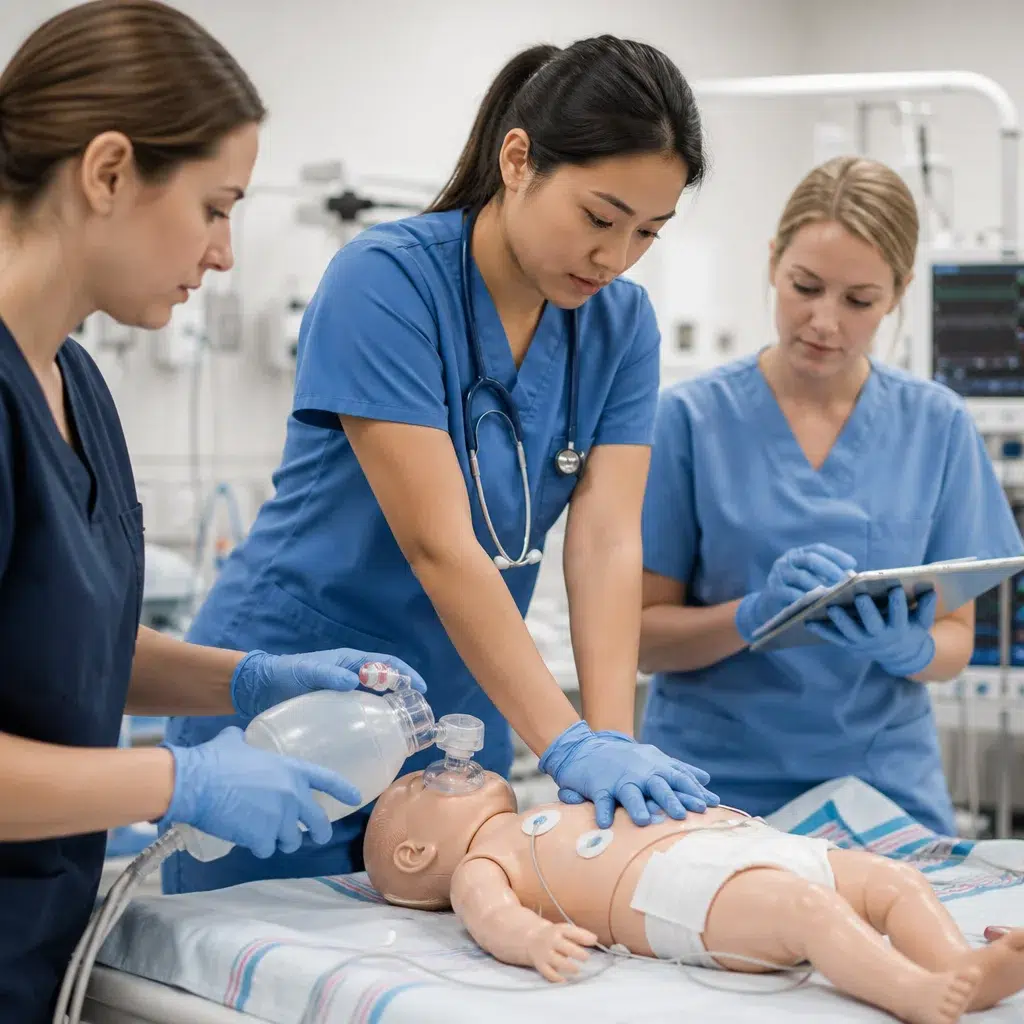
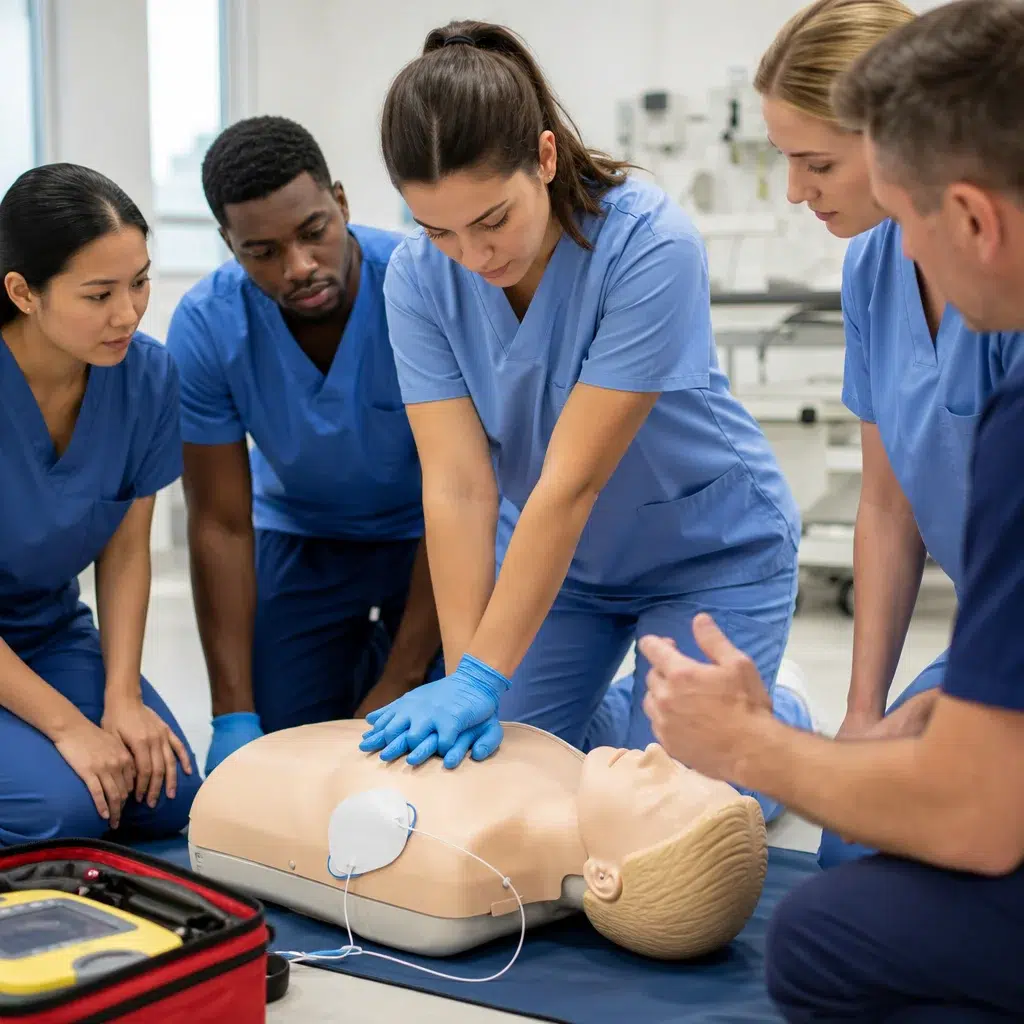
This is where certification becomes meaningful. During in-person sessions, an instructor watches you perform CPR, checks your hand placement, guides your compression rate, and ensures your technique meets certification standards. You’ll practice on manikins, often equipped with feedback technology that tells you in real-time if your compressions are too shallow or too fast.
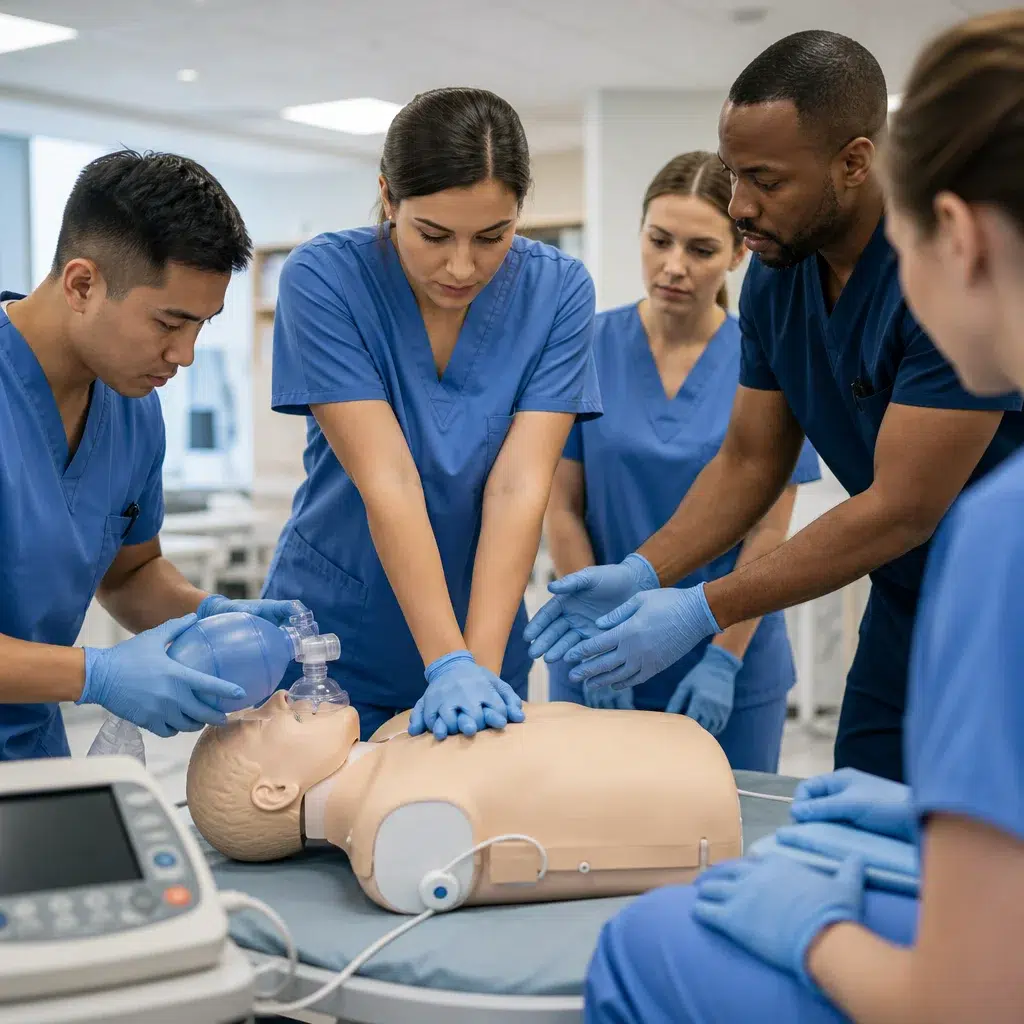
Simulation extends beyond basic compression. You might practice two-rescuer CPR, use an automated defibrillator, manage an airway, establish IV access (depending on your credential level), or handle pediatric scenarios. These hands-on stations are where knowledge transforms into muscle memory and confidence.
Quality programs keep class sizes manageable so instructors give you personal feedback rather than watching from a distance. You leave knowing exactly what you did well and what needs refinement.
Same-day certification cards are a practical advantage: you pass the skills test, receive your card immediately, and can document compliance the same day your employer requires it.
Top CPR and BLS Certification Program Models
Several models dominate the market, each with different trade-offs:
Full In-Person: All content and skills in one or two classroom days. Best for those who prefer structured learning and immediate accountability. Downside: time-intensive and less flexible for busy schedules.
Fully Online: Theory and skills assessment via video submission or proctored testing. Best for independent learners and those in remote areas. Downside: some employers and states don’t accept online-only for critical certifications, and the skills assessment lacks real-time correction.
Blended (Online + Skills Lab): Complete online coursework, then attend a focused 2-4 hour in-person skills session. Best for healthcare professionals who need flexibility without compromising credential validity. You study on your schedule, then refine technique with an instructor present.
Employer-Based Programs: Companies bring trainers on-site for group sessions. Best for large healthcare systems wanting standardized training and bulk discounts. Downside: less scheduling flexibility and dependent on your employer’s initiative.
Healthcare professionals most often choose blended because it balances convenience, credential acceptance, and actual skill development. You’re not sitting through lectures on topics you already know, and your employer gets documentation of verified competency.
Program Flexibility and Scheduling Options for Working Professionals
Your schedule is unpredictable. You work shifts, cover for colleagues, and may have unexpected call-outs. A rigid program that requires two full consecutive days doesn’t work for many healthcare professionals.
Look for programs offering:
- Multiple class times per week (early mornings, late evenings, weekends)
- Rolling enrollment so you start when your schedule allows
- In-person sessions scheduled weekly or biweekly (not just one cohort per month)
- Makeup options if you miss a session
Some programs allow you to complete the online portion immediately, then schedule your skills session weeks later once your calendar clears. Others let you complete theory one week and skills practice the next, breaking it into digestible chunks.

Location flexibility matters too. If you work across multiple clinical sites, having training available in multiple cities means you’re not traveling an hour for a certification course. Access near San Leandro or your primary work location saves time and reduces excuses to postpone needed renewals.
Comparison of Blended Learning vs Traditional Training Methods
Traditional In-Person (All-Day Classroom): You attend an 8-10 hour session covering theory and skills. You’re in a room with an instructor and classmates, covering everything end-to-end.
Pros: Structured, all-in-one experience; immersive environment; no self-discipline required. Cons: Inflexible scheduling; time away from work (even if paid); much of the day spent on content you already know; less efficient for experienced healthcare professionals.
Blended Learning: Online theory at your pace, then focused in-person skills session (2-4 hours).
Pros: Flexible scheduling; respects your existing knowledge; efficient use of classroom time; can review theory multiple times; more clinical in approach (like actually practicing shifts with study breaks). Cons: Requires self-motivation to complete online work; depends on internet access for the theory portion; may feel disconnected if you don’t complete online work before skills class.
Fully Online: All content, assessment, and optional video-based skills review conducted remotely.
Pros: Maximum flexibility; no geographic limitations; immediate access to materials. Cons: Rarely accepted for initial certifications in high-acuity roles; hard to verify actual skill competency; easy to procrastinate on completion.
For healthcare professionals, blended consistently ranks as the best compromise. You get the flexibility of online learning and the credibility of verified in-person skills assessment.
How to Choose the Right CPR and BLS Program for Your Role
Your role determines your needs more than anything else. A nurse in an ICU needs ACLS and advanced scenarios. A dental hygienist needs BLS and airway management. A pediatric clinic staff member needs PALS. An EMS provider needs ACLS plus specific transport protocols.
Ask yourself:
- What credential do I actually need? (BLS, ACLS, PALS, NRP, First Aid, Bloodborne Pathogens, etc.)
- What does my employer or state license require? Don’t guess here; check your renewal notice or HR handbook.
- How often do I need renewal? (Usually every 2 years for most certifications)
- Can I complete this on my current schedule? Be honest about whether you can carve out time for an 8-hour day versus a 3-hour evening session.
- What’s my learning style? If you learn better with hands-on first, skip the fully online option. If you’re detail-oriented and like reviewing material multiple times, blended works well.
- What does my employer offer? Some healthcare systems subsidize or mandate training through specific providers.
Once you’ve answered these, you’ll quickly narrow down appropriate programs. The right choice is the one you’ll actually complete and that your employer will accept as current documentation.
Safety Training Seminars: Comprehensive Blended CPR and BLS Solutions
Safety Training Seminars has delivered certified life-saving instruction across California since 1989. As a woman-owned training center, they specialize in blended learning that fits healthcare professional schedules.
Their approach combines online CPR training modules with hands-on skills labs at over 100 training locations throughout California. You complete the theory portion whenever you want, then book a focused skills session at a location near your work. Class sizes stay manageable so instructors give direct feedback on your technique.

They offer BLS, ACLS, PALS, NRP, First Aid, and specialty programs like Bloodborne Pathogens and Childcare Health & Safety. All courses align with current clinical standards and use equipment with real-time feedback technology (VAM systems on manikins) so you know immediately whether your compressions are effective.
Same-day certification cards mean you leave with documentation in hand. Pricing is transparent with a low-price guarantee, and their customer support is genuinely responsive to scheduling questions and makeup requests. For California healthcare professionals, they’ve built a reputation for compliance-first instruction delivered without the hassle.
Achieving Same-Day Certification and Immediate Professional Readiness
There’s real value in walking out of a training session with a physical certification card. You’re immediately compliant, you can start a new position, and you have documentation for your employer’s files.
Same-day certification requires a few things on the program’s side: the instructor must evaluate and pass you on the spot (not send your assessment to an office for approval), and they must physically print and issue your card. It also requires you to arrive prepared: completed online coursework, valid ID, and the ability to demonstrate competency during the skills test.
From a practical standpoint, same-day certification eliminates the anxiety of waiting for credentials to arrive in the mail. You don’t risk missing a job start date or renewal deadline. For healthcare professionals working in high-turnover roles or bridging gaps between positions, this matters.
The certification card is portable and valid nationally (for most credentials), so if you move or change employers, you have immediate proof of current credentials. No delays, no paperwork chase.
Getting Started with Your CPR and BLS Certification Today
The process is straightforward:
- Determine your credential need: Check your job posting, license renewal letter, or employer HR policies to confirm what type of certification you need.
- Choose a program aligned with blended learning: Look for online content plus scheduled in-person skills sessions. Verify it’s accepted in California and by your employer.
- Complete the online portion: Most programs let you start immediately. You’ll have a week or two to finish before your skills session. Don’t procrastinate here; give yourself time to review if you need it.
- Schedule your in-person skills session: Pick a class time and location that fits your schedule. Mornings before shift, evenings after, or a lunch break option might all be available.
- Attend the skills session prepared: Bring your ID, completed coursework confirmation, and an attitude ready to practice. The instructor will guide you through practical scenarios and evaluate your technique.
- Receive your same-day certification: Pass the skills assessment and leave with your card.
For most healthcare professionals in California, Safety Training Seminars simplifies this process. Their blended model respects your time, their multiple locations mean minimal travel, and their same-day cards remove delays. Start by browsing available CPR and BLS classes in your area or exploring their online options to find a session that fits your calendar.
Your patients, your employer, and your professional growth all benefit from current certifications. Make it happen this week by enrolling in a program designed for professionals like you.
Register for a class today.