Introduction: Understanding BLS Renewal Requirements in California
For nurses, dentists, and EMS professionals in California, keeping your Basic Life Support credential current is essential for employment and clinical privileges. While the state does not issue a single, universal mandate, most hospitals, dental practices, and EMS agencies require a current American Heart Association (AHA) BLS Provider card—or an accepted equivalent—as part of job compliance and, in some cases, licensing. AHA cards are valid for two years, so planning ahead for BLS renewal courses California can help you avoid lapses that could impact your schedule or shift assignments. If you’re new to the topic, see this overview: What Is a BLS Certification?
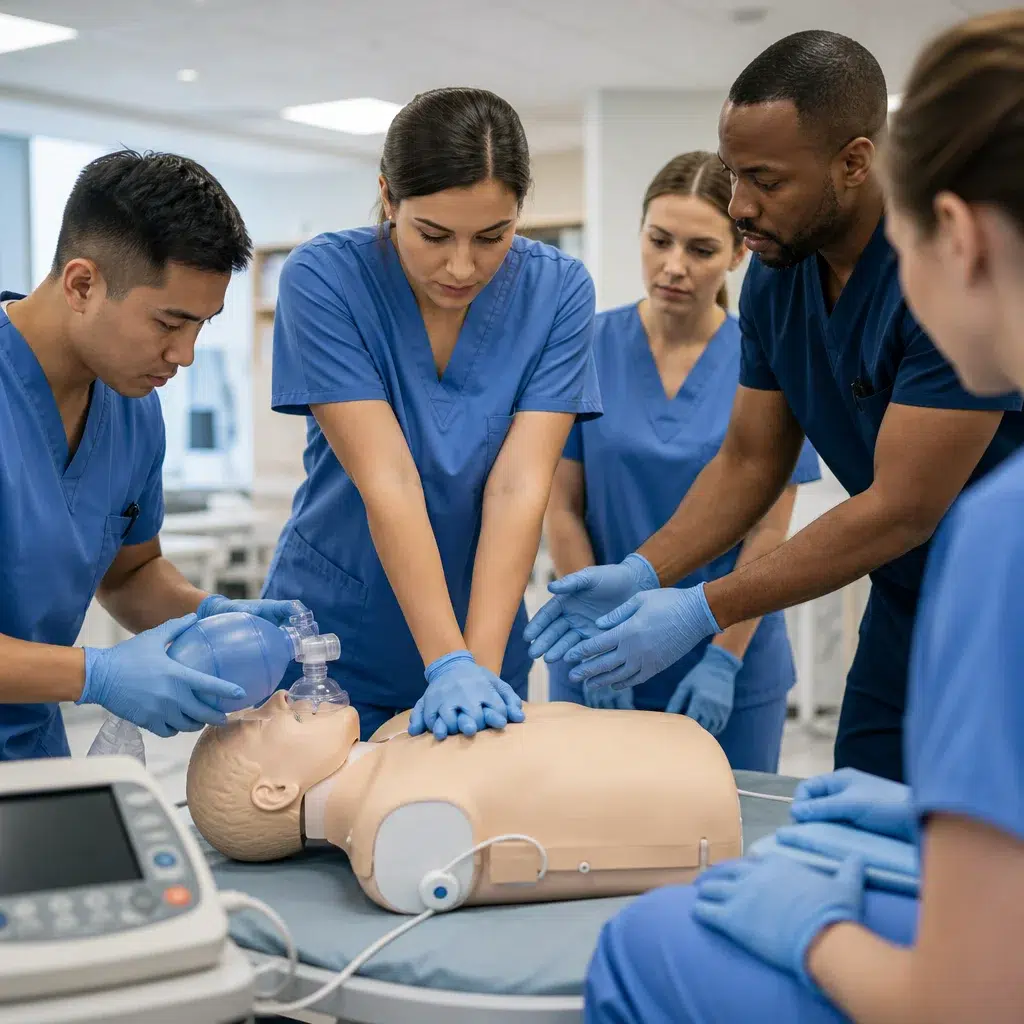
BLS recertification requirements focus on demonstrating high-quality CPR and team-based response in line with current AHA Guidelines for CPR and ECC. During basic life support renewal, you will be evaluated on adult, child, and infant CPR, use of an AED, effective bag-mask ventilation, choking relief, and roles within a resuscitation team. You must pass hands-on skills testing and a written knowledge assessment; successful completion results in an AHA BLS Provider eCard widely accepted across California.
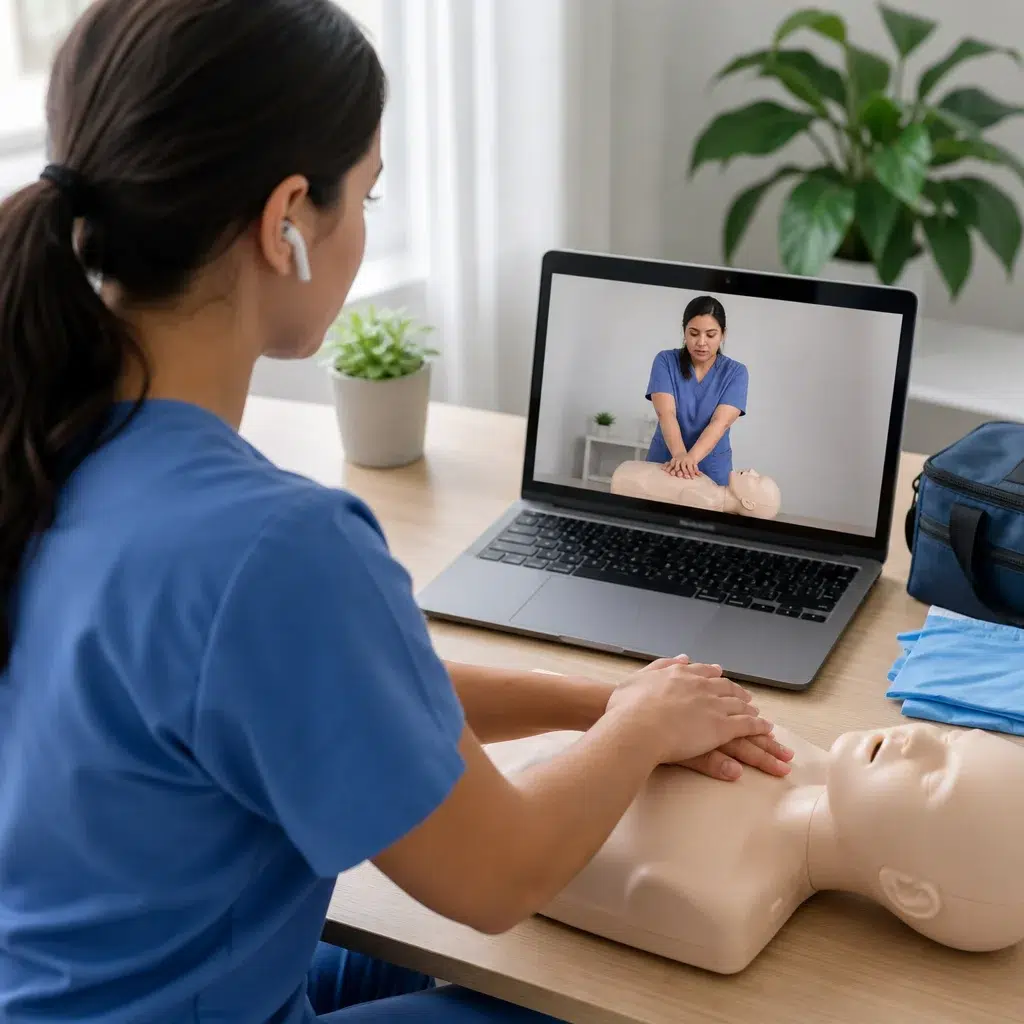
You can meet AHA BLS recertification through two primary formats. Many clinicians choose HeartCode BLS (blended learning), which pairs an online AHA module with a brief in-person skills session using feedback manikins. Others prefer an instructor-led renewal class entirely in person. Both routes yield the same AHA eCard, typically issued the same day by the training center.
Key points to know for CPR certification renewal California:
- Renewal interval: every two years; some employers or departments may require earlier refreshers.
- Accepted providers: AHA BLS is the gold standard; some facilities accept Red Cross equivalents—confirm with your employer.
- Expired card: you can still renew; depending on policy, you may be directed to a full Provider class rather than a shortened renewal.
- Documentation: bring a government-issued photo ID; prior BLS card is helpful but not always required.
- Professions commonly requiring it in emergency medical certification California: hospital RNs, dental staff, EMTs/paramedics, surgical techs, and many outpatient clinicians.
Safety Training Seminars simplifies AHA BLS recertification with flexible blended options and instructor-led classes at over 100 locations statewide, making it easy to schedule around shifts. Their low price guarantee and corporate group training help California healthcare teams maintain compliance efficiently, with skills sessions available days, evenings, and weekends.
Why BLS Renewal Matters for Healthcare Professionals
Timely basic life support renewal directly impacts patient outcomes and your ability to perform under pressure. BLS renewal courses California keep your skills sharp, align you with current science, and maintain your eligibility to work in hospitals, clinics, and dental practices. For clinicians who respond first—on a med-surg floor, in a dental operatory, or inside an ambulance—seconds matter, and current training helps convert those seconds into survivals.
Hands-on skills fade without practice, and research shows measurable decline in CPR performance within months. AHA BLS recertification refreshes critical psychomotor skills, reinforces algorithms, and updates you on focused changes to resuscitation science and team dynamics. Modern courses emphasize real-time feedback, minimizing pauses, and confident use of AEDs and bag-mask ventilation so you can lead or integrate seamlessly into any code team.
Staying compliant is non-negotiable. Most California hospitals and EMS agencies require an unexpired American Heart Association BLS Provider card, and there is no AHA grace period once a card expires. For license holders, CPR certification renewal California is often tied to employment or board expectations—for example, many dental professionals must maintain BLS for license renewal, and EMS personnel must keep current emergency medical certification California to remain field-ready. Understanding BLS recertification requirements helps you avoid last-minute scheduling, staffing gaps, or credentialing delays.
Solid renewal training reinforces the competencies that change outcomes:
- High-quality compressions with minimal interruptions and effective ventilation
- Rapid AED deployment and safe defibrillation in team settings
- Adult, child, and infant differences, including choking management
- Opioid-associated life-threatening emergencies and naloxone considerations
- Clear communication, role clarity, and closed-loop feedback during codes
Choosing the right provider can reduce downtime and cost. Safety Training Seminars offers AHA-aligned basic life support renewal through flexible blended learning—complete the online module on your schedule, then finish a brief in-person skills session at one of 100+ California locations. Their low price guarantee and group options make it easier for nurse managers, dental practices, and EMS crews to keep teams current without disrupting coverage. If you’re in the East Bay, see their convenient schedule for BLS Classes in Alameda.

California-Specific BLS Renewal Guidelines and Timeline
In California, most healthcare employers and licensing boards follow American Heart Association standards for Basic Life Support. AHA BLS Provider cards are valid for two years, and facilities commonly require a current card on file with no lapse for patient-facing roles. When comparing BLS renewal courses California providers, confirm the credential is AHA BLS Provider or HeartCode BLS with an in-person skills session, as online-only options are not accepted by hospitals.
Plan your CPR certification renewal California at least 30–60 days before your eCard expiration. The AHA does not offer a grace period; once expired, you may be removed from clinical duty until you complete AHA BLS recertification. You can renew through an instructor-led BLS Provider class or via HeartCode BLS plus a hands-on skills check. If your card has lapsed, completing the full provider course or HeartCode pathway will restore compliance; policies on accepting “renewal” vs. “full” formats vary by employer.
Profession-specific notes in California include the following BLS recertification requirements and practices:
- Nurses (BRN): Employers generally require current AHA BLS; basic life support renewal does not count toward BRN continuing education hours. Verify hospital policy on acceptable course formats and eCard documentation.
- Dentists and dental teams: The Dental Board of California requires BLS for license renewal; the course must include an in-person skills component. AHA BLS or equivalent (e.g., Red Cross) is typically accepted; confirm details before scheduling.
- EMS personnel: EMTs and paramedics must maintain current provider-level CPR/BLS for emergency medical certification California and agency credentialing. Many EMS agencies specify AHA BLS Provider.
Blended learning is widely accepted statewide. A common pathway is HeartCode BLS (online modules, approximately 1.5–3 hours) followed by a 30–60 minute in-person skills check on adult, child, and infant CPR and AED. This format is useful for 12-hour shift schedules or travel nurses who need fast turnaround and flexible appointment times.
To streamline renewal, keep your AHA eCard ID and completion certificates accessible for audits and HR verification. Schedule your class several weeks before travel, role changes, or performance reviews to avoid coverage gaps. Safety Training Seminars offers AHA-aligned BLS renewal across 100+ California locations with evening and weekend skills sessions, blended learning options, and a low price guarantee—making it straightforward to stay compliant on your timeline.
Comparing BLS Renewal Course Formats: In-Person vs Blended Learning
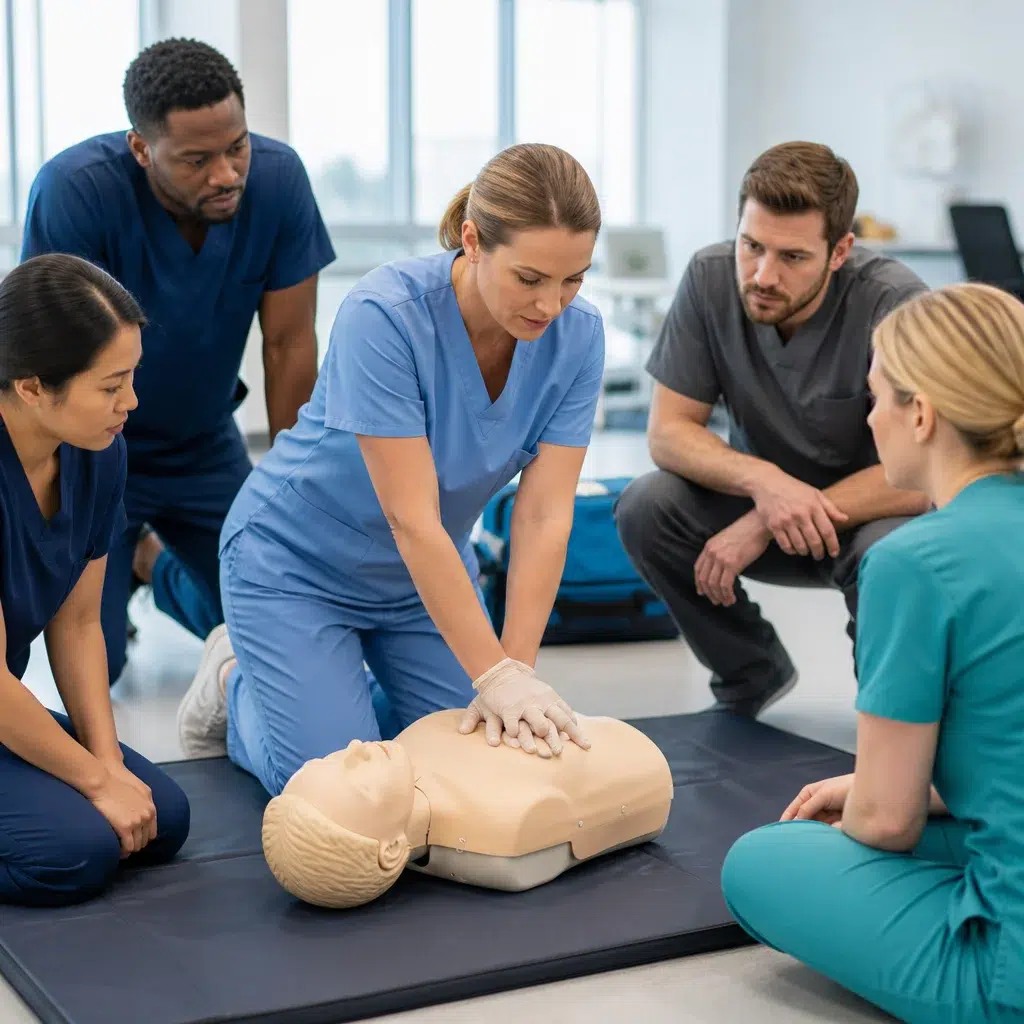
When choosing between in-person and blended learning for BLS renewal courses California, both formats meet American Heart Association standards and result in the same two-year AHA BLS Provider eCard accepted by hospitals and clinics. The best option depends on your schedule, learning style, and facility policy. For most experienced providers, both formats satisfy CPR certification renewal California without compromising quality.
Key differences to consider:
- Format: In-person is fully instructor-led in a classroom. Blended (AHA HeartCode BLS) combines an online module with an in-person skills check.
- Time commitment: In-person renewal typically takes about 3 hours. Blended usually involves 1.5–2.5 hours online (self-paced) plus a 30–60 minute hands-on skills session.
- Assessments: In-person includes a classroom skills evaluation and written exam. Blended includes an online exam, followed by an in-person skills test with an AHA instructor (and, at some sites, a voice-assisted manikin).
- Skills covered: Both formats test high-quality CPR for adults/children/infants, AED use, effective ventilations (including BVM), choking relief, and team dynamics—meeting core BLS recertification requirements.
- Best fit: In-person suits clinicians who want more coached practice, new grads, or those with lapsed cards. Blended fits seasoned providers and night-shift staff who need flexibility.
- Scheduling: In-person has fixed start/end times. Blended lets you complete the online portion anytime and book a quick local skills checkout.
- Cost: Pricing is generally comparable; many centers offer a low price guarantee for basic life support renewal.
For AHA BLS recertification, clinicians with an unexpired AHA BLS Provider card can enroll in a renewal track if offered; if your card is expired, you’ll complete the full provider course or HeartCode plus skills. Most California employers accept blended learning, but confirm your department’s policy—especially for emergency medical certification California roles. For blended, bring the online completion certificate to your skills session and be prepared to perform multiple two-minute compression cycles.
Examples that work in practice:
- A Sacramento RN on 12-hour shifts completes HeartCode on a day off and books a 45-minute skills slot nearby.
- A San Jose dental team schedules an on-site instructor-led session for coordinated team practice and compliance.
- An EMT in Los Angeles opts for in-person to refresh two-rescuer BVM and pit-crew CPR with peers.
Safety Training Seminars offers both instructor-led and AHA HeartCode blended BLS renewal courses California at 100+ locations statewide, with evening and weekend options. AHA eCards are issued upon successful completion, and corporate groups can arrange on-site classes or bulk vouchers for blended access. With a low price guarantee and add-on pathways for ACLS, PALS, and NRP, Safety Training Seminars makes renewal efficient and fully compliant.
What to Expect During Your BLS Renewal Course

If you’re a nurse, dentist, or EMS professional scheduling BLS renewal courses California, expect a streamlined experience that focuses on refreshing critical skills and validating competency. Most providers use a blended format: you complete an online module at your own pace, then attend a short in-person skills session. This structure keeps you current with the latest American Heart Association (AHA) science while minimizing time away from work.
Before your appointment, you’ll receive access to the AHA online learning component (often called HeartCode BLS). This interactive course reviews high‑quality CPR, ventilation strategies, AED use, and team dynamics, and includes knowledge checks to prepare you for skills testing. Many sites ask you to bring the online completion certificate to your skills session, which is part of standard BLS recertification requirements. If your card is expiring soon or recently lapsed, the same basic life support renewal pathway applies.
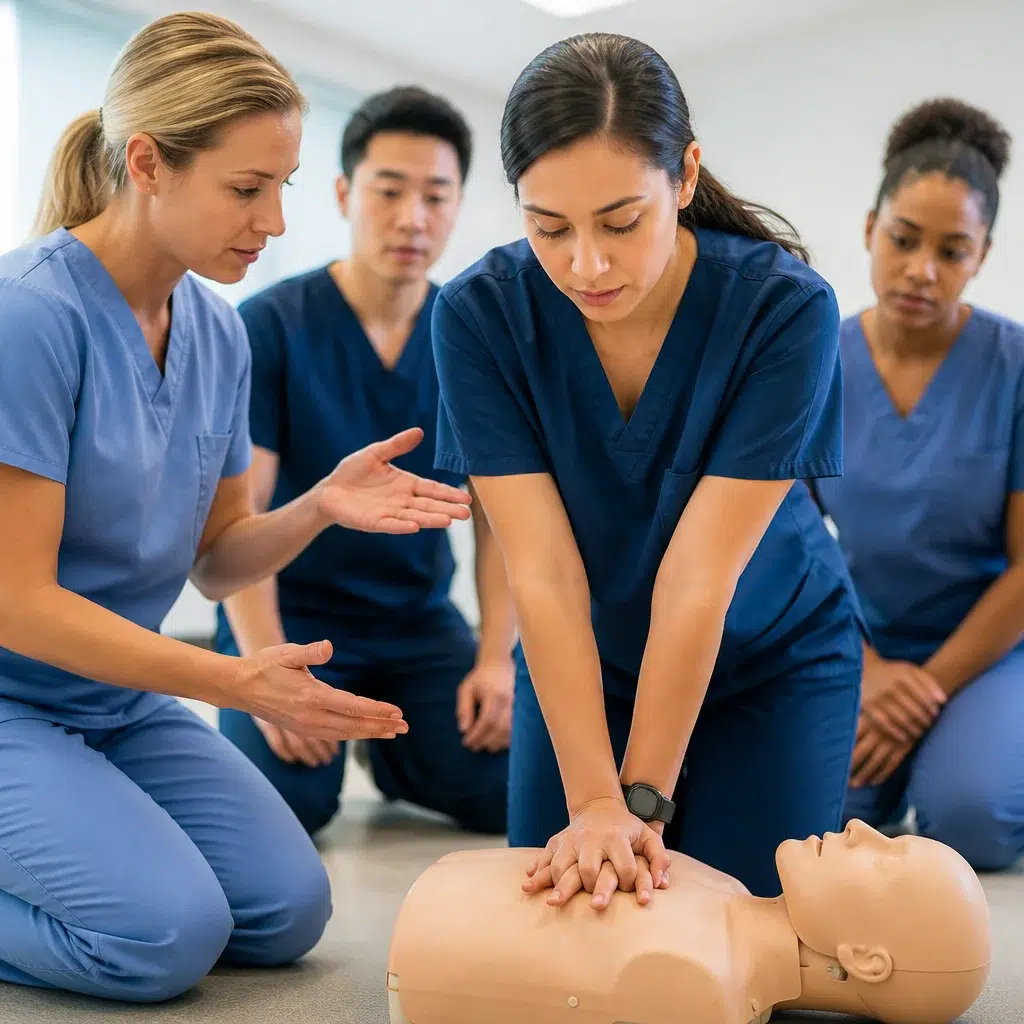
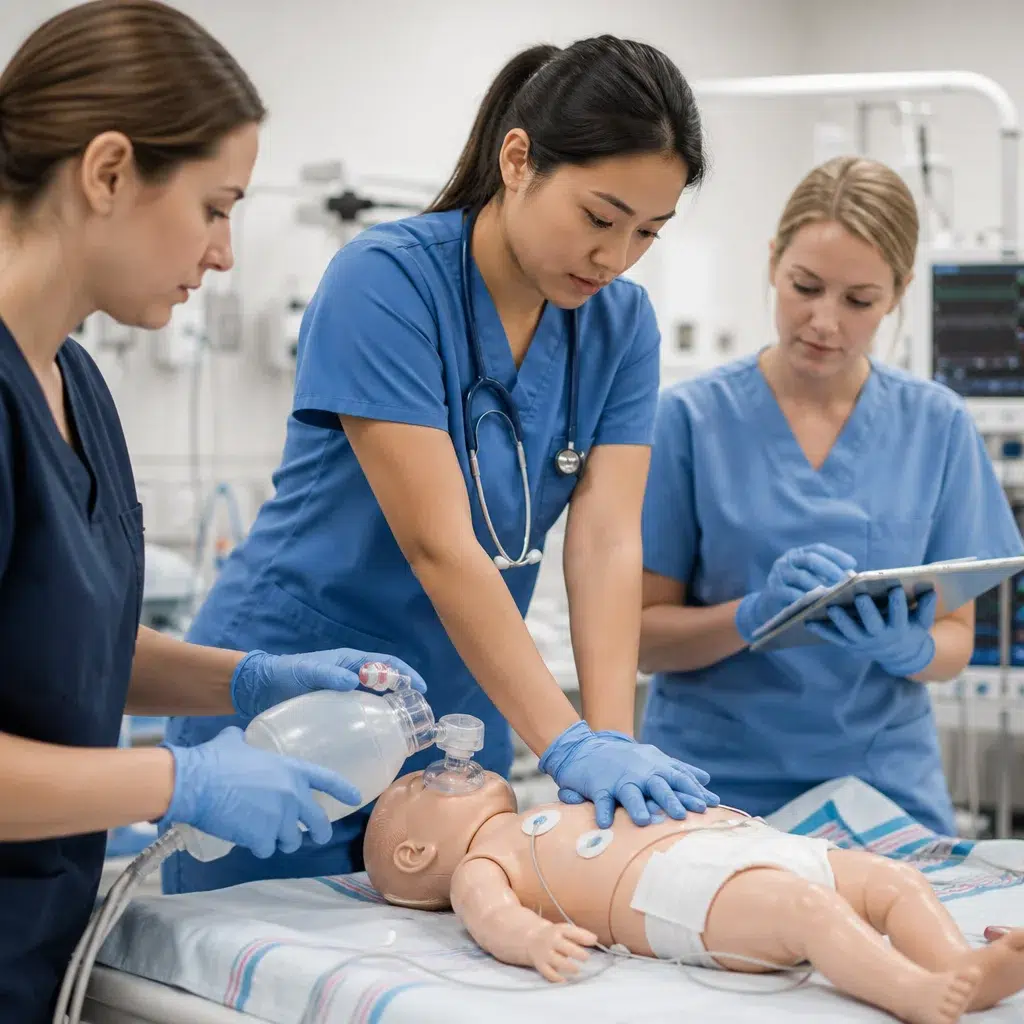
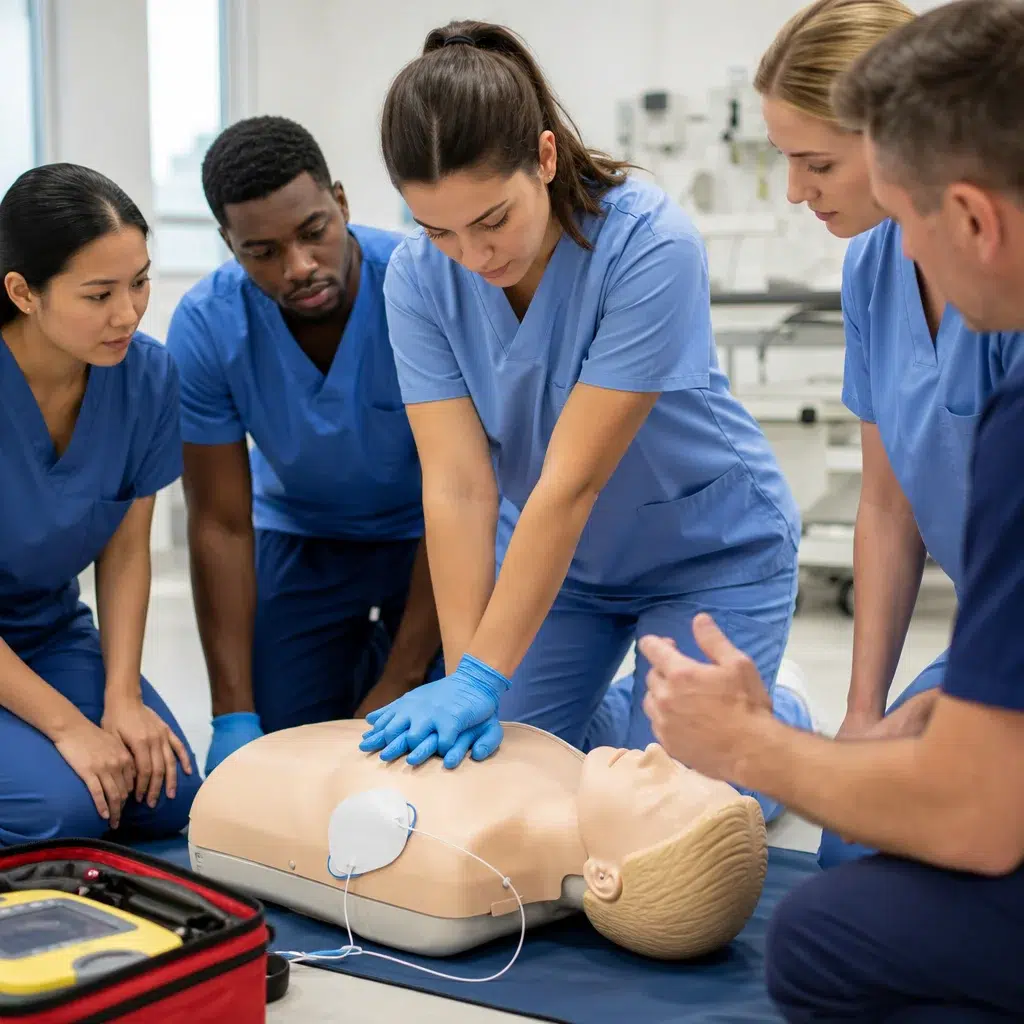
During the in‑person session, an AHA Instructor will coach you through realistic scenarios and hands‑on stations. Expect focused practice with real-time feedback to reinforce compression depth, rate, recoil, and minimal interruptions, plus efficient ventilations with a bag‑mask device. You’ll rotate through adult, child, and infant care, including one‑rescuer and two‑rescuer sequences and rapid AED integration. Recognition of opioid‑associated emergencies and choking relief is also addressed so you’re prepared for common clinical events.
Skills and knowledge are verified through performance checklists and a brief written assessment per current AHA BLS recertification standards. You must demonstrate high-quality CPR, safe and effective bag‑mask ventilation, and correct AED operation to pass. Upon successful completion, you’ll receive an AHA BLS Provider eCard—generally issued the same day—valid for two years and widely accepted for hospital privileging, licensing, and emergency medical certification California compliance.
Plan for a concise schedule: the online portion typically takes a few hours, and the skills session often runs 1.5–2.5 hours, depending on class size and your familiarity. Bring a photo ID, your current BLS card (if available), the online completion certificate, and wear attire suitable for kneeling and chest compressions. For CPR certification renewal California with maximum convenience, Safety Training Seminars offers blended learning with over 100 locations statewide, flexible days and times, group options, and a low price guarantee—making your basic life support renewal efficient and budget‑friendly.
Cost and Accessibility of BLS Renewal Programs Across California
Pricing for BLS renewal courses California varies based on format and location. In a blended model, you purchase the American Heart Association (AHA) HeartCode BLS online module separately (commonly around $30–$40) and then complete an in-person skills session that typically ranges from $55–$95. Fully instructor-led basic life support renewal classes often fall between $70–$120. Costs can be higher in major metros or for weekend/evening spots, and lower in suburban or Central Valley sites.
Access is generally strong across the state, with frequent sessions in the Bay Area, Sacramento, Central Valley, Los Angeles, Orange County, and San Diego. Safety Training Seminars operates over 100 training locations throughout California, making it easier to find a nearby class with free or low-cost parking and public transit options. Many centers offer weekday, evening, and weekend scheduling, plus last-minute openings to help you avoid lapses in CPR certification renewal California.
Blended learning reduces time away from work by moving the exam and cognitive portion online, then focusing your in-person visit on skills testing. During the hands-on check, instructors evaluate high-quality compressions, ventilation with a bag-mask device, AED use, and team dynamics aligned with current AHA BLS recertification guidelines. Most AHA BLS recertification cards are valid for two years, and employers may require you to maintain an active or recently expired AHA BLS Provider status. Providers typically issue AHA eCards quickly, often within 24 hours, which helps with tight compliance deadlines.
To control costs and simplify scheduling, consider the following:
- Choose blended HeartCode BLS to shorten your in-person time and expand scheduling options.
- Confirm that pricing includes the AHA eCard and all skills equipment to avoid add-on fees.
- Ask your employer about reimbursement or education funds, especially for emergency medical certification California.
- Bundle BLS with ACLS or PALS renewals when due; combined registrations can reduce per-course costs.
- Compare providers’ policies; Safety Training Seminars offers a low price guarantee across all classes.
For hospitals, clinics, dental groups, and EMS agencies managing team-wide BLS recertification requirements, onsite group training can reduce travel and overtime. Safety Training Seminars can coordinate multi-shift skills sessions and blended learning codes across multiple facilities, helping California healthcare professionals stay compliant without disrupting patient care. Always confirm your employer’s acceptance of AHA-issued cards before enrolling.
Maintaining Your BLS Certification Between Renewals
Your BLS card is valid for two years, but competency can fade long before the expiration date. Put your AHA eCard expiration in your calendar with reminders at 6, 3, and 1 month out to prevent a lapse in hospital privileging or schedule disruptions. Keep a copy of your eCard accessible and verify it periodically through the AHA eCard portal so employee health can retrieve it when needed.

Deliberate, bite-sized practice keeps high‑quality CPR second nature. Aim for compressions at 100–120/min, a depth of 2–2.4 inches for adults, full chest recoil, and compressor switches every 2 minutes. Minimize pauses to under 10 seconds and target a high compression fraction (>80%). If using an advanced airway, deliver 1 breath every 6 seconds without interrupting compressions; for single-rescuer adult CPR use 30:2, and for two-rescuer child/infant CPR use 15:2.
Build mini‑refreshers into your month. If your facility has Resuscitation Quality Improvement (RQI) manikins or similar feedback devices, schedule quarterly sessions. After real codes, participate in a quick debrief to translate outcomes to practice—what delayed the first shock, how could chest compression fraction improve, where was the AED? Tailor scenarios to your setting: opioid overdose in the ED with naloxone, laryngospasm with hypoxia in a dental operatory, or a pulseless infant in the NICU.
Maintain equipment readiness so skills meet working tools. Check AED status lights and pad expiration dates, ensure oxygen and suction are functional, and confirm bag‑mask sizes are stocked. Review your unit’s response map—who retrieves the AED, who leads compressions, who documents—and run 10‑minute team drills at shift huddles. Document these drills for unit competencies.
A quick between‑renewals plan:
- Monthly: 5–10 minutes of compressions/ventilations on a manikin, review adult and pediatric algorithms.
- Quarterly: Team mock code with role practice and AED deployment.
- After events: Debrief with data (compression rate, time to first shock).
- Annually: Review AHA focused updates to CPR & ECC Guidelines and update pocket cards.
Keep an eye on guideline updates; the AHA issues periodic focused updates that can affect BLS recertification requirements, such as opioid-associated emergencies or ventilation strategies. Use pocket reference cards or a trusted app to reinforce changes and confirm drug doses and shock sequences when you’re cross-covering outside your usual unit.
Plan AHA BLS recertification 30–60 days before expiration, and consider aligning basic life support renewal with ACLS or PALS to minimize time away from work. For BLS renewal courses California professionals trust, Safety Training Seminars offers blended learning with flexible skills sessions at 100+ locations statewide, a low price guarantee, and coordinated CPR certification renewal California options for individuals or groups—useful if your team is updating multiple emergency medical certification California credentials at once.
Conclusion: Staying Current with Your BLS Credentials
Staying current isn’t just about checking a compliance box—it’s about keeping your hands-on skills sharp when seconds matter. For California nurses, dentists, and EMS personnel, choosing the right BLS renewal courses California can streamline your schedule, satisfy employer policies, and ensure you’re ready for real emergencies.
Most AHA BLS Provider cards are valid for two years, and there’s no official AHA grace period once your card expires. Typical BLS recertification requirements include completing either an instructor-led renewal or a blended HeartCode BLS module followed by a brief, in-person skills check. Expect to demonstrate high‑quality CPR for adults, children, and infants, use of an AED, effective ventilations with a bag-mask, and team dynamics before receiving your AHA eCard.
To avoid a lapse, plan your basic life support renewal with a simple checklist:
- Verify your expiration date and schedule renewal 60–90 days in advance.
- Select the format that fits your learning style: full classroom or HeartCode BLS plus a short skills session.
- Complete any required online coursework before your hands-on appointment and bring a valid photo ID.
- Save your AHA eCard and update HR portals, credentialing services, and agency profiles the same day.
- Align renewals for ACLS or PALS when possible to minimize downtime and multiple commutes.
Safety Training Seminars offers a practical path to AHA BLS recertification statewide with blended learning options and over 100 locations across California. Classes run days, evenings, and weekends, making it easier to fit CPR certification renewal California into a rotating schedule. Healthcare teams can also book corporate group training with discount pricing, and the low price guarantee helps keep emergency medical certification California costs predictable.
A little planning goes a long way. Set calendar reminders, keep a digital copy of your eCard in your credential wallet, and coordinate renewals around shift changes or travel assignments. For example, a travel RN can complete the HeartCode module midweek, then stop by a San Diego or Bay Area site for a 30–60 minute skills check before starting a new contract—no coverage gaps and full compliance. With the right provider and process, staying current on BLS is straightforward, efficient, and aligned with the realities of frontline care.
Register for a class today.