Introduction: Understanding CPR Certification Requirements in California
If you work in a clinical setting in California, you’ll likely need current BLS for Healthcare Providers and, depending on your role, ACLS or PALS. California CPR certifications are not interchangeable—acceptance depends on the issuing organization and whether you completed a hands-on skills evaluation. Employers, hospital credentialing committees, and some professional boards look for specific, board-accepted life support courses that align with nationally recognized guidelines.
In a CPR provider comparison, the American Heart Association (AHA) and American Red Cross are the most widely accepted for hospital-based roles. Many California hospitals and surgery centers specifically require AHA-issued BLS, ACLS, and PALS, and may not accept online-only courses without an in-person skills check. Providers such as National CPR Foundation are not AHA and are often not accepted for clinical employment or hospital privileging in California. Always confirm with your employer, unit leadership, or local EMS agency before enrolling.
For healthcare professional CPR requirements in California, verify that your course includes:
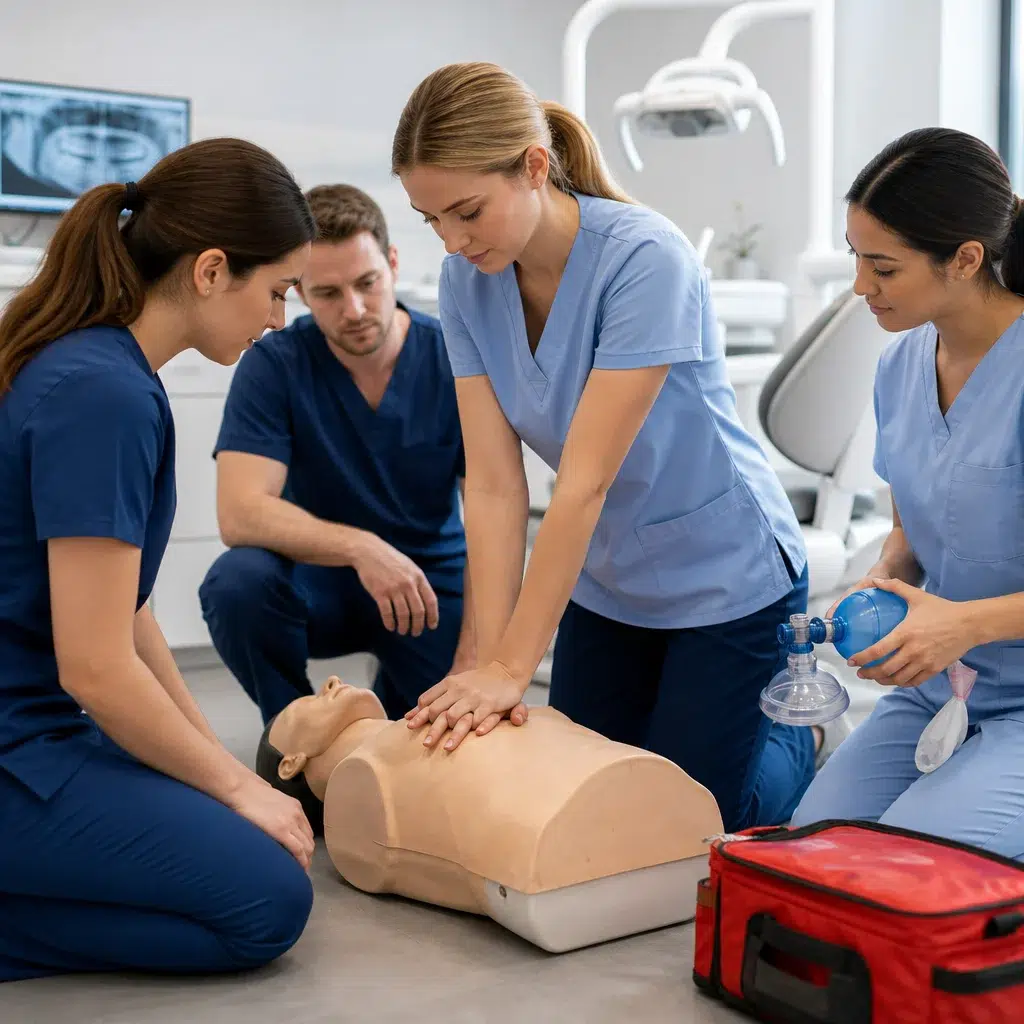
- AHA BLS Provider (adult, child, and infant CPR; bag-mask ventilation; AED use; team dynamics) with an in-person skills evaluation or a blended-learning skills session.
- ACLS/PALS from AHA if you work in ED, ICU, telemetry, anesthesia, cath lab, pediatrics, or code team roles.
- Valid, verifiable eCard issued by the accrediting body; most facilities audit AHA eCards.
- Renewal every two years and timely course completion before credentialing or California nursing certifications deadlines.
- For EMTs/paramedics, a credential accepted by your Local EMS Agency (LEMSA)—AHA courses are broadly recognized.
Safety Training Seminars is an AHA Training Center offering AHA certified CPR training California-wide, with blended learning, in-person skills sessions, and 100+ locations for convenient scheduling. The low price guarantee and group options make compliance straightforward for individuals and teams. If you’re in the Sacramento area, view local schedules for Sacramento CPR and BLS to find an AHA course your employer will accept.
Why California Healthcare Professionals Need Board-Accepted Certifications
California hospitals, clinics, and dental practices tie employment, privileging, and quality audits to recognized credentials—not just any online card. To meet healthcare professional CPR requirements, employers commonly specify American Heart Association (AHA) BLS for Providers and, based on role, ACLS, PALS, or NRP. These board accepted life support courses include hands-on skills testing; fully online “instant” certificates are frequently rejected. If you’re maintaining California CPR certifications, verification that your card is AHA-issued (or from another widely recognized body like the Red Cross) is essential.
Role-based expectations vary, but trends are consistent across the state:
- Nurses in telemetry, ICU, ED, perioperative, and procedural areas typically need current AHA BLS and ACLS; pediatric units often require PALS.
- Dentists must complete BLS with live skills verification for license renewal; sedation permit holders are commonly required to maintain ACLS or PALS. For details, see California dentists BLS/ACLS.
- EMS, fire, and transport agencies generally specify AHA BLS, ACLS, and PALS for field providers, with skills assessments conducted or verified in person.
- L&D and NICU teams often add NRP alongside BLS to meet hospital policy and payer accreditation standards.
Using non-accepted providers can derail onboarding or renewal. Cards from online-only sites that are not AHA or Red Cross—no in-person skills check, no proctored megacode—are often declined by HR, medical staff offices, and risk management, forcing a retake and delaying your start date or schedule. When doing a CPR provider comparison, confirm the exact course title (e.g., “AHA BLS Provider,” “AHA ACLS Provider”) and that a hands-on skills session is included.
Safety Training Seminars streamlines compliance with AHA certified CPR training California professionals recognize, offering blended eLearning plus in-person skills at over 100 locations statewide. Healthcare-focused options—BLS, ACLS, PALS, and NRP—deliver employer-accepted AHA eCards quickly, with group scheduling and a low price guarantee to help teams stay current without disrupting patient care.
Safety Training Seminars: Certification Standards and Coverage
Safety Training Seminars issues American Heart Association eCards for BLS, ACLS, and PALS, plus Neonatal Resuscitation Program (NRP) credentials through the AAP/NRP program. These board accepted life support courses are widely recognized by California hospitals and most licensing bodies, including the Board of Registered Nursing, the Dental Board of California, and local EMS agencies. For healthcare professional CPR requirements, this AHA-aligned pathway helps ensure your California CPR certifications meet typical employer and credentialing standards. As policies vary by facility, it’s smart to confirm your department’s specific requirements.
To streamline renewals, Safety Training Seminars offers AHA blended learning: complete the official online module at your own pace, then finish with an in-person skills check at one of 100+ training locations statewide. Same-day AHA eCards are issued upon successful completion, which helps prevent lapses in compliance. Evening and weekend skills sessions are available, supporting busy clinical schedules and California nursing certifications timelines.
Examples of role-based alignment include:
- Registered nurses: BLS Provider for all clinical staff; ACLS for telemetry, ED, ICU, and peri-anesthesia units.
- Dentists and oral surgeons: AHA BLS Provider to satisfy Dental Board of California mandates for licensure and office-based sedation teams.
- EMS personnel: BLS, ACLS, and PALS that align with local EMS agency policies and NREMT recertification pathways.
- Pediatrics, NICU, and L&D: PALS and NRP to meet hospital privileging and pediatric emergency response expectations.
For multi-site groups, Safety Training Seminars provides on-site corporate training and discount pricing, with centralized roster management and verification links managers can access during audits. The low price guarantee keeps AHA certified CPR training California costs predictable, while ensuring hands-on evaluation that many employers require. In any CPR provider comparison, confirm that a live skills assessment is included—online-only certificates are often not accepted for clinical roles in California.
National CPR Foundation: Certification Scope and Limitations

National CPR Foundation focuses on fast, self-paced online courses for CPR/AED, BLS, and First Aid with instant printable cards. That format can be convenient for general knowledge, but acceptance for regulated roles in California is inconsistent. For California CPR certifications tied to employment or licensure, many boards and hospitals require a hands-on skills evaluation and specific issuing bodies. This is where online-only options often fall short.
Healthcare employers across California commonly mandate American Heart Association BLS Provider, and for advanced roles, AHA ACLS and PALS, because these include verified skills testing and standardized algorithms. The Dental Board of California requires an in-person BLS course with manikin practice for license renewal; online-only BLS is typically not accepted. Many local EMS agencies and training officers also require healthcare-level CPR with documented skills for EMT and paramedic credentialing. For California nursing certifications related to job placement in acute care, managers frequently specify AHA cards as part of healthcare professional CPR requirements.
Examples of typical acceptance patterns in California include:
- Hospital onboarding for RNs: AHA BLS Provider required; critical care and ED roles often add AHA ACLS, with pediatrics requiring AHA PALS.
- Dental license renewal: an in-person BLS course (e.g., AHA or ARC) with hands-on skills; online-only certificates are usually declined.
- EMS recertification: current healthcare-provider CPR with a documented skills check; online-only credentials are frequently not accepted by agencies.
If you are comparing options in a CPR provider comparison, confirm whether your unit, medical group, or board lists AHA specifically or requires an in-person skills check. To meet board accepted life support courses without uncertainty, choose AHA certified CPR training California employers recognize. Safety Training Seminars delivers AHA BLS, ACLS, PALS, and NRP via blended learning with an in-person skills session at over 100 California locations, helping you meet compliance requirements on the first attempt while keeping costs low.
AHA Alignment: Key Difference in Board Recognition
For healthcare professionals pursuing California CPR certifications, alignment with the American Heart Association (AHA) is the difference between a card that clears credentialing and one that gets flagged. California hospitals and many licensing pathways specify AHA BLS Provider, ACLS, and PALS, or American Red Cross equivalents, and they require hands-on skills validation. AHA courses issue verifiable eCards that managers can check instantly, which is often a stated condition in job postings and unit-specific competency policies.
Examples of how AHA alignment affects board and employer acceptance across California:
- Nurses (BRN): Most hospital systems require AHA BLS Provider at hire and renewal; ICU/ED/telemetry roles typically add AHA ACLS, and pediatric or NICU assignments often require AHA PALS or NRP.
- Dentists (DBC): License renewal generally calls for BLS from AHA or ARC; sedation permits commonly require ACLS (adult) or PALS (pediatric) with in-person skills.
- EMS and hospital credentialing: LEMSAs and acute-care employers frequently list “AHA BLS/ACLS/PALS required—no online-only” in paramedic, ED tech, and transport roles.
This is where provider choice matters in a CPR provider comparison. Safety Training Seminars is an authorized AHA training center that delivers blended learning (AHA online modules plus an in-person skills session) and issues AHA eCards accepted by California hospitals and credentialing departments. By contrast, National CPR Foundation courses are not AHA certifications; they are typically online-only and, while acceptable to some non-clinical employers, are often not recognized for board accepted life support courses like BLS, ACLS, or PALS in clinical settings.
If you need AHA certified CPR training in California, Safety Training Seminars offers over 100 skills locations statewide, healthcare-specific tracks (BLS, ACLS, PALS, NRP), corporate group options, and a low price guarantee. You can schedule a same-week skills session to meet healthcare professional CPR requirements before orientation or a unit transfer. When in doubt, confirm with your manager or board and look for “AHA eCard required” to avoid delays in California nursing certifications and hospital onboarding.
Comparing Course Offerings and Specializations
When evaluating California CPR certifications, the biggest differentiator is whether the course issues American Heart Association (AHA) cards and includes a hands-on skills check. Most California hospitals, dental practices, and EMS agencies specify AHA BLS, ACLS, and PALS for onboarding and continuing employment. Fully online certificates are often not accepted for healthcare professional CPR requirements, especially for clinical roles and California nursing certifications.
Safety Training Seminars delivers AHA-certified CPR training in California through blended learning: online coursework followed by an in-person skills session at more than 100 locations statewide. Courses cover the full healthcare pathway—BLS Provider for bedside staff, ACLS for adult critical care, PALS for pediatric/ED teams, and NRP for perinatal units. This format aligns with board accepted life support courses used by major California employers and clinical rotation sites.
- AHA BLS Provider with adult/infant CPR, AED, and team-based resuscitation practice
- ACLS with high-fidelity megacode testing, rhythm recognition, and pharmacology
- PALS emphasizing pediatric assessment, respiratory failure/shock algorithms, and teamwork
- NRP skills for L&D, NICU, and nursery teams following current evidence-based guidelines
- HeartCode/Hybrid options with flexible skills check scheduling and same-day AHA eCards
- Onsite corporate training and group discount pricing for clinics and health systems
National CPR Foundation primarily offers 100% online CPR/AED, First Aid, and a BLS-branded course without an in-person skills evaluation. While these can suit certain community or non-clinical workplaces, they are not AHA cards and acceptance varies by employer. For roles requiring AHA certified CPR training California, many facilities will not accept fully online alternatives.
- Not an AHA Training Center; certificates are National CPR Foundation–issued
- No in-person skills check or megacode evaluation for ACLS/PALS equivalents
- Acceptance may be limited for hospital onboarding, travel nursing, and EMS roles
- Better fit for lay responder refreshers where online-only training is permitted
If you’re a nurse, dentist, or EMS professional comparing providers, choose AHA-credentialed, skills-based options to meet board accepted life support courses and employer audits. Safety Training Seminars provides the breadth of AHA courses and statewide access California clinicians need, with a low price guarantee and scheduling designed for shift work. This CPR provider comparison comes down to compliance: for California CPR certifications used in clinical practice, AHA cards from an in-person skills check remain the reliable standard.

In-Person vs Virtual Learning Components
For California CPR certifications that will be accepted by hospitals, clinics, and agencies, the delivery method matters as much as the card. Board accepted life support courses for providers almost always include a hands-on evaluation, even when the knowledge portion is completed online. If you’re doing a CPR provider comparison, focus on whether the course follows American Heart Association (AHA) guidelines and includes an in-person skills check that meets healthcare professional CPR requirements.
Safety Training Seminars offers a true blended format: complete the AHA HeartCode module online, then finish a brief, scheduled skills session with an AHA Instructor at one of 100+ locations statewide. A typical BLS renewal skills check takes about 30–60 minutes; ACLS and PALS skills sessions run longer due to team-based scenarios and pharmacology. This model produces an AHA eCard that employers can verify instantly. It’s AHA certified CPR training California clinicians can complete without sacrificing shift coverage or compliance.
- Best suited for virtual (online):
– Algorithms, pharmacology, and case-based decision-making (HeartCode BLS/ACLS/PALS) – Pre-course self-assessments and rhythm recognition – Knowledge testing and remediation
- Must be completed in person for provider-level cards:
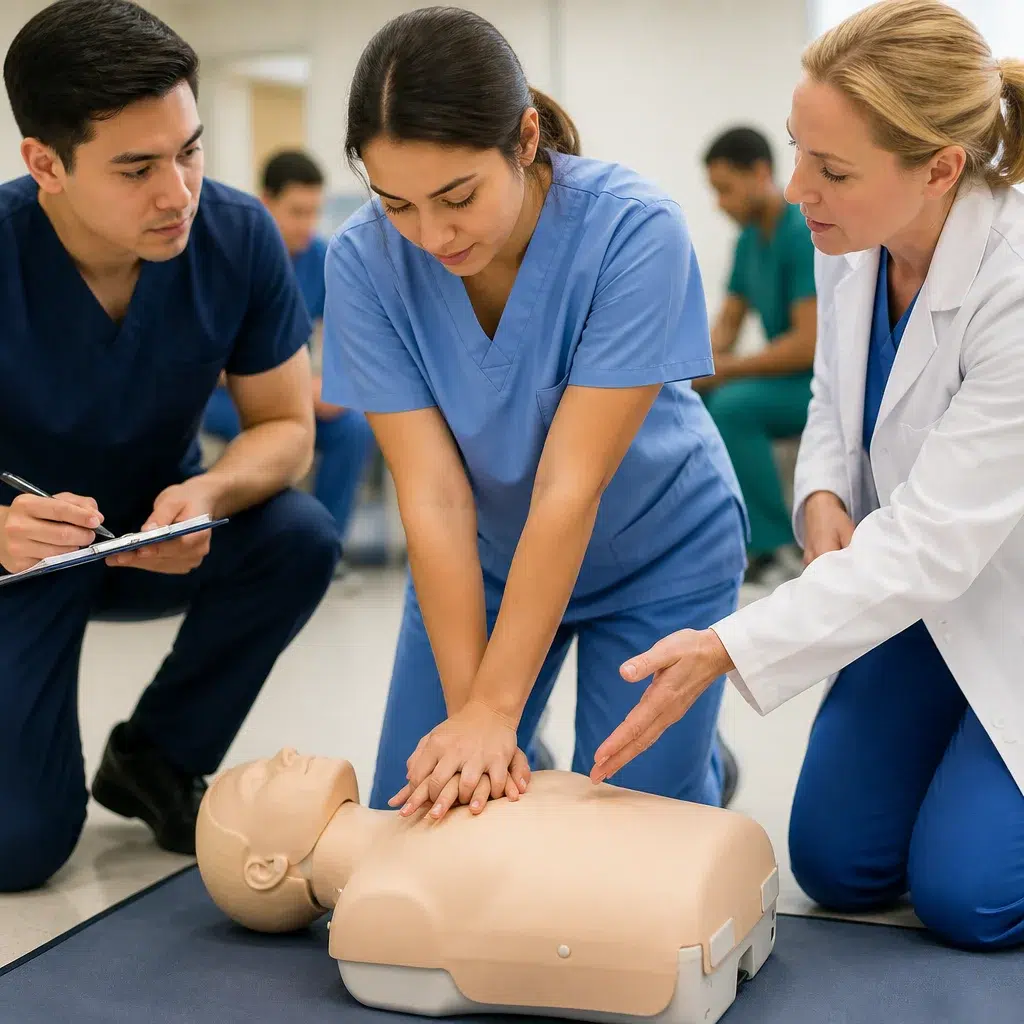
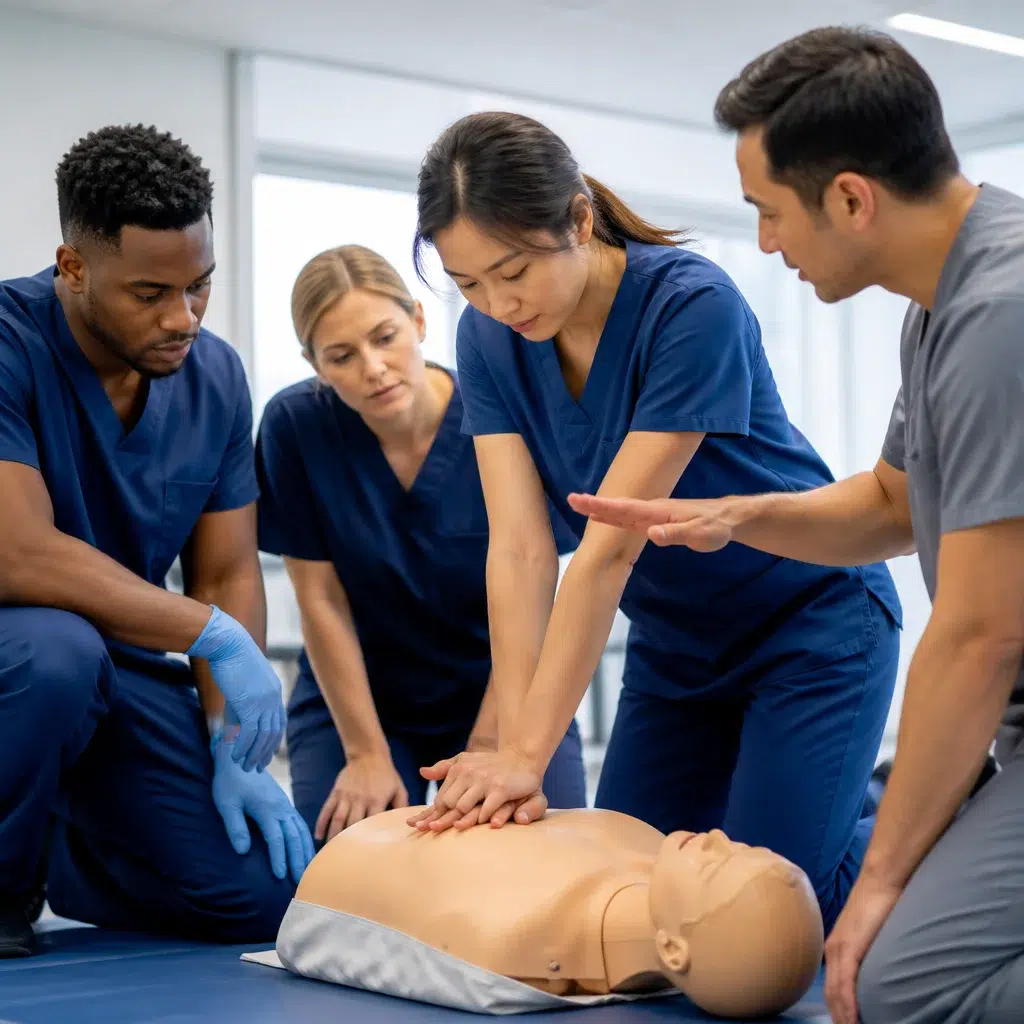
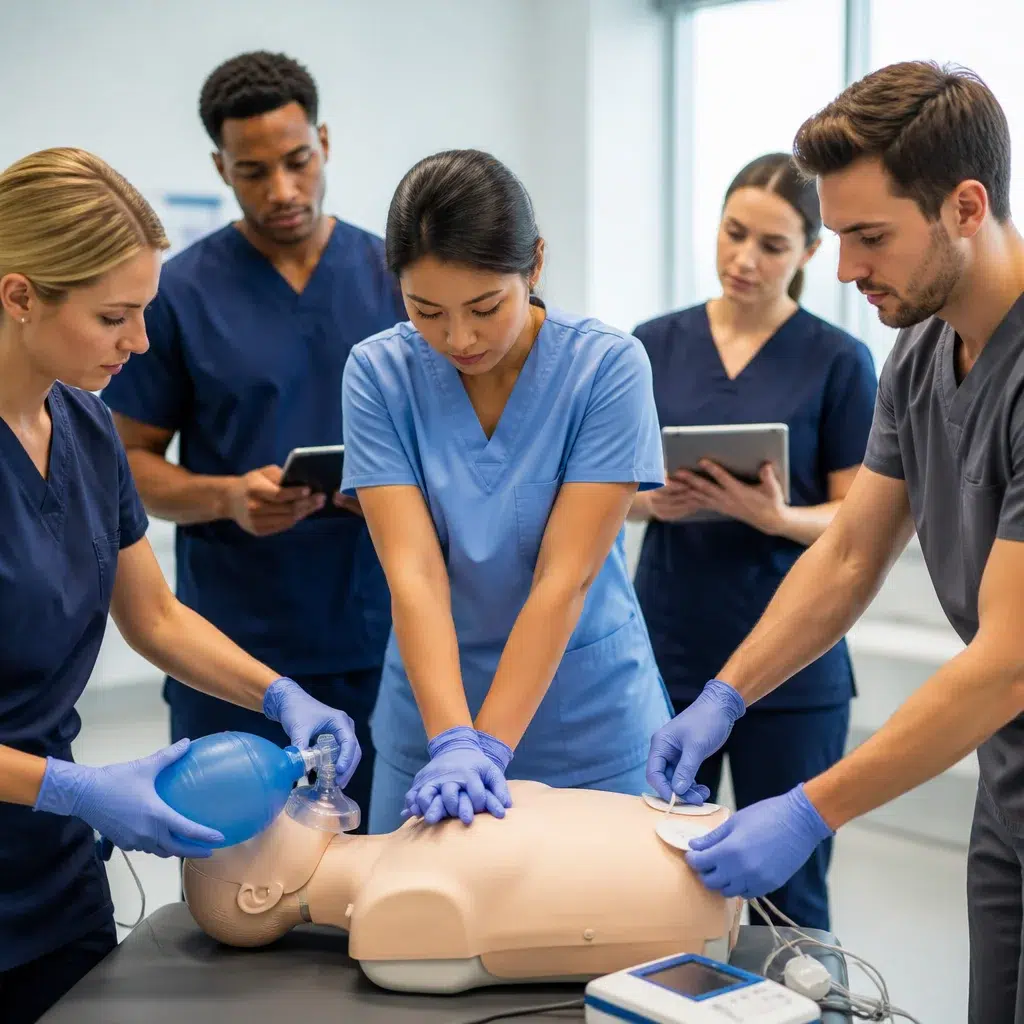
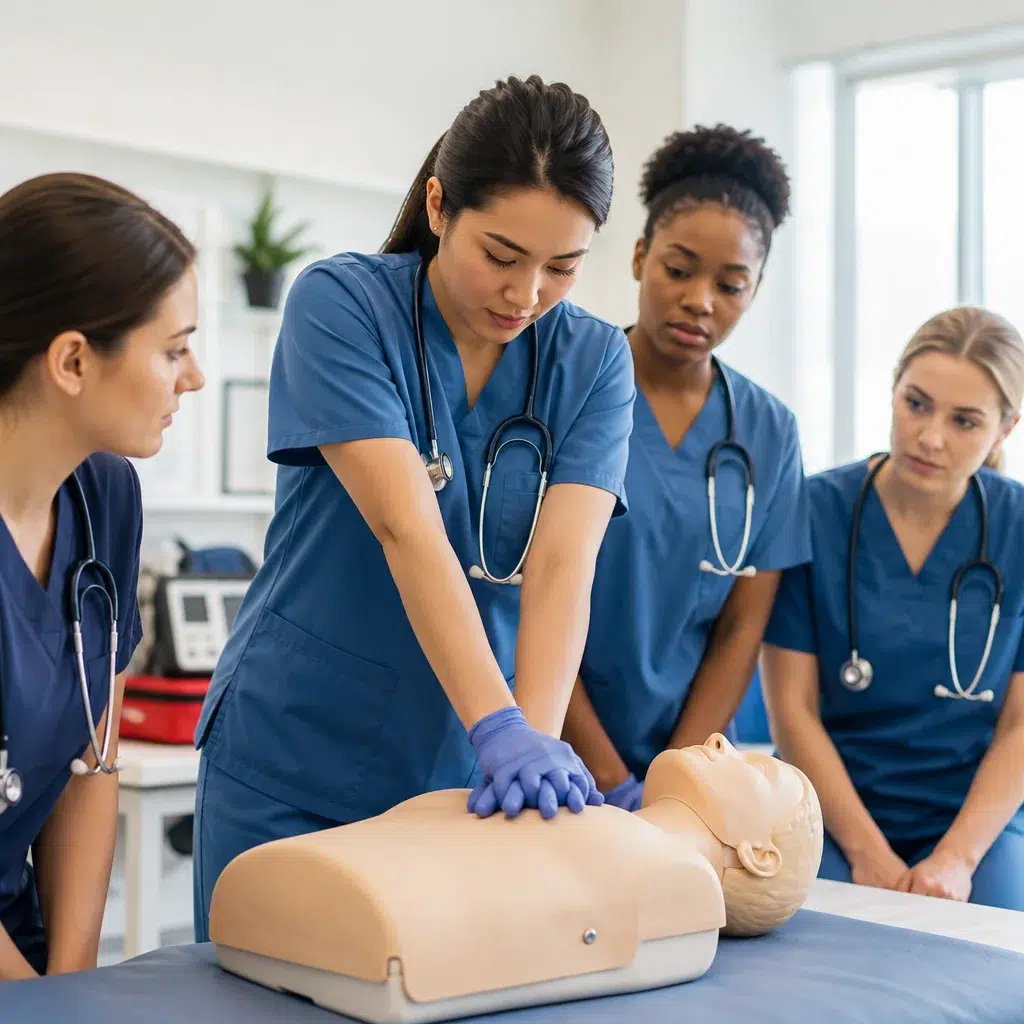
– Adult, child, and infant compressions/ventilations with manikins – Bag-mask ventilation, AED use, and airway adjuncts – Team dynamics and megacode performance (ACLS/PALS) – Skills testing with an AHA Instructor and issuance of a verifiable AHA eCard
By contrast, National CPR Foundation emphasizes fully online knowledge courses without a mandatory hands-on skills check. While convenient, many California hospitals, EMS agencies, and dental practices do not accept 100% online provider cards for BLS, ACLS, or PALS; always confirm requirements with your employer or licensing body. For California nursing certifications tied to hospital privileging, AHA eCards from Safety Training Seminars align with typical facility policies and credentialing standards.
For groups, Safety Training Seminars can bring the skills session on-site or provide vouchers so staff complete online modules at home and test in person on a set day. This streamlines audits, supports rotating schedules, and leverages discount pricing with a low price guarantee, while keeping your team current with board accepted life support courses.
Certification Timeline and Same-Day Card Availability
When you’re working against onboarding deadlines or renewal dates, the path from course enrollment to a verifiable card matters as much as the content. For California CPR certifications tied to employment or licensure, the critical variable is how fast you can earn a card that your hospital or board will accept without question.
Safety Training Seminars uses an AHA-blended model: you complete the official online module at your own pace and then book a short, in-person skills session at one of 100+ locations across California. Upon passing the hands-on check, AHA eCards are typically issued the same day and can be verified instantly in the AHA database—meeting common healthcare professional CPR requirements for hospitals and agencies. Most BLS renewals can be finished in a single day, while ACLS and PALS are often wrapped up within 24–72 hours depending on prework and skills availability.
National CPR Foundation delivers instant printable cards after an online quiz, which can seem faster on paper. However, because these are not AHA certifications, many California employers and boards require retesting with an AHA course—especially for ACLS, PALS, and BLS tied to bedside roles. That mismatch can turn an “instant card” into a delayed start date if HR rejects the credential and asks for an AHA certified CPR training California option instead.
- Need BLS in 24–48 hours? Finish HeartCode BLS this evening, attend a morning skills session with Safety Training Seminars, and receive your AHA eCard the same day for HR upload.
- Racing a unit transfer that requires ACLS or PALS? Complete the online prework and book the next available skills appointment; most clinicians secure a board accepted life support course eCard within 1–3 days.
- Coordinating a team renewal? Safety Training Seminars offers on-site skills sessions with batch same-day eCards, helping groups meet California nursing certifications timelines without schedule gaps.
For reliable timelines and broad acceptance across California, AHA-backed eCards from Safety Training Seminars streamline compliance and minimize costly rescheduling.
Cost Comparison and Low-Price Guarantees

When comparing total cost, focus on whether a course will actually satisfy healthcare professional CPR requirements in California. Safety Training Seminars delivers American Heart Association (AHA) BLS, ACLS, PALS, and NRP—board accepted life support courses that California hospitals and licensing bodies commonly require. National CPR Foundation advertises lower fees for fully online classes, but those certificates are not AHA and are frequently not accepted by California employers, nursing programs, or hospital credentialing. Choosing a bargain that isn’t recognized can mean paying twice and losing time.
A practical CPR provider comparison starts with real-world scenarios. For example, a nurse renewing BLS for California nursing certifications may pass an online-only test with National CPR Foundation for less money, then discover during hospital onboarding that an AHA BLS with an in-person skills session is mandatory. The nurse must then purchase and complete a second course—plus juggle schedules—to remain compliant. By enrolling with Safety Training Seminars the first time, the nurse completes blended learning with a required skills check, receives an AHA eCard, and avoids re-training costs.
Consider the full cost picture before enrolling in California CPR certifications:
- Acceptance risk: Will your employer, hospital, or board accept the card? AHA certified CPR training California options from Safety Training Seminars are widely recognized.
- Skills check requirements: Many roles mandate hands-on testing; online-only CPR often fails audits.
- Time off and delays: Re-doing a non-accepted course can delay start dates or shift assignments.
- Add-on fees: Look for transparent pricing that includes the skills session and certification card.
- Location and travel: Over 100 California sites from Safety Training Seminars reduce commute expenses.
- Group pricing: Corporate training and discounts can significantly lower per-employee costs.
Safety Training Seminars backs its AHA programs with a low price guarantee for all classes, helping clinicians meet strict employer and board standards without overpaying. For a cost-effective path that protects your schedule and credentials, choose AHA-aligned training that California employers expect.
Compliance Verification for California Healthcare Boards
California healthcare employers and licensing boards scrutinize life support cards, so verifying acceptance before you train is essential. For most hospital roles, California CPR certifications must be American Heart Association (AHA) BLS, ACLS, and PALS with a documented hands-on skills evaluation. Cards from 100% online providers—such as National CPR Foundation—are frequently rejected because they lack an in-person skills check and do not issue AHA eCards.
Expectations vary by role, but trends are consistent. Nurses pursuing California nursing certifications typically find hospital policies that specify AHA BLS Provider and, when applicable, ACLS or PALS for unit assignment or credentialing. The Dental Board of California requires BLS aligned with AHA or Red Cross guidelines and an in-person skills component; dentists with sedation permits are commonly required to maintain current ACLS (and PALS for pediatric sedation). EMS personnel must meet local EMS agency credentialing, where AHA skills-based ACLS/PALS/BLS are standard and online-only cards are not accepted.
Use this quick compliance checklist before enrolling:
- Confirm the course is AHA BLS Provider, ACLS Provider, or PALS Provider (or HeartCode with an in-person skills session).
- Verify you will receive an AHA eCard that can be validated on the AHA’s eCard verification site.
- Ensure a hands-on skills evaluation with an AHA-authorized instructor is included and documented.
- Check your employer or board policy for named providers (AHA/ARC) and prohibited formats (no 100% online).
- For dentists and sedation permits, confirm any ACLS/PALS requirements and renewal intervals in writing.
Safety Training Seminars is an official AHA Training Center offering AHA certified CPR training California clinicians can trust. With blended learning plus in-person skills at over 100 locations, you receive board accepted life support courses and verifiable AHA eCards that satisfy common healthcare professional CPR requirements. Records, reminders, and group options simplify audits and onboarding.
In a CPR provider comparison, National CPR Foundation’s online-only cards often fail California hospital and board reviews, creating costly delays. Choosing an AHA pathway through Safety Training Seminars protects compliance while meeting role-specific requirements for nurses, dentists, and EMS staff.
Conclusion: Making the Right Certification Choice for Your Career
When your license and job depend on it, California CPR certifications should be chosen for acceptance first, convenience second. For most clinical roles, employers and credentialing departments expect American Heart Association–aligned BLS, ACLS, and PALS with hands-on skills validation, not online-only quizzes. That’s where many low-cost cards from online providers like National CPR Foundation can fall short in a CPR provider comparison—hospitals, surgery centers, and EMS agencies frequently reject cards without an AHA skills check.
Use this quick checklist to make the right call for board accepted life support courses:
- Verify the card source: AHA eCard or AHA-authorized provider language clearly listed.
- Confirm skills testing: an in-person or manikin-based skills session is required.
- Match the level: BLS for providers vs ACLS/PALS/NRP for advanced practice settings.
- Check renewal timing: many units require cards valid through your entire rotation.
- Ask your employer: HR/education teams will confirm healthcare professional CPR requirements.
Safety Training Seminars is a reliable choice for AHA certified CPR training California professionals can use with confidence. With over 100 locations statewide, blended learning options (complete HeartCode online, then a short in-person skills check), and specialized ACLS/PALS/NRP for hospital roles, it aligns with typical California nursing certifications and hospital onboarding standards. Corporate teams can streamline compliance with onsite sessions and discount pricing, and the low price guarantee helps keep costs predictable.
Consider a few real-world scenarios. A telemetry RN in Sacramento can renew BLS via blended learning and book a same-week skills session nearby, ensuring unit compliance. An ED nurse in San Francisco up for ACLS can complete HeartCode ACLS online after shift, then finish a brief skills assessment at a local site. A dental practice in Los Angeles can schedule group BLS with manikin practice to satisfy employer and payer credentialing. In each case, choosing an AHA-aligned provider like Safety Training Seminars helps you avoid re-training, onboarding delays, and surprise denials.
Register for a class today.