
Criteria for Choosing Healthcare Training and Recordkeeping Templates
Start by confirming that the template structure aligns with California and national requirements. For clinical skills, fields should map to AHA competencies for BLS, ACLS, PALS, and NRP, and to Cal/OSHA-mandated topics such as bloodborne pathogens and hazard communication. If your organization answers to CMS or The Joint Commission, ensure your training recordkeeping templates for healthcare include an auditable trail of who completed which training, who verified competency, and when.
Design templates with complete, standardized data fields. At minimum, capture employee name, role/unit, license number, NPI (if applicable), training type and standard (e.g., AHA ACLS), provider, instructor ID, delivery mode (blended, online, in-person), date/hours, score, pass/fail, evaluator signatures, certificate/eCard ID, issuance and expiration dates, and next-due date. For safety training log templates, add course-specific elements (e.g., exposure control for BBP, evacuation routes for fire safety) and the facility/location where training occurred.
Prioritize renewal and retention logic. AHA BLS/ACLS/PALS certifications typically renew every two years, so your certification tracking tools should trigger reminders 90, 60, and 30 days before expiration. For employee training retention schedules, align with applicable rules and policies; for example, bloodborne pathogens training records must be kept for at least three years after the training date—verify durations with Cal/OSHA and your accreditor.
Ensure the template supports real-world workflows. Healthcare competency checklists should include skill observations (e.g., ACLS megacode, PALS pediatric assessment, NRP team roles) with space for evaluator initials, times, and scenario notes. Require digital signatures, allow attachment of AHA eCards and skill sheets, and include version control with change logs to show who edited what and when.
Look for robust reporting and interoperability. Useful medical staff training records generate exception reports (expired or at-risk), unit-level compliance dashboards, and exportable CSVs. Integration with HRIS/LMS (via API or flat-file) reduces double entry and supports multi-site rollups, delegation by facility, and audit-ready printouts on demand.
Protect privacy and access. Restrict templates to the minimum necessary data, as training files can incidentally contain sensitive information. Use role-based permissions, encryption at rest/in transit, and clear separation between training records and any PHI-containing documents.
Align templates with your training provider’s outputs. Safety Training Seminars issues AHA eCards and skills verification forms across 100+ California locations and via blended learning; include fields for eCard codes, course keys, and skills sign-offs to streamline imports. Their corporate group options and low price guarantee make it easier to standardize formats while maintaining medical staff certification records for specific roles like dentists, hygienists, and oral surgeons.
Essential Training Log Templates for Regulatory Compliance
Regulators expect to see clear, current, and complete documentation of who was trained, on what topics, by whom, and when. Building standardized training recordkeeping templates for healthcare teams reduces audit risk with The Joint Commission, CMS, OSHA/Cal-OSHA, and California licensing boards. Start with master forms you can reuse across departments, then tailor fields for role-specific requirements.
Use the following safety training log templates and trackers to cover the most common compliance scenarios:
- Master Training Roster: Employee name, role/license number, course title (e.g., BLS for HCP), date, instructor credentials, pass status, eCard ID, and next due date.
- Healthcare Competency Checklists: Skill-by-skill validation (e.g., high-quality CPR rate/depth, AED sequencing, medication calculation), observer initials, and remediation plan.
- Certification Matrix: Grid of staff vs. required credentials (BLS/ACLS/PALS/NRP), current status, expiration dates, and color-coded alerts.
- Orientation and Annual Refresher Log: Topics (BBP, HIPAA, fire safety, workplace violence), modality (blended/online/in-person), attendance, and post-test score.
- Incident-Triggered Retraining Log: Exposure or event description, corrective training assigned, completion date, and outcome verification.
- Equipment/Simulation Drill Log: Mock code participation, role performed, debrief notes, and improvement actions.
- CEU Tracker: Course titles, provider numbers, hours earned, and certificates on file to support license renewal.
Map your employee training retention schedules to governing rules. OSHA Bloodborne Pathogens training records must be retained for at least three years from the training date; respirator fit-test records are kept until the next fit test. HIPAA policies and training documentation are retained for six years, and the California BRN advises nurses to keep CE certificates for four years for audit readiness. Certifications such as BLS, ACLS, and PALS typically expire every two years; align reminders 60–90 days before expiry and distinguish training records from protected employee medical records.
To keep medical staff training records survey-ready, add practical workflow elements: unique employee IDs, version control, sign-offs, and a centralized index linking sign-in sheets, eCards, and CE certificates. Safety Training Seminars issues AHA eCards for BLS, ACLS, PALS, and more, which slot neatly into certification tracking tools and expiration matrices. With blended learning and over 100 California locations, teams can renew on schedule without disrupting staffing; group rosters and completion exports support HRIS uploads. For multi-site rollouts, consider organizing group healthcare training sessions through Safety Training Seminars to standardize documentation across units while leveraging discount pricing.
Comprehensive Competency Checklists for Specialized Medical Skills
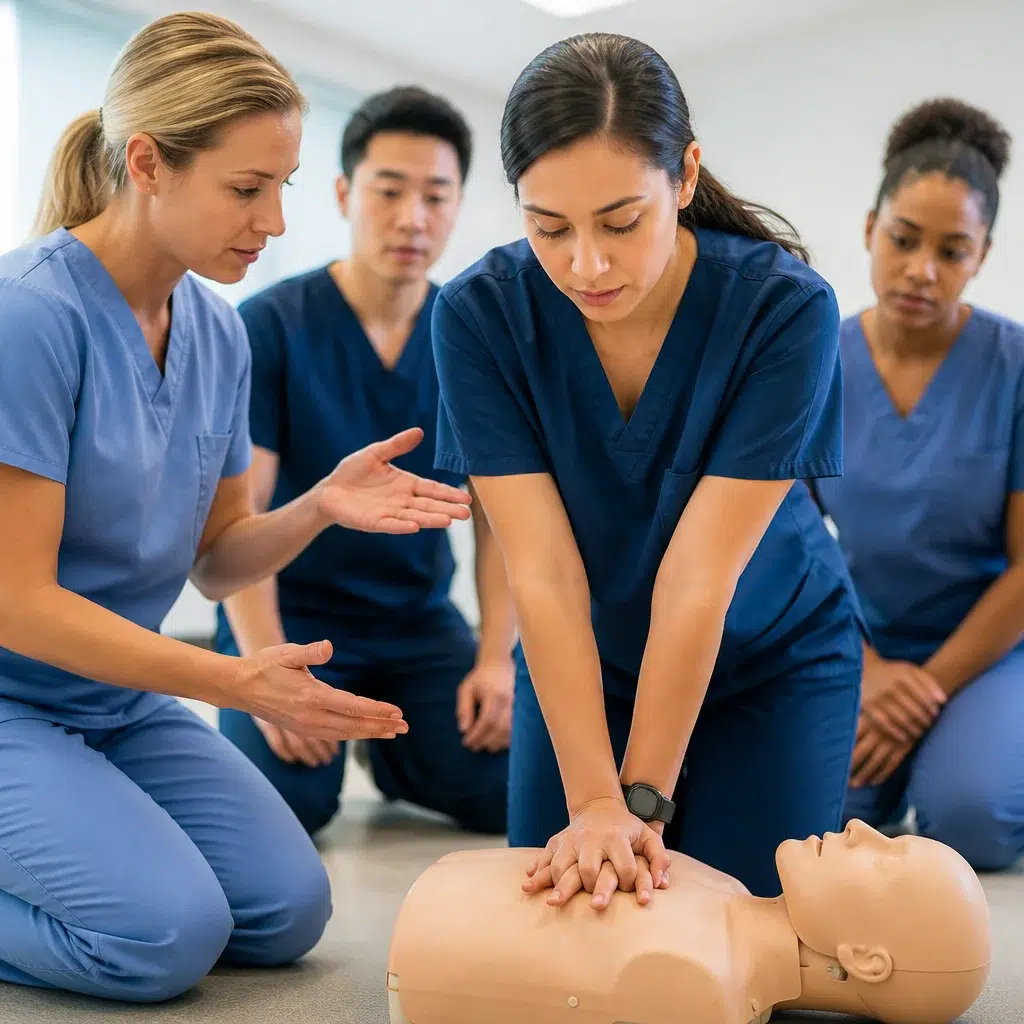
Competency checklists translate complex clinical standards into observable behaviors and sign-offs that hold up under audit. For California hospitals and clinics, pairing healthcare competency checklists with training recordkeeping templates for healthcare creates a defensible trail that aligns with Title 22 personnel record requirements and common accreditor expectations. Map each task to the governing protocol (AHA, facility policy, manufacturer IFU) so surveyors can see the clinical rationale at a glance.

A strong template captures both performance and regulatory metadata. Include fields such as:
- Skill/procedure and applicable standard or algorithm
- Verification method (direct observation, return demo, simulation, chart audit)
- Evaluator name/credentials and learner role/scope
- Date, outcome (meets/needs improvement), remediation plan, next due date
- Scenario ID or case type, equipment used, and patient population (adult/pediatric/neonatal)
Build specialized checklists around high-risk, low-frequency skills and time-critical pathways. Examples include:
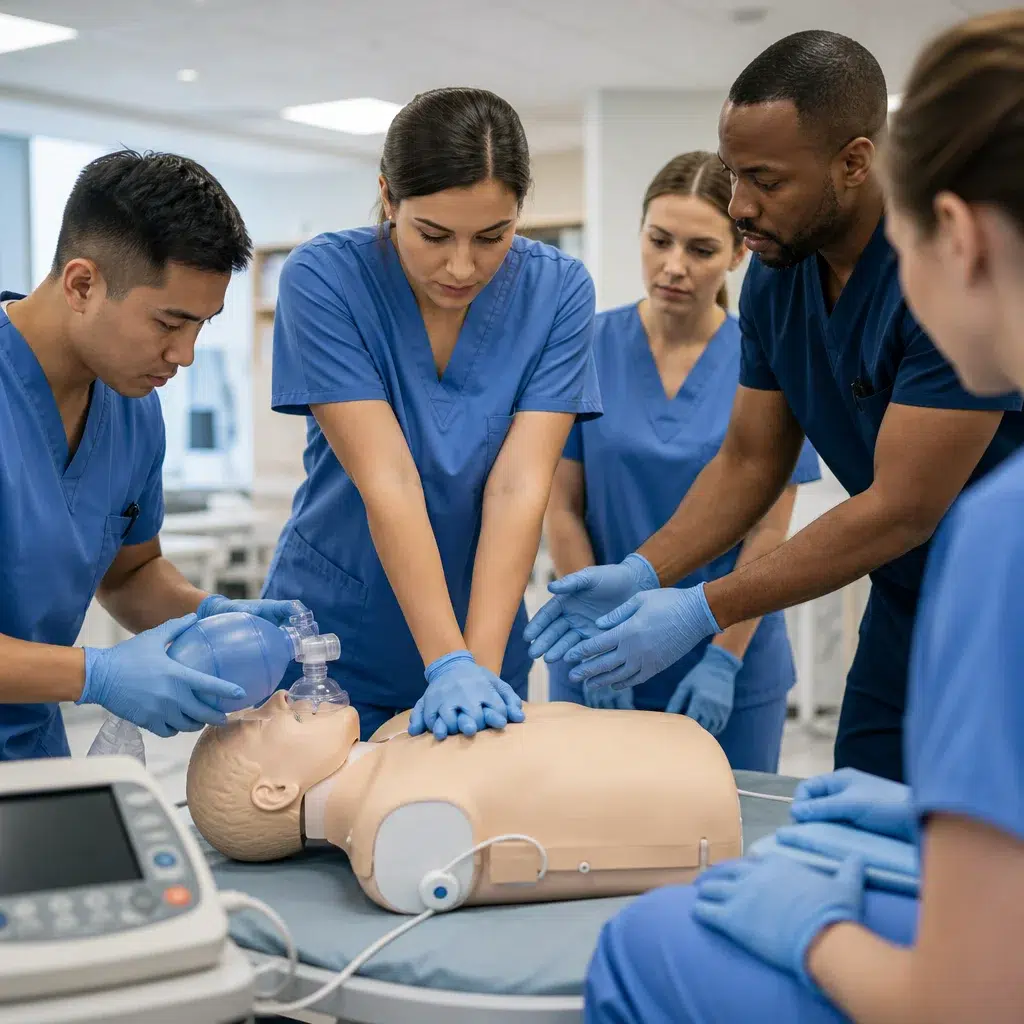
- ACLS: high-quality CPR metrics, airway adjunct selection, defibrillation safety, brady/tachy algorithms, post–cardiac arrest care
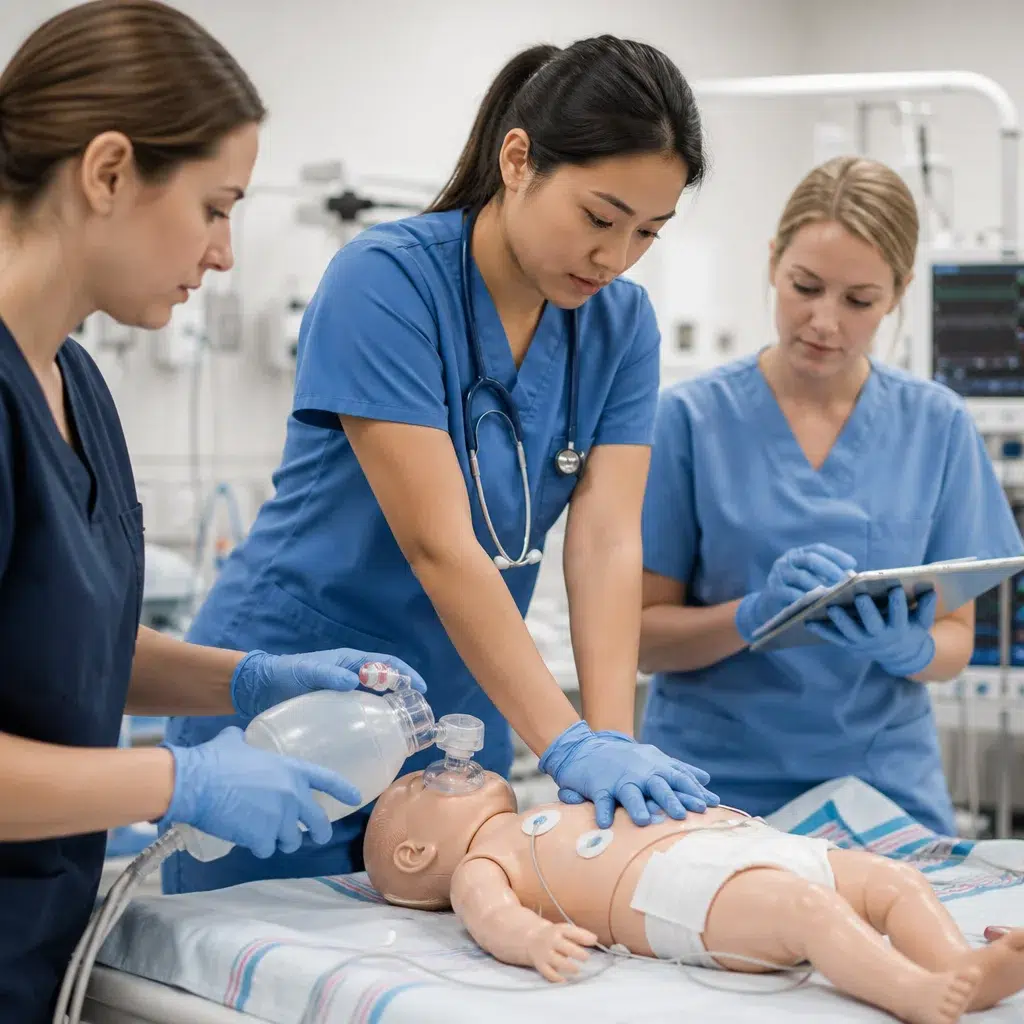
- PALS/NRP: pediatric assessment triangle, IO access assist, respiratory failure/shock algorithms, neonatal PPV/compressions sequence and epinephrine dosing checks
- ED/ICU: rapid sequence intubation assist, sepsis bundle initiation (lactate, cultures, antibiotics), stroke protocol door-to-needle steps
- Perioperative: sterile field setup, count reconciliation, central-line insertion assist with maximal barrier compliance
- Med-surg/ambulatory: blood transfusion verification, insulin infusion titration, high-alert medication double-checks, isolation PPE don/doff
Use safety training log templates to link practice events to outcomes. For example, log each mock code with team roles, debrief items, and targeted remediation, then cross-reference those entries in medical staff training records. Tie checklists to certification tracking tools so expiring BLS, ACLS, PALS, and NRP trigger competency refreshers. As a retention baseline, keep OSHA Bloodborne Pathogens training records for 3 years; respirator fit-test records until the next fit test; and maintain competency documents for at least the current and previous survey cycle (confirm durations with your compliance team). Document remediation and recheck dates to meet employee training retention schedules.
Safety Training Seminars provides AHA-aligned skills verifications for BLS, ACLS, PALS, and NRP through blended learning and in-person skills sessions across more than 100 California locations. Their signed skills forms and course completion cards attach cleanly to your medical staff training records and certification tracking tools, making audits faster and renewals predictable. For group departments, they can align course rosters with your facility’s competency checklists so unit educators can validate performance on the exact protocols your policy requires.
Retention Schedules for Medical Training and Certification Records
A clear, written schedule for how long you retain medical staff training records reduces audit risk and makes renewals predictable. In California, timelines should align with Cal/OSHA, the Board of Registered Nursing (BRN), The Joint Commission, and employer HR rules. Build your training recordkeeping templates for healthcare so each record type has a defined retention period, owner, storage location, and purge date.
Use the following employee training retention schedules as a practical baseline. Always verify against your facility policy and accreditor requirements:
- AHA certifications (BLS, ACLS, PALS, NRP): keep current card, skills checklists, and course completion documentation through at least the previous renewal cycle (commonly 4 years total). This demonstrates continuous competency and supports Joint Commission and CMS survey readiness.
- BRN continuing education: California RNs must retain CE certificates for 4 years (California BRN requirement).
- Bloodborne pathogens training: retain for 3 years from the training date (OSHA/Cal-OSHA).
- Respiratory protection fit testing: retain fit-test records until the next fit test is administered (many facilities keep 2 years as a best practice).
- Exposure and employee medical records (e.g., Hepatitis B vaccination or declination, TB screening results): retain for duration of employment plus 30 years (Cal/OSHA, 8 CCR 3204).
- Orientation and annual competency assessments: keep for the duration of employment and at least 4 years after separation to meet California personnel record rules (Gov. Code §12946) and to cover typical survey lookback periods.
To operationalize this, embed retention periods directly into your safety training log templates and healthcare competency checklists. Include fields for employee name and role, course or skill, date completed, expiration date, retention period, and next-review trigger. Add a “source of truth” column (e.g., AHA eCard ID, LMS roster, or signed skills validation) and an audit trail for updates. Set automated reminders 90, 60, and 30 days before expirations for time-sensitive items like ACLS or PALS.
Certification tracking tools should centralize digital documents and link to verifiable records. For example, store AHA eCard codes and PDF skills checklists alongside immunization and fit-test proof in a single folder structure. In small practices, a shared tracker plus quarterly audits can prevent lapsed cards; in hospitals, integrate your LMS, HRIS, and employee health system so purge dates and renewal cycles flow automatically.
Safety Training Seminars helps simplify this process by issuing AHA eCards with clear issue and expiration dates and providing rosters for corporate groups—ideal inputs for medical staff training records. With more than 100 California locations and flexible blended learning, teams can renew BLS, ACLS, PALS, or NRP on schedule while your templates keep the documentation complete and audit-ready.
Comparison Summary of Digital vs. Paper Recordkeeping Methods
California practices need reliable systems for training recordkeeping templates for healthcare to satisfy audits by the Joint Commission, CDPH, and licensing boards. The right method helps nurse managers quickly show proof of ACLS, BLS, PALS, NRP, annual competencies, and OSHA-required education without scrambling through binders.
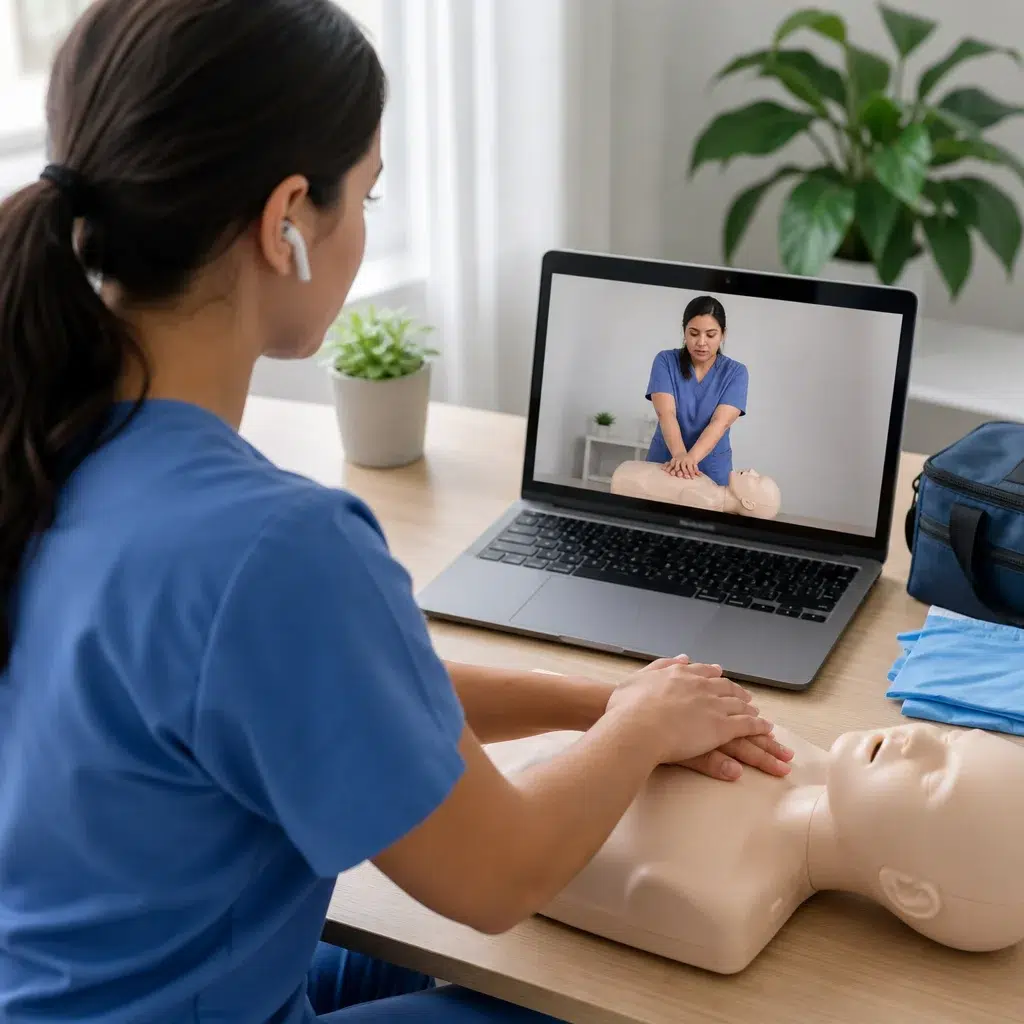
Digital recordkeeping centralizes data, speeds retrieval, and reduces errors tied to manual entry. Cloud-based files or an LMS let you standardize safety training log templates, healthcare competency checklists, and renewal dates across departments, sites, and shifts.
- Strengths: instant search/filtering, automated reminders, version control, and offsite backups for disaster recovery.
- Compliance: easy export of medical staff training records for surveyors; attach AHA eCards and rosters to employee profiles.
- Validation: link certificate IDs to the AHA eCard verification page; capture instructor signatures and completion times.
- Integration: connect data to HRIS or scheduling systems to restrict shifts if required certifications lapse.
Paper methods can be workable for small clinics or temporary setups, but they require tight discipline. When staff turnover is high or locations are dispersed, paper filing increases the risk of missing documents and outdated forms.

- Benefits: low cost to start, no logins, and simple for on-the-spot sign-offs during skills check-offs.
- Risks: misfiling, illegible entries, delayed updates, and vulnerability to fire/water damage.
- Workload: manual tallying for employee training retention schedules; slow to aggregate for quality dashboards.
Know your retention and renewal windows. OSHA Bloodborne Pathogens training records must be kept for at least 3 years. AHA certifications such as BLS and ACLS typically renew every 2 years, and the California Board of Registered Nursing expects RNs to retain CE documentation for 4 years in case of audit.
Practical approach: pair standardized digital templates with certification tracking tools. Use a shared folder or LMS to host safety training log templates and healthcare competency checklists, define owners for each unit, and automate alerts 60–90 days before expiration. For teams still using paper, scan and index every signed roster the same day to preserve a searchable digital copy.
Safety Training Seminars helps simplify this process by issuing American Heart Association eCards that employers can verify online and by providing blended learning options across 100+ California locations. Centralized, verifiable certificates make it easier to keep medical staff training records complete and current, whether you manage a single practice or a multi-site network.
Selection Guide: Choosing the Best Documentation Systems for Your Practice
Start by mapping your regulatory drivers to the documents you actually need. In California, most facilities align with Cal/OSHA requirements, CMS Conditions of Participation, and The Joint Commission’s expectations for initial and ongoing competence. From there, choose training recordkeeping templates for healthcare that mirror your job roles and required credentials, so the system supports how care is delivered—not just how records are stored. A well-chosen tool reduces audit risk, speeds onboarding, and gives managers real-time visibility.
Prioritize systems and templates that cover the full lifecycle—from orientation to annual skills and license renewals—and that produce evidence surveyors recognize. Look for options that bundle safety training log templates, healthcare competency checklists, and medical staff training records with clear version control and approvals. If you rely on ACLS/BLS/PALS, ensure skills verification forms align with current AHA standards and capture instructor IDs, eCard codes, and renewal dates.
Key selection criteria to evaluate:
- Coverage of required forms: safety training logs, unit-specific skills checklists, and role-based competency validations (e.g., ED, ICU, dental sedation).
- Certification tracking tools with automated alerts for expiring BLS/ACLS/PALS/NRP and license renewals, including grace-period logic.
- Integrations or simple imports from AHA eCards, HRIS, and scheduling systems; clean export to CSV/PDF for audits.
- Employee training retention schedules configurable by rule (e.g., OSHA Bloodborne Pathogens = 3 years) and internal policy.
- Role-based access, audit trails, and e-signatures that meet surveyor expectations.
- Mobile capture for on-the-floor skills validation and preceptor sign-off.
- Template governance with version history and sunset dates to prevent outdated forms.
- Dashboards that filter by unit, site, and manager for quick compliance snapshots.
Set retention with both regulatory minimums and risk in mind. For OSHA Bloodborne Pathogens, keep training records for at least three years from the training date. Respirator fit-test records must be retained until the next fit test is administered. The California Board of Registered Nursing requires RNs to retain continuing education certificates for four years; many organizations extend internal employee training retention schedules to cover the full employment period plus several years.
Design a practical workflow that ties templates to milestones. Example: an ED nurse onboarding packet may include BLS/ACLS eCards, dysrhythmia competency, bloodborne pathogens, safe patient handling, and medication administration. Link due dates and recertification windows (e.g., 60–90 days prior to expiration), and auto-populate safety training log templates from completed classes to reduce double entry.
Data quality matters more than volume. Standardize fields across medical staff training records: full name, license number and state, NPI (if applicable), course name, AHA eCard code, issue/expiration dates, instructor ID, and verification link. Attach source evidence (certificates, rosters, skills checklists) and enforce a naming convention that includes role, unit, and date. Version your healthcare competency checklists and archive superseded versions to simplify audits.
For clinical certifications, choose training partners whose outputs plug seamlessly into your system. Safety Training Seminars delivers AHA BLS, ACLS, PALS, and NRP statewide with blended learning and over 100 California locations, making it easy for staff to complete required courses on schedule. Their standardized rosters and eCard verification links import cleanly into most certification tracking tools, and corporate group options simplify record consolidation across multi-site practices. Pairing reliable course documentation with robust templates gives you defensible, survey-ready records year-round.
Register for a class today.