

Safety Training Seminars

Enhance your pediatric emergency expertise with our Comprehensive PALS Study Guide. Learn to assess critically ill children, recognize life-threatening conditions, perform high-quality CPR, and apply advanced interventions confidently. This step-by-step, evidence-based guide equips healthcare providers to respond quickly, improve survival rates, and deliver expert pediatric life support with precision.
Pediatric Advanced Life Support (PALS) is a systematic approach to assessing and treating pediatric patients in emergency situations. Developed by the American Heart Association (AHA), the PALS course equips healthcare providers with the skills to effectively recognize and manage respiratory emergencies, shock, and cardiopulmonary arrest.
For healthcare professionals working in emergency medicine, intensive care, or critical response, this certification is not just a requirement—it is a critical skillset that saves lives. According to data from the American Heart Association, pediatric out-of-hospital cardiac arrest (OHCA) survival rates remain low, emphasizing the need for high-quality, standardized training. Mastering PALS protocols ensures you are ready to intervene during those crucial first minutes.
This guide covers everything you need to know to pass your PALS exam and, more importantly, apply these skills in real-world scenarios. From the systematic approach to specific algorithms and pharmacology, we break down complex concepts into actionable knowledge.
The PALS Systematic Approach is the foundation of pediatric assessment. It provides a structured method to quickly identify life-threatening conditions. The approach uses a cycle of Evaluate-Identify-Intervene.
You must constantly repeat this cycle to monitor the child’s response to your interventions.
1. Upper Airway Obstruction (Croup, Anaphylaxis, Foreign Body):
2. Lower Airway Obstruction (Asthma, Bronchiolitis):
3. Lung Tissue Disease (Pneumonia, Pulmonary Edema):
4. Disordered Control of Breathing (Seizures, Poisoning):
1. Narrow Complex Tachycardia:
2. Wide Complex Tachycardia:
In California, specific regulations often require healthcare providers in emergency and critical care settings to maintain current PALS certification. The state has a high volume of pediatric emergency admissions, making readiness essential.
According to a study published in the Journal of the American Heart Association, survival rates for pediatric out-of-hospital cardiac arrest vary significantly by region. While national survival to hospital discharge averages around 8-11% for OHCA, regions with integrated systems of care—including high rates of bystander CPR and highly trained EMS/hospital staff—show improved outcomes.
Finding a reliable training center is crucial for your certification. We offer the lowest priced American Heart Association courses in California and operate over 70 locations, making it easy to find a class near you.
Here is why thousands of California healthcare providers choose us:
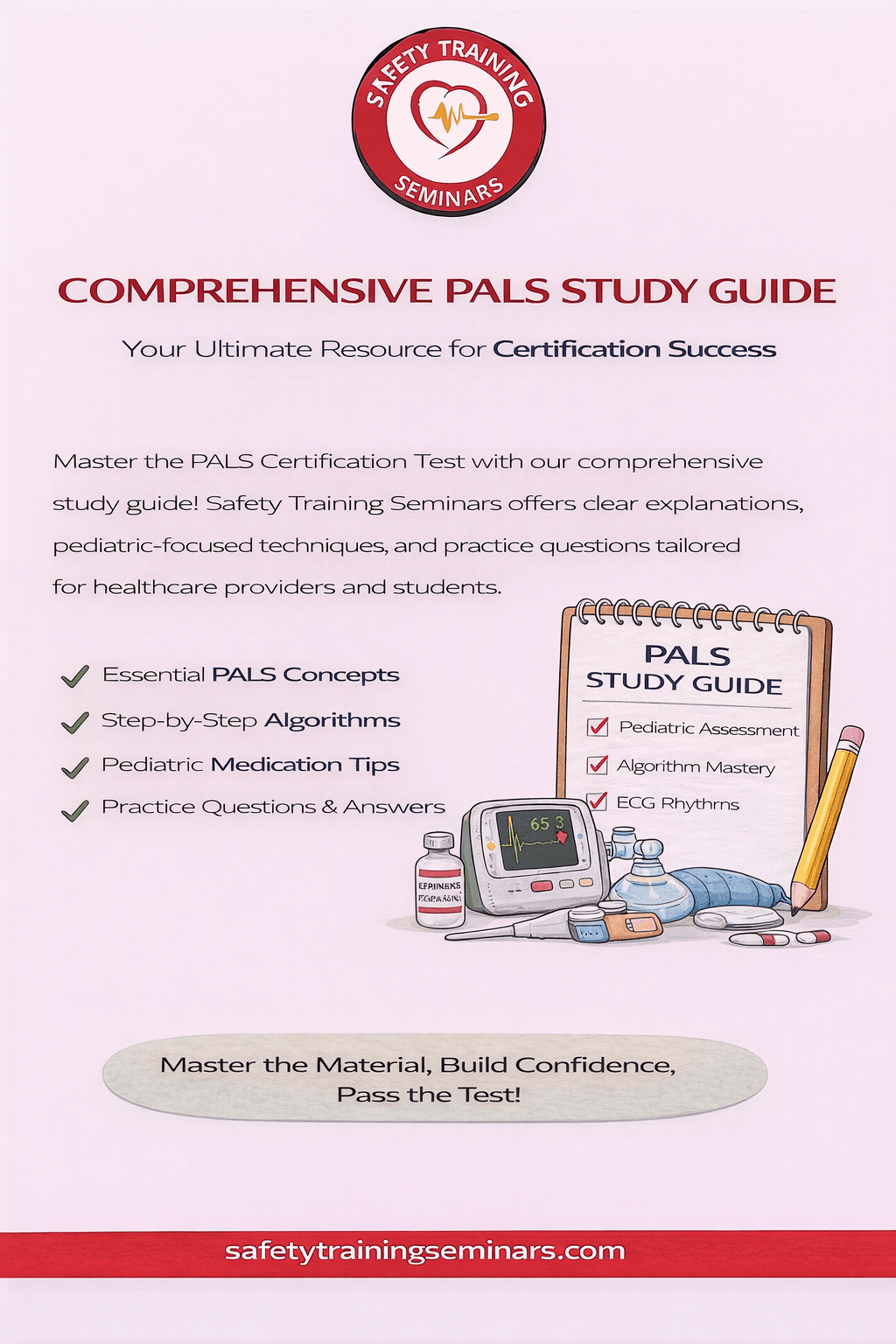
The Comprehensive PALS Study Guide is designed to make learning Pediatric Advanced Life Support (PALS) simple and approachable. Using an easy-to-follow infographic format, it breaks down complex emergency procedures into clear, visual steps. Whether you’re a healthcare professional, student, or first responder, this guide helps you understand how to act quickly and confidently during pediatric emergencies.
Inside the guide, you’ll find everything from recognizing cardiac emergencies and performing CPR to airway management and life-saving medication protocols. Every section follows the latest American Heart Association (AHA) guidelines, so you can trust the information is accurate and up-to-date. Visual flowcharts, step-by-step diagrams, and quick-reference tips make it easy to see what to do next, reducing confusion in stressful situations and improving retention of critical procedures.
What makes this guide truly effective is how it combines visuals with practical learning tools. Memory aids, color-coded sections, and concise explanations ensure the information sticks, whether you’re preparing for PALS certification or refreshing your skills for real-world practice. With this Comprehensive PALS Study Guide, lifesaving knowledge is right at your fingertips—easy to understand, easy to remember, and ready to use when it matters most.
You must achieve a score of 84% or higher on the American Heart Association PALS written exam to pass. The exam consists of 33 multiple-choice questions.
No. While you can complete the cognitive portion (HeartCode PALS) online, the American Heart Association requires an in-person hands-on skills session to verify your competency. Be wary of websites offering “fully online” cards, as most employers will not accept them.
The full classroom course takes approximately 12-14 hours (often split over two days). The Blended Learning HeartCode option takes 2-6 hours online, followed by a 30-60 minute in-person skills session.
If you do not pass the Megacode skills station, your instructor will typically provide remediation and allow you to retest. The goal is to ensure you are competent, not to fail you.
PALS is typically required for nurses working in Pediatrics, PICU, NICU, Emergency Departments, and Urgent Care centers. Check your specific employer’s requirements.
AHA PALS certification is valid for two years. You must take a renewal course or complete the HeartCode skills session before your card expires.
PALS (Pediatric Advanced Life Support) is for healthcare providers who direct or participate in the management of respiratory and cardiovascular emergencies. PEARS (Pediatric Emergency Assessment, Recognition, and Stabilization) is for providers who may encounter pediatric emergencies but do not routinely provide advanced life support (e.g., school nurses, medical assistants).
You should be proficient in BLS (Basic Life Support) skills, ECG rhythm interpretation, and basic pharmacology before taking PALS.
Yes! Many training centers, including ours, allow you to schedule back-to-back skills sessions for HeartCode BLS, ACLS, and PALS, saving you a trip.
We have over 70 locations across California offering PALS skills testing. Visit our Locations Directory to find the office nearest you.