

Safety Training Seminars
Become an opioid emergency first responder with Safety Training Seminars’ American Red Cross Opioid Overdose and Naloxone Administration certification course. Opioid overdoses occur unexpectedly in homes, workplaces, public spaces, and community venues—rapid recognition and response saves lives. Our comprehensive training equips everyday citizens and workplace teams with critical skills to identify overdose symptoms, perform emergency interventions, and properly administer naloxone during life-threatening situations. Build confidence to act decisively when minutes matter most during opioid-related emergencies anywhere.

The Opioid Overdose & Naloxone Administration Course offered through Safety Training Seminars provides essential education on recognizing opioid overdoses and responding quickly and safely. This online course is designed to help individuals understand how opioids affect the body, why overdoses occur, and how timely action can save lives during a critical emergency.
Opioid overdoses remain a major public health concern, affecting individuals and families across all communities. Being prepared to recognize the signs and respond appropriately can make a life-saving difference while emergency medical services are on the way.
Opioids include prescription pain medications as well as illicit substances. While these drugs are commonly used to manage pain, they can also suppress breathing and central nervous system function. In overdose situations, breathing may become dangerously slow or stop altogether, leading to unconsciousness or death if help is delayed.
This course explains how opioids interact with the body, why overdose emergencies are so dangerous, and how tolerance, dosage, and substance mixing increase risk. Understanding these factors helps learners recognize why rapid response is essential.
Early recognition is one of the most critical steps in overdose response. The course teaches learners how to identify common warning signs, including slow or absent breathing, unresponsiveness, pale or clammy skin, bluish lips or fingernails, pinpoint pupils, and choking or gurgling sounds.
Because overdoses can resemble other medical emergencies, the training emphasizes focusing on breathing and responsiveness. When an overdose is suspected, learners are taught to treat the situation as a medical emergency and seek help immediately.
A key focus of the course is understanding naloxone, a medication that can temporarily reverse the effects of an opioid overdose. Naloxone works by blocking opioids from attaching to receptors in the brain, helping restore normal breathing. It is not addictive and does not produce a high.
The course explains when naloxone should be used, how quickly it can take effect, and why emergency services must still be contacted even after naloxone is administered. Learners also understand that naloxone’s effects may wear off before the opioids leave the body, making continued monitoring critical.
Participants learn step-by-step how to respond to a suspected opioid overdose safely. This includes checking the scene for hazards, using gloves when available, calling 911 immediately, and assessing responsiveness and breathing.
The course covers how to support breathing, provide rescue breaths or CPR if needed, and stay with the individual until professional help arrives. Clear guidance is provided to help learners act confidently without increasing risk to themselves or others.
The training introduces different forms of naloxone, including intranasal spray options. Learners gain an understanding of how naloxone is administered, how to position the individual safely, and what to expect after the medication takes effect.
If the person begins breathing again, the course emphasizes recovery positioning, close observation, and readiness for possible side effects such as vomiting or confusion. Continued care is essential until emergency responders arrive.
Beyond emergency response, the course encourages preparedness and prevention. Learners are guided on how to create an emergency response plan for homes, schools, or workplaces. This includes knowing where naloxone is stored, ensuring multiple people are trained, and responding calmly and without judgment.
The course also reinforces that opioid overdose can affect people from all backgrounds. Compassion, awareness, and preparedness are key components of effective response and community safety.
This training is valuable for educators, coaches, childcare providers, security personnel, community leaders, workplace teams, and family members. It is especially useful in public-facing environments where emergencies may occur unexpectedly.
No medical background is required. The course is designed to be accessible, informative, and practical for everyday use.
The Opioid Overdose & Naloxone Administration Course is delivered entirely online. Learners can complete the training at their own pace, access materials 24/7, and review content as needed. The mobile-friendly platform allows learning from home, work, or on the go.
This flexibility makes the course ideal for individuals and organizations seeking timely, reliable education without attending in-person sessions.
The American Red Cross–aligned Opioid Overdose & Naloxone Administration Course equips learners with the knowledge to recognize overdose emergencies, respond appropriately, and administer naloxone correctly. These skills can help keep someone alive long enough to receive advanced medical care and another chance at recovery.
Preparedness saves lives. Understanding what to do—and having the confidence to act—can make all the difference during one of today’s most urgent emergencies.
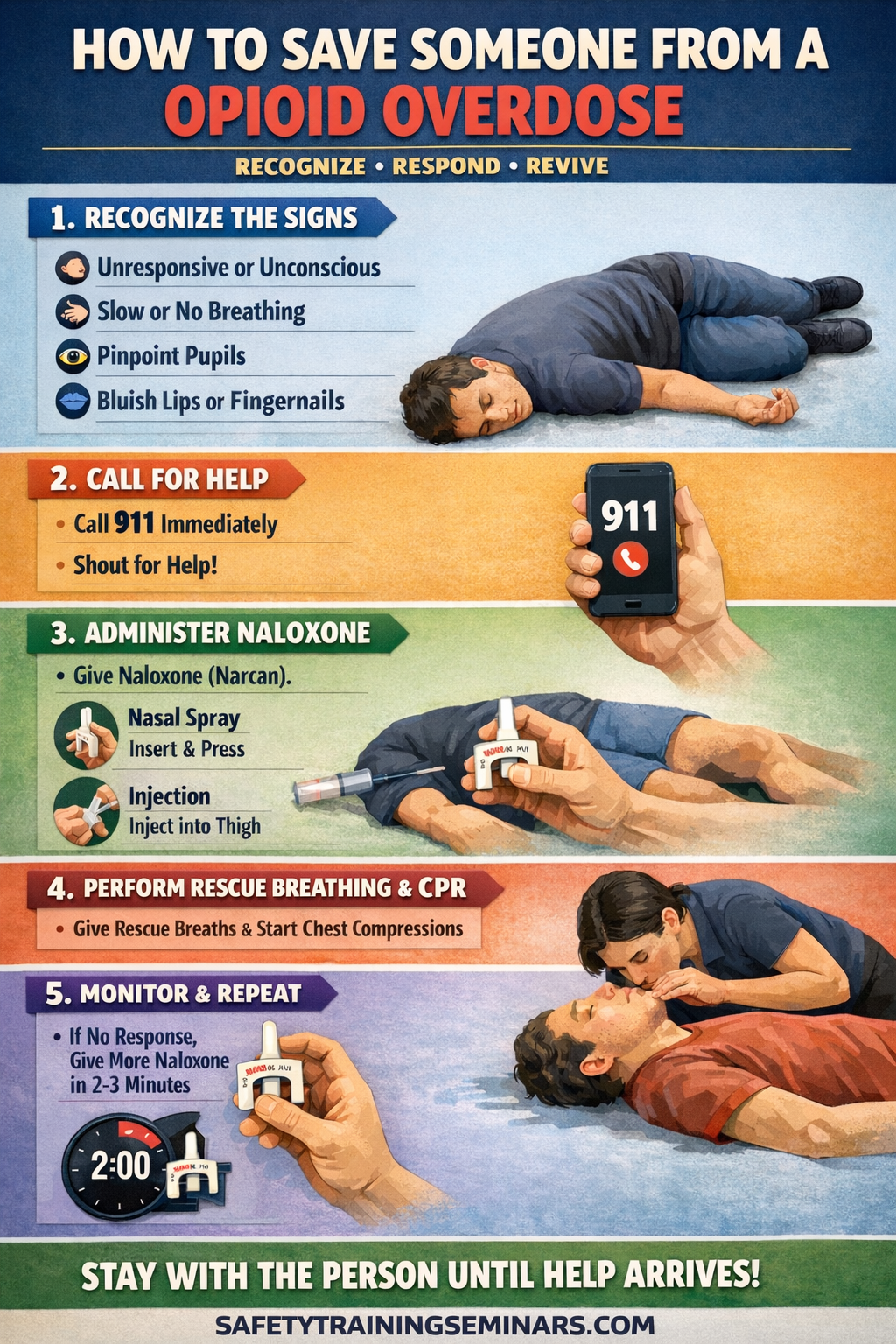
Opioid overdoses are life-threatening emergencies that require immediate action. Knowing these steps can help you save a life during a critical situation.
1. Recognize the Signs: Look for unresponsiveness or unconsciousness, slow or absent breathing, pinpoint pupils, and bluish lips or fingernails. These indicate a potential opioid overdose requiring urgent intervention.
2. Call for Help: Immediately call 911 and provide your location. Shout for nearby assistance while staying with the person. Emergency medical services are essential even if the person appears to recover.
3. Administer Naloxone: Give naloxone (Narcan) immediately if available. For nasal spray, insert the nozzle into one nostril and press the plunger firmly. For injection, inject into the outer thigh through clothing if necessary.
4. Perform Rescue Breathing & CPR: Provide rescue breaths and begin chest compressions if the person isn’t breathing. Continue CPR until help arrives or the person responds.
5. Monitor & Repeat: If there’s no response after 2-3 minutes, administer a second dose of naloxone. Continue monitoring breathing and responsiveness.
Stay with the person until emergency medical help arrives. Your quick action can be the difference between life and death.
A: This course benefits anyone who may encounter opioid emergencies, including family members of at-risk individuals, workplace safety teams, teachers, community organization staff, first responders, hospitality workers, and concerned citizens wanting to save lives.
A: Naloxone (brand name Narcan) is an FDA-approved medication that rapidly reverses opioid overdose effects by blocking opioid receptors in the brain, restoring normal breathing within minutes. It’s safe, effective, and has no potential for abuse.
A: Opioid overdoses can happen anywhere—private homes, workplaces, public restrooms, parks, community events, schools, and transportation facilities. This unpredictability makes widespread naloxone training and availability critical for saving lives when emergencies occur.
A: Yes, the American Red Cross Opioid Overdose and Naloxone Administration course teaches proper naloxone administration techniques, overdose recognition, emergency response protocols, rescue breathing, recovery position, and when to call 911 during opioid emergencies.
A: No medical background is required. Naloxone is designed for layperson administration during emergencies. Our course provides everyday people with the confidence and knowledge to recognize overdose symptoms and administer naloxone safely and effectively when minutes matter.