

Safety Training Seminars
Safety Training Seminars offers OSHA-compliant American Red Cross Bloodborne Pathogens online certification tailored for employees at risk of occupational exposure to blood, bodily fluids, and potentially infectious materials. This essential workplace safety training covers pathogen transmission mechanisms, exposure prevention strategies, proper personal protective equipment usage, decontamination procedures, and critical response protocols following contact with infectious substances. Fully satisfy federal OSHA Bloodborne Pathogens Standard 29 CFR 1910.1030 requirements through convenient, comprehensive online certification accepted nationwide.

The Bloodborne Pathogens Online Course by Safety Training Seminars provides essential training for individuals who may come into contact with blood or other potentially infectious materials. This course is designed to help participants understand the risks of exposure, follow safe work practices, and respond properly to incidents involving contaminated materials.
Bloodborne pathogens training is critical for maintaining workplace safety and reducing the risk of disease transmission. This online course delivers clear, practical instruction that supports compliance and promotes safer environments across a wide range of industries.
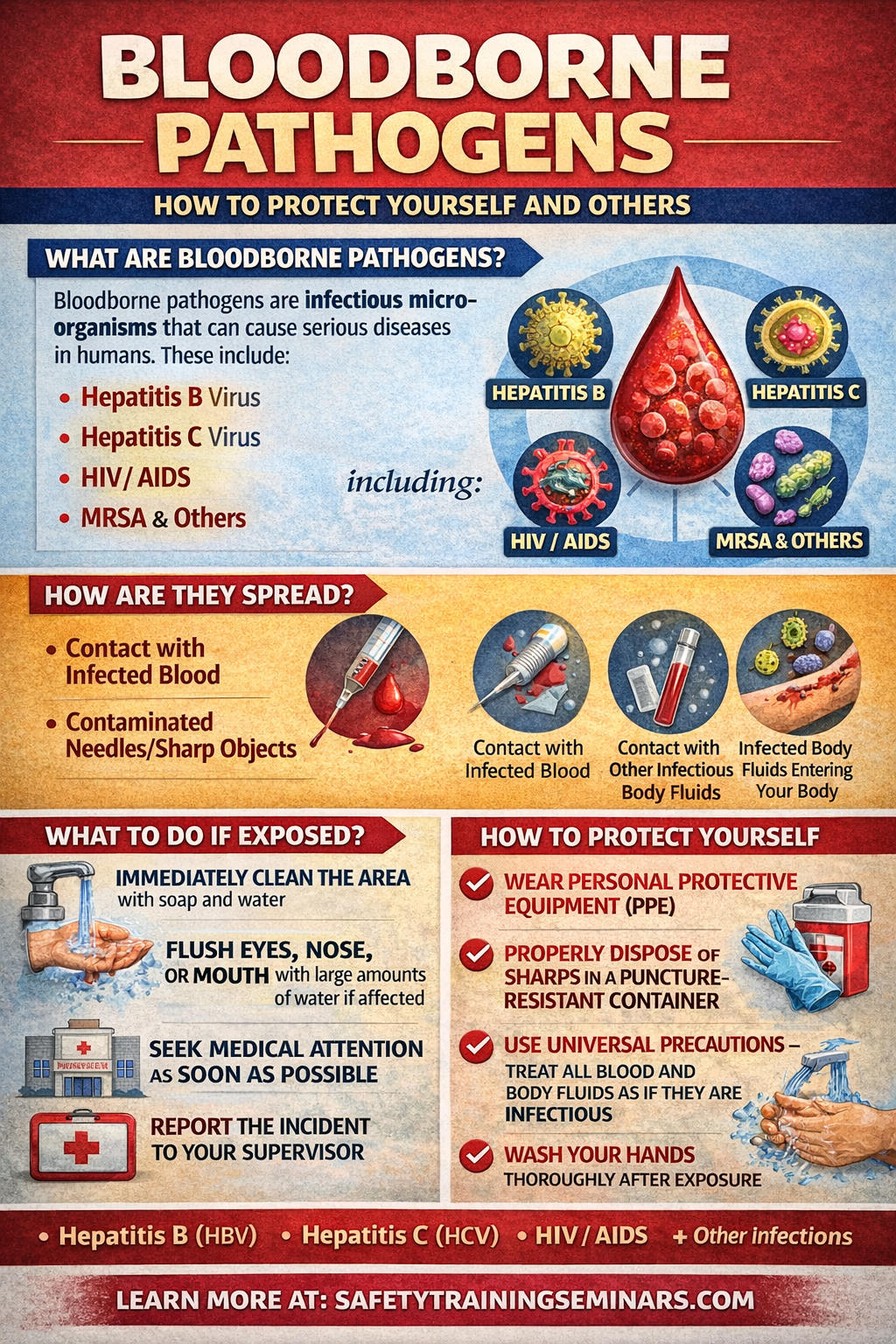
Bloodborne pathogens are infectious microorganisms present in blood and certain body fluids that can cause serious illness. Exposure can occur through needlestick injuries, cuts, abrasions, or contact with contaminated blood or bodily fluids. Without proper training, even routine tasks can pose significant health risks.
This course helps learners recognize exposure hazards, understand how infections spread, and apply preventive measures that protect both themselves and others. Proper training reduces fear, increases awareness, and strengthens overall workplace safety.
This training is ideal for healthcare workers, emergency responders, custodial staff, laboratory personnel, tattoo and body art professionals, and anyone whose job duties may involve exposure to blood or other potentially infectious materials. It is also valuable for caregivers and individuals seeking to improve personal and community safety.
No prior experience is required. The course is suitable for both individuals and organizations seeking reliable bloodborne pathogens education.
The course covers essential topics related to bloodborne pathogen safety, including how exposure occurs, how to reduce risk, and how to respond to incidents. Learners gain a clear understanding of universal precautions, personal protective equipment, safe work practices, and proper handling and disposal of contaminated materials.
You will also learn about common bloodborne pathogens and the importance of following exposure control procedures to minimize the risk of infection in the workplace.
The Bloodborne Pathogens course is fully online and available 24/7. Learners can start at any time, progress at their own pace, and review content whenever needed. The platform is mobile-friendly and works seamlessly on computers, tablets, and smartphones.
The simple layout and easy navigation make learning efficient and stress-free, even for busy professionals.
After completing the course material, learners take an online assessment to confirm understanding of key bloodborne pathogens concepts. The exam focuses on practical knowledge, including exposure prevention, proper use of protective equipment, and safe response procedures.
Upon successful completion, participants receive a bloodborne pathogens certificate that demonstrates their commitment to safety and awareness.
Bloodborne pathogens certification is valid for one year. Annual renewal ensures that knowledge remains current and that individuals stay informed about safe practices and workplace responsibilities.
Completing bloodborne pathogens training helps individuals protect themselves, coworkers, and the public. Certification supports workplace compliance, reduces the risk of exposure incidents, and demonstrates professional responsibility.
For employers, trained staff contribute to safer operations and a stronger safety culture. For individuals, certification enhances credibility and preparedness in environments where exposure risks exist.
The Bloodborne Pathogens Online Course from Safety Training Seminars offers practical, accessible training designed to promote safety and confidence. Whether required for work or taken as a proactive safety measure, this course helps ensure you are prepared to handle exposure risks responsibly and effectively.
When your pet faces a medical emergency, knowing what to do can save their life. Here are essential first aid responses for common pet emergencies:
Choking: Check for objects in your pet’s mouth and remove if easily accessible. Never blindly sweep your finger, as this can push objects deeper.
Wounds: Muzzle if necessary to prevent biting when your pet is in pain. Gently clean wounds with clean water and apply firm pressure with gauze to stop bleeding.
Heatstroke: Move your pet to a cool area immediately. Apply cool, wet towels to their neck, armpits, and between hind legs. Offer small amounts of water.
Poisoning: Identify the poison if possible and call your vet or poison control immediately. Do NOT induce vomiting unless instructed by a professional.
Broken Bones: Keep your pet calm and restrained on a flat surface. Create a makeshift splint only if transport is delayed.
Seizures: Stay calm and time the seizure. Move objects away but do NOT restrain your pet or put anything in their mouth.
CPR: Check for breathing, give rescue breaths through the nose, and perform chest compressions at 100-120 compressions per minute.
A: OSHA requires Bloodborne Pathogens training for all employees with reasonably anticipated occupational exposure to blood or other potentially infectious materials, including healthcare workers, first responders, custodial staff, laboratory personnel, tattoo artists, and childcare providers.
A: Yes, the American Red Cross Bloodborne Pathogens online course fully satisfies OSHA Bloodborne Pathogens Standard 29 CFR 1910.1030 requirements for workplace safety training and compliance documentation.
A: OSHA requires annual Bloodborne Pathogens training for all at-risk employees. You must complete refresher training at least once every 12 months to maintain compliance with federal workplace safety regulations.
A: The course covers bloodborne pathogen transmission methods, exposure prevention strategies, personal protective equipment usage, safe work practices, decontamination procedures, exposure control plans, post-exposure response protocols, and regulatory compliance requirements.
A: Yes, this OSHA-compliant course is delivered completely online, allowing convenient access from any location. Upon completion, you receive documentation proving compliance with federal Bloodborne Pathogens Standard training requirements.