Introduction to the Importance of Onsite Certification for Healthcare Facilities
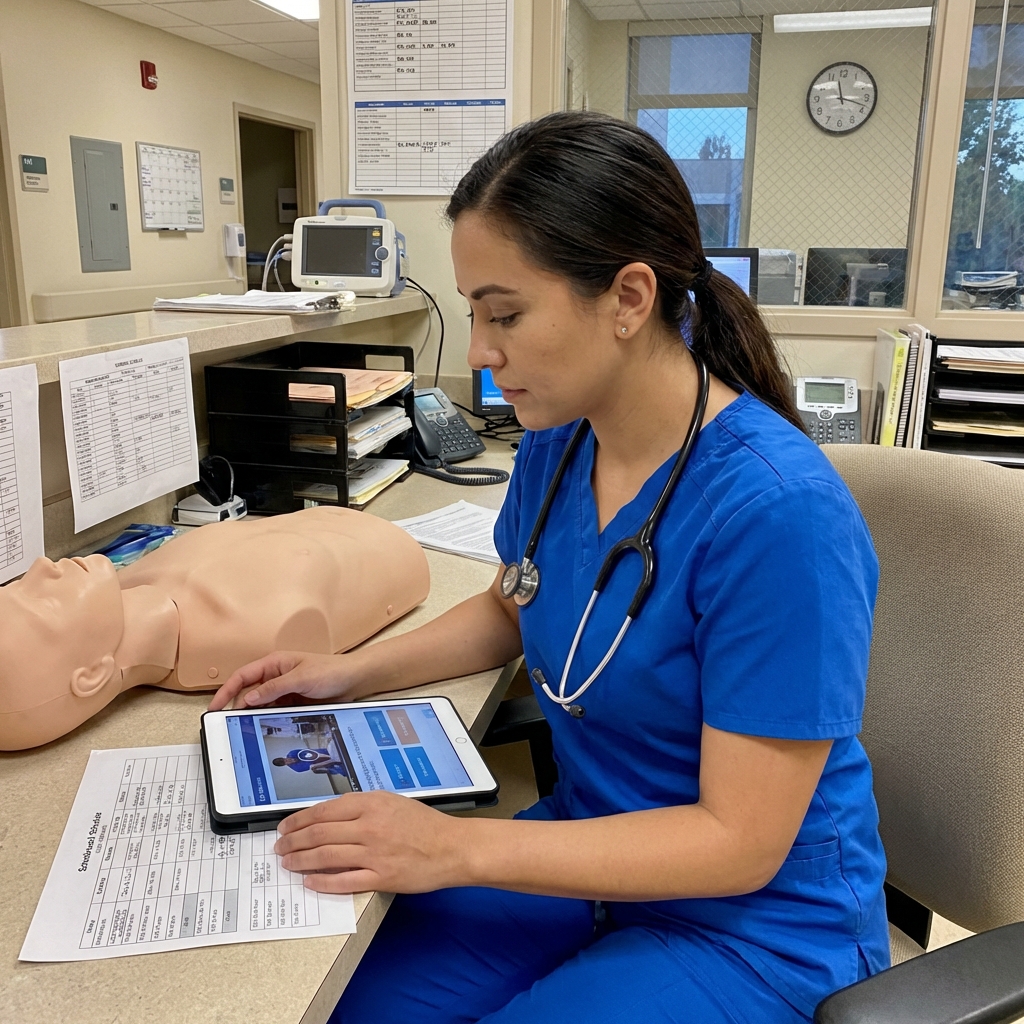
Keeping hospital teams current on AHA-required credentials is more than a checkbox—it directly supports patient safety, clinical readiness, and regulatory compliance. Because HeartCode eLearning courses still require an in‑person skills check, onsite skills testing for hospitals removes travel barriers, shortens time away from the unit, and helps managers maintain safe staffing while nurses, physicians, and techs renew.
For busy facilities, the operational advantages are immediate. Centralized hospital group certification scheduling allows educators to align BLS, ACLS, and PALS renewals with shift patterns, new‑hire cohorts, and annual competency fairs. A 300‑bed medical center, for example, can block evening or weekend skills sessions by department to minimize backfill costs and reduce overtime.
Key benefits of bringing certification onsite include:
- Consistent, scenario-based practice tailored to your units (ICU, ED, pediatrics)
- Faster completion of blended learning with coordinated skills checks
- Fewer disruptions to patient flow and staff scheduling
- Standardized documentation for credentialing and audits
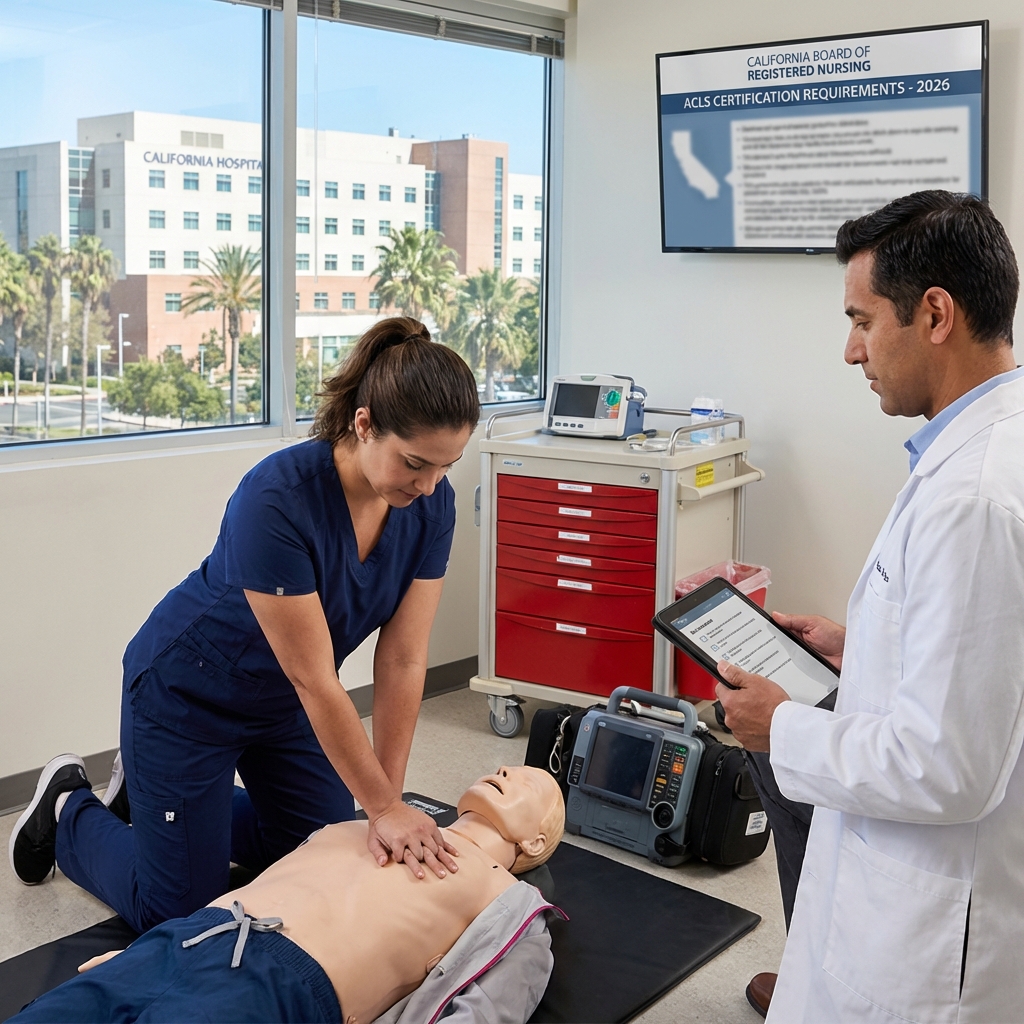
Onsite ACLS skills testing is especially valuable for high-acuity teams that need realistic MegaCode practice built around local protocols—post-cardiac arrest care in the ICU, rapid response on med‑surg, or perioperative emergencies. The same approach supports targeted healthcare facility safety training such as PALS for pediatrics or NRP for labor and delivery, ensuring competencies reflect your equipment, code carts, and communication pathways.
Clinics and ambulatory centers face similar pressures with lean staffing and tight appointment books. Mobile CPR training for clinics lets dental groups, urgent care networks, and ASC teams complete the online modules on their own time, then finish the hands‑on portion in short, instructor-led sessions before or after clinic hours. A multi-site practice can rotate a monthly skills day across locations to keep everyone current without closing schedules.
Safety Training Seminars delivers these efficiencies across California with blended learning plus professional instructors who come to your facility. With over 100 training locations statewide, corporate group options, discount pricing, and a low price guarantee, they simplify BLS certification for medical staff and coordinate hospital group certification scheduling. Facilities can also direct teams to streamlined CPR training and certification and then complete the onsite skills check together—an efficient path to keep ACLS, PALS, and NRP up to date.
The Efficiency of Mobile Skills Testing for Busy Hospital Staff
For facilities with tight staffing models and round-the-clock patient care, onsite skills testing for hospitals eliminates the most common barriers to compliance. Teams no longer have to commute to an offsite classroom or juggle coverage for half-day trainings. By bringing accredited instructors and equipment directly to your units, you minimize downtime while keeping patient care uninterrupted.
Mobile skills sessions pair naturally with blended learning. Staff complete their online AHA coursework in advance and then rotate through brief, hands-on checkoffs at the hospital. This model supports onsite ACLS skills testing alongside BLS certification for medical staff, and can be expanded to PALS or NRP when needed. The result is consistent evaluation using standardized scenarios in a timeframe that works for high-acuity environments.
Scheduling is streamlined with hospital group certification scheduling that aligns with shift patterns, huddles, and unit-based staffing. Short blocks can be set up for days, nights, and weekends so departments don’t need to pull entire teams at once. The same approach scales to ambulatory sites, making mobile CPR training for clinics a practical option during slower clinic hours or lunch breaks.
Quality and compliance remain central. AHA-aligned evaluators use calibrated manikins and checklists to document performance, and administrators receive consolidated reports for audits and credentialing. eCards are issued promptly after successful completion, helping HR and education teams keep healthcare facility safety training current across service lines.
Operationally, a mobile model improves efficiency in ways that matter to busy hospitals:
- Unit-based stations (ICU, ED, OR, Med-Surg) to reduce staff movement and pager disruptions
- Parallel skill stations to move learners through quickly without bottlenecks
- Rolling sign-up windows and waitlist options for last-minute schedule changes
- Pre-course reminders to boost online completion rates before skills day
- Post-session summaries that map completions by department and expiration date
Safety Training Seminars supports hospitals and clinics across California with AHA-compliant mobile teams, blended learning options, and corporate group pricing backed by a low price guarantee. With over 100 locations statewide, they can also supplement onsite efforts with regional classrooms for overflow or new hires. For departments planning recurring BLS renewals, see their onsite BLS certification programs to coordinate a schedule that keeps your staff current without disrupting care.
Streamlining Compliance with Blended Learning and Flexible Scheduling
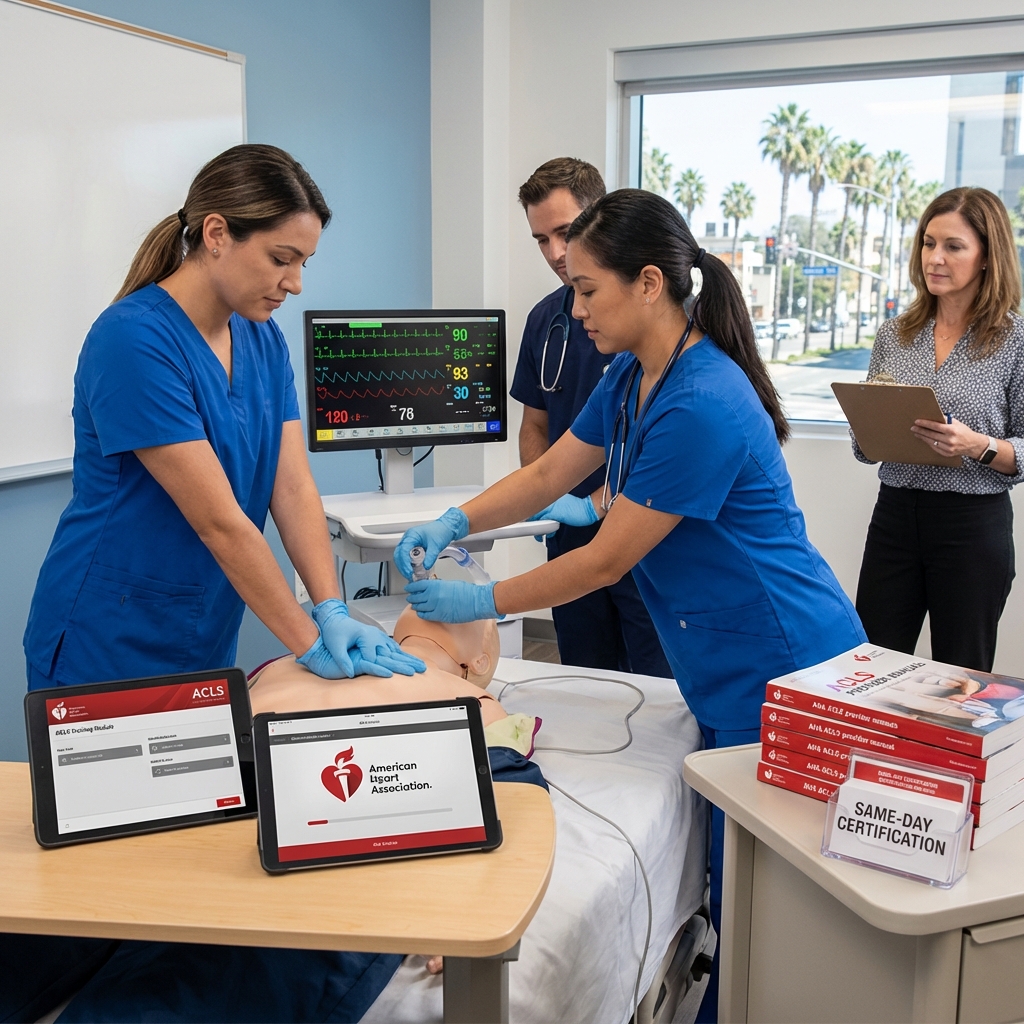
Meeting mandatory AHA renewal cycles while maintaining staffing levels can be challenging for hospitals and clinics. A blended learning approach reduces classroom time and keeps units fully staffed by pairing online coursework with onsite skills testing for hospitals. Staff complete the eLearning modules on their own schedule, then demonstrate competencies during short, focused hands-on sessions brought directly to your facility.
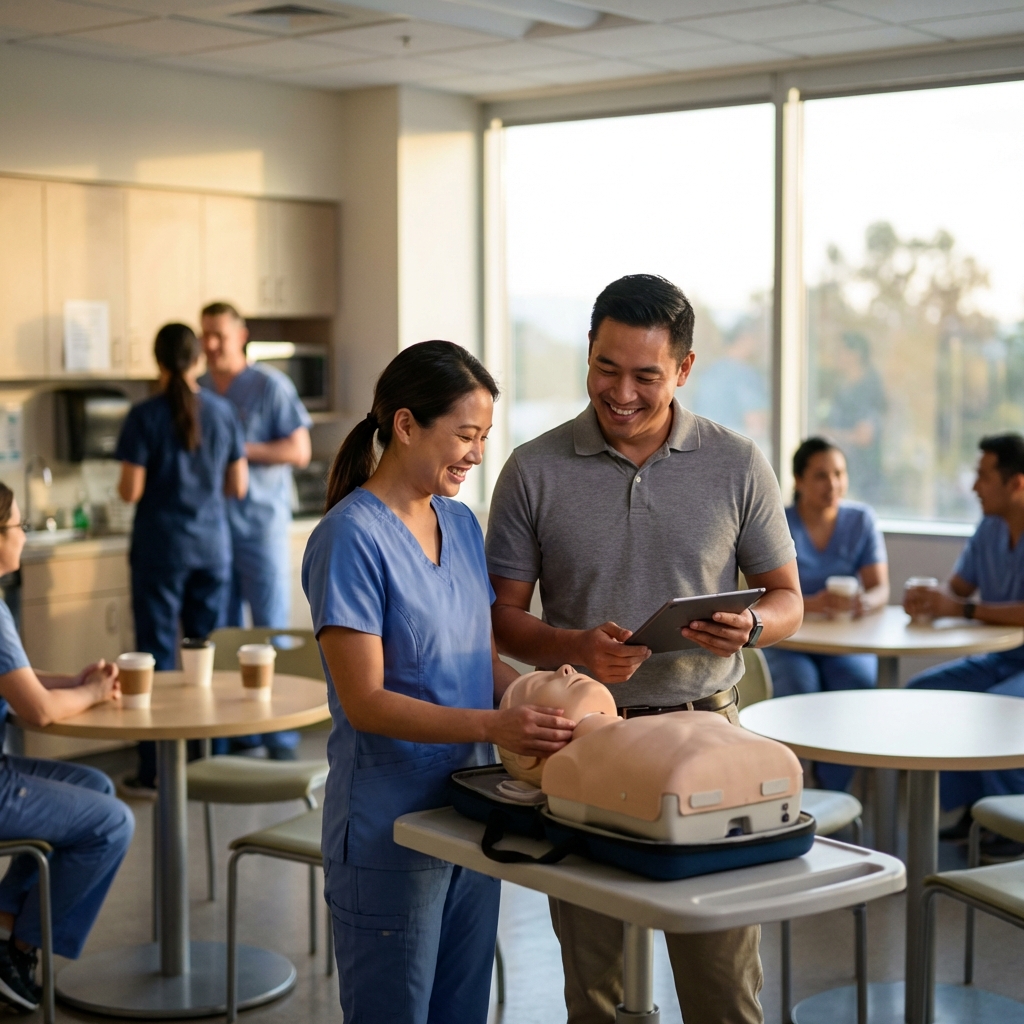
In practice, nurses, dentists, and EMS personnel finish HeartCode BLS, ACLS, or PALS online, then attend a skills check scheduled around shift changes and unit needs. For example, BLS skills checks often take 20–30 minutes per person, while onsite ACLS skills testing is typically completed in about an hour per participant. This model supports hospital group certification scheduling for entire departments—ICU one day, perioperative and ED the next—without pulling multiple teams off the floor at once.
Safety Training Seminars offers mobile CPR training for clinics and hospital campuses across California, delivering the same AHA-compliant experience you’d expect in a training center. Mobile sessions are fully equipped and standardized to minimize disruption and ensure measurable performance:
- High-fidelity manikins with real-time CPR feedback and AED trainers
- Airway management stations and bag-mask ventilation practice
- Megacode scenarios for ACLS/PALS with rhythm recognition and team dynamics
- Immediate remediation and competency sign-offs with rostered reporting
Coordination is streamlined from start to finish. Education leads submit a roster, and Safety Training Seminars distributes AHA eLearning keys, sets up on-site skills blocks, and provides automated reminders to staff. Completion data and AHA eCards are issued promptly, with reports formatted for HR, risk management, and regulatory audits—ideal for healthcare facility safety training documentation. If someone misses the on-site date, over 100 California locations make it easy to reschedule nearby without delaying compliance.
This flexible scheduling model reduces overtime, avoids agency coverage, and keeps compliance predictable. Whether you need BLS certification for medical staff on a rolling basis or quarterly ACLS/PALS refreshers before credentialing deadlines, group pricing and a low price guarantee help you manage budgets across service lines. Safety Training Seminars also supports ACLS, PALS, and NRP for specialized units, creating a single partner for blended learning and on-site verification that fits the realities of hospital operations.
Logistical Advantages of Onsite Training for Large Medical Clinics
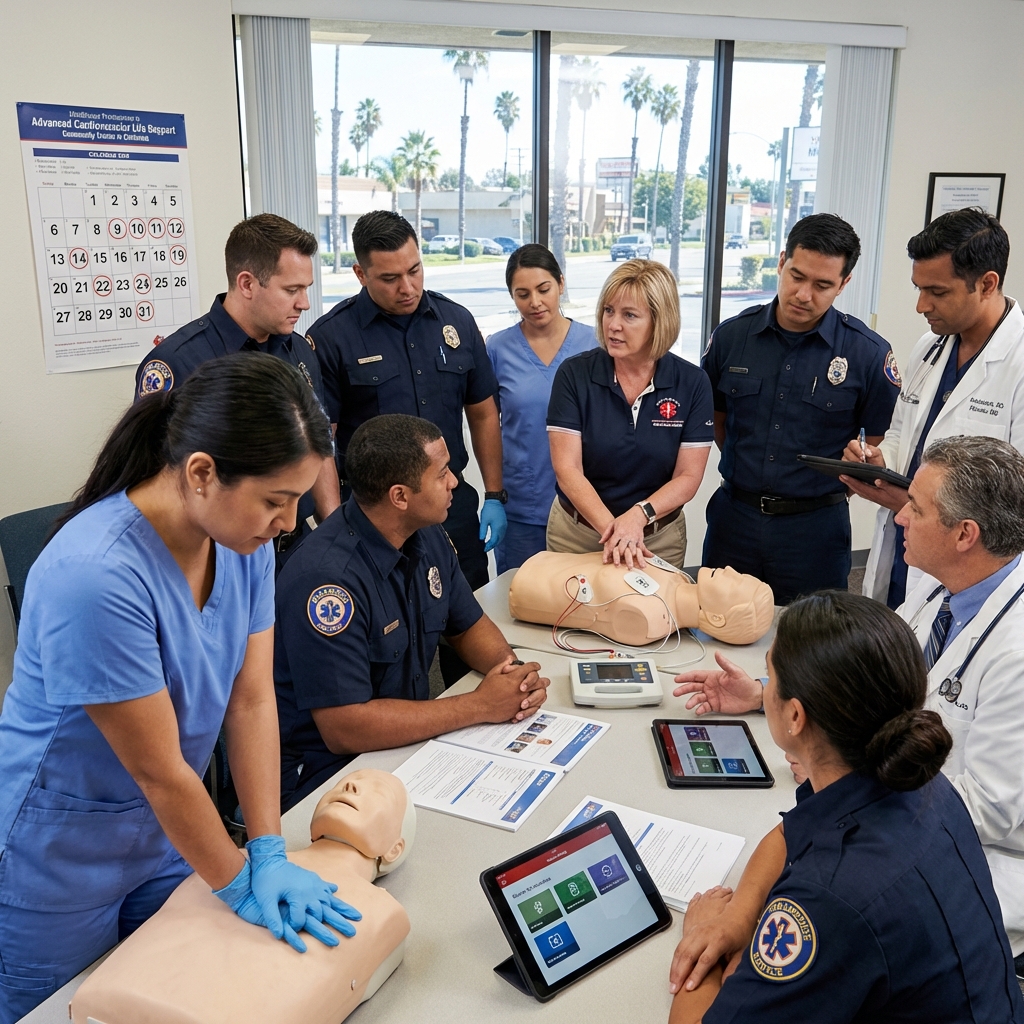
Large medical clinics juggle rotating shifts, tight staffing ratios, and compliance deadlines, making travel-based classes impractical. Bringing instructors to your facility consolidates training windows, reduces nonproductive time, and keeps units adequately staffed throughout the day. For systems that manage multiple departments, onsite skills testing for hospitals and clinics creates a single, coordinated plan rather than piecemeal registrations and last‑minute gaps.
Blended learning further streamlines the process. Staff complete the online coursework on their own schedule and then move through rapid, in-person checkoffs such as onsite ACLS skills testing and BLS certification for medical staff right inside your education room or conference space. This shortens the time off the floor while meeting AHA requirements for high-quality, hands-on assessment.
Scheduling at scale is simpler when everything happens under one roof. Hospital group certification scheduling lets you stack cohorts around shift changes, add evening or weekend options, and run parallel stations for high-volume departments. With mobile CPR training for clinics, Safety Training Seminars can set up skills stations across units or campuses so teams certify without leaving the facility.
Operational advantages include:
- Fewer schedule disruptions and less overtime coverage for travel and parking
- Consistent instruction aligned with your equipment, policies, and patient populations
- Flexible room setups (e.g., skills “rounds” during shift overlap) to maintain unit coverage
- Centralized rosters and completion summaries to support audits and HR compliance
Consider a multi-site clinic preparing for annual renewals across Cardiology, Pediatrics, and Surgery. Instead of sending 80 clinicians to different classrooms over several weeks, an onsite plan runs back-to-back skills labs over two days, tailored to each department’s acuity and equipment. The result is predictable staffing, unified standards, and faster completion before credentialing cutoffs.
Safety Training Seminars supports healthcare facility safety training statewide with AHA-certified CPR, BLS, ACLS, PALS, and NRP options, plus corporate group training and discount pricing. If someone misses an onsite session, more than 100 California locations provide convenient makeup options without derailing your timeline. Combine that reach with a low price guarantee, and clinics gain both logistical control and cost certainty while keeping teams compliant and patient-ready.
Maintaining High Standards of Care through Certified Skills Assessment
Consistent, certified evaluation of resuscitation skills is one of the most reliable ways to uphold clinical quality across units. Onsite skills testing for hospitals aligns team performance with current AHA guidelines, reduces variation between departments, and preserves staffing by eliminating offsite travel. It also creates clear documentation for policy compliance and survey readiness, making education leaders confident that every provider can perform during high‑acuity events.
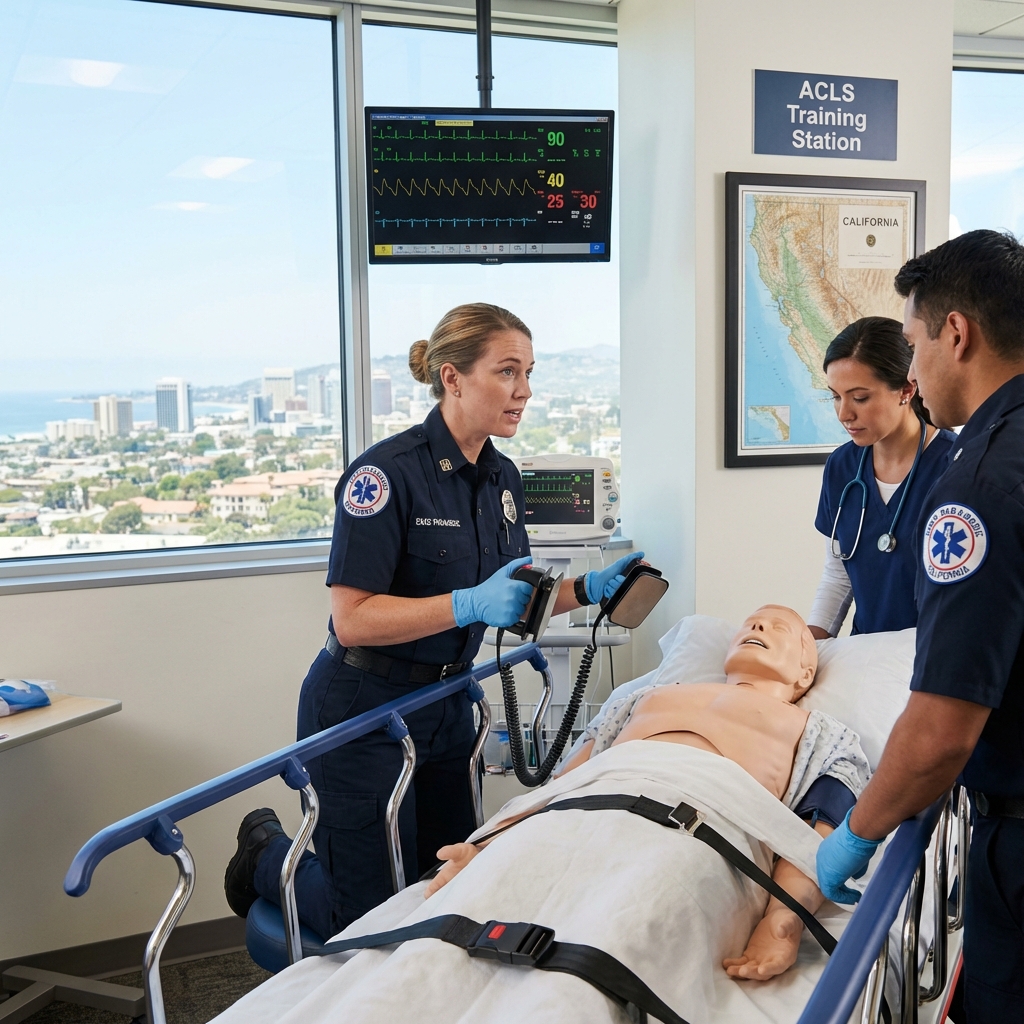
A rigorous skills check goes beyond a simple sign-off. In scenario-based ACLS, PALS, and NRP assessments, clinicians must demonstrate algorithm use, safe defibrillation, airway management, and effective team communication under time pressure. Safety Training Seminars uses AHA-approved checklists and feedback-enabled manikins to verify performance against objective benchmarks.

Core competencies typically validated include:
- High-quality CPR: correct rate, depth, recoil, minimal pauses, and ventilation timing
- AED/defibrillator use: safety checks, energy selection, and synchronized cardioversion when indicated
- Airway and ventilation: bag‑mask seal, adjunct selection, oxygen delivery, and avoidance of hyperventilation
- Rhythm recognition and pharmacology: identification of shockable/non‑shockable rhythms and weight-based dosing for pediatric cases
- Team dynamics: role assignment, closed‑loop communication, and leadership during megacode scenarios
Blended learning paired with onsite ACLS skills testing shortens downtime without sacrificing rigor. Staff complete AHA eLearning modules on their own schedule, then attend a focused in-person session for skills validation. With hospital group certification scheduling, Safety Training Seminars coordinates rosters, distributes eLearning keys, and sets up rotating stations that cover all shifts and units.
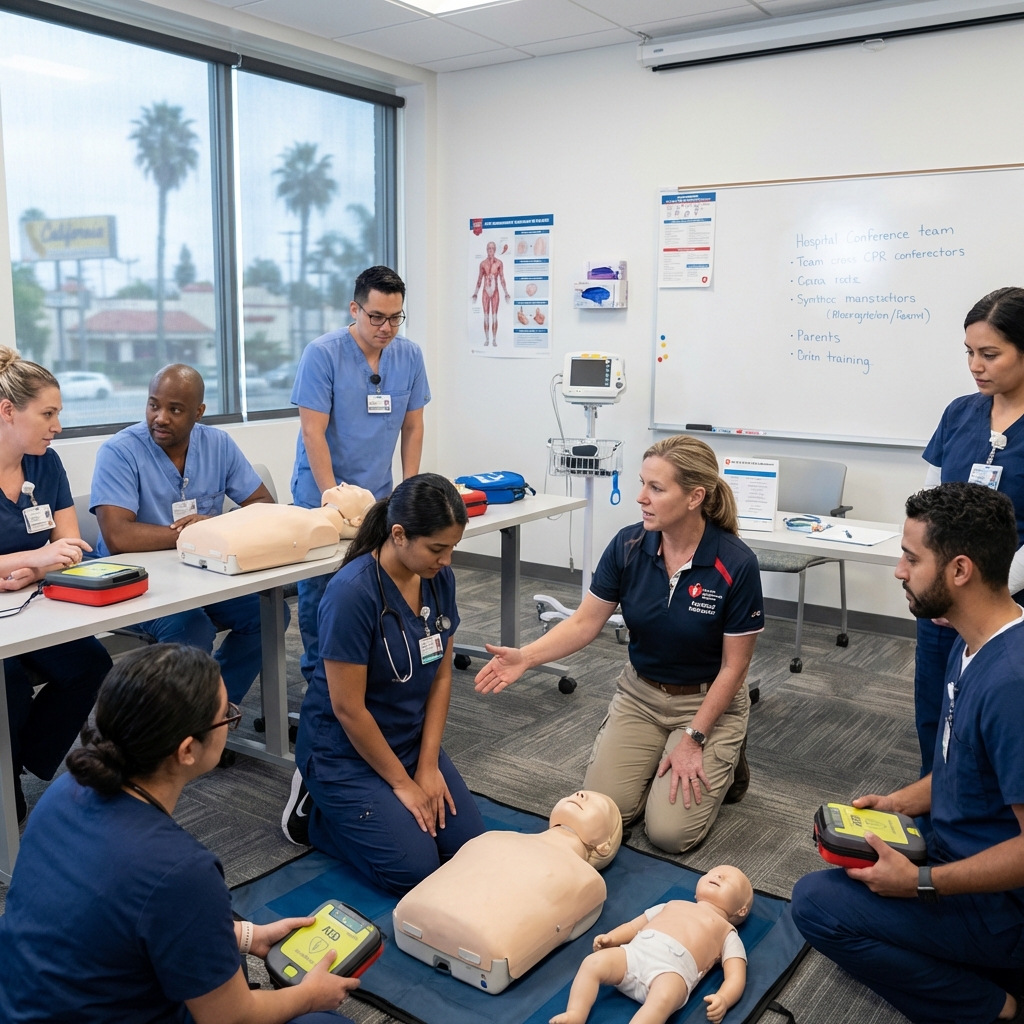
For example, a medical center can run a two- to three-day rotation of BLS, ACLS, and PALS skills stations in a conference room adjacent to critical units, allowing nurses and residents to attend between cases. Ambulatory practices benefit from mobile CPR training for clinics, where our team brings compact manikins and training defibrillators to complete skills checkouts in under two hours. This approach keeps clinic schedules intact while ensuring everyone meets current AHA standards.
Accurate records close the loop. Same‑day AHA eCards, attendance logs, and competency reports help educators track BLS certification for medical staff, upcoming expirations, and remediation needs. Optional refreshers and micro-drills can be scheduled quarterly as part of a broader healthcare facility safety training plan.
Safety Training Seminars supports hospitals and clinics statewide with onsite skills testing, specialized ACLS/PALS/NRP certifications, and mobile teams that cover all shifts. With over 100 California locations, corporate discounts, and a low price guarantee, the team can tailor an efficient, compliant program that keeps your workforce ready.
Conclusion: Optimizing Institutional Safety Training with Mobile Solutions
For hospitals and medical clinics in California, consolidating compliance training with mobile solutions streamlines operations while protecting patient safety. Onsite skills testing for hospitals minimizes travel, reduces backfill costs, and keeps teams on the floor during peak census periods. Clinics can leverage mobile CPR training for clinics to reach rotating staff without disrupting appointment schedules.
Blended learning makes the process even more efficient. Staff complete AHA eLearning modules on their own time, then demonstrate competencies during onsite ACLS skills testing or BLS check-offs with an instructor. This approach supports BLS certification for medical staff, ACLS/PALS for providers, and NRP where required, aligning training cadence with credentialing and onboarding timelines.
In practical terms, a hospital might set up hospital group certification scheduling by unit and shift, running multiple stations over two days to handle day, evening, and night coverage. A multi-site outpatient network can rotate a mobile team between locations, completing healthcare facility safety training in a coordinated sprint before Joint Commission surveys. In both scenarios, rosters are organized in advance, equipment is brought onsite, and AHA eCards are issued promptly after successful completion.
When choosing a partner, look for a provider that can handle scale, specialty requirements, and documentation needs:
- Statewide reach to support multi-campus systems and satellite clinics across California
- Blended learning options paired with onsite skills testing for hospitals, including ACLS/PALS/NRP for specialists
- Flexible hospital group certification scheduling, including evenings, weekends, and staggered stations
- All equipment provided (manikins, AED trainers, feedback devices) and adherence to current AHA guidelines
- Fast issuance of AHA eCards and administrative reporting to HR/compliance teams
- Transparent pricing with group discounts and a low price guarantee
Safety Training Seminars offers exactly this mix of capability and convenience. With over 100 training locations and mobile teams, they deliver onsite ACLS skills testing, BLS certification for medical staff, and tailored programs for departments like ED, ICU, perioperative, and pediatrics. Their blended learning model reduces downtime, while corporate group training and discount pricing make budgeting predictable.
As you finalize your healthcare facility safety training plan for the year, align courses, schedules, and sites with your staffing model. Partnering with Safety Training Seminars ensures mobile CPR training for clinics and hospital units is coordinated, compliant, and cost-effective—so your teams stay ready when every second counts.
Register for a class today.