The Role of Structured Debriefing in Clinical Education
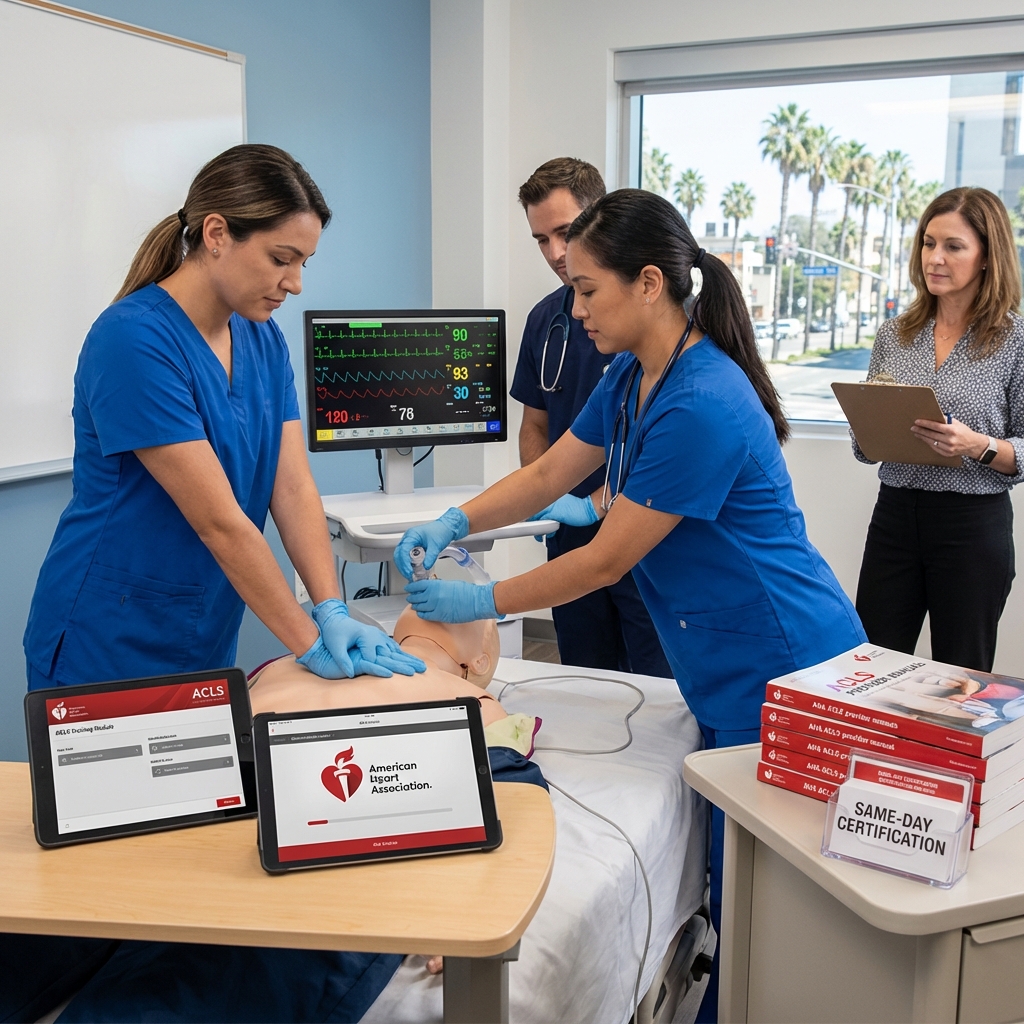
Structured debriefing frameworks transform medical simulation debriefing from a reflective conversation into a dependable engine for skill acquisition and clinical performance measurement. By following a consistent structure and mapping discussion points to observable behaviors, educators can tie learning directly to performance metrics in healthcare—reducing variability and accelerating transfer to the bedside. In California’s high-acuity settings, this approach helps busy clinicians practice deliberately, document progress, and satisfy competency and regulatory requirements.
Evidence-based approaches such as PEARLS, Debriefing with Good Judgment, GAS (Gather–Analyze–Summarize), Plus–Delta, and debriefing for meaningful learning provide a repeatable arc, psychologically safe dialogue, and targeted prompts. Facilitators use these models to align scenarios with explicit learning objectives, surface cognitive frames behind decisions, and co-create action plans. The result is a clear line from scenario objectives to measurable behaviors and, ultimately, to patient-focused outcomes.
Consider common examples that link debriefs to hard data:
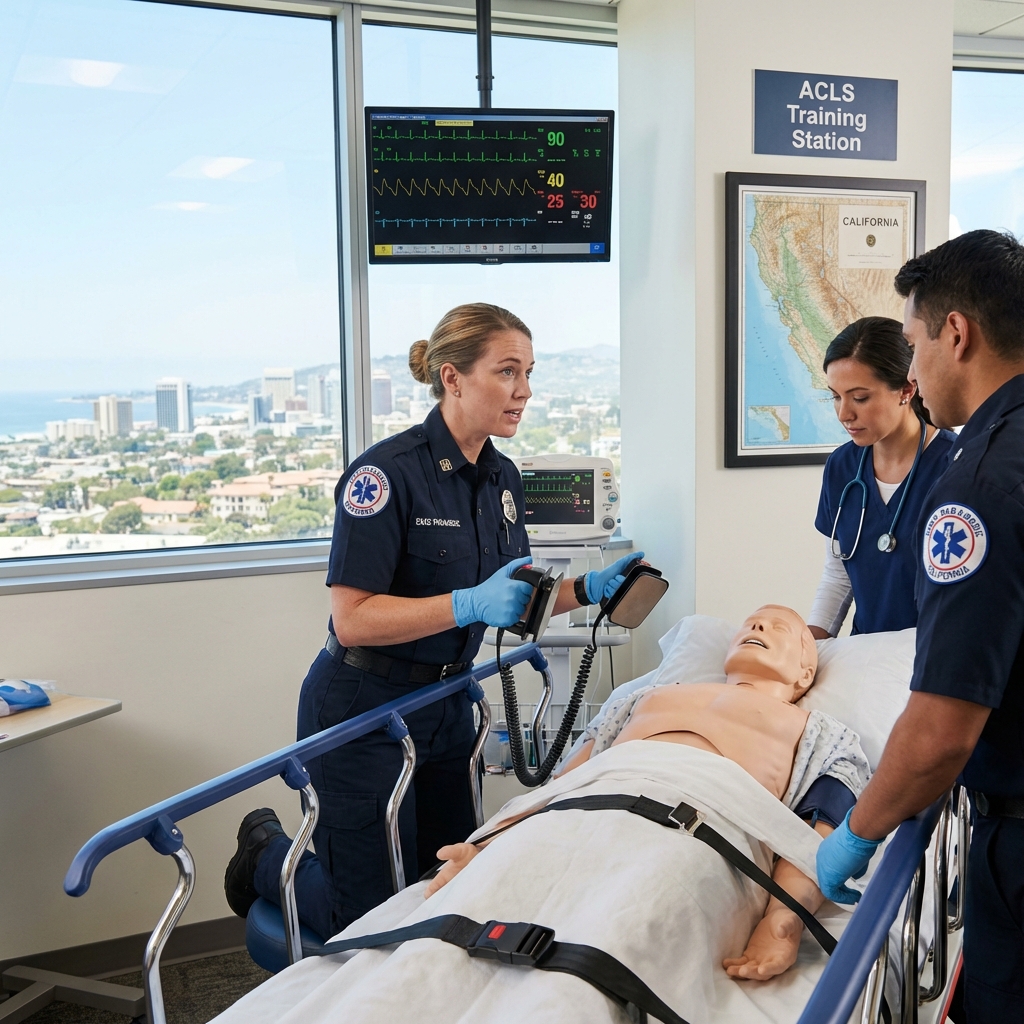
- Adult resuscitation: Review CPR quality (compression rate/depth, chest recoil, no-flow time), time to first defibrillation and epinephrine, and adherence to ACLS algorithms; pair device downloads and defibrillator logs with team reflections.
- Pediatric airway or shock: Track medication dosing accuracy, time to vascular access, and escalation thresholds in PALS scenarios; analyze closed-loop communication and role clarity under stress.
- Stroke or sepsis activation: Examine door-to-needle/antibiotic times, bundle completion, and handoff quality (e.g., SBAR); connect process delays to resource or workflow fixes.
To make debriefs actionable, educators should:
- Define metrics before the scenario and display them during the debrief.
- Blend objective data (manikin reports, timers) with behavioral observations (team leadership, healthcare team communication).
- Use advocacy–inquiry to explore why decisions were made, not just what happened.
- Close with specific, time-bound practice goals and feed them into unit QI dashboards for follow-up.
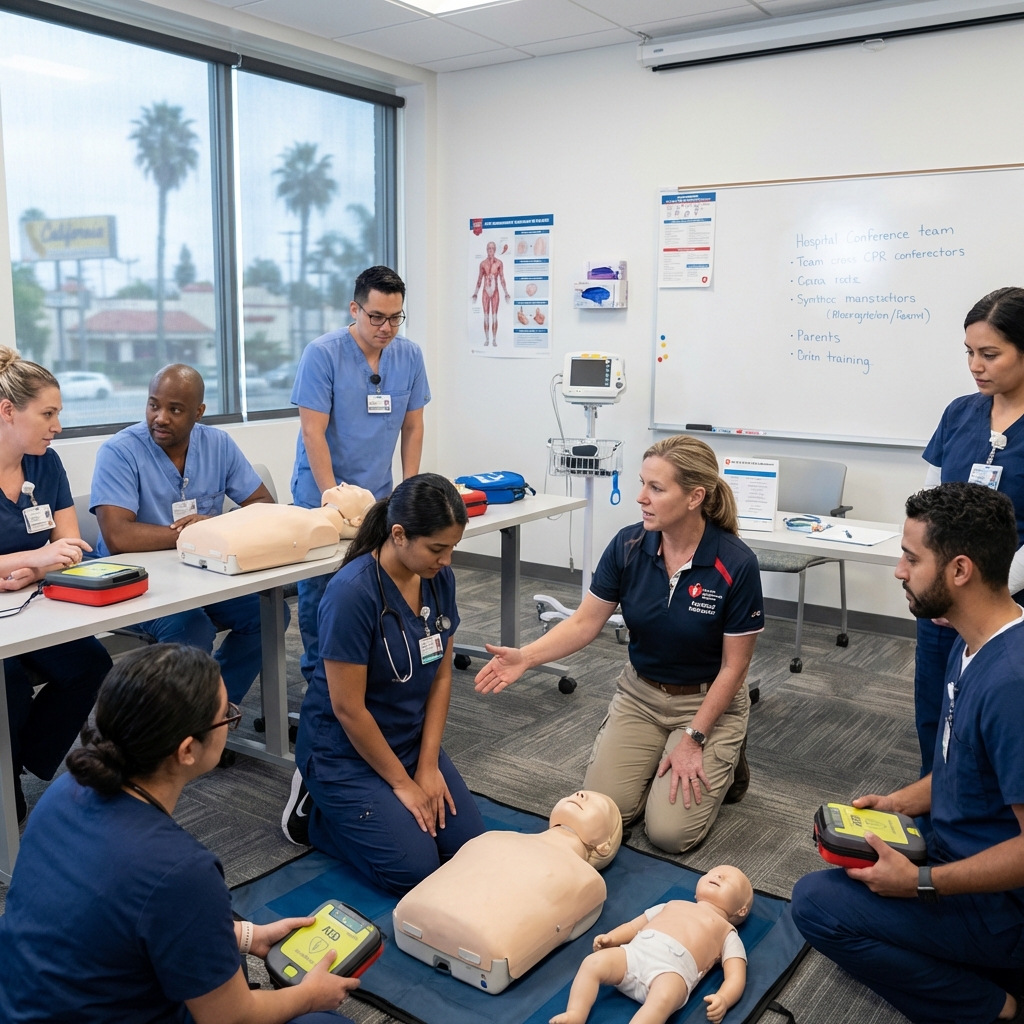
AHA-aligned courses naturally support this method because they emphasize measurable skills and algorithm fidelity. Safety Training Seminars’ blended learning model and in-person skills sessions provide realistic scenarios followed by guided debriefs that reinforce measurable outcomes for BLS, ACLS, PALS, and specialized provider courses. California teams and individual clinicians can build consistent, data-informed debrief habits during their Basic Life Support certification programs, then carry those habits into unit simulations and real events.
Core Components of Effective Debriefing Frameworks
Effective structured debriefing frameworks transform simulations and real events into measurable improvement. They translate teamwork behaviors and clinical decisions into data that feeds clinical performance measurement while reinforcing safe, reliable practice. The components below ensure debriefs are consistent, psychologically safe, and aligned with performance metrics in healthcare.
- Pre-brief that sets psychological safety, learning contract, roles, and expectations.
- Clear objectives mapped to competencies and operational metrics (e.g., time-to-shock).
- Standardized data capture: checklists, timestamps, device logs, and learner self-ratings.
- Facilitated analysis using PEARLS, advocacy–inquiry, or debriefing for meaningful learning.
- Focus on healthcare team communication: closed-loop, SBAR, leadership, and workload sharing.
- Time-boxed phases (reaction, description, analysis, summary) to maintain structure and depth.
- Objective feedback anchored to guidelines and local protocols, not opinion.
- Action planning with SMART commitments, owners, and due dates.
- Documentation workflows that feed dashboards, run charts, and QI huddles.
- Faculty development and calibration to reduce facilitator variability.
In medical simulation debriefing, link every insight to a measurable signal. For a code scenario, track chest compression fraction, peri-shock pause, time to first shock, time to epinephrine, and medication dosing accuracy; for sepsis, measure time-to-antibiotics and adherence to bundles. Use defibrillator event markers, manikin sensor data, and video timecodes to increase objectivity and inter-rater reliability.
A practical flow uses PEARLS: start with reactions, converge on a shared mental model of events, then analyze priority gaps. An advocacy–inquiry prompt might be, “I noticed a 3-minute delay to first shock; I was concerned about perfusion—what factors influenced waiting to charge?” Close with a summary and a SMART action, such as rehearsing role assignment using a two-breath checklist at the next huddle, and log the commitment for follow-up.
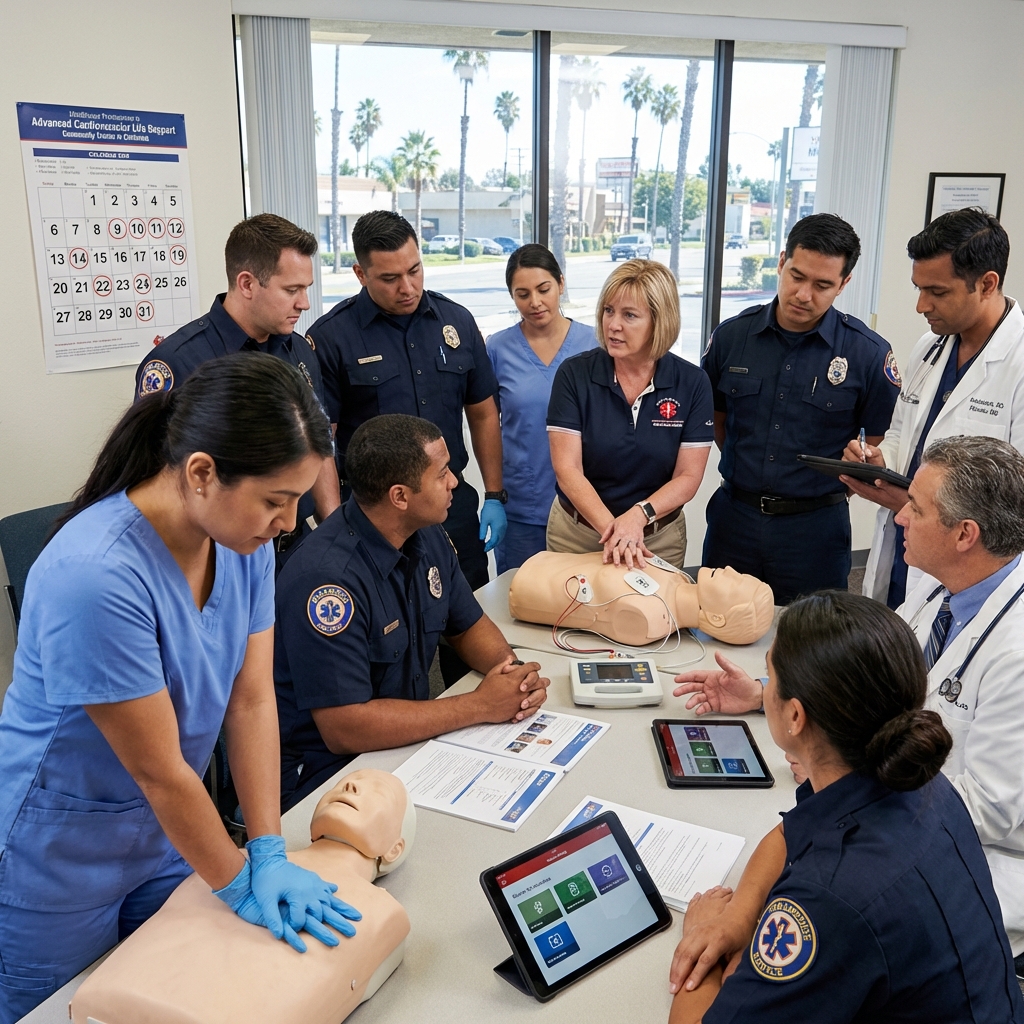
California teams can embed these practices through recurring AHA courses that emphasize debriefing for meaningful learning and clinical performance measurement. Safety Training Seminars integrates structured debriefs into BLS, ACLS, PALS, and NRP skills sessions, supporting consistent healthcare team communication through blended learning at 100+ sites, corporate group training, and a low price guarantee. For Bay Area clinicians, convenient San Francisco clinical training sessions make it easy to standardize debriefing while maintaining compliance and cost control.
Comparing Popular Debriefing Models for Healthcare Professionals
Choosing the right structured debriefing frameworks helps convert simulation insights into action and enables consistent clinical performance measurement across units. In California’s high-acuity environments, the model you use should surface decision-making, teamwork, and adherence to AHA algorithms without overburdening staff time. Below are widely adopted approaches and when they fit best during medical simulation debriefing.
- Plus–Delta: Rapid, learner-led inventory of what went well and what to change. Ideal for short huddles after code blues or brief skills stations where time is tight.
- GAS (Gather–Analyze–Summarize): Chronology-based review that aligns with timelines and event logs. Best for tracking time-to-defibrillation, first-dose epinephrine, or other time-sensitive performance metrics in healthcare.
- PEARLS: A blended model combining self-assessment, focused facilitation, and directive feedback. Useful when you need debriefing for meaningful learning tied to specific objectives and checklists (e.g., ACLS megacode, PALS respiratory failure).
- Debriefing with Good Judgment (Advocacy–Inquiry): Probes the gap between observed actions and clinicians’ mental models. Strong for uncovering cognitive biases that drive protocol deviations.
- SHARP: Set the stage, How did it go, Address concerns, Review learning points, Plan ahead. Practical for strengthening healthcare team communication and establishing next steps for unit practice.
To tie debriefs to clinical performance measurement, anchor questions to observable indicators. For ACLS, pair the GAS flow with a stopwatch and defibrillator logs; then use PEARLS to discuss adherence to the VT/VF algorithm and medication sequence. In pediatric anaphylaxis, Advocacy–Inquiry can reveal why epinephrine was delayed despite recognition, while SHARP closes with a plan to preload weight-based doses and standardize role assignments to improve performance metrics in healthcare.
Implementation works best when the framework maps to your learning objectives and data sources. Standardize terminology, capture debrief notes in your LMS or checklist app, and trend indicators like compression fraction, first-med timing, closed-loop communication, and read-back accuracy. Rotate facilitators through PEARLS and Advocacy–Inquiry to balance behavioral and technical learning, and reserve Plus–Delta for quick-turn scenarios on busy shifts.

Safety Training Seminars integrates evidence-based debriefing practices across its AHA BLS, ACLS, PALS, and NRP courses, helping California teams connect simulation outcomes to measurable improvements. Through blended learning and group training at over 100 locations, organizations can standardize debriefs, compare units on shared metrics, and reinforce healthcare team communication—backed by a low price guarantee.
Integrating Performance Measurement into the Debriefing Process
To make debriefs actionable, define performance metrics before the scenario and anchor discussion to those data points afterward. During the pre-brief, link objectives to measurable indicators drawn from AHA algorithms and local quality goals. For example, in a cardiac arrest simulation, specify how you will capture time to first shock, medication timing, chest compression quality, and closed-loop communication. This creates a shared mental model and sets up debriefing for meaningful learning, not just recollection.
Collect data reliably during the event using a mix of tools. Use checklist observers for algorithm adherence, timers for key interventions, manikin-integrated CPR reports for rate/depth/flow fraction, and brief video snippets to review team behaviors. In the debrief, pair structured debriefing frameworks (such as PEARLS or Debriefing with Good Judgment) with a simple dashboard of results to guide the analysis phase. Start with reactions, confirm the timeline, then explore why metrics landed where they did, ending with clear commitments.
Map measures to domains so clinical performance measurement stays balanced and fair. Consider:
- Clinical care: correct sequence for ACLS/PALS, medication dosing accuracy, defibrillator setup errors.
- Process/outcomes: time to defibrillation, time to epinephrine within recommended windows, chest compression fraction, interruptions under 10 seconds.
- Healthcare team communication: frequency of closed-loop communication, effective SBAR handoffs, leadership role clarity (TEAM or Ottawa GRS scores).
- Safety and systems: identification of latent safety threats, equipment readiness, adherence to sepsis/stroke bundles in medical simulation debriefing.
Translate insights into SMART action plans that can be re-measured in subsequent sessions. A PDSA cadence works well: run scenario, debrief with metrics, implement micro-changes (e.g., pre-assign roles, reposition crash cart), and retest within 2–4 weeks. Aggregate data across sessions to spot trends by unit or shift, and share quarterly summaries with quality committees to align simulation outcomes with performance metrics in healthcare.
For teams needing standardized approaches statewide, Safety Training Seminars can help integrate metrics into debriefs across ACLS, PALS, BLS, and NRP. Their blended learning model establishes baseline knowledge online, while in-person skills sessions apply structured debriefing frameworks with objective measures. With over 100 California locations and corporate group options, organizations can calibrate facilitators, unify healthcare team communication standards, and track improvements consistently—supported by a low price guarantee that makes ongoing measurement feasible.
Overcoming Barriers to Effective Team Debriefing
Time pressure, entrenched hierarchies, and fear of blame are the most common obstacles to candid conversations after a clinical event. Without psychological safety and a shared method, teams default to storytelling or silence, and lessons never translate into clinical performance measurement. Legal/peer-review concerns and inconsistent facilitation across units further erode trust and dilute signal in the data.
Build reliability by agreeing upfront on a simple, repeatable approach and by separating learning from liability. Start with a brief pre-brief that sets norms (confidentiality, respect, systems-focus), then time‑box “hot debriefs” to 5–10 minutes for immediate insights and schedule periodic “cold debriefs” for deeper trend analysis. Use structured debriefing frameworks such as GAS (Gather–Analyze–Summarize), PEARLS, advocacy–inquiry, or debriefing for meaningful learning to guide the conversation and keep it tied to observable behaviors.
Practical moves to reduce friction and improve healthcare team communication:
- Use a one-page debrief card at the bedside with prompts for plus/delta, closed‑loop communication, role clarity, and equipment issues.
- Define a minimal metric set aligned to performance metrics in healthcare (e.g., first‑shock time, chest compression fraction, door‑to‑drug times, medication dose accuracy, escalation time).
- Assign rotating roles: event leader, debrief facilitator, and scribe for reliable capture.
- Log key data in a standardized form that feeds QI dashboards; de‑identify to reduce discovery risk.
- Calibrate facilitators quarterly with video-based cases to improve inter‑rater reliability.
- Pair in‑situ hot debriefs with scheduled medical simulation debriefing to practice the same behaviors in a low‑stakes environment.
Measurement discipline turns reflection into improvement. Tie each debrief theme to a specific countermeasure and owner, then monitor effect sizes on your unit’s run charts. For example, if debriefs reveal delayed defibrillation due to pad placement confusion, implement a visual aid and track first‑shock time for the next 10 events.
California’s diverse, shift‑based teams also face multilingual communication and staffing variability. Offer micro‑debriefs at shift huddles, translate debrief prompts where needed, and train charge nurses as facilitators to ensure coverage on nights and weekends. For teams building these skills, Safety Training Seminars’ AHA‑aligned BLS, ACLS, and PALS courses integrate scenario practice with guided debriefs that reinforce closed‑loop communication and high‑performance team behaviors; with blended learning and over 100 locations statewide, they help standardize debriefing habits across sites and travel staff while meeting mandatory certification requirements.
The Impact of Structured Debriefing on Patient Outcomes
Structured debriefing frameworks translate practice into measurable improvements at the bedside. By turning events—whether simulated or real—into structured reflection and action plans, teams improve decision-making under pressure and reduce preventable variation. In California units that run regular medical simulation debriefing, leaders often see faster recognition of deterioration, more consistent protocol use, and safer handoffs.

The mechanism is straightforward: focused debriefs strengthen healthcare team communication and create shared mental models. Facilitators guide teams through what happened, why it happened, and how to do better next time—an approach aligned with debriefing for meaningful learning. When debriefs incorporate objective data, they surface latent safety threats and turn insights into clear commitments owners can implement on the next shift.
Patient-focused impact is best captured through clinical performance measurement. Rather than relying on perceptions, teams should monitor performance metrics in healthcare that correlate with outcomes. Examples include time-to-defibrillation in in-hospital cardiac arrest, first-dose antibiotic timing for sepsis, door-to-needle times in stroke, OB hemorrhage response intervals, and adherence to airway and medication safety checklists.
Consider two practical examples. After a series of in-situ simulations and debriefs, an emergency department maps delays in stroke activation to a paging cascade; a revised script and role assignment reduce door-to-needle time on subsequent cases. In a maternity unit, debriefs following PPH drills identify gaps in blood bank communication and kit layout, leading to quicker massive transfusion protocol activation and fewer near-misses.
To strengthen the link between debriefs and patient outcomes, standardize methods and make them data-driven:
- Use brief “hot” debriefs for immediate learning and scheduled “cold” debriefs for deeper analysis.
- Anchor discussions with objective data (CPR-quality dashboards, timestamps, video) and validated checklists.
- Convert insights into one or two specific tests of change, then track impact over the next month.
- Aggregate debrief themes quarterly to inform training, staffing, and policy updates.
For busy California healthcare teams, partnering with an AHA-accredited provider helps embed these practices. Safety Training Seminars integrates medical simulation debriefing into BLS, ACLS, and PALS courses and aligns scenarios with local workflows, making it easier to tie training to unit-level metrics. With blended learning and over 100 locations statewide, teams can practice structured debriefing frameworks consistently and monitor gains through clear clinical performance measurement.
Conclusion: Advancing Professional Practice through Continuous Feedback
Done well, structured debriefing frameworks move teams from ad hoc reflection to disciplined feedback that directly informs clinical performance measurement. In California healthcare settings, models such as PEARLS and Debriefing with Good Judgment create a shared language for examining decisions, teamwork, and outcomes. Medical simulation debriefing then becomes the rehearsal space for the same habits used after real events, closing the gap between training and practice.
To sustain improvement, convert insights into performance metrics in healthcare that are reliable and actionable. Useful examples include chest compression fraction, time to first shock, first-pass airway success, rate of closed-loop communication, and adherence to sepsis or stroke pathways. Standardized observation forms, manikin logs, and time‑stamped EHR or defibrillator data increase objectivity while reinforcing healthcare team communication behaviors.
A practical pathway is to pair brief, event-triggered debriefs with scheduled simulations that stress-test protocols. For instance, an emergency department that adds a five-minute huddle after every resuscitation and a weekly facilitated practice often sees measurable reductions in time-to-defibrillation and more consistent role clarity. Leaders can then translate debrief themes into concrete changes—updating checklists, relocating critical supplies, or revising escalation criteria—and reassess impact at the next cycle.
To embed this reliably across units, focus on a few disciplined steps:
- Select and standardize a framework, and train facilitators to guide debriefs with psychological safety.
- Define a small set of core measures with clear operational definitions and data sources.
- Hardwire debrief triggers (e.g., post-rapid response, high-risk handoff) and reserve five minutes to reflect on what went well, what to adjust, and what to measure.
- Visualize trends on a simple dashboard, review them in huddles, and link actions to observed outcomes.
- Close the loop by updating policies, equipment layouts, and training scenarios, then re-measure.
Education partners can accelerate this journey by aligning training with local metrics and workflows. Safety Training Seminars offers AHA-aligned ACLS, PALS, NRP, BLS, and CPR across more than 100 California locations with blended options, making it easier to practice debriefing for meaningful learning in realistic scenarios. Their corporate group training can calibrate facilitators, integrate unit-specific metrics into scenarios, and support teams in translating simulation insights into bedside practice. The result is a durable feedback system where skills, systems, and outcomes improve together.
Register for a class today.