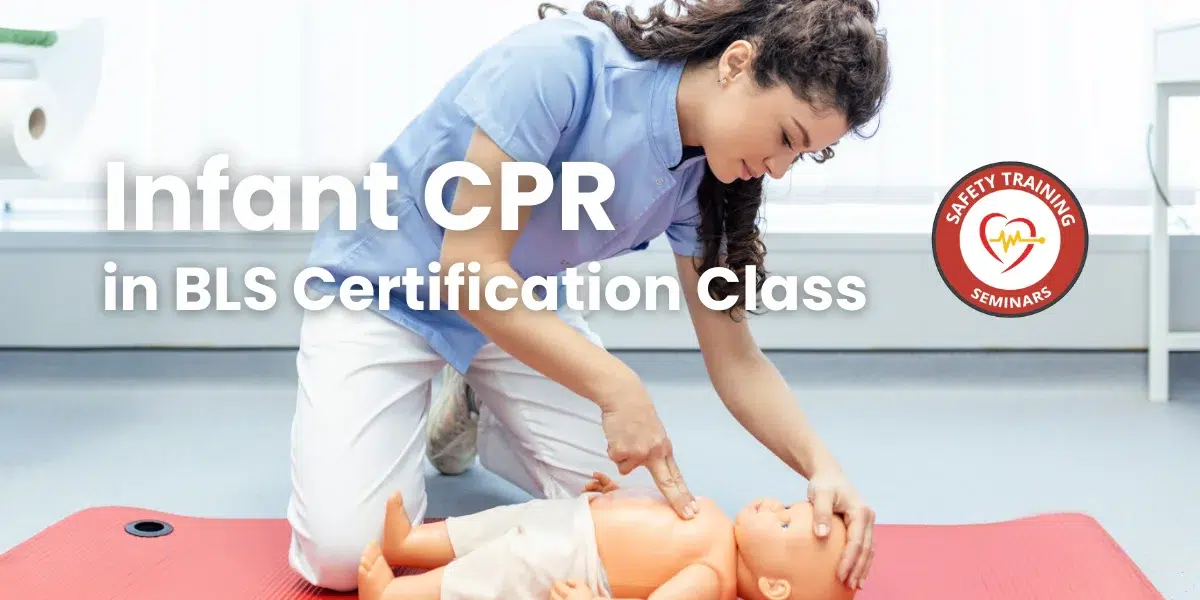
Few situations are as frightening as seeing an infant unresponsive and not breathing. In those moments, panic can take over—but training brings clarity. Infant CPR, taught as part of a BLS (Basic Life Support) certification class, gives parents, caregivers, and professionals the knowledge and confidence needed to act immediately. Because infants are especially vulnerable, the correct technique matters more than ever.
At Safety Training Seminars, Infant CPR training is not about memorizing steps alone. Instead, it focuses on understanding why each step is critical and how to help an infant survive until emergency medical services arrive. In this guide, you will learn the essential principles of Infant CPR in a BLS class and how these lifesaving skills can make a real difference.
Why Infant CPR Is a Critical Part of BLS Training
Infants are not simply “small adults.” Their anatomy, physiology, and causes of cardiac arrest are different, which is why Infant CPR has its own specific techniques in BLS certification classes. Most infant cardiac arrests result from respiratory issues such as choking, suffocation, or sudden infant illness rather than heart disease.
Because oxygen deprivation is often the root cause, Infant CPR places strong emphasis on both compressions and ventilations. The goal is to restore circulation while also delivering oxygen to vital organs, especially the brain. Without intervention, irreversible damage can occur within minutes.
Furthermore, emergencies involving infants often happen at home or in childcare settings. When caregivers are trained in First Aid, CPR, and BLS, they are far more likely to respond quickly and effectively. This early response dramatically improves outcomes and reinforces the importance of proper training.
Recognizing Cardiac Arrest in an Infant
Before CPR begins, it is essential to recognize when an infant needs immediate help. In a BLS certification class, students are taught to assess infants quickly and systematically while maintaining safety.
First, ensure the environment is safe. This foundational First Aid principle protects both the rescuer and the infant. Next, check responsiveness by gently tapping the infant’s foot and shouting. Unlike adults, infants should never be shaken.
Signs that an infant may be in cardiac arrest include:
- Unresponsiveness
- No breathing or only gasping
- No signs of circulation, such as movement or coughing
If these signs are present, emergency services must be activated immediately. If you are alone, provide about two minutes of care before leaving to call for help. This early recognition step is essential in understanding how to save an infant’s life.
Positioning and Preparing for Infant CPR
Once cardiac arrest is identified, proper positioning is the next critical step. In BLS training, rescuers are taught to place the infant on a firm, flat surface. If possible, this should be on the ground or a hard table to allow effective compressions.
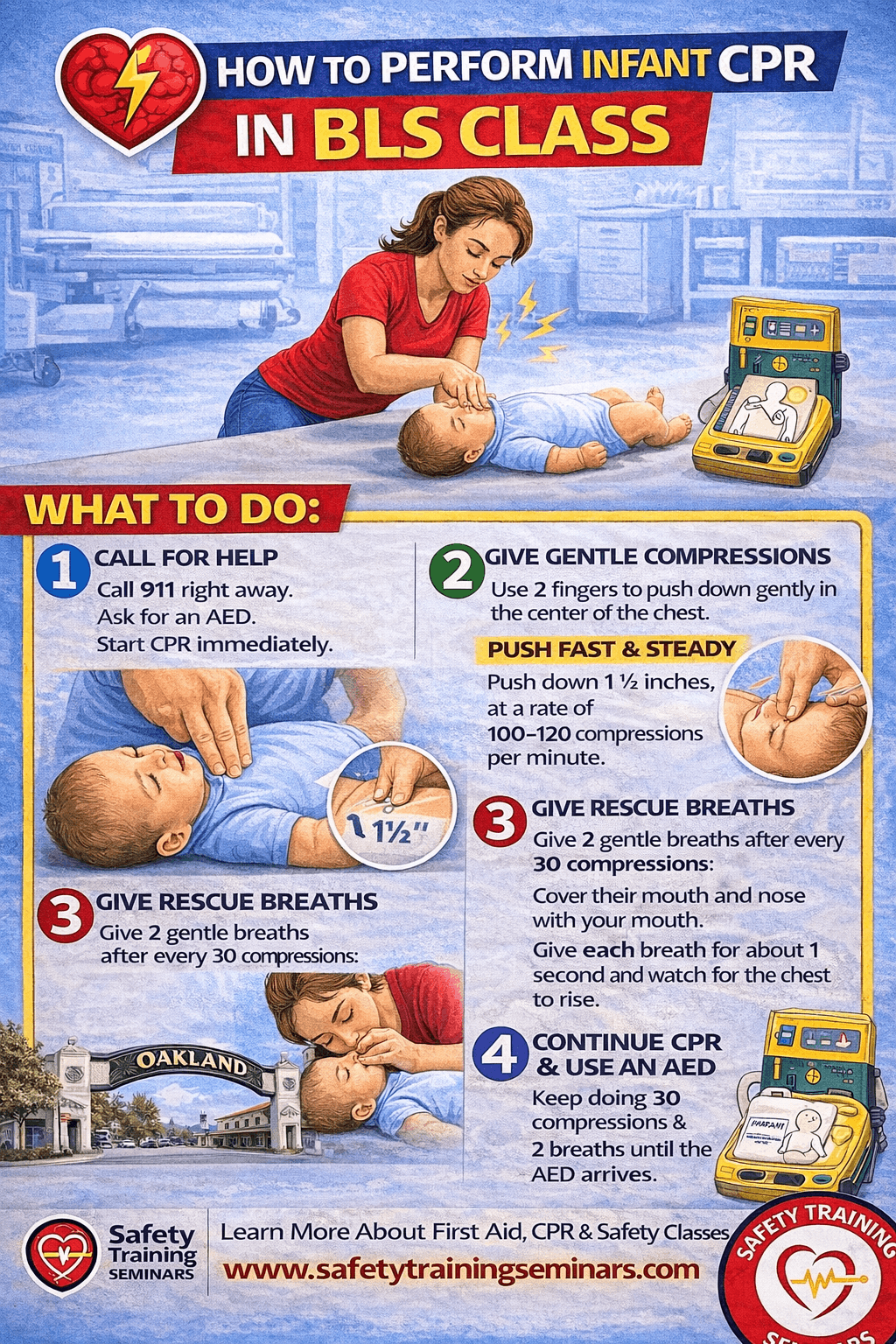
Correct hand placement is especially important. For single-rescuer Infant CPR, use two fingers placed just below the nipple line in the center of the chest. For two-rescuer CPR, the encircling thumbs technique is preferred, where both thumbs press on the sternum while the hands support the infant’s back.
Proper positioning ensures compressions are effective without causing injury. This step highlights how precision and technique work together in Infant CPR. Understanding these fundamentals helps rescuers remain calm and focused during high-stress situations.
How to Perform Infant Chest Compressions Correctly
Chest compressions are the foundation of Infant CPR. Their purpose is to manually pump blood through the heart to maintain circulation to the brain and other vital organs.
In a BLS certification class, students learn to:
- Compress the chest about 1.5 inches deep (one-third the depth of the chest)
- Maintain a rate of 100–120 compressions per minute
- Allow full chest recoil after each compression
For single rescuers, perform 30 compressions before giving breaths. For two rescuers, the ratio changes to 15 compressions per cycle. These ratios are designed to balance circulation and oxygenation.
Consistency is key. Interruptions in compressions reduce blood flow and lower survival chances. That is why BLS training emphasizes smooth transitions and minimal pauses. Strong, steady compressions are one of the most effective ways how to help an infant in cardiac arrest.
Providing Rescue Breaths for an Infant
Unlike adult CPR, ventilations play a particularly important role in Infant CPR. Because respiratory failure is a common cause of arrest, providing effective breaths is essential.
To give rescue breaths:
- Open the airway using a neutral head position (avoid excessive head tilt)
- Cover both the infant’s mouth and nose with your mouth
- Deliver a gentle breath lasting one second
- Watch for chest rise to confirm effectiveness
After two breaths, immediately return to compressions. Over-ventilation should be avoided, as too much air can reduce blood flow and cause complications.
BLS training reinforces that rescue breaths must be gentle and controlled. This balance between airflow and pressure is crucial when working with an infant’s delicate lungs and airway.
Using an AED During Infant CPR
Automated External Defibrillators (AEDs) are also part of Infant CPR within BLS training. While cardiac arrhythmias are less common in infants, AED use can still be lifesaving in certain situations.
When an AED is available:
- Turn it on immediately and follow voice prompts
- Use pediatric pads if available; if not, adult pads may be used with proper placement
- Ensure no one is touching the infant during rhythm analysis or shock delivery
After the shock, CPR should resume immediately. Even if no shock is advised, continue CPR until advanced help arrives. Early CPR combined with early defibrillation represents the strongest chain of survival.
Common Infant CPR Mistakes and How BLS Training Prevents Them
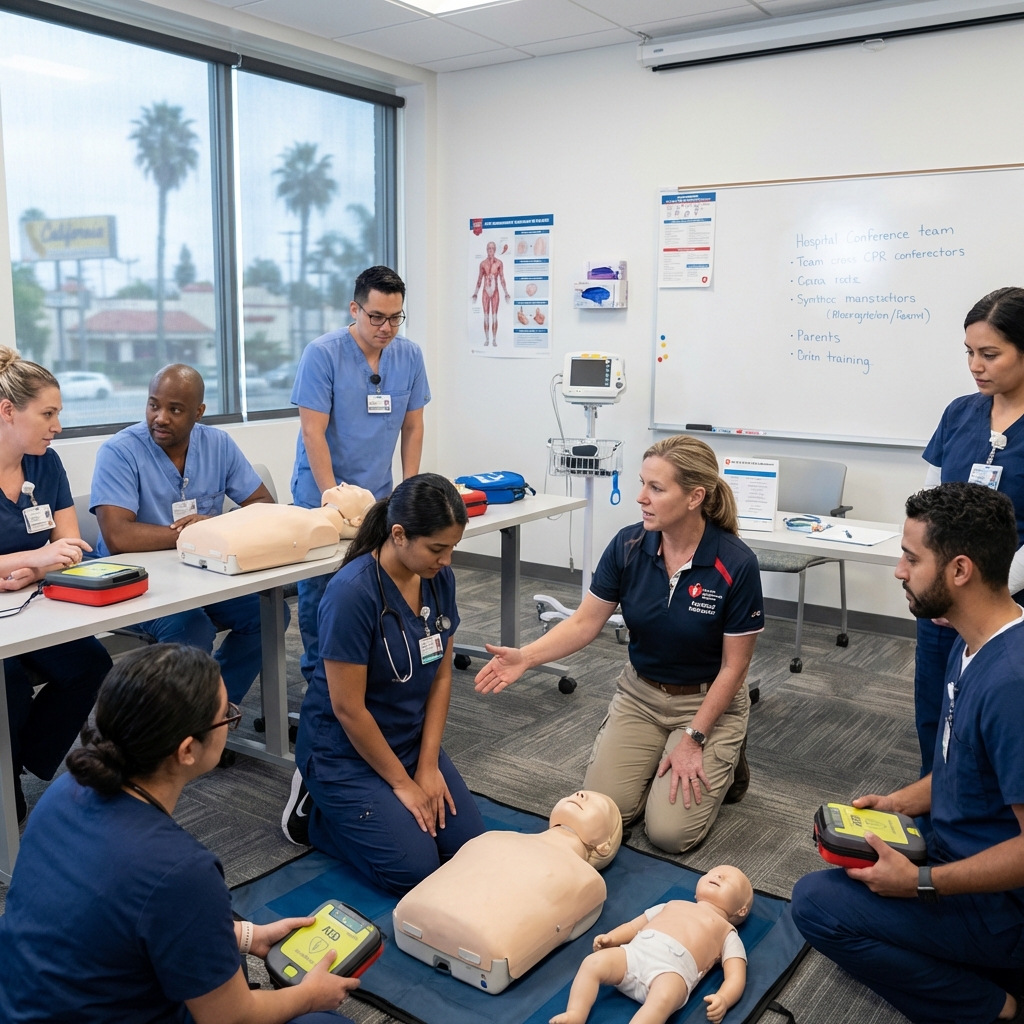
Without proper training, well-meaning rescuers may make mistakes that reduce effectiveness. BLS certification classes focus on preventing these errors through hands-on practice and feedback.
Common mistakes include:
- Using too much force during compressions
- Improper hand placement
- Inadequate or excessive ventilation
- Delaying emergency response activation
By practicing under instructor guidance, students learn correct techniques and build muscle memory. This preparation ensures that when an emergency happens, actions are automatic, confident, and effective.
Why Infant CPR Training Truly Saves Lives
Infant CPR training is not just for healthcare providers. Parents, babysitters, teachers, and childcare professionals all benefit from understanding how to save an infant during an emergency. Because infants cannot advocate for themselves, trained adults become their lifeline.
At Safety Training Seminars, BLS certification classes are designed to be practical, approachable, and medically accurate. Students learn not only what to do, but why it matters. This deeper understanding builds confidence and readiness.
Ultimately, Infant CPR training transforms fear into action. It equips individuals with the skills to help when seconds matter most. Knowledge, practice, and preparation together create lifesavers.
Final Thoughts: Knowledge That Protects the Most Vulnerable
Infant CPR in a BLS certification class is one of the most important skills anyone can learn. While emergencies are unpredictable, preparation is not. Through proper First Aid, CPR, and BLS training, individuals can respond with clarity instead of panic.
Safety Training Seminars remains committed to educating communities and empowering people to act. When you know what to do, you give infants the best possible chance at survival—and that knowledge can change a life forever.