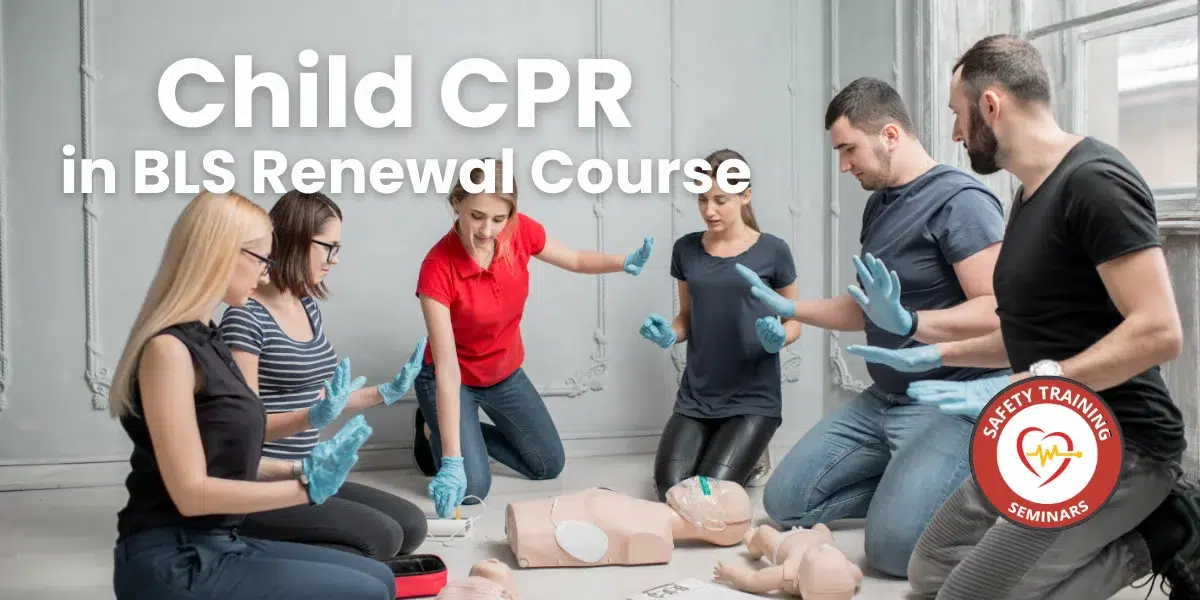
Child CPR is a vital life-saving skill that everyone caring for children should master. Cardiac emergencies in children can occur due to choking, drowning, allergic reactions, or underlying health conditions. Immediate action can make the difference between survival and serious complications.
Renewal courses in BLS and First Aid ensure that caregivers, parents, teachers, and healthcare professionals remain confident in performing CPR correctly. Knowing how to help a child in distress ensures quick, effective intervention in critical moments.
Recognizing When a Child Needs CPR
Recognizing cardiac arrest or severe distress in children is the first and most crucial step. Children often respond differently than adults, so understanding these differences is key.
Signs that CPR may be necessary include:
- Unresponsiveness or loss of consciousness
- Abnormal or absent breathing
- Weak or undetectable pulse
- Sudden collapse after choking or trauma
Prompt recognition allows you to act without hesitation, showing exactly how to save a child during an emergency.
Preparing for CPR in a Child
Preparation ensures that you can perform CPR safely and effectively. It involves assessing both the child and the environment.
Steps to prepare include:
- Ensuring the environment is safe for both you and the child
- Placing the child on a firm, flat surface
- Exposing the chest to allow proper hand placement
- Ensuring that emergency contacts or devices are within reach
- Wearing protective gloves if available
Proper preparation reinforces BLS and First Aid principles and helps you stay composed during high-stress situations.
Performing Chest Compressions on a Child
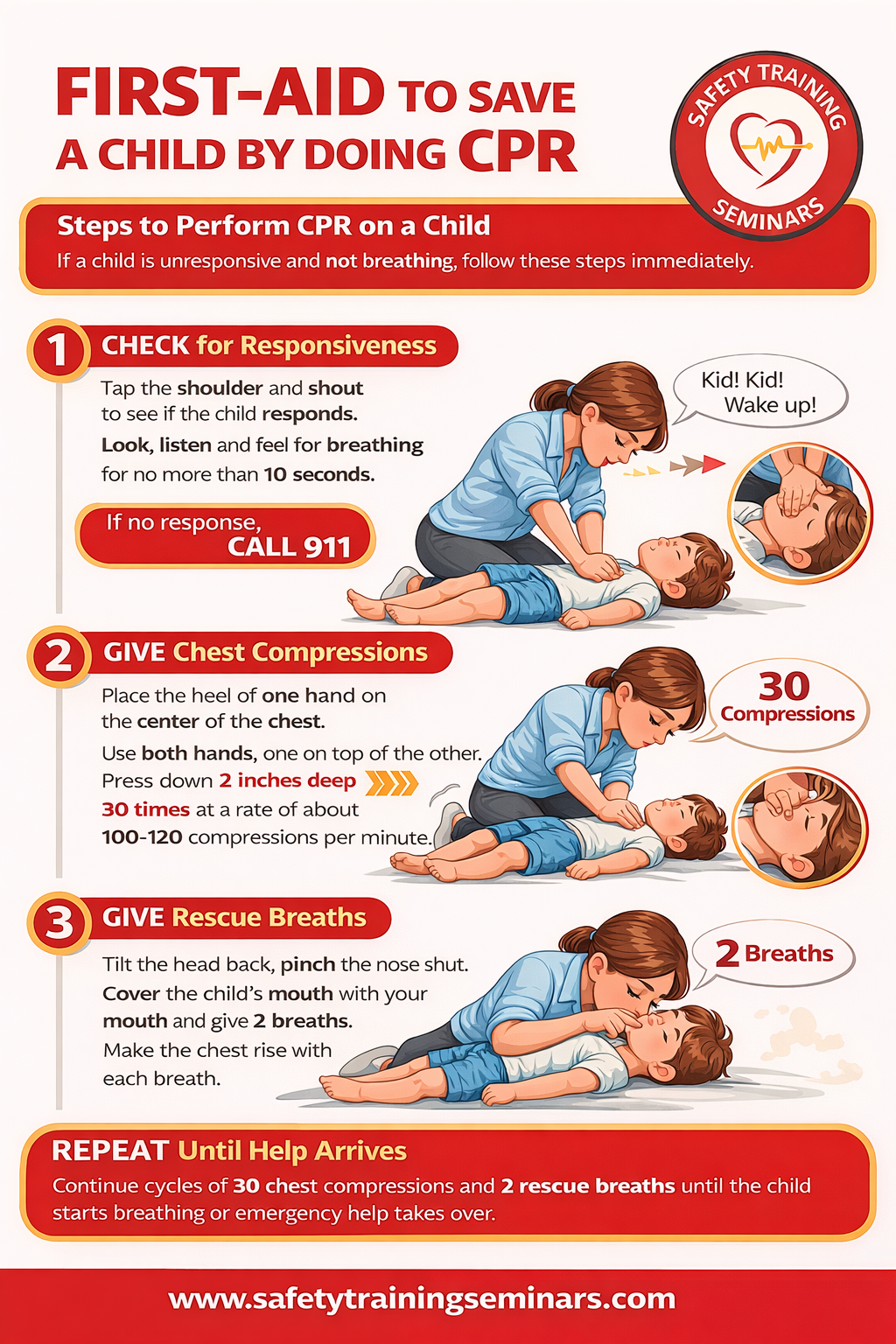
Chest compressions are the cornerstone of CPR and differ slightly for children compared to adults. They help maintain blood circulation to vital organs until medical help arrives.
Key steps for child chest compressions:
- Use one or two hands depending on the size of the child
- Place the heel of your hand(s) on the center of the child’s chest
- Push down approximately 2 inches deep, at a rate of 100–120 compressions per minute
- Allow full chest recoil between compressions
- Minimize interruptions in compressions to maximize blood flow
Effective compressions demonstrate how to help a child and maintain vital circulation during emergencies.
Delivering Rescue Breaths to a Child
Rescue breaths supply oxygen to the child’s lungs and complement chest compressions in BLS. Correct technique ensures that the child receives adequate oxygen.
Steps for rescue breaths:
- Open the airway using the head-tilt, chin-lift method
- Pinch the child’s nose and cover their mouth with yours to form a tight seal
- Give 2 slow breaths, watching for chest rise
- Resume compressions immediately after breaths
- Repeat the cycle of 30 compressions and 2 breaths until the child shows signs of life or emergency help arrives
Integrating compressions and breaths illustrates the practical application of First Aid and BLS in real-life emergencies.
Using Emergency Tools During Child CPR
Sometimes, emergency tools such as barrier devices or AEDs may be available during a pediatric cardiac emergency. Knowing how to use them properly enhances survival chances.
Tips for using tools:
- Barrier devices protect both the rescuer and child during rescue breaths
- AEDs can analyze heart rhythms and deliver shocks if necessary, with pediatric settings or pads
- Follow device instructions carefully while continuing CPR between analyses
- Be prepared to switch hands or adapt technique based on the child’s size
Using emergency tools demonstrates advanced how to help skills and shows readiness for any scenario.
Monitoring the Child During CPR
CPR is an ongoing process that requires constant observation. Children can recover quickly or deteriorate suddenly, so careful monitoring is essential.
Monitoring tips include:
- Watching for signs of consciousness, breathing, or movement
- Checking pulse and airway regularly
- Being prepared to resume compressions if the child loses responsiveness
- Offering reassurance and keeping the child calm if they regain consciousness
Ongoing monitoring highlights the importance of how to save a life through continuous care and attention.
Practicing CPR for Confidence and Competence
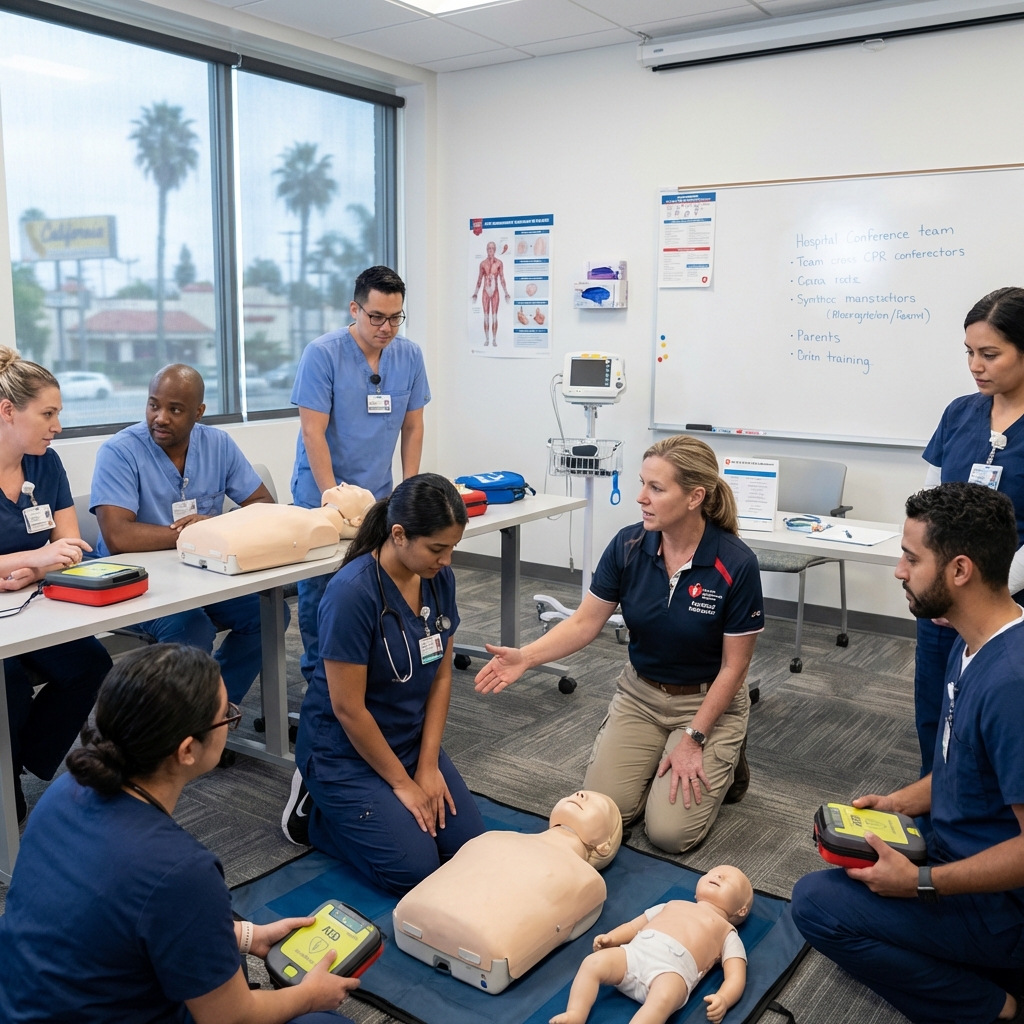
BLS renewal courses emphasize hands-on practice, which is essential for developing muscle memory and confidence. Regular practice ensures you can respond quickly and accurately during emergencies.
Benefits of consistent practice include:
- Faster response times in real-life emergencies
- Proper technique in compressions and breaths
- Confidence in handling AEDs and other emergency tools
- Better understanding of First Aid and BLS principles
Practicing CPR transforms knowledge into action, ensuring that bystanders know exactly how to help a child in distress.
Educating Communities About Child CPR
Teaching CPR skills to parents, teachers, and caregivers improves overall safety for children in the community. Education empowers individuals to act decisively during emergencies.
Community benefits include:
- Increased survival rates during pediatric cardiac events
- Reduced hesitation among caregivers and bystanders
- Creation of safer homes, schools, and public spaces
- Development of a proactive, life-saving mindset
Sharing these skills ensures that more people are prepared to step in and demonstrates the practical value of knowing how to save lives.
Final Thoughts: Quick Action Saves Children’s Lives
Child CPR is a vital skill that can prevent death and reduce long-term complications during cardiac emergencies. By recognizing cardiac arrest, preparing the child, performing compressions and rescue breaths, using emergency tools, and monitoring carefully, you can make a significant difference.
Safety Training Seminars offers comprehensive BLS renewal courses to equip caregivers with the confidence and skills to respond effectively. Knowing how to help a child in distress transforms bystanders into life-saving responders, making every second count.