Introduction: Why Group CPR Training Matters for Clinical Settings
In busy clinics, outcomes hinge on how well teams respond in the first minutes of a cardiac arrest. Group CPR training for clinics builds shared mental models, role clarity, and closed-loop communication so nurses, dentists, techs, and providers act as one unit under pressure. The stakes are high: for shockable rhythms, each minute without defibrillation can reduce survival by roughly 7–10%, making team readiness a clinical imperative—not a checkbox.
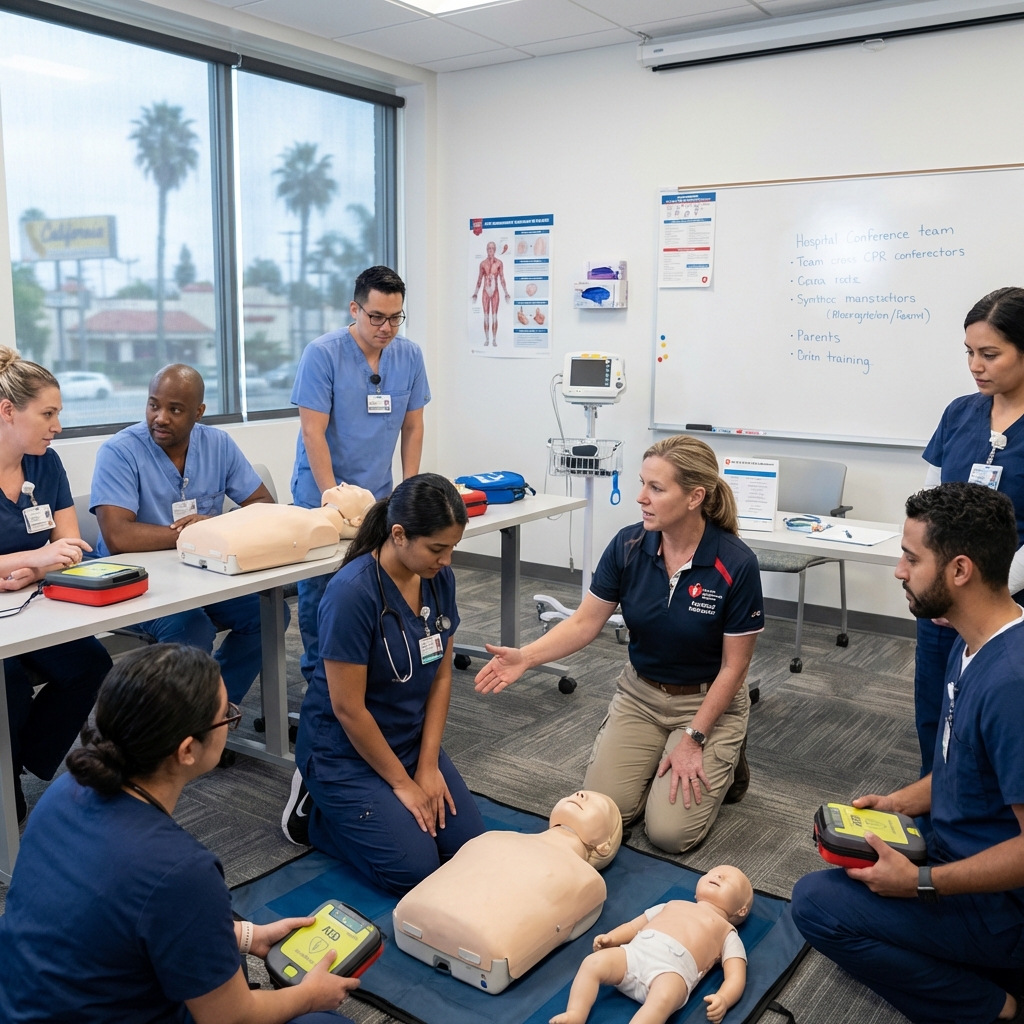
Beyond individual skills, on-site clinical CPR instruction lets staff rehearse in their real environment with their actual defibrillator, oxygen setup, and emergency cart. A dental practice using sedation can practice rapid airway management and AED use chairside; an urgent care can drill code-blue activation, compressor rotations, and post-ROSC handoffs. This context-specific practice turns guidelines into muscle memory while satisfying CPR certification for healthcare staff requirements.
Key advantages your clinic gains include:
- Faster, cleaner roles during codes (compressor, airway, defibrillator, recorder) and better closed-loop communication
- Consistent adherence to AHA algorithms across shifts and departments
- Easier compliance with team CPR recertification requirements on a predictable two-year cycle (BLS/ACLS/PALS)
- Reduced downtime via blended learning and coordinated scheduling within workplace CPR training programs
- Lower per-learner costs through bulk CPR training for medical facilities
- Improved risk management with scenario-based mock codes tailored to your patient population
Safety Training Seminars supports clinics across California with blended BLS, ACLS, PALS, and NRP options that combine flexible online modules with brief, hands-on skills checks. With over 100 locations statewide and the ability to deliver on-site group sessions, clinics can train entire teams without disrupting operations—and benefit from corporate pricing and a low price guarantee. To streamline scheduling and documentation for your next cohort, explore STS’s Group CPR Certification Classes for scalable, clinic-ready solutions.
Benefits of Group CPR Training for Healthcare Teams
Group CPR training for clinics strengthens team performance when seconds count. Practicing together builds a shared mental model for “who does what” during a code, reducing delays to first compressions and early defibrillation—interventions consistently associated with better outcomes. It also standardizes protocols across shifts and satellite sites so locums, RNs, dentists, and MAs respond with the same playbook.
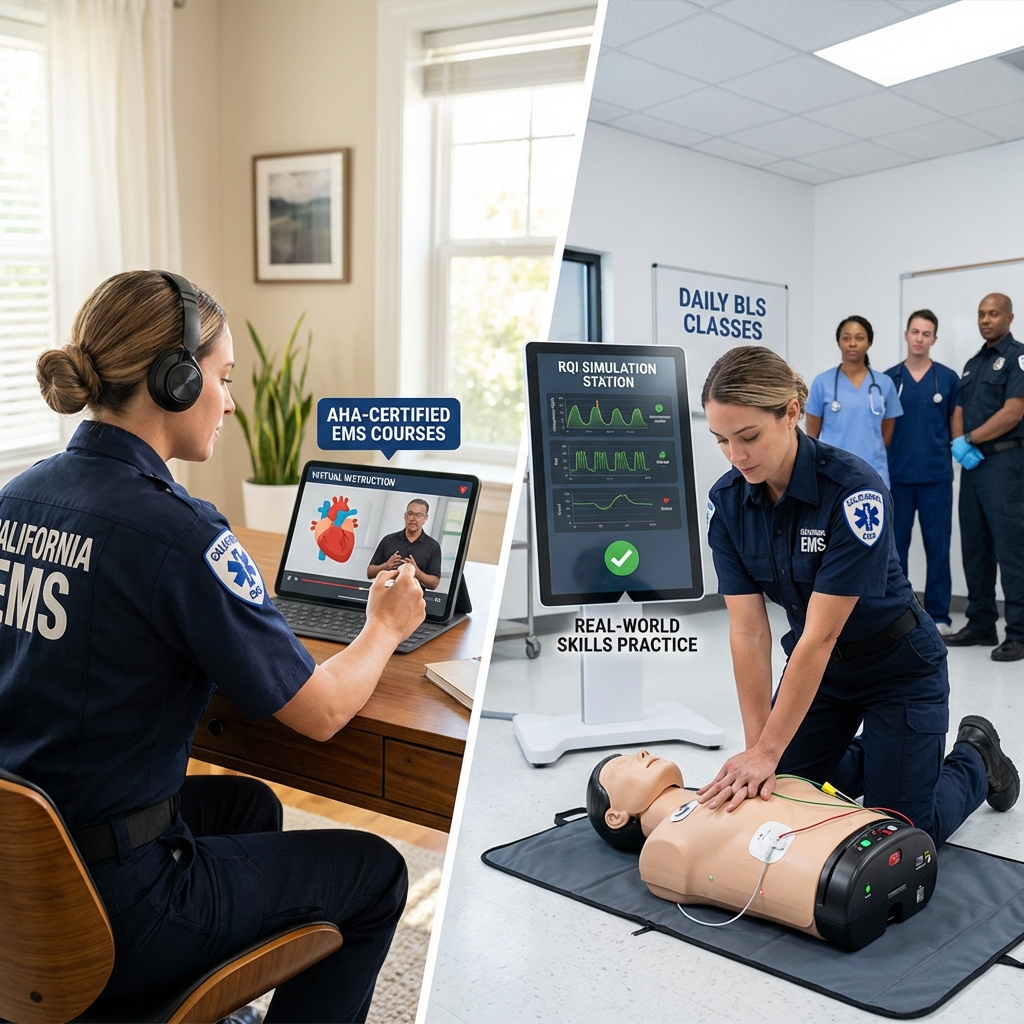
Workplace CPR training programs delivered in a blended format minimize operational disruption. Staff complete self‑paced modules off the floor, then rotate through short, scheduled skills checks—keeping clinic access open while meeting CPR certification for healthcare staff. Aligning team CPR recertification requirements on a single calendar prevents compliance gaps and last‑minute cancellations that strain coverage.
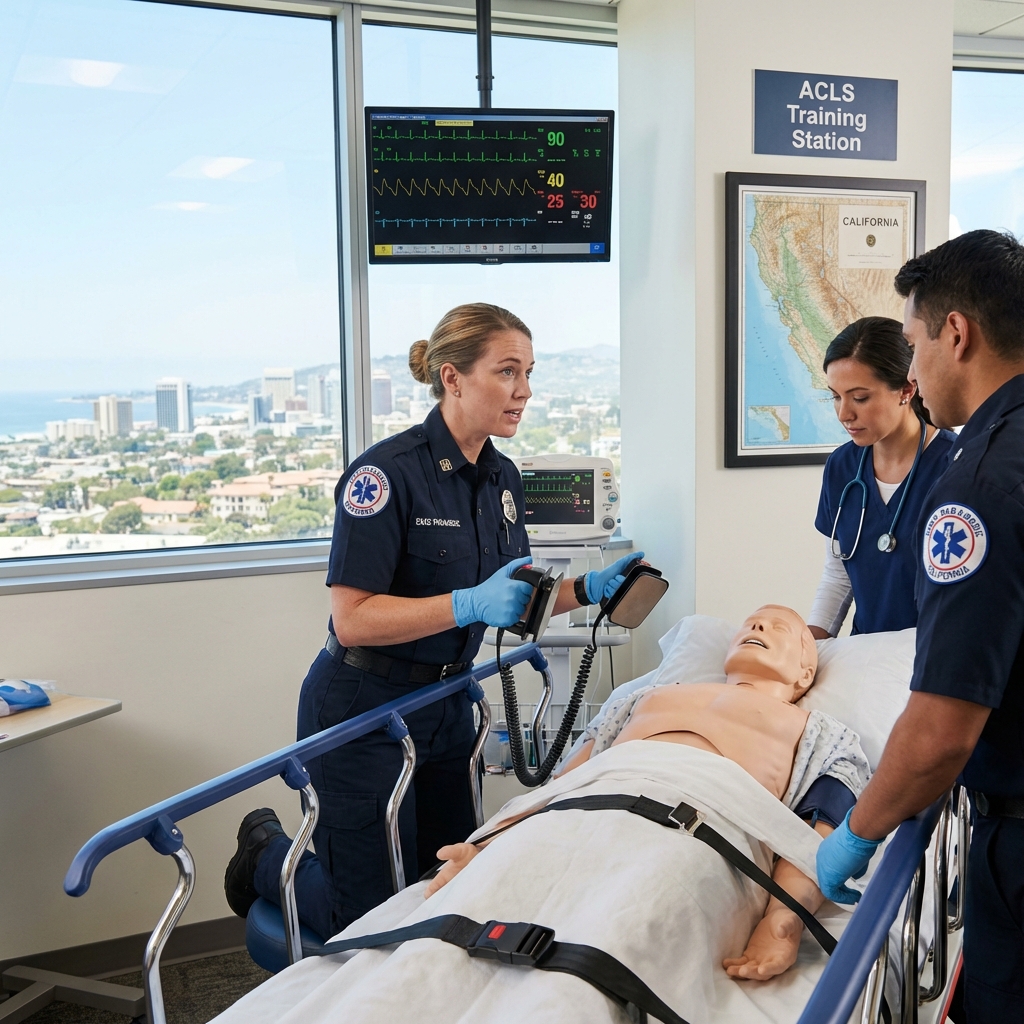
On-site clinical CPR instruction lets teams rehearse with their real equipment and layout—your AED model, oxygen setup, and crash cart contents. Running adult ACLS or pediatric PALS scenarios in actual exam rooms exposes bottlenecks (e.g., where to stage the backboard, how to route the suction line) before an emergency occurs. A dental practice, for example, can drill syncope progressing to arrest, refining roles for compressor, airway, and AED operator at the chairside.
Specific benefits your clinic can measure:
- Role clarity and closed‑loop communication under stress (compressor, airway, defibrillator, meds, recorder).
- Skills aligned to patient mix: BLS for all staff, ACLS for sedation or procedure areas, PALS for pediatric populations.
- Objective performance feedback (compression depth/rate, hands‑off time, time‑to‑shock) with debriefs to drive quality.
- Policy and risk management alignment, including crash cart checks and documentation workflows.
- Cost and scheduling efficiency through bulk CPR training for medical facilities and consolidated rosters.
Safety Training Seminars supports group CPR training for clinics across California with blended learning, on‑site options, and over 100 locations for convenient skills sessions, plus ACLS/PALS for providers. For roles that require AHA credentials, confirm whether online‑only cards meet your policy; see their guidance on validity here: Red Cross Online CPR. Their corporate team can also coordinate renewals and reminders to keep every license current without disrupting patient care.
Key Differences Between Individual and Group Training Programs
Individual courses focus on a single learner’s competency—testing knowledge, high‑quality compressions, ventilation skills, and equipment familiarity to meet AHA carding requirements. In contrast, group CPR training for clinics adds the layer that matters during real codes: team roles, communication, and workflow inside your actual care environment. On-site clinical CPR instruction can incorporate your clinic’s code cart layout, defibrillator model, and escalation pathways so practice mirrors reality. The result is not just compliant clinicians, but a coordinated response that reduces delays to first shock, medication administration, and post‑ROSC care.
The learning experience differs as well. Individual attendees typically complete blended learning online and attend a scheduled skills session at a training center. Group programs emphasize team-based scenarios and interprofessional drills that reflect daily operations, such as a syncopal event in triage or pediatric respiratory arrest in a procedure room. Common elements include:
- Role assignment and closed‑loop communication during mock codes
- Use of feedback manikins to fine‑tune depth, rate, and recoil
- AED/monitor-defibrillator practice with your in-house equipment
- Debriefing with performance metrics and improvement plans
Scheduling and cost structures also diverge. Individuals register for open‑enrollment dates that suit personal calendars. Clinics, however, can bundle staff into blocks by shift or department, align team CPR recertification requirements to a single compliance window, and minimize coverage strain. Bulk CPR training for medical facilities typically lowers per‑learner costs and eliminates travel time; Safety Training Seminars offers group pricing, a low price guarantee, and flexible options that fit clinic hours.

Administrative workflows are streamlined in group formats. Instead of collecting individual confirmations and receipts, managers receive consolidated rosters, rapid issuance of AHA eCards, and centralized records useful for audits and payer credentialing. Safety Training Seminars can map workplace CPR training programs to your policy requirements, set automated renewal reminders for CPR certification for healthcare staff, and deliver blended learning plus on‑site skills across 100+ California locations, ensuring multi‑site clinics maintain consistent standards statewide.
Implementation: Setting Up Group CPR Training at Your Clinic
Start with a needs audit and a calendar. Map roles to required AHA courses, identify expiring cards, and set target dates that avoid peak patient hours. A clear plan keeps group CPR training for clinics compliant while minimizing disruption to schedules and revenue.
Define who needs what. Most clinical staff require BLS; providers in urgent care, surgery, and procedural areas often need ACLS; pediatric settings may require PALS; labor and delivery teams may need NRP. Align team CPR recertification requirements to a consistent two‑year cycle so managers can batch renewals and reduce one‑off absences.
Choose a training format that fits clinical operations. Blended learning (AHA HeartCode eLearning plus an in‑person skills check) trims time away from patients and is ideal for CPR certification for healthcare staff. Set a two‑week window for eLearning completion, then run multiple 30–90 minute skills sessions across shifts (e.g., 07:00, 12:00, 17:00) so every team can attend.
Standardize logistics with a simple checklist:
- Reserve a clean, ventilated room; allow space for manikins and AED trainers; ensure hand hygiene supplies.
- Confirm AHA-compliant feedback manikins, bag‑valves, and training AEDs; instructor‑to‑student ratios of 1:6 or better.
- Communicate pre‑work links, deadlines, what to bring (photo ID), and payroll rules to avoid unplanned overtime.
- Capture rosters, job roles, and emails for eCard issuance; integrate completion data with HR or your LMS.
- Schedule make‑up sessions for new hires, per‑diem staff, and leave returns within 30 days.
Select a qualified provider that can deliver workplace CPR training programs on your terms. Safety Training Seminars offers on-site clinical CPR instruction and blended options, plus ACLS, PALS, and NRP for specialized teams. With 100+ locations across California, corporate group scheduling, bulk CPR training for medical facilities, and a low price guarantee, clinics can scale reliably and control costs.
Close the loop with quality improvement. Debrief after classes, track first‑attempt pass rates and hours saved, and add monthly 10‑minute mock codes that reinforce skills. Set automatic reminders 60–90 days before expirations and book quarterly group sessions to keep recertifications on track without last‑minute scrambles.
Choosing the Right Training Provider and Curriculum
The best provider for group CPR training for clinics is one that aligns curriculum with your patient mix, regulatory obligations, and workflow. Verify that courses follow current American Heart Association guidelines and satisfy employer, insurer, and licensing board expectations for CPR certification for healthcare staff. Clinics that manage sedation, triage, or pediatric populations should prioritize BLS for providers plus ACLS, PALS, or NRP where applicable to reflect real clinical risk.
Assess delivery models and logistics early. Blended learning (online modules plus in-person skills) shortens release time while preserving hands-on competency, and on-site clinical CPR instruction can be scheduled during shift changes or after hours. Confirm realistic student-to-manikin ratios, use of manikins with real-time feedback, and AED practice with models similar to those in your facility. Ask how the vendor handles AHA eCards, roster uploads, and reminders to meet team CPR recertification requirements without last-minute lapses.
Evaluate providers using a structured checklist:
- Curriculum fit: BLS for Providers for all clinicians; ACLS/PALS/NRP for urgent care, pediatrics, EMS, or sedation dentistry.
- Scenario relevance: team-based megacode, opioid emergencies with naloxone, maternal/obstetric or pediatric respiratory cases if applicable.
- Delivery options: workplace CPR training programs, blended learning, and mobile teams for on-site skills days across multiple locations.
- Quality measures: feedback-enabled manikins, clear remediation pathways, and documented skills checklists.
- Administration: digital certificates (AHA eCards), tracking dashboards, automated recertification reminders, and compliance reporting.
- Accessibility: multiple class times, language support, and coverage for per-diem or rotating staff.
- Safety and infection control: equipment sanitation protocols and individual PPE availability.
- Pricing and terms: transparent quotes, bulk CPR training for medical facilities, group discounts, and fair rescheduling policies.
For California clinics, Safety Training Seminars offers AHA-aligned blended courses with both virtual learning and in-person skills, on-site options, and over 100 training locations statewide. Their portfolio includes specialized ACLS, PALS, and NRP for healthcare providers, plus corporate group scheduling, discount pricing, and a low price guarantee—useful for multi-site systems aiming to standardize training while controlling costs.
Scheduling and Logistics for On-Site Clinical Training
Effective scheduling for group CPR training for clinics starts with a compliance map. Audit upcoming expiration dates for BLS, ACLS, PALS, and NRP, then cluster cohorts by role and shift to minimize gaps in patient coverage. Aim to plan 6–8 weeks out so you can accommodate prework, room bookings, and any team CPR recertification requirements tied to credentialing or performance reviews.
Blended learning streamlines downtime. Assign staff to complete AHA-approved online modules asynchronously, then book on-site clinical CPR instruction in focused 60–90 minute skills sessions. For example, a 24-person urgent care can run four staggered skills stations over two days (morning/afternoon) so day, swing, and night shifts rotate through without closing rooms. If your clinic spans multiple sites, consider rotating instructors between locations in the same week to reduce travel and overtime costs.

Before confirming dates, align on a logistics checklist:
- Room: 300–500 sq. ft., cleanable floor space, low foot traffic, and electrical outlets for AED trainers and manikin compressors.
- Ratios: Target 1 instructor per 6–8 learners; 2:1 or 3:1 learner-to-manikin for BLS; extra AED trainers for megacode practice.
- Infection control: Disinfectant, hand hygiene supplies, barrier devices; time buffers for equipment cleaning between cohorts.
- Access: Parking/loading info, security clearance or badging, after-hours HVAC/lighting if running evening sessions.
- Contingencies: High-census backup dates, waitlist process, and a rescheduling policy for clinical surges.
Tight administration keeps workplace CPR training programs compliant and audit-ready. Send pre-course emails with eLearning links, deadlines, and what to bring; collect rosters by department; and verify prerequisites for advanced courses. Track completions against CPR certification for healthcare staff requirements, document skills check-offs, and ensure AHA eCards are issued to the correct legal names and license numbers for HR and privileging files.
Safety Training Seminars can coordinate on-site group sessions or blend in-person skills with online coursework across California. With over 100 locations for overflow or make-ups, specialized ACLS/PALS/NRP options, corporate group training, and a low price guarantee, they simplify bulk CPR training for medical facilities while fitting around clinic operations.
Compliance and Certification Requirements for Healthcare Professionals
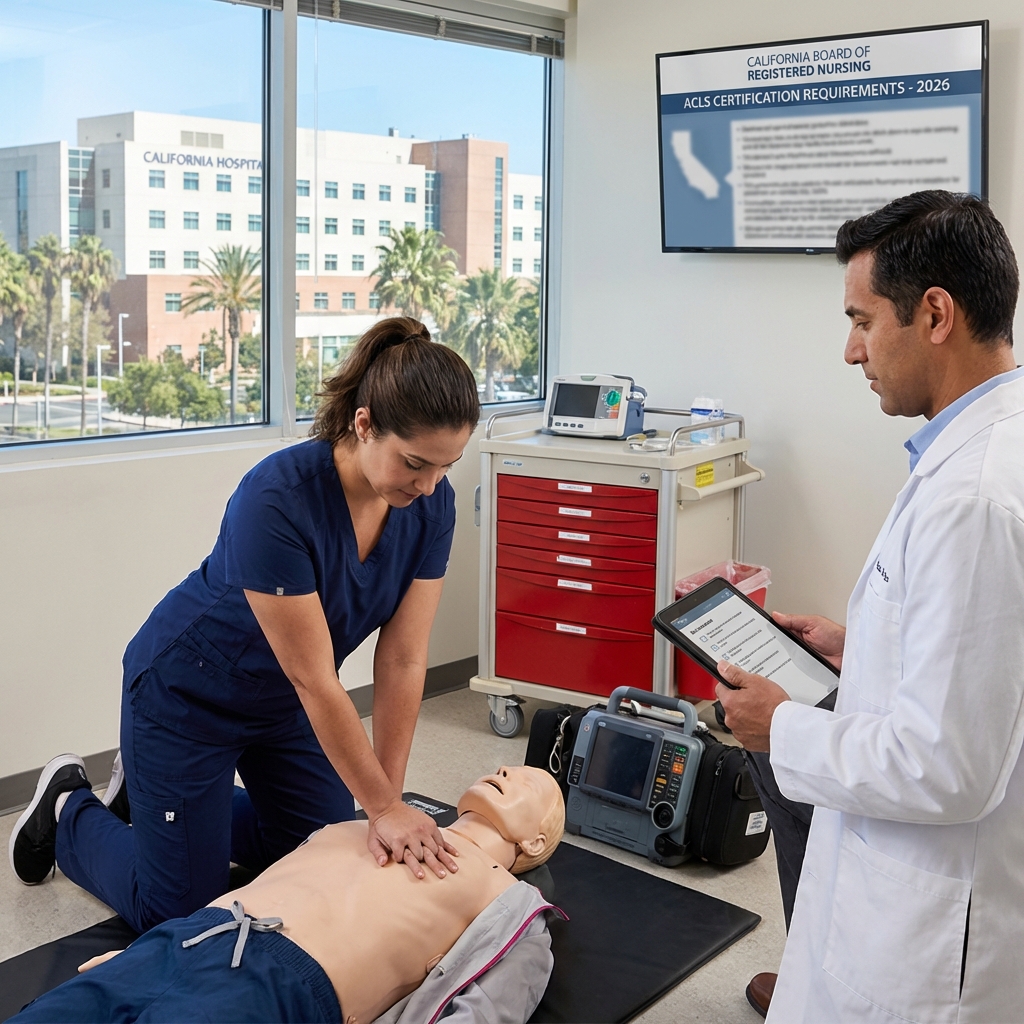
Staying compliant starts with aligning clinic policies to nationally recognized standards. Most California employers and accrediting bodies (e.g., The Joint Commission and CMS) expect current, skills-verified American Heart Association (AHA) credentials and documented competency in resuscitation. AHA eCards are valid for two years, so mapping expiration dates and role-based requirements is essential to avoid gaps in patient coverage and survey findings.
Clinics can simplify expectations by defining credentials per role and care setting:
- Nurses and clinical MAs: BLS Provider; ACLS commonly required in ED, ICU, PACU, and procedural areas.
- Physicians, NPs, PAs: BLS; ACLS for adult acute/critical care; PALS for pediatric-focused roles.
- Pediatric units and urgent care serving children: PALS for RNs and providers managing pediatric emergencies.
- Dental teams: BLS for all patient-facing personnel; sedation practices often adopt ACLS/PALS for providers.
- EMS personnel working in hospital-based programs: BLS; ACLS and PALS per agency protocol.
Group CPR training for clinics helps standardize team CPR recertification requirements by creating unified renewal windows, consistent documentation, and a single curriculum across sites. Use workplace CPR training programs that issue individual eCards with course ID, completion date, and skill verifier to pass credentialing audits. On-site clinical CPR instruction also supports mock codes and policy updates so competencies match current AHA guidelines (e.g., feedback devices, high‑quality compressions, and team communication).
A practical compliance checklist:
- Verify each role’s required card (BLS, ACLS, PALS; NRP for newborn care) and two-year renewal cycle.
- Consolidate expirations by quarter and schedule bulk CPR training for medical facilities 60–90 days in advance.
- Use blended learning (online + hands-on) to minimize downtime while preserving skills checks.
- Maintain a centralized roster with eCard links, skills session records, and remediation notes.
Safety Training Seminars is an AHA Training Site that supports CPR certification for healthcare staff through blended learning, on-site group sessions, and over 100 California locations. Clinics can standardize policies, streamline audits, and control costs with coordinated group enrollments, corporate discounts, and a low price guarantee.
Measuring Training Effectiveness and Staff Competency
Effective evaluation starts by defining clear goals: maintain compliance, build real-world readiness, and shorten response times during emergencies. Use a structured model such as Kirkpatrick to gauge reaction (learner feedback), learning (knowledge/skills), behavior (performance in drills), and results (process metrics from actual events or mock codes). For group CPR training for clinics, link these goals to clinic operations so improvements are visible on shift.
Track a concise set of KPIs that reflect both individual skill and team performance:
- Certification compliance rate for BLS/ACLS/PALS (and lapses avoided)
- First-attempt pass rates on skills and written exams
- QCPR manikin metrics: compression depth 5–6 cm, rate 100–120/min, full recoil, ventilation volume within target, chest compression fraction ≥60% (strive for ≥80%)
- Drill timing: recognition to first compression ≤10 seconds; time to AED on-scene and first shock ≤3 minutes when indicated
- Knowledge gain (pre/post test delta) and post-course confidence scores
- Code cart/AED readiness audit scores and corrective actions closed within set timeframes
Use multiple methods to gather objective data. Blended workplace CPR training programs with feedback manikins provide real-time scoring that can be exported by learner and by clinic. Schedule brief mock codes to test team role clarity, closed-loop communication, and defibrillator setup; debrief immediately with a short checklist and assign actions. In on-site clinical CPR instruction, standardize thresholds (for example, ≥80% manikin score and meeting all critical actions) so results are comparable across sites.
Plan the maintenance phase as carefully as the initial course. AHA BLS is typically valid for two years, but because CPR skills decay within months, add quarterly micro-drills or brief skills refreshers, especially for high-turnover roles. Map team CPR recertification requirements by role, build a competency matrix for nurses, MAs, dental assistants, and providers, and monitor lead time to renewal to prevent gaps.
Safety Training Seminars supports CPR certification for healthcare staff at scale with blended learning, on-site options, and aggregated reporting for multi-site clinics. For bulk CPR training for medical facilities, they provide completion rosters, automated reminders, and QCPR performance summaries, helping leaders prove effectiveness and sustain readiness.

Cost Considerations and Pricing Models for Group Programs
Budgeting for group CPR training for clinics should account for more than the sticker price. Compare models based on class size, certification type (BLS, ACLS, PALS), and your team CPR recertification requirements every two years. Consider how scheduling affects productivity, especially for 24/7 operations where pulling staff off the floor has real labor costs.
Common pricing models you’ll encounter in workplace CPR training programs include:
- Per-seat tuition for CPR certification for healthcare staff, straightforward for small teams or mixed rosters.
- Flat-rate on-site clinical CPR instruction covering a set number of learners, with options to add participants for a marginal fee.
- Tiered or volume discounts for bulk CPR training for medical facilities spread across multiple departments or locations.
- Blended learning bundles that pair online coursework with a shorter in-person skills check, reducing paid time away from patients.
- Vouchers or credits that allow rolling enrollment as hires are made or shifts change, maintaining compliance without overpaying for empty seats.
Factor in indirect and variable costs so your comparisons are apples to apples. Travel time, backfill or overtime to maintain coverage, and after-hours or weekend premiums can materially change the total. Some providers charge for instructor travel beyond a radius, room use, or replacement eCards; cancellation and rescheduling windows also carry fees. If you operate multiple clinics, coordination across sites can introduce no-show risk and duplication unless you consolidate rosters.
Practical ways to control spend include scheduling micro-cohorts by shift, stacking skills sessions at shift change, and standardizing blended learning to minimize time off the floor. For example, if 18 nurses avoid two hours of round-trip travel by using a nearby site, you reclaim 36 labor hours—often more than the difference between per-seat and flat-rate pricing. Safety Training Seminars supports on-site and local options through 100+ California locations, blended AHA courses, and corporate group pricing with a low price guarantee, helping clinics align cost with compliance across BLS, ACLS, PALS, and NRP. This flexibility makes it easier to keep CPR certification for healthcare staff current without overspending.
Maintaining Current Certifications Across Your Team
Keeping every clinician current starts with clarity on what is required and when. Most AHA credentials for CPR certification for healthcare staff—BLS for all clinical roles and ACLS/PALS/NRP for specific scopes—expire every two years. A lapse can sideline providers, complicate staffing, and create compliance risk during Joint Commission or CDPH audits, so define team CPR recertification requirements by role and build a proactive renewal cadence.
A simple maintenance program for group CPR training for clinics can include:
- Build a role matrix (e.g., MA: BLS; RN: BLS/ACLS; Pediatric team: BLS/PALS) with expiration dates.
- Use a rolling schedule that renews 60–90 days before expiry to prevent last‑minute scrambles.
- Leverage blended workplace CPR training programs so staff complete eLearning off-shift and attend brief skills checks.
- Prioritize on-site clinical CPR instruction for larger teams to cut travel time; smaller teams can use nearby centers.
- Stagger sessions by shift and department to maintain coverage and patient flow.
- Track completions centrally and keep certificates on file for audit readiness.
- Create contingencies for leave and turnover with monthly make-up sessions.
Operationally, align sessions with patient volumes. For example, primary care sites might run quarterly Friday afternoon skills checks, while ED or dental clinics rotate micro-sessions across nights and weekends. Avoid “single expiry” risk by splitting large departments into two cohorts six months apart, and tie onboarding to the same matrix so new hires never start behind.
Safety Training Seminars helps California clinics implement this system with blended AHA courses and flexible delivery—on-site clinical CPR instruction for bulk CPR training for medical facilities or convenient access at 100+ locations statewide. Corporate coordinators can consolidate rosters, set recurring group dates, and secure discount pricing with a low price guarantee. This approach reduces overtime, protects clinic capacity, and ensures your entire team remains current without disrupting care.
Conclusion: Making Group CPR Training a Priority
Making group CPR training for clinics a standing priority moves it from a compliance chore to a quality and safety practice. When entire care teams learn and drill together, roles are clearer, communication is tighter, and mock codes translate into faster, safer responses at the bedside. It also streamlines CPR certification for healthcare staff, reducing last‑minute scrambling and coverage gaps.
Build your approach around team CPR recertification requirements by role (for example, BLS for all clinical staff every two years, ACLS/PALS for designated providers). Create a rolling calendar that aligns expirations by unit or site, and use blended learning to minimize time off the floor—complete modules online, then finish with on-site clinical CPR instruction or a brief skills check. Standardize debriefs after drills to capture lessons learned and update protocols within workplace CPR training programs.
For California clinics, Safety Training Seminars offers practical pathways to consistency and cost control. With 100+ locations statewide plus mobile instructors, teams can mix virtual coursework with local skills sessions or schedule on‑site events after hours. Their healthcare-focused courses align with AHA curricula for BLS, ACLS, PALS, and NRP, and corporate group options support bulk CPR training for medical facilities with coordinated scheduling, discount pricing, and a low price guarantee. Example: a multi-site FQHC can stagger blended sessions across locations in one week, while a dental group can host a single evening on‑site for all hygienists and dentists.
Quick next steps to operationalize the plan:
- Assign a training coordinator, budget, and escalation path for coverage.
- Centralize tracking of expiration dates by site, role, and credential.
- Choose delivery models (blended vs on‑site) and schedule 60–90 days pre‑expiry.
- Run brief quarterly mock codes and document improvements.
- Partner with Safety Training Seminars to design a multi-location schedule that meets AHA-aligned requirements and supports reliable, clinic-wide recertification.
Register for a class today.