
Table of Contents
- Why EMS Professionals Need Scheduling Flexibility
- The Challenge: Balancing Mandatory Certifications with Demanding Shifts
- Traditional In-Person EMS Training: Limitations and Constraints
- Our Blended Learning Approach: The Best of Both Worlds
- Comparison: Scheduling Flexibility and Convenience
- Comparison: Hands-On Practice and Skill Development
- Comparison: Cost and Value
- Same-Day Certification Across California's 100+ Locations
- Learn at Your Own Pace with Our Online Platform
- Expert Instructors and Experienced Guidance Throughout
- Why EMS Professionals Choose Our Blended Model
- Reserve Your Flexible EMS Training Spot Today
- Frequently Asked Questions (FAQ)
Why EMS Professionals Need Scheduling Flexibility
Your EMS career demands split-second decisions on the field, but your training schedule shouldn’t demand the same rigidity. Whether you’re a paramedic juggling 24-hour shifts, an EMT balancing a second job, or a healthcare provider updating certifications for licensure, finding time for mandatory training feels nearly impossible.
The reality is simple: life-saving training shouldn’t derail your life. You need a certification path that respects your unpredictable schedule while delivering the hands-on practice that keeps you sharp and compliant. That’s where flexibility becomes more than convenience—it becomes a necessity for your career.
Actionable takeaway: Before choosing a training format, list your schedule constraints (shift patterns, commute time, days off). This will clarify whether traditional or blended learning serves you better.
The Challenge: Balancing Mandatory Certifications with Demanding Shifts
EMS professionals face a unique pressure. Your employer requires current AHA-certified CPR, BLS (Basic Life Support), ACLS (Advanced Cardiovascular Life Support), and often PALS (Pediatric Advanced Life Support) for licensure and workplace compliance. Yet the schedules that generate those requirements—rotating shifts, on-call hours, extended response periods—make attending a full-day in-person class feel like an additional shift you can’t afford.
Many EMS personnel renew certifications only when renewal deadlines hit, scrambling to book whatever class fits a narrow window. This reactive approach leaves little room for skill refinement and often means choosing the least convenient option simply because it’s available when you need it.
We designed our blended learning model specifically for this pressure point. You shouldn’t have to choose between staying current and maintaining your work-life balance.
Traditional In-Person EMS Training: Limitations and Constraints
Full in-person training delivers undeniable value: immediate feedback from instructors, live mannequin practice, and same-room accountability. But the format comes with real constraints for shift workers.
A typical 8-hour in-person BLS class requires you to block an entire day. If you work rotating 12-hour shifts or split your schedule across multiple jobs, that’s not just inconvenient—it’s logistically painful. You’ll also face geographic limitations. If your training center is 45 minutes away, you’re adding 90 minutes of commute time to an already long day.
Then there’s the timing mismatch. Most training centers cluster classes on weekdays or occasional weekends. If you’re scheduled to work those days, you’ll need to request time off—which isn’t always possible in emergency services. Some EMS professionals end up paying for a class they can’t attend or traveling to a distant location to fit an available slot.
Cost is another factor. Traditional programs that require full-day attendance with limited scheduling options often reflect that constraint in their pricing.
Our Blended Learning Approach: The Best of Both Worlds
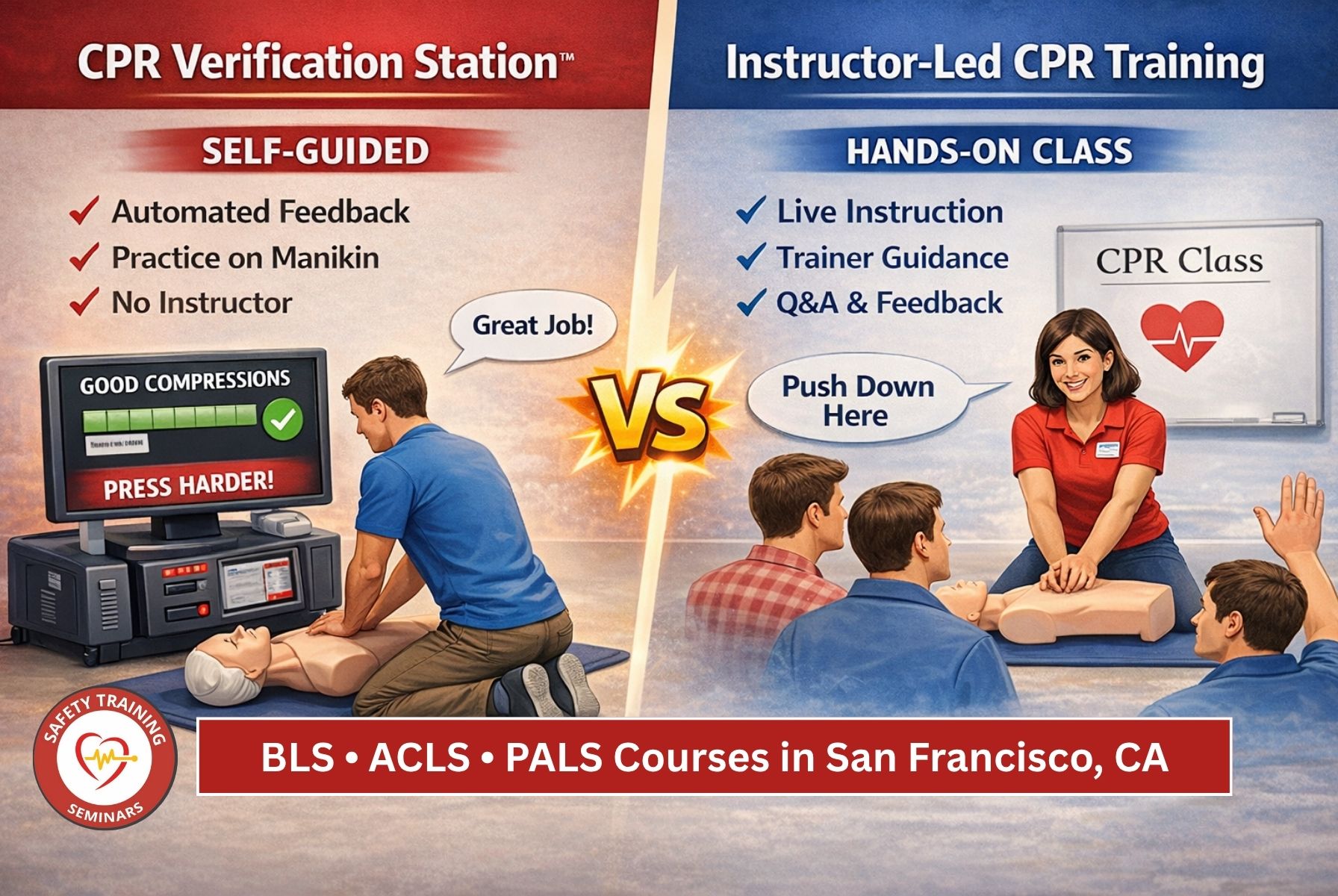
We’ve built a training model that keeps the gold standard of hands-on practice while removing scheduling barriers. Here’s how it works:
Online foundation modules let you learn theory, algorithms, and coursework whenever fits your life—midnight after a shift, early morning before work, or during a quiet stretch at the station. You move at your own pace through videos, scenarios, and knowledge checks.
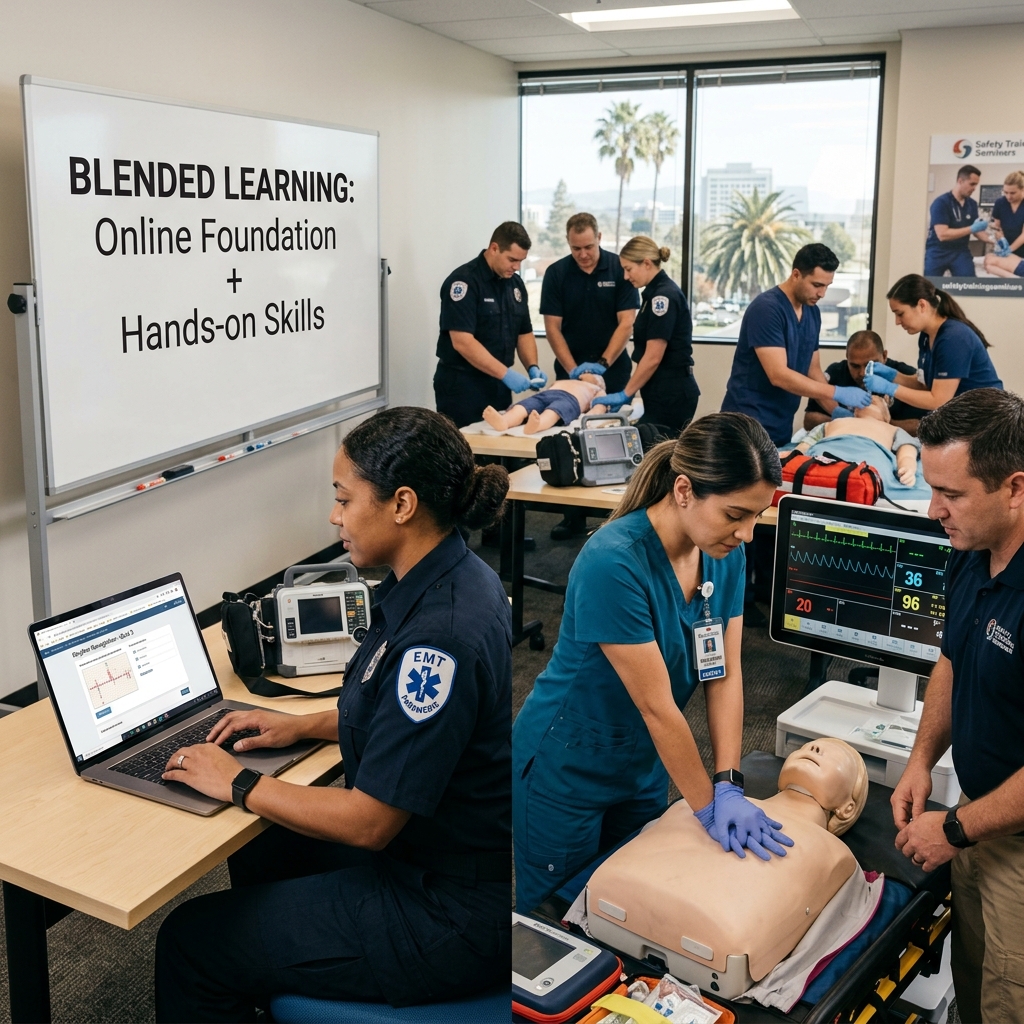
In-person skills sessions are scheduled frequently across our 100+ California locations, often with multiple time slots per week. You attend only the hands-on practice component—typically 2-3 hours—rather than an entire day-long class. This is where you practice chest compressions on our RQI simulation stations with VAM (Visual Airway Management) technology, perform live scenarios with our experienced instructors, and build the muscle memory that saves lives.
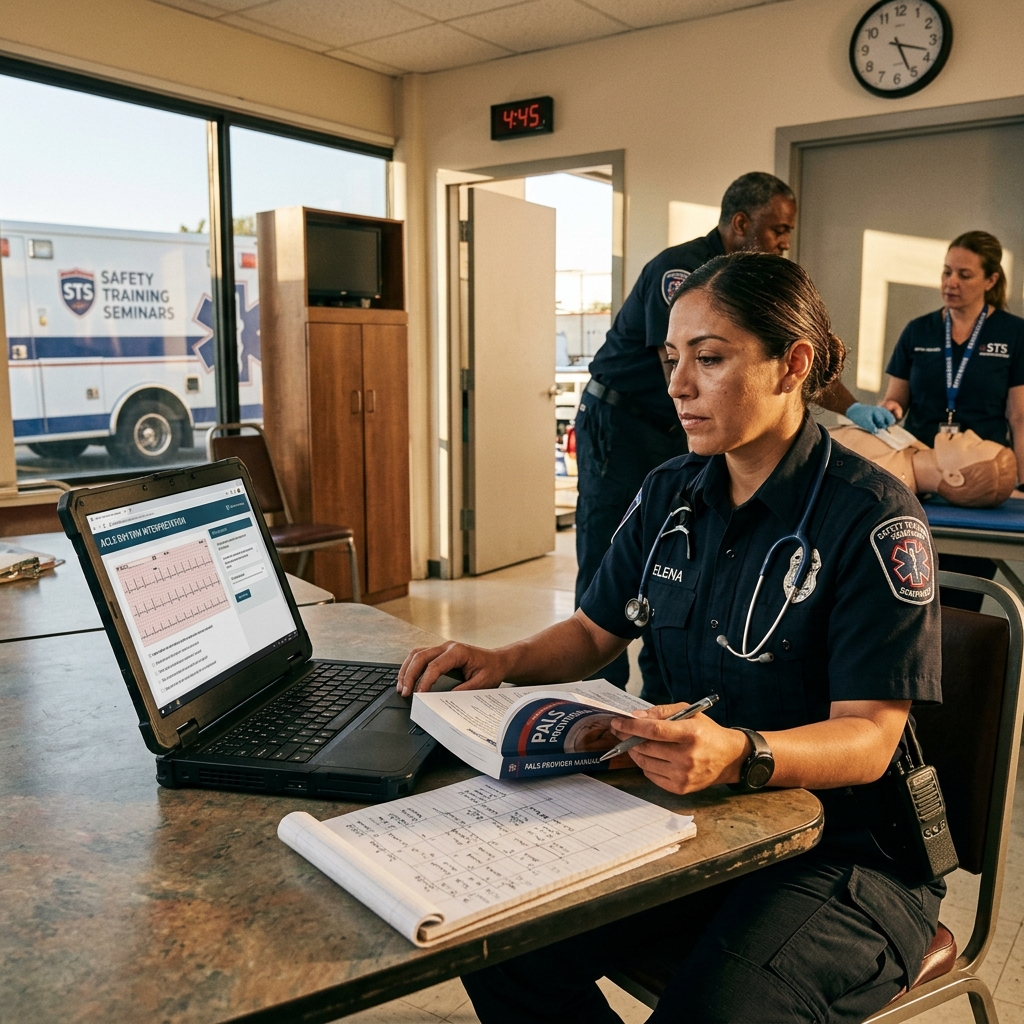
You receive your same-day certification card after completing both components. No waiting, no bureaucratic delays.
This isn’t a compromise between convenience and quality. It’s a deliberate design that respects your professional demands while delivering superior skill development.
Actionable takeaway: Calculate your total time commitment by comparing a full-day in-person class (8 hours plus travel) with our blended model (2-3 hours in-person skills practice plus self-paced online time).
Comparison: Scheduling Flexibility and Convenience
Here’s where the difference becomes concrete for your calendar.
With traditional in-person training, you work around the training schedule. You find a class that fits, request time off, and hope nothing changes. If that class fills or conflicts with an unexpected shift, you move to the next available option—which might be two weeks away.
Our blended model flips this dynamic. Your online coursework is available 24/7. You complete it whenever you have 30 minutes between shifts or during a slower day. Then you choose from frequent in-person skills sessions across multiple California locations. Most EMS professionals find an available slot within 1-2 weeks, often sooner.
Need ACLS certified in Sacramento? We have classes available across California at dozens of locations including Sacramento Arden, Sacramento Midtown, and Sacramento Rosemont. Can’t make this week? Next week has additional slots. Working night shifts in Oakland? We offer sessions at our Oakland Fruitvale, Oakland Lake Merritt, and Oakland Piedmont locations with varying times.
If you travel between stations or cover multiple jurisdictions, our geographic reach matters. You’re never forced into a long commute for the sake of finding a class.
Actionable takeaway: Check available class times and locations near your station. You’ll likely find 3-4 options within a 10-mile radius and a week’s timeframe.
Comparison: Hands-On Practice and Skill Development
This is where blended learning truly excels for EMS professionals. You don’t sacrifice practice quality—you enhance it.
In traditional all-day classes, instructors cover theory, demonstrate skills, and facilitate practice all within a compressed timeframe. By hour six, fatigue sets in. Your muscle memory for CPR compression depth and rate gets one solid practice session, then moves on.
Our model dedicates your in-person time entirely to skills practice. You’ve already learned the theory online, so your 2-3 hours with an instructor focuses exclusively on performing compressions correctly, managing airways, responding to scenarios, and receiving detailed feedback. You practice on multiple mannequins, work through realistic decision trees, and leave with genuine muscle memory—not just classroom exposure.
We use RQI simulation stations equipped with VAM technology. This isn’t basic plastic mannequin practice. VAM technology provides real-time visual feedback on airway management, helping you develop technique that transfers directly to patient care. You’re not learning training CPR; you’re developing the specific skills you’ll use in emergency response.
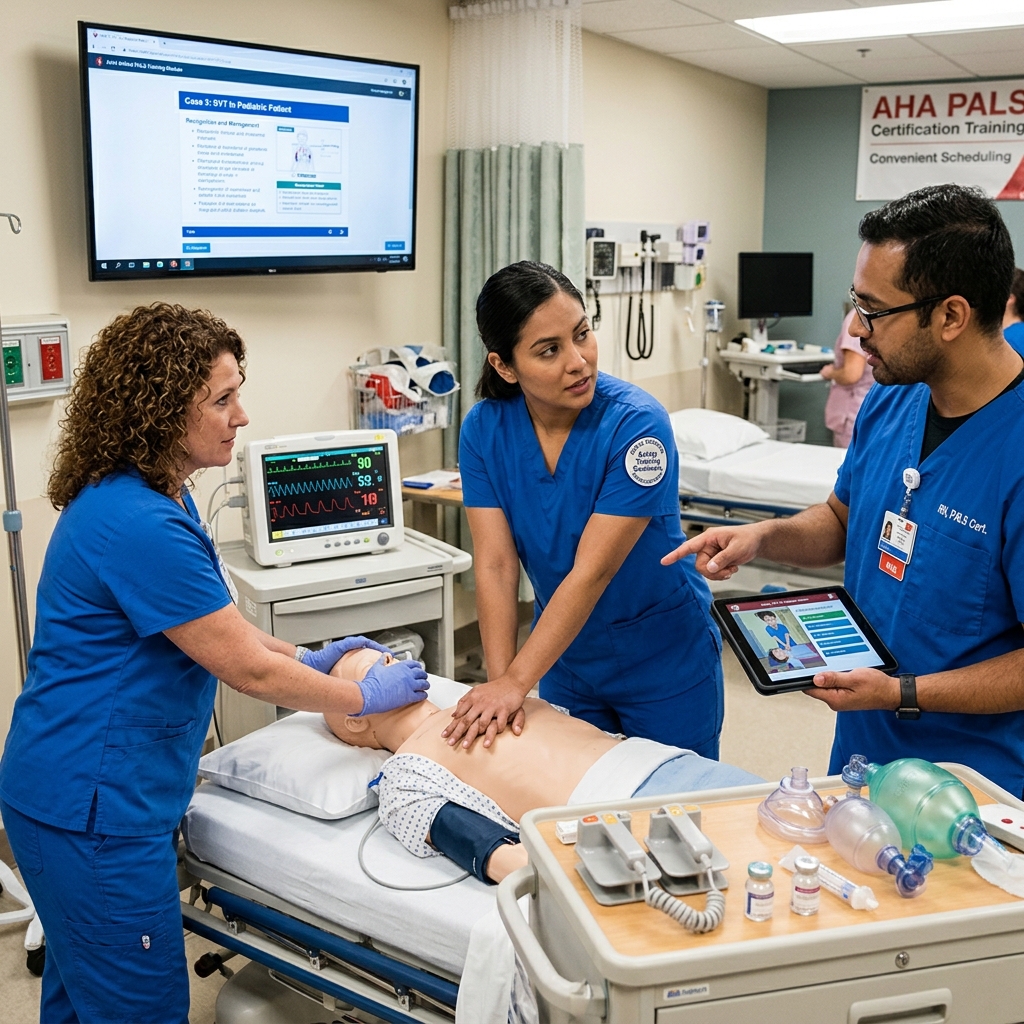
For advanced certifications like ACLS and PALS, this focused hands-on time proves invaluable. You work through algorithms with an instructor present, ask clarifying questions, and practice the decision-making that defines quality emergency response.
Actionable takeaway: Prioritize hands-on practice time over class length. Two focused hours with expert instructors beats eight hours of mixed lecture and practice.
Comparison: Cost and Value
We honor a low-price guarantee on all classes, and our blended model delivers additional cost advantages.
Traditional in-person training often costs more because training centers price for full-day overhead: facility time, instructor hours, and administrative costs concentrated into one session. You’re paying for the entire day even if skills practice could happen in half the time.
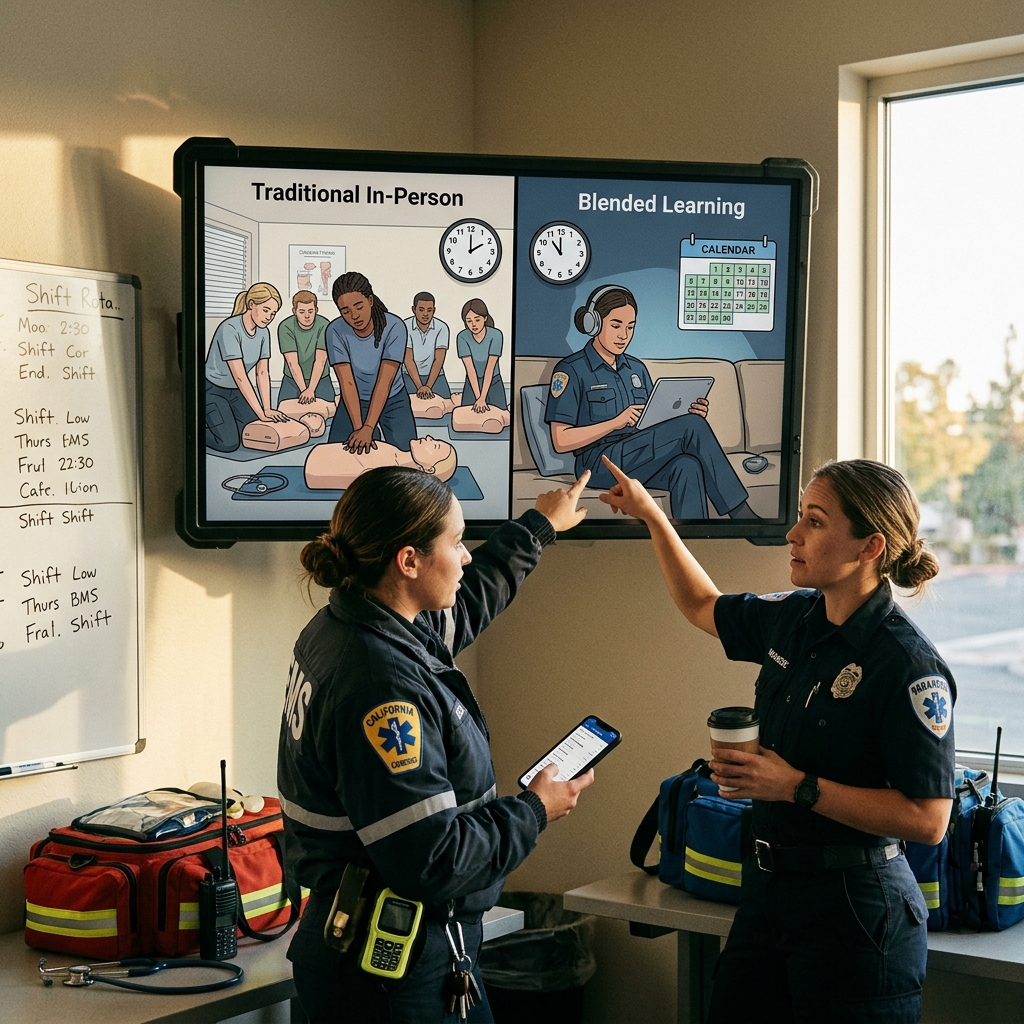
Our blended approach reduces overhead for both of us, and we pass those savings to you. You get AHA-certified instruction with same-day certification cards at competitive rates—often lower than traditional providers who offer less scheduling flexibility.
Consider your true cost beyond tuition: commute time, potential parking fees, childcare or coverage arrangements if you’re missing work hours, and occasional repeat courses because you couldn’t fit the class into your schedule. Blended learning eliminates those hidden costs.
For group training—which many EMS services coordinate for entire crews—we offer corporate discount pricing. If your station needs 5-10 team members certified, we’ll work with your schedule to arrange sessions that minimize service disruption. You’re not forcing half your crew off-shift for an all-day class; you’re coordinating brief, focused skills sessions.
Actionable takeaway: Request a quote for your EMS team. Group training often qualifies for significant discounts, and blended scheduling means less operational disruption.
Same-Day Certification Across California’s 100+ Locations
You don’t wait for a certificate to arrive in the mail. Upon completing both your online coursework and in-person skills session, you receive an AHA-certified, printed certification card before you leave—same day.
This matters for compliance. You need documented proof for your employer, your licensing board, and your scope of practice. No gap between completing training and having credential in hand. No uncertainty about when you’ll legally be authorized to perform those procedures.
Our network spans over 100 training locations throughout California, from the Bay Area to Central Valley to Northern regions. Whether you’re based in San Francisco, San Jose, Sacramento, Fresno, or anywhere between, you’ll find a location convenient to your station or home. Many larger cities—Sacramento, San Jose, Oakland, San Francisco—have multiple locations to reduce travel friction.
Actionable takeaway: Visit our California locations page and identify the facility nearest your station. Most EMS professionals will find 2-3 convenient options.
Learn at Your Own Pace with Our Online Platform
The online portion of your training removes time-pressure stress while maintaining rigor.
You log in whenever you have free time. After a 24-hour shift? Wait until you’re rested. Between calls during a quiet shift? Knock out a module. Early morning before work? Get it done then. Our platform is designed for healthcare professionals who live unpredictable schedules.
The coursework covers everything AHA standards require: algorithms for BLS, ACLS, or PALS; scenarios and decision trees; knowledge checks that ensure you’re absorbing material; and content that reinforces what you’ll practice in person. You can’t skip to certification—you must progress through the material—but you control when and how you engage.
This self-paced format often produces better long-term retention than all-day lectures. You’re not cramming information into a fatigued brain at 4 PM. You’re learning when you’re alert, with time to reflect between modules.
For providers renewing certifications every two years, this approach prevents the “last-minute scramble” that leads to weak preparation. You can begin your online work weeks in advance and book your skills session whenever you’re ready, rather than finding availability that matches a fixed class schedule.
Expert Instructors and Experienced Guidance Throughout
Blended learning doesn’t mean limited instructor access. Our experienced instructors guide you throughout the entire process.
Online modules include instructor-created content and clear explanations of complex concepts. When you attend your in-person skills session, you’re working directly with AHA-certified instructors who bring real-world EMS experience. They know the scenarios you’ll face. They understand the high-stress environment where these skills matter.
If you have questions during your online work, you can reach out. During skills practice, you receive direct feedback on compression rate, hand placement, algorithm timing, and scenario decision-making. You’re not rotating through a checklist with an instructor; you’re getting actionable guidance from someone who’s performed these procedures in live emergency response.
We support you step-by-step from enrollment through certification. If you’re unclear about course prerequisites, scheduling options, or what to expect during your skills session, our team responds quickly. For EMS professionals managing multiple certifications across different agencies, we help navigate requirements and coordinate training efficiently.
Actionable takeaway: Contact us directly if you have questions about prerequisites or course selection. We’ll identify the exact certifications your role requires.
Why EMS Professionals Choose Our Blended Model
EMS professionals choose blended learning because it respects the reality of emergency services. Your work doesn’t follow a 9-to-5 calendar. Your schedule shifts. Your availability changes. Training should adapt to you, not force you into inflexible options.
Our model delivers what traditional training centers struggle to provide: genuine flexibility, focused hands-on practice, quick certification, and locations where you actually work. You’re not sacrificing quality for convenience or settling for less rigorous instruction. You’re choosing a format specifically designed for professionals like you.
The feedback we hear consistently is this: EMS providers prefer blended learning because it lets them stay current without disrupting station operations, family time, or career momentum. Same-day certification means immediate compliance. Hands-on sessions with experienced instructors mean real skill development. Multiple California locations mean short drives, not regional trips.
This model also scales. Whether you need one personal renewal or you’re coordinating certification for an entire EMS service, blended learning adapts. You’re not waiting for a specific all-day class to have 20 people available; you’re scheduling focused sessions that fit operational needs.
Reserve Your Flexible EMS Training Spot Today
You’ve invested in becoming an excellent EMS professional. Your training shouldn’t add friction to your career—it should support it.
Reserve your spot in a blended learning course designed for your schedule. Start your online coursework today, choose a skills session time that works, and walk away with your same-day certification. We’ll guide you step-by-step through every phase.
Check available classes in your region. Most EMS professionals find an opening within 1-2 weeks. Your certification renewal doesn’t require a full day off, a long commute, or weeks of scheduling stress. It requires 2-3 hours of focused practice with experienced instructors and self-paced online learning around your shifts.
Your schedule is demanding. Your training doesn’t need to be. Reserve your flexible EMS training spot now.
Register for a class today.
Frequently Asked Questions (FAQ)
Can I get certified the same day with your blended learning program?
Yes, we offer same-day certification across our 100+ California locations. Our blended approach combines your self-paced online coursework with hands-on skills practice during in-person sessions, so you can complete everything on your schedule and leave certified. We make it simple for busy EMS professionals like you to stay current with your mandatory AHA certifications without lengthy time commitments.
How does your blended learning model work for shift-based schedules?
We’ve designed our blended program specifically for EMS personnel working irregular hours. You can complete the knowledge portion anytime through our online platform, then book an in-person skills session at one of our nearby locations when your schedule allows. This flexibility means you’re not locked into rigid class schedules that conflict with your shifts, and we’ll guide you step-by-step through the entire process.
Is your blended learning program less expensive than traditional in-person training?
We stand behind our low price guarantee on all classes, including our blended learning courses. You get the same expert instruction and AHA certification as traditional training, but without paying extra for rigid scheduling or lengthy classroom time. Reserve your spot today at any of our California locations to see how affordable certified life-saving instruction can be.