Introduction: The Evolution of CPR and First Aid Training Methods
CPR and first aid education has shifted from lecture-heavy classes to formats that fit the pace of modern clinical work. Blended learning CPR training—where evidence-based eLearning is paired with a brief, proctored skills check—now sits alongside traditional classroom models. American Heart Association (AHA) blended learning courses like HeartCode BLS, ACLS, and PALS help busy clinicians keep competencies current without losing the rigor of in-person evaluation.
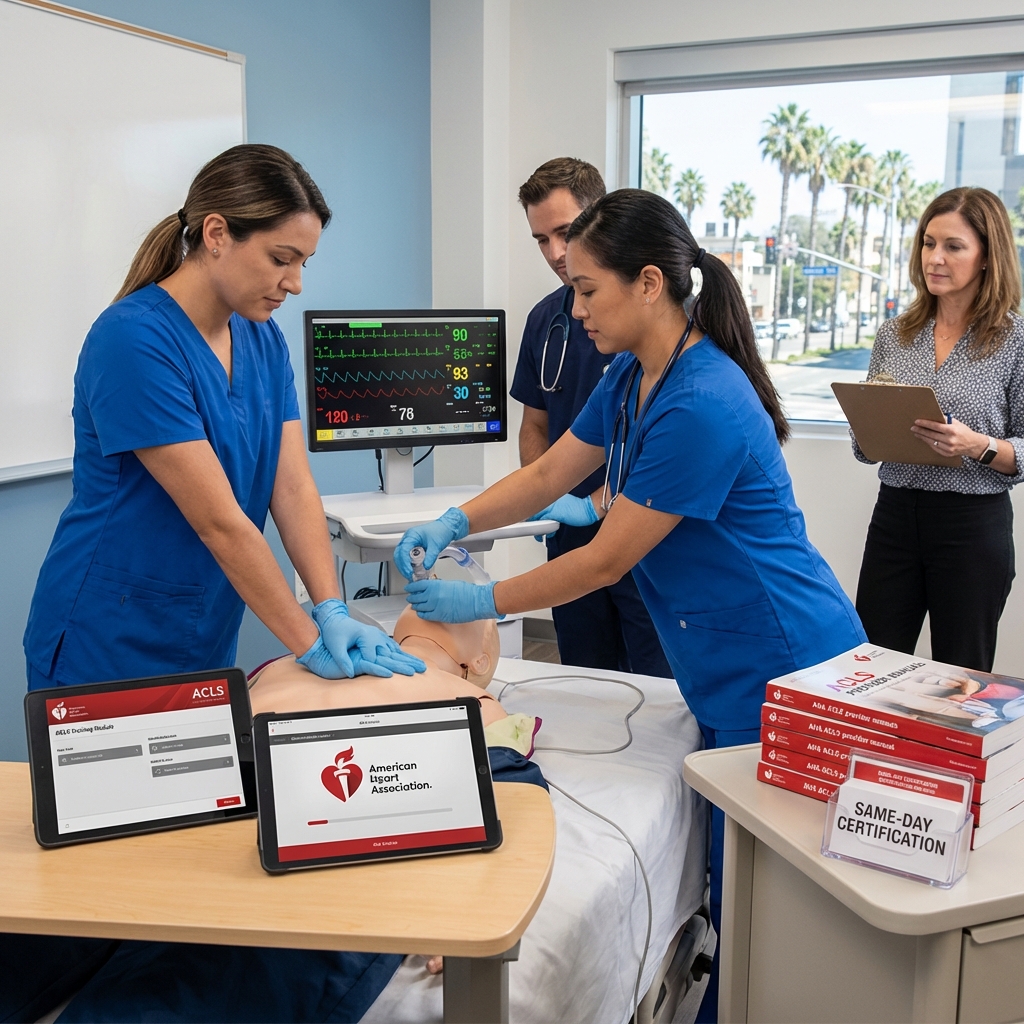
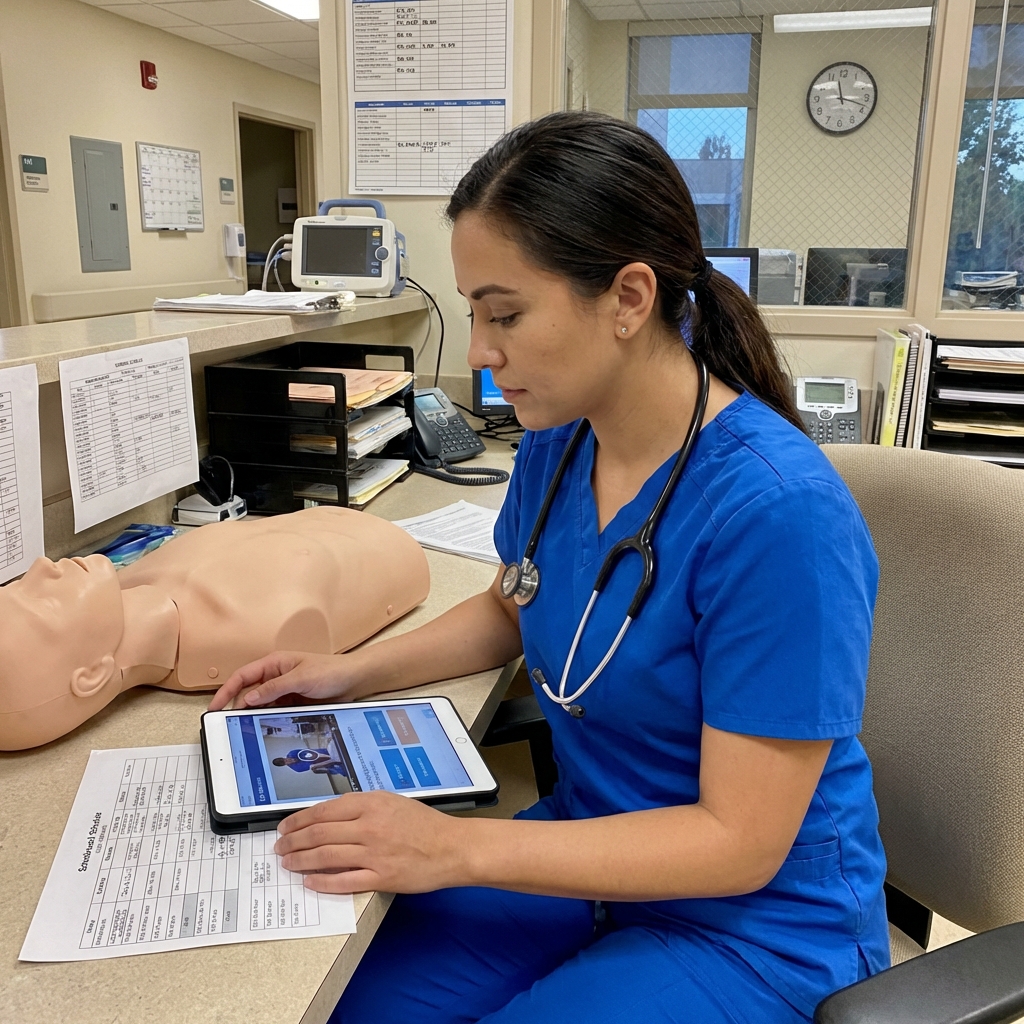
In practice, hybrid CPR certification programs split knowledge and psychomotor components. Learners complete interactive modules with videos, scenarios, and quizzes, then demonstrate mastery during online and in-person skills sessions with an instructor and feedback-enabled manikins. For example, a Sacramento RN might finish HeartCode BLS after a night shift, then attend a 30–60 minute skills appointment nearby to validate compressions, ventilations, and AED use—true virtual CPR training with hands-on practice.
Key benefits and considerations include:
- Self-paced eLearning that reinforces algorithms for BLS, ACLS, and PALS, followed by focused hands-on testing.
- Real-time manikin metrics (rate, depth, recoil) that improve psychomotor accuracy over lecture alone.
- Faster renewals for experienced providers while preserving assessment integrity.
- Credential acceptance: many California employers require AHA cards; always confirm California healthcare certification options with your facility.
- Access and cost: proximity of skills sites and low price guarantees can reduce time away from patients and budgets.
For clinicians comparing providers such as Safety Training Seminars and ProTrainings, start with credential requirements, schedule flexibility, and support during the skills check. Safety Training Seminars delivers AHA blended learning across 100+ California locations with BLS, ACLS, PALS, and NRP options, corporate group scheduling, and a low price guarantee—making the online-to-skills pathway practical for hospital teams and solo practitioners alike. If you also need first aid, explore their Flexible online first-aid learning to bundle requirements efficiently.
Understanding Blended Learning in Healthcare Certification
Blended learning CPR training combines self‑paced online coursework with a short, in‑person evaluation to verify skills and competency. For healthcare roles, this format mirrors day‑to‑day realities: you learn guidelines and algorithms online, then demonstrate compressions, ventilations, AED use, and team dynamics under an instructor’s eye. It’s a flexible approach that still meets the rigor most California employers expect for BLS, ACLS, and PALS.
Here’s how AHA blended learning courses typically work. You complete a HeartCode module featuring adaptive scenarios, videos, and an exam, followed by a hands‑on skills session using feedback manikins, AED trainers, and bag‑valve masks. Expect about 30–60 minutes for BLS skills and 60–120 minutes for ACLS/PALS, depending on your experience and class size—true virtual CPR training with hands-on practice.
A practical example: a night‑shift RN finishes HeartCode BLS at home, then books a morning skills check at a nearby site. Safety Training Seminars offers online and in-person skills sessions through 100+ locations statewide, so nurses, dentists, and EMS personnel can choose times that align with rotations. The same hybrid CPR certification programs extend to advanced credentials like ACLS, PALS, and even NRP, which also require an in‑person evaluation.
Before you enroll, verify:
- Your employer accepts AHA eCards for your role and unit.
- The provider offers skills sessions near you with start times that fit your schedule.
- Manikins include real‑time feedback to document performance metrics.
- Group or corporate options are available if certifying a team.
For California healthcare certification options that prioritize convenience and compliance, Safety Training Seminars delivers AHA blended pathways statewide, plus corporate scheduling support and a low price guarantee. If you manage non‑clinical staff, consider their Online CPR and AED training to upskill teams efficiently while reserving hands‑on sessions for roles that require them.
Virtual Components: Online Coursework and Knowledge Assessment
The virtual component is the backbone of blended learning CPR training, and the curriculum source matters. Safety Training Seminars delivers AHA blended learning courses (HeartCode BLS, ACLS, and PALS), which align with the requirements many California hospitals and licensing boards recognize. ProTrainings offers its own video-based online curriculum with optional skills evaluation, which can be appropriate in some settings, but acceptance ultimately depends on employer policy.
With Safety Training Seminars, you complete the AHA HeartCode module at your pace, typically in 1–3 hours depending on the course. The eLearning uses adaptive scenarios, interactive decision-making, and a final knowledge assessment; upon passing, you receive a completion certificate to bring to your in-person skills session. For example, a nurse in San Francisco can finish HeartCode BLS on a Sunday evening and book a 30-minute manikin checkoff the next day at a nearby site. This hybrid CPR certification program pairs virtual CPR training with hands-on practice across 100+ California locations, minimizing time away from shifts.
ProTrainings’ online coursework is structured around short, instructor-led videos, embedded quizzes, and a written test. Learners can add a local skills evaluation to convert an online completion into a blended credential. For California healthcare certification options, verify in advance whether your facility requires an AHA card for BLS/ACLS/PALS, as many acute-care employers do.
What to expect from the online coursework and knowledge assessment with Safety Training Seminars:
- AHA HeartCode modules for BLS/ACLS/PALS with adaptive learning and case-based simulations.
- Precourse self-assessment (ACLS/PALS) and a required final exam with instant remediation.
- A completion certificate that unlocks streamlined scheduling for in-person skills sessions.
- Fast AHA eCard issuance after the hands-on checkoff, with employer verification links.
- Eligibility for AHA-issued CME/CE credits on applicable courses, supporting credentialing audits.

If you need online and in-person skills sessions that align with AHA standards and California employer expectations, Safety Training Seminars’ blended pathway offers a clear, compliant route.
Skills Sessions: The Critical Hands-On Practice Component
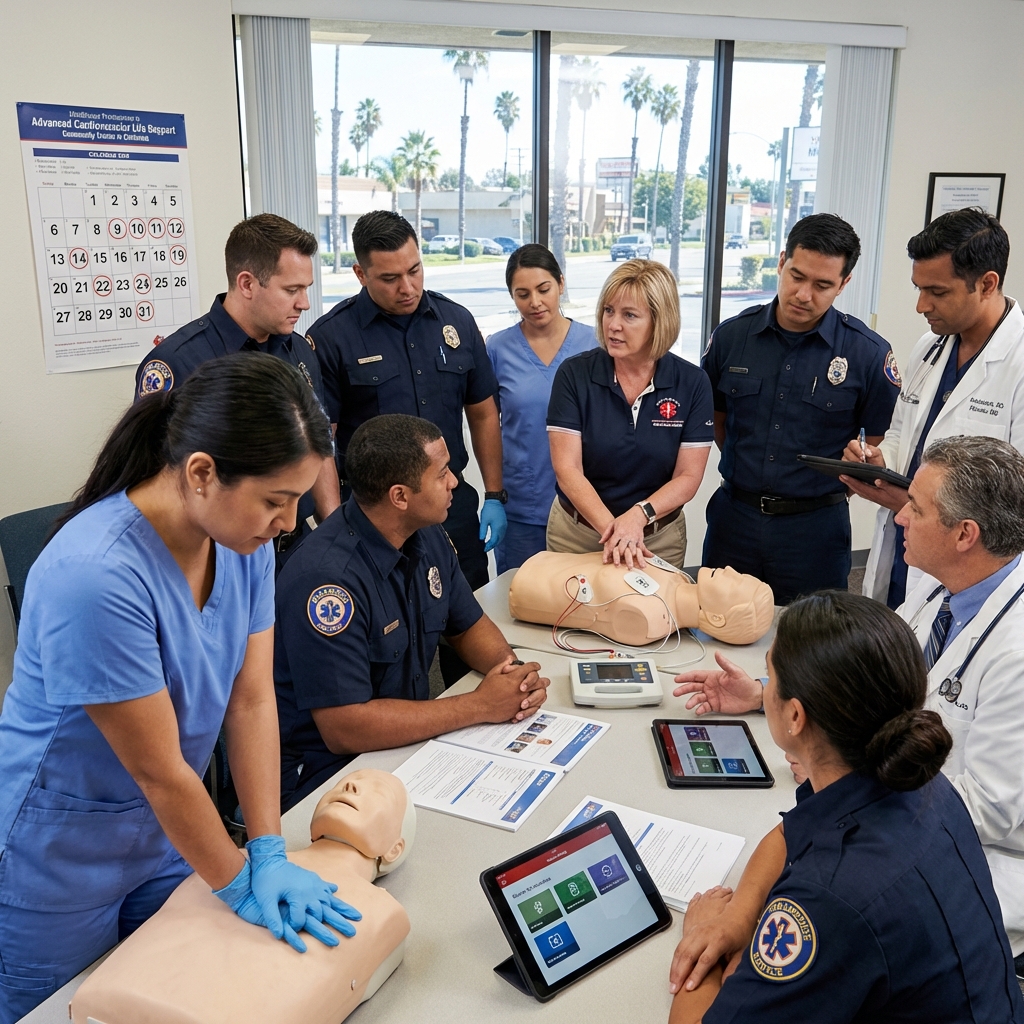
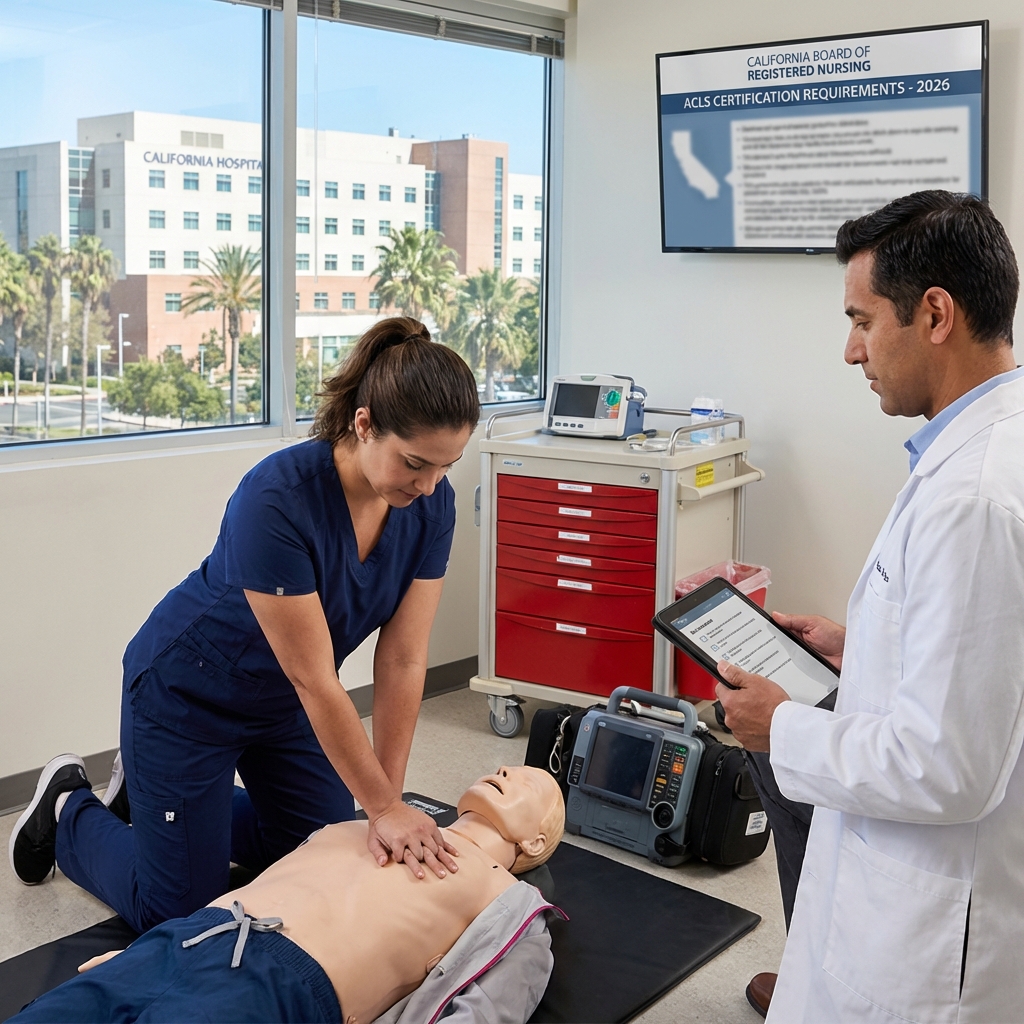
For healthcare professionals, the skills session is where blended learning CPR training becomes real-world competence. After completing the online cognitive modules, an AHA Instructor validates your psychomotor skills using feedback manikins, simulated scenarios, and structured checklists. This hands-on evaluation is mandatory for AHA blended learning courses (HeartCode BLS, ACLS, and PALS) and is often the requirement employers look for when verifying clinical readiness.
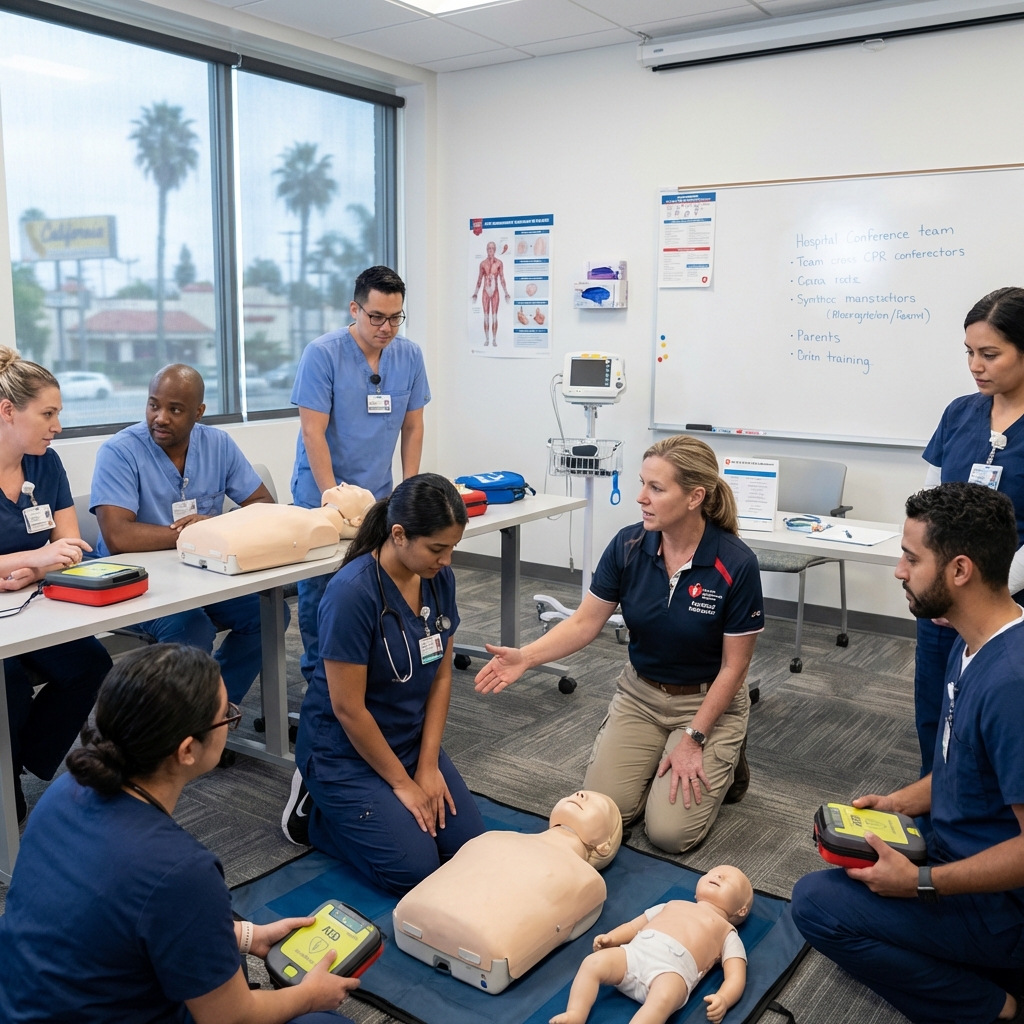
Expect a focused, scenario-driven format that mirrors what you will face on the job. In a typical session, you will:
- Perform high-quality compressions and ventilations using instrumented feedback devices that measure rate, depth, and recoil.
- Demonstrate bag-mask ventilation, two-rescuer sequences, and safe AED operation.
- Manage adult, child, and infant cases, including opioid-associated emergencies when applicable.
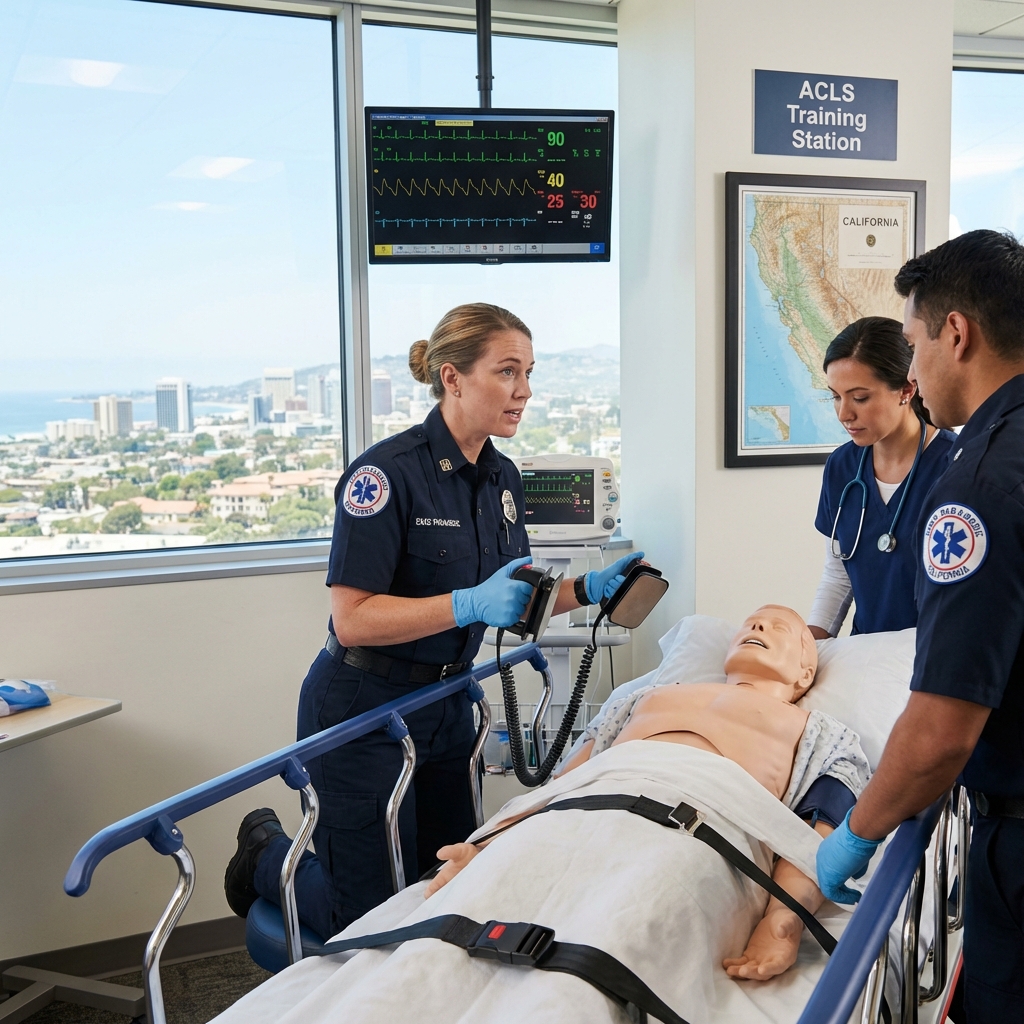
- Run team-based megacodes for ACLS/PALS, applying airway adjuncts, rhythm recognition, and medication algorithms.
- Troubleshoot human-factor issues like communication, role clarity, and pause minimization to optimize hands-off time.
Safety Training Seminars streamlines this hands-on phase across California with online and in-person skills sessions scheduled mornings, evenings, and weekends at 100+ locations. Low student-to-instructor ratios and feedback-enabled manikins help you quickly correct technique, while instructors assess to current AHA metrics for compression depth, rate, recoil, and ventilation. Upon successful completion, you receive an AHA eCard—an efficient path within hybrid CPR certification programs that maintains clinical rigor and reduces seat time compared with all-day traditional formats.
If you are comparing California healthcare certification options, confirm what your facility accepts. Many hospitals specify AHA blended learning courses for compliance, so choosing an AHA provider like Safety Training Seminars avoids surprises at onboarding. Providers such as ProTrainings offer virtual CPR training with hands-on practice under their own approvals; acceptance can vary by employer, making pre-approval essential before selecting a course.
Comparing Training Delivery Models Across California Providers
California providers generally deliver CPR in two ways: fully instructor-led classroom courses and blended learning CPR training. Traditional classes keep you on-site for lectures, practice, and testing in one block, which some first-time learners prefer. AHA blended learning courses shift the cognitive portion online (e.g., HeartCode BLS/ACLS/PALS), followed by required in-person skills testing with feedback devices. For clinicians balancing shifts, these hybrid CPR certification programs can reduce time away from work while meeting hospital policy.
Safety Training Seminars (STS) follows the AHA model statewide, pairing the online module with short, scheduled skills appointments at more than 100 locations. Learners complete the eLearning at their own pace, then perform compressions, ventilations, and team scenarios on feedback manikins during the hands-on check. Because STS is an AHA Training Center, successful participants earn the AHA eCard that California hospitals, dental practices, and EMS agencies commonly require. STS also offers corporate group training, a low price guarantee, and options across major hubs like the Bay Area, Los Angeles, Sacramento, and San Diego.
ProTrainings emphasizes virtual CPR training with hands-on practice through remote or local evaluators, issuing ProTrainings or HSI/ASHI credentials depending on the course. While these online and in-person skills sessions may suit non-clinical workplaces, many California healthcare certification options explicitly specify AHA BLS Provider, ACLS, or PALS for employment and credentialing. ProTrainings is not an AHA Training Center, so clinicians whose employers require AHA cards should verify acceptance before enrolling. In contrast, STS’s AHA blended path aligns cleanly with hospital and EMS compliance.
- Choose blended AHA with STS if you need widely accepted AHA credentials, predictable skills slots near you, and minimal time off the unit.
- Choose traditional classroom if you want a full-day, instructor-led experience with extended practice and peer discussion.
- Consider ProTrainings if your employer accepts non-AHA credentials and you prefer remote skills verification or alternative formats.
Certification Recognition and Professional Compliance Standards
For California clinicians, the key question isn’t just how you learn but whether your certification is recognized by employers, credentialing bodies, and state boards. In most acute-care settings, AHA credentials remain the default standard for BLS, ACLS, and PALS, and many hospital policies explicitly require an AHA eCard for onboarding and renewal. The Dental Board of California also specifies an American Heart Association or American Red Cross Basic Life Support course for license renewal, making provider source critical for dentists and oral surgeons.
AHA blended learning courses (HeartCode for BLS/ACLS/PALS) produce the same, fully recognized eCard as a traditional classroom class when paired with an in-person skills check. Safety Training Seminars delivers these AHA blended learning CPR training options statewide through online and in-person skills sessions at 100+ locations, giving you the flexibility of virtual CPR training with hands-on practice while maintaining strict employer acceptance. For travel nurses, per-diem staff, and rotating residents, this format helps meet tight deadlines without risking credentialing delays.

ProTrainings offers hybrid CPR certification programs and virtual-first pathways, but acceptance can vary by facility and role. Before choosing a non-AHA provider, verify written acceptance with your medical staff office or education department—especially for hospital-based BLS Provider, ACLS, and PALS. Many EMS agencies accept AHA (and sometimes ARC/ASHI) for CPR, but paramedic employers and hospital-based transport teams frequently require AHA.
When evaluating California healthcare certification options, confirm:
- Issuer and card type (AHA eCard for BLS Provider, ACLS, PALS)
- Hands-on skills verification required by your employer/board
- Alignment with Joint Commission standards and hospital privileging
- Course format (AHA blended learning courses vs fully in-person) and turnaround time for proof of completion
Safety Training Seminars meets these compliance checkpoints by issuing verifiable AHA eCards with QR-code validation and offering specialized certifications for healthcare providers (ACLS/PALS/NRP). Combined with corporate group training and a low price guarantee, it’s a straightforward path to maintaining employer-required credentials without compromising on acceptance.
Flexibility and Scheduling: Meeting Healthcare Professional Needs
For clinicians juggling 12-hour shifts and rotating weekends, blended learning CPR training offers far more control over time than classroom-only models. Completing the cognitive portion online, then booking a short, in-person skills check, reduces time away from patients and minimizes travel. This format also eases last‑minute renewals, since the online modules can be finished after hours and the hands-on component scheduled as soon as openings appear.
Safety Training Seminars structures AHA blended learning courses so you can start eLearning immediately and choose from over 100 California sites for the required skills session. Many locations offer evening and weekend availability, allowing a night‑shift RN in Sacramento or a dentist in San Jose to complete online study midweek and finalize skills on a Saturday. For ACLS, PALS, and NRP, these online and in-person skills sessions align with AHA requirements that many California employers specify.
ProTrainings emphasizes convenience with robust online coursework and, where applicable, options for virtual CPR training with hands-on practice through local evaluators. This can work well for roles or employers that accept non‑AHA credentials. However, when job compliance explicitly calls for an AHA card—a common scenario for hospitals and EMS in California—an AHA Training Center such as Safety Training Seminars provides clear, compliant California healthcare certification options.
Key scheduling advantages to consider:
- Self‑paced modules that fit between shifts, plus rapid booking for hybrid CPR certification programs.
- Broad site choice for skills checks across California vs. relying on the availability of individual evaluators in your area.
- Corporate solutions: onsite group sessions at hospitals/clinics or voucher systems so staff complete eLearning remotely and test in person on a set day.
- Support for urgent renewals, with frequent skills sessions that help you stay current without rearranging an entire week.
Cost Comparison and Value Considerations
When comparing costs, look beyond the sticker price of a class and consider employer acceptance, time away from work, and the likelihood of needing a second course. For California healthcare professionals whose facilities specify American Heart Association credentials, the most cost-effective path is usually AHA blended learning courses that satisfy compliance on the first try. Blended learning CPR training reduces seat time by moving knowledge online and reserving a short, focused skills check for hands-on verification.
Safety Training Seminars delivers AHA-approved hybrid CPR certification programs statewide, pairing HeartCode eLearning with online and in-person skills sessions at more than 100 California locations. That footprint lowers indirect costs like travel, parking, and missed shifts, while the low price guarantee and group discounts help keep tuition competitive. For teams, on-site or virtual CPR training with hands-on practice can further reduce downtime and per-employee spend.
ProTrainings offers competitively priced online modules that are convenient for individual learners. However, some California hospitals, dental groups, and EMS agencies require AHA cards specifically, so it’s important to verify acceptance before enrolling. If an employer later asks for an AHA credential, you may end up paying again for an AHA skills session or course, increasing total cost and time.
Key value factors to compare across California healthcare certification options:
- eLearning tuition plus separate skills-session fees (bundled vs à la carte)
- Travel, parking, and schedule impact for skills verification
- Employer acceptance (AHA-specific requirements vs “equivalent” cards)
- Remediation or retake policies and any associated fees
- Group pricing, reimbursement eligibility, and invoice/roster support
- Options for virtual skills checks versus in-person appointments
Example: A nurse in San Jose who needs AHA BLS can complete HeartCode online and book a nearby 30–60 minute skills appointment with Safety Training Seminars, minimizing time off and ensuring compliance on the first attempt. A traditional full-day class may cost more in lost time, while a non-AHA online card that isn’t accepted could require re-certifying, doubling expenses.
Student Outcomes and Retention Rates
For clinical staff, the strongest predictor of performance in emergencies is not where a class happens, but how often and how effectively skills are practiced. Research on AHA-recognized formats shows that learners in blended models who complete a hands-on evaluation achieve knowledge and psychomotor results comparable to traditional classrooms, with better scheduling flexibility. In other words, blended learning CPR training can support solid long-term recall when paired with deliberate, feedback-driven practice.

Safety Training Seminars delivers AHA blended learning courses that pair self‑paced modules with required, in‑person skills checks, so knowledge is built online and verified on manikins. By contrast, ProTrainings commonly issues non‑AHA credentials; many California hospitals, dental groups, and EMS agencies specify AHA only, which can affect acceptance. For outcomes, that difference matters: a nurse renewing BLS for a health system that lists AHA will complete the eLearning, attend online and in-person skills sessions at a local site, and leave compliant the same day—without risking a retake. For hybrid CPR certification programs tied to employer requirements, fewer barriers translate to smoother renewals and sustained readiness.
Key drivers of retention in virtual CPR training with hands-on practice include:
- Spaced eLearning that allows repetition of high‑yield topics (compressions, ventilation, defibrillation).
- Focused, time‑efficient skills appointments that concentrate on mastery rather than seat time.
- Scenario-based practice (e.g., megacode for ACLS/PALS) that links algorithms to real decisions.
- Immediate instructor coaching during the skills check to correct depth, rate, and recoil.
- Clear post‑course resources and reminders that prompt refreshers before skills decay.
For California healthcare certification options, access and cadence also shape outcomes. With 100+ locations statewide, Safety Training Seminars makes it easier to schedule skills checks near work or home, reducing lapsed cards. Corporate group training further standardizes performance across teams, and the low price guarantee helps organizations encourage timely renewals without budget friction.
Choosing the Right Training Program for Your Career
For California nurses, dentists, and EMS personnel, the best fit often comes down to balancing compliance with convenience. Blended learning CPR training lets you complete didactic content online and finish with a short, scheduled skills appointment, while a traditional classroom keeps everything in person. If you need an AHA eCard for BLS, ACLS, or PALS, both AHA blended and classroom pathways lead to the same credential—what differs is how you get there.
Blended options are ideal when you need flexibility without sacrificing psychomotor competency. For example, a night-shift RN can complete the AHA modules at home and book an in-person skills session on a day off; a dental team can assign online work before a coordinated hands-on practice. Safety Training Seminars offers AHA blended learning courses with online and in-person skills sessions at over 100 California locations, plus a low price guarantee that helps keep renewals affordable.
A traditional, fully in-person class can be a better pick if you learn best through continuous instructor coaching or you’re tackling advanced content (e.g., first-time ACLS/PALS) and want more time on team dynamics, rhythms, and megacode practice. Many providers value the live peer interaction and immediate feedback of a classroom, especially when preparing for high-stakes clinical scenarios.
Employer acceptance should guide your choice. Many California hospitals and large health systems require AHA cards for BLS/ACLS/PALS; Safety Training Seminars issues AHA eCards recognized across the state. ProTrainings offers its own certifications and can provide virtual CPR training with hands-on practice via evaluators, but acceptance varies by facility—always confirm with your credentialing office before enrolling.
Use this quick checklist to compare hybrid CPR certification programs and classroom options:
- Employer policy: AHA required, or are alternatives accepted?
- Credential level: BLS only, or ACLS/PALS/NRP as well?
- Access: How close are skills sites to your home or facility?
- Schedule: Evening/weekend skills sessions or set class dates?
- Budget: Low price guarantee, group discounts, or corporate billing?
- Renewal planning: Course length, CE availability, and recert intervals.
If you need AHA-blended convenience with broad California healthcare certification options, Safety Training Seminars is a reliable, statewide choice for online modules paired with hands-on practice.
Conclusion: Making an Informed Decision on CPR Training Options
Choosing between traditional classroom instruction and blended learning CPR training comes down to employer requirements, scheduling, and how you learn best. For many California healthcare professionals, acceptance hinges on holding an American Heart Association (AHA) eCard for BLS, ACLS, or PALS. Safety Training Seminars (an AHA Training Center) delivers AHA blended learning courses that pair online modules with an in-person skills check. ProTrainings offers online coursework and skills evaluations through its network, but acceptance can vary by facility and role.
Use these decision filters to make the right call:
- Employer mandate: If your hospital or clinic specifies an AHA eCard, select a provider that issues AHA certification and includes in-person skills testing.
- Timeline and flexibility: Hybrid CPR certification programs let you complete the cognitive portion online, then finish with a short, scheduled skills session—ideal for renewals under deadline.
- Geographic access: If you need convenient online and in-person skills sessions near home or work, confirm the number of sites and available time slots.
- Scope of credentials: Clinicians who also need ACLS, PALS, or NRP should confirm bundled pathways and recert options to streamline compliance.
Safety Training Seminars aligns well with California healthcare certification options. With over 100 locations statewide, you can complete AHA blended learning courses at your pace online, then attend a local, instructor-led skills check for virtual CPR training with hands-on practice. Nurses up against an ACLS renewal can finish HeartCode online and book a same-week skills session; dental teams can schedule group BLS onsite at their practice; EMS agencies can secure discounted corporate training for shift-friendly times. The low price guarantee helps control CE budgets without sacrificing AHA validity.
Bottom line: Verify your facility’s policy, confirm whether an AHA eCard is required, and choose the format that fits your schedule. If you need AHA-backed, hybrid CPR certification with broad California coverage, Safety Training Seminars offers a reliable, efficient path to compliance.
Register for a class today.