Why EMS Training Schedule Flexibility Matters
Best EMS Shift Training Schedules for California Emergency Responders
Emergency responders operate on irregular schedules that don’t align with traditional training hours. A paramedic working 24-hour shifts can’t block off five consecutive weekdays for certification. A nurse juggling hospital rotations needs options that respect her unpredictable calendar. The difference between a rigid training program and one built for shift workers often determines whether someone gets certified on time or delays critical professional development.
Schedule flexibility directly impacts retention and completion rates. When programs force responders into inconvenient time slots, dropouts climb. Career advancement stalls. Departments struggle to maintain compliant staffing levels. Conversely, training providers who offer evening classes, weekend sessions, and blended formats see higher completion rates and stronger community partnerships. Your certification timeline shouldn’t compete with your job; it should work alongside it.
The stakes are real. Many California EMS personnel must renew certifications annually or every two years, depending on their credential level. Missing a renewal window creates compliance gaps and can sideline a responder from duty. Having multiple pathway options means you can adapt your training schedule to whatever your shift cycle demands this year.
Key Criteria for Evaluating Training Programs
Not all EMS training programs serve shift workers equally. Start by checking whether the provider offers multiple scheduling options within a month, not just once quarterly. If you work nights, evening classes matter more than morning sessions. If you work rotating shifts, weekend availability becomes essential.
Curriculum alignment with recognized standards is non-negotiable. Ensure the program follows current protocols approved by your state’s EMS authority and your employer’s requirements. A cheaper course that doesn’t meet your department’s standards wastes money and time.
Consider location density. A provider with over 100 training locations across California beats a single location when you need to train near your station or home. Travel time eats into limited off-shift hours, so proximity saves real time.
Look for same-day or next-day certification delivery. If you complete your practical skills assessment on a Friday, you shouldn’t wait three weeks for your card. Fast credential issuance matters when employers need proof for scheduling and licensing purposes.
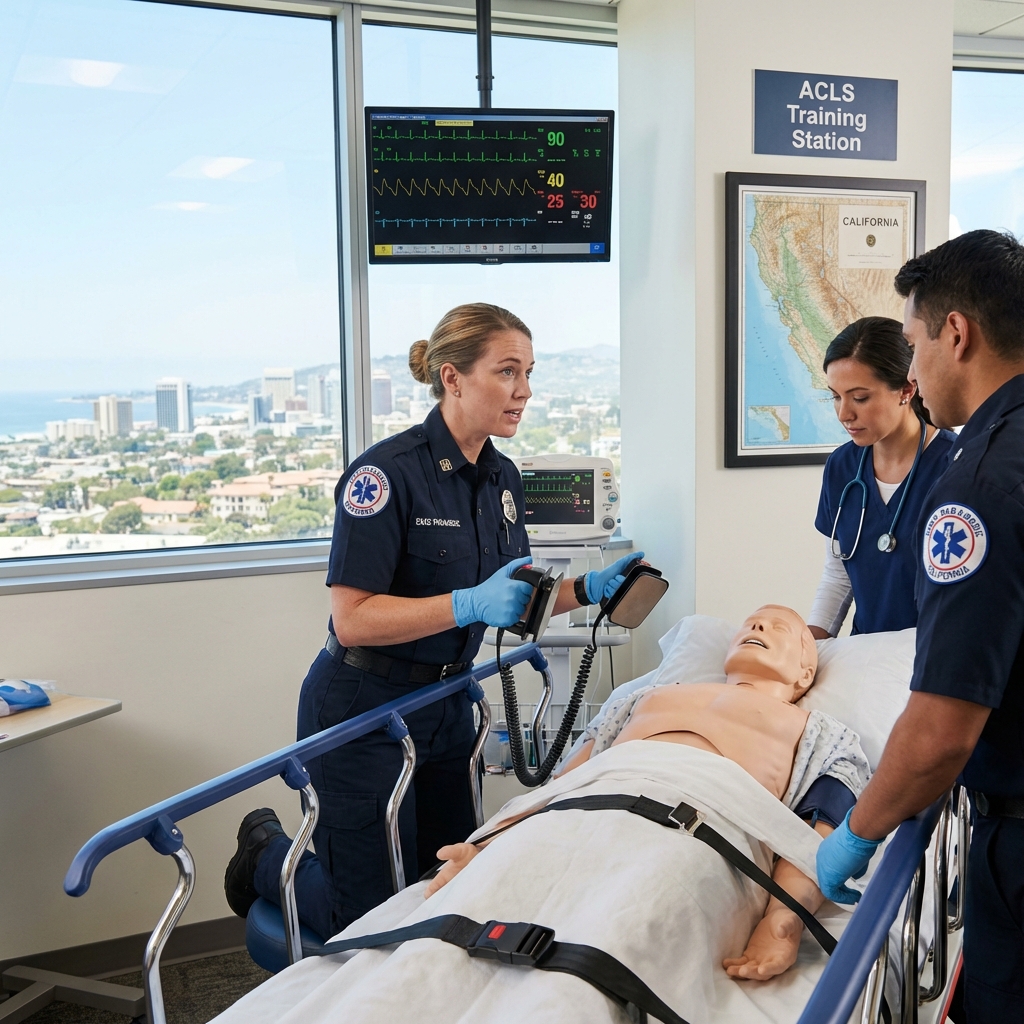
Verification of practical skills matters more than cost alone. The cheapest course that skips hands-on simulation stations leaves gaps in your muscle memory. Quality matters when lives depend on your technique.
Full-Time Intensive Certification Programs
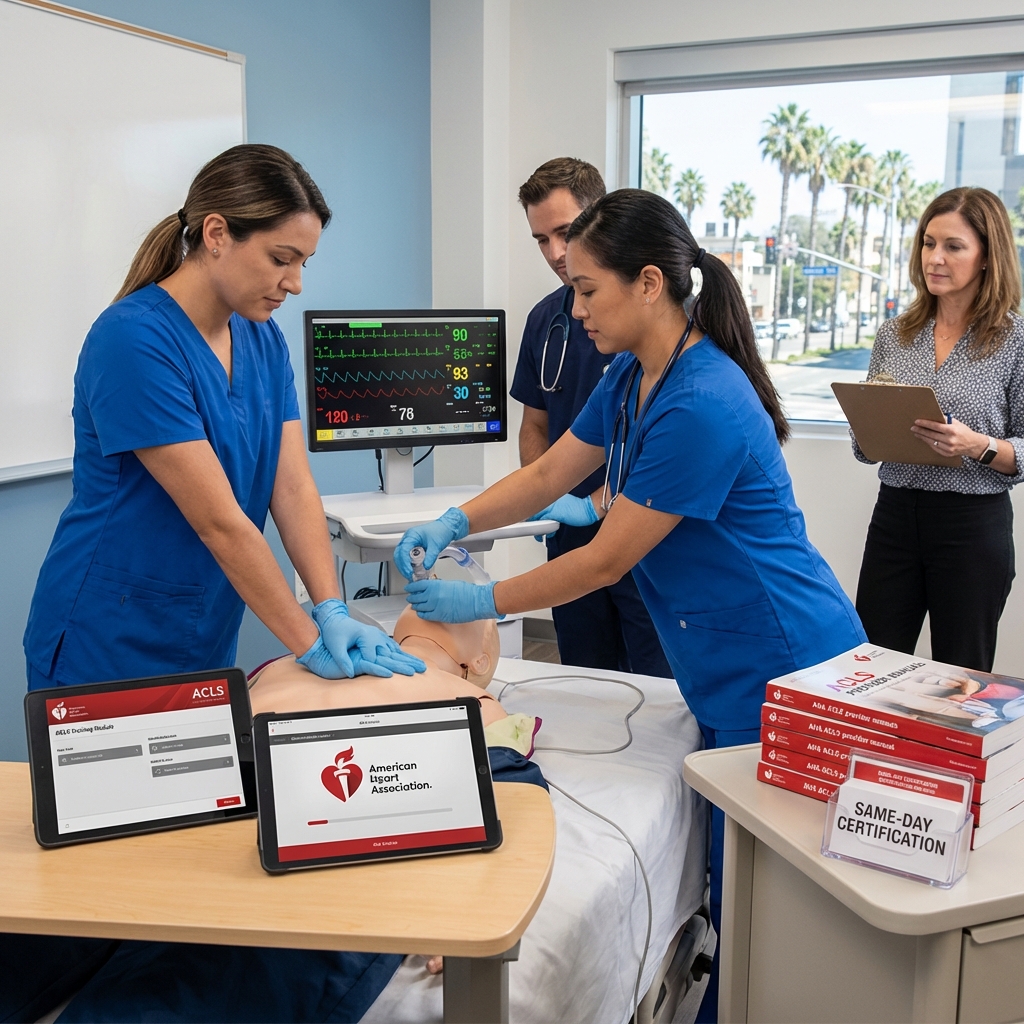
Intensive programs compress training into consecutive days or weeks. If you’re eligible for extended time off or starting a new EMS career, this path moves fastest. Most intensive ACLS and PALS programs run three to five days, combining classroom content with full-day skills stations.

This approach works best for career-switchers, newly hired paramedics in their onboarding window, or responders stacking several certifications. Doing your CPR, ACLS, and PALS back-to-back in one week eliminates repetitive travel and scheduling friction. You build momentum and finish with everything current at once.
The downside: taking a full week off as a shift worker often requires trading shifts or banking time, which may not be feasible mid-month. Intensive formats also demand higher upfront time commitment, so they suit people with fewer competing obligations.
Who should choose this: New hires with onboarding flexibility, career-changers entering EMS, and responders whose departments offer paid training time.
Part-Time Evening and Weekend Options
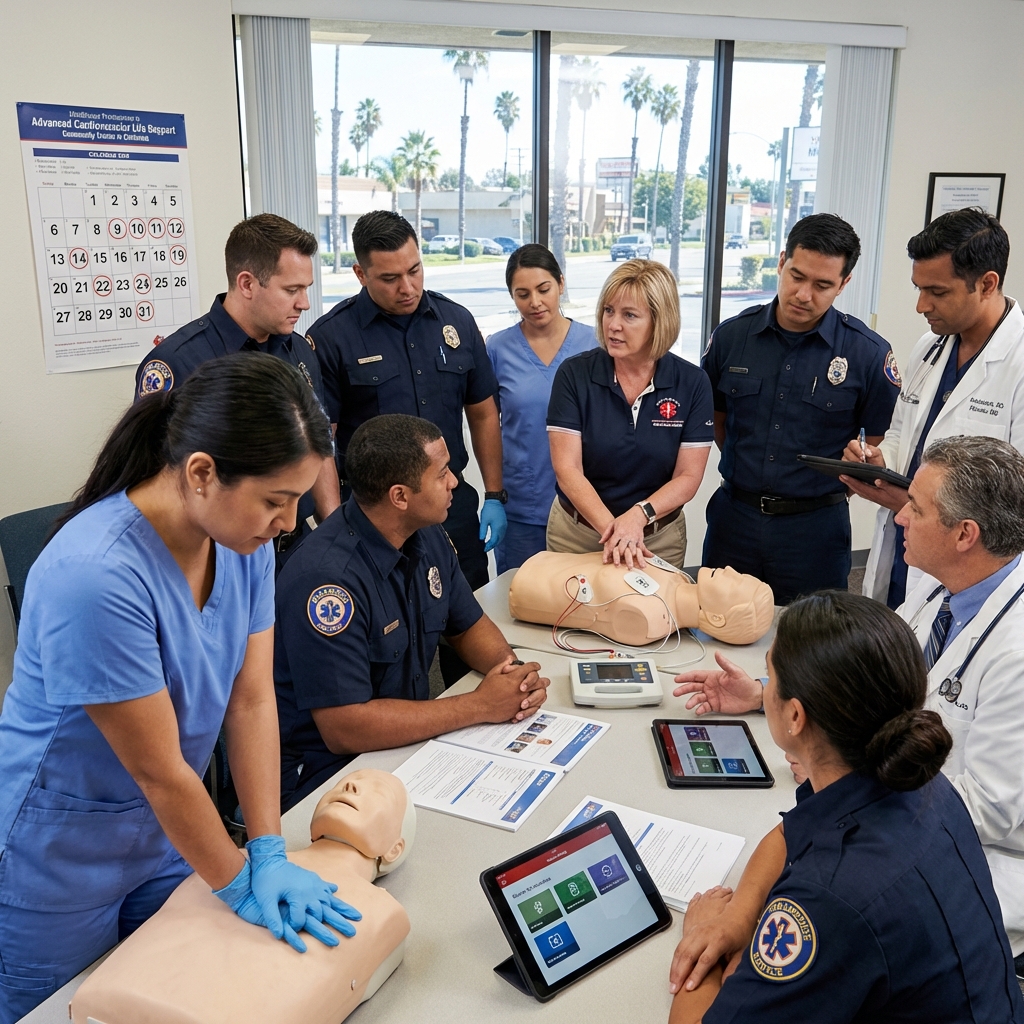
Evening and weekend classes let working responders train without disrupting their schedule. A two-hour evening session once or twice weekly spreads training across weeks, fitting naturally into days off or before shifts. Weekend formats concentrate training but avoid work-week conflicts.
This flexibility means you attend classes around your actual shift pattern. A paramedic on a Monday-Wednesday-Friday rotation can train Monday and Wednesday evenings, staying aligned with existing off-days. Someone with rotating shifts has weekend options available most months.
The trade-off involves longer calendar time from start to certification. A program spread over six weeks requires more sustained focus than an intensive week, though shorter individual sessions feel less mentally taxing.
Who should choose this: Shift workers with stable rotation patterns, responders with family or second-job obligations, and anyone needing to minimize time off requests.
Blended Learning Formats for Working Responders
Blended programs combine online modules with in-person skills sessions. You complete knowledge content at your own pace online, then attend concentrated practical training over one or two days. This hybrid model cuts in-person time from four days to one, while keeping content delivery rigorous.
Online portions work perfectly for shift workers because you study when awake and alert, not constrained by class schedules. Complete modules between shifts, during downtime at the station, or on your days off. The knowledge sits there when you’re ready, whether that’s 6 AM or midnight.
Flexible online learning platforms let you progress through content without instructors forcing pace, so you absorb material thoroughly. You show up to skills practice already grounded in theory, making hands-on practice more efficient and impactful.
This approach minimizes time away from duty while maintaining credential quality. Many California departments now prefer this model because it reduces staffing gaps during training periods.
Who should choose this: Busy shift workers, remote learners who thrive with self-paced content, and departments wanting certification without extended coverage gaps.

Same-Day Certification Advantages
Receiving your certification card immediately after your practical exam eliminates the waiting period many providers impose. Same-day credentials mean you can document compliance the moment you finish, satisfying employer requirements and licensing bodies instantly.
This matters practically when renewal deadlines loom or when departments schedule certification audits. You have proof in hand, not a promise of mail delivery in five to ten business days. For EMS personnel managing multiple active certifications across different renewal windows, same-day issuance prevents administrative headaches.
Some providers build secure verification systems so employers can confirm your credential status online within hours. This approach modernizes the compliance chain and reduces paperwork friction for both responders and departments.
Comparing Top EMS Training Approaches
The right choice depends on your shift pattern, renewal timeline, and learning style. Here’s a quick breakdown:
Intensive formats win on speed and convenience if you can block time off. Ideal for initial certification, new hires, or stacking multiple credentials at once.
Evening/weekend programs suit stable shift rotations. You train around predictable days off without requesting exceptions.
Blended learning balances flexibility with quality. Best for shift workers who learn independently and need minimal in-person time commitment.
On-demand options work when you need rapid renewal close to your deadline. Single-day sessions scheduled frequently reduce wait times between course offerings.
Most successful responders use different approaches at different points in their careers. You might start with intensive certification as a new paramedic, then switch to evening or blended renewals once working full-time. Some departments offer paid training time annually, making intensive formats feasible even mid-career.
Why Safety Training Seminars Stands Out
Safety Training Seminars has operated since 1989, building deep expertise in what California EMS providers actually need. They offer BLS CPR classes across more than 100 training locations statewide, making proximity genuinely available rather than theoretical.
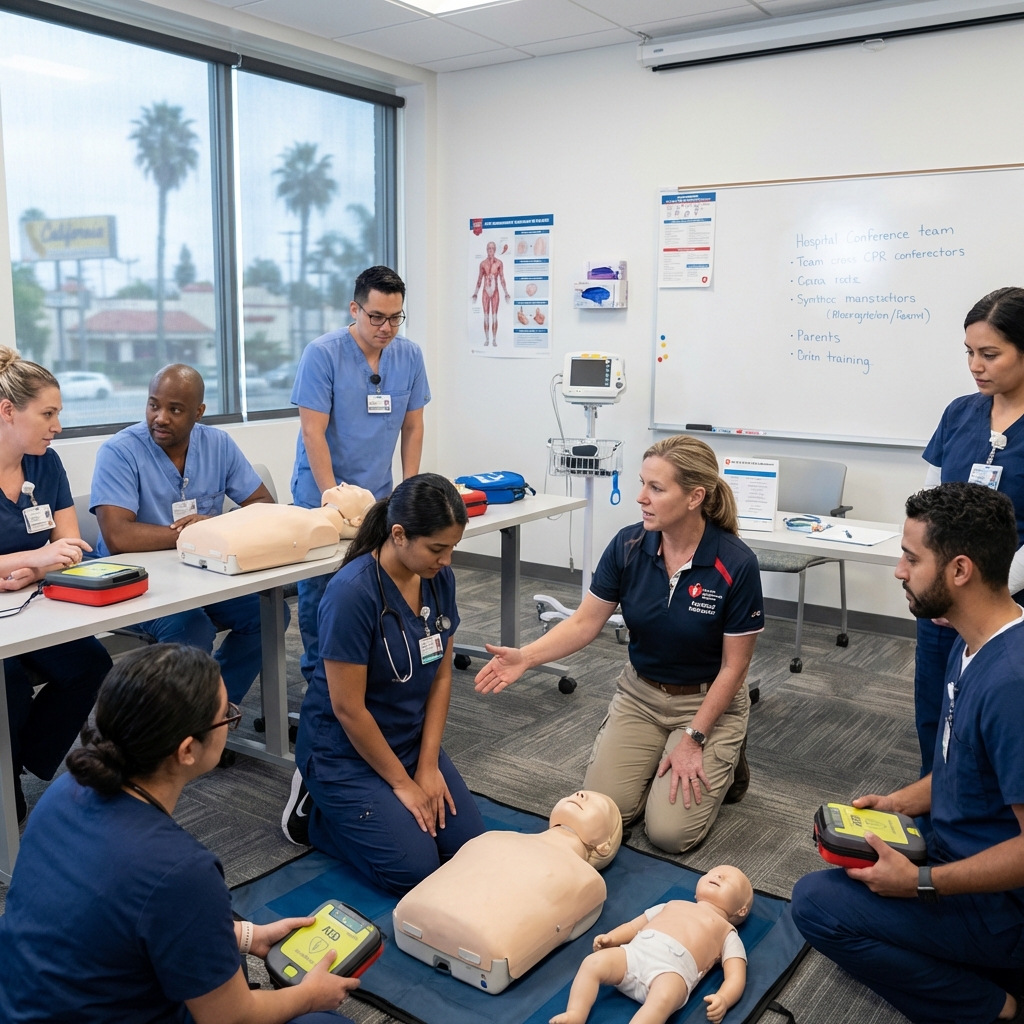
Their scheduling flexibility is built-in, not added as an afterthought. Daily BLS offerings, weekly evening sessions, and weekend classes mean you find something matching your shift. Blended learning uses real simulation stations with technology that tracks your technique, giving immediate feedback and building genuine competence.
Same-day certification cards arrive when you finish, not weeks later. Their low-price guarantee means you don’t pay more for convenience, and corporate group training with volume discounts reduces costs for departments certifying multiple personnel simultaneously.
The woman-owned training center maintains AHA-aligned curriculum standards while prioritizing responder convenience. Customer support acknowledges the real constraints shift workers face, not treating flexible scheduling as a premium add-on.
How to Choose the Right Schedule for Your Shift
Start with your actual shift pattern. Write down which days you regularly have off, which times you typically finish shifts, and how many consecutive days you can take time off annually. This reality check reveals which formats genuinely work versus which ones sound good on paper.
Next, check your renewal deadline. If your certification expires in three months, intensive formats may be necessary. If you have six months, part-time options let you spread training more comfortably.
Then verify your department’s requirements. Some employers mandate specific credentials or credential combinations. Check whether your employer offers paid training time and whether they have preferred providers. These policies constrain your choices significantly.
Finally, test whether you learn better independently or with instructors present. Blended learning assumes you’ll complete online modules consistently; some responders thrive here, others procrastinate. Knowing yourself prevents expensive course withdrawals.
Getting Started with Your EMS Certification
Contact Safety Training Seminars directly and describe your shift pattern. Their scheduling team understands EMS operations and can recommend the specific format matching your calendar. They handle the complexity so you don’t have to guess whether Tuesday evenings or Saturday mornings fit your rotation.
Confirm whether your current certifications expire soon and whether you need to stack multiple credentials this year. This context helps them recommend the most efficient pathway.
Verify that their curriculum meets your department’s specific requirements and your state’s current EMS protocols. While their AHA-aligned standards cover most California operations, specialized credentials like PALS for pediatric protocols or NRP for neonatal care require exact matching.
Once you’ve selected a format, register early. Frequent classes fill quickly, especially evening and weekend sessions. Securing your spot means you control the timeline rather than waiting for the next available opening.
Your certification timeline shouldn’t create stress or force you to choose between career development and shift stability. The right training program respects both constraints and delivers quality instruction that makes you genuinely better at your job.
Register for a class today.