Introduction to BLS Certification Standards for California Healthcare Licensing
For California clinicians, the key question isn’t just where to train—it’s BLS certification acceptance California. Hospitals, clinics, and state licensing boards expect “healthcare provider” level CPR that aligns with current AHA Guidelines and includes hands‑on skills assessment. While both the American Heart Association (AHA) and American Red Cross (ARC) issue widely recognized BLS cards, acceptance is ultimately determined by your employer and, in some cases, your licensing board.
Across California, the common denominator is skills verification. A valid BLS course for healthcare professionals typically includes adult, child, and infant CPR with AED use, team dynamics, and bag-mask ventilation, with a live skills check. Blended learning—online coursework followed by an in-person skills session—is broadly accepted; fully online BLS without a skills evaluation is usually not.
How this plays out by role:
- Nurses (BRN): The California Board of Registered Nursing does not endorse a single vendor, but many hospitals and health systems specify AHA BLS Provider for onboarding and annual compliance. Red Cross BLS is often acceptable; always confirm with your facility.
- Dentists (DBC): The Dental Board of California requires BLS for license renewal with a live skills component. AHA BLS Provider and Red Cross BLS meet typical dental board BLS requirements; online-only certificates do not.
- EMS Personnel (EMSA/local agencies): EMTs and paramedics need professional-level CPR with hands-on skills verification covering all age groups and AED. AHA or Red Cross BLS fulfills most agency standards; online-only options are not accepted.
If you’re considering online BLS certification validity, remember that “online-only” courses generally fail employer audits because there’s no instructor-led skills testing. By contrast, AHA HeartCode BLS or ARC blended formats pair online learning with an in-person skills session, satisfying healthcare provider CPR requirements.
To stay compliant, verify three details before enrolling: the issuing body (AHA or ARC), inclusion of a live skills check, and your facility’s specific policy. Safety Training Seminars offers blended AHA BLS Provider classes with convenient in-person skills sessions at more than 100 California locations, plus ACLS, PALS, and NRP for advanced roles. If you need a nearby option that meets nursing board certification standards and hospital credentialing, explore their local BLS certification courses.
Overview of AHA, Red Cross, and Online-Only Training Providers
For California clinicians, BLS certification acceptance California hinges on whether the course is issued by a nationally recognized organization and includes hands-on skills. The American Heart Association (AHA) BLS Provider remains the gold standard across most hospitals and clinics, and it’s often specifically named in employer policies and onboarding packets. AHA offers instructor-led and HeartCode blended formats (online cognitive training plus an in-person skills check), with two-year eCards that employers can verify online.
The American Red Cross (ARC) Basic Life Support course is also nationally recognized and widely accepted when it is the healthcare-level BLS and includes an in-person skills component. Acceptance can vary by facility, and some large systems explicitly require AHA, so it’s wise to confirm with your unit educator or HR before enrolling. For nurses evaluating nursing board certification standards, the California BRN generally defers to employer policy and national training bodies; hospitals typically require an AHA or ARC healthcare-level BLS with manikin practice and skills testing.
Online-only BLS certificates that do not include a live skills evaluation are rarely accepted for healthcare provider CPR requirements in acute care, outpatient surgery, or EMS settings. This distinction is critical for dental board BLS requirements as well: dental practices and DSOs commonly expect a healthcare-level BLS with an in-person skills test, and many choose AHA or ARC to satisfy audit and credentialing needs. If you prefer online study, choose a blended option from AHA or ARC that culminates in an in-person skills session to maintain online BLS certification validity.
When comparing providers, verify the following before you register:
- Course level: Must be healthcare-provider BLS (not layperson CPR/AED).
- Format: Includes hands-on skills with a certified instructor or manikin-based testing.
- Issuer: AHA BLS Provider or Red Cross Basic Life Support are most broadly recognized.
- Documentation: You receive a verifiable eCard or digital certificate valid for two years.
- Employer policy: Check facility requirements, especially if ACLS/PALS prerequisites specify AHA.
Safety Training Seminars is an authorized AHA Training Center offering HeartCode BLS and traditional classroom options at 100+ locations statewide, making healthcare professional life support training easy to schedule around shifts. Their blended learning meets hospital credentialing expectations, and they also provide ACLS, PALS, and NRP for providers who need stacked credentials. For practices and departments, corporate group training and discount pricing simplify compliance across teams while meeting California employers’ verification standards.
Compliance Comparison: California State Board and Employer Acceptance Criteria
Understanding BLS certification acceptance in California hinges on two layers: state board rules and employer policies. Across nursing, dental, and EMS settings, a consistent theme is the need for a hands-on skills assessment. Online-only BLS certificates lack in-person skills verification and are widely rejected for healthcare provider CPR requirements.
For nurses, the California Board of Registered Nursing does not prescribe a specific BLS vendor for licensure, but hospitals and clinics set the bar. Most acute-care employers explicitly require American Heart Association (AHA) BLS Provider, while some accept the American Red Cross (ARC) equivalent if it includes an in-person skills test. If you are job hunting, prioritize AHA BLS to meet the strictest nursing board certification standards used by large California health systems.

The Dental Board of California requires Basic Life Support for license renewal for dentists and dental hygienists. The course must include live, instructor-led skills practice and evaluation; online BLS certification validity does not extend to online-only formats. AHA or Red Cross BLS—taken as classroom or blended learning with an in-person skills session—meets typical dental board BLS requirements.
EMT and paramedic credentialing overseen by local EMS agencies and the California EMS Authority generally requires BLS at the healthcare provider level with adult, child, infant, and AED skills. Accepted providers include AHA and ARC, provided there is a documented, in-person skills check. Online-only certificates do not satisfy healthcare professional life support training requirements for field personnel.
What California employers and boards typically look for:
- Course type: BLS Provider (Healthcare Provider level), not lay-rescuer CPR/AED.
- Provider: AHA is most universally accepted; ARC is commonly accepted when skills are verified.
- Modality: Classroom or blended learning with an in-person skills test; no online-only.
- Verification: Valid eCard or card with verifiable ID, issue/expiration dates, and instructor or Training Center details.
- Scope: Adult, child, and infant CPR with AED and team-based resuscitation components.
Safety Training Seminars delivers AHA-authorized BLS, ACLS, and PALS in a blended format (online coursework plus an in-person skills session) at over 100 California locations. This structure aligns with employer policies and state expectations for hands-on assessment while accommodating tight schedules. For teams, corporate group training and discount pricing simplify compliance across facilities, backed by a low price guarantee.
Skills Assessment Comparison: Hands-on Practice vs. Digital Simulations
For BLS certification acceptance California employers focus on whether your skills were evaluated on a manikin by an instructor, not just learned on a screen. Hospitals, surgery centers, and local EMS agencies generally require an AHA or Red Cross BLS card earned through a class that includes an in-person skills check. Digital simulations are valuable for cognitive learning, but they usually do not meet healthcare provider CPR requirements without a live skills assessment.
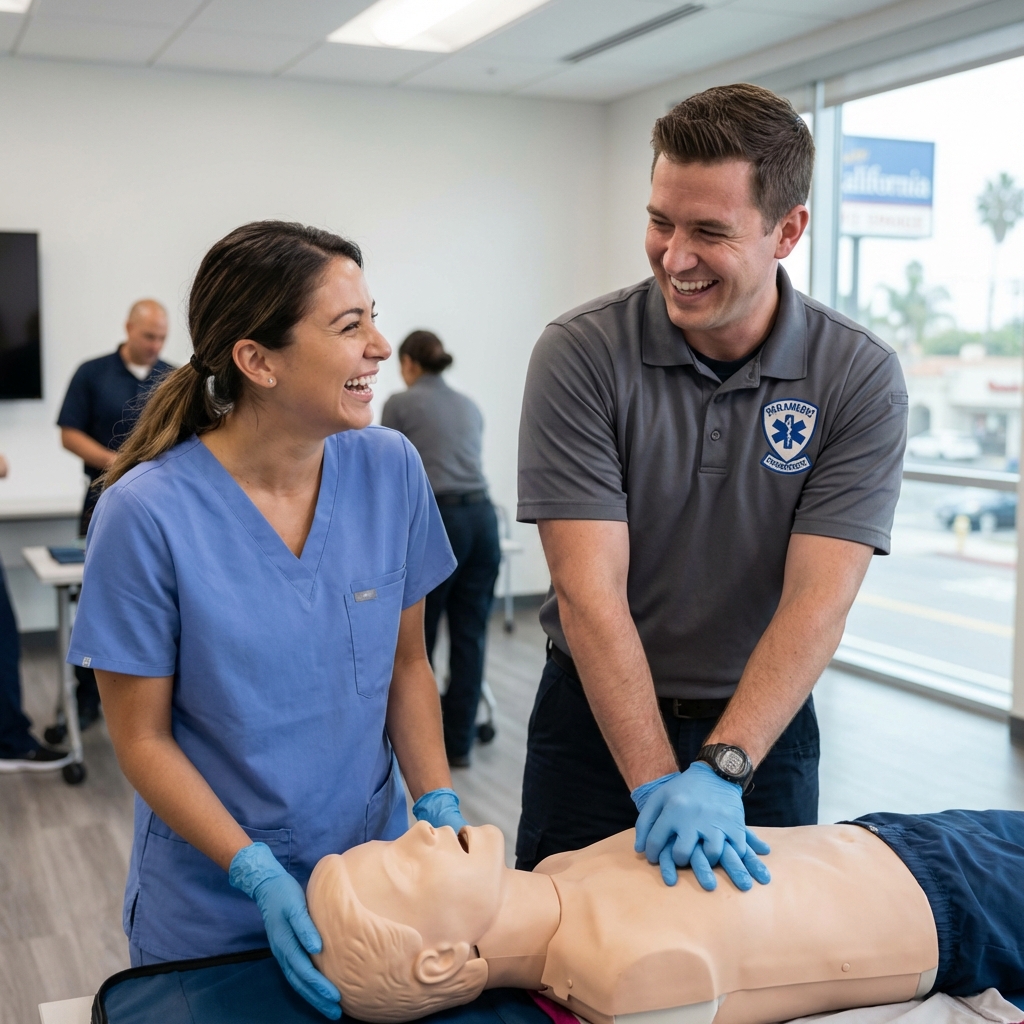
AHA BLS offers both traditional classroom and HeartCode blended learning, where you complete the online cognitive module and then demonstrate skills in person. During the hands-on session, instructors use feedback manikins to verify compression depth and rate, full recoil, correct ventilation volume, and safe AED use—elements emphasized in the latest AHA Guidelines for high-quality CPR. Because this model verifies psychomotor competence, it is broadly accepted across California hospitals and clinics.
The American Red Cross BLS program also uses a blended approach that culminates in an instructor-led skills evaluation. Many California facilities accept ARC BLS for healthcare providers; however, some systems specify AHA only, so verifying your facility’s policy before enrolling is wise. In both AHA and ARC pathways, the presence of an instructor and objective manikin feedback supports compliance with unit policies and employer audits.
What in-person skills assessments validate that digital-only courses cannot:
- Two-rescuer adult, child, and infant CPR with correct hand placement and compression-to-ventilation ratios
- Effective bag-mask ventilation with a proper seal and avoidance of over-ventilation
- Rapid AED application, analysis safety, and clear communication in team resuscitations
- Recognition and correction of common errors (shallow compressions, slow rate, incomplete recoil, excessive breaths)
Online BLS certification validity is limited for clinical roles. Most California hospitals will not accept online-only certificates for onboarding or credentialing, and many local EMS authorities require a provider card with documented skills. Dental board BLS requirements specifically call for a course that includes a live, hands-on component; fully online BLS does not satisfy renewal for dentists. For nurses, nursing board certification standards don’t mandate a specific issuer statewide, but acceptance is typically employer-driven and favors AHA or ARC with a skills check.
Safety Training Seminars delivers AHA HeartCode BLS and classroom options statewide, pairing convenient online study with an instructor-led skills session at over 100 California locations. Classes use feedback manikins and issue same-day AHA eCards, helping you meet healthcare professional life support training expectations across hospitals, dental practices, and EMS. Group scheduling and a low price guarantee make it straightforward to stay compliant while controlling costs.
Pros and Cons of Each Life Support Certification Method
BLS certification acceptance California hinges on who issued the card and whether you completed a hands-on skills test. For hospital-based roles and most clinical settings, AHA and Red Cross BLS with an in-person skills evaluation are the safest choices. Purely online credentials from third-party websites are commonly declined for healthcare provider CPR requirements.

American Heart Association (AHA) BLS remains the most universally recognized option for acute care employers. It aligns seamlessly with advanced AHA pathways like ACLS and PALS, which many units also require. The blended HeartCode BLS model lets you finish theory online and complete a short, in-person skills session.
- Pros: Highest acceptance across California hospitals; meets provider-level hands-on standards; easy to bundle with ACLS/PALS/NRP.
- Pros: Flexible blended learning plus extensive scheduling through large training networks.
- Cons: Requires an in-person skills check; may cost slightly more than some alternatives.
American Red Cross BLS is also widely respected and follows current ILCOR guidelines used by major resuscitation councils. It offers both blended learning and traditional classroom formats with skills testing. Many outpatient clinics and dental practices accept Red Cross BLS, though employer policies vary.
- Pros: Broad recognition in clinics, dental settings, and many hospitals; blended skills options statewide.
- Pros: Competitive pricing; accessible renewal pathways.
- Cons: Some hospital systems and staffing agencies specify “AHA only,” which can limit portability for travel or float roles.
Online-only BLS (no in-person skills) is the riskiest choice for clinicians. While fast and inexpensive, online BLS certification validity is limited for licensed providers because hands-on assessment is standard in healthcare. Expect credentialing offices to require an AHA or Red Cross skills evaluation.
- Pros: Convenient refresher for layperson CPR or pre-study; low cost.
- Cons: Frequently rejected by hospitals, staffing firms, and surgical centers; can delay onboarding.
- Cons: Falls short of nursing board certification standards expectations and dental board BLS requirements that presume a provider-level course with skills.
When in doubt, confirm your unit or employer’s policy and choose a path with maximal acceptance. Safety Training Seminars offers AHA blended and in-person healthcare professional life support training at over 100 California locations, with a low price guarantee and options to add ACLS or PALS. For group needs, their corporate training team standardizes compliance across multiple sites statewide.
Recommendation: Choosing the Right Course for Professional Compliance
If your goal is simple: pass audits and keep working without interruption, choose a course that aligns with what your employer and state boards accept. For BLS certification acceptance California employers overwhelmingly prefer (and many require) the American Heart Association (AHA) BLS Provider card. Red Cross BLS is accepted by some facilities, but AHA remains the safest choice for acute care settings. Avoid “100% online” BLS options for healthcare providers—most California hospitals and boards will not accept them.
Nursing board certification standards in California focus on employer policy rather than naming a single BLS issuer. In practice, hospital systems commonly require AHA BLS for Healthcare Providers, with ACLS for adult critical care or ED roles and PALS for pediatrics. Travel nurses and per-diem staff should default to AHA to meet the broadest range of onboarding requirements. When in doubt, ask HR which AHA course code (e.g., BLS Provider) they require.
Dental board BLS requirements are stricter about delivery method: the Dental Board of California requires an in-person skills component; online-only BLS certification validity does not meet renewal criteria. Dentists and dental hygienists can choose AHA or Red Cross BLS with hands-on testing; providers with sedation permits may also need ACLS or PALS depending on patient population. Keep copies of course outlines and cards on file for office inspections and malpractice carrier audits.
For EMS personnel, local EMS agency policies typically require current BLS for Healthcare Providers from AHA or an equivalent that includes skills testing; many agencies also mandate ACLS, with PALS for pediatric transport or specialty units. Clinics, surgery centers, and dialysis facilities generally follow hospital-aligned healthcare provider CPR requirements, listing AHA BLS in job postings and privileging packets.
Use this quick guide to decide:
- Need the most widely accepted card for hospitals? Choose AHA BLS Provider (plus ACLS/PALS as your unit requires).
- Working in dentistry? Take BLS with hands-on skills from AHA or Red Cross; skip any online-only option.
- EMS or urgent care? Select AHA BLS and confirm local agency add-ons (ACLS/PALS).
Safety Training Seminars offers AHA BLS, ACLS, PALS, and NRP across 100+ California locations with blended learning—online coursework plus a short, in-person skills session. This format maximizes compliance and minimizes downtime, with group training and a low price guarantee to meet staffing and budget needs. If you’re unsure, their team can confirm the exact course that satisfies your facility and board expectations for healthcare professional life support training.
Register for a class today.