
Introduction to California Clinic Licensing and Mandatory Life Support Certifications
California medical clinics are evaluated on more than patient outcomes; surveyors also scrutinize California healthcare certification regulatory requirements tied to clinical staff credentials. Core life support training—BLS for all clinical staff, with ACLS and PALS added based on patient population and duties—is a frequent focal point during state surveys and payer or accreditor reviews. Expect auditors to confirm that credentials are current, role-appropriate, and aligned with the latest resuscitation science.
Understanding AHA vs Red Cross BLS is critical because acceptance varies by employer and setting. Most California hospitals and large health systems explicitly list AHA BLS Provider as the standard; many also accept Red Cross BLS for Healthcare Providers when it follows current ECC guidelines. For advanced credentials, ACLS certification compliance is often stricter: numerous hospitals require AHA ACLS/PALS for code team, telemetry, OR, and ED roles, while some outpatient clinics now accept Red Cross ALS/PALS equivalents—always verify your facility’s policy before enrolling.
Role and specialty drive the mix of required cards and medical board certification acceptance. Examples:
- Primary care and specialty clinics: BLS for nurses, MAs, and providers; ACLS for clinicians administering moderate sedation or managing high-risk patients.
- Pediatric practices and urgent care: BLS for all; PALS for providers who may lead pediatric resuscitations.
- Dentistry: BLS for licensure; ACLS or PALS may be required for sedation permits, depending on patient age and sedation level.
- EMS: California EMS provider requirements typically include BLS for EMTs and BLS plus ACLS (and often PALS) for paramedics as dictated by local EMS agency policy and EMSA guidance.
Clinic licensing audit standards extend beyond “having a card.” Maintain:
- A centralized roster with credential type, issue/expiration dates, and course IDs/eCard verification.
- Policies specifying which roles require BLS, ACLS, PALS, and renewal intervals.
- Orientation and annual competency records (mock codes, AED drills, sedation rescue practice).
- Evidence of equipment checks tied to resuscitation readiness (AED pads, oxygen, suction).
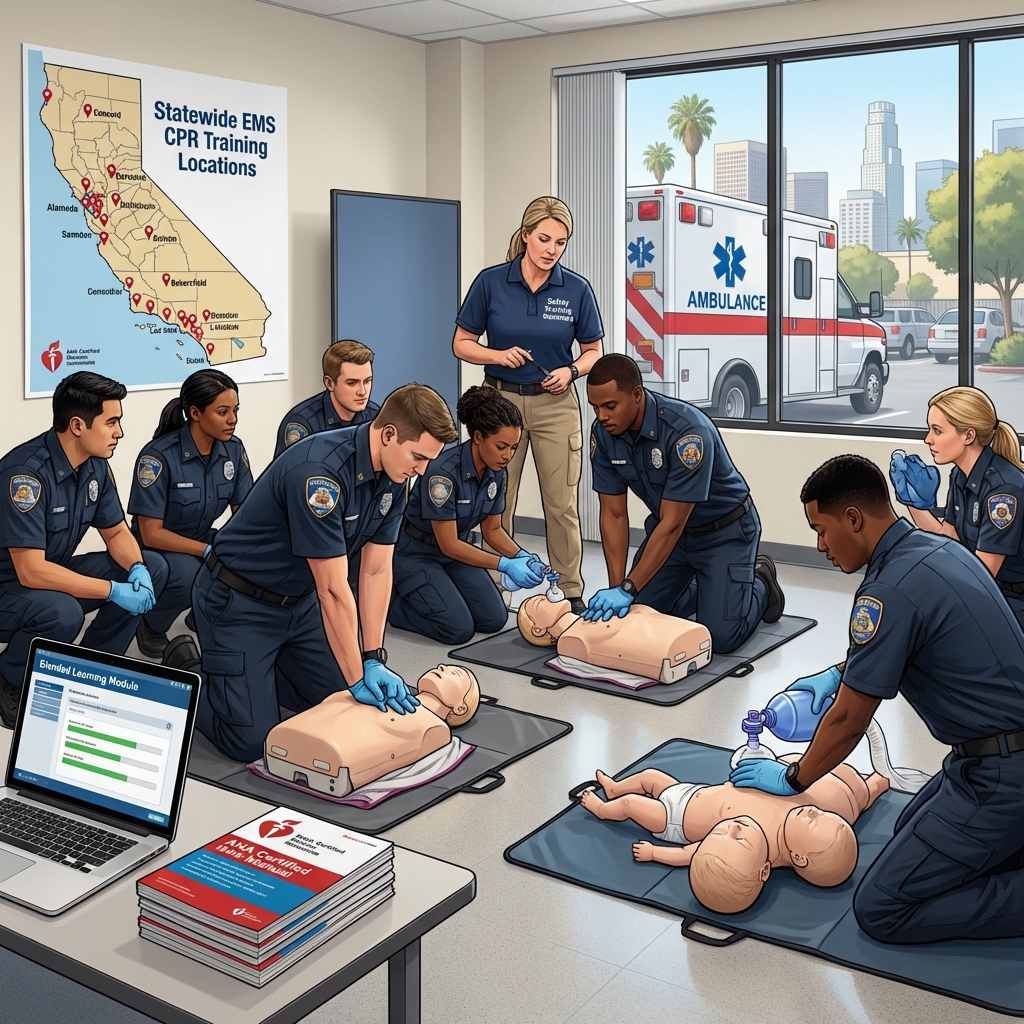
Safety Training Seminars helps California facilities stay audit-ready with AHA-compliant BLS, ACLS, PALS, and NRP offered via blended learning and in-person skills at over 100 locations statewide. Healthcare teams can streamline scheduling, group training, and documentation tracking, while individual clinicians benefit from flexible sessions and a low price guarantee. Their support with eCard verification and roster management simplifies compliance before surveyors arrive.
Overview of American Heart Association (AHA) Training Requirements
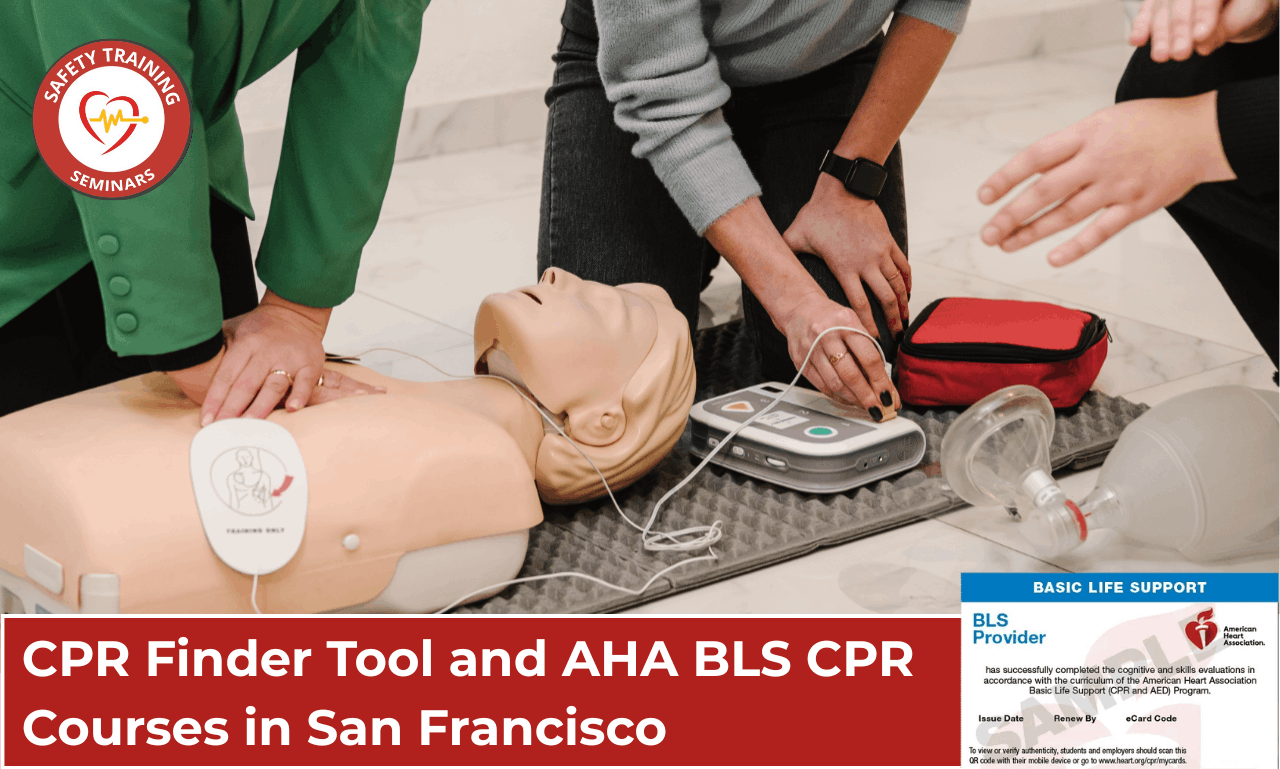
For most clinics and hospitals, the American Heart Association (AHA) is the benchmark for resuscitation training that satisfies California healthcare certification regulatory requirements. AHA course cards (eCards) are valid for two years and require successful completion of both cognitive learning and hands-on skills evaluation. While AHA vs Red Cross BLS credentials are generally treated as equivalent by many regulators and accreditors, individual facility policies and privileging criteria can specify AHA only, so verify site-specific standards before audits.
Role-based expectations typically drive which AHA credentials are needed under clinic licensing audit standards and internal policies:
- Registered nurses and clinic staff: current BLS for Healthcare Providers; ACLS for moderate/deep sedation areas, perioperative settings, telemetry/ICU, or designated code team members.
- Pediatric practices and urgent care: PALS for clinicians who manage pediatric patients; NRP (developed by the AAP) in perinatal and newborn care settings.
- Dentists and oral–maxillofacial teams: BLS for all patient-facing staff; ACLS and PALS when providing sedation or treating pediatric patients.
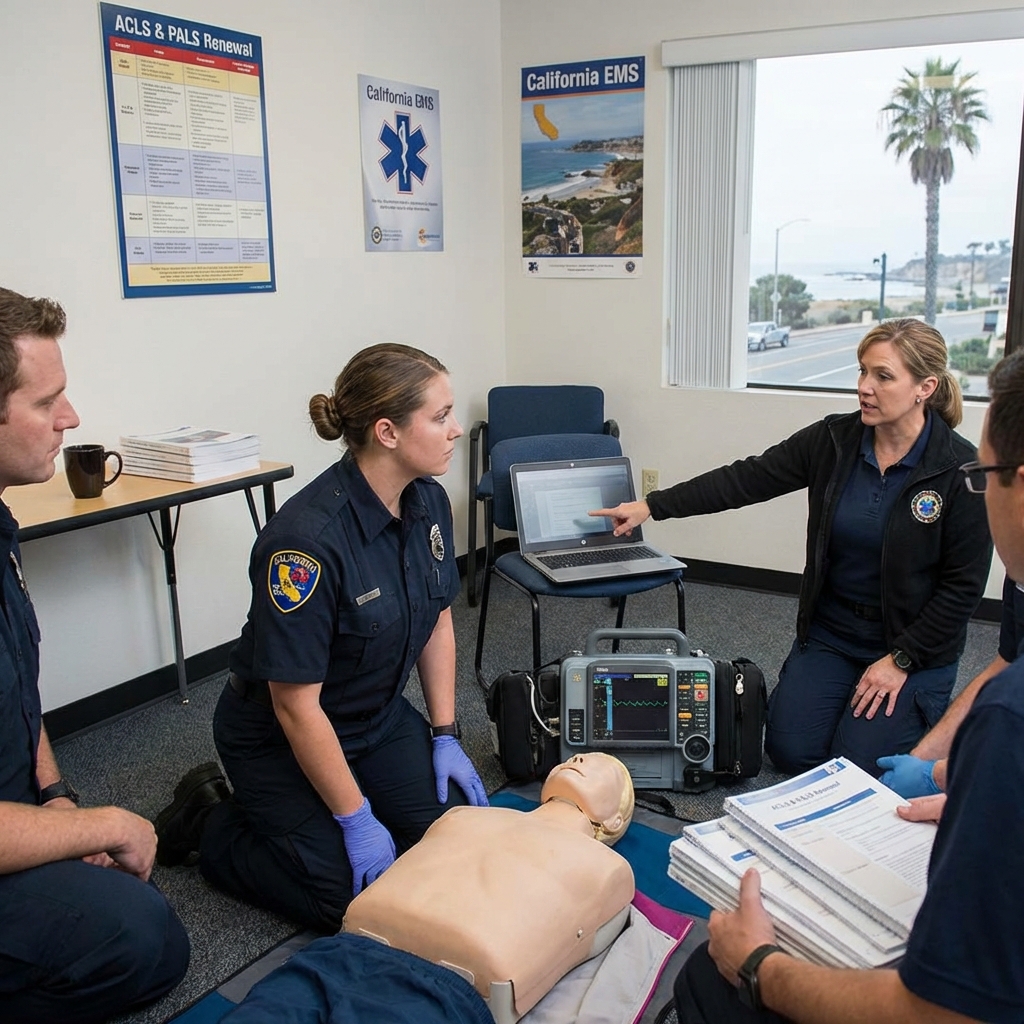
- EMS personnel: BLS is required for EMTs; paramedics commonly need ACLS and PALS under California EMS provider requirements set by local EMS agencies.
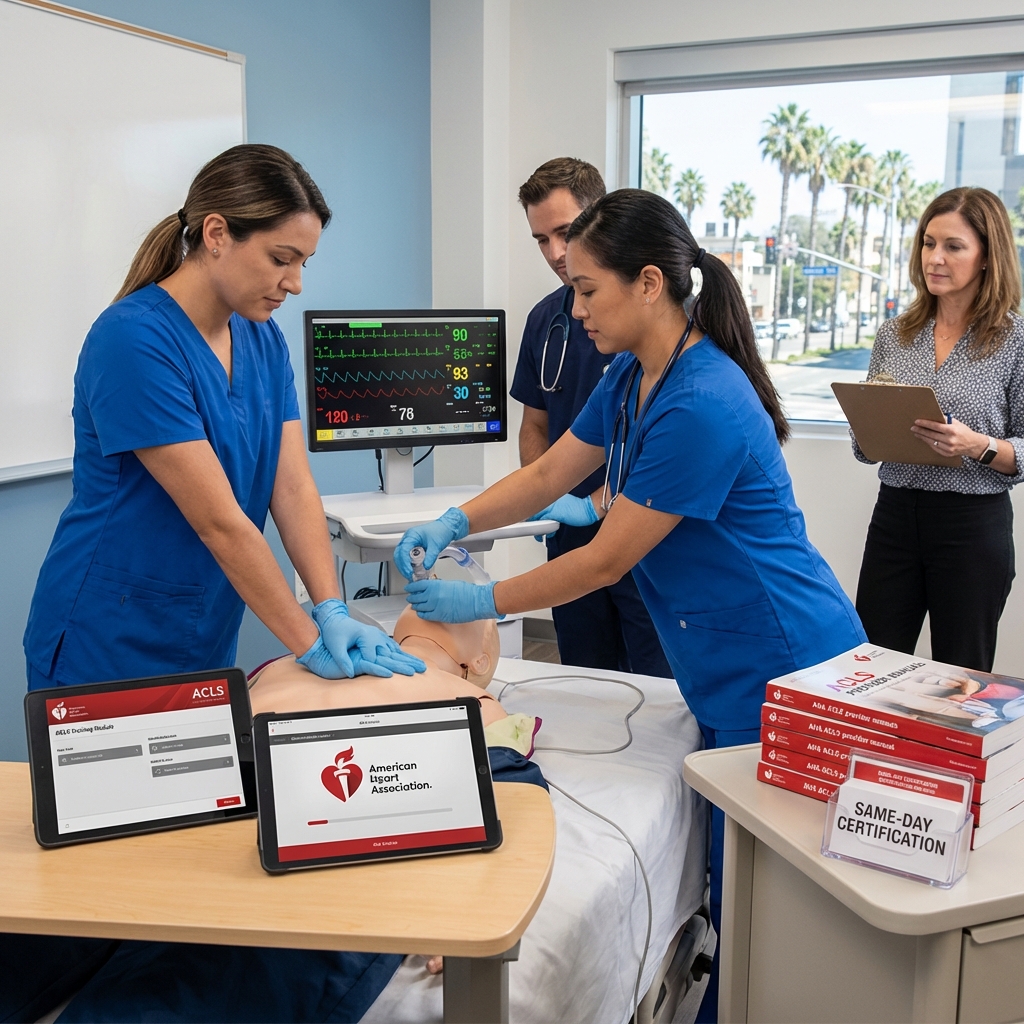
AHA permits blended learning (e.g., HeartCode online modules) paired with an in-person skills session conducted by an AHA-certified instructor. For ACLS certification compliance, auditors typically look for current eCards with verifiable QR codes, course titles that match staff roles (BLS vs ACLS vs PALS), the completion date and Training Center ID, and documentation of hands-on megacode performance. Clinics preparing for surveys by CDPH, The Joint Commission, AAAHC, or AAAASF should align staffing matrices with patient acuity and sedation policies and maintain a centralized roster with expiration alerts.
State licensing boards (e.g., the Medical Board of California or the Board of Registered Nursing) do not prescribe a specific brand for medical board certification acceptance; however, hospitals, ASCs, and EMS agencies commonly reference AHA standards in policy. To streamline readiness, Safety Training Seminars offers AHA-authorized BLS, ACLS, and PALS in a blended format across 100+ California locations, plus group scheduling and low price guarantee. Their eCard verification, instructor-led skills checks, and consolidated training records help clinics demonstrate compliance during regulatory audits and meet local EMS agency expectations.
Overview of American Red Cross (ARC) Healthcare Provider Courses
The American Red Cross (ARC) offers healthcare-focused credentials that align with current resuscitation science and can meet many California healthcare certification regulatory requirements, depending on employer policy. Core options include Basic Life Support (BLS) for Healthcare Providers and Advanced Life Support (ALS) and Pediatric Advanced Life Support (PALS), with two-year digital certificates. Courses follow ILCOR-consensus science and are delivered via flexible blended learning that pairs eLearning with an in-person skills check.
ARC BLS covers high-quality adult, child, and infant CPR, AED use, ventilation with BVMs, team dynamics, and opioid-associated emergencies. The blended format allows staff to complete the cognitive portion online and demonstrate psychomotor skills in a monitored session, a structure that can streamline onboarding before clinic licensing audit standards reviews. In California, many clinics accept ARC for BLS; however, policies that explicitly state “AHA vs Red Cross BLS” vary by system, so it is essential to confirm with HR, compliance, or medical staff services before scheduling.
ARC ALS and PALS focus on airway management, rhythm recognition, shock states, pharmacology, and team leadership within adult and pediatric algorithms. Acceptance for these advanced credentials is employer- and agency-driven, and ACLS certification compliance in California hospitals often specifies AHA cards in bylaws or contract language. For field providers, California EMS provider requirements are set by local EMS agencies (LEMSAs), many of which reference AHA ACLS/PALS by name; ARC ALS/PALS acceptance is expanding but can be inconsistent, so crews should verify with their LEMSA and medical director.
Practical acceptance checkpoints for Red Cross cards in California include:

- Hospitals and ambulatory surgery centers: Review medical staff bylaws, perioperative policies, and HR onboarding checklists for named certifying bodies.
- EMS personnel: Confirm with your LEMSA policy memos and training bulletins; some require AHA for ALS credentials.
- Dentists and oral surgeons: Dental Board rules recognize BLS courses that follow AHA or ARC guidelines; sedation permits may specify course content and hands-on verification.
- Physicians and nurses: State medical/nursing boards do not mandate a specific brand; employer policy governs medical board certification acceptance during audits.
If your clinic or agency requires AHA to satisfy internal policy or payer-driven audits, Safety Training Seminars offers AHA BLS, ACLS, and PALS statewide with blended learning, more than 100 California locations, corporate group options, and a low price guarantee. Their team can help map your policy language to the correct course mix so your next audit proceeds smoothly.
Comparing State Board and Clinic Audit Acceptance for AHA vs Red Cross
When it comes to California healthcare certification regulatory requirements, acceptance often depends on who is checking your credentials. State boards tend to be brand-neutral as long as the course meets current resuscitation guidelines and includes the appropriate provider level. Clinic licensing audit standards, however, usually follow the facility’s own policy; if your hospital or medical group specifies “AHA” in policy, an otherwise equivalent Red Cross card may be flagged during an audit.
For medical board certification acceptance, California’s BRN and Medical Board do not mandate AHA over the Red Cross; they require current, appropriate provider-level training. The Dental Board of California explicitly accepts BLS from either the American Heart Association or the American Red Cross, provided it includes a hands-on component. California EMS provider requirements are set by EMSA and local EMS agencies; many accept AHA vs Red Cross BLS for EMT/paramedic roles, but ALS positions and hospital-based roles often specify AHA for ACLS/PALS. Red Cross now offers ALS and PALS, yet acceptance for ACLS certification compliance in acute-care settings in California still commonly favors AHA.
Auditors from The Joint Commission or CDPH will verify that staff certifications match facility policy, are current, and document skills evaluation. If your policy states “AHA BLS Provider and AHA ACLS/PALS,” a Red Cross certificate will not satisfy the audit even if the training is comparable. Reviewing job postings across large California systems also shows frequent requirements for “AHA BLS/ACLS,” which signals the safest path for clinic credentialing.
Practical steps to avoid audit issues:
- Confirm with HR/Medical Staff Office whether policy specifies AHA or accepts equivalents (AHA vs Red Cross BLS).
- Match the exact course type to your role: BLS for all clinical staff; ACLS for critical care/telemetry/anesthesia; PALS for pediatric roles.
- Ensure your card shows hands-on skills completion and provider level; keep eCards and skills session documentation accessible.
- Verify renewal cycles and grace periods in facility policy to align with survey windows.
- For EMS, check local agency bulletins for accepted brands and submit cards early for accreditation updates.
Safety Training Seminars offers AHA BLS, ACLS, and PALS across 100+ California locations with blended learning that satisfies hospital policies and streamlines audits. Our courses align with clinic licensing audit standards, and we provide verifiable AHA eCards and documentation to support survey readiness. For groups, we can mirror your policy language and schedule onsite sessions, helping teams maintain continuous compliance at a low price guarantee.
Side-by-Side Criteria: Renewal Cycles, Course Content, and Verification
For California healthcare certification regulatory requirements, regulators and auditors focus on three things: how often credentials renew, whether course content follows the latest guidelines, and how easily credentials can be verified. Both the American Heart Association (AHA) and the American Red Cross (ARC) issue credentials used in California clinics and hospitals, but employer policy often dictates which brand is acceptable. When policies are silent, many facilities default to AHA for the broadest acceptance, especially for code-team roles.
Renewal cycles are similar across agencies. AHA BLS, ACLS, and PALS Provider cards are valid for two years, and ARC issues two-year BLS, ALS, and PALS credentials as well. Some hospitals or EMS agencies shorten cycles (for example, annual BLS refreshers for emergency departments), so always follow your facility policy to maintain ACLS certification compliance.
Course content is aligned across both brands to current resuscitation science. AHA courses are built on the AHA Guidelines for CPR and ECC, and Red Cross courses reflect the same ILCOR science and U.S. guidelines, delivering comparable adult, pediatric, high‑performance team, and megacode scenario training. Differences you’ll notice are naming conventions (AHA “BLS/ACLS/PALS Provider” vs. ARC “BLS/ALS/PALS”) and layout of algorithms and checklists, not the underlying clinical standards.
Acceptance varies by role and regulator. Many California hospitals list “AHA BLS Provider required,” making AHA vs Red Cross BLS a practical, not clinical, decision. California EMS provider requirements generally ask for current BLS for providers plus ACLS and PALS (or PEPP) that meet AHA Guidelines; local EMS agencies and employers may explicitly require AHA cards. Dental practices subject to sedation rules and medical board–regulated settings typically accept AHA or equivalent credentials; verify your clinic licensing audit standards and written HR policy before enrolling.
Verification is straightforward for both issuers and is critical during audits. AHA eCards include a unique ID and QR code and can be validated at the AHA eCard portal, while ARC digital certificates can be confirmed at redcross.org/confirm. Store PDFs, eCard IDs, and skills checklists in your HR system to streamline audit response.
Auditors commonly look for:
- Current digital card with exact course title (e.g., “AHA ACLS Provider”) and expiration date
- Documentation of hands-on skills testing and instructor ID
- Evidence the course aligns to the latest Guidelines year
- Consistency with facility policy for required disciplines by unit/role
If you need the widest employer acceptance in California, choosing AHA is the safest route. Safety Training Seminars offers AHA BLS, ACLS, PALS, and NRP via blended learning at over 100 California locations, with corporate roster tracking, eCard verification support, and a low price guarantee—making ongoing compliance and audit preparation simpler for clinics and health systems.

Pros and Cons of Each Credential for California Medical Professionals
California healthcare certification regulatory requirements are driven by employer policy, state agency rules, and accreditor expectations. Both AHA and Red Cross credentials follow the same ILCOR-based science and meet most clinic licensing audit standards, but acceptance is not identical in every setting. For roles exposed to hospital privileging or trauma center protocols, choosing the credential most commonly specified in job postings and medical staff bylaws reduces audit risk.
AHA credentials: advantages for California medical settings
- Widely specified for hospital roles; many medical staff offices and travel nurse agencies list “AHA BLS/ACLS/PALS” to streamline ACLS certification compliance.
- Easy eCard verification and broad familiarity among credentialing coordinators during Joint Commission, AAAHC, or AAAASF surveys.
- Direct alignment with the AHA Guidelines for CPR and ECC, minimizing questions during clinic licensing audit standards reviews.
- Extensive course availability (BLS, ACLS, PALS) and seamless pairing with NRP through many California training centers.
AHA credentials: potential drawbacks to consider
- Some courses may be higher cost or fill quickly in metro areas during hiring surges.
- Scheduling requires an AHA-authorized skills session, which can be a hurdle for last-minute renewals.
- Occasional confusion about blended-learning steps if employers have older policy language.
Red Cross credentials: advantages for California professionals
- Strong acceptance for BLS in outpatient, dental, and many allied health settings; useful for general compliance and onboarding.
- Robust blended-learning options and competitive pricing for individuals and small clinics.
- Meets the underlying science expectations most accreditors look for, aiding routine policy compliance.
Red Cross credentials: limitations in acute care and specialized roles
- AHA vs Red Cross BLS acceptance is broad, but ALS/PALS from Red Cross may be declined where policies explicitly require “AHA ACLS/PALS.”
- Naming differences (ALS vs ACLS) can trigger re-training requests from medical staff offices.
- Some California EMS provider requirements and local EMS agency protocols reference AHA; EMT/paramedic candidates should verify local acceptance.
- For high-risk services (ED, cath lab, anesthesia support), many employers default to AHA to avoid audit ambiguity.
Practical tip: If you work in a hospital, surgery center, or EMS agency—or your job posting/medical staff bylaws mention AHA—choose AHA to ensure medical board certification acceptance and smoother ACLS certification compliance. For outpatient clinics or dental practices with flexible policies, Red Cross BLS may suffice, but verify employer and payer requirements in writing. Safety Training Seminars offers statewide AHA BLS, ACLS, PALS, and NRP with blended learning, over 100 California locations, and a low price guarantee, making it simple to stay audit-ready. Their team can also advise on local EMS and board requirements before you enroll.
Conclusion and Final Recommendations for Maintaining Regulatory Compliance
For California healthcare certification regulatory requirements, align your training program with internal policy, accrediting bodies (e.g., The Joint Commission), CMS Conditions of Participation, and state agencies. In most hospital and clinic settings, both AHA and Red Cross credentials are nationally recognized, but many California facilities explicitly name AHA in policy. To avoid disputes during surveys, standardize across sites and document your rationale for choosing AHA vs Red Cross BLS.
For advanced credentials, choose AHA for ACLS and PALS when possible to minimize gray areas in ACLS certification compliance. Example: an ambulatory surgery center performing moderate sedation typically requires AHA ACLS for RNs and providers, and AHA PALS if pediatric patients are treated. When medical board certification acceptance is not explicitly stated, adopting AHA often meets the strictest interpretation of employer, privileging, and payer expectations.
EMS teams should follow California EMS provider requirements set by the EMS Authority and your Local EMS Agency (LEMSA). While many agencies accept either AHA or Red Cross BLS, individual LEMSAs or employers may specify AHA for field providers. Confirm the exact card type, course title, and renewal interval with your LEMSA policy and contract requirements.
Audit readiness depends on documentation that aligns with clinic licensing audit standards. Retain AHA eCards (or Red Cross certificates), course IDs, completion dates, instructor names, and skills checklists for each employee. Keep a written matrix that maps roles to required certifications and renewal intervals (e.g., RN: BLS every 2 years; ASC RN performing sedation: BLS + ACLS; Pediatric clinic RN: BLS + PALS).
- Standardize card types and titles (e.g., AHA BLS Provider, AHA ACLS Provider, AHA PALS Provider) across all sites and vendors.
- Build a renewal cadence: enroll staff 60–90 days before expiration; stagger by department to maintain coverage.
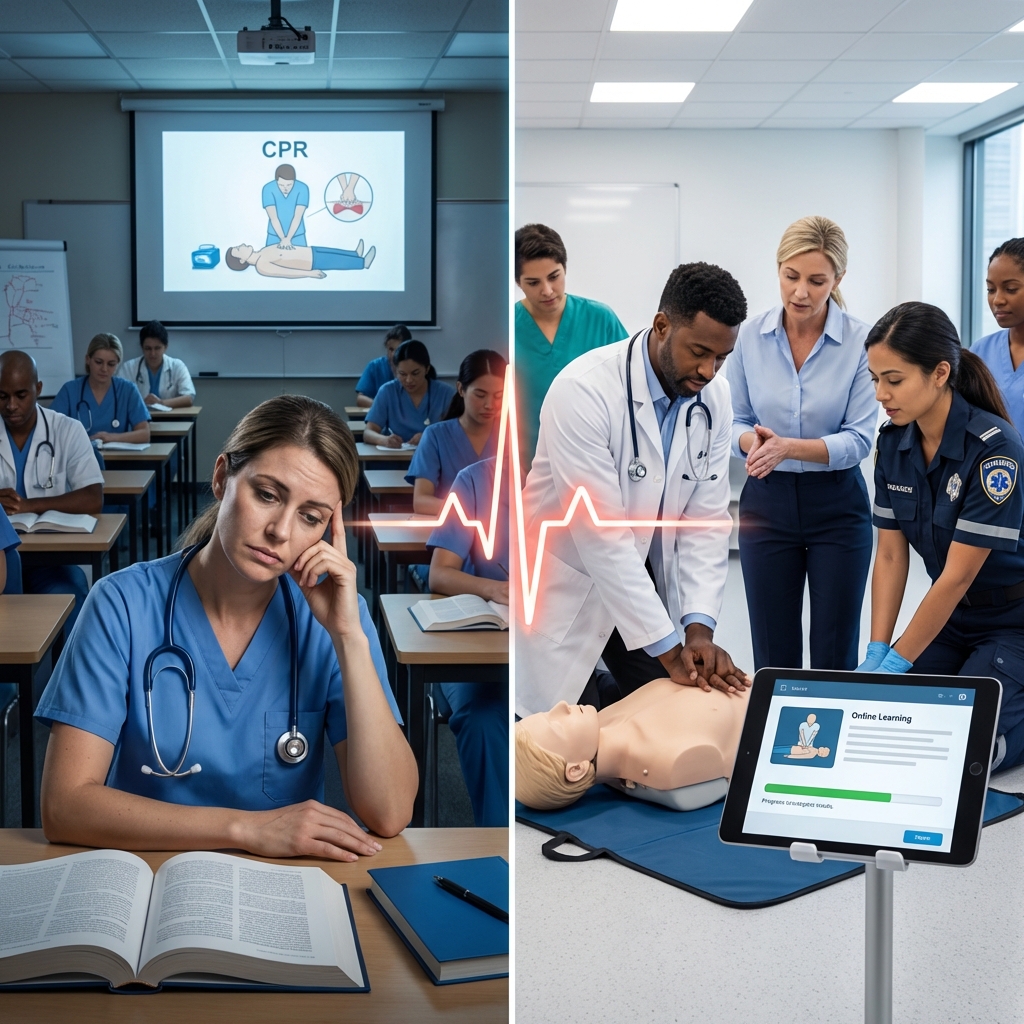
- Use blended learning to minimize downtime: online coursework plus an in-person skills session.
- Centralize tracking with primary-source verification (AHA eCard codes), and retain rosters and certificates for 3–5 years.
- Run quarterly internal audits; remediate gaps within 30 days and document corrective actions.
Safety Training Seminars streamlines compliance for California clinics and EMS organizations with AHA-authorized BLS, ACLS, PALS, and NRP across 100+ locations. Their blended learning options, corporate group training, and low price guarantee help standardize training while controlling costs. They also provide audit-ready documentation packets and renewal reminders aligned to your policy, making ongoing compliance simpler and more defensible.
Register for a class today.