Introduction: Understanding AHA Certification Transitions for California Nurses
For many RNs, a nurse AHA certification transition happens when roles change, hospitals update policies, or expiration dates approach. In California, most facilities require current AHA BLS for all nurses and ACLS and/or PALS for specialty areas such as ICU, ED, PACU, and pediatrics. Planning ahead prevents schedule disruptions, helps you stay marketable, and supports unit readiness during audits and credentialing checks.
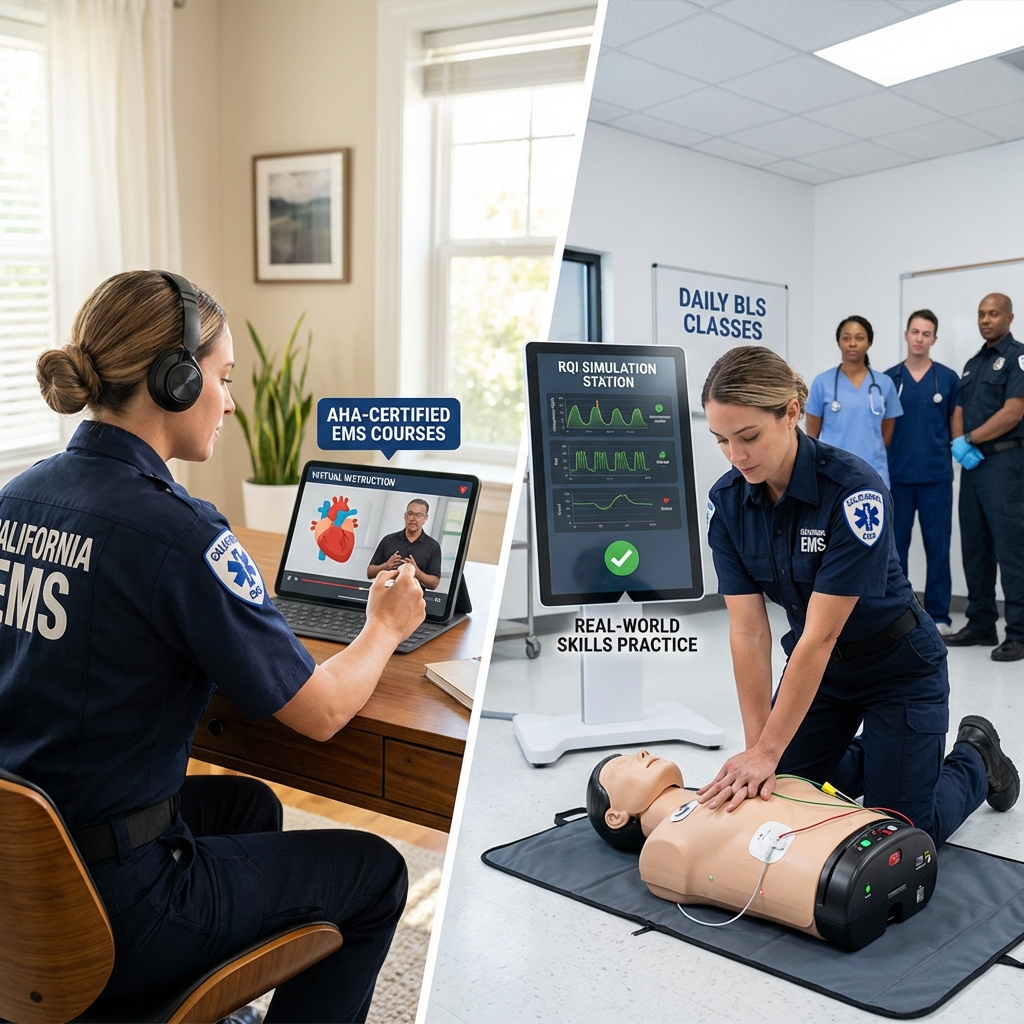
While nursing license compliance in California is governed by the BRN’s CE requirement (30 hours every two years), AHA cards are typically an employer requirement tied to your job description and privileging. BLS, ACLS, and PALS eCards are valid for two years; the AHA does not offer a grace period, so the prudent healthcare professional recertification timeline is to renew 30–60 days before expiration. The AHA credential renewal process can be completed via HeartCode (online modules) plus a hands-on skills session; expect roughly 1–2 hours online for BLS and 4–6 hours for ACLS/PALS, followed by a 45–90 minute skills check. If your hospital announces a BLS/ACLS certification update or system-wide transition to AHA-only credentials, update early to avoid shift restrictions.
Common triggers for an AHA transition include:
- Moving from med-surg to ICU/ED (now needing ACLS).
- Transferring to pediatrics or a mixed ED (adding PALS).
- Starting a travel contract where the facility requires AHA eCards specifically.
- Switching from a non-AHA card to AHA to meet employer or network standards.
To make the process efficient, Safety Training Seminars offers blended HeartCode options with flexible skills sessions across 100+ California locations, evening/weekend availability, and a low price guarantee. Nurses can knock out BLS, then add ACLS or PALS as roles evolve, keeping pace with California nursing certification requirements and unit policies. Not sure where to start? Review the BLS Certification basics and map your renewals 4–8 weeks before due dates to avoid lapsed credentials.
What Is AHA Certification and Why It Matters for Your Nursing Career
AHA certification is the gold standard for resuscitation training from the American Heart Association, recognized by hospitals and clinics across California. For nurses, it verifies current, evidence-based competence in identifying cardiac/respiratory arrest, initiating high-quality CPR, and leading or supporting advanced resuscitation. Keeping these credentials current directly impacts employability, unit assignments, and patient safety outcomes.
Common AHA credentials for nurses include:
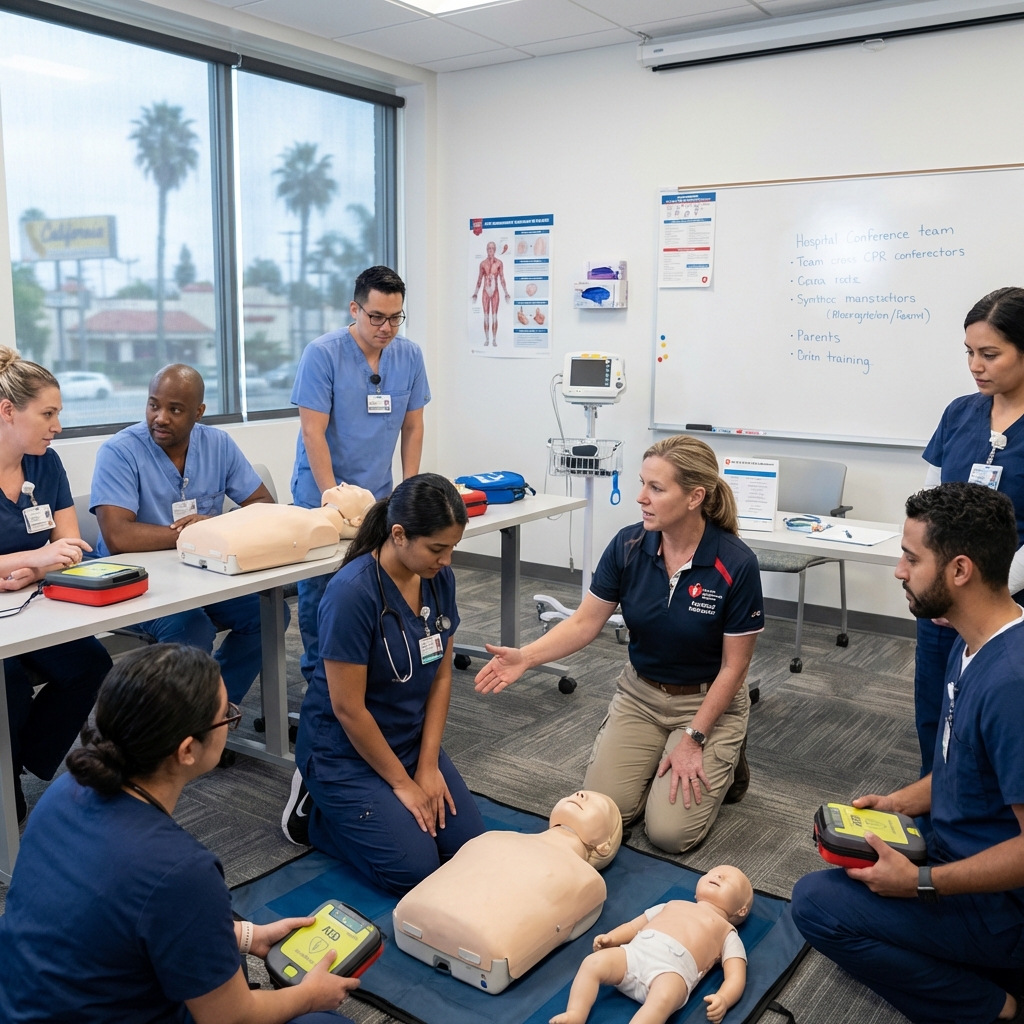
- BLS (Basic Life Support): Required for virtually all nursing roles; focuses on high-quality CPR and AED use for adults, children, and infants.
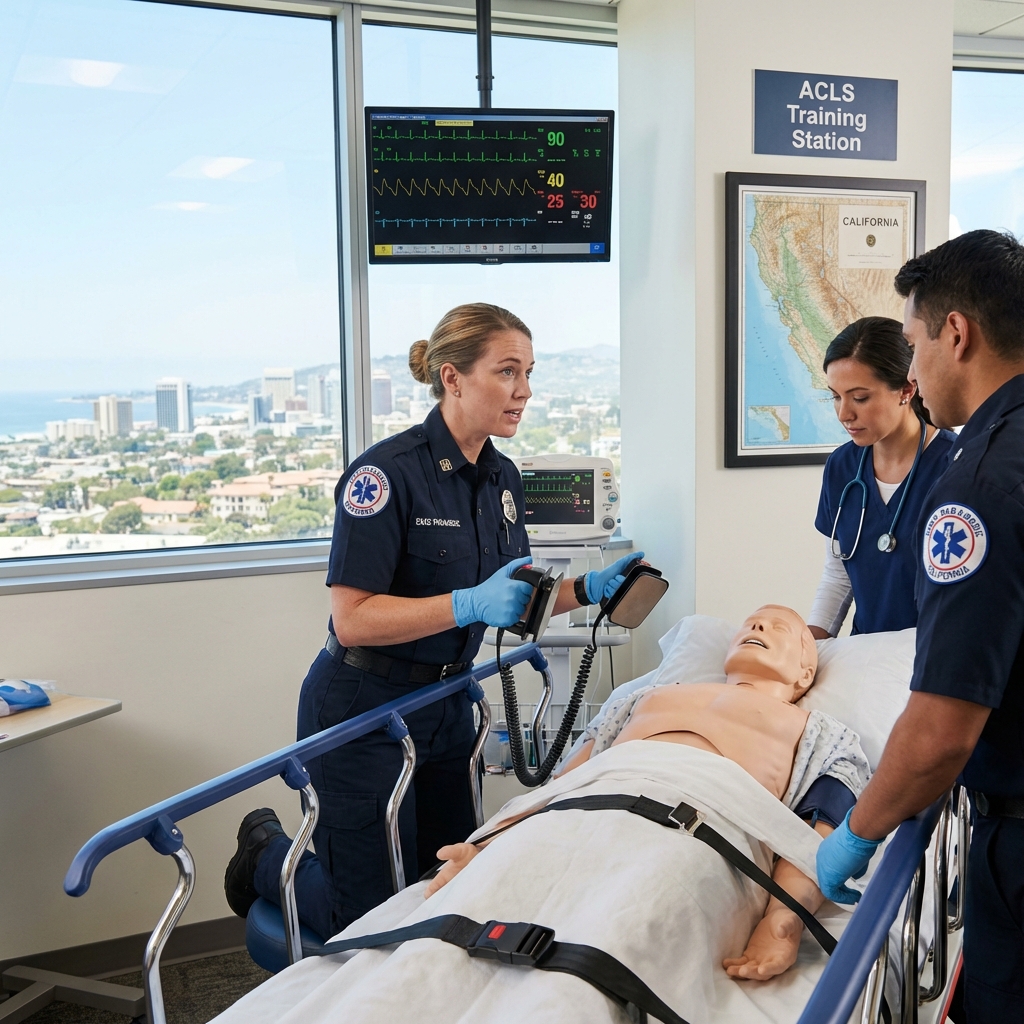
- ACLS (Advanced Cardiovascular Life Support): Typically required in ER, ICU, telemetry, cath lab, and procedural areas; emphasizes airway management, rhythm recognition, medications, and team leadership.
- PALS (Pediatric Advanced Life Support): Often needed in pediatrics, PICU, and EDs that see children; covers pediatric assessment, respiratory failure, shock, and arrest algorithms.
- NRP (Neonatal Resuscitation Program): Common in labor and delivery, NICU, and nursery settings; focuses on newborn resuscitation at birth.
Most AHA cards are valid for two years, and employers generally require they remain current with no lapse. The AHA credential renewal process typically involves a review or blended-learning module followed by an in-person skills check; if your card has expired, you can still renew, but some facilities may require a full provider course. While AHA cards are not a formal part of nursing license compliance in California, they are often mandatory for hospital credentialing and job role eligibility. Planning ahead helps you avoid scheduling gaps that could affect shifts or onboarding.
If you’re navigating a nurse AHA certification transition—such as moving into a higher-acuity unit or aligning with a BLS ACLS certification update—map your healthcare professional recertification timeline 60–90 days before expiration. Safety Training Seminars offers blended learning (online + in-person skills) at 100+ California locations, specialized ACLS/PALS/NRP courses for hospital roles, and a low price guarantee. In the East Bay, you can quickly secure a spot through local options like BLS CPR Classes in Newark.
California State Requirements for Nurse Certifications and Licensing
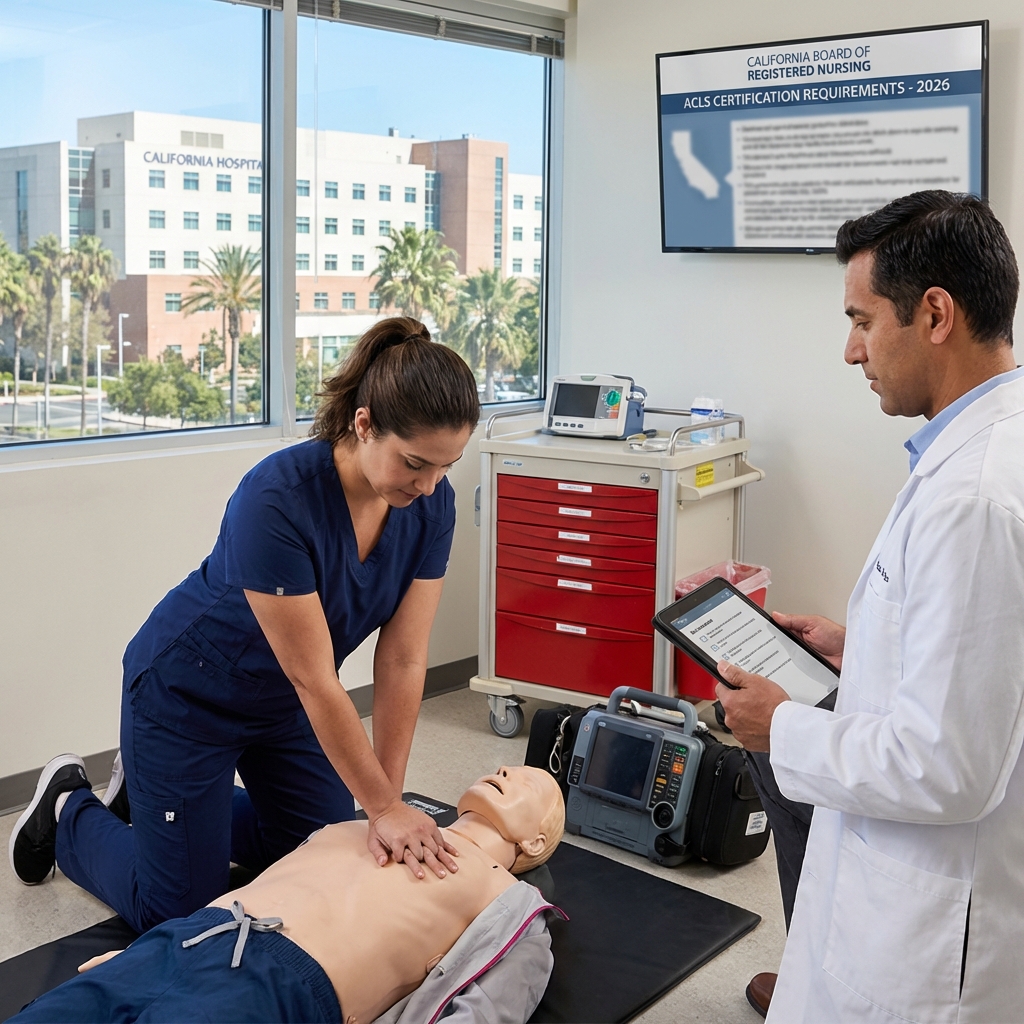
California requires active RNs to renew their license every two years and complete 30 contact hours of continuing education within each cycle. While the Board of Registered Nursing does not mandate AHA cards statewide, most hospitals and clinics do. For nursing license compliance California focuses on CE and on-time renewal, while employers set the rules for BLS, ACLS, and PALS to meet unit-specific standards and accreditation.
Most AHA provider cards (BLS, ACLS, PALS) are valid for two years. The AHA credential renewal process typically involves a provider renewal course or a blended-learning “HeartCode” option with an in-person skills check; if your card lapses, many employers may require the full provider course. A nurse AHA certification transition also occurs when AHA guideline updates are released or when moving into new clinical roles that demand different credentials—plan ahead for any BLS ACLS certification update to avoid shift or scheduling impacts.
Common California employer expectations include:
- Med–Surg/Telemetry: Current AHA BLS; ACLS often preferred or required for telemetry.
- ICU/ED/PACU/Cardiac Cath Lab: AHA BLS and ACLS required; some EDs add PALS.
- Pediatrics/NICU/PICU: AHA BLS and PALS; NRP frequently required for NICU/L&D.
- Procedural/Sedation areas: AHA BLS; ACLS commonly required when moderate sedation is used.
Build a healthcare professional recertification timeline that aligns with your BRN renewal date. Example: If your RN license expires in June, aim to renew BLS in April and ACLS/PALS in May, keeping at least a 60–90 day buffer. Keep digital and printed copies of AHA eCards and CE certificates in case of employer verification or BRN audits.
Safety Training Seminars offers AHA BLS, ACLS, PALS, and NRP across 100+ California locations with flexible blended learning and same-day skills sessions, making it easy to synchronize renewals. Their low price guarantee and group options also help units standardize compliance schedules statewide.

Key Differences Between AHA Certification Levels for Healthcare Professionals
For most California nurses, AHA credentials are employer-mandated rather than a Board of Registered Nursing licensing requirement. Understanding the distinctions between course levels helps you plan a smooth nurse AHA certification transition and avoid gaps in unit eligibility. In general, BLS is the universal baseline, while ACLS, PALS, and neonatal credentials are tied to patient population and setting.
- BLS (Basic Life Support): Required for virtually all direct-care RNs. Focuses on high‑quality CPR, AED use, and team dynamics for adults, children, and infants. Example: A med-surg nurse must maintain BLS for bedside code response.
- ACLS (Advanced Cardiovascular Life Support): Required in telemetry, ICU, ED, cath lab, and PACU. Adds rhythm recognition, airway management, IV/IO access, defibrillation, and pharmacology aligned to AHA cardiac arrest and brady/tachy algorithms. Example: A step‑down RN caring for post‑MI patients needs ACLS to manage bradycardia with hypotension.
- PALS (Pediatric Advanced Life Support): Required for pediatric units, ED, PICU, and transport. Emphasizes pediatric assessment triangle, respiratory failure/shock pathways, and age‑specific dosing/defibrillation. Example: An ED nurse covering a pediatric pod needs PALS for rapid recognition of compensated shock.
- NRP (Neonatal Resuscitation Program): Typically required for L&D, NICU, nursery, and postpartum. Focuses on newborn airway, PPV, chest compressions, and thermoregulation; administered by the AAP (not an AHA course). Example: An L&D RN assisting at delivery needs NRP for initial neonatal stabilization.
Most AHA provider cards are valid for two years; plan your AHA credential renewal process 60–90 days before expiration to meet California nursing certification requirements set by employers. Blended learning options (HeartCode online + hands‑on skills) shorten seat time: BLS skills can take about 2–3 hours; ACLS/PALS updates typically run 4–6 hours and include “megacode” testing. Expect pre-course self-assessment for ACLS/PALS and be prepared to interpret ECGs and calculate weight‑based meds for a timely BLS ACLS certification update within your healthcare professional recertification timeline.
Safety Training Seminars offers HeartCode BLS, ACLS, PALS, and NRP skills sessions at over 100 California locations with flexible schedules and a low price guarantee. Their blended format helps nurses maintain unit access and nursing license compliance in California workplaces, and group options simplify department-wide renewals.
Preparing for Your Certification Transition: Timeline and Deadlines
A successful nurse AHA certification transition starts with knowing your expiration dates and working backward. AHA BLS, ACLS, and PALS Provider cards are typically valid for two years from the end of the month issued, and there is no official grace period—many California employers treat an expired card as non-compliant immediately. For most inpatient roles, BLS is required by employer policy; ACLS is common for telemetry/ICU/ED, and PALS for pediatric settings. Aligning your plan with California nursing certification requirements set by your facility helps you avoid last‑minute scheduling conflicts.
Begin your AHA credential renewal process at least 60–90 days before expiration. HeartCode modules can take 1.5–6+ hours depending on the discipline, and skills session slots fill quickly around peak renewal months. Allow time for precourse assessments (ACLS/PALS) and for your eCard to post—issuance can take up to 24–48 hours after skills completion.
Use this healthcare professional recertification timeline as a checklist:
- 90 days out: Audit role-based requirements (BLS only vs. BLS/ACLS/PALS) and verify employer deadlines and shift coverage policies.
- 60 days out: Enroll in HeartCode BLS/ACLS/PALS and book an in‑person skills session that fits your schedule.
- 30 days out: Complete online modules; pass ACLS/PALS precourse self‑assessment; review algorithms and medication updates.
- 14 days out: Confirm appointment details, bring a government ID, and print or save completion certificates.
- 7 days out: Plan backup options in case of sick calls or overtime; verify facility acceptance of AHA eCards.
- Post‑course: Download and verify your eCard on the AHA site; send to HR/credentialing the same day. Avoid any BLS ACLS certification update past the expiration date.
Example: If your BLS and ACLS expire October 31, start in August, finish HeartCode in early September, and schedule a mid‑September skills session. If you may float to pediatrics, add PALS on the same day to stay ahead of nursing license compliance California expectations tied to employer privileging.
Safety Training Seminars streamlines this process with blended learning and frequent skills sessions across 100+ California locations. Their low price guarantee and flexible scheduling help you complete renewals on time and keep your nurse AHA certification transition smooth and stress‑free.
Choosing the Right Training Provider for Your Transition Course
Selecting a provider for your nurse AHA certification transition is about more than finding the next available seat. Look for a training partner that supports the full AHA credential renewal process, aligns with California nursing certification requirements, and issues official AHA eCards you can verify immediately. This reduces the risk of gaps in hospital privileging or delays with unit scheduling—critical for nursing license compliance California employers expect. For example, a telemetry RN updating both BLS and ACLS can avoid shift disruptions by choosing a blended course with rapid eCard turnaround.
Evaluate course design and logistics first. Blended learning (online modules plus an in-person skills session) shortens classroom time and lets you practice on your schedule, which is ideal if your healthcare professional recertification timeline is tight. Confirm that instructors teach to the latest AHA guidelines and use feedback manikins for high‑quality compressions and ventilations. Also ask about documentation: same‑day eCards, clear course completion letters, and optional BRN CE documentation if your facility prefers it.

Coverage and convenience matter, too. Providers with multiple California sites, evening/weekend skills checks, and easy rescheduling help you complete a BLS ACLS certification update before unit audits or travel assignments. Transparent pricing, a low price guarantee, and group discounts are valuable if your whole unit is transitioning at once. Finally, verify support policies—such as remediation options if you need extra practice on megacode or pediatric rhythms.
Safety Training Seminars is a practical choice for California nurses who need streamlined AHA-aligned BLS, ACLS, PALS, or NRP updates. With blended learning and over 100 training locations statewide, you can complete online modules at home and finish skills checks near your facility, often with prompt eCard issuance. They also offer corporate group training and discount pricing, which helps managers coordinate department-wide renewals without exceeding budget or the recertification window.
Documentation and Renewal Process During Your Certification Change
During a nurse AHA certification transition—such as moving from a med-surg role (BLS) to ICU or ED (BLS + ACLS)—a clear paper trail and planned renewal timeline keep you on schedule and maintain nursing license compliance California. The California Board of Registered Nursing requires 30 CE hours every two years but does not mandate BLS/ACLS/PALS for licensure; most employers do under their California nursing certification requirements. Align your documentation with facility policy and unit competencies to avoid onboarding delays.
Keep these records organized in a single digital folder and a backup drive so you can respond quickly to audits or HR requests:
- AHA eCards for BLS/ACLS/PALS with eCard codes, issue dates, and expiration dates (valid for two years)
- HeartCode/online completion certificates for blended learning modules
- Skills session verification or roster from the Training Center
- CE certificates (verify the provider’s California BRN number if you plan to use CE for license renewal)
- Employer competency checklists or unit-specific credential forms
- A simple naming convention (e.g., “LastName_BLS_eCard_2026-05-12.pdf”) for fast retrieval
You can retrieve and share your AHA eCards at ecards.heart.org; download the PDF and screenshot the QR code for mobile verification. Submit the eCard ID to HR or your travel agency portal, and upload the course completion certificate if your facility requests proof of the online portion. Keep copies for at least one full renewal cycle beyond expiration.
Use this healthcare professional recertification timeline to manage the AHA credential renewal process without lapses (note: the AHA does not provide a grace period; some facilities have internal windows, but do not rely on them):
- 90 days out: Confirm employer requirements; plan any BLS ACLS certification update and add PALS if your new unit needs it.
- 60 days out: Complete HeartCode modules; schedule your in-person skills session.
- 30 days out: Finish skills, download new eCards, and update HR.
- 7 days out: Verify rosters posted and expirations aligned across all cards.
If you’re adding ACLS or PALS as part of a role change, blended learning helps you pivot quickly. Safety Training Seminars offers AHA-blended options and in-person skills checks at 100+ California locations, plus group training and discount pricing—making it easier to keep all cards current and synchronized with employer timelines.
Maintaining Compliance: Common Mistakes to Avoid During Transition
Small missteps during a nurse AHA certification transition can lead to schedule disruptions or temporary ineligibility to work. In California, most hospitals require current AHA BLS—and often ACLS or PALS based on unit—on your first day and at all times thereafter. Build your plan around your employer’s policy and the healthcare professional recertification timeline so you’re never caught between shifts with an expired card.
- Letting cards lapse. Many California facilities have no grace period, and if your ACLS or PALS expires you’ll need the full Provider course rather than a shorter update. Book your BLS ACLS certification update 30–60 days before expiration to preserve eligibility.
- Choosing the wrong course type. AHA credential renewal process options differ: “Update/Renewal” courses require a current card on day one; expired credentials typically require the initial Provider format. Confirm prerequisites and bring your current eCard to avoid being turned away.
- Underestimating blended learning time. HeartCode courses require completing the AHA online module before the skills session; plan several hours for ACLS/PALS and at least 1–2 hours for BLS. Arriving without the completion certificate usually means rescheduling.
- Overlooking unit-specific California nursing certification requirements. Examples: Telemetry/ICU commonly require BLS + ACLS; ED and pediatrics often require PALS; L&D/NICU may require NRP in addition to BLS. Travel and per-diem nurses should verify each facility’s matrix before mapping renewals.
- Skipping precourse work and rhythm review. ACLS/PALS include required precourse assessments; study ECG interpretation, algorithms, and dosing to prevent course failure and extra fees. Bring printed or digital proof of completion.
- Not verifying eCard authenticity and records. Employers validate AHA eCards; save the PDF, wallet copy, and claim CE credits per AHA instructions. Immediately upload documents to your HR portal to maintain nursing license compliance California and employer credentialing.
Safety Training Seminars helps nurses avoid these pitfalls with AHA-authorized blended learning, clear prerequisites, and over 100 California locations for flexible skills sessions. Their team can confirm the right course mix for your role, coordinate group renewals, and offer a low price guarantee—making your California nursing certification requirements easier to meet on time.

Post-Transition: Managing Multiple Active Certifications Effectively
After a nurse AHA certification transition, many California RNs end up holding BLS plus role-based credentials like ACLS and PALS simultaneously. The challenge is keeping all cards current for hospital privileging while avoiding redundant training. Align renewal dates proactively to minimize time off the unit and support nursing license compliance in California by preventing employer-required competency gaps.
Most AHA cards (BLS, ACLS, PALS) renew on a two-year cycle, but unit or employer policies may be stricter. Map a single healthcare professional recertification timeline across all cards. For example, if BLS expires in March, ACLS in July, and PALS in November, target a BLS ACLS certification update together in January–February, then renew PALS early on the same skills day if allowed. This consolidates skills sessions and reduces scheduling friction.
Practical steps to manage multiple active certifications:
- Build a 24-month calendar with reminders at 120, 90, and 60 days before the earliest expiring card.
- Batch blended learning: complete online HeartCode modules for ACLS/PALS, then book one in-person skills appointment that also includes your BLS renewal.
- Keep a central digital file: AHA eCard codes, wallet cards, completion certificates, and employer upload confirmations.
- Standardize your name and license/NPI across all records to avoid HR verification delays.
- Confirm policy on expired cards with your training center; AHA has no grace period, and you cannot work in roles requiring a current card once it lapses.
- Distinguish employer requirements from California nursing certification requirements: most facilities require AHA BLS for all RNs, with ACLS/PALS based on unit; NRP follows AAP guidance and has its own timeline.
Travel and per-diem nurses should maintain duplicates of verification documents and schedule renewals 60–90 days early to accommodate contract changes. Safety Training Seminars makes consolidation easier with blended learning options and 100+ California locations, allowing you to complete BLS with your ACLS/PALS skills on the same day at a low price. Their frequent class availability helps you keep a smooth AHA credential renewal process without interrupting your schedule.
Continuing Education Options After Your AHA Certification Transition
After completing your nurse AHA certification transition, consider continuing education that both strengthens clinical skills and meets California nursing certification requirements. California RNs renew every two years and must complete 30 contact hours of approved continuing education, so it’s smart to pair CE with resuscitation updates you already need for practice. Prioritize courses that reinforce your patient population (adult, pediatric, perinatal) and your unit’s risk profile.
AHA cards (BLS, ACLS, PALS) typically renew every two years. Many AHA courses offer CE credit; confirm acceptance with the California Board of Registered Nursing and your employer before enrolling. Build an AHA credential renewal process that reduces downtime: align your BLS ACLS certification update during the same month, keep your eCards and CE certificates together, and document hours promptly. Example: a telemetry RN completes HeartCode ACLS and BLS online during off-days, then books a single Saturday skills session to stay current without extra PTO.
Consider these focused options to round out CE while staying job-ready:
- Blended HeartCode BLS/ACLS updates with an in-person skills check to refresh algorithms, team dynamics, and high-quality CPR.
- PALS for ED or PICU nurses who manage pediatric respiratory failure, shock, and dysrhythmias.
- NRP for L&D and NICU teams needing neonatal resuscitation competency alongside unit-based neonatal simulations.
- ECG and Pharmacology refreshers to boost confidence interpreting rhythms and titrating vasoactive meds ahead of ACLS renewals.
- Post–cardiac arrest care, airway management, and stroke recognition modules to strengthen rapid-response performance.
Safety Training Seminars offers flexible blended learning with virtual coursework plus local skills sessions at 100+ California locations, along with corporate group scheduling and a low price guarantee. Their scheduling support makes it easier to map a healthcare professional recertification timeline—ideally starting 60–90 days before expiration—for nursing license compliance California. Plan early, verify CE credit, and bundle renewals to keep your credentials seamless year-round.
Conclusion: Ensuring Seamless Certification Transitions in Your Nursing Practice
A seamless nurse AHA certification transition starts with mapping role-specific credentials to a realistic timeline. In California, most hospitals require current AHA BLS for all RNs, with ACLS common for ICU/ED/telemetry and PALS for pediatrics. AHA cards are typically valid for two years, so aligning renewals with your RN license cycle (which also renews every two years and requires 30 CE hours) reduces risk of lapses and supports nursing license compliance California.
Build your plan backward from expiration. At 90 days out, begin the AHA HeartCode eLearning; at 45–60 days, schedule an in-person skills appointment; and at 30 days, verify your eCard posts to HR files and staffing systems. This approach streamlines the AHA credential renewal process and protects your staffing eligibility. Example: an ED nurse who pairs ACLS with BLS in one visit avoids last‑minute conflicts; a travel nurse ensures continuity between assignments by locking in a weekend skills check.
Use this quick checklist to meet California nursing certification requirements while minimizing downtime:
- Confirm unit policy and employer mandates for BLS, ACLS, PALS, and any NRP needs.
- Track expirations in a shared calendar and set 90/60/30‑day reminders to guide your healthcare professional recertification timeline.
- Combine your BLS ACLS certification update to reduce duplicate travel and skills appointments.
- Choose blended learning to complete coursework online and keep the in‑person skills session short and focused.
- Save AHA eCards as PDFs and upload them to your credentialing portals before the deadline.
- Capture offered CE credits to apply toward the BRN’s 30‑hour requirement.
Safety Training Seminars makes this process straightforward with blended AHA BLS, ACLS, and PALS options across 100+ California locations, plus group training and a low price guarantee. Their virtual-and-skills format helps night-shift and per‑diem nurses finish eLearning at home and book a nearby skills check that fits a tight rota. For NICU and L&D teams, they also host NRP (AAP) alongside AHA courses, simplifying department-wide renewals.
Set your reminders now, bundle courses where possible, and choose a provider that offers flexible scheduling and clear documentation. With a structured plan and a reliable training partner like Safety Training Seminars, you can keep credentials current, meet all compliance expectations, and stay ready for every patient assignment.
Register for a class today.