Table of Contents
- Virtual Instruction Combined With Real-World Skills Practice
- RQI Simulation Stations With VAM Technology for Better Retention
- Same-Day Certification Cards Available Immediately After Completion
- Over 100 California Locations for Maximum Schedule Flexibility
- Daily BLS Classes That Fit Your Agency Shift Requirements
- Experienced Instructors Who Guide You Step-by-Step Through Scenarios
- Low Price Guarantee Ensuring Your Agency Saves on Certifications
Virtual Instruction Combined With Real-World Skills Practice
Healthcare professionals across California face a real challenge: you need American Heart Association (AHA)-certified training to maintain your license, but you’re working demanding shifts in hospitals, clinics, and field environments. Standard in-person-only courses demand full days away from work. Online-only programs leave you unprepared for the hands-on skills assessment you’ll face during certification.
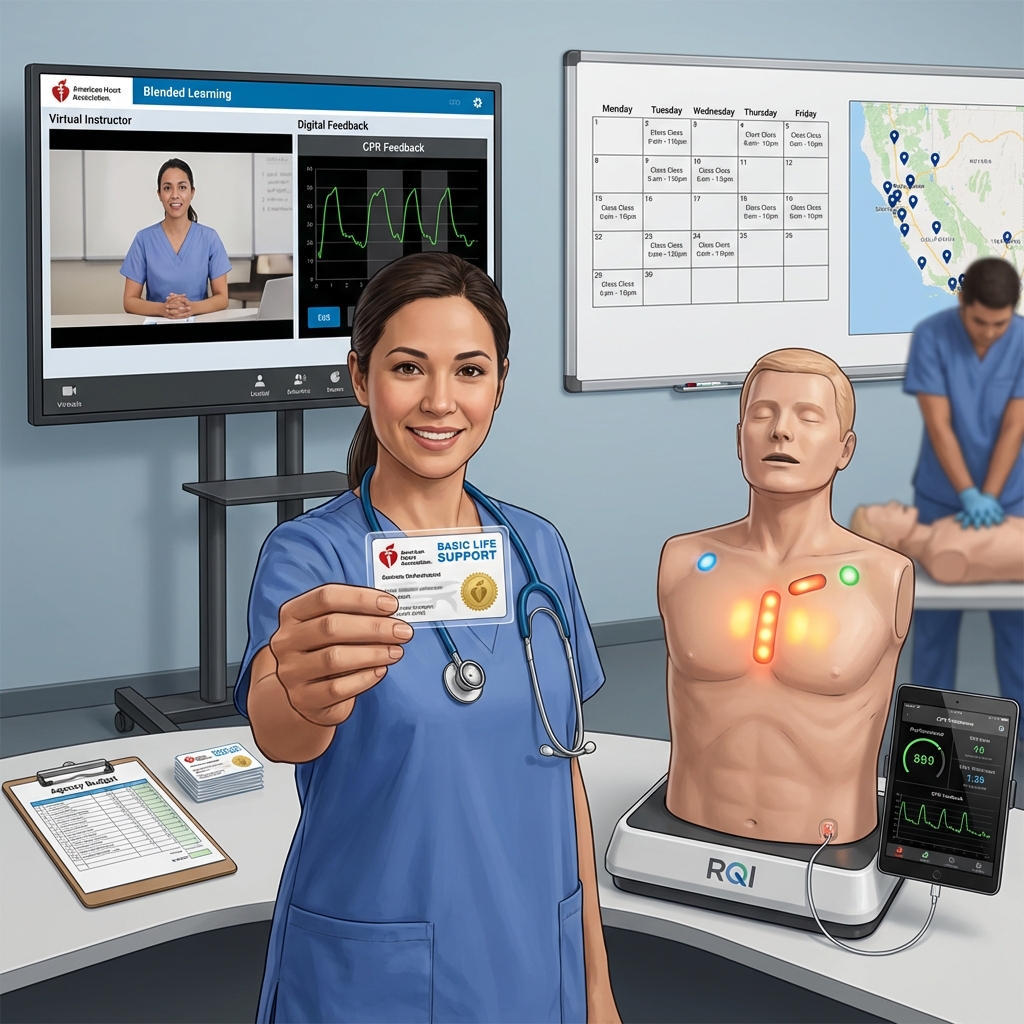
We designed our blended learning approach to solve exactly this problem. Our model combines flexible virtual instruction with real-world skills practice at our training centers, giving you the convenience of self-paced learning plus the confidence that comes from hands-on practice with experienced instructors. We’ve built this across over 100 California locations, and it’s working: healthcare professionals complete their certifications faster, retain critical skills better, and return to their roles without extended downtime.
Here’s what sets our blended training apart from standard AHA courses you’ll find elsewhere.
The traditional approach forces you to sit through an entire day of classroom instruction and skills stations in one block. If you’re an EMS supervisor managing shift rotations or a nurse juggling clinic hours, that’s disruptive.
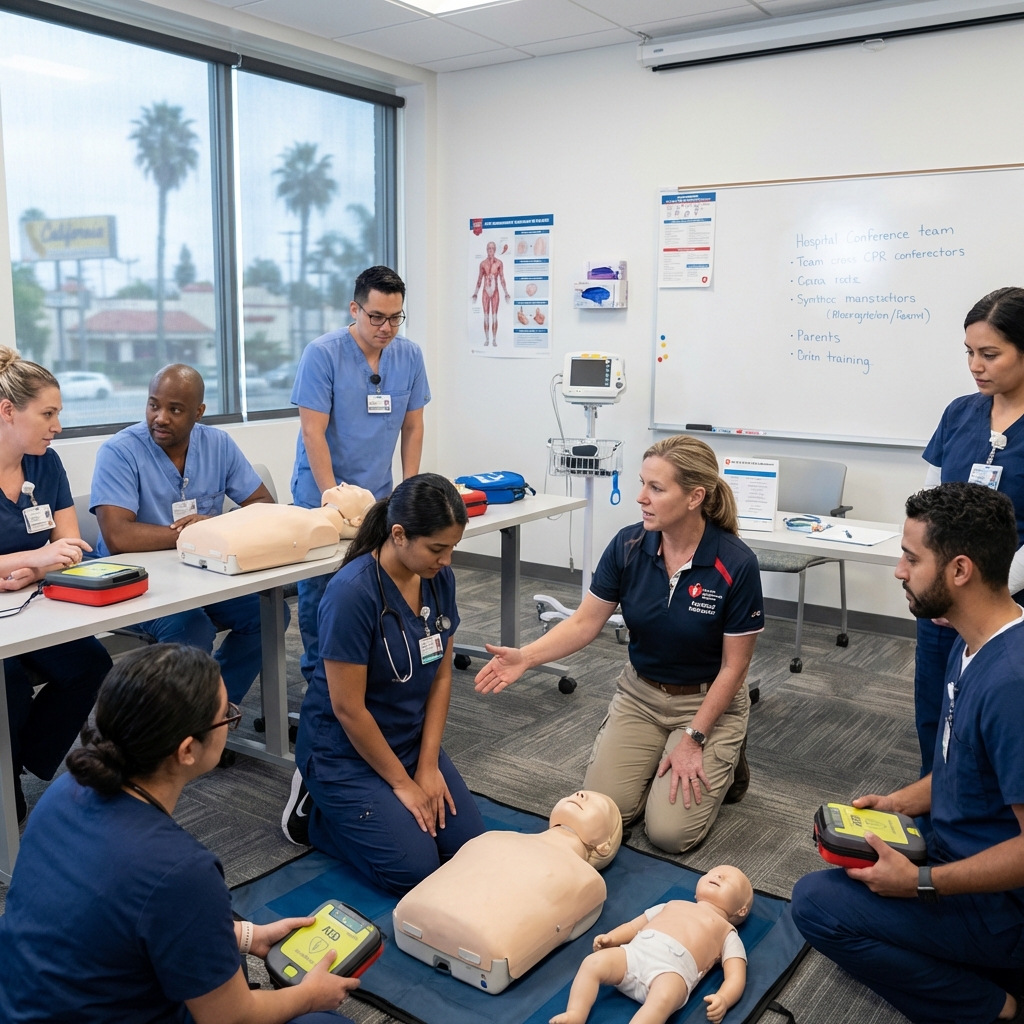
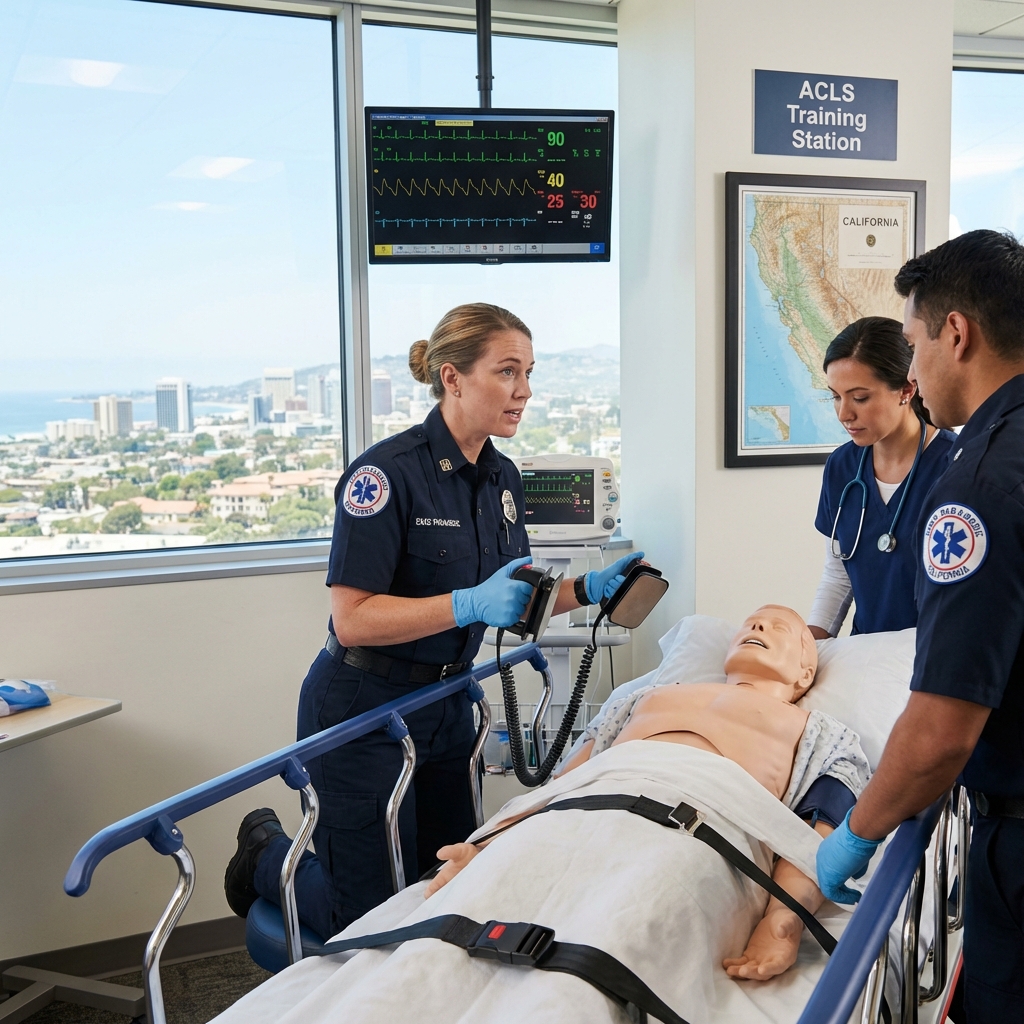
We flip this model. Our online component covers all the knowledge you need—American Heart Association (AHA) guidelines, algorithm review, medication protocols—at your own pace. You watch videos when your schedule allows, take knowledge checks when you’re ready, and complete the modules on your timeline. Then you come into one of our training centers for a focused, efficient skills session where our instructors run you through real-world scenarios and validate that you can perform CPR, use a defibrillator, and manage airways correctly.
This approach actually improves learning retention. Research in medical education shows that spacing out instruction and skills practice helps information stick better than cramming everything into one day. You absorb the concepts, have time to reflect on them, and then immediately apply them with hands-on guidance—exactly how muscle memory and clinical confidence develop.
What to do next: Check your current certification expiration date and identify which modules you could review on evenings or weekends before booking your in-person skills session.
RQI Simulation Stations With VAM Technology for Better Retention
Not all hands-on practice is equal. Generic manikin practice doesn’t tell you much about whether you’re performing compressions effectively or if you’re placing your hands in the right spot.
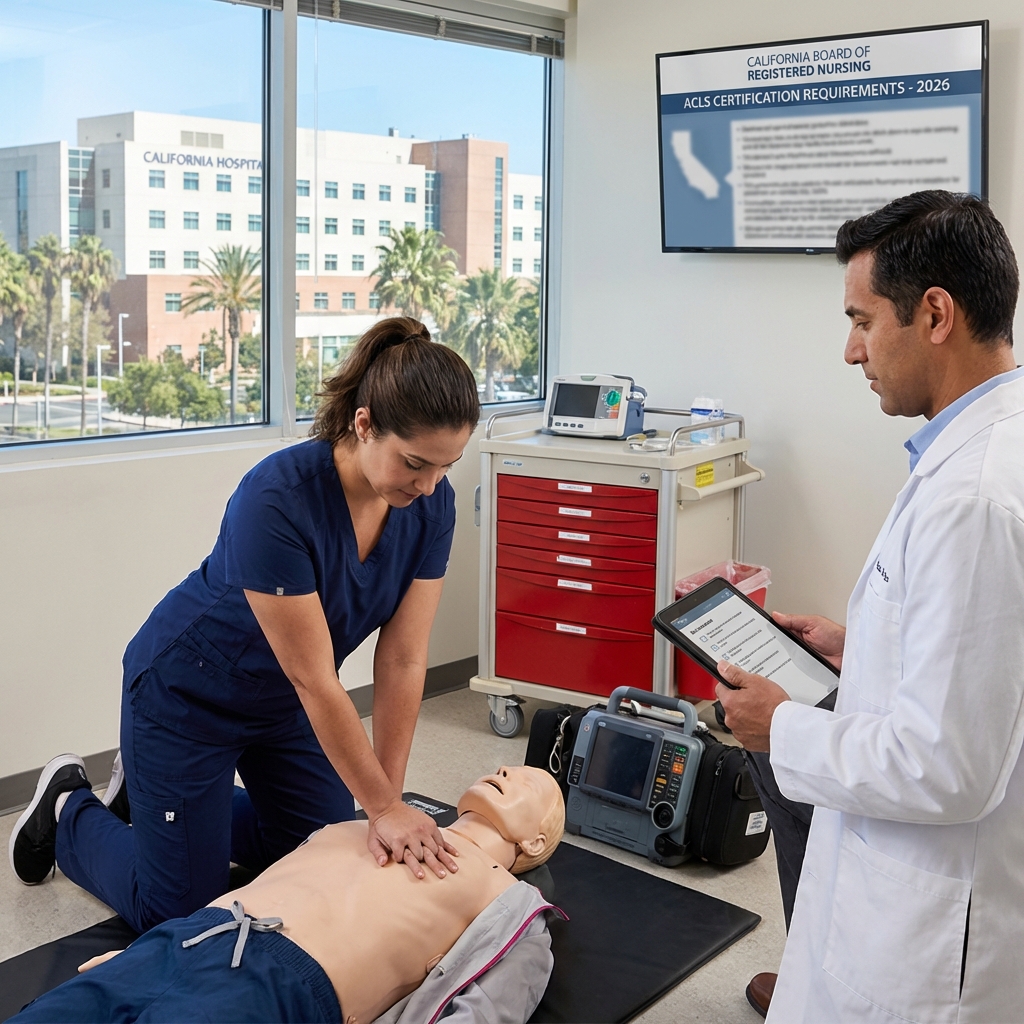
Our RQI (Resuscitation Quality Improvement) simulation stations use VAM (Voice Assisted Manikin) technology that gives you real-time feedback during compression practice. The manikin literally tells you when your hand placement is correct, when your compression depth is right, and when your rhythm matches the guidelines. This immediate corrective feedback during practice—not weeks later when you’re already on the job—makes a measurable difference in skill retention and performance.
You’re not just going through the motions. You’re getting coached in real time by technology that our instructors monitor and explain. If you’re coming in a bit shallow on compressions or your hand position drifts, you’ll hear it and correct it right there. When you leave our center, you leave with muscle memory that’s actually been validated and refined.
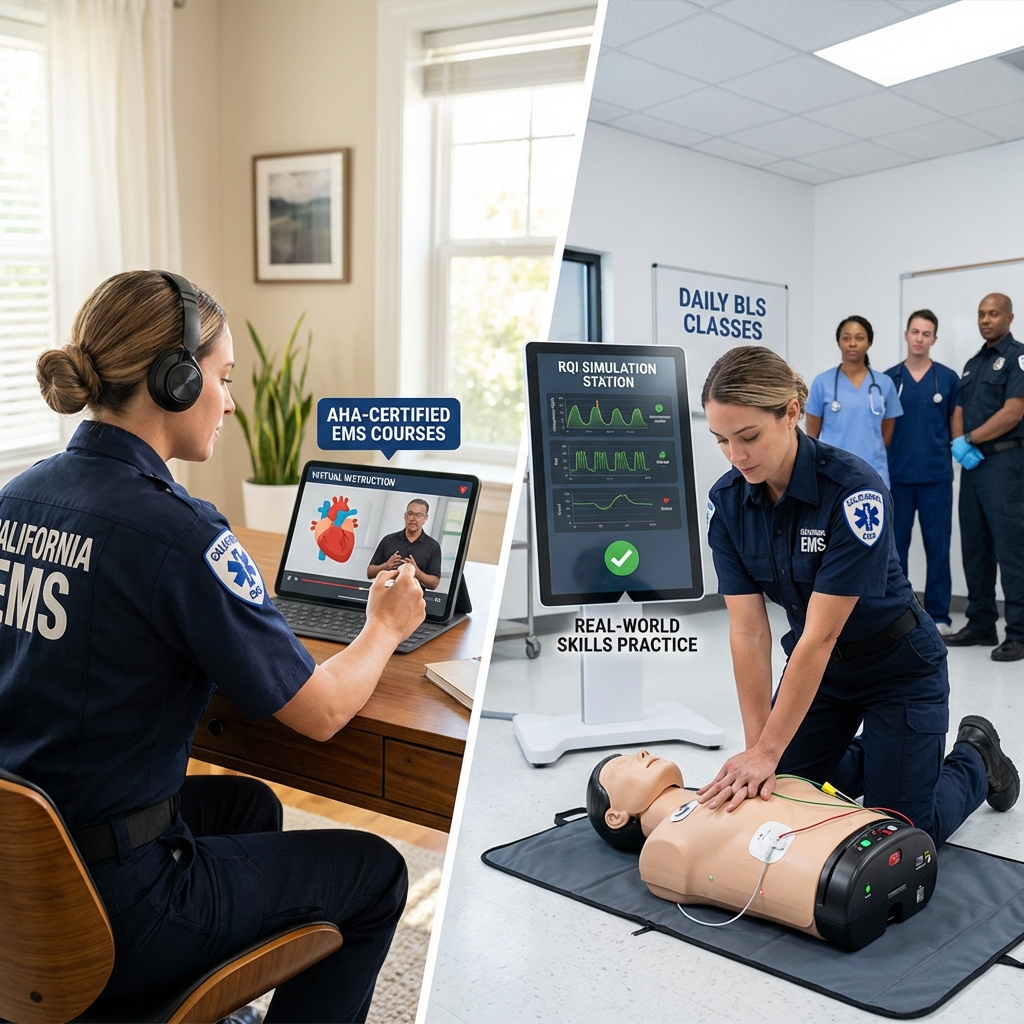
This is a game-changer for EMS personnel and nurses who need confidence that they can perform under stress. You’re practicing on equipment that mimics real feedback, so when you’re in an actual emergency, your body already knows the correct motion and pressure.
What to do next: Ask our instructors about the specific feedback you receive during your compression practice—it’ll reinforce what you’re doing right and give you a clear mental model to reference on the job.
Same-Day Certification Cards Available Immediately After Completion
One of the biggest friction points we hear from healthcare professionals is the wait. You finish a CPR or BLS course, pass your skills check, and then wait days or weeks for your official certification card to arrive by mail. Meanwhile, you can’t verify your certification status to your employer or licensing board.
We print and issue AHA-certified cards the same day you complete your course. Pass your knowledge test and skills assessment, and you walk out with your certification in hand. Your agency can verify your status immediately. Your licensing board has what it needs. You’re compliant right now, not in two weeks.
This matters more than it seems. If you’re a temporary staffing nurse picking up shifts at multiple facilities, or an EMS provider who needs to document current certification for your service, same-day cards eliminate uncertainty and administrative friction. You never wonder about your status. You never face a situation where you can work pending verification.
We also provide digital verification through the AHA registry, so your employer or licensing authority can confirm your certification status online if they prefer. You get flexibility—physical card in hand, plus digital proof available immediately.
What to do next: Confirm with your employer or licensing board whether they prefer physical cards or digital verification, so you know exactly what to bring to your certification.
Over 100 California Locations for Maximum Schedule Flexibility
Driving an hour to a training center twice a year adds up quickly when you’re managing a healthcare career. We’ve built our network across California specifically so that wherever you live or work, there’s a training center near you.
Whether you’re based in San Francisco, Sacramento, San Jose, Fresno, or smaller communities like Davis, Vacaville, or Visalia, you’ll find one of our California locations with regularly scheduled classes. We run courses in urban centers and regional hubs because we know healthcare professionals are distributed across the whole state, not just major metropolitan areas.
This isn’t just convenience—it’s practical economics. Shorter commutes mean less time away from work, less travel expense, and higher likelihood you’ll actually schedule and complete your renewal on time. We’ve seen professionals skip renewals or let certifications lapse because they had to drive three hours to the nearest training option. That doesn’t happen with our footprint.
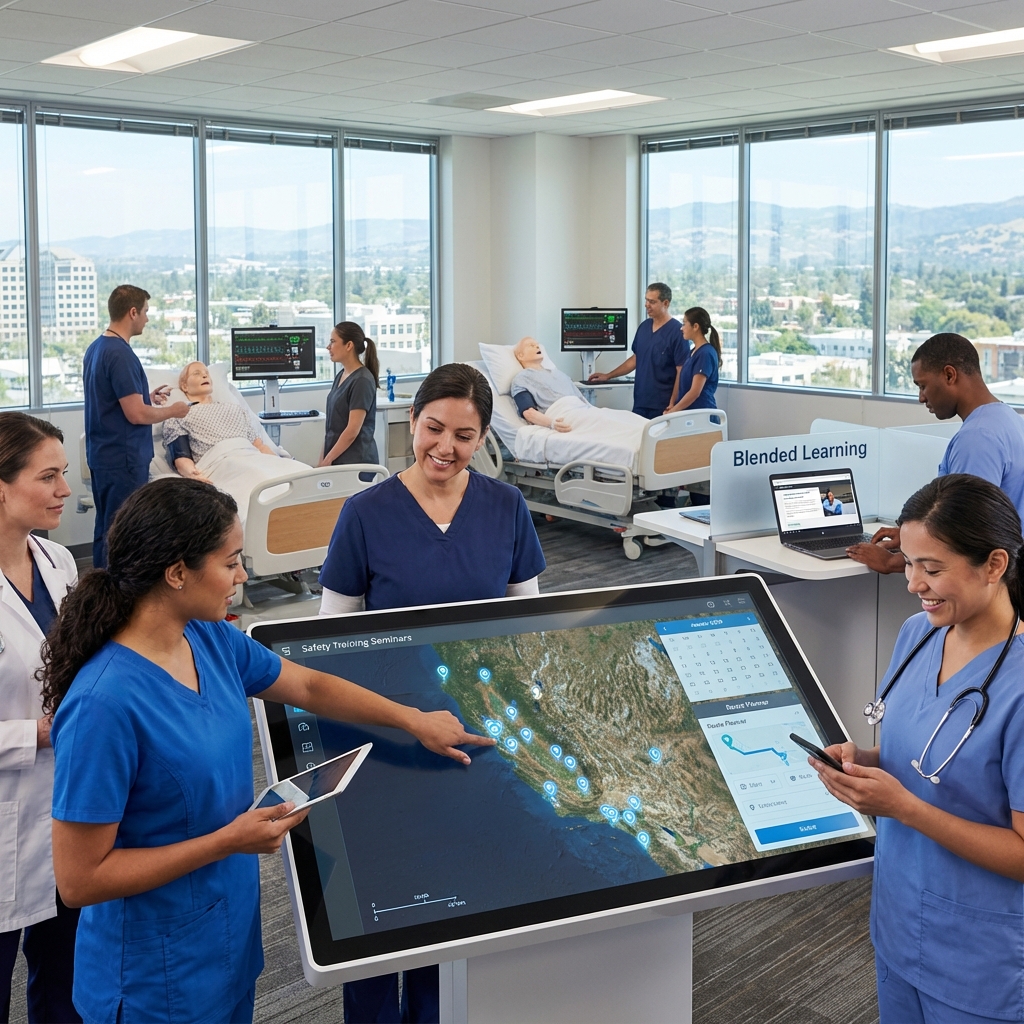
Regional centers also mean you can find cohort-based learning with professionals from your own community, which often leads to richer discussion about how protocols apply in your specific environment. A nurse in Oakland and a dentist in Palo Alto will have different certification needs, and our local instructors understand the regional context.
What to do next: Use our location finder to identify the training center closest to your work or home, then check available class dates for your next certification.
Daily BLS Classes That Fit Your Agency Shift Requirements
Healthcare agencies operate on shift schedules, not standard business hours. You might work nights, rotating days, or split schedules that make attending a class during typical business hours nearly impossible.
We run BLS certification courses daily across our network, including early morning, afternoon, and evening sessions. If you work night shift at a hospital in Sacramento or rotating EMS shifts in the East Bay, you’ll find a class time that doesn’t force you to take unpaid time off or arrange complicated coverage.
Many healthcare organizations also run group training programs, and we work with your agency to schedule cohort sessions at times that minimize disruption to operations. We can coordinate with your staffing manager to get a group of nurses, paramedics, or dentists through certification together, often during a less busy operational window.
This flexibility is something standard training centers struggle with because they operate on fixed schedules. We’ve built our model around the reality that you can’t all attend a 9am Monday class. You work nights, weekends, and unpredictable shifts. We meet you where you are.
What to do next: Contact our team with your shift pattern and preferred training window, and we’ll identify available classes or help coordinate group training for your agency.
Experienced Instructors Who Guide You Step-by-Step Through Scenarios
You’re not working with part-time trainers or instructors who read from a script. Our team includes nurses, paramedics, respiratory therapists, and other healthcare professionals who actually perform the skills they teach. They’ve run codes. They’ve used defibrillators in real emergencies. They understand the pressure you face.
During your skills session, our instructors don’t just check off a box. They walk you through realistic scenarios—a patient in cardiac arrest, an airway obstruction, a pediatric emergency. They ask you questions about your assessment, your next step, what you’re listening for. This Socratic approach builds clinical reasoning, not just muscle memory.
If you’re weak on something, they catch it and coach you through it until you’re confident. If you’re anxious about a specific skill—maybe you haven’t intubated in a while as a nurse, or you’re new to PALS protocols—our instructors notice and provide extra support in a way that builds confidence rather than increases stress.
We also recognize that healthcare professionals learn differently. The EMS supervisor with 15 years of experience needs different coaching than a new nurse practitioner. Our instructors adjust their teaching style to where you are, which is why students consistently tell us they felt prepared and supported.
What to do next: When you book your skills session, mention any specific skills you want extra focus on, and we’ll make sure your instructor is ready to support you there.
Low Price Guarantee Ensuring Your Agency Saves on Certifications
Certification costs add up. If you’re a healthcare organization managing CPR, BLS, ACLS, PALS, or Neonatal Resuscitation Program (NRP) renewals for dozens of staff members, budget for training can become substantial.
We guarantee the lowest pricing in California for AHA-certified courses. If you find a lower price elsewhere for the same certification, we’ll match it and give you an additional discount. This isn’t hidden pricing—our rates are transparent, and we stand behind them.
For agencies running group training programs, we offer corporate discount packages that reduce per-person costs significantly. We’ve worked with large hospital systems, EMS agencies, dental practices, and urgent care networks to structure pricing that makes sense for bulk certification needs. The more staff you bring through, the better the rate.
We also don’t create artificial pressure through fake scarcity or surprise fees. No hidden processing charges. No surprise exam fees. You know the cost upfront, and you know you’re getting the best rate available in the state.
This matters because you’re already managing tight budgets. Training should reduce your burden, not add financial stress on top of operational demands.
What to do next: Get a quote from us for your next group of certifications and compare it directly to any other training providers you’re considering. If you find a lower price, bring it to us and we’ll beat it.
—
Blended learning isn’t just a buzzword for us—it’s how we’ve solved the real problems that keep healthcare professionals from getting certified on time and staying current with their skills. You get flexible, self-paced instruction combined with hands-on validation from experienced instructors. You get same-day certification. You get locations convenient to wherever you work. And you get it at the best price in California.
Reserve your spot in our next class. Check available BLS, CPR, ACLS, or PALS courses in your area, and let’s get your team current and confident.