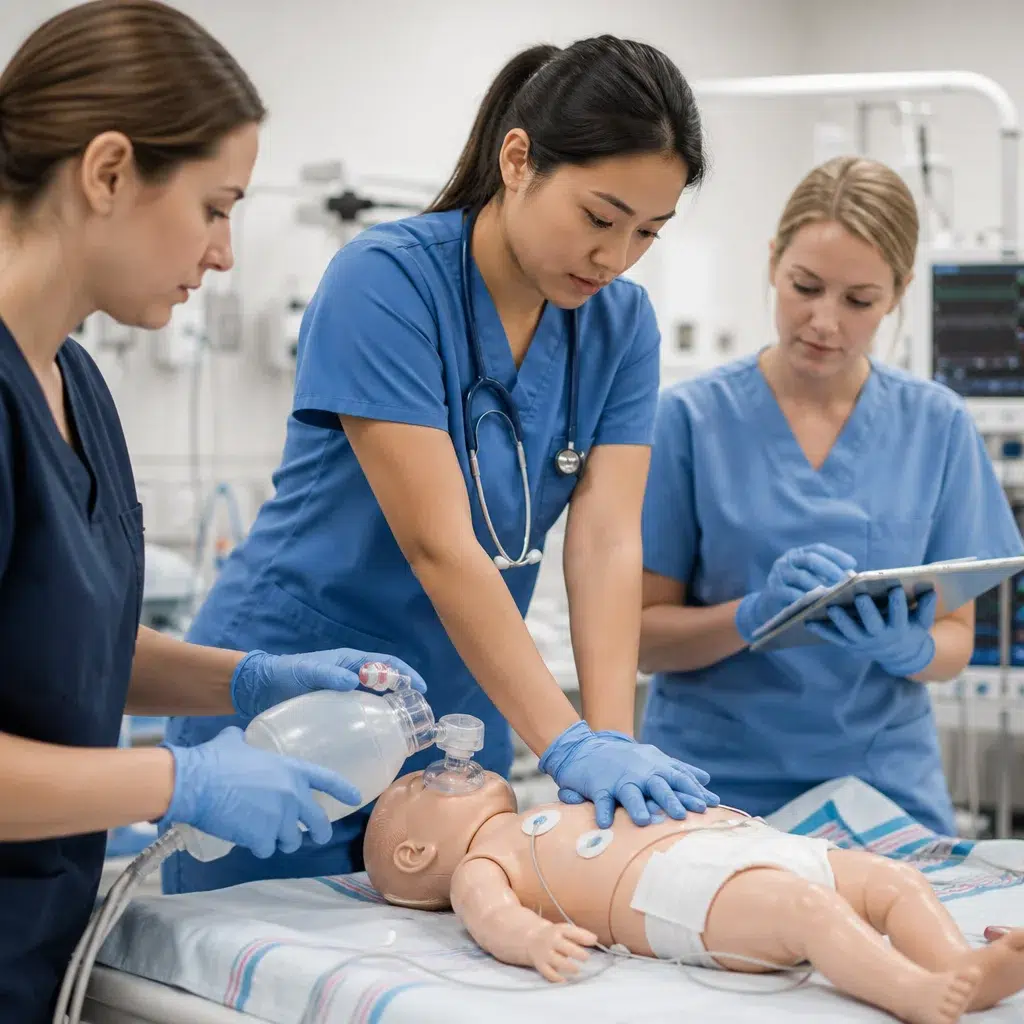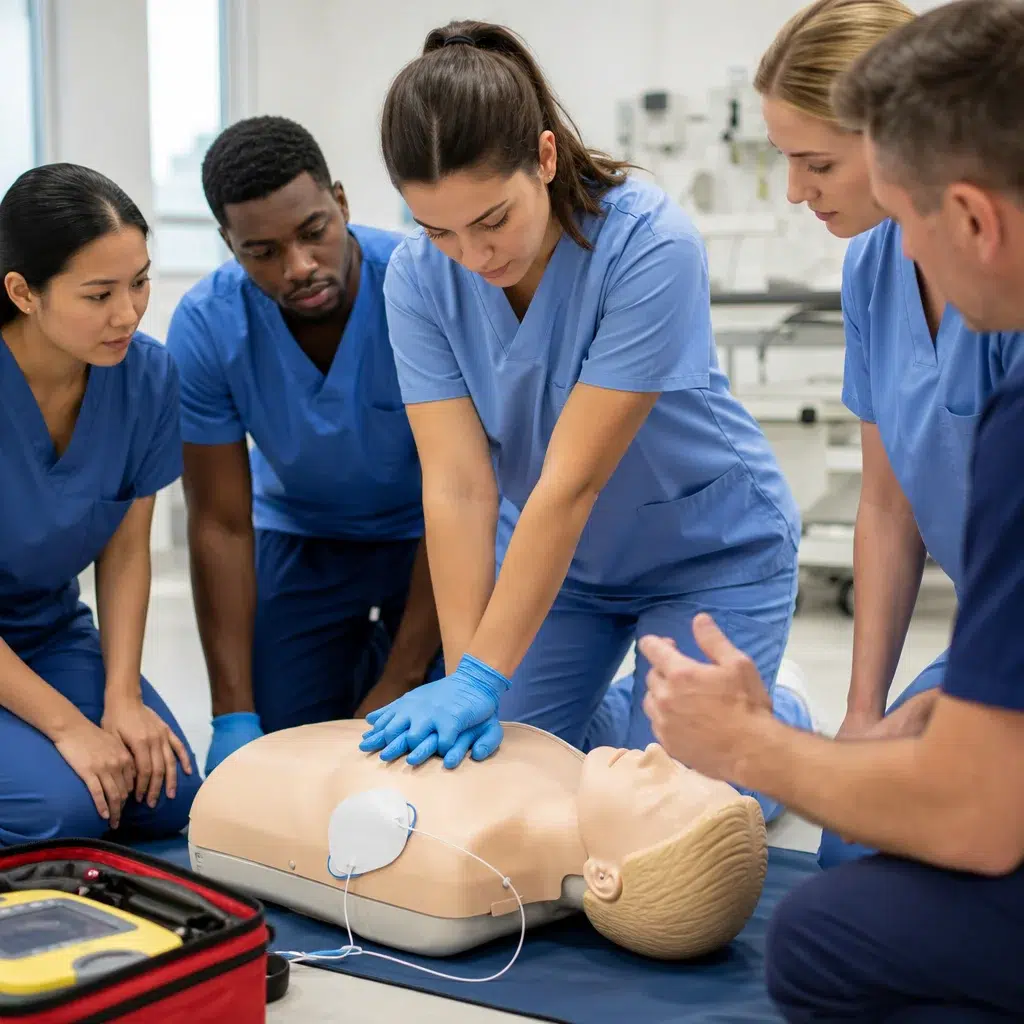
Introduction: Why Scheduling and Pricing Matter for Healthcare Professionals
For California hospital staff, timing and budgets are as critical as clinical skills when planning mandatory certifications. Tight staffing ratios, union rules on overtime, and hospital staff certification requirements mean classes must fit around 12-hour shifts, float assignments, and last-minute coverage changes. Choosing a provider that offers flexible California healthcare provider training can be the difference between staying compliant and scrambling before a deadline.
Scheduling is the first hurdle. CPR training scheduling California teams often juggle rotating nights, on-call weeks, and travel between campuses. Blended learning CPR courses—online coursework paired with a short, in-person skills check—minimize time away from patients while meeting American Heart Association (AHA) standards. Safety Training Seminars supports this model with statewide skills sessions at 100+ locations, including evening and weekend options that make planning across departments more predictable.
Pricing matters just as much. An ACLS certification cost comparison should factor in the base price, required AHA eBook or course key, renewal vs. initial certification, and whether a BLS add-on is needed for nurses. Look for transparent quotes, a low price guarantee, and options to bundle ACLS with BLS training for nurses to reduce total spend. For units upskilling together, corporate rates and Group CPR discounts help stretch departmental education budgets.
A practical approach is to prioritize providers that offer:
- Multiple skills session times and locations close to major hospitals
- Blended formats to cut classroom hours without sacrificing quality
- Clear, itemized pricing with renewal pathways and bundle options
- Corporate scheduling support for cohorts and shift-based teams
Consider a telemetry nurse in San Jose who needs ACLS and BLS before a schedule change. With Safety Training Seminars, they can complete ACLS online modules after a night shift, book a 60–90 minute skills session at a nearby site, and add a same-day BLS renewal—keeping costs low and time off the floor minimal. For education leads, coordinating a monthly cohort ensures continuous coverage while keeping certification spending predictable.
Understanding California Hospital Staff Certification Requirements
In California, hospital staff certification requirements are set by employers and credentialing departments, but most align with American Heart Association (AHA) standards and Joint Commission readiness. Nearly all bedside roles require current BLS for Healthcare Providers, while ACLS is common for ED, ICU, step-down/telemetry, anesthesia, and code team members. Pediatric units and emergency departments typically require PALS, and L&D/NICU teams often add NRP. AHA eCards are widely accepted statewide and generally renew every two years without a grace period from most hospitals.
Typical role-to-certificate pairings include:
- Telemetry/step-down RN: BLS + ACLS
- ICU/ED RN, hospitalist, respiratory therapist, paramedic: BLS + ACLS (+ PALS for mixed adult/peds environments)
- Pediatric ED/PICU RN or physician: BLS + PALS
- L&D/NICU RN and neonatal providers: BLS + NRP
- Dentists and oral surgeons using sedation: BLS; many maintain ACLS or PALS per permit and patient population
Plan ahead for precourse requirements and skills verifications. ACLS and PALS usually require a precourse self-assessment and rhythm/pharmacology review, and many facilities require BLS to be current before taking advanced courses. For CPR training scheduling California hospital teams plan around 12-hour shifts, float assignments, and credentialing deadlines—blended learning CPR courses (AHA HeartCode eLearning plus in-person skills) can reduce time off the unit to a short skills check. Safety Training Seminars offers Flexible online learning and same-day skills appointments across 100+ California locations, helping you avoid lapses.
When doing an ACLS certification cost comparison, factor the online module, skills session, eCard, parking, and potential paid time off. BLS training for nurses is often reimbursed by employers; group enrollments can further reduce per-learner costs. Safety Training Seminars provides California healthcare provider training with AHA-authorized BLS, ACLS, PALS, and NRP, same-day eCards, corporate group scheduling, and a low price guarantee—useful if your unit is recertifying on a deadline. Keep copies of eCards and course summaries for HR and privileging files to streamline renewals.
Comparing Training Delivery Methods: Virtual vs In-Person vs Blended Learning
Choosing between virtual, in-person, and blended formats comes down to compliance, time, and staffing realities. When evaluating CPR training scheduling California hospital teams must balance shift coverage, renewal deadlines, and audit readiness. Most hospital staff certification requirements specify American Heart Association (AHA) credentials and a documented hands-on skills check for BLS, ACLS, and PALS.
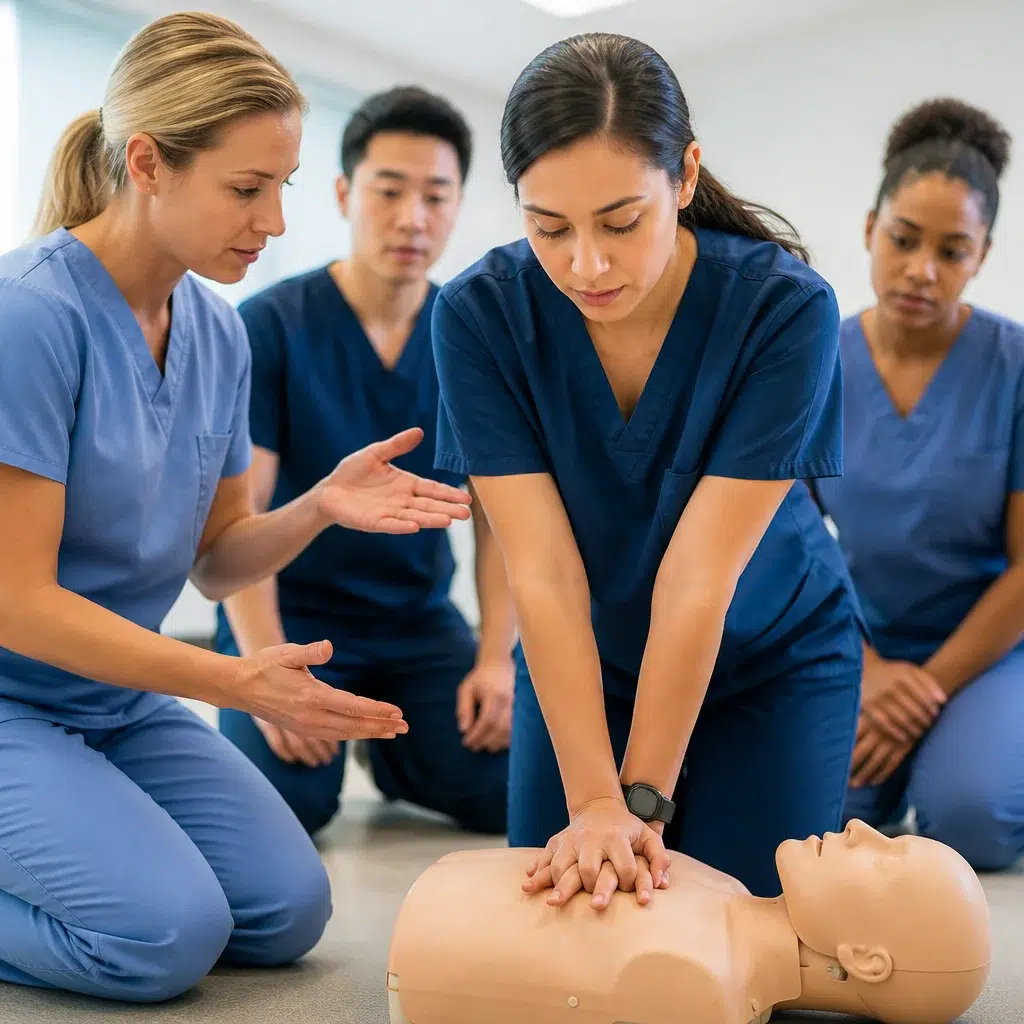
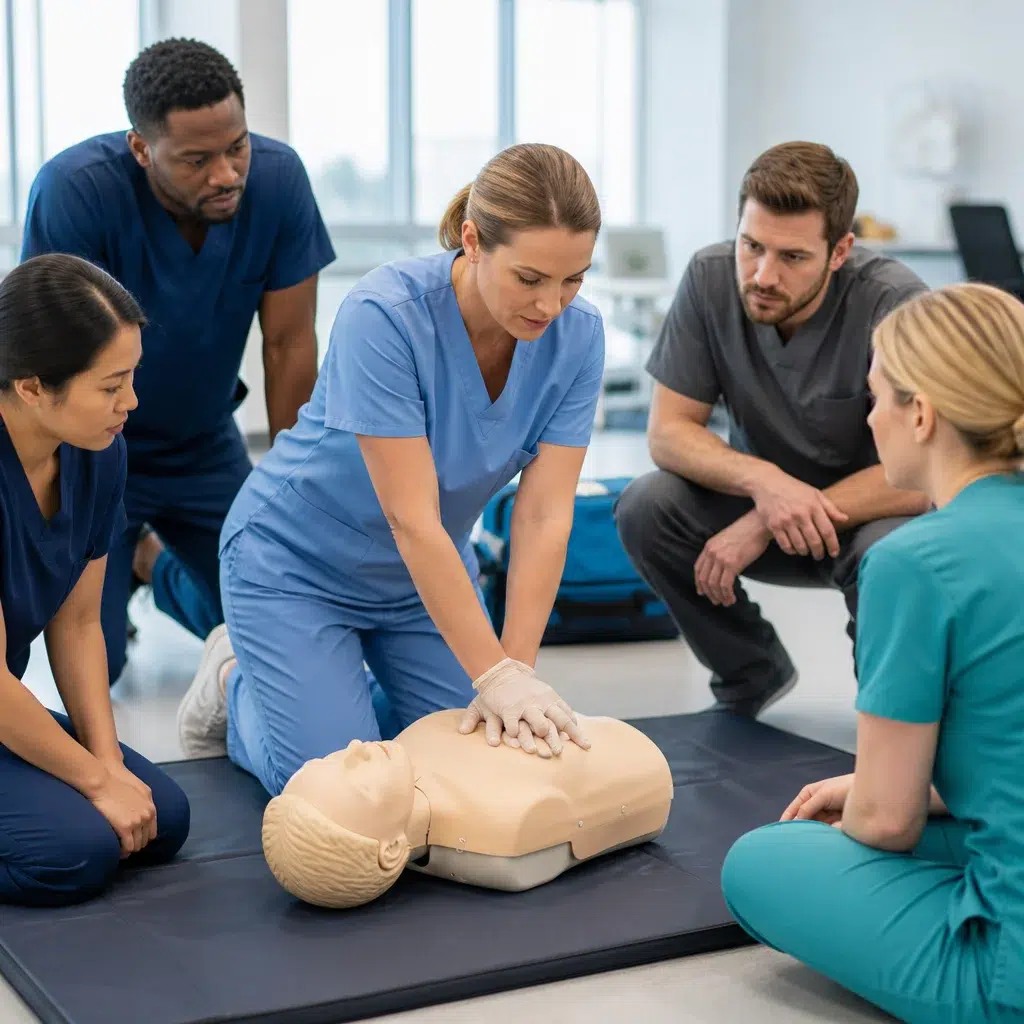
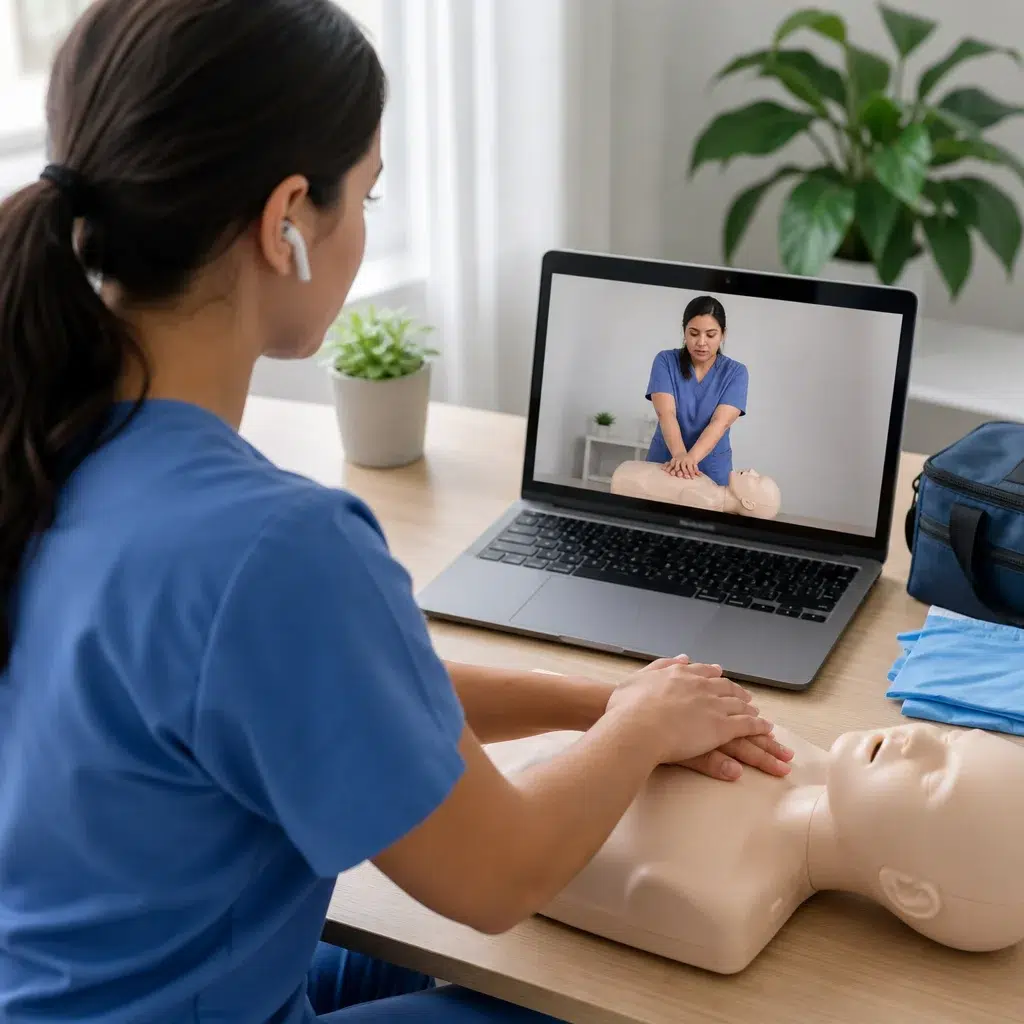
Fully virtual options cover cognitive content but still require an in-person skills evaluation to meet AHA standards, so “online only” is rarely accepted by hospitals. Traditional in-person classes deliver all content and skills in one session, useful for new providers who benefit from live coaching but harder to schedule for large teams. Blended learning CPR courses split the work: complete AHA eLearning at your pace, then book a short, in-person skills session. For example, a night-shift nurse can finish modules midweek and complete a 30–60 minute skills check on a day off.
Key differences to consider:
- Scheduling flexibility: Blended lets staff complete eLearning anytime and attend a brief skills appointment, minimizing backfill needs; in-person requires full blocks of time.
- Speed to card: Blended often yields the fastest AHA eCard after a short skills check; in-person depends on class length and availability.
- ACLS certification cost comparison: Weigh tuition, required eLearning codes, textbook fees, and whether renewal vs initial impacts time off the floor.
- Skill confidence: In-person offers more live practice reps; blended still provides targeted hands-on evaluation to hospital standards.
- Role fit: BLS training for nurses is efficient in blended or in-person formats; ACLS/PALS are often best in blended for experienced providers who need focused megacode practice.
Safety Training Seminars supports California healthcare provider training statewide with 100+ skills locations, AHA-approved eLearning pathways, and a low price guarantee. Their blended model helps departments standardize compliance while easing scheduling pressure, and corporate group options simplify rosters and discount pricing. Whether onboarding a new cohort or coordinating renewals, their team can align class delivery to your unit’s cadence and policy requirements.

Pricing Structures: What California Healthcare Providers Should Expect
Hospital staff in California typically budget for AHA-required renewals every two years: BLS for most nurses, with ACLS for ICU/ED/telemetry and PALS for pediatrics. Pricing varies by format, schedule, and whether you’re new or renewing, but most providers follow similar structures across CPR training scheduling California. Expect blended learning options to trim classroom time and reduce coverage needs on the unit, while fully in-person formats may cost more time but keep everything in one session.
A common structure for ACLS or BLS is blended: complete the AHA HeartCode module online, then attend a short, in-person skills check. In contrast, traditional classroom courses bundle lecture, practice, and testing into a single longer session. For hospital teams, blended learning CPR courses can simplify back-to-back shifts by letting staff finish the online portion during lighter blocks and book a quick skills appointment nearby.
When comparing quotes, make an ACLS certification cost comparison that’s truly apples-to-apples by confirming what’s included:
- AHA eLearning key (HeartCode ACLS/BLS/PALS) or classroom tuition
- Skills session fee and length (plus any rush or after-hours premium)
- AHA eCard issuance and timeline
- Required provider manual or digital text access
- Remediation/retake policy and no-show/reschedule rules
- Parking/venue fees (common in urban centers)
- Bundle pricing for BLS training for nurses added to ACLS on the same day
Many California hospital staff certification requirements allow renewals via blended formats, which can reduce overtime and backfill costs. Weeknight or weekend skills sessions may carry a small premium at some sites, while larger groups often unlock discounted corporate rates and on-site options. If your facility reimburses only AHA-branded cards, verify that the training center is an authorized AHA provider before booking.
Safety Training Seminars offers California healthcare provider training at over 100 locations with AHA-authorized blended and classroom pathways. The company’s low price guarantee and corporate group discounts help standardize costs across departments, and frequent skills sessions make scheduling easier for units with rotating shifts. Example: complete HeartCode ACLS online, then reserve a 60–90 minute skills check the same week near your hospital to minimize time off the floor.
Scheduling Flexibility and Convenience for Working Professionals
Hospital schedules rarely align with training calendars, especially with rotating 12-hour shifts, nights, and last-minute staffing changes. For CPR training scheduling California clinicians can count on, Safety Training Seminars offers options built around real-world workloads across 100+ locations statewide. You can register anytime online and choose the site and time that fit your next stretch of off-days, eliminating long waits or cross-town commutes.
Blended learning CPR courses let you complete the AHA’s online cognitive portion at your own pace, then finish with a short, in-person skills check. For example, an ICU nurse needing BLS training for nurses can complete eLearning after a shift and book a 30–60 minute skills session the next morning at a nearby site. The same approach streamlines ACLS and PALS renewals, so you spend less time away from patients.
To make planning simple, Safety Training Seminars provides practical scheduling choices designed for busy teams:
- Early-morning, evening, and weekend skills sessions across major California metros and suburbs
- Frequent start times, with same-week and often short-notice seats available
- Easy online rescheduling when census spikes or on-call duties change
- Multiple site options near hospitals and transit to minimize travel time
Hospitals can also coordinate onsite or closed-group sessions to meet hospital staff certification requirements without disrupting coverage. Centralizing California healthcare provider training across departments helps standardize renewal cycles and reduce overtime, while group pricing can lower overall spend. Teams can align ACLS, BLS, and PALS on adjacent dates to cut repeat trips.
Transparent pricing supports smart ACLS certification cost comparison. With Safety Training Seminars’ low price guarantee, you can select the most convenient time and location without second-guessing the budget. Combined with statewide coverage and flexible formats, that makes staying compliant far less stressful for nurses, dentists, EMS personnel, and other licensed professionals who need reliable, on-time renewals.
Group Training and Corporate Discount Options for Healthcare Facilities
Coordinating CPR training scheduling California across multiple units and shift patterns can be challenging for hospitals. Group options streamline compliance with hospital staff certification requirements while reducing disruptions to patient care. Safety Training Seminars supports facility-wide rollouts for AHA BLS, ACLS, PALS, and NRP so teams renew on time and managers can plan coverage with confidence.
Facilities can choose private on-site skills days or reserve seats across more than 100 locations statewide. Blended learning CPR courses pair an AHA online module with a brief in-person skills check, minimizing time away from the unit. This format works well for night-shift and per-diem staff who need flexible windows to complete California healthcare provider training.
Corporate discount pricing is available for contracted groups, and the company’s low price guarantee helps with ACLS certification cost comparison and budgeting. Consolidating BLS and ACLS renewals into coordinated cohorts can lower per-learner costs and simplify staffing. Transparent quotes reflect class type, headcount, and location, so administrators can forecast expenses across quarters.
Common hospital configurations include:
- BLS training for nurses during onboarding and annual renewal cycles
- ACLS renewals for ICU/ED/telemetry teams, with optional PALS for mixed pediatric coverage
- NRP sessions for labor and delivery units scheduled alongside skills fairs
- Multi-site systems reserving blocks at local training centers to reduce travel time

Safety Training Seminars can align course calendars with hiring waves, residency starts, or Magnet and Joint Commission timelines. For example, a facility might schedule quarterly ACLS and PALS skills days on campus, while issuing vouchers for BLS renewals at nearby centers for float pool staff. This blended approach maintains compliance and keeps staffing plans intact without overloading any single department.
Certification Timeline and Same-Day Card Benefits
California hospital staff typically need active AHA cards for BLS, and many roles in critical care, ED, cath lab, and telemetry require ACLS; pediatric units often require PALS. AHA BLS, ACLS, and PALS cards are valid for two years, but individual hospital staff certification requirements may set earlier internal deadlines. To avoid a lapse, plan renewal before your unit’s scheduling freeze periods or annual skills fairs.
Blended learning CPR courses streamline the timeline. With Safety Training Seminars, you complete the official AHA online module on your own time, then attend a brief in-person skills session (often 60–120 minutes, course dependent). Upon successful completion, an AHA eCard is issued the same day, so you can immediately update your employee file and the AHA’s eCard verification system.
Example: An ICU nurse whose ACLS expires in 45 days can finish the online coursework after a shift, book a Saturday skills check at a nearby location, and receive the ACLS eCard that afternoon. A new grad nurse needing BLS training for nurses can complete the eLearning midweek and squeeze in a short skills session before their first hospital orientation. This flexibility reduces PTO requests and last-minute schedule changes.
Practical scheduling milestones:
- 60–90 days out: Confirm which cards your unit requires (BLS/ACLS/PALS/NRP) and note expiration dates.
- 30 days out: Finish the online portion; lock in a skills session that won’t conflict with call shifts.
- 7 days out: Verify prerequisites (photo ID, completion certificate) and hospital upload instructions.
- Day of: Bring your eLearning completion proof; expect a same-day eCard after passing the skills test.
When doing an ACLS certification cost comparison, factor in time-to-card and potential rush fees. Safety Training Seminars offers CPR training scheduling California clinicians can rely on, with over 100 convenient locations, evening/weekend options, same-day AHA eCards, and a low price guarantee. For departments, corporate group scheduling and discounts make California healthcare provider training predictable and budget-friendly.
Evaluating Training Quality and Curriculum Standards
Start by confirming the course follows current AHA Guidelines and issues AHA eCards accepted by California hospitals and boards. Ask for written confirmation that the provider satisfies hospital staff certification requirements and will deliver your eCard the same day or within 24 hours. Also confirm the course length and skills testing match AHA standards, not abbreviated awareness trainings.
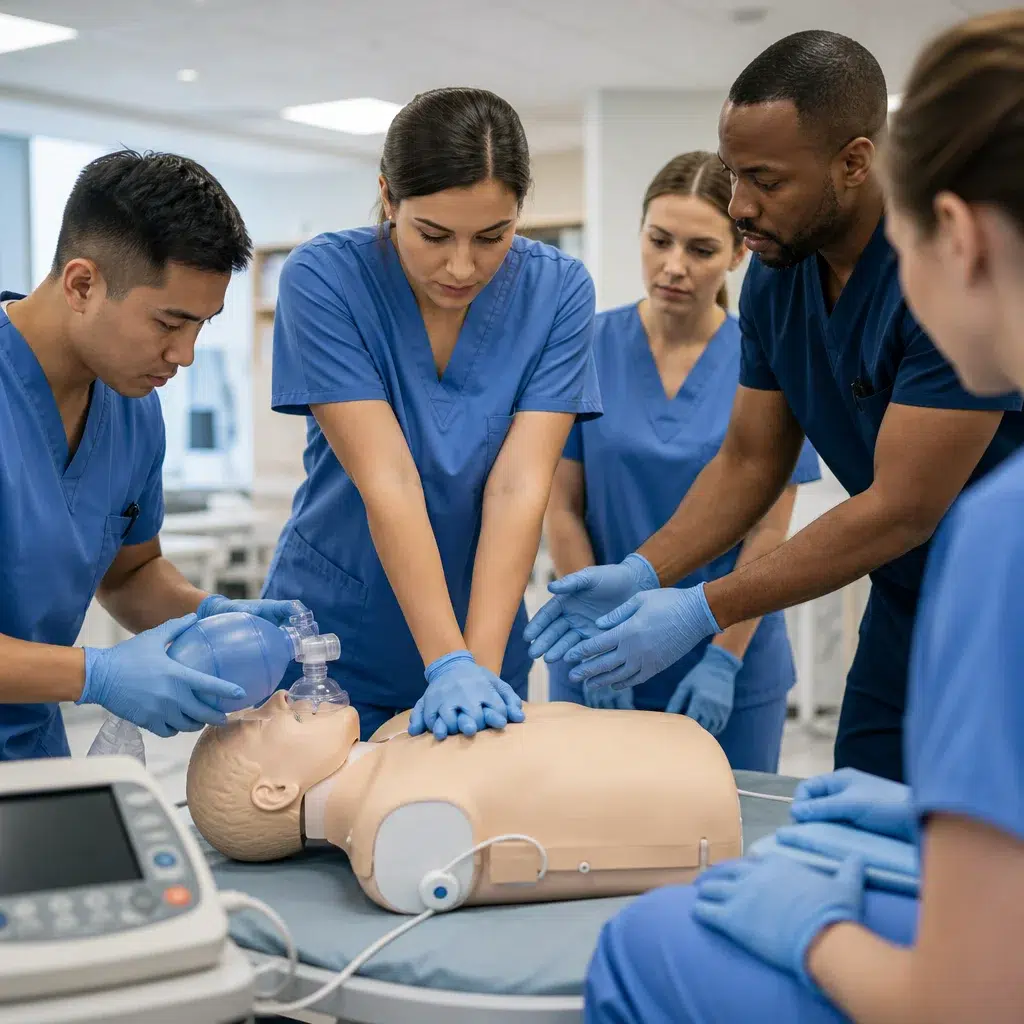
High-quality curricula prioritize hands-on practice and measurable performance. In ACLS and BLS, that means verified compression rate/depth, minimal pauses, correct ventilation timing, team communication, and realistic megacode scenarios for rhythm recognition and pharmacology.
Look for:
- AHA-aligned lesson plans and required precourse work
- Feedback manikins displaying rate, depth, recoil, ventilation
- Low student-to-manikin ratios (≈2:1) and timed stations
- Instructors with current AHA status and recent clinical practice
For busy units, blended learning CPR courses let staff complete the AHA online module (HeartCode) at their pace, then book a short, in-person skills check. When comparing CPR training scheduling California options, evaluate frequency of skills sessions, weekend/after-hours availability, and proximity to your facility. Safety Training Seminars offers statewide HeartCode skills sessions across 100+ California locations, making it easier to align training with shift rotations and low-census windows.
An ACLS certification cost comparison should include every line item: online key (if blended), skills session fee, textbook or eBook, practice tests, parking, rescheduling, and replacement eCards. Be cautious of unusually low tuition that excludes the official AHA module or adds same-day card and retest fees. Safety Training Seminars posts transparent pricing, offers a low price guarantee, and provides corporate discounts for hospitals consolidating training across departments.
Role alignment matters. BLS training for nurses is typically required for all inpatient roles, while ACLS is standard for ED, ICU, telemetry, and procedural areas, and PALS/NRP for pediatrics and L&D. For California healthcare provider training at scale, Safety Training Seminars can map courses to unit-specific matrices, send renewal reminders, and deliver completion reports to simplify audits.
Nationwide Training Locations and Multi-Office Accessibility
In large hospital systems with multiple campuses and satellite clinics, administrators need a simple way to coordinate CPR, BLS, ACLS, and PALS renewals for dispersed teams. While rosters shift and clinicians float between units or cities, the training must still meet hospital staff certification requirements and produce credentials recognized nationwide. For CPR training scheduling California hospital systems need flexible options that scale across campuses, without disrupting patient care.

Safety Training Seminars streamlines CPR training scheduling California through blended learning CPR courses and more than 100 skills locations across the state. Clinicians complete the AHA online modules on their own time, then book the in-person skills session at the nearest site—whether they’re working in San Diego this week or covering shifts in Sacramento next month. For BLS training for nurses, that flexibility reduces time away from the floor while keeping renewals on schedule.
For multi-office accessibility, education teams can coordinate ACLS/PALS windows across regions and still maintain a uniform AHA curriculum. Centralized planning becomes easier when every location follows the same standards and issues cards accepted by California healthcare provider training programs and employers nationwide. A traveling respiratory therapist, for example, can finish ACLS skills in Los Angeles after completing the eLearning in the Bay Area without restarting the process.
Budget predictability matters across departments, especially during ACLS certification cost comparison and annual budgeting. Safety Training Seminars’ low price guarantee keeps pricing consistent across California locations, simplifying approvals for managers who oversee multiple cost centers. Combined with corporate group training and discount pricing, hospitals can standardize costs and timelines across campuses without sacrificing instructor quality.
- Blended learning reduces scheduling bottlenecks for large rosters
- 100+ California skills sites support multi-office and rotating staff
- AHA-aligned credentials are accepted nationwide, aiding mobile teams
- Low price guarantee and group options support multi-site budgeting
Making Your Decision: Key Factors for Hospital Staff Selection
Start with compliance. Confirm the provider issues current American Heart Association eCards and aligns with your hospital staff certification requirements. Most California facilities require BLS training for nurses and ACLS for critical-care, telemetry, and ED roles, with renewals typically every two years. If you work with pediatric populations, PALS (and sometimes NRP) may be required, so verify course availability and prerequisites.
Scheduling can make or break your plan. For CPR training scheduling California teams should look for programs that offer blended learning CPR courses, where you complete the online module on your time and book a short, in-person skills check nearby. Frequent skills sessions on evenings and weekends help staff on 12-hour shifts. Example: a San Diego night-shift nurse can finish HeartCode ACLS online and schedule a Saturday morning skills session at a location close to home.
Price transparency matters as much as the sticker number. When doing an ACLS certification cost comparison, check what’s actually included and which extras may appear at checkout or on training day:
- AHA eCard issuance fee
- Online module access (included vs. separate purchase)
- Skills session fee and length
- Required textbook or digital reference
- Parking or facility charges
- No‑show, rescheduling, or late-cancellation fees
- Renewal vs. initial pricing, and group discounts
Access and scale help busy hospitals. Over 100 sites statewide means shorter commutes and faster rescheduling if a shift changes, which is crucial for California healthcare provider training. For units onboarding multiple hires, ask about onsite corporate sessions, consolidated invoicing, and roster tracking to reduce manager workload. Example: a med-surg unit can schedule a single weekday ACLS renewal block for ten nurses before a protocol rollout.
Safety Training Seminars checks these boxes with AHA-aligned BLS, ACLS, PALS, and NRP, statewide blended options, corporate group training, and a low price guarantee. Compare schedules and inclusions across nearby locations, confirm your hospital’s required course types, and choose the option that fits your shift pattern, budget, and renewal timeline.
Conclusion: Finding the Right Training Solution for Your Facility
For CPR training scheduling California facilities can optimize outcomes by anchoring calendars to renewal windows, unit staffing patterns, and peak census periods. Stagger cohorts by shift and location to prevent overtime and backfill costs, and batch expiring staff so completions are easy to audit. For example, rotate ICU days, nights, and per-diems through two weeks of skills sessions while keeping core coverage intact.
Budget planning should include an ACLS certification cost comparison across vendors—individual retail rates versus negotiated group pricing, blended versus traditional delivery, and any card, exam, or rescheduling fees. When a 60‑nurse telemetry unit renews ACLS and BLS together under a corporate agreement, you can consolidate rosters, reduce duplicate skills labs, and limit nonproductive time. Multi-year pricing with a low price guarantee also stabilizes spend across fiscal cycles.
Blended learning CPR courses minimize disruption by moving didactics online and limiting onsite time to focused skills checks. For BLS training for nurses, schedule 30–60 minute skills verifications at shift change or on weekends to preserve staffing, and use nearby sites so travel time is negligible. Large systems can cross-assign learners to the closest sessions to equalize seat availability across campuses.
Use this short checklist to confirm fit with hospital staff certification requirements and streamline California healthcare provider training:
- AHA-aligned courses covering BLS, ACLS, PALS, and NRP for role-specific compliance
- Statewide access to skills sessions near all facilities and common commuter corridors
- Centralized rosters, completion reports, and renewal reminders for audits
- Flexible rescheduling and ample seat inventory for last-minute needs
- Transparent group discounts and written price guarantees
Safety Training Seminars aligns well with these needs, offering blended learning with virtual coursework plus in-person skills sessions at over 100 training locations throughout California. Their catalog includes ACLS, BLS, PALS, and NRP for healthcare providers, along with corporate group training and discount pricing supported by a low price guarantee. For most hospitals, partnering with a single provider like Safety Training Seminars simplifies scheduling, controls costs, and keeps teams compliant year-round.
Register for a class today.