Introduction: The Challenge of EMS Training Scheduling
EMS crews don’t live on a 9–5 clock. Rotating 24/48s, late call-offs, and surge events make it hard to block a full day for advanced cardiac life support training without straining coverage or burning PTO. Tight compliance windows add pressure, especially when recert dates land in the middle of a busy deployment cycle. That’s where thoughtful ACLS blended learning scheduling becomes essential—not just convenient.
Traditional classroom models often collide with the realities of field operations. A medic finishing a 48-hour rotation can’t reliably attend an 8-hour class the next morning, and supervisors juggle backfills to keep units in service. Rural crews face longer drives to training centers; urban crews see shifts extended by interfacility transports and hospital delays. EMS leaders need EMS crew certification options that flex with call volume, mutual aid, and mandatory overtime.
Blended education changes the equation. With emergency medical services online courses covering cognitive content, providers can complete modules during station downtime or on days off, then book a short, hands-on skills session to validate competencies. In an ACLS blended format California agencies can adopt statewide, crews minimize time off the rig while meeting current AHA standards for ACLS. The result: EMS certification flexible hours without compromising clinical rigor.
Safety Training Seminars aligns training with field realities:
- Blended learning that pairs virtual coursework with focused in-person skills checks.
- Over 100 locations across California to reduce travel time from your station or post.
- Frequent skills session options on weekdays and weekends to fit unpredictable rosters.
- Corporate group scheduling, including on-site skills sessions and discount pricing.
- Specialized pathways for healthcare providers (ACLS, PALS, NRP) under a low price guarantee.
If your units stage in the Central Valley or commute into the capital, you can streamline recert with local ACLS certification in Sacramento. By integrating blended coursework with accessible skills appointments, EMS leaders can maintain readiness, protect staffing, and stay compliant—without letting schedules dictate care.
Why ACLS Certification Matters for EMS Personnel
For EMS crews, advanced cardiac life support training is more than a checkbox—it’s the framework that turns chaotic cardiac calls into repeatable, high-quality care. ACLS equips field providers to move from first rhythm check to definitive intervention with speed and consistency, improving outcomes in VF/pulseless VT, symptomatic bradycardia, and unstable tachyarrhythmias. It also tightens the handoff to receiving facilities, aligning prehospital actions with hospital pathways like STEMI activation and post-ROSC care.
ACLS certification validates that providers can apply evidence-based interventions while managing scene constraints, limited staffing, and transport timelines. It sharpens judgment under pressure and standardizes care across multi-agency responses.
- Rapid ECG rhythm recognition and defibrillation or synchronized cardioversion decisions in the field
- Evidence-based pharmacology (e.g., epinephrine timing, amiodarone for refractory VF/pVT, magnesium for torsades, adenosine for SVT when appropriate)
- Airway and ventilation strategies, including supraglottic airways and waveform capnography to confirm placement and guide CPR quality
- High-performance team dynamics with closed-loop communication in cramped or moving environments
- Post-ROSC stabilization: managing hypotension, targeted ventilation, and early 12-lead acquisition to support destination and cath lab decisions
Beyond clinical impact, maintaining a current AHA ACLS card helps California providers meet employer, medical director, and contract requirements, especially on ALS units and interfacility transport teams. With county protocols varying across California, ACLS gives a shared clinical language that integrates smoothly with local policies and QA metrics.
Because shift work is unpredictable, ACLS blended learning scheduling matters. A blended path—completing emergency medical services online courses at your own pace, then attending a short, hands-on skills session—supports EMS certification flexible hours without pulling entire crews off the street. Safety Training Seminars offers an ACLS blended format California teams can access statewide, with over 100 locations, low price guarantee, and group scheduling options that fit 24/48s, night rotations, and force-ins. To see how flexible online study can streamline recert windows, explore their flexible online learning approach and book the nearest skills session when your unit’s schedule allows.
Understanding Blended Learning in Emergency Medical Training
Blended learning in emergency medical training pairs self-paced online coursework with a focused, in-person skills session. For Advanced Cardiac Life Support, clinicians complete evidence-based modules covering algorithms, rhythm recognition, pharmacology, and team dynamics, then demonstrate competency in a hands-on evaluation. This format meets AHA ACLS requirements while streamlining the time spent away from the field.
The biggest advantage is scheduling. With ACLS blended learning scheduling, EMTs and paramedics can progress through emergency medical services online courses between calls or across 24-hour shifts, then book a short, local skills check when their roster allows. For example, a San Diego crew might finish HeartCode-style modules during station downtime and reserve a weekend afternoon for the team-based megacode.
The skills session focuses on real-world application: airway management, defibrillation and pacing, pharmacologic interventions, high-performance CPR, and coordinated leadership. Sessions are typically under half a day and offered on varied timetables—early mornings, evenings, and weekends—to align with EMS certification flexible hours. Crews can attend individually or reserve blocks so partners certify together.
How it works for EMS crews:
- Select the ACLS blended format (California locations) and enroll in the online modules.
- Complete the pre-course self-assessment and scenario-based learning at your own pace.
- Book a nearby skills session; bring your online completion certificate.
- Run team megacode scenarios, demonstrate skills, and receive your ACLS card upon successful completion.

Safety Training Seminars supports busy California agencies with over 100 training locations and frequent skills-session availability statewide. Their ACLS blended format California offering simplifies staffing by letting departments stagger online work while coordinating group skills checks, with corporate training options and discount pricing when certifying entire shifts. A low price guarantee helps departments manage budgets without compromising on advanced cardiac life support training quality.
Virtual Components: Maximizing Flexibility for Busy Crews
ACLS blended learning scheduling lets EMS crews move the heaviest lift—the cognitive work—into a virtual environment that fits around shifts, call volume, and station duties. Online modules are available 24/7, so a medic can complete a case at 06:00 after a night run or finish drug algorithms on a tablet during stand-by. The result is less time in a classroom and more control over when and how advanced cardiac life support training gets done.
The virtual components mirror real calls. AHA-aligned eLearning uses interactive megacode scenarios, ECG rhythm recognition, pharmacology decision points, and team-communication videos to reinforce judgment under pressure. Progress auto-saves across devices, so a crew member on a 24/48 can chip away between calls and resume later without losing ground.
- 24/7 access from station, home, or the rig using a secure LMS
- Mobile-friendly design for phones and tablets; desktop support for full modules
- Auto-save and progress tracking for stop-and-start learning
- Modular runtime (typically 4–6 hours) to fit into shorter time blocks
- Precourse self-assessment to target knowledge gaps before scenarios
- Immediate completion certificate to book the skills check without delay
Once the online portion is complete, the only in-person requirement is a focused skills session and megacode assessment. Safety Training Seminars streamlines that step with more than 100 locations statewide, allowing crews to select the nearest site and a brief appointment that won’t disrupt staffing. For agencies exploring EMS crew certification options, group scheduling, voucher codes, and roster tracking help align compliance windows while honoring EMS certification flexible hours.
Consider two common scenarios in California. A busy urban crew in Los Angeles can finish emergency medical services online courses over several days, then schedule a quick skills check between shifts nearby. A rural team in the Central Valley can complete the same ACLS blended format California online, then choose the closest skills site on a low-call day. Safety Training Seminars supports both paths with a low price guarantee and coordinated logistics that minimize overtime and keep units in service.
In-Person Skills Sessions: Building Practical Competency
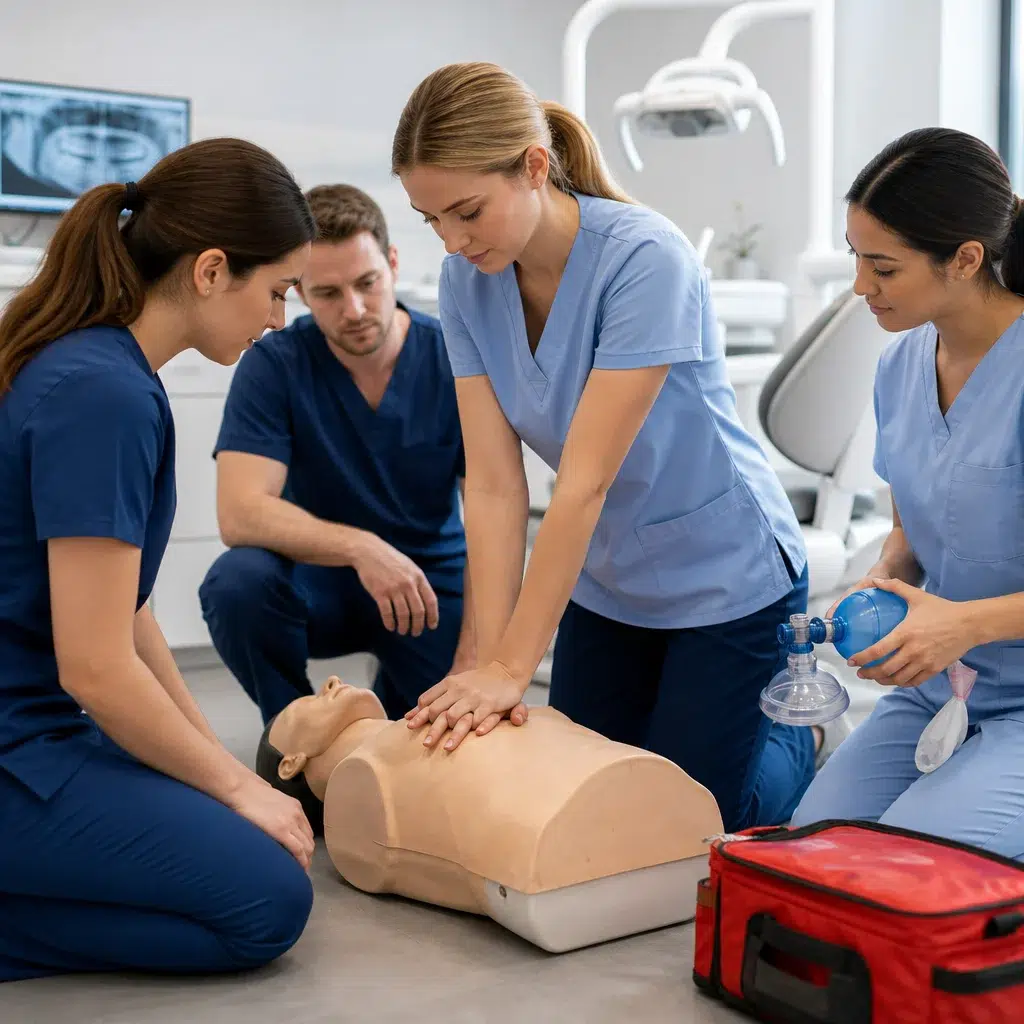
After completing the didactic modules in the ACLS blended format California, the skills session is where EMS clinicians convert knowledge into muscle memory. Short, focused appointments are designed around ACLS blended learning scheduling, so crews can swap in and out between calls without losing coverage. The result is minimal downtime and maximum readiness when algorithms need to run in the field.
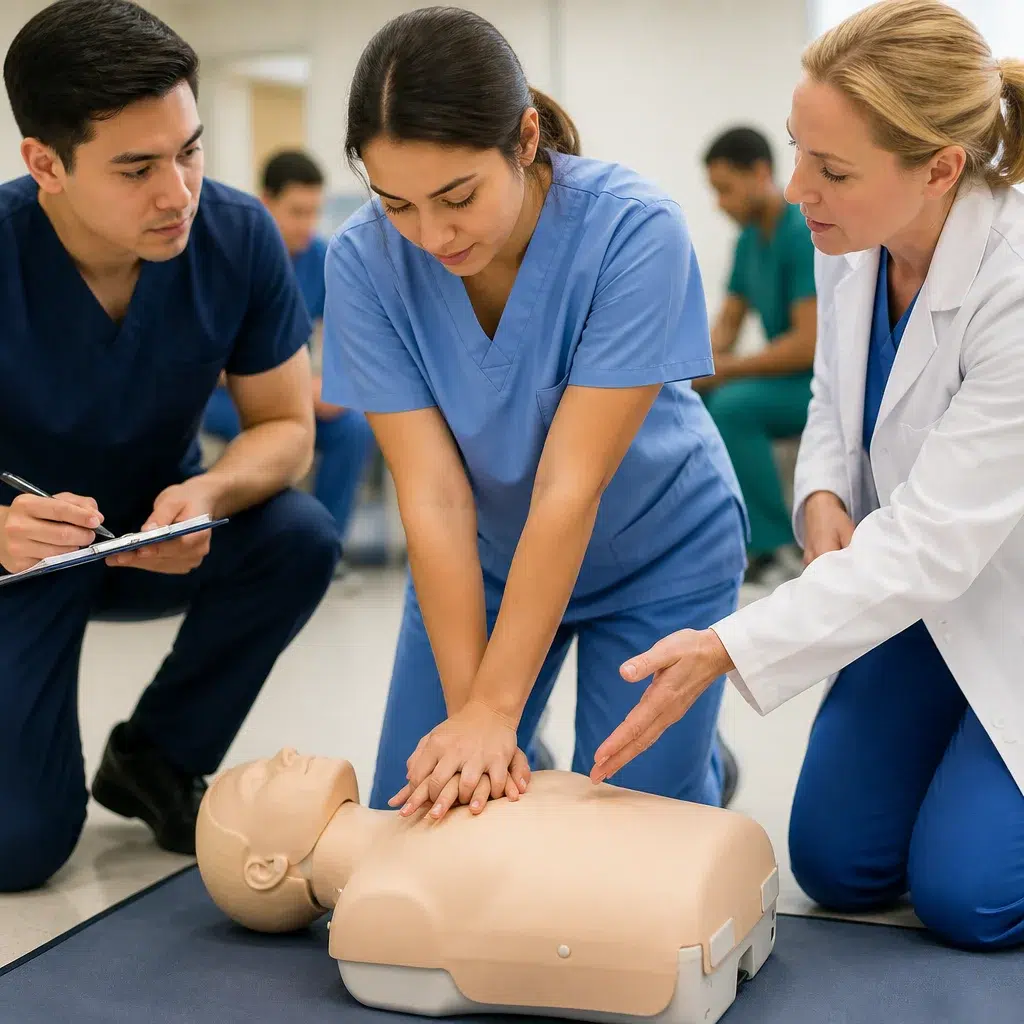
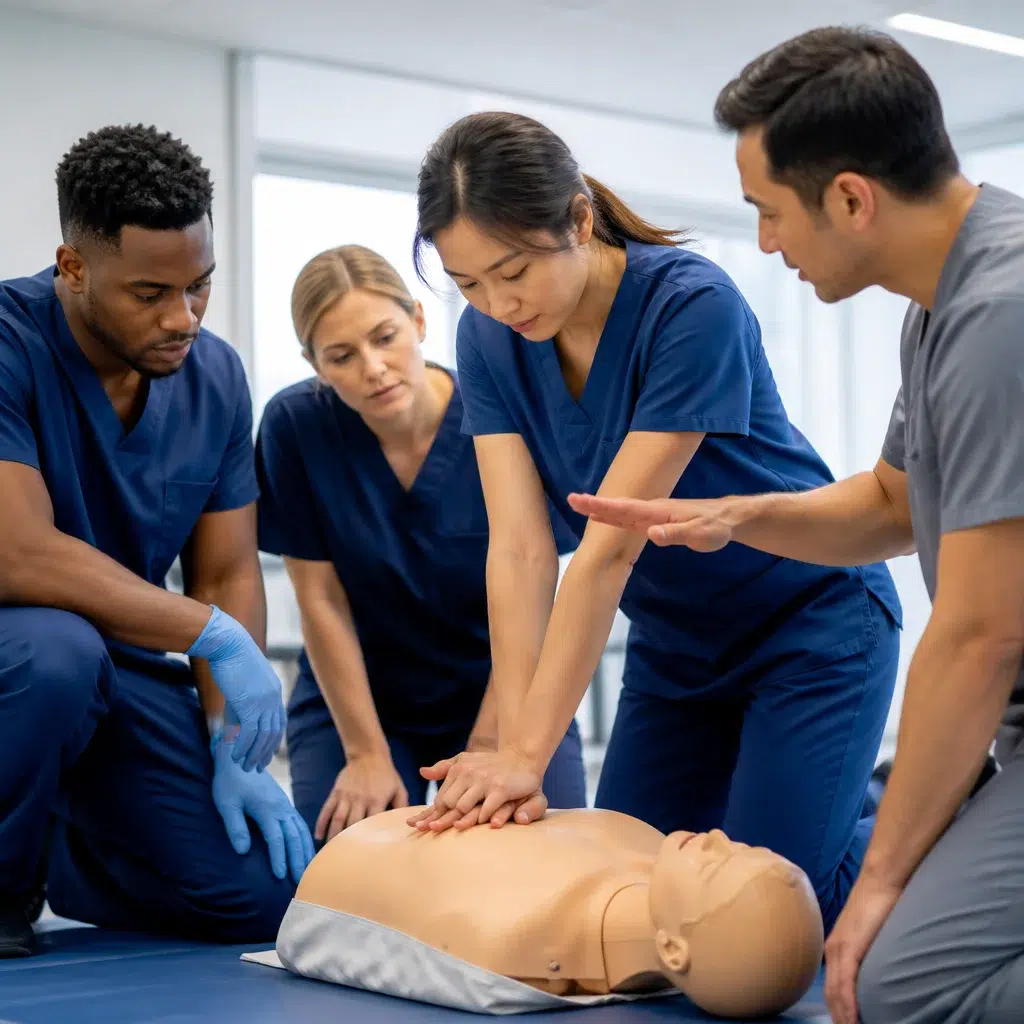
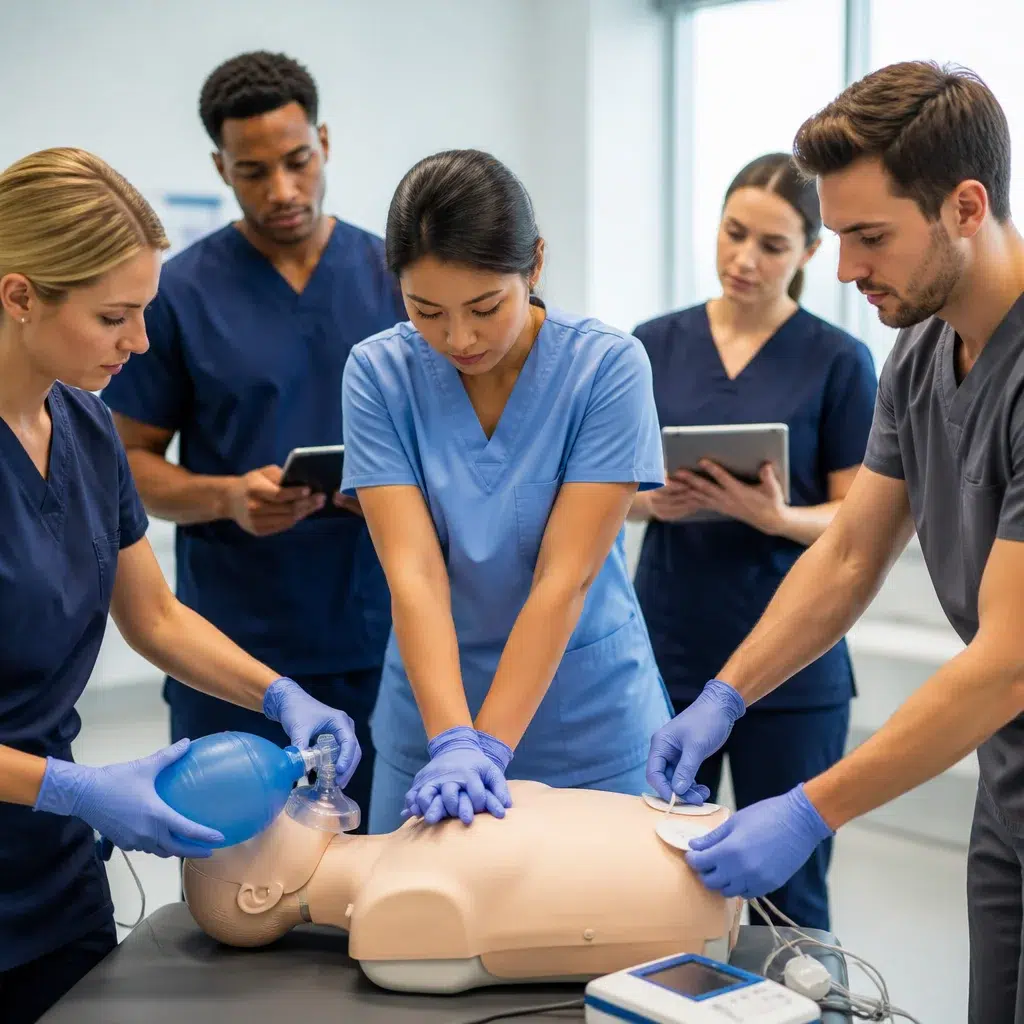
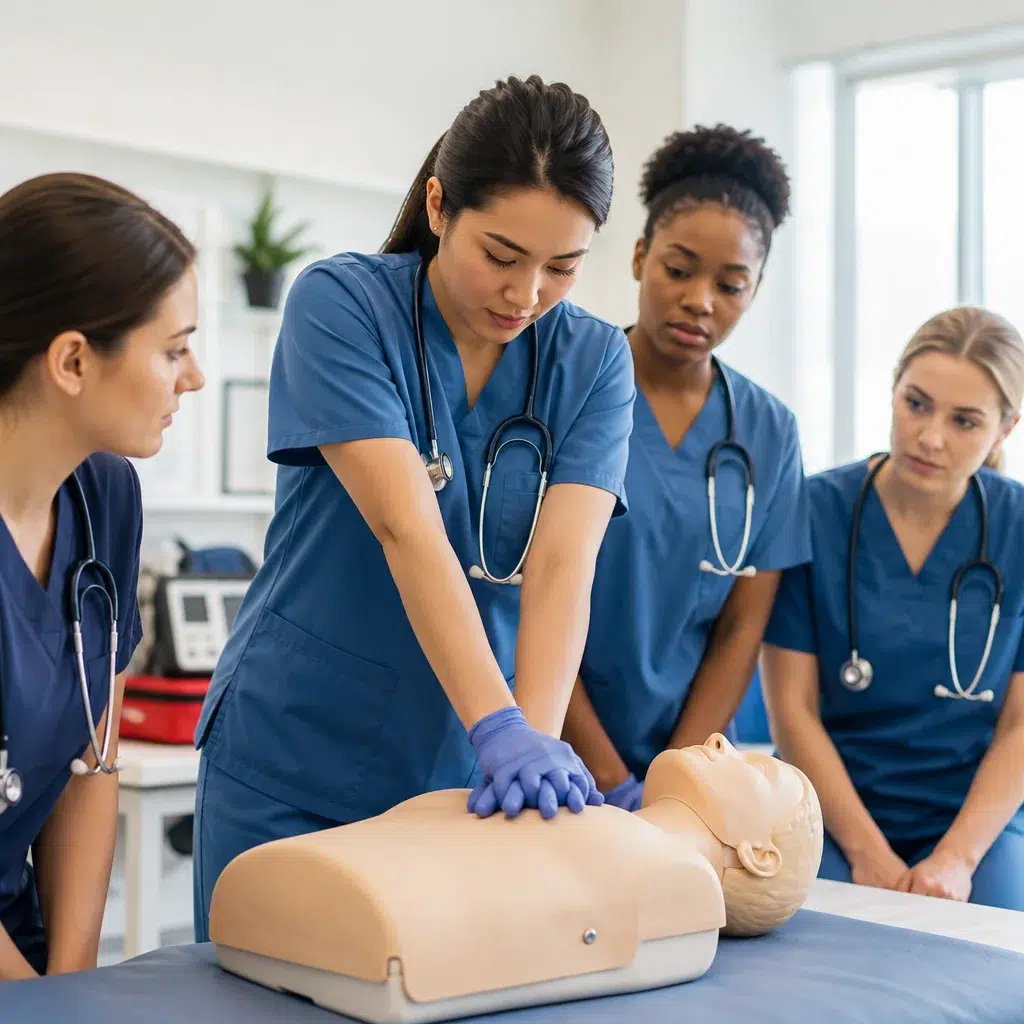
Facilitators guide teams through realistic mega-code scenarios using defibrillators, airway adjuncts, and manikins that provide compression and ventilation feedback. You’ll practice high-performance choreography—compressions, airway, meds, rhythm checks—with closed-loop communication and timed benchmarks that mirror advanced cardiac life support training standards. Immediate debriefs surface what to improve and lock in what went well, reinforcing consistent performance under pressure.
Common hands-on competencies include:
- Rapid recognition and treatment of shockable vs. non-shockable rhythms
- Defibrillation, synchronized cardioversion, transcutaneous pacing, and safety checks
- Airway management with BVM, supraglottic devices, and waveform capnography integration
- Pharmacology at the bedside: dosing, sequencing, and route selection for ACLS meds
- Post–ROSC care priorities, including hemodynamics and targeted communication with receiving facilities
- Team leadership, role clarity, and scene management to fit single- and multi-provider responses
Safety Training Seminars supports EMS certification flexible hours with evening, weekend, and early-morning skills check slots at over 100 locations statewide, plus coordinated options for 24/48 schedules. Their blended pathway pairs emergency medical services online courses with in-person verifications that meet current guidelines and employer audit needs. Agencies can use EMS crew certification options such as on-site group sessions, reserved blocks for rotating shifts, and discount pricing to keep entire teams compliant together. With a low price guarantee and fast card turnaround, California crews can maintain ACLS without disrupting deployment.
Scheduling Options That Work for EMS Shifts
Unpredictable 24-hour tours and mandatory overtime make it hard for crews to sit in a full-day class. ACLS blended learning scheduling solves this by separating the online cognitive work from a short, hands-on skills session. With Safety Training Seminars’ ACLS blended format in California, you can complete emergency medical services online courses when your schedule allows, then book a quick in-person evaluation to finalize certification.
Many EMS teams break up the online portion into short blocks around calls. For example, a paramedic on a 48/96 can knock out algorithm reviews after morning rig checks, tackle pharmacology modules between transports, and finish megacode scenarios post-tour. Progress saves automatically, so you can pause at any point and resume on a truck tablet, station desktop, or phone without losing your place. This approach keeps advanced cardiac life support training manageable without disrupting response readiness.
The in-person skills check is concise—typically 1–2 hours—and can be slotted before or after a shift. With over 100 training locations throughout California, crews can choose the nearest site to minimize travel and fatigue. Safety Training Seminars offers frequent weekday, evening, and weekend skills appointments, making EMS certification flexible hours a reality for busy stations.
Coordinators planning crew-wide renewals can streamline the process. Safety Training Seminars provides corporate group training with discount pricing, voucher options so members complete the online portion on their own time, and the ability to schedule on-site skills sessions at your station or a central location right after shift change. This reduces backfill needs and keeps units in service. A low price guarantee helps you stretch training budgets without compromising AHA-required competencies.
Practical tips for smooth scheduling:
- Map online modules to lighter call windows; save rhythm practice for quieter hours.
- Book skills within a week of finishing online work to keep algorithms fresh.
- Stagger two to three providers per skills slot to maintain coverage.
- Choose locations along crew commute routes to reduce off-duty time.

Benefits of Blended ACLS for California Emergency Services
For EMS agencies that operate on 24/48 rotations, on-call schedules, and dynamic deployment, ACLS blended learning scheduling helps crews stay compliant without pulling units off the street for a full day. The online-first approach reduces classroom time to a concise, hands-on skills session, keeping readiness high while meeting AHA standards for recertification.
The self-paced, emergency medical services online courses allow providers to complete advanced cardiac life support training in segments during station downtime or between calls. Learners can pause and resume modules on their own devices, review pharmacology or ECG content as needed, and arrive at the skills check prepared for scenario-based megacodes and team communication.
In the ACLS blended format California providers can book short, focused skills appointments early mornings, evenings, or weekends to fit EMS certification flexible hours. With over 100 locations across the state, Safety Training Seminars makes it practical for crews from different shifts to certify near their stations. For example, a three-person medic team can finish the online modules independently and stagger 60–90 minute skill checks over a single 24-hour period, minimizing unit downtime.
Operational advantages for departments include:
- Lower overtime and backfill needs compared to full-day classes
- Reduced transport and travel time with local skills sites
- Predictable staffing coverage by splitting crews across multiple sessions
- Consistent documentation aligned with AHA requirements for audits and licensing
Safety Training Seminars supports EMS crew certification options with blended ACLS, BLS, and specialized offerings like PALS and NRP for multi-discipline teams. Coordinators can arrange group blocks across locations, take advantage of corporate pricing, and rely on a low price guarantee for all classes. The result is a streamlined path to renewal that preserves response capacity while keeping medics current on evidence-based resuscitation practices.
How to Get Started with Flexible ACLS Training
Start by confirming your agency’s requirements and renewal dates, then pick a provider that supports ACLS blended learning scheduling through the American Heart Association. Safety Training Seminars offers the AHA-approved blended pathway with more than 100 California locations and flexible skills-session times, making it easier to align with shift changes. You’ll complete the online portion at your pace and reserve a short, in-person skills check when it fits your crew’s calendar.
To get moving, follow these steps:
- Verify prerequisites: current BLS for Healthcare Providers is recommended, and brush up on ECG interpretation and ACLS pharmacology before starting.
- Choose the ACLS blended format California option nearest your station and filter for early-morning, evening, or weekend skills sessions.
- Enroll and complete the AHA HeartCode ACLS online modules; most clinicians spend 4–6 hours, but the adaptive program varies by experience.
- Book a skills appointment that lines up with your shift (for example, 0700 before days or 1900 before nights); the hands-on check typically runs about 2–3 hours.
- Bring your online completion certificate and a government ID to the skills session.
- If your card is current, select the Update track during enrollment; if lapsed, choose the full Provider route in your advanced cardiac life support training plan.
For departments coordinating multiple providers, consider EMS crew certification options that reduce downtime. Safety Training Seminars can issue voucher codes, hold reserved blocks, or run dedicated skills sessions for crews, with discount pricing for groups. Example: a 12‑person Sacramento team completes the emergency medical services online courses during station downtime, then splits skills checks across nearby Roseville and Elk Grove locations on alternating evenings to maintain coverage and leverage EMS certification flexible hours.
On skills day, expect team-based scenarios, rhythm recognition, airway management, and medication decision-making consistent with AHA algorithms. After successful completion, you’ll receive your AHA ACLS Provider eCard by email, which you can forward to credentialing or upload to your LMS. Many EMS professionals finish the online work on an off day and schedule a next-shift skills check to minimize overtime. Explore schedules and lock in your spot directly through Safety Training Seminars.
Real-World Success Stories from California EMS Teams
Night-shift paramedics in the Bay Area shared how ACLS blended learning scheduling let them stay compliant without disrupting 24/48 rotations. Crews completed the emergency medical services online courses during station downtime, then booked a 90-minute in-person skills check on a turnaround day. By using the ACLS blended format California providers offer through Safety Training Seminars, their training officer kept multiple engine companies current while maintaining unit availability.
A Central Valley EMS agency serving wide rural zones cited travel as their biggest barrier. With over 100 California locations, Safety Training Seminars allowed medics to choose the nearest skills site while finishing advanced cardiac life support training online. The coordinator used corporate group training to reserve staggered skills slots across two weekends, giving staff EMS certification flexible hours that aligned with volunteer and per-diem schedules.
In Los Angeles, a private ambulance company synchronized skills verifications with shift-change windows—6:30 a.m. and 7:30 p.m.—so crews could certify before or after calls. Because the coursework was completed in advance, each medic moved efficiently through airway, megacode, and team dynamics stations. The result: on-time renewals, fewer overtime backfill requests, and a consistent standard for ACLS across mixed-experience crews using practical EMS crew certification options.
Across these teams, managers reported measurable scheduling gains from the blended approach with Safety Training Seminars:
- Reduced need for out-of-service time and last-minute swaps
- Predictable skills checkouts that fit peak-call patterns
- Easier onboarding for new hires who arrive with partial online progress
- Budget-friendly planning supported by group pricing and a low price guarantee
- Statewide continuity for crews who float between counties
For EMS leaders juggling coverage and compliance, this model keeps units in service while meeting AHA requirements efficiently.

Common Questions About Blended ACLS Programs
Blended ACLS pairs self‑paced emergency medical services online courses (HeartCode ACLS) with a brief, in‑person skills check. For EMS crews juggling 24/48 or Kelly schedules, ACLS blended learning scheduling lets you complete modules during station downtime and book hands‑on testing when your unit is off shift. This ACLS blended format California option leads to the same American Heart Association ACLS eCard accepted by most California EMS agencies and hospitals; always confirm your employer’s requirements.
Time commitment depends on experience. The online portion typically takes 4–6 hours for seasoned providers and up to 8–10 hours for first‑timers, and you can pause and resume across devices. The skills session usually runs 60–90 minutes, with daytime, evening, and weekend slots; eCards are issued shortly after passing, and are valid for two years.
Both first‑time and renewing providers use the same HeartCode ACLS, but experienced clinicians generally move faster through adaptive modules. You should be comfortable with BLS, rhythm recognition (e.g., SVT vs. VT), and ACLS pharmacology (e.g., epinephrine, amiodarone) before the skills check. Most agencies accept AHA ACLS for EMS certification flexible hours needs, but verify if your medical director requires any additional documentation.
Common scheduling questions:
- Can I book my skills before finishing online modules? Yes—just bring the HeartCode completion certificate to your appointment.
- What if our unit gets a late call? Providers like Safety Training Seminars offer flexible rescheduling and multiple locations so you can switch times or sites as needed.
- Can our crew certify together? Yes—group blocks and onsite options are available; ask about corporate discounts.
- How many locations are available? Safety Training Seminars hosts skills sessions at 100+ sites statewide.
- What about pricing? They offer a low price guarantee on all advanced cardiac life support training.
Safety Training Seminars streamlines ACLS blended learning scheduling across California with abundant skills session availability, corporate group training, and reliable AHA eCards. Choose HeartCode ACLS, reserve a nearby skills slot that fits your roster, and keep your team mission‑ready without disrupting coverage.
Maintaining Certification Between Recertification Cycles
Staying sharp between renewal dates takes intention, especially when call volume swings from slow shifts to back-to-back codes. Build a lightweight maintenance plan that fits around tours and overtime, then lock in ACLS blended learning scheduling well before your card expires. Small, consistent touchpoints keep algorithms, drug dosing, and team choreography from fading so the final assessment feels like routine practice—not a cram session.
- Schedule 10–15 minute micro-drills before or after shift: run bradycardia/tachycardia flowcharts, practice dosing calculations, and rehearse airway confirmation and IO placement on station manikins.
- Run rhythm-recognition sprints: display strips for 30 seconds and call out the intervention sequence, including shock energy and medication timing.
- Convert real calls into learning: create quick debrief cards (initial rhythm, reversible causes, compression fraction, next-step decision) and revisit them monthly.
- Use emergency medical services online courses for targeted refreshers on post-ROSC care, shockable vs nonshockable pathways, and team leadership—aligning with your advanced cardiac life support training.
When it’s time to renew, start the online component two to four weeks out and book the brief skills session immediately after completion to avoid scheduling crunches. Safety Training Seminars offers an ACLS blended format California crews can complete on their own time, followed by an in-person skills check at one of 100+ training locations statewide. Multiple sites and blended delivery support EMS certification flexible hours, while corporate group training and discount pricing simplify crew-wide compliance.
A practical timeline might look like this: quarterly, a 20-minute on-shift mega code focused on high-quality compressions and first-shock timing; monthly, a five-minute drug-dose huddle; at month 20, begin the AHA online module after night shifts; within a week of completion, attend a local skills session. Crew leads can mix individual skills appointments with corporate group options to accommodate rotations and mutual aid. With a low price guarantee and broad statewide access, Safety Training Seminars helps EMS teams maintain readiness between cycles and close out renewal without disrupting coverage.
Conclusion: Choosing the Right ACLS Training Approach
Selecting the best path for advanced cardiac life support training should start with your operational realities. Look at crew rotations, call volume, and how often teams can be relieved for skills checks. For many agencies, ACLS blended learning scheduling offers the most control: complete emergency medical services online courses on your own time, then book a short, focused hands-on session without pulling entire units off the street.
Blended learning is especially useful when crews work 24-hour shifts or mixed tours. A paramedic can finish HeartCode modules between calls and schedule a Friday evening skills check in San Jose, while a partner on nights books Sunday morning in Sacramento—both staying compliant the same week. This model supports EMS certification flexible hours while preserving the rigor expected in ACLS.
Consider these EMS crew certification options and when they fit best:
- HeartCode (ACLS blended format California): Ideal for experienced providers who want self-paced cognitive work plus a brief in-person skills evaluation.
- Instructor-led classroom (initial or renewal): Best for new ACLS learners, teams seeking guided practice, or agencies standardizing protocols in one cohort.
- Coordinated group scheduling: Useful when aligning multiple expirations, consolidating skills checks on the same day, and simplifying documentation for HR.
Safety Training Seminars can help you match the approach to your timeline and budget. With over 100 California training locations, blended and instructor-led formats, and corporate group training with discount pricing, agencies can keep units staffed while meeting AHA requirements. For example, a county EMS department can schedule a midweek group skills block in Oakland for day shift, then a Saturday block in Fresno for night shift—both covered by a low price guarantee across all classes.
In short, pick the format that minimizes disruption while maximizing readiness. If your goal is flexibility without compromising standards, a blended pathway supported by local skills sessions is often the most efficient choice. Explore schedules and options on Safety Training Seminars to keep your crews current and mission-ready.
Register for a class today.