Introduction: Why Dental Practices Need Coordinated Staff Training
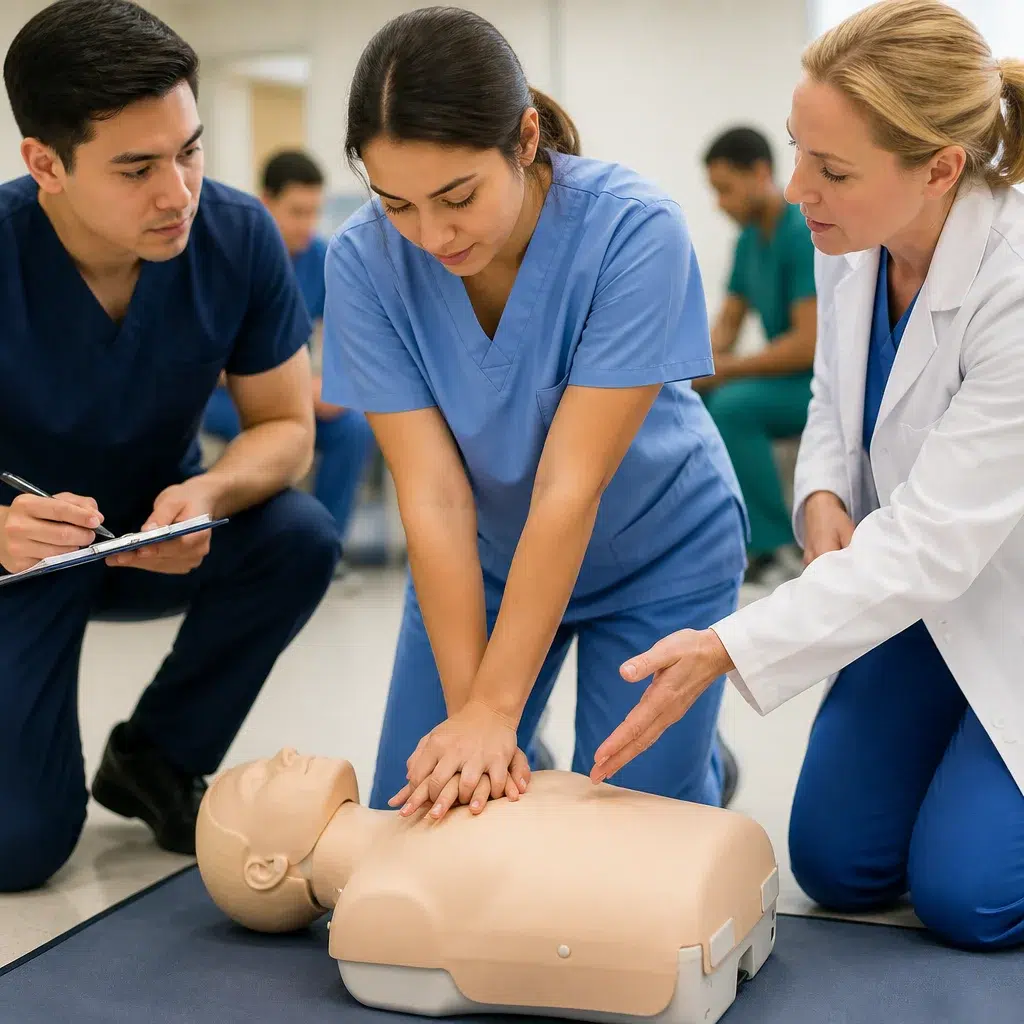
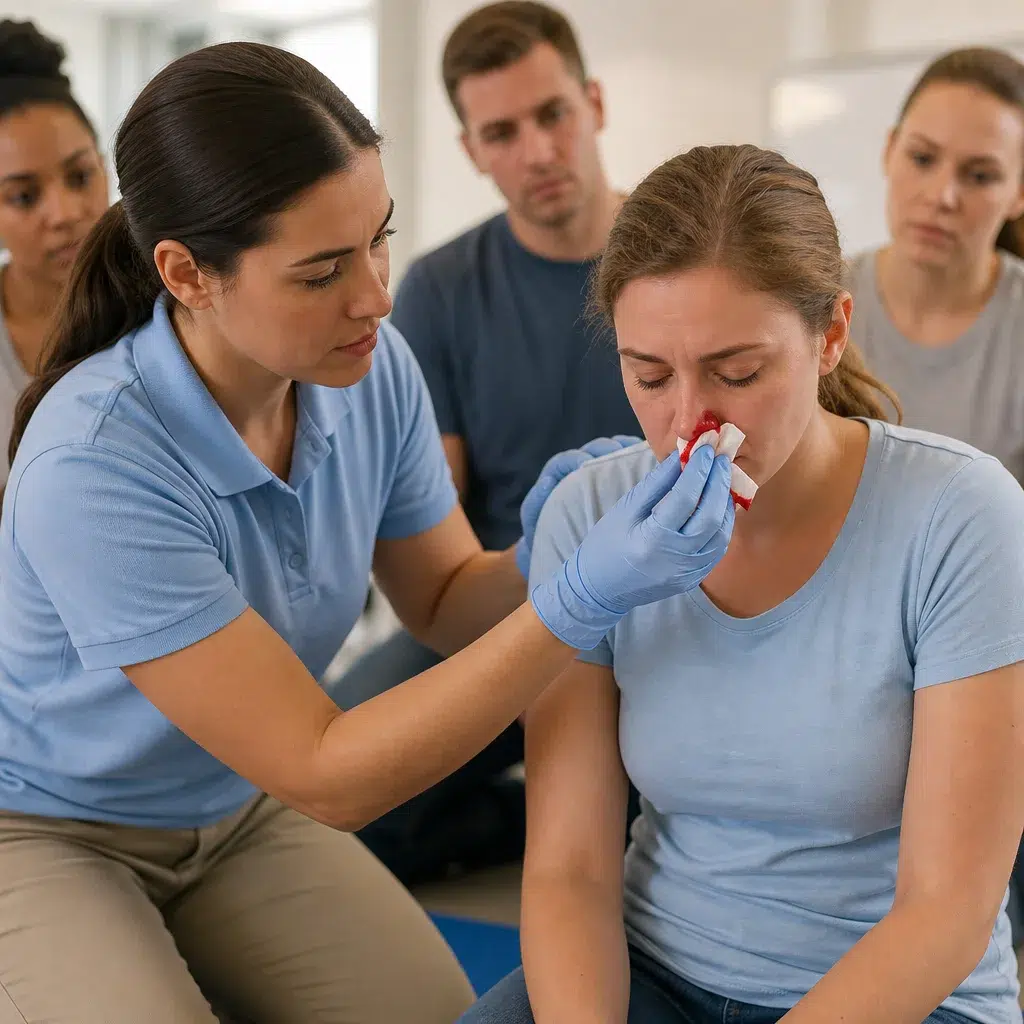
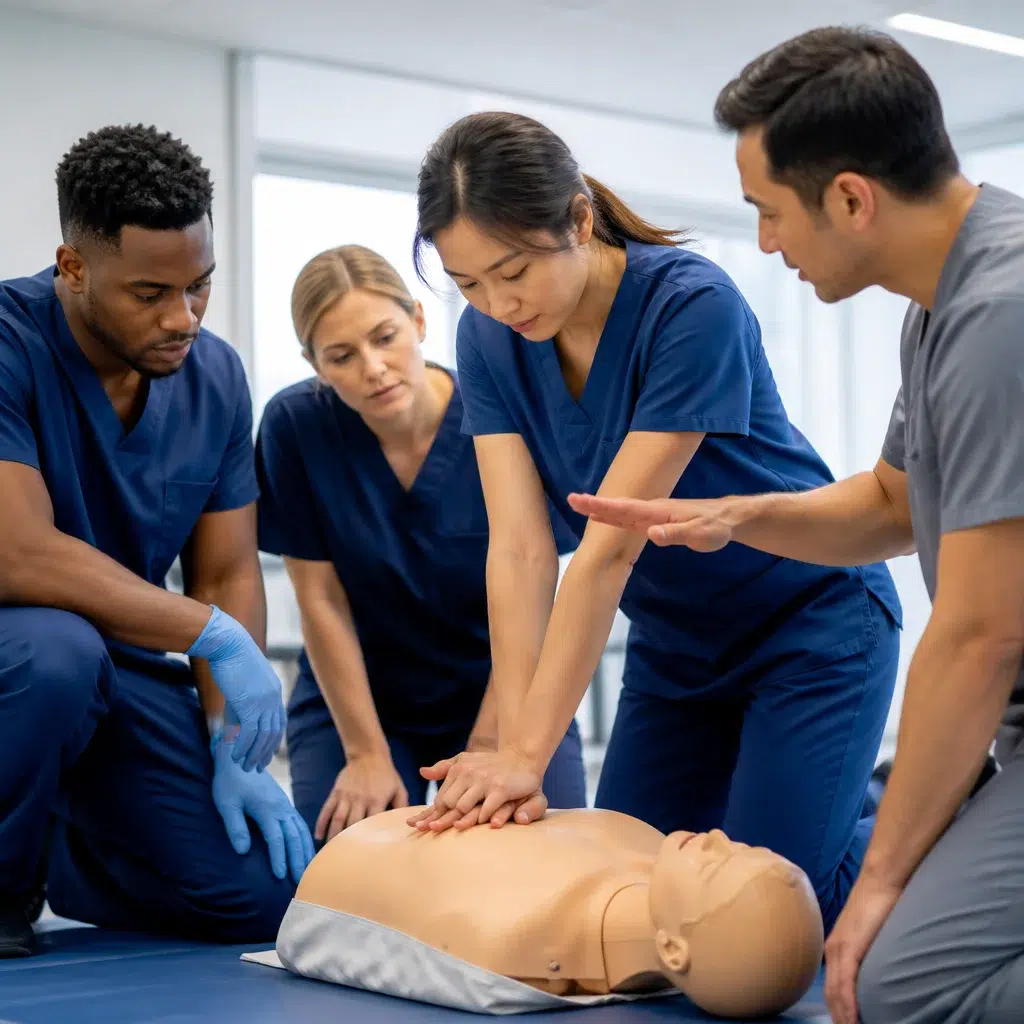
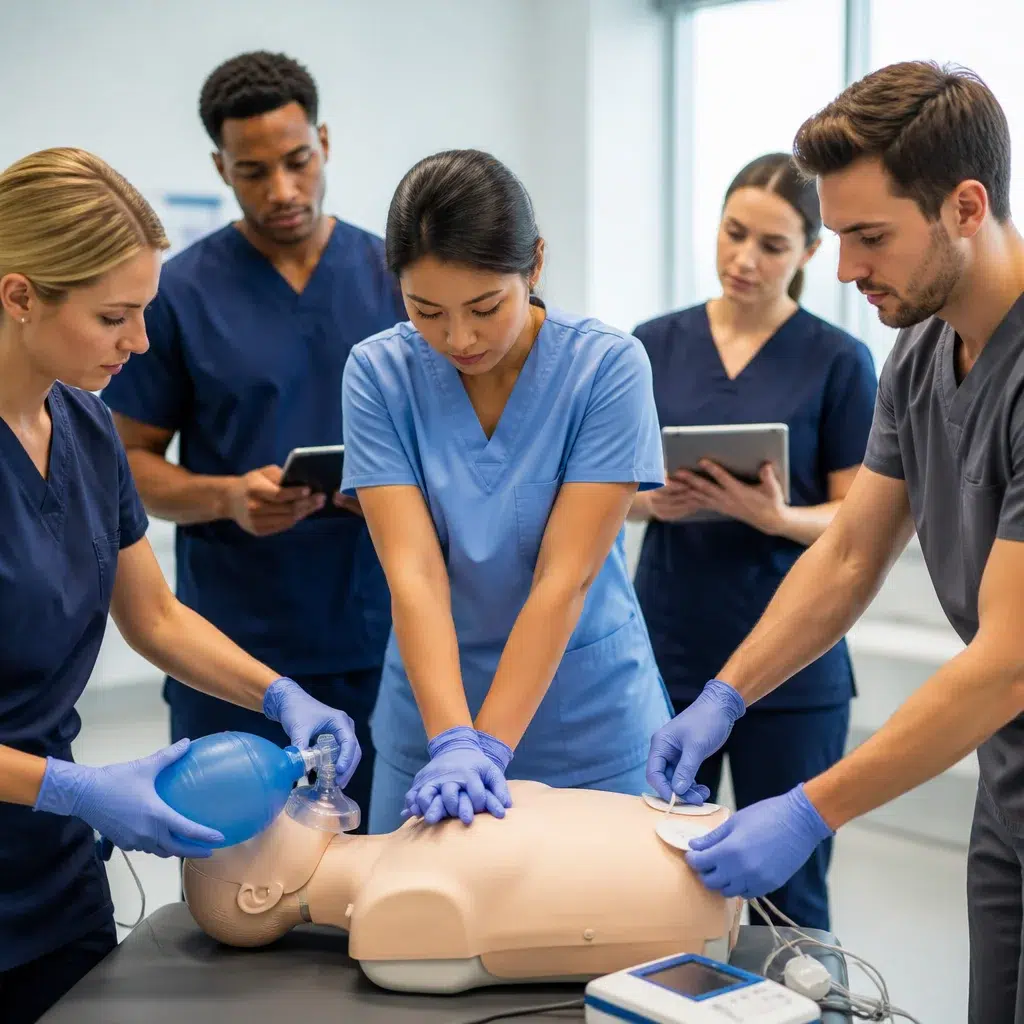
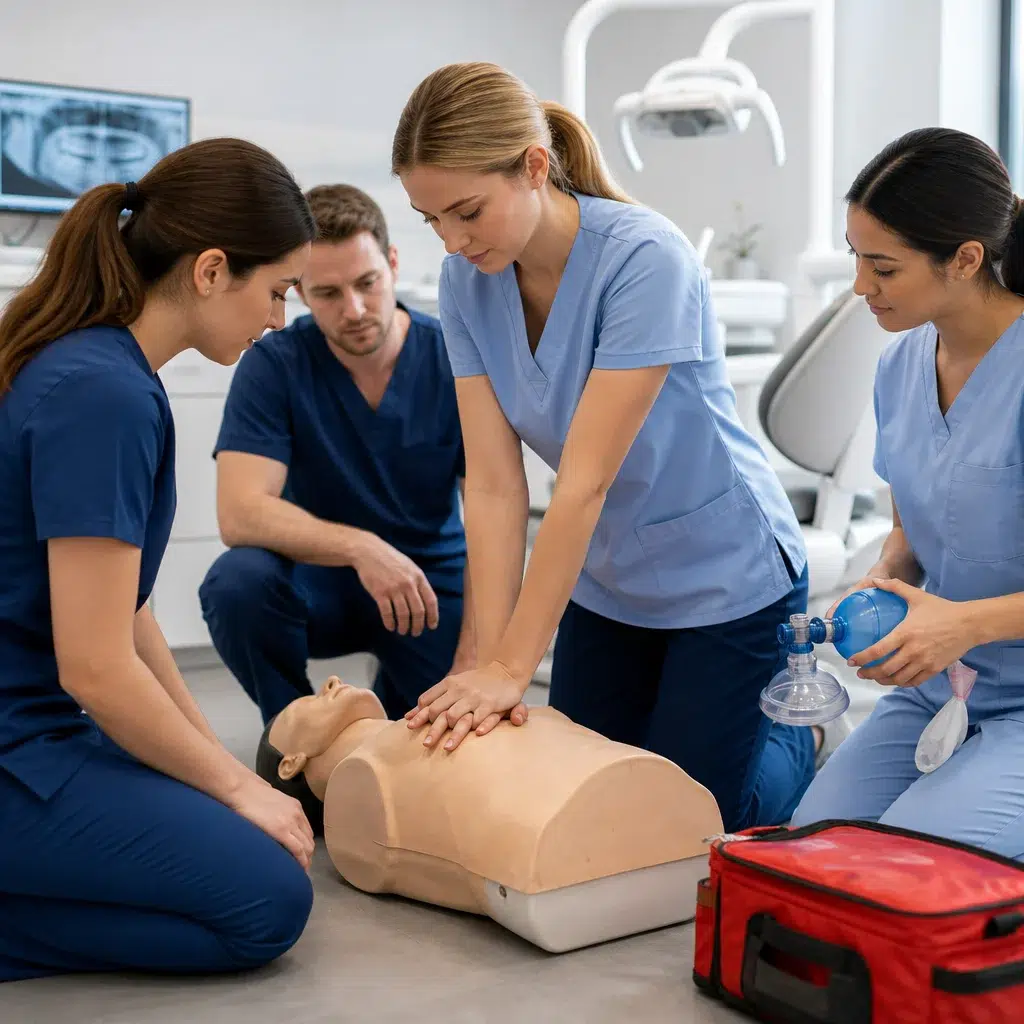
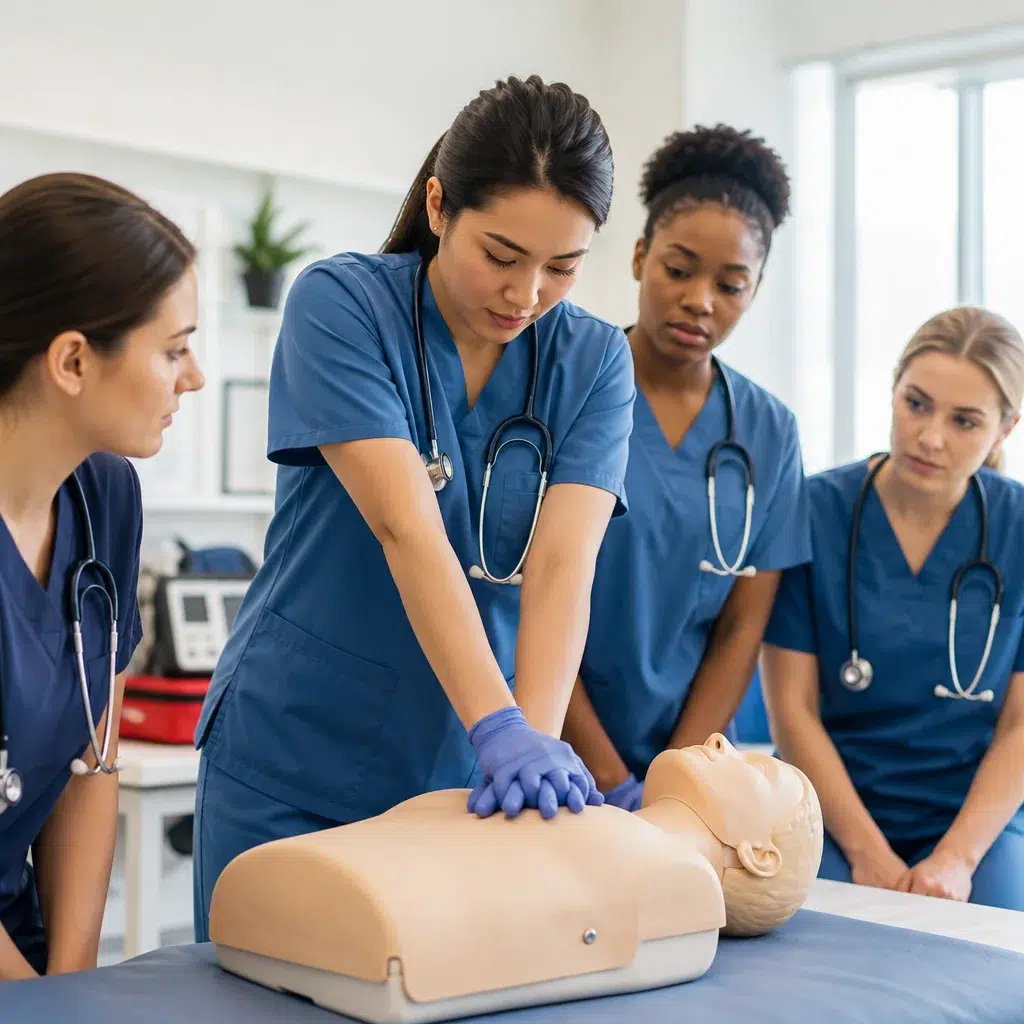
Dental practices face real medical emergencies—syncope, anaphylaxis, sedation-related events, and even cardiac arrest—right in the operatory. Coordinated, team-wide CPR/BLS training ensures everyone follows the same AHA algorithms, communicates clearly, and initiates high‑quality compressions and defibrillation without delay. It also helps meet California compliance expectations, where most dental roles require current AHA BLS and annual Bloodborne Pathogens training for licensure and OSHA readiness.
Organizing team dental practice training on a shared schedule reduces downtime and avoids gaps in coverage when renewals lapse. With group discount CPR training and bulk AHA training pricing, offices can standardize competencies across locations while controlling costs. The result is a safer clinic, confident staff, and predictable renewal cycles.
- Align BLS renewal dates so front and back office teams stay compliant together
- Use blended learning to complete modules online and finish skills in a short, in‑person session
- Add ACLS or PALS for practices offering sedation or pediatric care, keeping providers aligned on advanced protocols
- Centralize records and reminders to simplify audits and credentialing
- Leverage dental staff certification discounts to lower per‑person spend across multiple sites
For example, a multi-location pediatric group can assign PALS to sedation providers and BLS to support staff, complete eLearning on their own time, then rotate brief, on‑site skills checks to keep clinics open. Same‑day eCards make credential tracking immediate, while standardized scenarios build muscle memory across roles. Practices that adopt RQI simulation with VAM technology can also strengthen ongoing performance with data-driven feedback.
Safety Training Seminars streamlines this process with AHA‑aligned blended courses, on‑site group training, 100+ California locations, flexible scheduling, and a low‑price guarantee for cost‑effective CPR classes. Their corporate team supports tracking across offices and fast checkout for renewals or new hires, making group healthcare certifications easier to manage. Learn more about available Group CPR discounts for your dental team.
Evaluation Criteria for Group Training Programs
Choosing a partner for group discount CPR training starts with accreditation and fit for your practice. Confirm the provider follows current AHA guidelines and issues eCards promptly so staff can return to patient care without delays. If your team provides sedation or treats pediatric patients, ensure ACLS and PALS are available alongside BLS to cover all compliance needs. For a quick refresher on what dentists typically need, see BLS CPR for Dentists.
Evaluate providers against criteria that impact cost, compliance, and convenience:
- Curriculum and cards: AHA-aligned content, standardized skills testing, and same-day or next-business-day eCards.
- Delivery model: Blended learning that moves didactic work online with brief in-person skills checks to minimize downtime.
- Access: Multiple locations statewide and on-site options for team dental practice training; evenings/weekends for shift coverage.
- Instructor quality: Dental-relevant scenarios (syncope, anaphylaxis, sedation events) and strong equipment ratios (ideally 1 manikin per 2 learners; pediatric manikins for PALS).
- Outcomes and support: Clear remediation policy, high pass support, and timely customer service.
- Administration: Roster upload, renewal reminders, centralized billing, and employer reporting for group healthcare certifications.
- Pricing transparency: Written bulk AHA training pricing, dental staff certification discounts, and no hidden fees for eCards or materials.
- Policies: Reasonable rescheduling windows and ADA-accessible sites.
Look for specifics that translate to real savings. For example, blended learning can shrink in-person time to about an hour per employee, making it one of the most cost-effective CPR classes for busy operatories. Multi-location groups benefit when staff can complete skills checks near home across California rather than driving to a single site.
Safety Training Seminars checks these boxes with blended learning options, over 100 statewide locations, specialized ACLS/PALS offerings, corporate group training, and a low price guarantee. Ask for an itemized quote showing tiers for different headcounts, eCard turnaround times, and equipment ratios to compare providers confidently.
Individual Recommendation 1: Full-Team Certification Packages
Bundled, full-team packages are the fastest way for dental practices to secure compliance while unlocking group discount CPR training. Instead of scheduling piecemeal seats, enroll your entire staff under one plan: BLS for all clinical team members and ACLS or PALS for dentists who provide moderate sedation or treat pediatric cases. This approach reduces calendar chaos, simplifies billing, and captures meaningful dental staff certification discounts without compromising quality.
A well-structured bundle should combine online coursework with a coordinated in-person skills session so everyone finishes on the same timeline. Safety Training Seminars offers blended learning with skills appointments available across 100+ California locations or arranged onsite for larger groups, making team dental practice training simple to execute. Because courses follow American Heart Association guidelines, your staff earns widely accepted credentials required by employers and licensing boards.
Consider how a typical practice might build a package:
- BLS for 8 hygienists, assistants, and front-desk team members who support patient care
- ACLS for 2 dentists who administer moderate sedation
- One coordinated skills day to keep renewal dates aligned
- Flexible options to split the team across morning and afternoon sessions to maintain patient coverage
With bulk AHA training pricing, consolidating these seats under a single contract is often more cost-effective than booking individually. For example, a 10–12 person package that mixes BLS and ACLS can qualify for tiered rates and one invoice, minimizing administrative overhead. Safety Training Seminars also offers a low price guarantee on cost-effective CPR classes, helping practices control budgets while meeting requirements.
For growing offices or multi-location groups, standardizing on one provider streamlines group healthcare certifications year after year. Safety Training Seminars can help you map roles to the right credentials, plan a renewal calendar, and schedule skills sessions near each clinic. The result is fewer lapses, predictable costs, and a simpler path to compliance for the entire dental team.

Individual Recommendation 2: Staggered Scheduling Options
Keeping the practice open while everyone renews CPR is doable with staggered scheduling. Instead of closing for a full-day course, split your team into small waves that rotate through training over several days. You still qualify for group discount CPR training while maintaining chairside coverage and front-desk operations.
Blended learning makes staggering simple. Assign the online AHA module to be completed during non-clinical time, then book short, in-person skills checks for 3–5 people per slot. With Safety Training Seminars’ 100+ California locations and frequent evening/weekend options, staff can attend the nearest site at convenient times without disrupting production.
For example, a 12-person dental practice can create three waves of four employees. Wave 1 completes online work this week and attends a 90-minute skills session on Wednesday evening; Wave 2 goes Saturday morning; Wave 3 the following Tuesday. This approach preserves hygiene and provider schedules while securing dental staff certification discounts and tapping into bulk AHA training pricing. It also reduces overtime because each team member spends less time away from the clinic.
To coordinate smoothly:
- Map everyone’s expiration dates and start scheduling 60 days in advance to avoid last-minute gaps.
- Mix roles in each wave (e.g., 1 provider, 2 assistants, 1 admin) to keep daily operations balanced.
- Use shared calendars and automated reminders so online modules are finished before skills check dates.
- Track completions in a simple roster to satisfy compliance audits and insurer requirements.
- Align BLS renewals on a common month each year to simplify future team dental practice training.
Safety Training Seminars can support staggered enrollments for group healthcare certifications across multiple dates and locations, while offering cost-effective CPR classes and a low price guarantee. Their corporate group training team can help you structure waves, hold seats, and maximize dental staff certification discounts without sacrificing patient care time.
Individual Recommendation 3: Blended Learning Flexibility
Blended learning lets your team complete the AHA coursework online and reserve only a short, hands-on skills check in person—ideal for minimizing schedule disruptions while still qualifying for group discount CPR training. Most dental teams need BLS Provider, while oral surgery or sedation permit holders may also need ACLS or PALS; a blended model accommodates both without pulling everyone off the schedule at once. This approach helps you capture dental staff certification discounts without sacrificing chair time.
Here’s how it works for team dental practice training:
- Staff complete AHA-aligned BLS (and ACLS/PALS as needed) modules at their own pace.
- Schedule brief, in-person skills sessions (about 30–60 minutes per person).
- Choose on-site verification at your practice or nearby locations to reduce travel.
- Receive same-day eCards to meet compliance and HR deadlines.
Safety Training Seminars makes blended learning seamless and cost-effective. With over 100 California locations, evening and weekend options, and on-site group training, your team can finish skills checks close to home or work. RQI simulation stations with voice-assisted manikins deliver consistent, high-quality feedback, and the low price guarantee supports bulk AHA training pricing for truly cost-effective CPR classes. You can also mix credentials in one plan—BLS for most clinicians and ACLS/PALS for sedation teams—to streamline group healthcare certifications under one invoice.
Example: A 14-person dental practice in San Diego splits into two cohorts. Everyone completes the online BLS portion during non-patient hours over three days; oral surgery staff add HeartCode ACLS. Cohort A books Saturday morning skills at a nearby Safety Training Seminars site, while Cohort B uses an on-site skills session Monday at lunch. The office stays fully operational, overtime is minimized, and the group rate applies across all enrollments.
Individual Recommendation 4: On-Site Training Solutions
Bringing certification to your practice is often the fastest path to savings and compliance. On-site sessions let you train the entire team in one block, reduce travel and schedule disruptions, and align renewal dates. For most dental practices, that means BLS for Healthcare Providers for all clinicians; offices that provide sedation may also need ACLS or PALS for designated team members, plus Bloodborne Pathogens to meet OSHA-related training needs.
Safety Training Seminars delivers on-site, AHA-aligned skills sessions anywhere in California, paired with blended learning so staff complete the online coursework in advance and spend minimal time away from patients. Instructors arrive with feedback manikins for high-quality practice and run targeted scenarios relevant to dental settings—medical emergencies in the chair, airway management, and post-event documentation. Same-day AHA eCards keep credentialing simple, and group discount CPR training makes the per-learner rate more cost-effective than sending staff individually.
What to expect with an on-site plan for dental teams:
- Tiered, bulk AHA training pricing and dental staff certification discounts for BLS, with options to bundle Bloodborne Pathogens, First Aid, ACLS, or PALS as needed.
- Flexible scheduling before opening, during a lunch block, or after hours to avoid canceling patients.
- Consolidated rosters, digital pre-work links, and reminders so managers can track completion and renewals.
- Multi-office coordination across California—train one location this week and another next week under the same agreement.
- Low price guarantee and centralized billing for predictable budgeting of group healthcare certifications.
Example: A 10-person practice schedules a 2-hour on-site skills session on a Friday afternoon after completing the online modules earlier in the week. The hygienists and assistants renew BLS, the lead dentist completes ACLS, and the entire team adds Bloodborne Pathogens in a single visit. Safety Training Seminars issues same-day cards, cuts travel time to zero, and delivers cost-effective CPR classes that keep the whole office compliant on a shared renewal cycle.
Comparison Summary: Group Pricing vs. Individual Registration

For most California dental practices, registering everyone separately costs more in money and time than coordinating one cohort. Group discount CPR training consolidates fees into a single, predictable spend and cuts soft costs tied to travel, schedule juggling, and reimbursement. It also simplifies documentation, so your practice manager isn’t chasing individual receipts or missing expiring cards during audits.
From a pricing standpoint, dental staff certification discounts typically appear as tiered rates or bundled services when you enroll a team together. With bulk AHA training pricing, you can often align BLS (and, when needed, ACLS/PALS for sedation or pediatric offices) under one plan, reducing per-learner costs while standardizing curriculum quality. The result is cost-effective CPR classes that meet the same AHA-aligned standards your liability carrier expects.
Operationally, team dental practice training delivers speed and consistency. Scheduling one blended learning session (online coursework plus a brief in-person skills check) minimizes chairside downtime and produces same-day eCards, so the whole team renews on the same cycle. This approach also streamlines onboarding for new hires and ensures coverage if your practice is inspected or audited.
Consider these quick guidelines:
- Choose group pricing when you have 6+ staff due within 60–90 days, are opening a new operatory, or want unified renewal dates.
- Choose individual registration for 1–2 last-minute renewals, per-diem hygienists, or remote team members who can’t attend a cohort.
- Mix both when multi-location teams need a combination of on-site sessions and flexible local skills checks.
Safety Training Seminars is a practical choice for practices comparing group vs. individual routes. With AHA-aligned courses, blended learning, and over 100 California locations—plus on-site options and RQI simulation stations—your team can train close to home or in-office. Corporate group training and discount pricing, same-day certification cards, and a low price guarantee help control budgets while maintaining compliance-ready, group healthcare certifications.
Selection Guide: Choosing the Right Group Program
Start by mapping requirements to roles. The Dental Board of California commonly requires current AHA Basic Life Support (BLS) for dentists and licensed staff, while practices performing moderate sedation or general anesthesia may need ACLS for dentists and PALS if treating pediatric patients. Inventory who needs what, along with renewal deadlines, so your team dental practice training stays synchronized and downtime is minimized.
Evaluate the delivery model next. Blended learning (online coursework plus a short, in-person skills check) reduces chair-time disruption and is ideal for staggered shifts. Safety Training Seminars offers this format at over 100 locations statewide, letting multi-site groups streamline scheduling and keep travel minimal while still meeting AHA hands-on requirements for cost-effective CPR classes.
Compare pricing structures with an eye for predictability. Seek group discount CPR training that includes transparent, tiered quotes, bulk AHA training pricing, and options for on-site sessions versus individual vouchers your staff can redeem throughout the year. For example, a practice onboarding new hygienists quarterly can lock in dental staff certification discounts and issue vouchers, rather than paying one-off retail rates each time.
Use this quick checklist when assessing providers:
- AHA-authorized courses with fast eCard delivery for compliance audits
- Blended learning availability and evening/weekend skills sessions
- On-site training at your office versus open-enrollment seats nearby
- Clear rescheduling, remediation, and no-show policies
- Instructor-to-learner ratios and manikin availability for quality practice
- Centralized rosters, reminders, and reporting for HR tracking
- Proof of insurance and the ability to provide a certificate of insurance
- References from other California dental groups
Safety Training Seminars fits these criteria with corporate group training, statewide access, and a low price guarantee. They can bundle BLS with ACLS or PALS where needed, simplifying group healthcare certifications while keeping your team compliant and calendar-friendly.
Implementation Strategy for Dental Practices
Start by mapping clinical roles to required credentials so you only buy what you need. Most dental teams require AHA BLS Provider, while dentists who provide sedation may also need ACLS. Choose a provider that offers group discount CPR training and blended learning to minimize chair downtime while keeping you compliant.
- Appoint a training coordinator and build a roster with role, location, and renewal dates.
- Confirm which staff need BLS vs ACLS/PALS, and whether First Aid or Bloodborne Pathogens is required by your insurers or DSAP policies.
- Select delivery: assign online modules first, then schedule short in-person skills sessions on-site or at nearby locations.
- Stagger cohorts (front desk, hygiene, assistants) to maintain patient coverage and production.
- Require completion proof before skills day; after skills, collect same-day eCards and store centrally.
- Set automated renewal reminders 60–90 days before expiration and include CPR in new-hire onboarding.
For example, a 12-operatory practice in San Jose can run two lunch-hour skills cohorts on consecutive days while the rest of the team covers patients. Staff complete eLearning at home or during admin time, then rotate through skills checks in 20–60 minutes, keeping the schedule intact. This team dental practice training model delivers cost-effective CPR classes without canceling clinics.
Select a partner that simplifies logistics and pricing. Safety Training Seminars offers over 100 California locations, on-site skills days, same-day AHA eCards, and dental staff certification discounts through bulk AHA training pricing. Practices can consolidate group healthcare certifications—BLS for staff, ACLS for sedation dentists, plus optional Bloodborne Pathogens—under one account with a low price guarantee.
Close the loop with quality and readiness. Add a brief post-class debrief to update medical emergency kits, assign roles for emergencies, and run a quarterly mock code. For multi-site groups, Safety Training Seminars can standardize curricula statewide and, where available, leverage RQI simulation stations to maintain competency between renewal cycles. Keep certificates in your HR system and be audit-ready year-round.

Maximizing Your Group Training Investment
A smart plan for group discount CPR training starts with aligning renewal dates and selecting formats that minimize downtime. Most dental practices need AHA BLS for Healthcare Providers, and many also benefit from First Aid and Bloodborne Pathogens for OSHA compliance. Consolidating these needs into one coordinated event reduces disruption while capturing dental staff certification discounts.
Blended learning is the fastest way to keep chairs full and still achieve compliance. Team members complete the online cognitive portion on their own time, then finish an in-person skills session in a short, predictable block. Safety Training Seminars offers AHA-aligned blended courses with same-day eCards, so your team is certified and back to patients without extended classroom hours.
Look for bulk AHA training pricing that rewards combined enrollments across roles and locations. Many dental groups add Bloodborne Pathogens or First Aid to the BLS renewal to streamline recordkeeping and vendor management. Practices that provide sedation or work in surgical settings can fold in ACLS for applicable clinicians, keeping all team dental practice training under one umbrella with cost-effective CPR classes. Safety Training Seminars supports bundled quotes and a low price guarantee to help maximize value.
Practical steps to get the most from group healthcare certifications:
- Audit expiration dates and align renewals within a single quarter for easier scheduling.
- Decide between on-site training at your practice or nearby skills sessions across 100+ California locations.
- Use blended learning to cut seat time and reduce overtime or schedule gaps.
- Bundle BLS with Bloodborne Pathogens and First Aid to capture better pricing and simplify compliance.
- Ask for roster management, reminder emails, and consolidated invoicing to reduce admin time.
- For multi-office groups, coordinate staggered sessions to keep each location staffed.
For California dental teams, Safety Training Seminars provides scalable corporate group training, flexible calendars, and consistent quality statewide. Whether you have a single clinic or multiple offices, their coordinators can map your roster, recommend the right course mix, and deliver a streamlined, budget-conscious plan.
Compliance and Certification Maintenance
Keeping your dental team compliant starts with understanding renewal cycles and scope-of-practice needs. In California, most dentists and allied dental staff must maintain current AHA- or ARC-aligned BLS/CPR, with cards typically valid for two years. Practices that provide moderate or deep sedation often require ACLS for dentists and PALS for teams serving pediatric patients; confirm specifics with the Dental Board and your malpractice carrier. Document training dates and course IDs, and store eCards for quick access during payer credentialing, Cal/OSHA checks, or board audits.
Plan renewals around efficiency and coverage. Many practices choose group discount CPR training to certify the whole team on one date, while others stagger skills sessions by department to reduce chair-time disruptions. Blended learning shortens time away from patients by moving lectures online and scheduling a brief, in-person skills check; same-day eCards help you close compliance gaps immediately. For multi-site groups, align windows by location to leverage bulk AHA training pricing without overloading a single office.
Build a simple, repeatable maintenance workflow your office manager can run monthly:
- Centralize a roster with certification type, issue date, and expiration.
- Trigger reminders at 120, 60, and 30 days before expiry; prioritize sedation teams first.
- Onboard new hires with an immediate BLS slot and add ACLS/PALS as role-appropriate.
- Keep certificates in your HRIS and a shared compliance folder for inspections.
- After each session, update payer and hospital credentialing files to prevent denials.
Safety Training Seminars makes team dental practice training straightforward and cost-effective. With over 100 California locations, on-site options, and blended AHA-aligned courses, they offer dental staff certification discounts, corporate group pricing, and a low price guarantee on cost-effective CPR classes. Their RQI simulation stations with VAM technology support low-dose, high-frequency refreshers that keep skills sharp between two-year renewals—ideal for group healthcare certifications across multiple offices. Many practices rotate RQI access quarterly while booking annual in-person skills for new staff to keep compliance continuous and predictable.
Getting Started with Group Enrollment
Start by mapping your team’s compliance needs. Most California dental practices require AHA BLS for Healthcare Providers for dentists, hygienists, and assistants, while teams that assist with moderate sedation may also need ACLS or PALS. Add OSHA Bloodborne Pathogens as an annual requirement, and consider First Aid/CPR AED for front desk or administrative staff. Bundling these courses helps maximize dental staff certification discounts and creates a single renewal cycle for the entire team.
Next, outline when and how your staff can train. Decide between blended learning (online coursework plus a brief skills session) or an on-site private class at your office. With over 100 locations statewide, Safety Training Seminars offers group discount CPR training, bulk AHA training pricing, and flexible scheduling—including evenings and weekends—so multi-location practices can choose the most cost-effective CPR classes close to each office. Their AHA-aligned curriculum, RQI simulation stations with VAM technology, and same-day eCards help keep licensure timelines on track.
To request a quote and lock in dates, gather a few essentials:
- Headcount by role (dentist, hygienist, assistant, admin) and the mix of courses needed (BLS, ACLS, PALS, Bloodborne Pathogens, First Aid/CPR AED)
- Preferred delivery (blended with skills checks at nearby sites, RQI stations, or an on-site private session) and timing windows
- Roster with names and unique emails for eCards, plus current certification expiration months to align renewals
- Office locations (if multiple) and any after-hours or weekend preferences
- Billing preferences (single invoice, card, or corporate account) and any need for multi-office reporting
Example: A two-location dental group with 14 staff standardizes on blended BLS for all clinical roles and adds Bloodborne Pathogens for the full team. Staff complete the AHA online portion over a few hours, then choose either an after-hours on-site skills session or a quick check at the nearest training center. Safety Training Seminars issues same-day eCards, consolidates billing into one invoice, and applies team dental practice training discounts under a low price guarantee—streamlining group healthcare certifications across both offices.
Register for a class today.