
Introduction to Healthcare Staff Certification Models
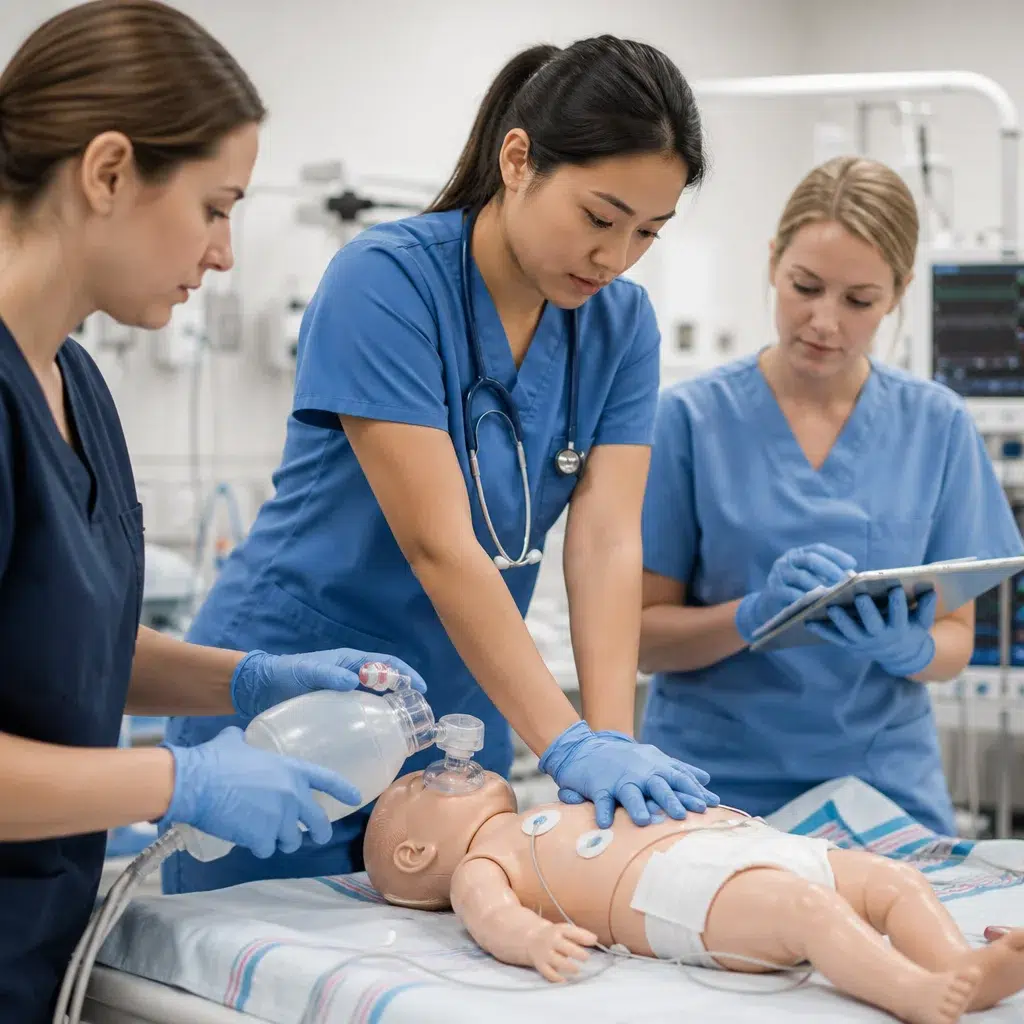
California healthcare teams must keep AHA-required credentials like BLS, ACLS, and PALS current, often alongside NRP for perinatal units. Most organizations choose between two models: individual professional enrollment, where each clinician registers and attends on their own, and coordinated group delivery arranged by the employer. The right fit depends on costs, scheduling complexity, and how your organization manages compliance across medical staff certification programs.
Individual enrollment offers maximum flexibility. Clinicians complete online modules at their pace and attend a local skills session, which works well for variable shifts and travel constraints. With more than 100 locations statewide and blended learning options, Safety Training Seminars makes it straightforward for nurses, dentists, and EMS personnel to book nearby classes, and a low price guarantee helps keep per-learner costs predictable.
Group delivery consolidates training through dedicated, employer-arranged sessions—either on-site at your facility or reserved at a nearby training center. This model supports group BLS training options and healthcare provider discount programs, with bulk CPR certification pricing that can lower the per-person rate as headcount rises. Centralized scheduling reduces downtime and creates consistent skill standards, while corporate group training discounts help finance larger renewal waves across departments.
When comparing models, consider these variables:
- Workforce size and turnover: Larger teams often benefit from bulk pricing and consolidated scheduling.
- Renewal cycles: Clusters of expiring cards favor group sessions; staggered expirations fit individual enrollment.
- Geography: Multi-site systems may blend on-site training at hubs with local skills checkouts for distant clinics.
- On-site safety training costs: Factor instructor travel, minimums, and room availability against paid travel time for staff.
- Coverage planning: Evaluate overtime or float needs to maintain patient care while staff are in class.
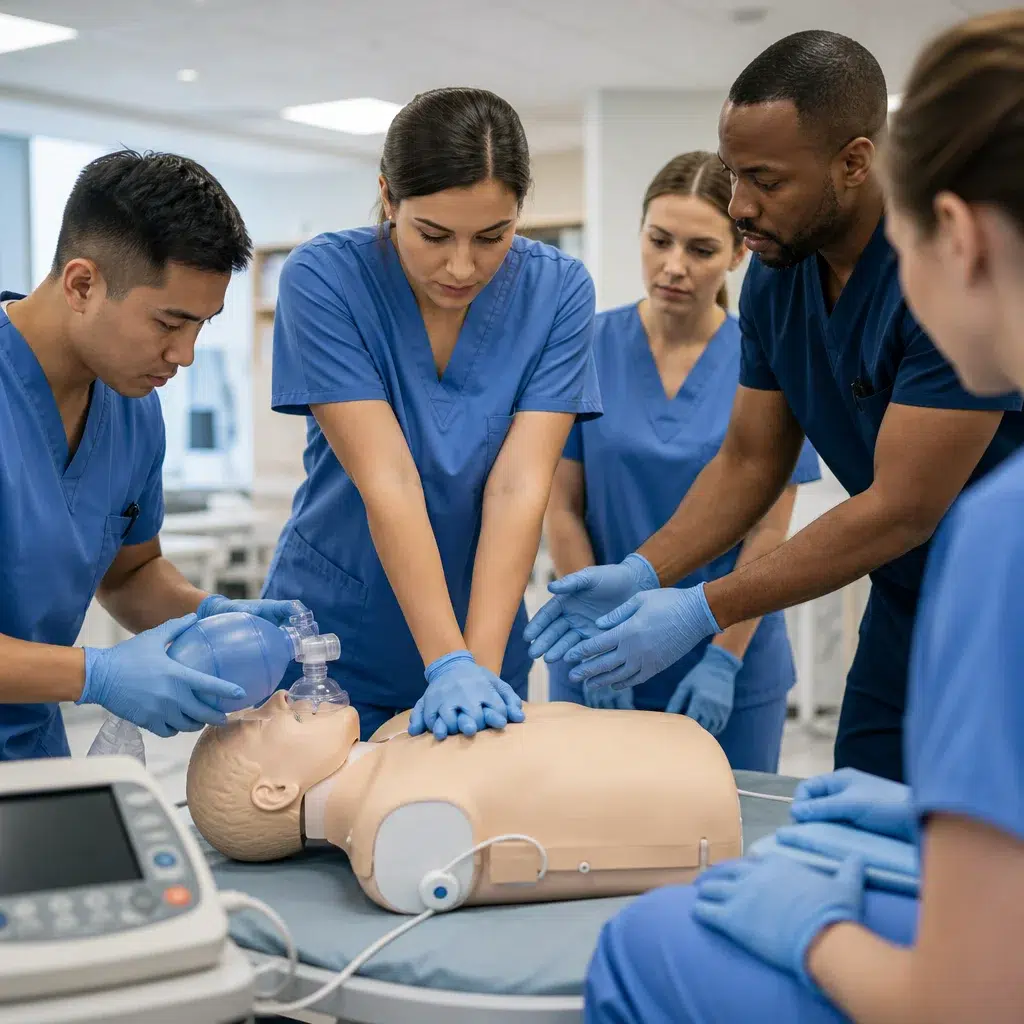
- Course mix: Units needing ACLS/PALS/NRP alongside BLS may streamline with integrated, employer-coordinated sessions.
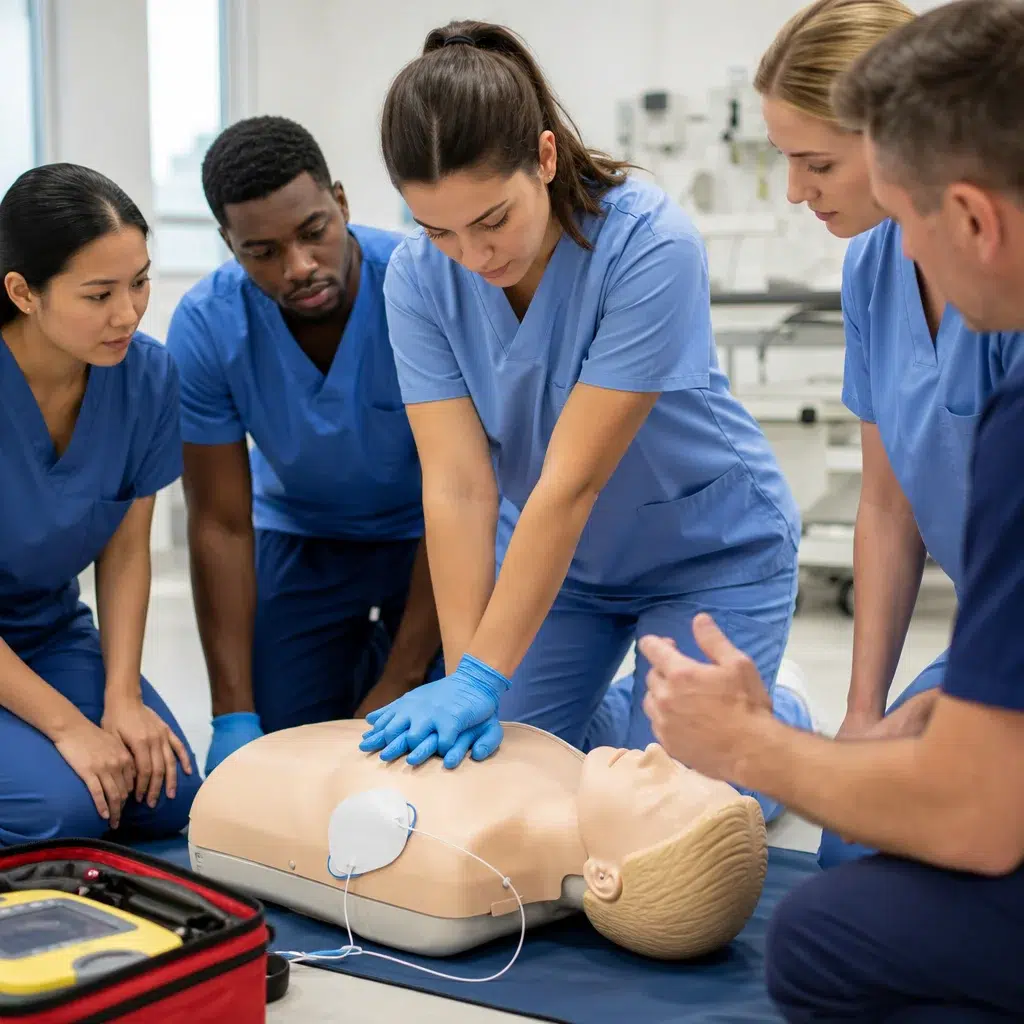
Practical examples illustrate the trade-offs. A 24/7 ED with rotating shifts can schedule multiple short BLS/ACLS skills sessions over two weeks, minimizing backfill while staff complete online coursework first. A dental network with four offices might opt for one on-site BLS renewal day to train 28 team members together, standardize documentation, and reduce administrative overhead.
Safety Training Seminars supports both approaches statewide with AHA-aligned blended learning, on-site delivery, and specialized certifications for healthcare providers. Whether you need flexible sign-ups across 100+ locations or a coordinated plan with discount pricing, STS helps California teams choose the most efficient path to compliance.
Overview of Individual Professional Enrollment Options
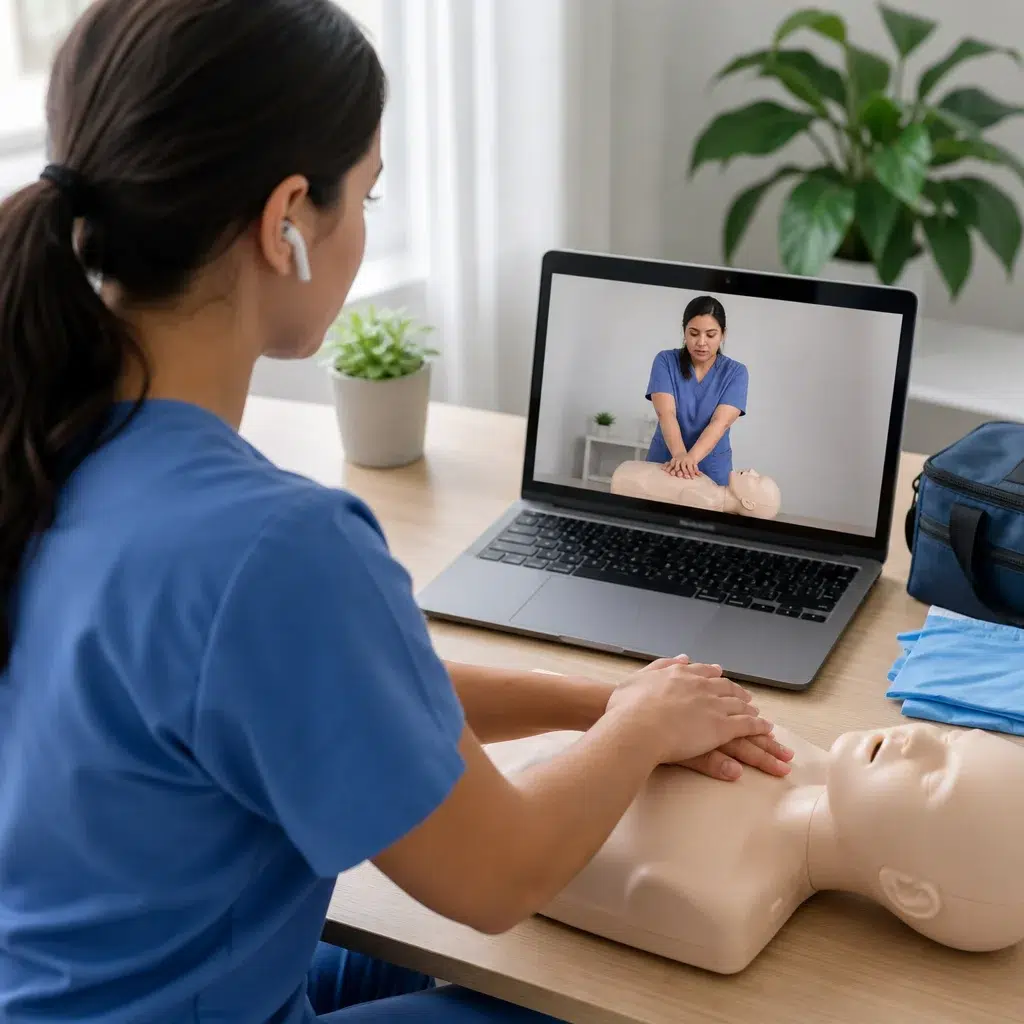
Individual enrollment is ideal for California clinicians who need to renew a credential on a tight timeline or prefer to manage their schedule independently. Nurses, dentists, EMS personnel, and other licensed providers can register for American Heart Association courses—BLS, ACLS, PALS, and NRP—on their own and complete requirements without coordinating with a full department. Safety Training Seminars supports these needs with blended learning that combines online coursework and an in-person skills session at over 100 locations statewide.
Most medical staff certification programs can be completed using a two-part format. Learners finish the AHA eLearning at home or work, then attend a brief skills check to demonstrate hands-on competency with an instructor. This model reduces time away from shifts and makes it easier to renew before license deadlines. It’s especially helpful for travelers, per-diem staff, and providers working variable schedules.
Typical path to enroll with Safety Training Seminars:
- Choose the course (BLS, ACLS, PALS, or NRP) and select “initial” or “renewal.”
- Pick a nearby California location and a skills session time that fits your calendar.
- Complete the assigned AHA eLearning module before your appointment.
- Attend the in-person skills check; bring required ID and any completion certificates.
- Receive your AHA eCard after successful completion, meeting employer and licensing requirements.
Pricing for individual enrollment is straightforward and posted at registration. Safety Training Seminars offers a low price guarantee, which helps individual providers avoid comparison shopping and the uncertainty of healthcare provider discount programs that may not apply to solo bookings. While corporate group training discounts, bulk CPR certification pricing, and on-site safety training costs are important factors for larger facilities, individual clinicians typically find the blended format the most cost- and time-efficient path for a single seat. Transparent scheduling and fees make it easy to plan renewals around shifts and credential expiration dates.
Consider individual enrollment when you need a single BLS renewal before a credential audit, an ACLS update between travel contracts, or a PALS course to satisfy a hospital privileging requirement. If your department later evaluates group BLS training options for multiple staff, Safety Training Seminars can also support that, but you don’t have to wait for an internal cohort to stay compliant. With statewide access, flexible time slots, and recognized AHA certifications, individual professionals can meet requirements quickly and confidently.
Overview of Corporate Group Discount Programs
Corporate group training discounts are designed to lower the per-learner cost when hospitals, clinics, and dental networks enroll teams into required AHA medical staff certification programs. Discounts typically scale with volume and coordination efficiency, helping California healthcare leaders meet compliance deadlines while controlling budgets and minimizing schedule disruption.
Most healthcare provider discount programs follow a tiered structure. Common models include:
- Volume tiers (e.g., price breaks at 10, 25, 50+ seats) for BLS, ACLS, PALS, and NRP
- Bundled course pricing when staff complete multiple certifications in the same window
- Prepaid vouchers/credits that employees redeem at any location or date
- On-site delivery rates versus reserved seats in public classes
- Multi-site agreements that consolidate billing across campuses or departments
Total on-site safety training costs depend on several variables beyond the base rate. Factors can include instructor travel and setup, equipment requirements (manikins and AED trainers), minimum headcounts, after-hours or weekend sessions, and rescheduling policies. Clarify whether AHA eCards, student manuals, and remediation time are included to avoid surprise add-ons.

Operationally, group BLS training options and blended learning pathways can reduce time away from patient care. For example, teams complete online coursework independently, then attend a short in-person skills session scheduled back-to-back for multiple shifts. Some providers also offer centralized rosters and renewal reminders, which help managers track expirations and align recertification cycles.
Consider practical scenarios. An emergency department planning ACLS and BLS renewals for 30 clinicians might combine blended courses with two on-site skills days to cut overtime and travel. A dental group seeking bulk CPR certification pricing could issue prepaid vouchers, letting staff book at nearby locations and stagger attendance to keep offices open.
Safety Training Seminars supports these approaches with corporate group training discounts across more than 100 California locations and on-site delivery statewide. Their blended options for BLS, ACLS, PALS, and NRP shorten seat time, and the low price guarantee helps finance leaders benchmark quotes confidently. For multi-facility systems, the ability to mix on-site sessions with local public classes provides cost control without sacrificing scheduling flexibility.
Comparing Administrative Overhead and Management Efficiency
Administrative workload is often the hidden cost in keeping California teams current with AHA-required credentials. With individual professional enrollment, each nurse or EMS crew member books a class, submits reimbursement, and sends proof of completion—multiplying touchpoints for managers and HR. Variability in course dates, policies, and documentation across vendors also complicates audits and renewal tracking for medical staff certification programs.
Typical overhead with individual enrollment includes:
- Approving time off and shift backfills for multiple dates and locations
- Processing reimbursements and reconciling varied receipts
- Verifying instructor credentials and AHA eCard authenticity
- Entering completion data into HRIS/LMS and monitoring renewal windows
- Chasing missing certificates and rescheduling cancellations
By contrast, a coordinated group pathway centralizes planning and reduces administrative cycles. One calendar, one roster, and one invoice streamline compliance for ACLS/PALS/NRP and group BLS training options. Completion data arrives in a consistent format, simplifying recordkeeping for hospitals and multi-site practices. For example, scheduling two monthly skills days for a 50-person nursing unit can cut manager touchpoints from six per learner to roughly two (enroll + receive results).
Cost control also improves. Corporate group training discounts and healthcare provider discount programs allow per-learner rates to scale with volume, similar to bulk CPR certification pricing. On-site safety training costs can be weighed against overtime, travel, and parking; many teams find that centralized sessions during low census hours or blended-learning skills days lower both payroll disruption and no-shows. Even a modest reduction of 10–15 minutes per learner in scheduling and data entry translates to several hours saved each cycle for a small department.
Safety Training Seminars helps reduce overhead by offering blended learning with consistent skills checkouts at more than 100 locations across California, so staff can complete online modules and test at the nearest center without cross-county travel. For larger cohorts, the company’s corporate group training and discount pricing, paired with a low price guarantee, provides predictable budgets and fewer vendor relationships to manage. Teams can mix formats—centralized skills days for new hires and rolling drop-ins for renewals—to keep compliance continuous with minimal disruption.
When deciding between paths, use these signals:
- Highly distributed workforce: leverage multiple nearby skills locations to minimize travel.
- Tight staffing windows: schedule concentrated skills days to reduce backfills.
- Large renewal waves: request a group quote to compare on-site safety training costs versus staggered individual enrollment.
Comparing Total Cost of Ownership and Volume Pricing
When comparing enrollment pathways, look beyond sticker price to total cost of ownership. The real cost of medical staff certification programs includes tuition, staff time away from patients, travel, and administrative overhead. Corporate group training discounts can lower per-seat rates, but the best value depends on how and where your teams learn.
Key cost drivers to model include:
- Tuition and fees: list price vs. bulk CPR certification pricing tiers
- Staff time: wages/benefits for time in class, plus travel and meal breaks
- Backfill/overtime: coverage to maintain ratios during training
- Scheduling/admin: coordination, reminders, tracking, and recordkeeping
- On-site safety training costs: room setup, equipment staging, and any instructor travel
- Compliance risk: rush renewals, reschedules, and missed-deadline penalties
Group purchasing tends to win when you can consolidate learners and standardize schedules. It also improves consistency across units and reduces administrative churn with a single roster and invoice. Consider group BLS training options, and extend the model to ACLS, PALS, or NRP to maximize economies of scale.
Group pricing is typically most cost-effective when:
- You have 8–12+ clinicians renewing the same credential within a 60–90 day window
- Teams are co-located or can meet at one facility for an on-site session
- Travel to a training center would require paid time and mileage for most learners
- You want private scenarios aligned to your protocols or equipment
- You’re leveraging healthcare provider discount programs across multiple course types
Individual professional enrollment often minimizes TCO for small or distributed teams. If you have staggered start dates, frequent new hires, or staff spread across California, flexible scheduling can reduce disruptions. Blended learning (online coursework plus a short skills check) keeps time in class brief and limits backfill needs, especially when learners live near one of Safety Training Seminars’ 100+ locations.

Example: A unit schedules 12 nurses for BLS renewals. Assume 1 hour of travel saved per nurse by hosting on site and a fully burdened rate of $60/hour; that’s roughly $720 in recovered time. Add a modest per-seat reduction from corporate group training discounts and you can offset any on-site setup fees while streamlining compliance. Conversely, for three new hires in different cities, individual enrollments at nearby centers may beat the minimum headcount and setup costs of a private class.
Safety Training Seminars can help you model both scenarios across BLS, ACLS, PALS, and NRP. With blended courses, on-site options, and low price guarantee, they provide transparent volume tiers, consolidated billing, and scheduling support tailored to California healthcare teams.
Pros and Cons of Each Training Delivery Method
California healthcare teams often juggle compliance cycles, staffing, and budgets when choosing between individual enrollment and private group classes. Both approaches can satisfy AHA requirements for BLS, ACLS, PALS, and more, but the operational impact differs. Safety Training Seminars supports both models statewide with blended learning, rapid AHA eCards, and over 100 convenient locations.
Individual professional enrollment fits rolling hires, travel nurses, and clinicians with mismatched renewal dates. It also works well when an employer reimburses but doesn’t coordinate scheduling.
- Pro: Maximum flexibility. Learners can complete online coursework and book a short skills session evenings or weekends close to home; for example, a night-shift RN can pick a BLS skills check after a shift at a nearby Bay Area site.
- Pro: Fast turnaround for single renewals. AHA eCards are typically issued quickly after the skills session, keeping providers in compliance.
- Con: Higher per-learner spend versus bulk CPR certification pricing, especially if the employer doesn’t capture volume discounts.
- Con: Fragmented expirations and receipts. Managers must track multiple rosters, invoices, and completion records across different medical staff certification programs.
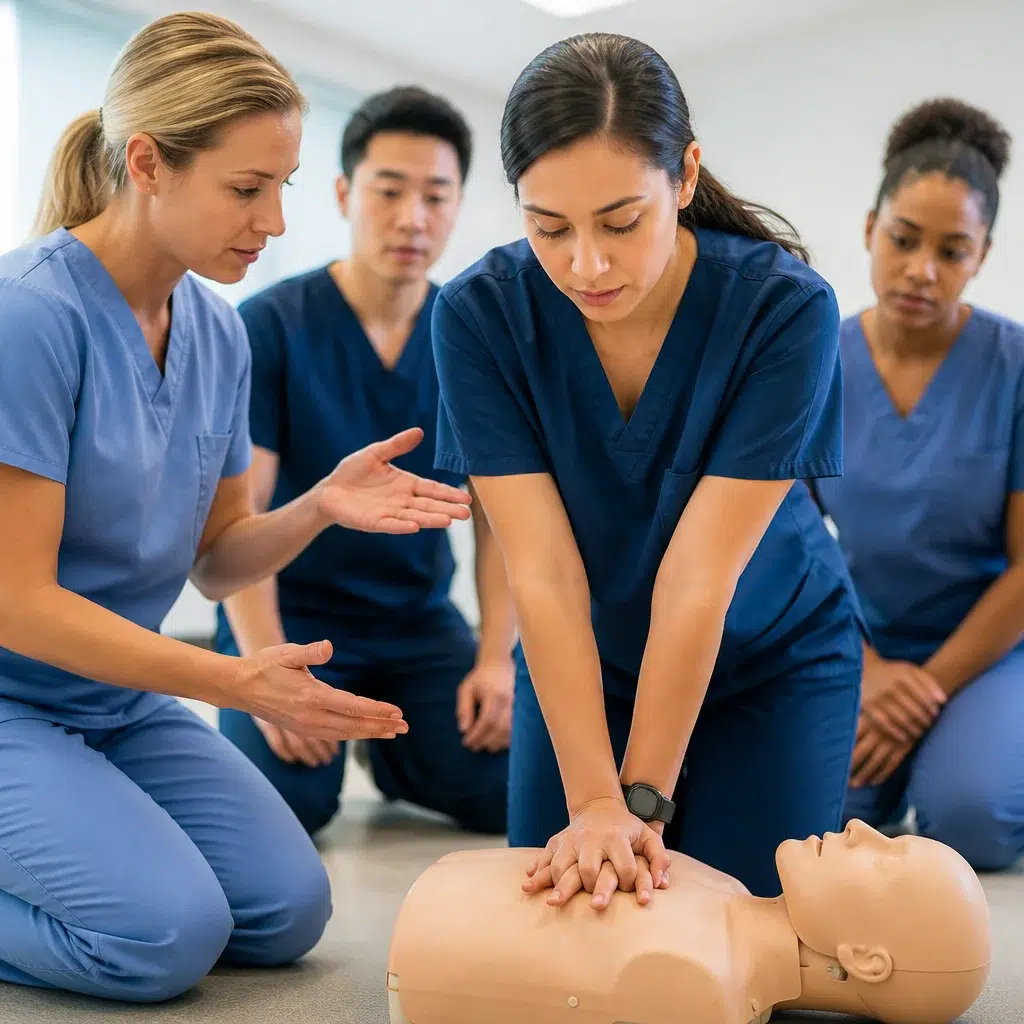
Corporate group training centralizes logistics and leverages corporate group training discounts. Teams can host on-site sessions or reserve a private class at a nearby center, with options spanning group BLS training, ACLS, PALS, and NRP.
- Pro: Lower average cost with healthcare provider discount programs, consolidated invoicing, and unified reporting for HR/education departments.
- Pro: On-site delivery reduces travel and overtime, and scenarios can be tailored to facility equipment and policies. Blended formats shorten seat time while maintaining AHA standards.
- Pro: Cohort renewals align expiration dates, simplifying future planning and audits.
- Con: On-site safety training costs may include minimum headcounts, after-hours or weekend surcharges, and instructor travel depending on location and schedule.
- Con: Requires staffing coverage and advance coordination; last‑minute census changes can trigger rescheduling or no‑show fees.
As a rule of thumb, individual enrollment is efficient for scattered renewals and small numbers, while a private class is cost‑effective when a cohort needs the same course within a short window. Many hospitals blend both: enroll stragglers individually and schedule quarterly group BLS training options and annual ACLS/PALS cohorts to capture discounts. Safety Training Seminars can quote side‑by‑side pricing, outline volume-based savings, and provide centralized rosters and eCard reporting—backed by a low price guarantee across California.
Conclusion: Choosing the Best Path for Your Organization
Both paths can work; the right choice depends on your headcount, timeline, and operational realities. If your team renews in cohorts and you can block time, corporate group training discounts typically deliver the lowest per-learner costs and the least disruption. For decentralized teams or rolling renewals, individual professional enrollment may be more flexible and just as cost-effective when you factor in travel, overtime, and backfill.
Group delivery shines when you can align schedules. With group BLS training options and ACLS/PALS/NRP conducted on-site, you centralize logistics, reduce travel, and often unlock bulk CPR certification pricing. While on-site safety training costs include instructor travel and setup, those are frequently offset by the savings from pulling multiple staff through in one session and minimizing shift differentials.
Individual enrollment makes sense for systems with multiple locations, variable shifts, or small batches of expiring cards each month. Safety Training Seminars’ blended learning model lets clinicians complete coursework online and finish a brief, in-person skills check—ideal for minimizing time away from patients. With more than 100 locations across California and healthcare provider discount programs available for volume, staff can self-schedule nearby without waiting for a company-wide event.
Consider two quick examples. A 25-nurse telemetry unit with synchronized BLS and ACLS renewals can book an on-site Friday skills day and move everyone through efficiently; the effective rate per learner drops with group pricing, and no one drives across town. By contrast, a network of dental practices with one or two expiring certifications per month may keep operations smoother by having employees enroll individually at the closest site and complete blended modules between patients.
Use this checklist to decide quickly:
- Number of staff expiring within the same 60–90 days
- Mix of certifications needed (BLS vs. ACLS/PALS/NRP) and prerequisites
- Ability to block training time without impacting patient flow
- Travel time and mileage vs. on-site coordination
- Internal training space availability and equipment needs
- Budget predictability and preference for bulk or pay-as-you-go
Safety Training Seminars can price both scenarios side by side—corporate group training discounts with on-site delivery, or flexible individual enrollment across California locations—all backed by a low price guarantee. Ask for a comparative quote that breaks out on-site safety training costs and volume tiers across your medical staff certification programs, so you can choose the most efficient path for your team and budget.
Register for a class today.