
Introduction: Evaluation Criteria for Life-Saving Training and Regulatory Compliance
Selecting the right provider for California healthcare compliance training starts with verifying that courses align with recognized clinical guidelines and the oversight expectations of employers, hospitals, and state agencies. Programs should reflect the latest American Heart Association science updates and support documentation that stands up to audits by medical staff offices, Joint Commission reviewers, and state entities. In California, compliance decisions are influenced by a mix of hospital bylaws, EMS Authority requirements, and board rules, so your training must be widely accepted across settings.
Use the following criteria to evaluate life-support programs against healthcare safety regulatory guidelines and everyday operational needs:
- Acceptance and issuer: AHA certification for BLS, ACLS, and PALS is the most broadly recognized by California hospitals; NRP should follow AAP/AHA standards where neonatal care is delivered.
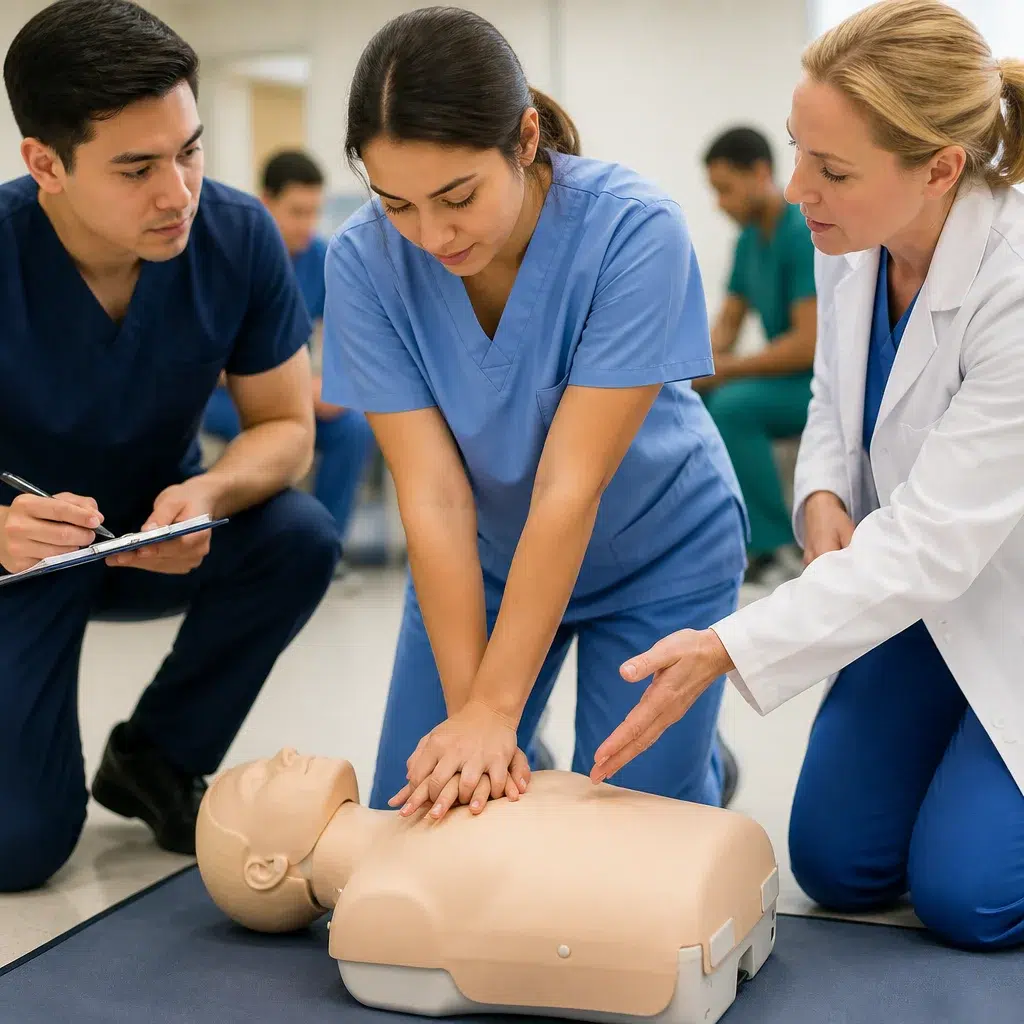
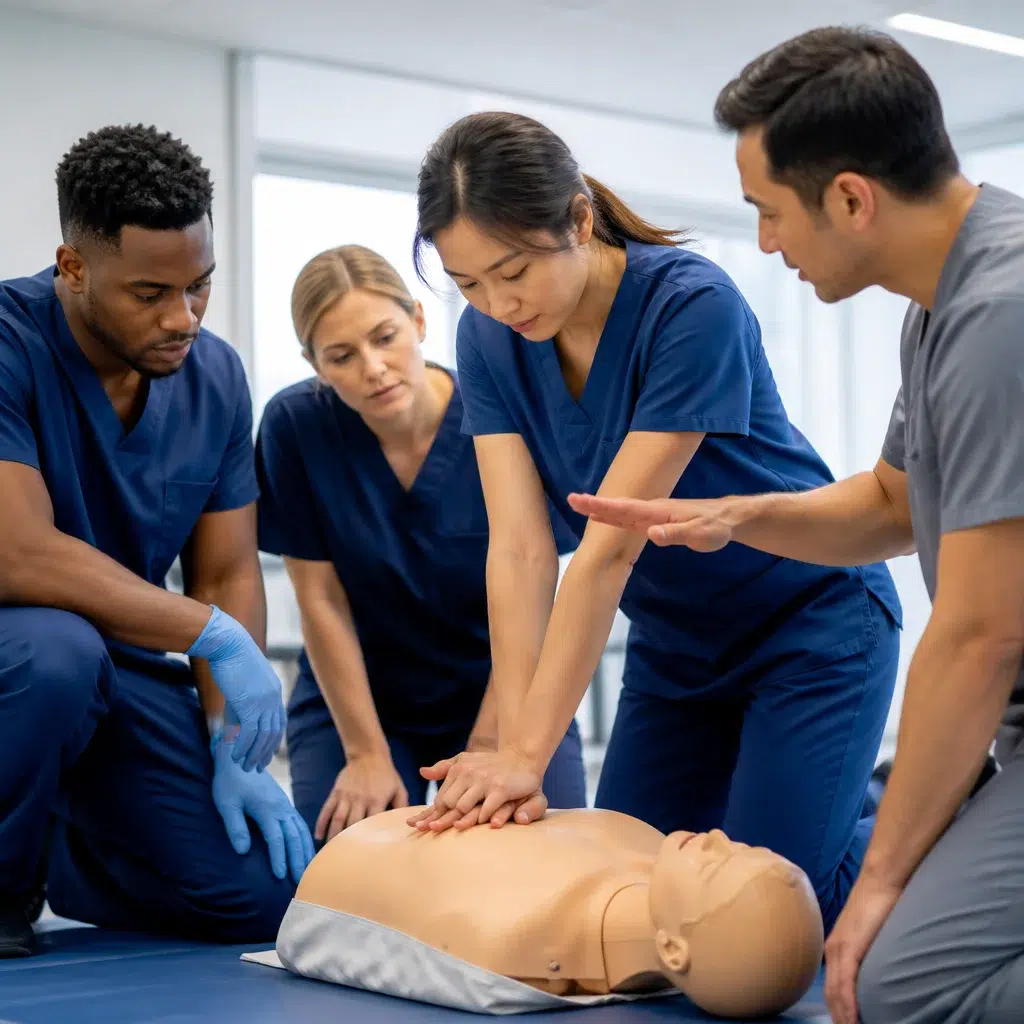
- Current curriculum and equipment: Courses should reflect the latest AHA Guidelines and use feedback manikins that measure compression rate and depth during skills checks.
- Format and hands-on validation: Blended learning is efficient, but ensure an in-person skills session is included; for some professions (e.g., dentistry), online-only CPR is not acceptable.
- Documentation integrity: Issued eCards with unique IDs, verifiable rosters, and completion timestamps are essential for audits and medical staff privileging.
- Renewal cadence: Plan for ACLS PALS license renewal on a two-year cycle; confirm refresher pathways and testing options that fit your schedule.
- Scheduling and access: Evening/weekend sessions and multiple locations reduce downtime; statewide coverage helps when teams work across regions.
- Corporate and group support: Onsite skills checks, volume pricing, and centralized roster management streamline compliance across departments.
- Specialty pathways: Ensure availability of pediatric tracks (PALS), neonatal resuscitation (NRP), and advanced cardiovascular courses for critical care environments.
Examples vary by role. For nurses, many hospital units require BLS for direct care and ACLS for telemetry, ED, or ICU, often tied to medical board training requirements and unit competencies; confirm whether CE credit can be applied toward license renewal. Dentists licensed in California must maintain hands-on CPR; see this overview on BLS certification for dentists to align with Dental Board expectations. EMS personnel typically require AHA BLS at minimum, while agency policy and EMSA guidance may specify ACLS and PALS for paramedic-level practice.
Safety Training Seminars fits these criteria by offering AHA certification courses in BLS, ACLS, PALS, and NRP through a blended model with in-person skills sessions. With over 100 training locations across California, it’s straightforward to schedule renewals without disrupting shifts, and corporate group training with discount pricing simplifies multi-site compliance. Their low price guarantee helps contain education budgets while maintaining the rigor needed for audits and credentialing. For clinicians seeking reliable, audit-ready documentation and broad hospital acceptance, this is a practical, statewide solution.
Basic Life Support (BLS): The Foundation for All Healthcare Personnel
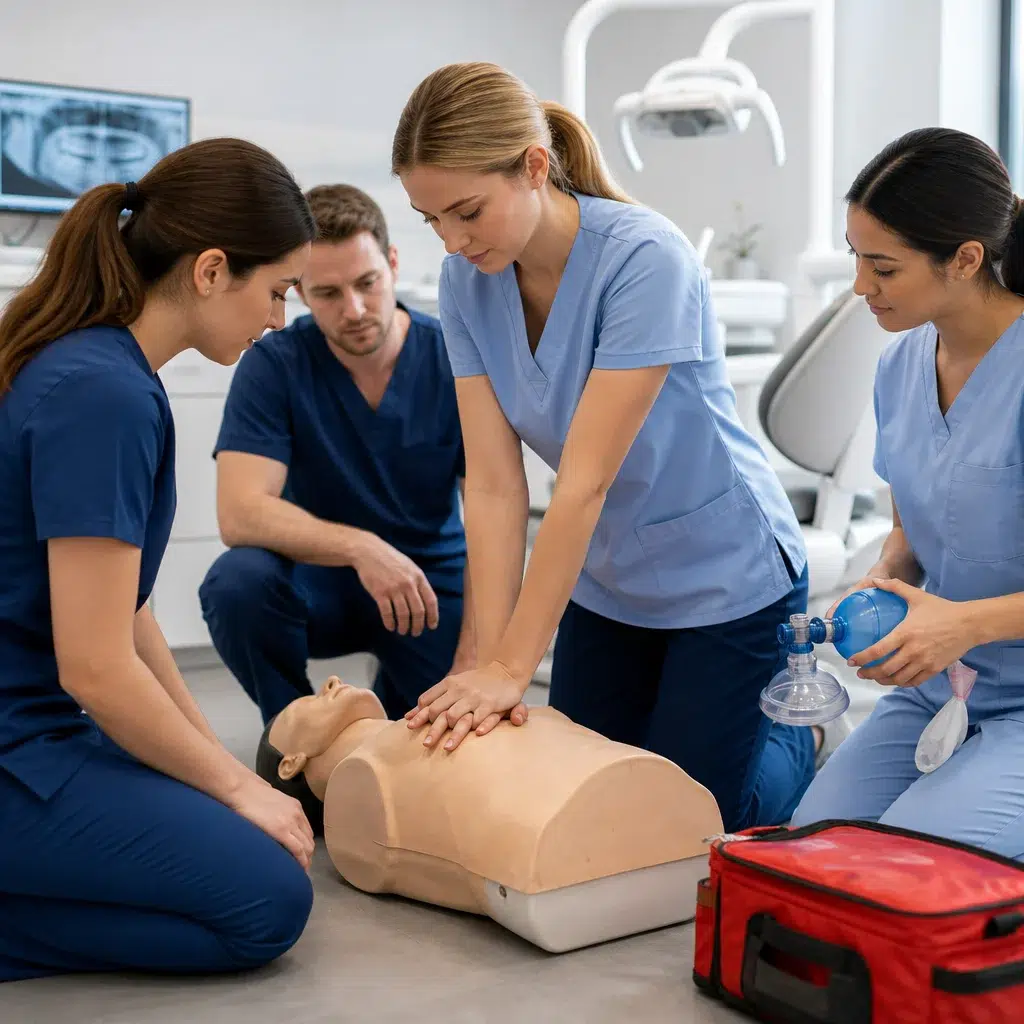
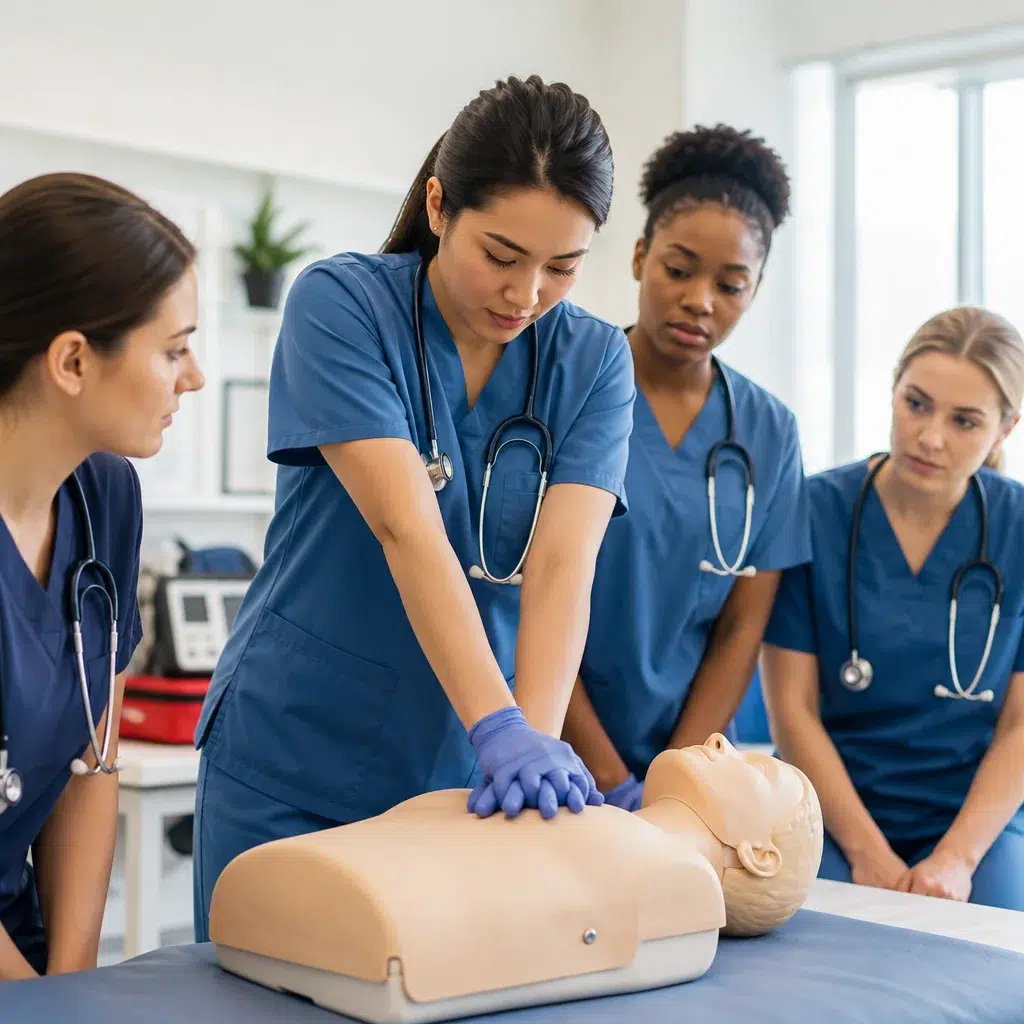
Basic Life Support (BLS) is the starting point for California healthcare compliance training and the skill set most likely to be checked during onboarding, audits, and renewals. It equips clinicians to recognize sudden cardiac arrest, deliver high-quality CPR, use an AED, and support breathing until advanced care arrives. Because these actions are governed by healthcare safety regulatory guidelines, BLS competency underpins safe practice in hospitals, clinics, dental offices, and EMS settings.
Across roles, BLS sits at the intersection of employer policy and state oversight. Hospitals and outpatient centers typically require an American Heart Association (AHA) BLS Provider card as a condition of employment and privileging, even when a board does not list it explicitly in medical board training requirements. The Dental Board of California requires BLS for license renewal, making BLS certification for dentists essential; EMS personnel must maintain current CPR/BLS under EMSA rules; and BLS is among the most common mandatory nursing certifications California employers enforce.
BLS is also the gateway to advanced courses. A current BLS Provider card is typically required to enroll in ACLS, PALS, and NRP, and to complete ACLS PALS license renewal for many hospital roles. Because these advanced credentials focus on algorithms and pharmacology, they assume you already deliver textbook compressions, ventilations, and team-based resuscitation.
Core BLS competencies include:
- Adult, child, and infant CPR with correct compression rate, depth, recoil, and minimal interruptions.
- Early defibrillation with an AED and safe pad placement in diverse care environments.
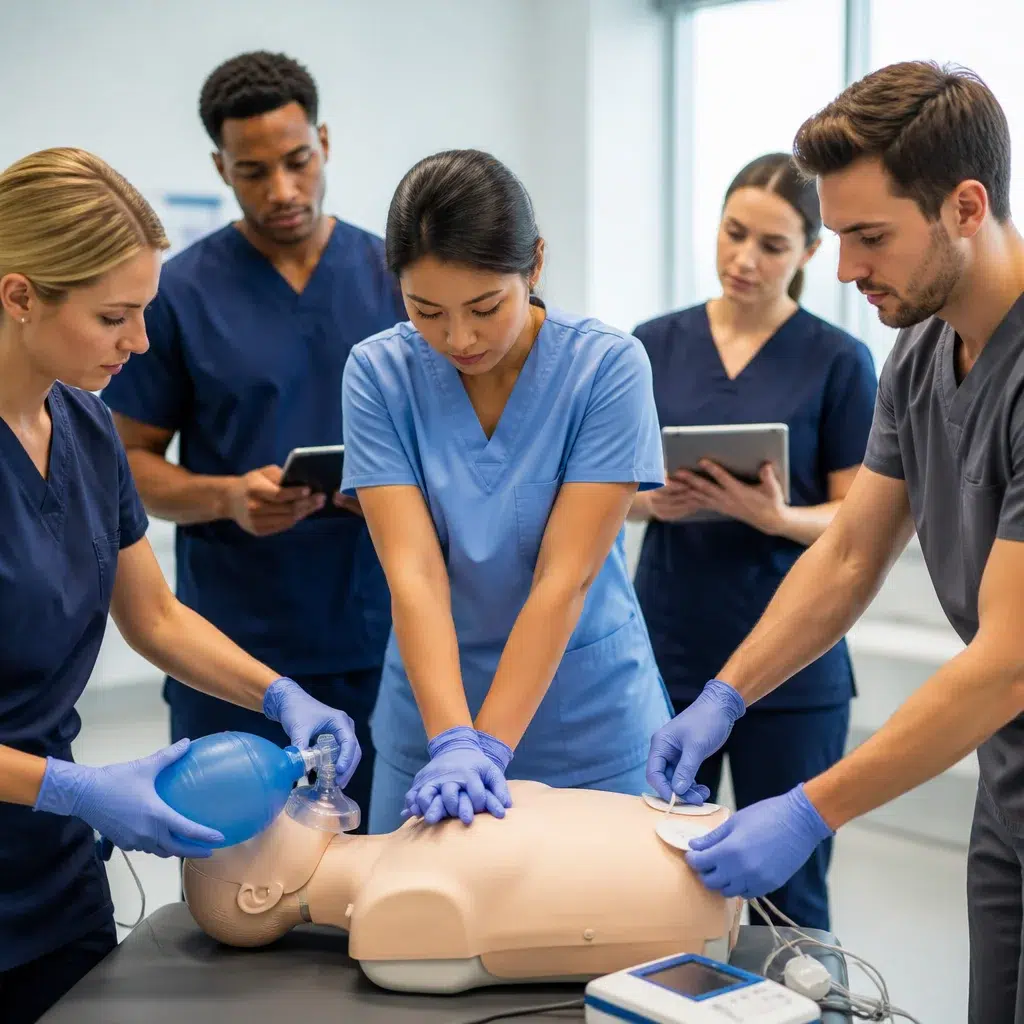
- Effective bag-mask ventilation, rescue breathing, and management of choking and opioid-associated emergencies.
- Team dynamics, role clarity, and closed-loop communication during codes.
Most California clinicians choose AHA-blended learning for flexibility: complete the online course, then attend a short, in-person skills session for hands-on testing. Expect a two-year certification period, with refresher training recommended sooner if your facility experiences low code frequency. Plan ahead for renewals to avoid lapses that can delay scheduling or jeopardize unit coverage.
Safety Training Seminars streamlines BLS across the state with blended learning, rapid skills appointments, and over 100 California locations that fit rotating shifts. The organization also supports corporate rollouts and group discounts, with a low price guarantee to keep budgets in check. California healthcare professionals can book AHA-compliant Basic Life Support certification courses to meet employer expectations and stay current for ACLS/PALS pathways.
Advanced Cardiovascular Life Support (ACLS): Requirements for Hospital and Emergency Settings
Advanced Cardiovascular Life Support (ACLS) is a common requirement for clinicians working in critical care, telemetry, cath lab, perioperative areas, and emergency departments. In California, these mandates typically come from hospital privileging policies, EMS agency protocols, and healthcare safety regulatory guidelines, not the state license itself. Most employers require an AHA ACLS Provider card within a defined window (often 30–90 days of hire) and renewed every two years. Aligning ACLS with California healthcare compliance training helps avoid credentialing delays and scheduling gaps.

Roles that frequently need ACLS include ICU/ED RNs, respiratory therapists involved in codes, hospitalists, anesthesia support staff, cath lab teams, and paramedics/critical care transport personnel. While the Medical Board of California does not list ACLS as a licensure requirement, hospitals and medical groups often make it mandatory for emergency response readiness and moderate sedation privileges. The Dental Board of California requires BLS certification for dentists; ACLS and/or PALS may be required by permit category for adult or pediatric sedation—clinicians should verify the latest board rules. These employer and board-driven expectations are often treated as mandatory nursing certifications in California facilities.
A current ACLS course should build competency in high-stakes scenarios that hospitals survey for during audits and drills. Look for training that emphasizes:
- Adult cardiac arrest algorithms, high-quality CPR, defibrillation, and pacing
- Recognition and management of bradycardia, tachycardia, acute coronary syndromes, and stroke
- Airway management and ventilation strategies with adjuncts
- Resuscitation pharmacology and closed-loop team communication
- Post–cardiac arrest care and integration with rapid response systems
To streamline ACLS PALS license renewal planning, coordinate expirations across ACLS, PALS, and BLS so they align with unit competencies and annual evaluations. Blended learning can reduce time off the unit while meeting employer requirements: complete the online modules, then schedule an in-person skills check that fits your shift. Safety Training Seminars offers AHA ACLS across more than 100 California locations with flexible skills sessions, a low price guarantee, and corporate group options—useful for hospital departments standardizing compliance. Graduates receive AHA eCards widely accepted by California hospitals, clinics, and EMS agencies.
Examples in practice: an ED RN in San Jose may be hired contingent upon obtaining ACLS within 60 days; a Los Angeles County paramedic must maintain ACLS per agency protocol; a dental group adding adult moderate sedation ensures dentists hold ACLS while all staff keep BLS current. Always confirm exact medical board training requirements and employer policies to match course selection and renewal timing.
Pediatric Advanced Life Support (PALS): Essential Training for Pediatric Care Compliance
Pediatric Advanced Life Support (PALS) is a core component of California healthcare compliance training for professionals who assess or treat infants and children in acute settings. Built on American Heart Association (AHA) science, PALS helps clinicians meet employer privileging standards and aligns with healthcare safety regulatory guidelines in hospitals, clinics, and EMS systems. In California, many EDs, PICUs, pediatric transport teams, and urgent care networks list PALS as a condition of hire or continued employment, making it a practical necessity even when not explicitly mandated by state law.
Clinicians who most commonly need PALS include emergency and pediatric nurses, respiratory therapists, paramedics, pediatric hospitalists, and providers working in ambulatory surgery and urgent care centers. Paramedic agencies often accept PALS or PEPP to satisfy internal readiness standards, and many hospital bylaws pair PALS with ACLS for roles that cross-cover adult and pediatric emergencies. For dental practices, BLS certification for dentists is universal, and PALS is frequently required when providing moderate or deep sedation to children under Dental Board permitting pathways. These patterns place PALS among the de facto mandatory nursing certifications California employers expect for pediatric-facing roles.
A well-structured PALS course builds mastery in pediatric assessment and resuscitation, including the pediatric assessment triangle, respiratory distress/failure, shock management, bradycardia and tachyarrhythmias, defibrillation for VF/pVT, intraosseous access, weight-based dosing, and post–cardiac arrest care. Team dynamics and closed-loop communication are emphasized through megacode simulations, which mirror real-world rapid response scenarios. AHA eCards and documented skills checklists support credentialing audits, Joint Commission reviews, and medical staff file updates tied to medical board training requirements and facility policies.
Safety Training Seminars delivers AHA PALS in a blended format—online coursework followed by an in-person skills session—available across 100+ California locations and through on-site corporate training. This approach minimizes time away from the unit, simplifies ACLS PALS license renewal cycles, and supports group scheduling for hospital departments or EMS agencies. The company’s low price guarantee and streamlined roster management make renewals predictable and budget-friendly for both individual clinicians and administrators.
To stay compliant and avoid schedule disruptions:
- Verify your facility’s policy on PALS, ACLS, and BLS renewal intervals and accepted course formats.
- Align PALS with ACLS PALS license renewal to reduce duplicate training days.
- Maintain BLS certification for dentists and all clinical staff; confirm pediatric sedation cases require PALS under Dental Board guidance.
- Choose AHA-authorized providers and retain eCards for audits.
- Review healthcare safety regulatory guidelines and complete pre-course self-assessments to pass skills on the first attempt.
Safety Training Seminars can help you map requirements to your role, schedule blended sessions near your shift pattern, and keep your compliance file current with reliable AHA certifications.
Comparison of Blended Learning Versus Traditional In-Person Training Modalities
Choosing between blended learning and fully in-person formats comes down to balancing flexibility with coaching intensity. Blended courses combine self-paced AHA eLearning with a short, scheduled skills session, allowing busy clinicians to complete didactic content on their own time while still demonstrating hands-on competence. Traditional classroom courses deliver end-to-end instruction face-to-face, which some teams prefer for real-time feedback and team-based scenarios aligned with healthcare safety regulatory guidelines.

For many pursuing California healthcare compliance training, blended learning shortens time away from patient care without compromising quality. An ICU RN can complete HeartCode ACLS online after shifts, then attend a focused skills check to satisfy employer requirements for ACLS PALS license renewal. A dental office can assign staff the online BLS module and book a single afternoon skills session to meet BLS certification for dentists required by the Dental Board of California.
Fully in-person training remains valuable when coached practice and peer learning are priorities. New grads seeking mandatory nursing certifications California or code teams preparing for high-acuity events often benefit from extended instructor-led megacode practice, debriefing, and mock team drills. Some facilities also schedule department-wide in-person refreshers to standardize protocols and equipment familiarity.
Key differences to consider:
- Scheduling and time: Blended reduces classroom hours; in-person reserves a full session for lecture, skills, and testing.
- Skills mastery: In-person allows more live scenario time; blended remains strong if the skills session includes robust megacode and pediatric stations.
- Compliance tracking: Blended platforms provide digital completion records; both formats can generate certificates aligned with medical board training requirements and hospital privileging.
- Access and scale: Blended leverages statewide skills sites; in-person may be best when a whole unit trains together.
- Cost and staffing: Blended can lower backfill needs; group in-person bookings may optimize per-learner pricing.
Regulatory acceptance hinges on recognized curricula and employer policy. While state boards rarely specify modality, hospitals, EMS agencies, and the Dental Board define what counts for credentialing and renewal. Using AHA-aligned BLS, ACLS, and PALS ensures broad acceptance across California and supports audits tied to healthcare safety regulatory guidelines.
Safety Training Seminars offers both paths statewide—AHA blended courses with convenient skills checks at 100+ California locations, and comprehensive in-person classes for individuals and corporate groups. Their team supports documentation for audits, accommodates unit-based training schedules, and provides low price guarantees to keep compliance predictable for nurses, dentists, and EMS professionals.
Buying Guide: Choosing the Right Course Provider for State Licensing Boards
Selecting a provider for California healthcare compliance training starts with acceptance. Confirm that the courses are American Heart Association (AHA) compliant and that your board or employer recognizes the credential. Look for providers that issue official AHA eCards and clearly state which boards and facilities accept their classes. For example, nurses fulfilling mandatory nursing certifications California commonly need BLS at minimum, with ACLS or PALS based on unit assignment, while many hospitals require these for privileging even when not specifically mandated for license renewal.
Verify board alignment before you enroll. The California Board of Registered Nursing typically accepts AHA BLS, ACLS, and PALS for practice requirements and CE, provided the course includes hands-on skills; check that the provider lists a BRN CE provider number. BLS certification for dentists should meet Dental Board of California requirements, including adult CPR/AED and hands-on skills; dentists with sedation permits may need ACLS or PALS based on patient population. EMS personnel should confirm county or agency policies and EMSA alignment, as many require AHA BLS and often ACLS or PALS for field operations.
Use this checklist to evaluate providers:
- AHA authorization and issuance of official eCards (with same-day or next-business-day delivery).
- Clear mapping to your role: BLS for all clinicians; ACLS for adult acute/critical care; PALS for pediatrics/ED; NRP for perinatal and L&D.
- CE credit availability and board alignment noted on the course page (BRN, Dental Board), plus documentation that meets medical board training requirements and employer privileging policies.
- Flexible delivery (blended learning with online modules plus in-person skills) and frequent skills sessions near you.
- Transparent pricing, group rates, and a low price guarantee.
- Robust recordkeeping, verification portals, and renewal reminders to support audits and ACLS PALS license renewal timelines.
Consider scheduling and format. Blended learning can reduce time away from the unit: complete the AHA online module at your pace, then attend a short, in-person skills check. Choose providers with multiple skills session times, weekend options, and convenient locations, which is especially helpful for travel nurses and rotating residents.
Documentation matters for healthcare safety regulatory guidelines and audits. Ensure you’ll receive a verifiable AHA eCard, CE certificates where applicable, and clear retention policies. Safety Training Seminars offers blended AHA courses (BLS, ACLS, PALS, and NRP), over 100 California training locations, corporate group training with discount pricing, and a low price guarantee—making it a practical option for busy clinicians needing board-accepted credentials on a reliable schedule.
Register for a class today.