Introduction: Why Healthcare Professionals Need Reliable AHA Certification Providers
California clinicians work under tight credentialing timelines, and choosing the wrong course can delay start dates or agency placements. A clear AHA certification providers comparison helps ensure your BLS, ACLS, PALS, or NRP cards align with employer policies, payer audits, and licensing renewals. For most hospitals and EMS agencies statewide, the best CPR certification in California is the one explicitly accepted by your facility—often AHA.
Acceptance matters because not all credentials are viewed equally. While HSI and ASHI offer solid lay-rescuer training, many California hospitals, dental groups, and EMS providers specifically require AHA BLS for Healthcare Providers and AHA ACLS/PALS for advanced roles. Keeping pace with healthcare provider recertification requirements (typically every two years) also means your provider must deliver current 2020/2025 AHA Guidelines–aligned content and valid eCards.
When evaluating AHA aligned training programs, compare providers on practical factors that affect compliance and convenience:
- Verification: Confirm AHA alignment and employer acceptance for BLS certification options, plus ACLS/PALS/NRP where applicable.
- Format: Blended learning (online modules plus in-person skills) to reduce time away from shifts.
- Access: Multiple locations and frequent skill sessions to meet last-minute onboarding.
- Issuance: Prompt eCard delivery and roster reporting for credentialing teams.
- Support: Remediation policies, exam prep, and clear rescheduling options.
- Value: Transparent pricing, group discounts, and a low price guarantee.
Real-world scenarios illustrate the stakes. A Sacramento RN onboarding to a cardiac unit may need AHA BLS and ACLS within a week; a travel paramedic in Los Angeles might require weekend ACLS renewal; a pediatric dental office could bundle PALS for the dentist and basic CPR for staff through an AHA CPR First Aid course to cover non-clinical team members.
Safety Training Seminars delivers AHA-aligned blended courses across 100+ California locations, with flexible skills sessions, corporate group training, and a low price guarantee. For clinicians who cannot afford credentialing surprises, a provider like STS streamlines compliance while keeping training convenient and consistent statewide.
Understanding AHA Certification Requirements for Healthcare Professionals
For California clinicians, employers—and often unit-specific policies—determine which credentials are acceptable. In an AHA certification providers comparison, most hospitals and surgery centers require American Heart Association cards for direct patient care, while some outpatient or non-clinical roles may accept alternatives. Always confirm acceptance with your HR, medical staff office, or credentialing agency before enrolling, especially if you float across departments or facilities.
Typical mandatory healthcare certifications by role include:
- All clinical staff: AHA BLS Provider (hands-on skills required).
- ICU, ED, telemetry, cath lab, PACU, anesthesia/sedation dentistry: ACLS.
- Pediatrics, PICU, pediatric ED, pediatric sedation dentistry: PALS.
- L&D, NICU, well-baby nursery, midwives: NRP (varies by facility).
- EMS/paramedics: BLS plus ACLS and often PALS.
BLS certification options follow AHA’s two pathways: an initial/renewal classroom course or HeartCode blended learning (online module plus in-person skills test on a feedback manikin). Cards are valid for two years; many hospitals require you to complete healthcare provider recertification requirements 30–60 days before expiration to maintain scheduling privileges. If you’re comparing the best CPR certification in California for hospital compliance, the AHA BLS Provider is the default. For scope and prerequisites, see Safety Training Seminars’ BLS Certification Overview.
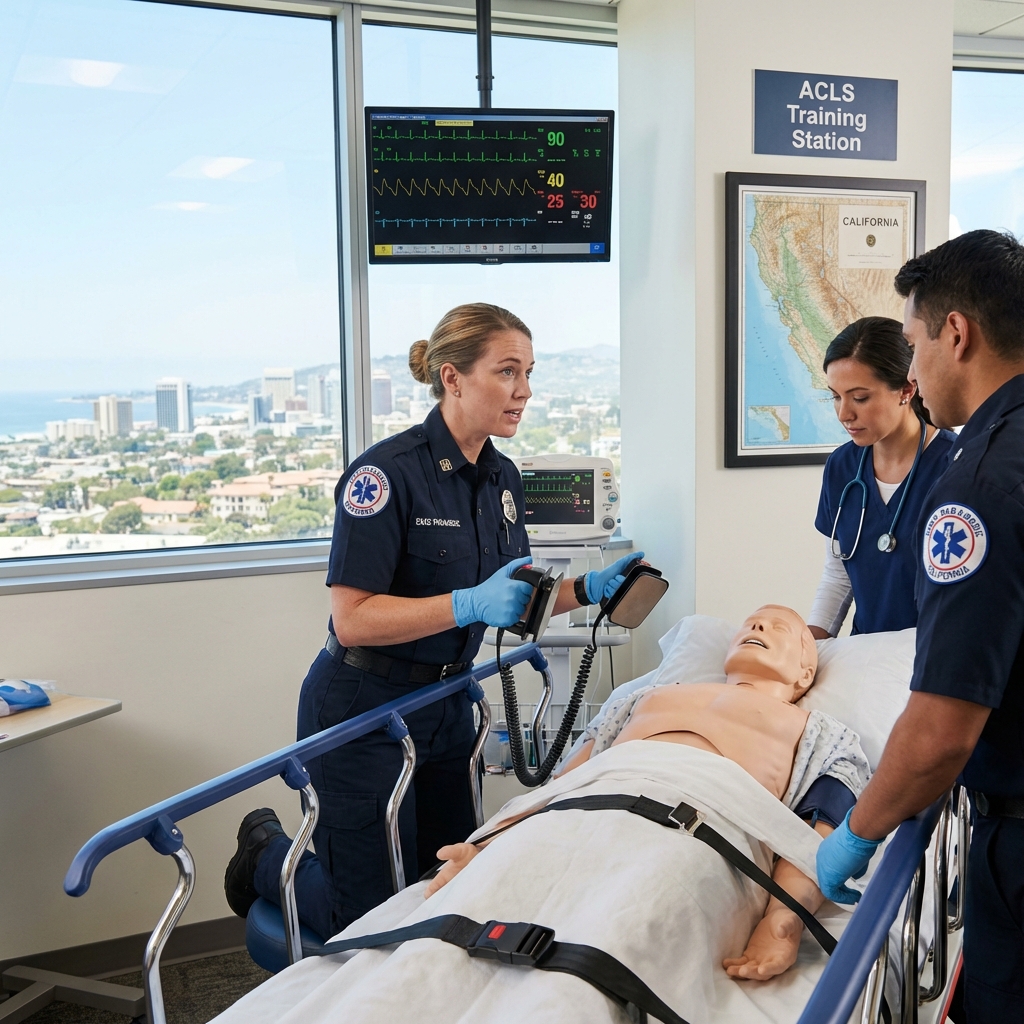
AHA aligned training programs require a live skills evaluation; fully online-only CPR does not meet most hospital standards. For ACLS and PALS, HeartCode modules cover algorithms and pharmacology, followed by a brief in-person megacode and skills check. Example: an ICU nurse completes HeartCode ACLS at home, then finishes a 30–60 minute hands-on evaluation the same week to avoid a lapse.
Safety Training Seminars supports these requirements statewide with blended learning, in-person skills sessions, and over 100 California locations—helpful for travel nurses and multi-site dentists. The team offers ACLS/PALS/NRP scheduling, reminder notices ahead of expiration, and a low price guarantee, making compliance simpler for individuals and groups.
Overview of Safety Training Seminars: Services and Competitive Advantages
For an AHA certification providers comparison focused on California, Safety Training Seminars offers statewide access to AHA aligned training programs that meet common hospital and clinic policies. The company delivers the mandatory healthcare certifications most facilities request—BLS, ACLS, and PALS—plus NRP for neonatal teams. This approach aligns with healthcare provider recertification requirements, helping nurses, dentists, and EMS personnel stay compliant without disrupting patient schedules.
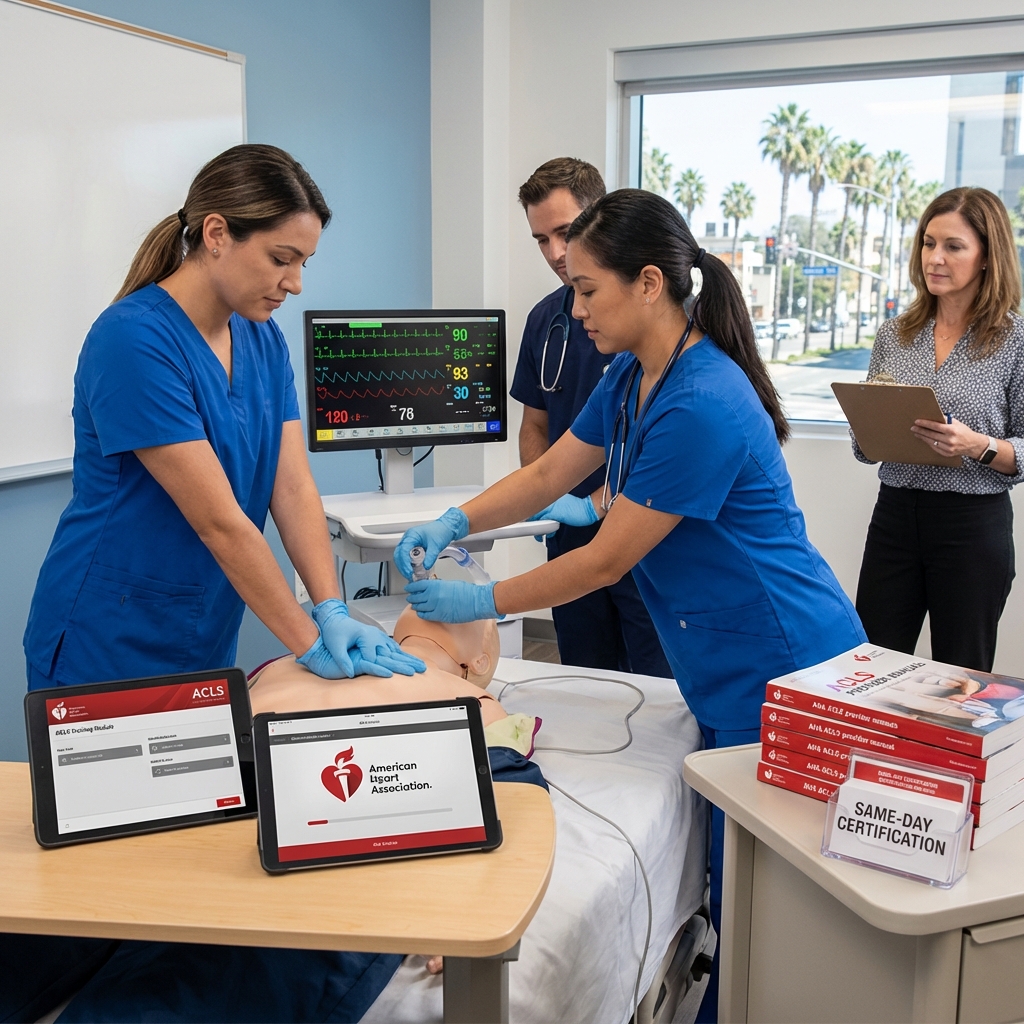
Courses are available in a blended format that pairs official AHA eLearning with an in-person skills check, so you can study online and complete a brief hands-on evaluation at a convenient time. With over 100 locations across California, clinicians can book sessions close to home or work, including evenings and weekends. Example: a telemetry nurse renewing ACLS can complete HeartCode online, then schedule a local skills session to receive the AHA eCard once requirements are met.
Key advantages include:
- Coverage where you practice: 100+ California sites and frequent skills sessions statewide.
- Flexible BLS certification options and advanced pathways (ACLS/PALS/NRP), including initial and renewal tracks.
- Corporate services for hospitals and group practices: onsite training, consolidated billing, and volume discounts.
- Low price guarantee and transparent scheduling, with eCards issued promptly (often the same day after successful completion).
- Experienced instructors and scenario-based assessments aligned with current AHA guidelines.
If you’re comparing the best CPR certification in California, consider factors like AHA card acceptance, scheduling speed, and total cost of compliance. Safety Training Seminars helps facilities standardize credentialing while reducing overtime—e.g., a dental practice can host onsite BLS for the whole team in one block, and an EMS agency can coordinate ACLS/PALS refreshers before license renewals. In an AHA certification providers comparison, STS stands out for delivering widely accepted credentials with statewide convenience and budget-friendly options.
Health and Safety Institute (HSI): Features and Certification Offerings
Health & Safety Institute (HSI)—which includes the American Safety & Health Institute (ASHI)—delivers a broad catalog of CPR and resuscitation courses designed around the latest ILCOR/AHA science updates. In an AHA certification providers comparison, HSI stands out for flexible delivery and digital tools, but its credentials are HSI/ASHI-branded rather than American Heart Association (AHA). That distinction matters in California, where many hospital roles specifically require AHA cards for compliance.
HSI emphasizes blended learning and skills validation options that reduce classroom time, along with enterprise-level tools for workforce tracking and auditing. Typical cards are valid for two years, supporting common healthcare provider recertification requirements. Core offerings include:
- BLS for Healthcare Providers (HSI/ASHI)
- ACLS and PALS equivalents (HSI/ASHI)
- CPR/AED and First Aid for non-clinical teams
- Remote Skills Verification (RSV), digital cards, and LMS integrations
Acceptance is the key consideration. HSI/ASHI credentials can be appropriate for outpatient clinics, dental practices, and allied health roles where employer policy allows non-AHA courses. However, for hospital onboarding, travel assignments, and EMS positions in California, AHA-branded BLS, ACLS, and PALS are often mandatory healthcare certifications; an HSI/ASHI card that is “AHA aligned” on content may still be declined because it is not an AHA provider card.
If you need the best CPR certification in California for hospital compliance, choose an AHA-authorized training center. Safety Training Seminars offers AHA BLS, ACLS, PALS, and NRP through convenient blended learning and in-person skills sessions at 100+ California locations, with a low price guarantee and group discounts. This gives clinicians clear BLS certification options that meet system requirements the first time—avoiding retakes and delays—while simplifying future renewals on a predictable two-year cycle.
American Safety and Health Institute (ASHI): What to Know
The American Safety and Health Institute (ASHI), now part of HSI, offers CPR, AED, First Aid, and BLS courses that follow the latest ILCOR and AHA Guidelines for CPR and ECC. However, ASHI/HSI cards are not the same as American Heart Association (AHA) certifications. In an AHA certification providers comparison, this distinction matters: many California healthcare employers specifically require an AHA eCard for compliance, especially for advanced courses.
Acceptance varies by role and employer. Job postings and hospital credentialing packets in California commonly list “AHA BLS” or “AHA ACLS required,” and travel nurse agencies often stipulate AHA-only for ACLS/PALS. ASHI/HSI credentials can meet general workplace needs and some clinic policies, but they may not satisfy mandatory healthcare certifications tied to hospital privileges, EMS agencies, or dental board requirements. When in doubt, request written confirmation from your credentialing office.
Both ASHI/HSI and AHA offer blended learning with online coursework plus an in-person skills session and issue digital cards. If you’re weighing BLS certification options or planning healthcare provider recertification requirements, use this quick guide:
- Layperson CPR/AED or OSHA compliance for non-clinical staff: ASHI/HSI often accepted.
- Clinic or ambulatory settings that allow “equivalent” training: ASHI/HSI may be fine—confirm locally.
- Hospital-based roles, ACLS/PALS, travel assignments, or EMS licensure: AHA is typically required in California.
For California clinicians who need certainty, AHA aligned training programs that issue AHA eCards are the safer choice. Safety Training Seminars delivers AHA BLS, ACLS, and PALS statewide via blended learning at over 100 locations, with a low price guarantee and corporate group options. Their team can help verify your facility’s policy, schedule skills sessions that fit tight shifts, and keep you current on the best CPR certification in California—plus NRP through the AAP when neonatal credentials are needed.
Comparing Curriculum Quality and AHA Alignment Across Providers
For an AHA certification providers comparison that matters to California hospitals and clinics, the key differentiator is who controls the curriculum and the card you receive. Safety Training Seminars (STS) is an American Heart Association Training Center, so its BLS, ACLS, and PALS courses follow AHA’s official materials and issue AHA eCards. HSI/ASHI courses are based on the same science updates but use their own curricula and typically issue HSI/ASHI cards, which some employers will not accept for mandatory healthcare certifications.
Curriculum quality is not just about science alignment; it’s about standardized evaluation. AHA courses require specific psychomotor testing (e.g., high‑quality compressions with feedback, team dynamics, megacode performance for ACLS/PALS) and a proctored exam, with eCards tracked in the AHA system. HSI/ASHI courses may use different scenario design and testing criteria, and while they align to ILCOR/AHA guidelines, they are not AHA-branded programs—an important distinction when job postings list “AHA BLS” or “AHA ACLS/PALS required.”
Acceptance policies across California employers reflect these differences. For example, an ICU RN in San Francisco or an ED paramedic in San Diego will almost always need AHA ACLS/PALS for credentialing, while some outpatient or dental offices may accept HSI/ASHI for BLS. Recertification intervals are commonly two years across providers, but travel nurse agencies, Magnet hospitals, and large systems frequently specify AHA for healthcare provider recertification requirements to simplify audits and verification.
When deciding on the best CPR certification in California or comparing BLS certification options, verify the following before you enroll:
- Card issuer listed by the course (AHA eCard vs HSI/ASHI)
- Exact course your role requires (BLS, ACLS, PALS, NRP) and employer acceptance
- Skills session format and access to manikin feedback
- Turnaround time for eCards and roster reporting
- Support for reminders and documentation needed for reappointment
STS streamlines compliance with AHA aligned training programs delivered via blended HeartCode-style learning plus in-person skills at over 100 locations statewide. Healthcare teams can schedule corporate sessions, receive consolidated documentation, and benefit from discount pricing and a low price guarantee—making it easier to meet hospital policy while keeping costs predictable.
Convenience and Accessibility: In-Person vs Blended Learning Models
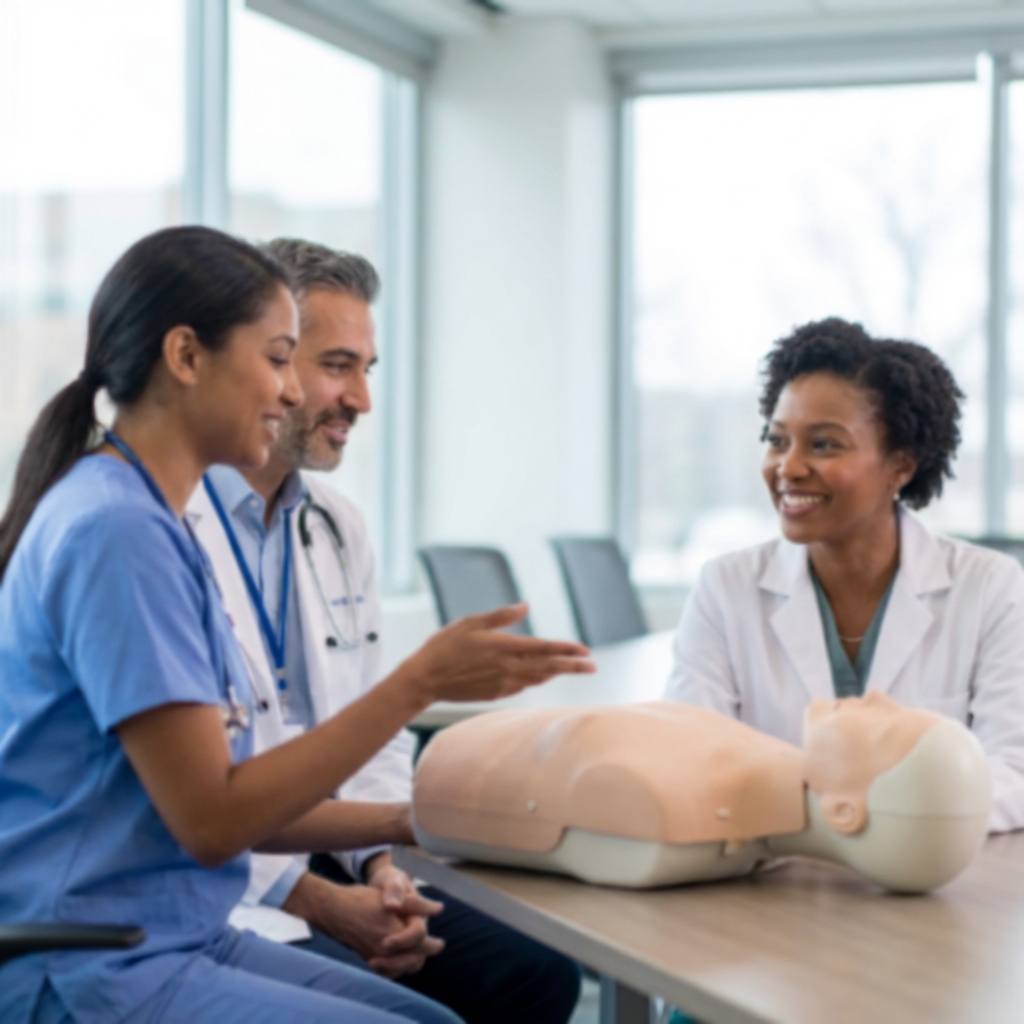
Choosing between fully in-person classes and blended formats can make or break your timeline for meeting healthcare provider recertification requirements. In an AHA certification providers comparison, the model you pick directly affects schedule flexibility, commuting time, and how quickly you receive your eCard. For most busy California clinicians, blended learning minimizes time away from shifts without sacrificing hands-on practice.
Blended AHA options (e.g., HeartCode BLS, ACLS, and PALS) let you complete the online, adaptive module on your own device, then finish with a focused, in-person skills session. A night-shift RN in Sacramento, for example, can complete HeartCode BLS after work and book a nearby skills appointment to secure a same-day AHA eCard. Safety Training Seminars (an AHA Training Center) supports this approach statewide with more than 100 locations and a low price guarantee, helping clinicians keep certifications current on tight schedules.
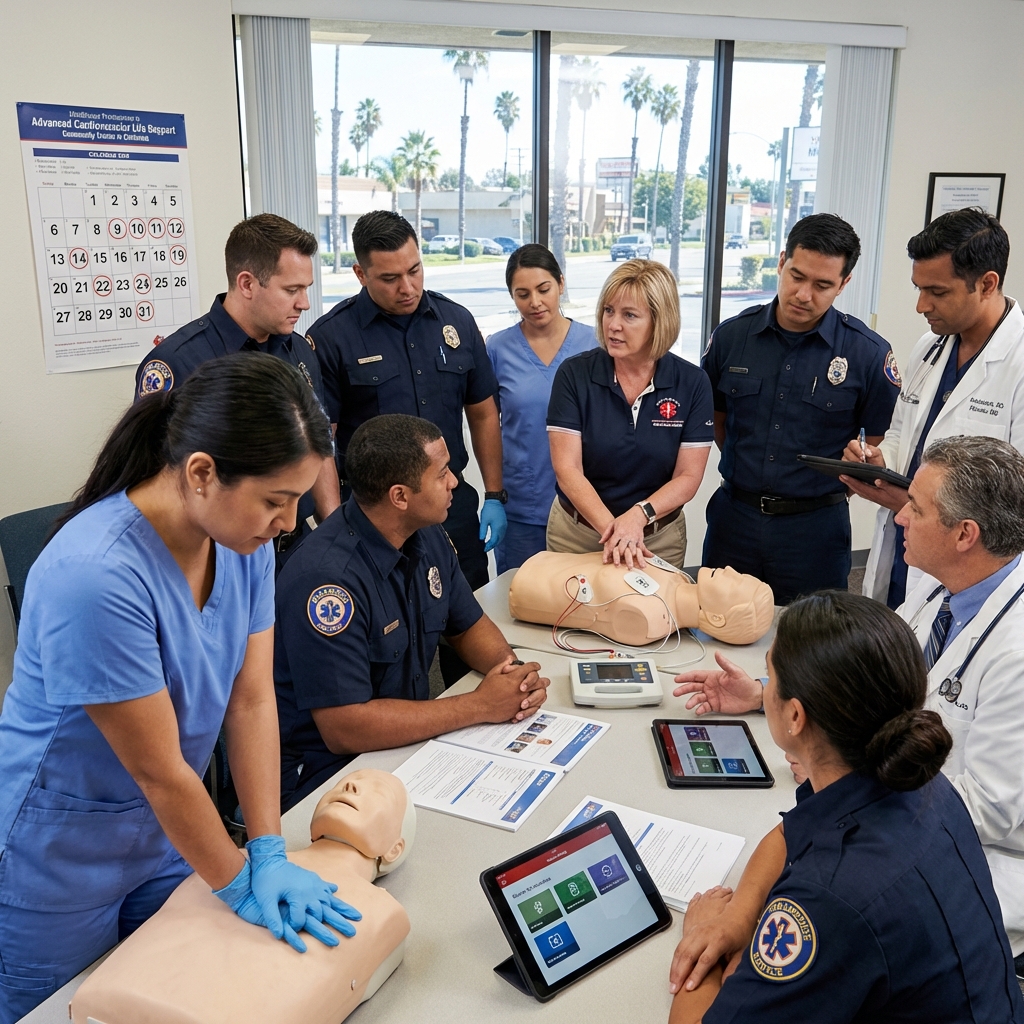
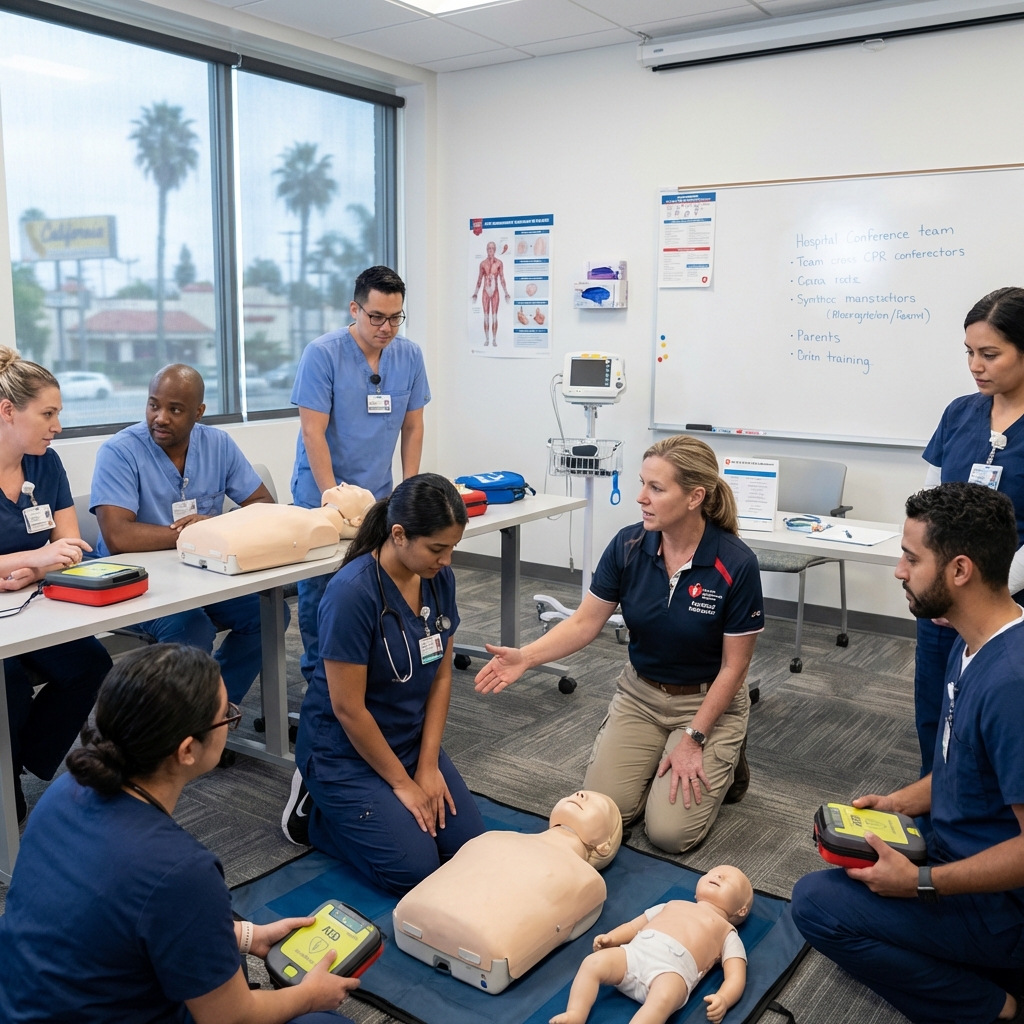
Fully in-person classes consolidate everything—lecture, practice, and testing—into a single instructor-led session. This can be ideal for first-time ACLS/PALS learners or anyone who prefers real-time coaching, extra megacode practice, and peer interaction. It’s also efficient for departments coordinating mandatory healthcare certifications together; Safety Training Seminars offers on-site corporate training to streamline staff compliance.
HSI and ASHI also provide in-person and blended pathways, but availability and scheduling vary by the independent training site you choose. If your role requires AHA aligned training programs—a common requirement in California hospitals and EMS—select courses that issue AHA cards to avoid delays in onboarding. Where employers accept HSI/ASHI, their blended formats can deliver comparable time savings, but always verify acceptance before enrolling.
For day-to-day convenience and access, look for:
- Self-paced online modules with quick, local skills checks
- Frequent skills session calendars across multiple sites
- Same-day eCards after successful completion
- On-site group options to meet unit-wide BLS certification options and ACLS/PALS needs
For many clinicians seeking the best CPR certification in California, Safety Training Seminars’ statewide blended schedule makes it simple to renew on time and on budget.
Pricing and Value: Low-Cost Options for Mandatory Certifications
When making an AHA certification providers comparison, look beyond the sticker price to total value and acceptance. For California hospitals and clinics, many mandatory healthcare certifications—especially BLS, ACLS, and PALS—explicitly require an American Heart Association eCard. Lower-cost courses from HSI/ASHI can seem appealing, but if your employer only accepts AHA, you risk paying twice in lost time and re-enrollment fees to retake an AHA course.
Several factors drive the real cost of the best CPR certification in California and other renewals. Consider these variables before you book:
- Course format: Blended learning (AHA HeartCode + in-person skills) reduces paid time off and travel compared with full-day classroom courses.
- Location and schedule: Evening/weekend options and proximity cut commute, parking, and coverage costs.
- Bundling: Pairing ACLS with BLS or PALS on the same day can lower per-course fees.
- Group rates: Employer-sponsored sessions and corporate contracts unlock volume discounts.
- Price protection: A low price guarantee ensures you don’t overpay if a comparable AHA class is listed lower elsewhere.
For example, an RN renewing ACLS and BLS can choose AHA aligned training programs via blended learning to complete online modules at home, then a short, hands-on skills check the same day. Booking at a nearby site avoids interfacility travel, and a bundle can trim fees while satisfying healthcare provider recertification requirements in one trip. If a competitor advertises a lower rate for the same AHA course, Safety Training Seminars (STS) honors a low price guarantee and offers more than 100 training locations statewide to keep incidental costs down.
To maximize value, verify your employer’s acceptance policy (AHA vs. alternatives), choose blended BLS certification options when available, and renew before your card expires to avoid taking a longer initial course. For teams, ask about onsite corporate group training and consolidated billing to reduce overtime. STS combines statewide access, AHA-authorized credentials, and discount pricing—making it a practical, low-cost choice for California clinicians who need AHA cards for compliance.
Speed of Certification: Same-Day Cards and Flexible Scheduling
When time is tight, speed and scheduling flexibility can make or break your renewal plan. In an AHA certification providers comparison, the fastest path is usually an official AHA course with blended learning and frequent skills check openings. Safety Training Seminars (STS) offers AHA HeartCode BLS, ACLS, and PALS with online modules followed by a brief, in-person skills session, so most learners receive same-day AHA eCards after passing. With 100+ locations across California and numerous daily time slots, it’s straightforward to book a session that fits before or after a shift.
For California hospitals and clinics that specify AHA cards for mandatory healthcare certifications, choosing an AHA Training Center avoids rework. HSI and ASHI providers can issue digital cards quickly, and many align to current AHA guidelines; however, those cards are not AHA-branded. If your employer requires AHA specifically, completing HSI/ASHI first can delay onboarding or recertification while you retake an AHA course. STS reduces that risk by issuing official AHA credentials the same day you complete the skills check.
Flexible scheduling is especially valuable for BLS certification options and high-stakes renewals like ACLS and PALS. STS’s blended format limits classroom time to focused skills practice, and frequent sessions run mornings, afternoons, evenings, and weekends across the Bay Area, Sacramento, Los Angeles, San Diego, and more. Corporate teams can also schedule onsite group training with discount pricing to meet unit-wide deadlines together.
Examples of quick turnarounds that meet healthcare provider recertification requirements:
- A nurse completes HeartCode BLS before work, attends a midday skills session, and uploads the same-day eCard to the hospital LMS.
- An ED physician books a Saturday ACLS renewal skills check near home to avoid weekday call conflicts.
- A dental practice schedules an onsite BLS skills session so the whole team earns the best CPR certification in California for healthcare settings without disrupting patient schedules.
For speed, compliance, and statewide access, STS’s official AHA-aligned training programs are built to get you carded fast—without surprises.
Customer Support and Success Rates Among Training Providers
In any AHA certification providers comparison, two factors most influence outcomes for clinicians: accessible customer support and practices that drive first‑time success. For California nurses, dentists, and EMS professionals facing healthcare provider recertification requirements, clear guidance on prerequisites, employer acceptance, and remediation can be the difference between staying compliant or missing shifts. Acceptance matters, too—many California hospitals prefer or require American Heart Association cards for BLS, ACLS, and PALS, whereas HSI and ASHI cards may be accepted in some settings but not all.
Safety Training Seminars streamlines success with blended learning, pairing AHA eLearning modules with concise, in‑person skills sessions at over 100 California locations. That coverage shortens wait times and reduces cancellations, so a clinician who needs an ACLS renewal on short notice can usually find a nearby appointment. STS support teams help learners navigate AHA pre‑course self‑assessments for ACLS/PALS and provide reminders, which measurably improves megacode confidence and written exam readiness.
HSI and ASHI offer reputable, skills‑focused curricula; however, employer acceptance varies. If your medical group requires AHA aligned training programs, choosing a non‑AHA course may result in repeating training or having a card declined during credentialing. A reliable provider will proactively verify acceptance with your facility, confirm whether you need Initial vs Renewal, and steer you to the right BLS certification options to satisfy mandatory healthcare certifications the first time.
When comparing customer support and success policies, look for:
- Transparent pass‑rate reporting and what counts as a “pass” (skills, written, or both).
- Clear remediation/retake terms, including fees and how quickly you can rebook.
- Instructor access for questions before skills day and practice time with equipment.
- eCard turnaround times and documentation assistance for hospital credentialing.
- Group and onsite options, plus discount pricing for teams.
For many clinicians seeking the best CPR certification in California with broad hospital acceptance, Safety Training Seminars’ AHA pathway, responsive support, and low price guarantee offer a dependable route to on‑time recertification and strong first‑attempt outcomes.
Choosing the Right Provider for Your Professional Needs
When making an AHA certification providers comparison, start with employer acceptance. For mandatory healthcare certifications in California, most hospitals and clinics specify American Heart Association cards for BLS, ACLS, and PALS. HSI/ASHI credentials can be valuable for community or non-clinical roles, but acceptance varies across major systems, so verify with HR or your credentialing portal before you enroll.
Use the checklist below to choose confidently among BLS certification options and AHA-aligned training programs:
- Card issuer and acceptance: Look for “American Heart Association (AHA) eCard.” Confirm that facilities like Kaiser Permanente, Sutter Health, Dignity Health, or UC campuses accept the course you’re taking.
- Course scope: Clinicians typically need AHA BLS Provider, ACLS Provider, and PALS Provider; some roles also require NRP. HSI/ASHI offer parallel CPR/BLS courses, but they are not AHA and may not satisfy hospital privileging.
- Delivery model: Blended learning (eLearning plus in-person skills) is fastest for renewals. Ensure flexible skills-session times near you and same-day eCards for compliance deadlines.
- Scheduling and access: Frequent start times, weekend/evening options, and statewide sites reduce time off the floor—crucial for travel nurses and per diem staff.
- Documentation and turnaround: Same-day AHA eCards, clear receipts, and roster support help with audits and healthcare provider recertification requirements (typically every two years).
- Pricing and groups: Look for a low price guarantee, invoicing, and onsite group training to streamline team renewals.
Example: A telemetry RN renewing this month likely needs AHA BLS and ACLS; the best CPR certification in California for hospital roles is typically the AHA BLS Provider, delivered via HeartCode with a 30–60 minute skills check. A dental practice recertifying staff can save time with onsite AHA BLS for Healthcare Providers and coordinated eCard issuance in a single visit.
Safety Training Seminars delivers official AHA courses statewide with blended learning, over 100 California training locations, same-day eCards, and a low price guarantee. For individual renewals or corporate cohorts, STS makes it straightforward to meet mandatory healthcare certifications on your schedule.
Conclusion: Making an Informed Decision on AHA Training
In this AHA certification providers comparison, the deciding factor is almost always employer policy and clinical scope. Across California, hospitals and EMS agencies typically require AHA BLS Provider for all clinical staff, with AHA ACLS for adult critical care and AHA PALS for pediatrics—while HSI/ASHI credentials may be fine for community or non-hospital roles. If you’re aiming for the best CPR certification in California for hospital compliance, choosing AHA-aligned training programs helps avoid onboarding delays and repeat coursework.
Use these filters to make a confident choice:
- Confirm acceptance: Check your facility’s policy (e.g., “AHA BLS/ACLS/PALS required”). Many large systems and travel nurse contracts specify AHA only.
- Match the course to your role: BLS for all providers; ACLS for ED/ICU/telemetry; PALS for pediatrics; NRP for labor and delivery. Stack courses efficiently if multiple are due.
- Pick the right format: Blended HeartCode eLearning plus an in-person skills session speeds completion and suits variable shifts.
- Verify proof and turnaround: Ensure you’ll receive an official AHA eCard the same day, with employer-verifiable rosters.
- Plan for healthcare provider recertification requirements: Most AHA certifications renew every two years; schedule before expiration to maintain clinical privileges.
Safety Training Seminars offers AHA-aligned BLS, ACLS, PALS, and NRP with blended learning and over 100 locations statewide, making scheduling straightforward for busy California clinicians. Examples: a float RN needing a 24-hour turnaround can complete HeartCode online and book a same-day skills check with immediate eCard issuance; a dental practice can coordinate team BLS renewals via on-site corporate training with discount pricing. The low price guarantee helps control CE costs without compromising on approved credentials.
Bottom line: pick the provider that satisfies your facility’s mandatory healthcare certifications, issues AHA eCards promptly, and offers flexible BLS certification options near you. For California healthcare professionals who want compliant, efficient training with broad location coverage, Safety Training Seminars is a practical choice to keep your credentials current and your onboarding on track.
Register for a class today.